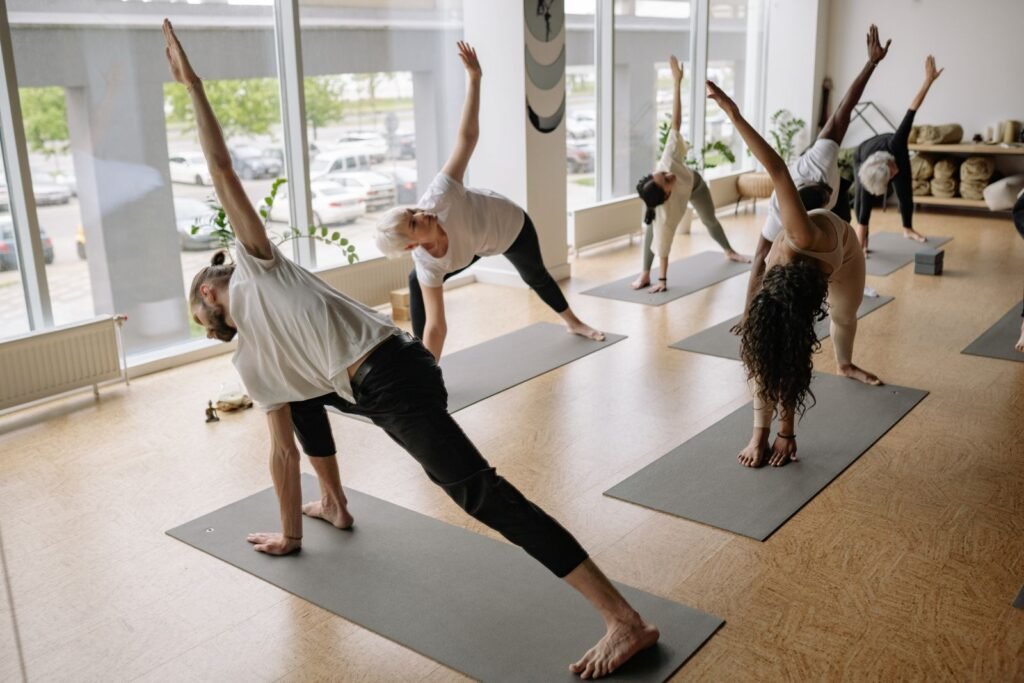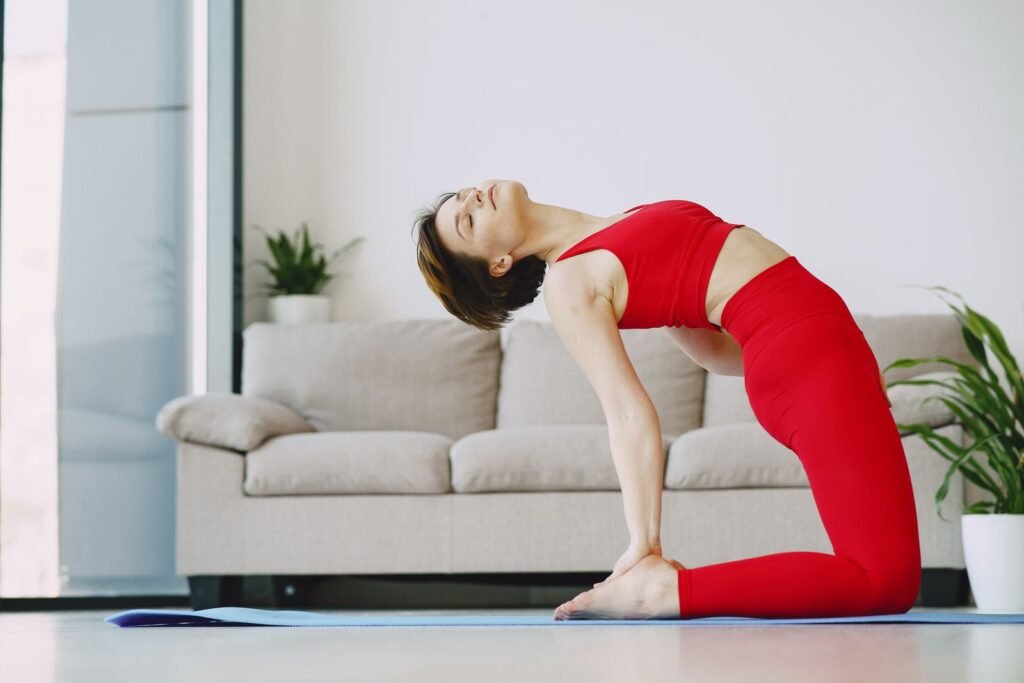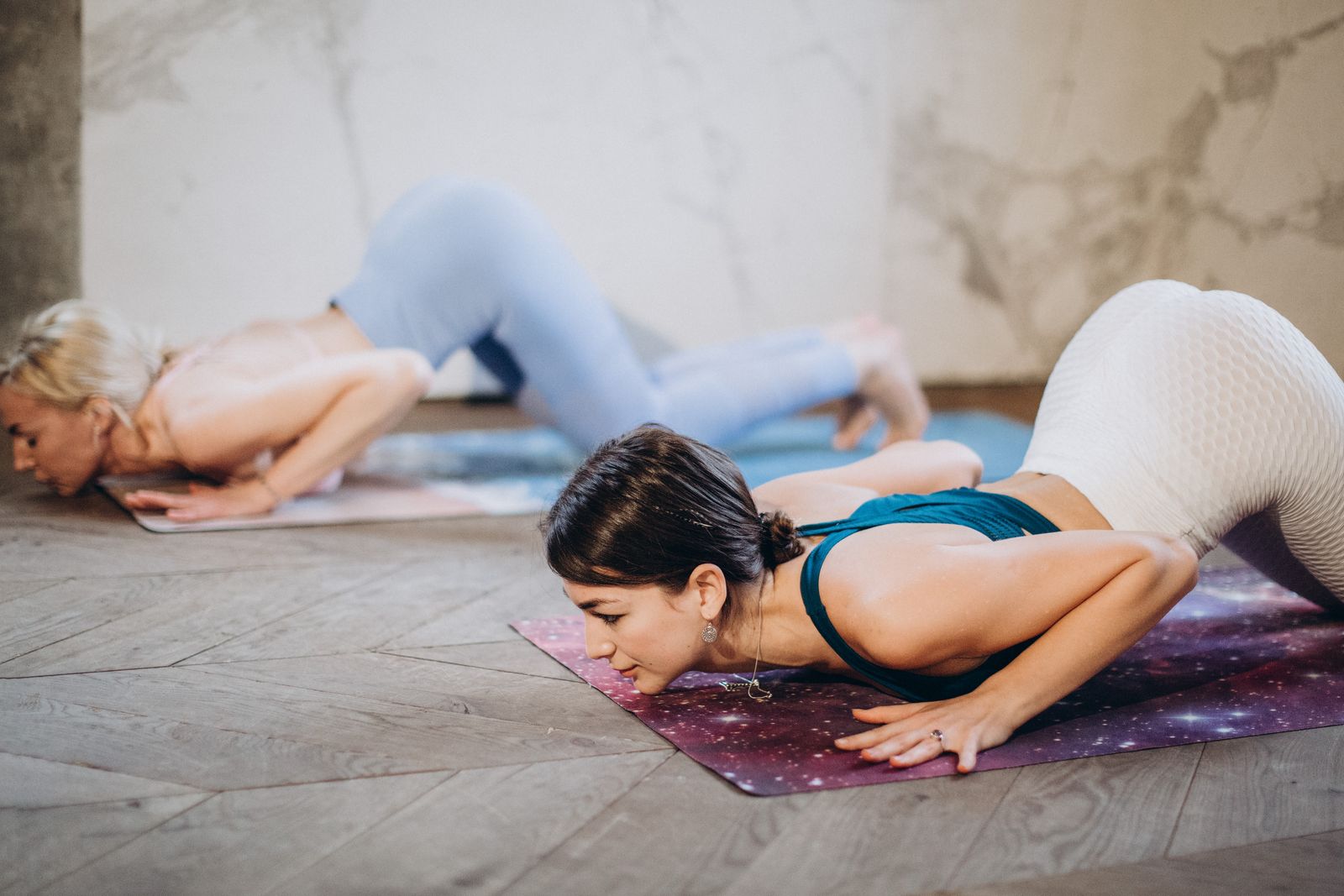
A yoga flow is a sequence of poses linked together by breath, moving from one posture to the next in a continuous rhythm instead of holding each shape as a static, isolated stretch. Rooted in vinyasa-style practice, a flow typically pairs one inhale or exhale with one movement, so the body transitions smoothly through postures like a moving meditation. Flows can run anywhere from 5 minutes to a full hour, can be gentle or athletic, seated or standing, and can be built around a theme such as hip opening, chest opening, or beginner mobility. What makes it a “flow” rather than a static class is continuity: breath drives movement, movement drives breath, and transitions matter as much as the poses themselves.
What Exactly Is a Yoga Flow?
At its core, a yoga flow is any sequence where postures are linked by breath-synchronized movement rather than practiced as separate, disconnected holds. This is the defining feature of vinyasa yoga, a style whose name is often translated as “to place in a special way,” referring to how poses are arranged in a purposeful order. In a flow class, you might move from downward dog to plank to cobra to child’s pose in a single connected wave, each transition timed to an inhale or exhale. Compare this to hatha yoga, where a pose is typically held for several breaths before moving on. Both approaches offer real benefits, but a flow’s continuous movement builds cardiovascular engagement, coordination, and body awareness in a way static holds alone do not. If you’re new to the broader landscape of practice styles, our guide to the types of yoga explains how flow-based classes compare to restorative, yin, and power formats.
How Is a Yoga Flow Sequence Actually Built?
A well-designed yoga flow sequence follows a logical arc rather than a random string of poses: a grounding or centering phase, gentle warm-ups for the spine and joints, peak poses that demand more strength or flexibility, and finally cooldown stretches and rest. This arc mirrors how the body adapts to movement, since connective tissue and muscle respond better to gradual loading than sudden intensity. A typical structure looks like this:
- Breath awareness (2-3 minutes): centering and settling into the breath before any movement begins.
- Warm-up (5-10 minutes): sun salutations or similar flows that prepare the spine and joints.
- Standing poses and balance work (10-20 minutes): the peak phase, demanding the most strength and flexibility.
- Seated or floor-based stretching (5 minutes): easing out of peak intensity.
- Closing savasana (3-5 minutes): final rest and integration.
Understanding how to create a yoga flow yourself starts with recognizing this arc, since it lets you swap poses in and out while preserving the sequence’s overall logic.
What Is a Yoga Flow Chart and How Do You Read One?
A yoga flow chart is a visual map of a sequence, usually a linear or grid layout showing each pose in order alongside cues for breath (inhale or exhale) and sometimes hold duration. Flow charts are especially useful for home practitioners and new teachers because they translate an abstract sequence into something you can glance at mid-practice without needing an instructor cueing every transition. A good flow chart typically includes the pose name (often in both English and Sanskrit), a simple stick-figure or photo reference, the breath cue, and modification notes for beginners. If you’re building your own practice from a written chart rather than a guided video, read it top to bottom once before you start moving, so your body has a rough sense of where the sequence is heading. This reduces the mental load of checking the chart mid-flow, which can interrupt the breath-movement connection a flow is meant to build.
What Does a Yoga Flow for Beginners Look Like?
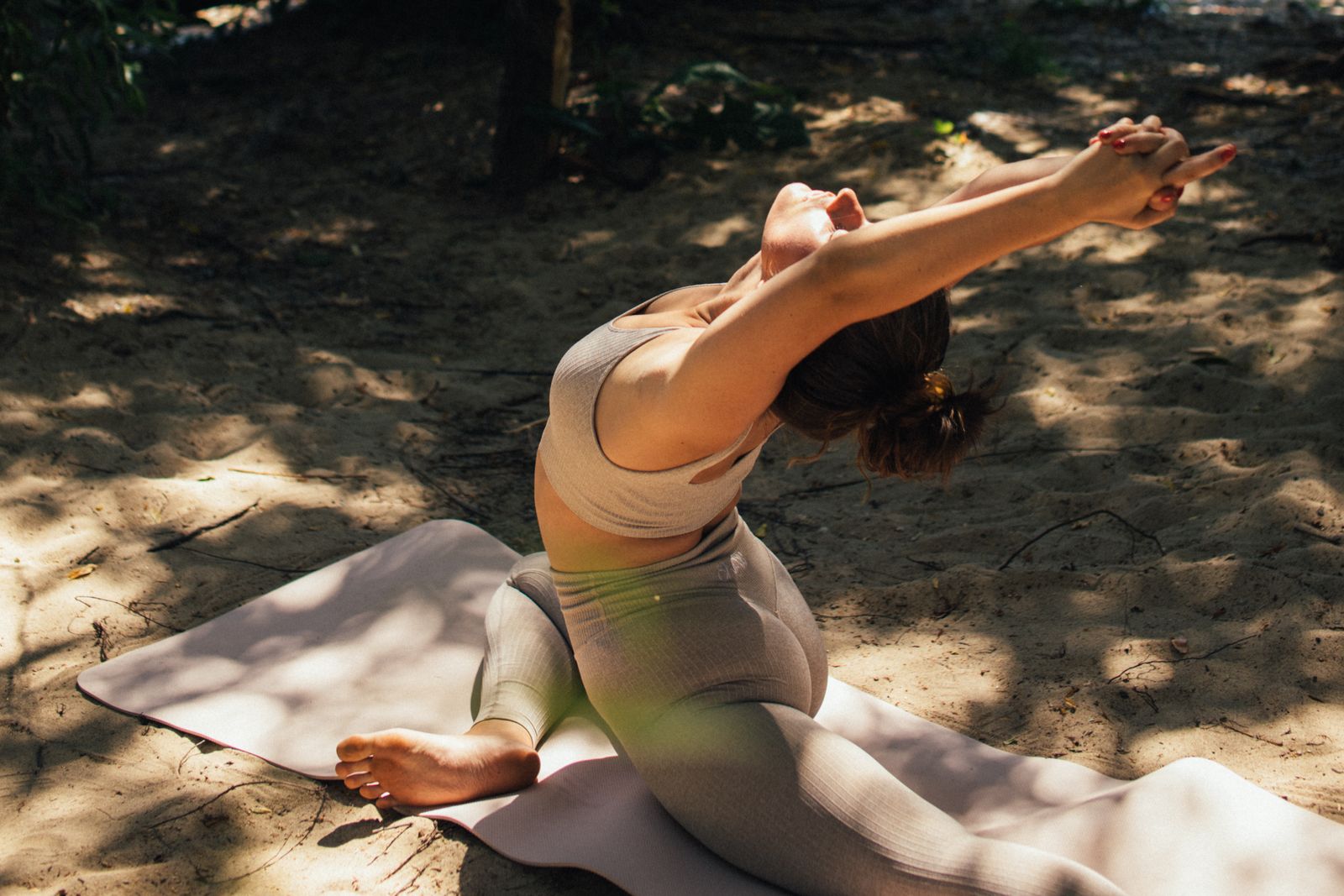
A yoga flow for beginners should prioritize fewer transitions, longer breath counts per movement, and generous use of modifications like blocks, bent knees, or a wall for balance support. Rather than a fast-paced vinyasa with complex arm balances, a beginner flow typically includes cat-cow, downward dog, low lunge, gentle twists, and a supported sun salutation where chaturanga is replaced by lowering onto the knees first. The goal in early practice isn’t to master advanced shapes, it’s to build the fundamental skill underlying every flow: linking one breath to one movement, consistently, without rushing. If you’re just starting out, our yoga for beginners guide and beginner yoga poses breakdown are good companion reads, since they cover foundational alignment cues that make later, faster flows both safer and more effective.
How Long Should a Yoga Flow Be? Exploring the 10-Minute and 30-Minute Formats
A 10-minute yoga flow is built for consistency over completeness. It typically strips a sequence down to five or six poses, moving quickly enough to raise heart rate slightly and loosen major joint groups, without extended holds or a deep cooldown. This format works well as a morning wake-up sequence or a quick reset during a work break; pairing it with a morning yoga routine is one of the simplest ways to build a daily habit without a large time commitment. A 30-minute yoga flow for beginners, by contrast, has room for a proper warm-up, a full round or two of modified sun salutations, standing balance poses, some floor work, and a real savasana at the end. This longer format is generally the sweet spot for the full physical and mental benefit of a flow class without the hour-long commitment of a traditional studio session, and it fits naturally into a broader daily yoga practice.
What Is a Creative Yoga Flow, and How Does It Differ From a Standard Sequence?
A creative yoga flow moves beyond the standard sun-salutation template to explore unconventional transitions, playful movement, and sometimes music-driven pacing. Rather than following a fixed traditional order, a creative flow might link poses by shape (all twists, then all backbends), by direction (a sequence moving only to one side before mirroring), or by a narrative theme, such as a “moon flow” built around slower, introspective movement. Creative sequencing is popular in vinyasa and power yoga studios partly because it keeps experienced practitioners engaged once the basic poses have become familiar, and partly because varied movement patterns challenge coordination and proprioception in ways that repetitive sequences eventually stop doing. If you enjoy this style, it pairs well with an evening yoga practice, since creative and theme-based flows are often designed with a calming wind-down in mind.
What Is a Chair Yoga Flow, and Who Is It For?
A chair yoga flow adapts standard poses so they can be performed seated in or supported by a chair, making the practice accessible to people with limited mobility, balance concerns, injuries, or those recovering from surgery. Instead of downward dog, a chair flow might use a seated forward fold with hands reaching toward the floor; instead of standing balance poses, it might use a seated figure-four stretch or a supported spinal twist with one hand on the chair back. Chair flows are widely used in corporate wellness settings, senior care programs, and rehabilitation contexts because they preserve the breath-movement connection central to any flow while removing the floor transitions and standing balance demands that create barriers for some bodies. This makes chair-based flows a genuinely useful entry point, not a lesser version of “real” yoga, and they’re increasingly built into corporate yoga programs as a low-barrier way to introduce movement breaks during the workday.
What Makes a Chest-Opening Yoga Flow Different, and Why Practice One?
A chest-opening yoga flow sequences poses specifically to counteract the forward-rounded posture common after long hours at a desk or looking down at a phone. Typical poses include cobra, camel, supported fish, and a cat-cow variation that exaggerates the “cow” backbend phase, all of which stretch the pectoral muscles and front of the shoulders while strengthening the muscles between the shoulder blades. Practically, a chest-opening flow tends to slot in well after a day of sitting, since tight chest muscles and rounded shoulders are strongly associated with prolonged sitting posture. Pairing this sequence with general guidance on yoga for posture and yoga for back pain gives you a fuller picture of how breath-linked movement addresses the cumulative strain of desk-bound life.
What Is a Holistic Yoga Flow?
A holistic yoga flow treats the physical sequence as one part of a larger practice that also incorporates breathwork, intention-setting, and sometimes meditation, rather than treating the poses as the entire point. Where a purely fitness-oriented flow might focus on calorie burn or strength gains, a holistic flow typically opens with a brief pranayama (breathing) practice, sets an intention for the session, moves through the physical sequence with attention to mental state as well as body, and closes with a longer meditation or reflection period rather than jumping straight up at the end of savasana. This approach draws on yoga’s broader tradition as a practice of the mind as much as the body, and it connects naturally to concepts like yoga philosophy and pranayama breathing techniques, both of which deepen what a flow can offer beyond the physical sequence alone.
How Do You Create Your Own Yoga Flow?
Building your own yoga flow starts with choosing an intention, such as energizing, calming, or targeting a specific area like hips or shoulders, since that intention shapes every pose choice that follows. From there, structure the sequence using the standard arc: centering, warm-up, peak poses, cooldown, and rest. A practical method is to pick one “peak” pose you want to work toward, such as a deeper backbend or a balance pose, then work backward, selecting preparatory poses that stretch or strengthen the muscles that peak pose demands. For example, building toward wheel pose means including chest-openers and shoulder stretches earlier in the flow, not just backbends right before the peak. Keep transitions simple at first, one breath per movement, and resist overloading a single flow with too many peak poses; one or two well-prepared peaks make for a safer sequence than five competing high-intensity poses crammed together. If you eventually want to teach, understanding sequencing principles like this is foundational to yoga teacher training curricula.
What Is the Difference Between a Yoga Flow and a Yoga Flower Practice?
“Yoga flower” is a term that occasionally gets searched by people actually looking for flow-based sequences, likely due to a common typo, but it also refers to the lotus flower as a symbolic image in yoga philosophy representing growth through difficulty, since the lotus rises clean through muddy water, and to flower-themed sequences or props used in some studios for a lighter, playful class format. If you searched “yoga flower” expecting sequencing guidance, everything above on building and following a flow sequence applies directly. If you’re interested in the symbolic side, the lotus imagery shows up frequently in yoga philosophy and in poses like lotus pose (padmasana), often used as a seated base for breathing and meditation at the start or end of a flow.
How Does Breath Actually Drive a Yoga Flow?
In a flow practice, breath isn’t just background rhythm, it’s the mechanism that paces and structures the entire sequence. The most common pattern, ujjayi breath, involves a slight constriction at the back of the throat that creates an audible, ocean-like sound on both inhale and exhale, giving practitioners an auditory cue to match movement speed to breath speed. Generally, inhales accompany expansive movements, lifting the chest, extending the spine, raising the arms, while exhales accompany contracting or folding movements, forward folds, twists, and transitions into lower postures. This pairing isn’t arbitrary: expansive movement naturally makes more room in the ribcage for an inhale, while folding movement naturally compresses the torso, supporting a fuller exhale. Practicing this pairing consistently is also why many people find flow-based classes more effective for stress relief than static stretching alone, since the sustained, controlled breathing pattern activates the parasympathetic nervous system even while the body is working.
What Are the Physical and Mental Benefits of a Regular Flow Practice?
A consistent yoga flow practice builds flexibility and strength simultaneously, since holding transitional poses like plank and chaturanga develops muscular endurance while the stretching components improve range of motion in the hips, hamstrings, and shoulders. The continuous movement also raises heart rate more than static yoga styles, giving flow practice a mild cardiovascular component that purely restorative styles don’t offer. Beyond the physical, synchronizing breath and movement demands present-moment focus that functions similarly to seated meditation, which is part of why regular practitioners often report reduced anxiety and improved sleep quality. For a deeper look, our guides to the benefits of yoga and yoga for flexibility cover the physiological side, while yoga for anxiety addresses the mental health angle specifically.
What Common Mistakes Should You Avoid When Flowing?
Common mistakes in flow practice include:
- Prioritizing speed over alignment: rushing through transitions to keep pace with a class or video instead of maintaining correct form. This is how flow-related injuries typically happen, particularly in the wrists and shoulders during chaturanga transitions.
- Holding the breath during difficult transitions: instead of maintaining the steady breath pattern that defines the practice, which defeats much of the point of flowing.
- Skipping warm-up: jumping straight into deep backbends or twists without the preparatory poses that make peak postures safe.
- Keeping up with an advanced-paced video before the body is ready: slowing the same sequence down produces the same benefits with far less injury risk.
If wrist strain is a recurring issue, our guide to yoga for wrist pain covers specific modifications for flow-heavy practices.
How Does a Yoga Flow Fit Into a Broader Weekly Routine?
A single flow class is a complete practice on its own, but weaving flow-based sessions into a broader weekly rhythm tends to produce more consistent long-term results than occasional, isolated sessions. Many practitioners pair an energizing flow in the morning with a slower, more restorative practice in the evening, alternating intensity across the week rather than doing the same style daily. This variation also reduces overuse strain on the same muscle groups and connective tissue, since a fast vinyasa flow and a slow yin session load the body very differently. If you’re building a full weekly structure, our guides to yoga for weight loss and restorative yoga offer useful counterpoints to a flow-heavy schedule, helping balance cardiovascular, strength, and recovery needs.
Questions People Ask About Yoga Flow
What is the difference between yoga flow and vinyasa?
The terms are used almost interchangeably. “Vinyasa” technically refers to the principle of linking breath to movement, while “flow” describes the resulting continuous sequence built on that principle. Most studios use “vinyasa flow” and “flow class” to mean the same thing: a breath-synchronized, continuously moving practice rather than static, separately held poses.
Can beginners do a yoga flow, or should they start with static poses first?
Beginners can start with flow-based practice, provided the sequence is beginner-paced with modifications available. Learning the breath-movement connection early builds a useful skill for all future practice. That said, mixing in some static-hold sessions helps beginners understand individual pose alignment before adding speed.
How often should I practice a yoga flow each week?
Three to four sessions per week is a commonly recommended range for building noticeable flexibility, strength, and stress-relief benefits without overloading the same muscle groups. Even two sessions a week produces measurable benefit over consistent months; the specific number matters less than showing up regularly.
Do I need any equipment to do a yoga flow at home?
A yoga mat is the only real requirement, though blocks and a strap make certain transitions more accessible, particularly for beginners working on flexibility. A chair can substitute for blocks if you don’t have props, and bare feet on a non-slip mat surface are generally sufficient for most flows.
Is a yoga flow a good workout for weight loss?
A vigorous, faster-paced flow can contribute to a calorie deficit and build lean muscle, both relevant to weight management, though it’s rarely as calorie-intensive per minute as high-intensity cardio. It’s most effective when combined with broader activity and nutrition habits rather than relied on alone.
Why do some yoga flows feel harder on some days than others?
Energy levels, sleep quality, hydration, hormonal cycles, and time of day all affect how demanding the same sequence feels. This variability is normal; a flow that feels effortless on Tuesday and effortful on Thursday doesn’t indicate a decline in ability, just natural day-to-day variation.
Try This for Yourself
Reading about breath-linked sequencing is useful, but the actual skill of flowing, timing movement to breath, building through a peak pose, and settling into a real cooldown, only develops through guided repetition. Explore FitStrot’s Online Yoga Classes to practice structured flow sequences with live instruction, at a pace suited to your current level, from wherever you are.
Related reading: Morning Yoga, Daily Yoga, Evening Yoga, Types of Yoga, and explore FitStrot’s Online Yoga Classes to build your own flow practice with expert guidance.