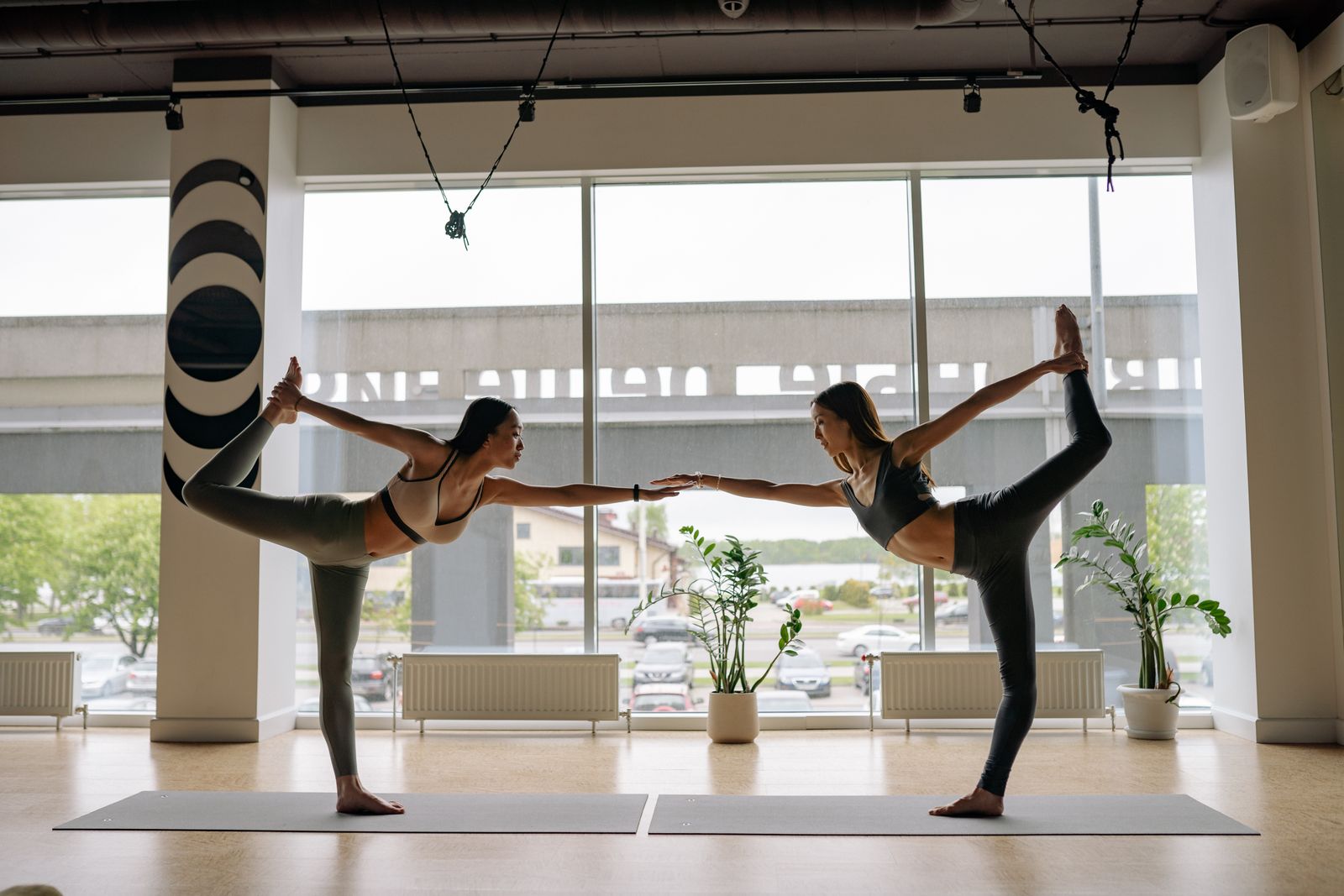
Yoga poses for two are partner-based asanas where two people share weight, balance, and breath to deepen a stretch or build trust, ranging from simple seated twists you can do with a friend to advanced acro-yoga lifts that need real spotting skill. The best starting poses for beginners are double child’s pose, seated back-to-back breathing, partner forward fold, and double tree pose, because they build communication and shared balance without requiring strength or flexibility most people don’t already have. Whether you’re practicing with a partner, a friend, a parent, or a child, partner yoga turns a solo practice into a shared one, and it works well alongside a broader yoga poses routine or as its own weekly session.
What Makes a Pose a “Yoga Pose for Two”?
A yoga pose for two, sometimes called partner yoga or duo yoga, is any asana modified so that two bodies share the work of holding, balancing, or stretching. Unlike solo yoga asanas, partner poses depend on constant, quiet communication: a nod, a shift in breath, a hand pressing slightly harder to signal “I’ve got you.” Some partner poses are mirrored versions of familiar solo poses (like a double downward dog), while others exist only in a two-person context, such as back-to-back seated twists or a partner boat pose where both people balance on their sit bones with feet touching. The common thread across every yoga pose name that gets a “partner” or “duo” prefix is shared weight-bearing: one person’s stability becomes the other person’s support.
Which Yoga Poses for Two People Are Best for Complete Beginners?
For first-timers, four poses cover almost everything you need: they are low-risk, forgiving of size and flexibility mismatches, and teach the core skill of partner yoga, which is trusting someone else’s body signals over your own ego.
- Seated back-to-back breathing – Sit cross-legged, spines pressed together, and simply breathe. This is often the first pose taught in any beginner yoga poses partner class because it requires zero flexibility and teaches synchronized breath.
- Double child’s pose – One partner in a standard child’s pose, the second partner draping gently over their back in the same shape. A deeply calming, restorative pairing.
- Partner seated forward fold – Facing each other, legs extended and touching feet, holding hands or a strap, and taking turns leaning back to assist the other’s fold.
- Double tree pose – Standing side by side, inside legs lifted into tree pose, inside arms linked or palms pressed together overhead for shared balance.
These four poses alone make a complete 15-20 minute session and are the standard entry point recommended in most partner yoga guides before progressing to weight-bearing poses.
How Do You Do the Double Downward Dog?
The double downward dog stacks one partner’s downward-facing dog on top of the other’s. The base partner holds a strong, stable downward dog with hands shoulder-width and hips lifted high. The top partner places their hands on the base partner’s lower back or sacrum (never directly on the spine) and walks their feet up the base partner’s legs until their own hips stack over the base’s hips, forming a second downward dog on top. The base partner needs solid shoulder and core strength to support the added weight; the top partner needs good balance and light feet. Start with the top partner only placing hands on the base’s back without fully lifting the feet, and build confidence gradually. This pose is a natural next step once both partners are comfortable with vinyasa yoga transitions and basic inversions.
What Are the Best Partner Yoga Poses for Two Kids?
Kids’ partner yoga should emphasize play and giggles over precision. Good options include the “seesaw” (a version of partner seated forward fold where kids rock gently back and forth holding hands), “mirror pose” (one child moves through simple shapes like cat-cow pose or cobra pose while the other copies exactly), and double boat pose, where two kids sit facing each other, hold hands, and lift their feet to touch soles, balancing on their sit bones. Because children have different proportions and attention spans than adults, sessions should stay short (10 minutes is often plenty), avoid weight-bearing poses like double downward dog until kids are older and stronger, and always be supervised by an adult familiar with basic yoga for kids safety guidelines.
What Is Acro Yoga and How Does It Differ From Partner Yoga?
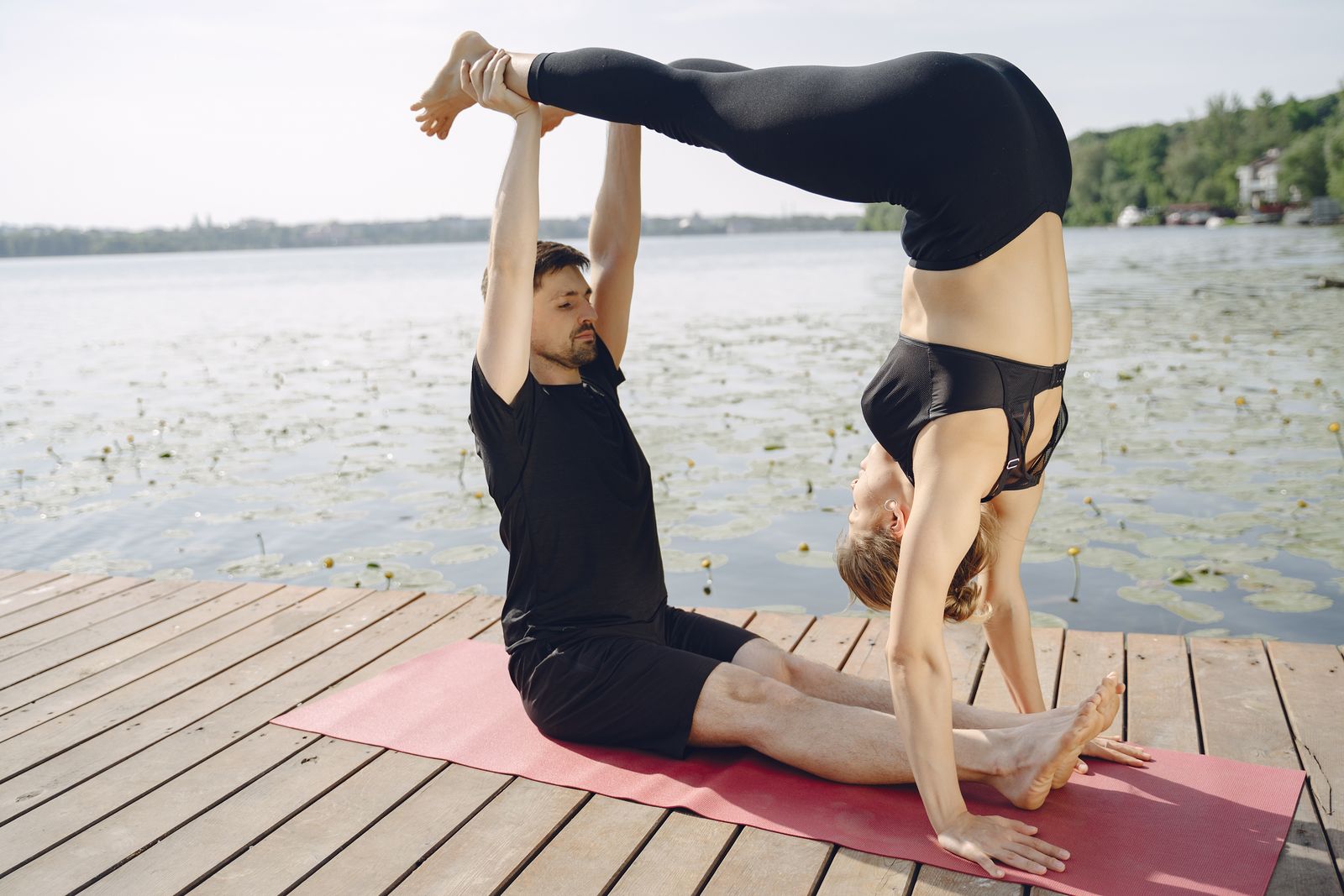
Acro yoga poses for two combine yoga, acrobatics, and Thai massage into a three-role practice: a “base” (usually lying on the ground, supporting with feet and hands), a “flyer” (the person being lifted), and sometimes a “spotter” (a third person ensuring safety, though many acro poses are practiced by pairs alone once skilled). Classic entry-level acro poses include “bird” or “front bird,” where the flyer balances on the base’s feet in a horizontal flying position, and “throne,” where the flyer sits on the base’s shin and foot in a stable seated lift. Acro yoga is meaningfully more advanced than gentle partner yoga: it requires a spotter for early attempts, a clear mat or grass surface, and a base partner with strong leg and core strength. Never attempt inverted acro lifts without in-person instruction from a certified acro yoga teacher first, since falls from height carry real injury risk.
What Are Easy Yoga Poses for Two People to Do at Home?
Home practice works best with poses that need no equipment beyond a mat or soft floor space. Easy options include:
- Partner twist – Sit back-to-back, cross-legged, and twist toward the same side, using each other’s shoulder as leverage for a deeper spinal twist.
- Double butterfly – Sit facing each other in a bound-angle position, soles of the feet touching, and gently press knees toward the floor together.
- Supported bridge – One partner lies in bridge pose while the second partner sits nearby providing a hand at the lower back for extra lift and stability.
- Standing partner forward fold – Facing each other, hold forearms and lean back simultaneously, letting body weight counterbalance a deep hamstring stretch.
None of these require prior partner yoga experience, making them a good complement to gentle yoga or restorative yoga routines already in your rotation.
How Do You Safely Progress to 100 Yoga Poses for Two People?
Most “100 yoga poses for two” lists you’ll find online are really a handful of pose families (seated, standing, forward-fold, twist, backbend, and balance/lift) repeated with small variations in hand position, leg placement, or added movement. Rather than memorizing 100 discrete shapes, it’s more useful to master the six families and their natural variations:
- Seated connection poses (back-to-back breathing, twists, forward folds) – build trust and breath sync.
- Standing balance poses (double tree, partner airplane, standing hand-to-hand balance) – build shared stability.
- Forward fold and stretch poses (partner fold, double pyramid, assisted hamstring stretch) – build flexibility with assistance.
- Backbend poses (partner camel, seated backbend over a partner’s knee, assisted wheel pose) – require more warm-up and trust.
- Weight-bearing poses (double downward dog, partner plank press, double table) – require strength and stable footing.
- Lift and acro poses (bird, throne, star) – require spotting and progression from a trained instructor.
Working through these families in order, spending two to three sessions on each before advancing, is a safer and more sustainable path than attempting to work through a long numbered list in one sitting.
What Are the Benefits of Practicing Yoga With a Partner?
Partner yoga offers benefits beyond a solo benefits of yoga session. Physically, having a partner allows for assisted stretches that go deeper than most people can achieve alone, since a partner’s gentle counter-pressure can access ranges of motion your own muscles would otherwise resist. Poses like partner forward fold or supported backbends let you use a partner’s body weight as an external anchor. Socially and emotionally, partner yoga builds nonverbal communication skills, since much of the practice depends on reading subtle shifts in a partner’s breath or muscle tension rather than speaking. Couples and families often report that partner yoga feels less like exercise and more like shared time, similar in spirit to how yoga for stress relief works, but with the added layer of co-regulation: when one person’s nervous system calms, it can help the other’s calm too.
What Should You Know Before Trying Partner Yoga for the First Time?
A few ground rules make the first session safer and more enjoyable. First, pick a partner whose weight is reasonably close to your own for weight-bearing poses, or simply avoid weight-bearing poses if there’s a large mismatch and stick to seated and standing balance poses instead, which work regardless of size difference. Second, communicate constantly and specifically: “a little less pressure” or “hold here” is more useful than a general grunt of discomfort. Third, warm up separately first with a few rounds of sun salutations or gentle joint circles before attempting any partner stretch, since cold muscles are more prone to strain. Finally, treat any pain (as opposed to a normal stretch sensation) as a stop signal, not something to push through, a principle that applies equally to yoga for beginners practicing solo or with a partner.
How Long Should a Two-Person Yoga Session Last?
A beginner partner yoga session works well at 20-30 minutes: five minutes of separate warm-up, 15-20 minutes moving through four to six partner poses, and five minutes of shared relaxation such as double child’s pose or lying back-to-back in a modified savasana. As comfort and strength build, sessions can extend to 45-60 minutes to include a wider pose selection or an acro yoga segment. Unlike solo practice, partner sessions tend to naturally self-limit in length, since coordinating two people’s timing and communication is itself tiring in a way that solo hatha yoga is not.
Can You Practice Partner Yoga Poses Online?
Yes, and it has become one of the more popular ways to learn partner yoga safely, since an instructor can talk both partners through hand placement, weight distribution, and common mistakes in real time without either person needing to already know the pose. Online partner yoga classes work particularly well for couples, roommates, or parent-child pairs who want structured guidance without booking an in-person studio slot. It also pairs naturally with an existing online yoga classes routine, letting you alternate solo practice days with partner practice days.
Questions People Ask About Yoga Poses for Two
Do you need to be flexible to try yoga poses for two?
No. Many of the best beginner partner poses, like seated back-to-back breathing or double child’s pose, require no flexibility at all. Partner yoga is more about communication, balance, and shared weight than deep stretching, and flexibility naturally improves with regular practice rather than being a prerequisite to start.
Can two people with very different body sizes do partner yoga together?
Yes, though weight-bearing poses like double downward dog work best with partners of similar size. Pairs with a bigger size difference can still do the full range of seated, standing balance, and stretch-assist poses, which depend on positioning and trust rather than matched weight, and simply skip or modify lift-based poses.
What is the easiest yoga pose for two beginners to start with?
Seated back-to-back breathing is generally considered the easiest starting pose. Both partners sit cross-legged with spines touching and simply breathe together for one to two minutes, building comfort with physical closeness and synchronized breath before attempting any pose that involves balance or weight-sharing.
Is acro yoga safe to try without a teacher?
Basic seated and standing partner poses are safe to try at home, but acro yoga poses that involve lifting a partner off the ground carry real fall risk and should be learned with a certified acro yoga instructor or experienced practitioner present, ideally on a soft surface like grass or padded mats.
How many yoga poses for two people should a beginner learn first?
Four to six poses are enough for a complete first session: a seated connection pose, a standing balance pose, a forward-fold or stretch pose, and a relaxation pose. Mastering this small set builds the trust and communication skills needed before progressing to backbends, weight-bearing poses, or acro yoga lifts.
Try This for Yourself
Reading about partner poses only goes so far: the coordination, timing, and trust of two-person yoga are best learned with real-time guidance. Book an online yoga class with FitStrot and work through beginner-friendly partner poses with an instructor who can talk you and your partner through hand placement, weight distribution, and safe progression, whether you’re practicing with a partner, a friend, or your kids.
Related reading: yoga poses, yoga asanas, yoga poses names, types of yoga, and FitStrot’s online yoga classes.