Sitting yoga poses are seated asanas practiced on the floor or a mat that build hip flexibility, spinal alignment, and calm focus without any standing or balancing work. They form the foundation of most yoga sequences because a stable, comfortable sitting position is what makes breathing exercises, meditation, and forward bends possible in the first place. Poses like Sukhasana (Easy Pose), Padmasana (Lotus), Vajrasana (Thunderbolt), and Baddha Konasana (Bound Angle) are the most commonly taught sitting yoga asanas, and each targets a slightly different combination of hip opening, spinal length, and digestive or nervous-system benefit. Because they don’t require standing balance, seated poses are especially accessible for beginners, older adults, people recovering from injury, and anyone practicing at a desk or in a small space.
What Exactly Is a Sitting Yoga Pose?
A sitting yoga pose, or seated asana, is any posture performed with the body’s base of support resting on the floor, typically through the sit bones, hips, shins, or a combination of these. Unlike standing poses that demand balance and leg strength, sitting yoga poses prioritize stillness, hip mobility, and spinal alignment. Most traditional hatha yoga sequences begin or end in a seated position because it’s easier to observe the breath and settle the nervous system when the body isn’t working to stay upright. In classical yoga texts, seated postures are often grouped separately from standing and balancing asanas precisely because their primary purpose is meditative readiness rather than strength-building, though many seated poses do build real hip and core strength over time.
Why Practice Yoga in a Sitting Position?
Practicing yoga in a sitting position offers a distinct set of benefits compared to standing or inverted work. Seated poses gently open the hip flexors and rotators, which tend to shorten from long hours in chairs or cars. They also encourage a neutral pelvic tilt, which supports better posture throughout the day. Because the base of support is wide and low, sitting poses carry a lower injury risk than standing balances, making them a safer entry point for beginners, pregnant practitioners, and people managing joint pain. They’re also the natural setting for pranayama (breathing practices) and meditation, since a stable seat frees the mind from the work of balancing. If you’re building a home practice around yoga for back pain or general beginner yoga poses, seated asanas are typically where a teacher will start you.
What Are the Most Common Sitting Yoga Asanas?
The seated asanas that appear most often in beginner classes and yoga teacher training syllabi include Sukhasana, Padmasana, Ardha Padmasana, Vajrasana, Baddha Konasana, Dandasana, Paschimottanasana, and Ardha Matsyendrasana. Each has a distinct hip and spine action:
- Sukhasana (Easy Pose): simple cross-legged sitting, ideal for meditation and pranayama.
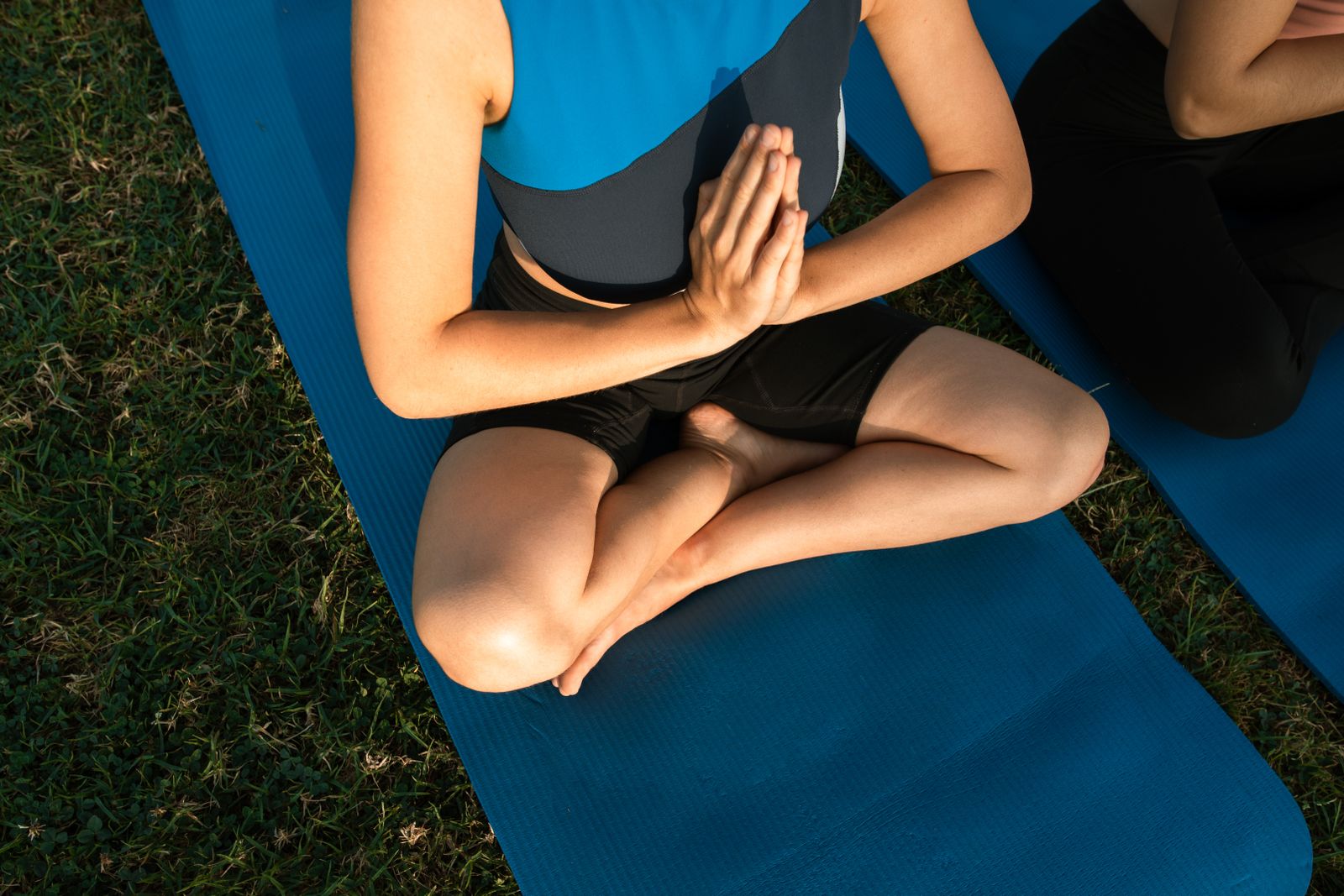
- Padmasana (Lotus Pose): each foot rests on the opposite thigh, deeply opening the hips.
- Ardha Padmasana (Half Lotus): one foot on the opposite thigh, the other tucked underneath, a gentler alternative to full lotus.
- Vajrasana (Thunderbolt Pose): kneeling with hips resting on the heels, traditionally practiced after meals to aid digestion.
- Baddha Konasana (Bound Angle / Butterfly Pose): soles of the feet pressed together, knees dropping toward the floor.
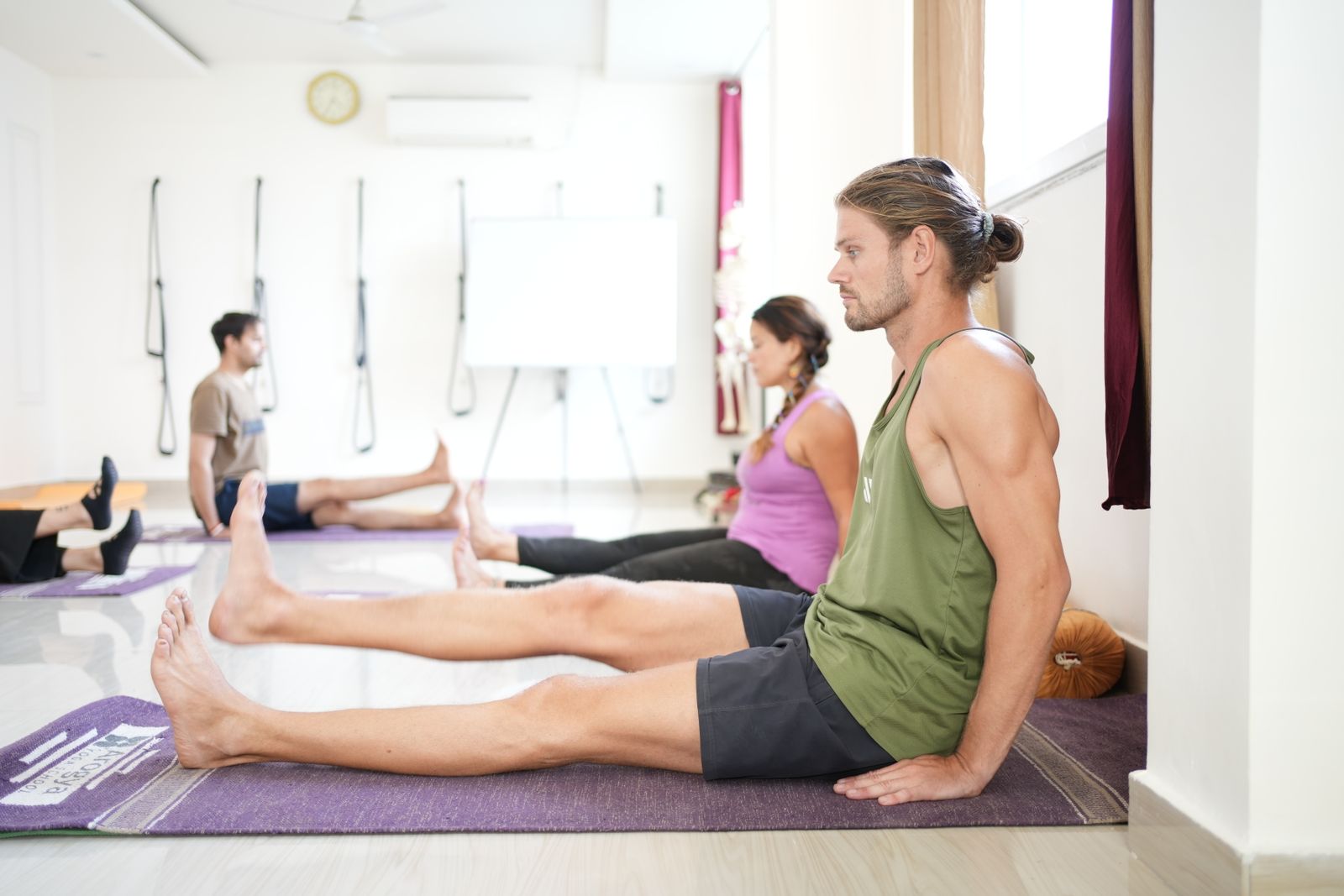
- Dandasana (Staff Pose): legs extended straight forward, spine upright, considered the seated equivalent of Tadasana (Mountain Pose).
- Paschimottanasana (Seated Forward Bend): a full forward fold over extended legs that stretches the entire back body.
- Ardha Matsyendrasana (Half Lord of the Fishes Pose): a seated spinal twist that mobilizes the vertebrae and stimulates the abdominal organs.
For a broader view of how these fit into the full spectrum of postures, see our guides to yoga poses, yoga asanas, and yoga poses names.
How Do You Sit Correctly for Yoga? (Sukhasana Step-by-Step)
Sukhasana, or Easy Pose, is usually the first seated position taught in any yoga class because it establishes the alignment principles that carry into every other seated asana. To practice it: sit on the floor or a folded blanket, cross your shins so each foot tucks beneath the opposite knee, and let your knees relax open and down toward the floor. Lengthen your spine as if a string is gently pulling the crown of your head upward, stack your shoulders over your hips, and rest your hands on your knees, palms up or down. Keep your chin level and your jaw soft. If your knees sit noticeably higher than your hips, sit on a cushion or folded blanket to tilt the pelvis slightly forward, which takes pressure off the lower back and knees. Hold for 30 seconds to several minutes, breathing evenly through the nose.
What Is the Correct Yoga Sitting Position for Meditation?
For meditation, the correct yoga sitting position prioritizes a long, unsupported spine over how the legs are folded. Sukhasana, Ardha Padmasana, and Vajrasana are all acceptable meditation seats; the choice comes down to hip flexibility and comfort over extended periods. The key alignment cues are the same regardless of leg position: hips slightly higher than knees (using a cushion if needed), a neutral pelvic tilt so the lower back isn’t rounded or overarched, shoulders relaxed away from the ears, and the crown of the head reaching upward. Many meditation teachers also recommend resting the hands in a mudra, such as Gyan Mudra with thumb and index finger touching, to keep the arms relaxed rather than gripping the knees. If sitting on the floor is uncomfortable, a chair with feet flat on the ground works just as well; the goal is a stable, alert seat, not a specific leg fold.
What Are the Benefits of Sitting Yoga Poses?
Seated yoga poses offer benefits across flexibility, posture, digestion, and mental focus. Regular practice of hip-opening poses like Baddha Konasana and Padmasana gradually increases external rotation in the hip joint, which can ease tightness from prolonged sitting. Forward bends such as Paschimottanasana stretch the hamstrings and lower back, and are commonly cited as helpful for people who sit at desks for long periods. Twists like Ardha Matsyendrasana mobilize the thoracic spine and are traditionally associated with supporting digestion, though this effect is best understood as a gentle massage of the abdominal organs rather than a clinically proven digestive treatment. Seated poses also lower the physical demand of practice, which makes them well-suited to calming the nervous system; combined with slow breathing, they’re a common entry point into yoga for stress relief and yoga for anxiety.
Which Sitting Yoga Poses Are Best for Beginners?
Beginners generally start with Sukhasana, Vajrasana, Dandasana, and a supported version of Baddha Konasana, because these poses ask the least of hip and hamstring flexibility while still teaching correct spinal alignment. Padmasana (full Lotus) is usually introduced later, once a student has built enough hip external rotation to fold the leg without straining the knee joint; forcing full lotus too early is one of the most common causes of knee discomfort in new practitioners. A reasonable beginner progression looks like this: start with Sukhasana and Dandasana to learn spinal alignment, add Vajrasana and Baddha Konasana to build hip and ankle mobility, then introduce Ardha Padmasana, and only attempt full Padmasana once Ardha Padmasana feels effortless. Props are not a shortcut; a folded blanket under the hips or a bolster under the knees is standard practice at every level, not just for beginners.
How Do You Modify Sitting Poses If You Have Tight Hips or Knee Pain?
Tight hips and cranky knees are the two most common obstacles to comfortable seated practice, and both have straightforward modifications. For tight hips, sit on the edge of a folded blanket, cushion, or yoga block; raising the hips above the knees reduces the stretch demand on the hip flexors and makes poses like Sukhasana and Baddha Konasana noticeably more comfortable. For knee pain, avoid any pose that folds the knee joint sharply until the surrounding hip muscles have opened, and place a rolled blanket under the outer knee in cross-legged poses to support the joint rather than letting it hang unsupported. In Vajrasana, a folded blanket between the calves and thighs, or between the ankles, reduces pressure on the knee and ankle joints. If a seated floor pose is simply not accessible, chair variations of the same poses preserve most of the postural and breathing benefits; this is the basis of chair yoga.
How Long Should You Hold a Sitting Yoga Pose?
For general flexibility and posture work, most seated poses are held between 30 seconds and 2 minutes per side or repetition. Meditation-focused seats like Sukhasana or Ardha Padmasana are often held for 5 to 20 minutes or longer as concentration builds, since the goal shifts from stretching to stillness. Restorative variations, such as a supported Baddha Konasana with blocks under the knees, are frequently held for 3 to 5 minutes to allow the nervous system to fully settle. As a general rule, static stretches held under 30 seconds mainly improve short-term range of motion, while holds of a minute or longer are more strongly associated with lasting flexibility gains. Beginners should prioritize consistent shorter holds with correct alignment over long holds in a compromised position.
Can Sitting Yoga Poses Help With Digestion and Posture?
Several seated poses are traditionally linked to improved digestion and posture, and the mechanical reasoning behind this holds up reasonably well. Twisting poses like Ardha Matsyendrasana compress and then release the abdominal organs as the torso rotates, which is commonly described as a gentle internal massage that may support gut motility. Vajrasana is traditionally recommended for sitting in after meals, since the upright kneeling position keeps the torso from compressing the stomach the way slouching does. For posture, seated poses that emphasize a neutral pelvic tilt and lengthened spine, such as Dandasana, directly train the postural habits that carry over into everyday sitting at a desk or in a car. None of these effects should be treated as medical claims; think of them as reasonable, traditionally supported explanations for why seated practice feels good after a meal or a long day at a desk.
What’s the Difference Between Sitting Yoga Poses and Chair Yoga?
Sitting yoga poses are traditionally practiced on the floor or a mat with the legs folded, crossed, or extended, while chair yoga adapts the same postural and breathing benefits to a seated chair position for people who cannot easily get down to or up from the floor. Chair yoga is not a lesser version of floor-based seated practice; it’s a legitimate adaptation widely used in corporate wellness programs, senior fitness classes, and rehabilitation settings. Many of the same asanas named in this article, including seated twists, seated forward bends, and simple hip openers, have direct chair equivalents. If your goal is a practice you can do at a desk during the workday, chair-based variations deliver similar circulation, posture, and stress-relief benefits without needing a mat on the floor.
How Do Sitting Yoga Poses Fit Into a Full Practice?
Sitting yoga poses typically appear at three points in a full yoga session: as a grounding opening, as a mid-practice cooldown between more dynamic sequences, and as a closing sequence before final relaxation. A class might open in Sukhasana for a few minutes of breath awareness, move through standing poses and perhaps a vinyasa yoga flow, then return to the floor for seated forward bends, hip openers, and twists to cool the body down before Savasana (Corpse Pose). This structure mirrors the traditional progression found in many hatha yoga sequences, where standing poses build heat and strength while seated poses restore calm and mobility. If you practice styles like yin yoga or restorative yoga, seated poses often make up the majority of the session rather than a small bookend.
Are Sitting Yoga Poses Good for Online and Corporate Yoga Classes?
Sitting yoga poses are particularly well suited to online and corporate yoga formats because they require minimal space, no standing balance, and can be modified to a chair without losing much of their benefit. A 20-minute seated sequence covering hip openers, a gentle twist, and a forward bend fits easily into a lunch break and needs nothing more than a chair or a small patch of floor. This is one of the reasons seated asanas feature heavily in workplace wellness programs and virtual classes aimed at reducing the physical toll of a desk job. If your organization is exploring group sessions, our corporate yoga and online yoga classes guides walk through how these formats are typically structured for teams working from home or the office.
What Mistakes Should You Avoid in Sitting Yoga Poses?
The most common mistake in seated poses is letting the lower back round into a slouch rather than maintaining a neutral spine; this single error undermines nearly every benefit a seated pose is meant to provide. A close second is forcing the knees down in cross-legged or lotus-style poses before the hips have the flexibility to allow it, which places unwanted torque on the knee ligaments instead of the hip joint where the stretch belongs. Holding the breath while concentrating on alignment is another frequent habit worth unlearning early, since steady breath is arguably the more important half of any seated posture. Finally, skipping props out of a belief that blankets and blocks are only for less capable practitioners is a mistake at every experience level; even advanced practitioners use a cushion under the hips in Sukhasana to protect the lower back over a long meditation sit.
Questions People Ask About Sitting Yoga Poses
What is the easiest sitting yoga pose for beginners?
Sukhasana (Easy Pose) is widely considered the easiest sitting yoga pose because it only requires crossing the shins comfortably and lengthening the spine. It needs no special hip flexibility, can be modified with a cushion under the hips, and is used as the default seat for meditation and breathing exercises in most beginner classes.
What is the difference between Sukhasana and Padmasana?
Sukhasana is a simple cross-legged seat with the shins crossed and feet tucked under the opposite knees, requiring minimal hip flexibility. Padmasana (Lotus Pose) places each foot on top of the opposite thigh, demanding significantly more hip external rotation. Padmasana is typically introduced only after a student is comfortable in Ardha Padmasana, its half-lotus precursor.
Can sitting yoga poses help with back pain?
Many seated poses, particularly Dandasana and gentle seated twists, encourage a neutral spine and can ease tension from prolonged sitting. They are commonly used in gentle back-care sequences, though anyone with a diagnosed spinal condition should get individualized guidance before attempting deep forward bends or twists.
How many sitting yoga poses are there?
There isn’t one fixed number, since seated asanas and their variations run into dozens across different yoga traditions, but eight to ten poses, including Sukhasana, Padmasana, Vajrasana, Baddha Konasana, Dandasana, Paschimottanasana, and Ardha Matsyendrasana, cover the core seated postures taught in most beginner and intermediate classes.
Is it okay to sit on a cushion during seated yoga poses?
Yes, sitting on a folded blanket, cushion, or yoga block is standard practice, not a beginner-only crutch. Elevating the hips above the knees reduces strain on tight hip flexors and protects the lower back, and many experienced practitioners continue using props in seated poses indefinitely, especially for longer meditation sits.
Why do my knees hurt in cross-legged yoga poses?
Knee pain in cross-legged poses usually comes from limited hip external rotation forcing the knee joint to compensate for a stretch that should happen at the hip. Sitting on a cushion to raise the hips, supporting the outer knee with a folded blanket, and avoiding forced full lotus before the hips are ready typically resolves this.
Try This for Yourself
Reading about seated poses only goes so far; the real difference in flexibility, posture, and calm comes from consistent, guided practice. If you’d like a structured way to build these poses into your week with expert correction on your alignment, explore FitStrot’s online yoga classes and start your first seated practice session with a certified instructor.
Related reading: yoga poses, yoga asanas, yoga poses names, beginner yoga poses, and FitStrot’s online yoga classes.