Yoga for sciatica works by gently lengthening the piriformis and hamstring muscles, decompressing the lower spine, and improving circulation around the compressed nerve root, which together reduce the shooting pain, tingling, and numbness that travel from the lower back down the leg. Poses like reclined pigeon, supine twist, and child’s pose are widely recommended for sciatic pain, while deep forward folds and unsupported spinal twists are usually best avoided during a flare-up. Most people notice some relief within two to four weeks of consistent, gentle practice, though severe or worsening symptoms should always be checked by a doctor first.
What Is Sciatica and Why Does It Cause Leg Pain?
Sciatica refers to pain that radiates along the path of the sciatic nerve, which runs from the lower back through the hips and buttocks and down each leg. It is usually caused by a herniated disc, bone spur, or spinal stenosis pressing on part of the nerve, though in many cases the piriformis muscle deep in the buttock tightens and irritates the nerve directly, a pattern often called piriformis syndrome. Symptoms typically appear on only one side and can include a burning or electric sensation, numbness, or a dull ache that worsens with prolonged sitting. Yoga for sciatica pain relief targets both the structural compression and the muscular tightness that keep the nerve irritated, which is why a well-sequenced practice can help where static stretching alone often falls short.
Can Yoga Actually Help With Sciatica Pain?
Yes, for many people yoga is one of the more effective non-surgical approaches to sciatica, largely because it addresses the underlying muscular imbalances rather than just masking the pain. Research on yoga for chronic low back pain, including a widely cited randomized trial published in the Annals of Internal Medicine, found that structured yoga classes produced meaningful improvements in back-related function compared with usual care. While sciatica is a more specific condition than general low back pain, similar mechanisms are commonly cited as relevant: gentle stretching reduces muscle guarding, controlled movement supports disc health, and mindful breathing lowers the nervous system’s pain sensitivity. That said, yoga is a complement to medical care, not a replacement for it, especially if numbness, weakness, or loss of bladder control ever occurs.
What Are the Best Yoga Asanas for Sciatica?
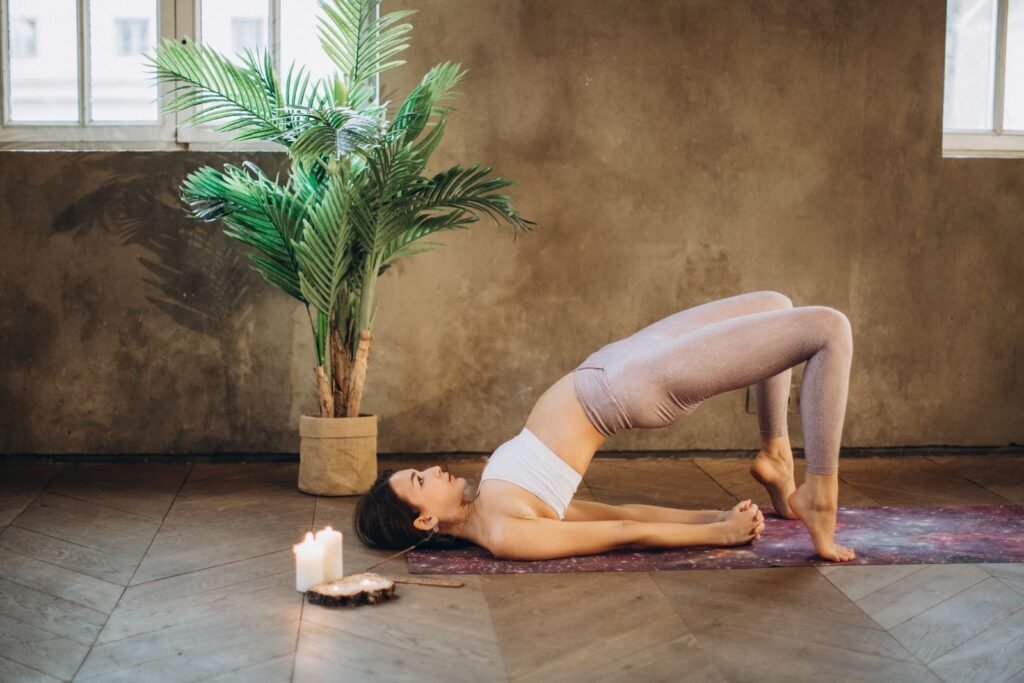
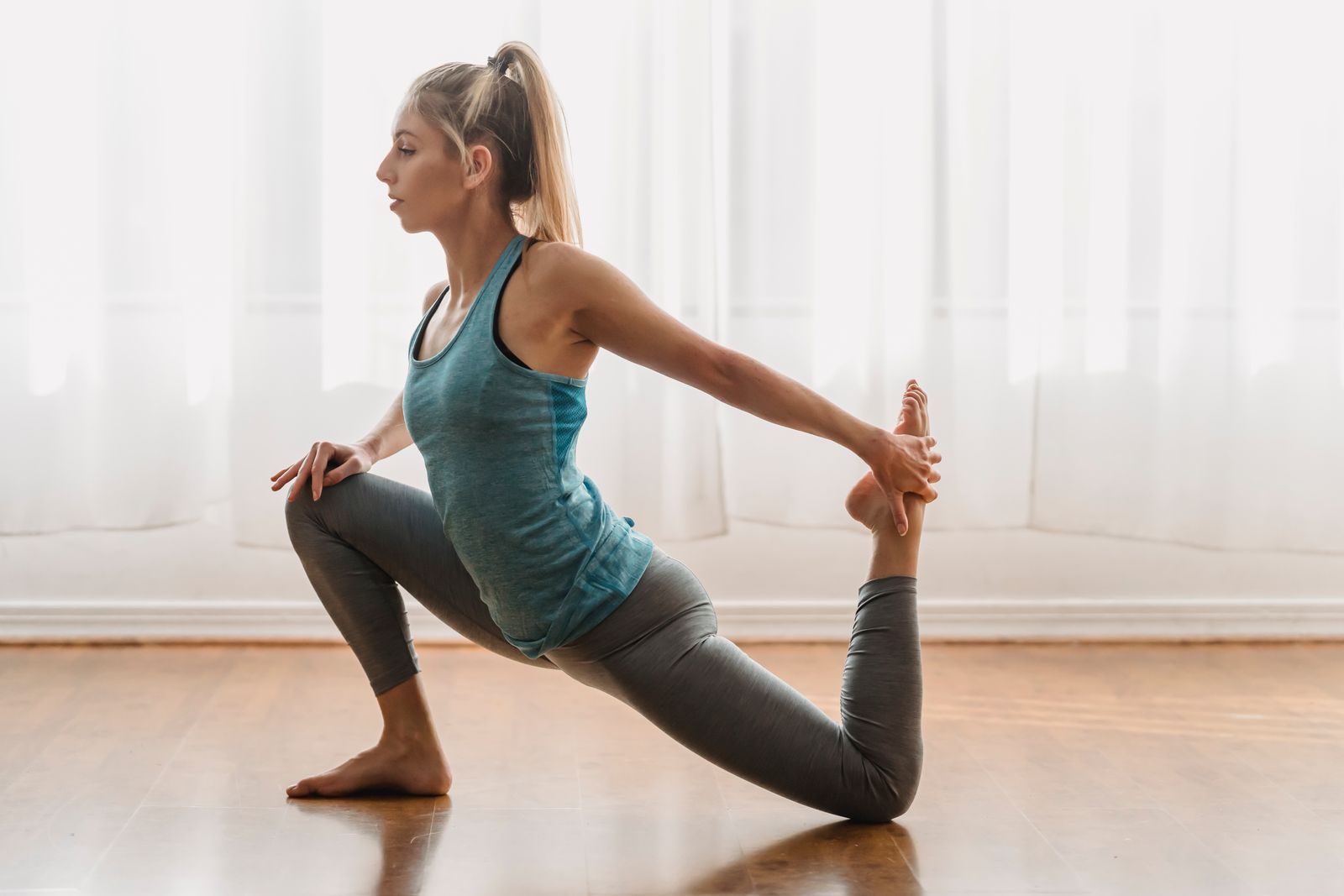
The most effective yoga asanas for sciatica share one trait: they stretch the piriformis, glutes, and hamstrings without compressing the lower spine. Reclined pigeon pose (Supta Kapotasana) is usually the first pose recommended because it isolates the piriformis while the spine stays supported on the floor. Supine hand-to-big-toe pose (Supta Padangusthasana) lengthens the hamstring on the affected side and can be done with a strap for beginners. Cat-cow flow mobilizes the lumbar spine gently, and a supported bridge pose strengthens the glutes, which stabilizes the pelvis and takes pressure off the sciatic nerve over time. For anyone building a broader home practice, pairing these targeted poses with a foundational routine like the one outlined in yoga for back pain gives the lower back consistent, well-rounded support.
Which Yoga Poses for Sciatica Work Best for Beginners?
Beginners yoga for sciatica should start with floor-based, supported poses rather than standing balances, since lying down removes gravity’s compressive load from the spine. A good beginner sequence looks like this:
- Child’s pose with knees wide — 2 minutes
- Cat-cow flow — 10 rounds
- Reclined pigeon, each side — 1 minute per side
- Supine twist, each side — 1 minute per side
- Legs-up-the-wall to finish — 5 minutes
None of these require flexibility or strength to begin, and all can be modified with a bolster, blanket, or wall for support. If you’re new to yoga generally, it also helps to understand the different approaches available; a primer like types of yoga can help you choose a style, such as restorative or gentle hatha, that suits a sensitive back rather than a fast-paced vinyasa flow.
Sciatica Yoga Poses to Avoid
Not every yoga pose is safe during a sciatica flare-up, and this is one of the most searched questions on the topic for good reason. Deep forward folds like standing Uttanasana or seated Paschimottanasana can round the lower spine excessively and increase disc pressure on the nerve root. Unsupported deep twists, especially closed twists where you wrap an arm around a bent knee, can compress the space where the nerve exits the spine. Poses that combine flexion and rotation together, such as a fast-paced revolved triangle, are particularly risky. Intense backbends like full wheel pose should also wait until acute pain has settled, since they can aggravate an already irritated nerve if the surrounding muscles aren’t yet stable. The safest rule during a flare-up: if a pose sharpens the shooting pain rather than easing it, stop immediately and return to a neutral, supported position like child’s pose.
How Does Yoga Compare to Other Sciatica Pain Treatments?
Sciatica pain treatment in yoga differs from other common approaches in that it targets movement and muscular balance rather than solely managing inflammation or pain signals. Here is how it compares with other common options:
| Treatment | How It Works | Best For |
|---|---|---|
| Yoga | Targets movement and muscular balance through stretching, strengthening, and breathwork | Mild-to-moderate cases seeking a non-invasive, long-term approach |
| Physical therapy | Movement-based rehab that often overlaps with therapeutic yoga sequences | Cases needing structured, supervised rehabilitation |
| OTC anti-inflammatories, heat/ice | Reduce acute inflammation and pain signals temporarily | Short-term symptom relief during a flare-up |
| Epidural steroid injections / surgery | Directly addresses severe nerve compression | Severe cases that don’t respond to conservative care |
For most mild-to-moderate cases, a combination of gentle yoga, walking, and posture correction is a sensible starting point before more invasive sciatica pain treatment options are considered.
How Long Does It Take for Yoga to Relieve Sciatica?
Most people practicing a consistent, gentle yoga routine notice a meaningful reduction in sciatic pain within two to four weeks, though this varies widely depending on the underlying cause and how long the pain has been present. Acute sciatica triggered by a minor disc irritation often improves faster than chronic sciatica linked to spinal stenosis or long-standing piriformis tightness. Practicing for 15 to 20 minutes daily tends to produce better results than a single long session once a week, since the nerve and surrounding muscles respond to frequent, gentle input rather than occasional intense stretching. If there’s been no improvement after four to six weeks of regular practice, or if symptoms are worsening, it’s a sign to consult a doctor or physical therapist rather than continuing the same routine unsupervised.
Sciatica Ke Liye Yoga: A Daily Sequence You Can Follow
For those searching sciatica ke liye yoga or sciatica ka yoga, here is a simple daily sequence that works well for most mild-to-moderate cases. Begin with five minutes of slow diaphragmatic breathing in a comfortable seated or lying position to calm the nervous system before stretching. Move into cat-cow for two minutes to warm the spine, then hold reclined pigeon for one minute per side, followed by supine hand-to-big-toe stretch for one minute per side. Add a gentle supine twist for one minute per side, and finish with five to ten minutes of legs-up-the-wall pose, which drains tension from the lower back and calms the nervous system. This sequence takes about 20 minutes and can be done every morning or evening, ideally on a firm, supportive mat rather than a soft bed.
What Role Does Breathing Play in Sciatica Relief Yoga?
Breath control is often the most overlooked part of sciatica relief yoga, yet it directly affects how much tension the body holds around the compressed nerve. Shallow chest breathing keeps the nervous system in a mild stress response, which increases muscle guarding around the spine and hips. Slow diaphragmatic breathing, where the belly expands on the inhale and softens on the exhale, activates the parasympathetic nervous system and reduces this protective muscle tension. Pairing each stretch with a slow exhale, rather than holding the breath, allows the muscle being stretched to lengthen more fully without triggering a stretch reflex that tightens it back up. This is also why practices like pranayama for beginners are often recommended alongside physical sciatica sequences rather than as a separate, unrelated practice.
Can Yoga Prevent Sciatica From Coming Back?
Yoga’s biggest long-term value for sciatica may be prevention rather than just relief during a flare-up. Sciatica has a high recurrence rate, particularly when the piriformis and hip muscles remain chronically tight or when core stability is weak, since both patterns place repeated stress on the lower spine and hips. A regular practice that combines gentle strengthening, such as bridge pose and bird-dog, with consistent stretching of the hips and hamstrings addresses both risk factors at once. Building general postural awareness also helps, since many sciatica flare-ups are linked to prolonged sitting with poor spinal alignment. Complementary practices like yoga for posture and core strengthening yoga reinforce this preventive effect by keeping the muscles that support the spine engaged throughout the day, not just during a formal practice session.
Is Yoga Safe for Sciatica During Pregnancy?
Sciatica is common in the second and third trimesters of pregnancy because the growing uterus can place direct pressure on the sciatic nerve, and hormonal changes loosen the ligaments supporting the pelvis. Prenatal-safe yoga for sciatica avoids deep twists, prone poses, and any position that compresses the abdomen, focusing instead on side-lying stretches, gentle hip openers like a supported figure-four stretch, and pelvic tilts on hands and knees. A prenatal yoga teacher or a program specifically designed for pregnancy, such as the guidance found in prenatal yoga, is strongly recommended over following a general sciatica sequence, since anatomical and safety considerations differ significantly during pregnancy.
How Does Yoga for Sciatica Fit Into a Broader Wellness Routine?
Yoga for sciatica works best as one part of a broader approach to spinal health rather than an isolated fix. Maintaining a healthy body weight reduces the mechanical load on the lower spine and discs, which is one reason practices like yoga for weight loss can indirectly support sciatica recovery over time. Improving circulation throughout the legs also helps reduce the swelling and stiffness that can accompany prolonged nerve irritation, an area where yoga for varicose veins shares several relevant poses, including legs-up-the-wall and gentle inversions. Since chronic pain and stress are closely linked, and tension headaches often accompany a flare of back-related pain, exploring yoga for migraine can round out a practice aimed at calming the entire nervous system rather than just the lower back.
Should You Try Online or In-Person Yoga for Sciatica?
Both formats can be effective, but the right choice depends on how confident you feel modifying poses safely. Online yoga for sciatica works well for people who already understand basic alignment cues and want the convenience of practicing at home with props like bolsters, blocks, and straps close at hand. In-person or one-on-one sessions are usually better when sciatica is new, severe, or accompanied by numbness, since a teacher can physically check alignment and adjust the pose in real time. Many people find a hybrid approach works best: starting with a few guided one-to-one sessions to learn safe modifications, similar to the personalized attention described in one-on-one personal training, before transitioning to regular online yoga for sciatica pain relief once the sequence feels familiar and safe.
What Props Help Most When Practicing Yoga for Sciatica?
Props make sciatica-focused yoga safer and more effective, particularly for beginners or anyone in an active flare-up. A bolster or firm cushion under the knees during reclined pigeon reduces strain on the hip joint while still stretching the piriformis. A yoga strap looped around the foot in supine hand-to-big-toe pose lets people with tight hamstrings stretch the back of the leg without straining to reach the foot, which can otherwise round the lower back and increase nerve compression. Blocks placed under the hands or hips in supported bridge pose add stability for anyone with weaker core or glute muscles. A rolled blanket placed under the lower back during gentle twists keeps the spine in a neutral, supported position rather than allowing it to sink into extension. Anyone new to props in general can find a broader overview in yoga props for beginners.
What Yoga Styles Are Best Suited to Sciatica Recovery?
Slower, floor-based styles generally work better for sciatica than fast-paced, standing-heavy practices. Restorative yoga and gentle Hatha yoga both emphasize longer holds with props, giving tight muscles time to release without rushing through transitions. Yin yoga can also be useful once acute pain has settled, since its long, passive holds target the connective tissue around the hips. Faster-paced styles like Vinyasa yoga or power yoga are best avoided during an active flare, since quick transitions and standing sequences increase the risk of moving into a painful range before the body is ready.
Anyone recovering from a broader injury, not just nerve-related pain, may also benefit from the modification principles covered in yoga for injury recovery, since the same “props first, pain-free range only” approach applies across muscle, joint, and nerve conditions alike.
Questions People Ask About Yoga for Sciatica
Is it OK to do yoga with sciatica?
Yes, gentle yoga is generally safe and often beneficial for sciatica, as long as poses are chosen carefully and modified to avoid deep spinal flexion or aggressive twisting. Start with supported, floor-based poses like reclined pigeon and child’s pose, and stop immediately if any movement sharpens the shooting or radiating pain rather than easing it.
What yoga pose is best for sciatic nerve pain?
Reclined pigeon pose is widely considered one of the most effective poses for sciatic nerve pain because it directly stretches the piriformis muscle, which often compresses the nerve, while keeping the spine supported on the floor. Supine hand-to-big-toe pose with a strap is a close second for stretching a tight hamstring on the affected side.
Can yoga make sciatica worse?
Yes, if the wrong poses are practiced, particularly deep forward folds, unsupported twists, or fast-paced flows that don’t respect the current level of nerve irritation. Practicing slowly, avoiding pain-provoking positions, and listening closely to how the leg feels during and after each pose prevents most cases of yoga aggravating sciatica.
How many times a week should I do yoga for sciatica?
Daily practice of 15 to 20 minutes tends to produce better and faster results than longer sessions done only once or twice a week, since the muscles around the sciatic nerve respond well to frequent, gentle input. Even a short five-minute sequence of reclined pigeon and legs-up-the-wall daily is more effective than a single 60-minute class weekly.
Can sitting yoga help with sciatica?
Seated yoga poses can help maintain mobility for people who sit for long periods, but most seated forward folds should be avoided or heavily modified during an active flare-up since they can increase pressure on the lower spine. Simple seated spinal twists and gentle seated cat-cow variations are generally safer seated options.
Is walking or yoga better for sciatica?
Both are complementary rather than competing options. Walking keeps the spine moving and maintains circulation without demanding flexibility, while yoga more directly addresses the muscular tightness, such as a shortened piriformis, that is often the root cause of nerve compression. Most people recover fastest when they combine short daily walks with a targeted yoga sequence rather than relying on either alone.
Try This for Yourself
Reading about yoga for sciatica is a useful start, but lasting relief comes from a properly sequenced, consistently practiced routine tailored to your body and the specific cause of your nerve pain. If you’d like guided support building a safe, effective sciatica-focused practice from home, explore FitStrot’s online yoga classes and work with an instructor who can adapt every pose to your comfort level.
Related reading: yoga for back pain, yoga for weight loss, yoga for varicose veins, yoga for migraine, and FitStrot’s online yoga classes.