Yoga for lower back pain works by gently lengthening tight hip flexors and hamstrings, releasing tension in the erector spinae muscles that run along the spine, and building the core and glute strength needed to support the lumbar region. Poses like cat-cow, child’s pose, supine twist, and sphinx pose are widely recommended because they move the spine through its natural range without loading it, which is usually safer than static stretching alone for people with stiffness, muscle-related pain, or mild disc irritation. A short 15-20 minute practice done 3-4 times a week, combined with mindful breathing and attention to posture, is often enough to reduce day-to-day stiffness. That said, yoga is not a substitute for medical diagnosis, and anyone with numbness, shooting leg pain, or pain after an injury should get evaluated before starting a new movement practice.
Why Does Yoga Help With Lower Back Pain?
Most lower back pain that isn’t caused by a structural injury is linked to muscular imbalance: tight hip flexors and hamstrings pull on the pelvis, weak glutes and core muscles fail to stabilize the spine, and the lower back ends up compensating for both. Yoga addresses this from several angles at once. Gentle backbends and forward folds mobilize the lumbar spine and sacroiliac joints. Twists decompress the discs by creating space between vertebrae. Poses like bridge pose and warrior poses activate the glutes and deep core, which take pressure off the lumbar spine during everyday movement. Slow diaphragmatic breathing, a core part of most yoga sequences, also lowers the sympathetic nervous system activity that can amplify pain signals. A 2023 overview of systematic reviews published in Frontiers in Neurology found consistent, though modest, improvements in pain and disability across multiple yoga trials for chronic low back pain, reinforcing that the mechanism is real even if the size of the effect varies between studies.
What Does the Research Actually Say About Yoga for Back Pain?
A Cochrane review on yoga for chronic non-specific low back pain found that yoga produced small improvements in back-related function and pain compared with no exercise at all, with low-to-moderate certainty evidence, and that it performed about as well as other structured exercise programs. The review’s authors were careful to note that the size of the benefit was modest rather than dramatic, and that choosing yoga over another form of exercise often comes down to accessibility, cost, and personal preference rather than one approach being clearly superior. This is a useful, evidence-based way to think about yoga for back pain: it is a legitimate, low-risk tool that belongs alongside movement, posture correction, and medical guidance rather than a stand-alone cure. If you want a broader look at how a consistent practice affects the whole back rather than just symptom relief, our guide on yoga for back pain covers the full picture.
What Are the Best Yoga Poses for Lower Back Pain?
Certain poses come up again and again in physical therapy and yoga-for-pain literature because they mobilize the spine without compressing it:
- Cat-cow pose warms up the entire spine through alternating flexion and extension, and is usually the safest starting point for a stiff back.
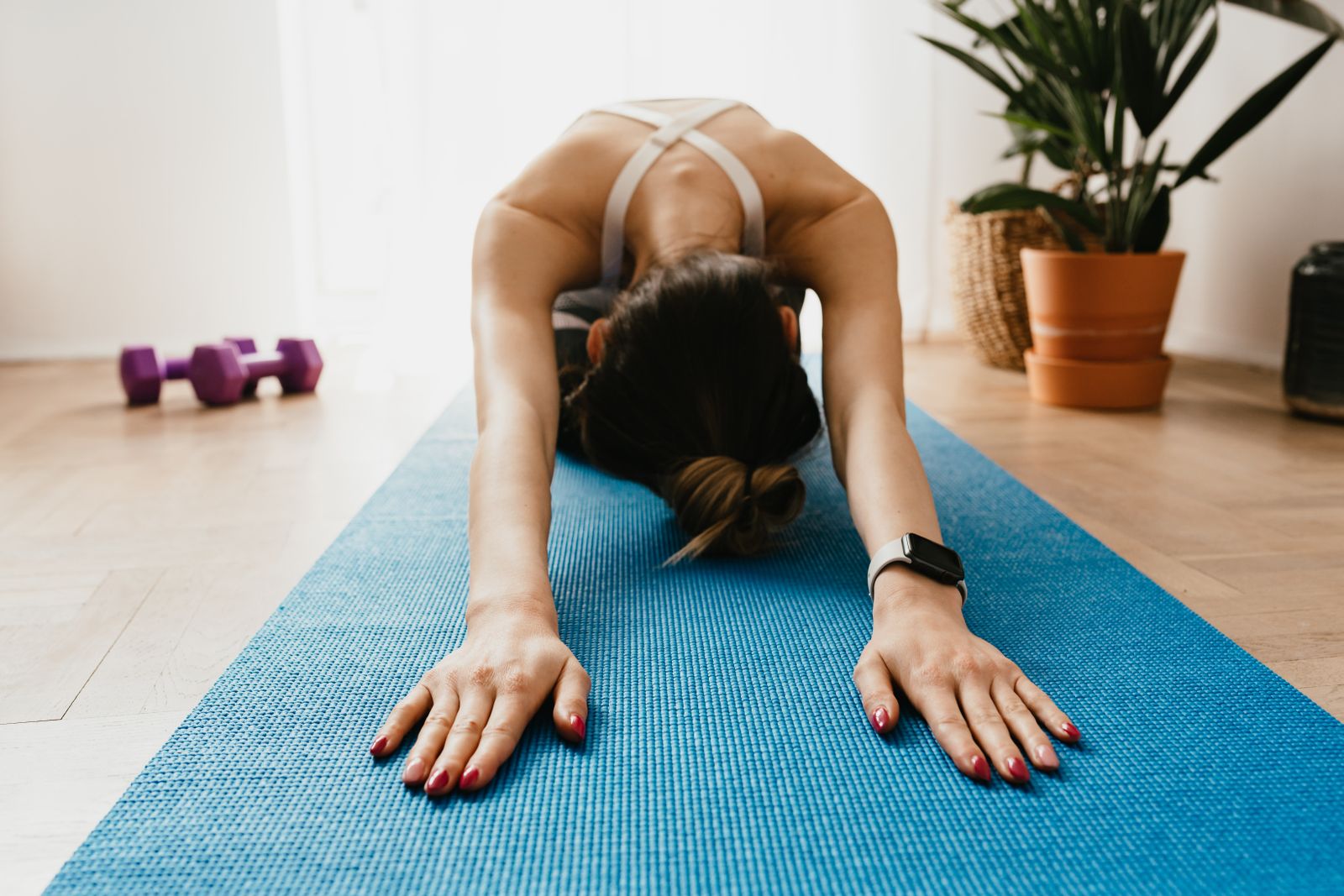
- Child’s pose gently stretches the lower back and hips while allowing the spine to relax into gravity.
- Sphinx pose is a mild backbend that strengthens the muscles supporting the lumbar spine without the strain of a deeper backbend like cobra.
- Supine twist releases tension along the sides of the spine and in the glutes.
- Downward-facing dog lengthens the hamstrings and calves, which indirectly reduces pull on the pelvis and lower back.
- Legs-up-the-wall pose calms the nervous system and takes all compressive load off the spine, which makes it a good closing pose on a difficult pain day.
Together, these six poses form a well-rounded, low-risk sequence that most beginners can do daily.
How Do You Do Cat-Cow Pose Correctly?
Start on your hands and knees in a tabletop position, wrists stacked under shoulders and knees under hips. As you inhale, drop your belly toward the mat, lift your chest and tailbone, and let your gaze rise slightly (cow pose). As you exhale, round your spine toward the ceiling, tuck your chin toward your chest, and draw your navel up and in (cat pose). Move slowly, syncing one full breath to each phase, for 8-10 rounds. The goal is not a dramatic range of motion but a smooth, controlled wave through every segment of the spine. People with wrist pain can do the same movement on forearms instead of flat hands, and people with knee sensitivity can fold a blanket under the knees.
How Do You Do Child’s Pose for Lower Back Relief?
Kneel on the mat with big toes touching and knees spread comfortably wide, then fold forward and rest your torso between your thighs, arms extended in front or resting alongside the body. Let your forehead rest on the mat or a block. This is a passive stretch, so avoid forcing the hips lower than feels comfortable, especially if your knees are tight. Holding for 30-60 seconds allows the lower back muscles to release under gentle, sustained tension rather than a forceful one. Widening the knees further reduces pressure on the belly and lower back for anyone in the later stages of pregnancy or carrying more weight around the midsection. For a deeper stretch specifically through the hips, which often refer tension into the lower back, our article on yoga for hip pain pairs well with this pose.
Which Yoga Stretches for Lower Back Pain Work Best for Beginners?
Beginners generally do best starting with floor-based, supported stretches rather than standing poses that require balance and strength they may not have yet. A simple beginner sequence looks like this:
- Cat-cow for 8 rounds
- Child’s pose for 60 seconds
- Supine knee-to-chest stretch for 30 seconds per side
- Gentle supine twist for 30 seconds per side
- Legs-up-the-wall for 3-5 minutes to finish
This sequence takes under 15 minutes and needs no equipment beyond a mat. It’s a good template for anyone searching for beginner yoga for lower back pain because every pose is done lying down or kneeling, which removes the risk of losing balance and re-aggravating the area. Once this feels easy and pain-free, poses like sphinx, downward dog, and gentle standing forward folds can be layered in gradually. If you’re brand new to the practice entirely, our beginner yoga guide walks through foundational alignment cues that apply across every pose in this article.
Can Yoga Help With Sciatica as Well as General Back Pain?
Sciatica is nerve-related pain that radiates from the lower back down through the buttock and leg, usually caused by compression or irritation of the sciatic nerve, often related to a disc issue or piriformis muscle tightness. Yoga for lower back pain and sciatica typically emphasizes gentle nerve glides and piriformis-release poses rather than deep forward folds, which can sometimes aggravate nerve compression. Reclining pigeon pose, where you cross one ankle over the opposite knee while lying on your back and gently draw the legs toward your chest, is one of the more commonly recommended poses for releasing piriformis tightness that contributes to sciatic symptoms. Because sciatica has several distinct underlying causes, anyone with pain that radiates below the knee, numbness, tingling, or weakness in the leg should see a doctor or physical therapist before starting a yoga routine, since the wrong movement can worsen nerve compression rather than relieve it.
What Yoga Asanas for Lower Back Pain Should You Avoid?
Not every yoga pose is appropriate when the lower back is inflamed or acutely painful. Deep forward folds, like uttanasana done with straight legs and a rounded spine, can overstretch already-irritated lumbar structures. Full wheel pose and other intense backbends put significant compressive load on the lumbar spine and should be avoided until pain has settled and a practitioner has built adequate core strength. Twists that force rotation rather than allowing it to happen gradually can also aggravate disc-related pain. As a general rule, any pose that reproduces sharp, shooting, or radiating pain should be stopped immediately rather than pushed through, since yoga is meant to work with the body’s natural range of motion, not override pain signals that exist for a reason.
How Often Should You Practice Yoga for Lower Back Pain Relief?
Consistency matters more than intensity when it comes to yoga for lower back pain relief. Most physical therapy and yoga research points to short, frequent sessions, 15-20 minutes, 3-5 times a week, being more effective for chronic muscular pain than one long session on the weekend. This mirrors how physical therapy home programs are typically structured, because muscles and connective tissue respond to regular, low-intensity loading better than sporadic, high-intensity stretching. Morning sessions can help work out overnight stiffness, while an evening practice can help release tension accumulated from a day of sitting or standing. If you sit at a desk for long stretches, pairing this with our guide on yoga for desk workers addresses the postural habits that often feed lower back pain in the first place.
Does Yoga Help With Lower Back Fat as Well as Pain?
People searching for lower back fat yoga are usually looking for two different but related outcomes: a leaner midsection and relief from stiffness in the same area. Yoga alone is not a targeted fat-loss tool, spot reduction isn’t how fat loss works physiologically, but a consistent practice that combines strength-building poses (like plank, boat pose, and warrior sequences) with cardiovascular styles like vinyasa yoga or power yoga can contribute to overall calorie expenditure and core toning as part of a broader fitness and nutrition plan. For anyone whose primary goal is fat loss rather than pain relief, our dedicated guide to yoga for weight loss lays out which styles and sequences are most effective, while the pain-relief poses in this article can still be layered in on the same days to protect the lower back during more vigorous practice.
How Does Posture Affect Lower Back Pain, and Can Yoga Fix It?
Poor posture, especially prolonged sitting with a rounded lower back or standing with an exaggerated forward pelvic tilt, places uneven pressure on the lumbar discs and shortens the hip flexors over time. Yoga improves postural awareness in two ways: it strengthens the deep core and back extensor muscles that hold the spine in a neutral position, and it builds body awareness so you notice slouching or overarching before it becomes painful. Mountain pose (tadasana), even though it looks passive, is often taught first specifically because it trains the alignment cues, stacking ears over shoulders over hips, that carry over into how you sit and stand the rest of the day. Combining a home yoga practice with ergonomic changes, like a supportive chair or a standing desk break every hour, tends to produce better long-term results than yoga alone.
What’s the Difference Between Yoga Poses for Lower Back and General Stretching?
General stretching usually targets a single muscle in isolation, holding a hamstring or quad stretch for a fixed count. Yoga poses for lower back pain are typically sequenced so that one pose prepares the body for the next, and breath is used to deepen the stretch gradually rather than forcing a static end range immediately. This sequencing matters because the lower back rarely hurts in isolation, tight hamstrings, weak glutes, and stiff hips usually all contribute together, and a well-designed yoga sequence addresses the whole kinetic chain rather than one muscle. Yoga also incorporates strengthening poses alongside stretches, since a back that’s only flexible but not stable is still vulnerable to re-injury. This is why physical therapists increasingly recommend yoga-based sequences over stretch-only routines for people with recurring, non-specific back pain.
Can Online Yoga Classes Help With Lower Back Pain?
Guided online classes offer a real advantage for back pain specifically because form matters, a poorly executed forward fold or backbend can do more harm than good, and a live or recorded instructor can cue alignment in ways that a static image or article cannot. Online formats also make it easier to follow a progressive plan rather than randomly picking poses, which matters when recovering from pain because certain sequences (gentle mobility before strengthening) work better than others. If you experience lower back pain related to poor posture or prolonged sitting, look for a class that specifically addresses yoga for posture alongside general back-pain sequences, since the two issues usually need to be treated together for lasting relief.
How Does Yoga for Lower Back Pain Compare to Yoga for Related Conditions?
Lower back pain rarely exists in isolation from other common complaints that yoga also addresses. Tight hips and a stiff lower back often go hand in hand with poor circulation in the legs, which is why people managing both frequently also look into yoga for varicose veins, since several of the same gentle inversions and leg-elevating poses, like legs-up-the-wall, support both goals. Chronic pain and muscular tension are also strongly linked to headaches and migraines, so if tension in the neck and upper back frequently accompanies your lower back pain, yoga for migraine covers overlapping relaxation and breathing techniques. And because stress amplifies pain perception throughout the body, building a broader practice through restorative yoga or yin yoga can support lower back recovery even on days when a more active sequence isn’t appropriate.
When Should You See a Doctor Instead of Doing Yoga?
Yoga is appropriate for most cases of non-specific muscular lower back pain, but certain symptoms need medical evaluation first. See a doctor or physical therapist before starting yoga if you have numbness or tingling that radiates down the leg, pain following a fall or accident, unexplained weight loss alongside back pain, fever, loss of bladder or bowel control, or pain that wakes you up at night and doesn’t improve with rest. These can indicate a disc herniation, nerve compression, or another condition that needs a specific treatment plan rather than general stretching. For everyone else, most yoga teachers and physical therapists agree that a gentle, consistent practice is a safe and reasonable first step, ideally alongside guidance from a qualified instructor who can adjust poses to your specific pattern of tightness and weakness.
Questions People Ask About Yoga for Lower Back Pain
How long does it take for yoga to help lower back pain?
Many people notice reduced stiffness within one to two weeks of practicing 15-20 minutes, 3-4 times a week, though meaningful improvement in chronic pain and function typically takes 6-12 weeks of consistent practice. Research reviews generally describe the benefit as modest rather than dramatic, so pairing yoga with posture changes and general activity tends to produce faster, more noticeable results than yoga alone.
Is it safe to do yoga every day for lower back pain?
For most people with non-specific muscular back pain, gentle daily yoga is safe and often more effective than sporadic sessions, since consistency helps build the strength and mobility needed to support the spine. The key is keeping daily sessions gentle rather than pushing into deep stretches or backbends every day, and stopping immediately if any pose causes sharp or radiating pain.
Can beginners do yoga for lower back pain without any experience?
Yes. Beginner-friendly sequences rely on floor-based poses like cat-cow, child’s pose, and supine twists that require no prior flexibility, strength, or balance. Starting with a short, simple routine and adding poses gradually as mobility improves is safer and more sustainable than attempting an advanced sequence too early.
What is the fastest yoga pose for lower back pain relief?
Child’s pose and supine knee-to-chest stretches tend to offer the quickest relief for muscular tightness because they gently decompress the lower back without requiring strength or balance. Legs-up-the-wall pose is also commonly used for fast relief since it takes all compressive load off the spine while calming the nervous system.
Can yoga make lower back pain worse?
Yoga can worsen back pain if poses are done with poor alignment, if deep backbends or forward folds are attempted too soon, or if a pose is pushed through sharp or radiating pain instead of stopping. This is why gentle, well-sequenced practice with attention to form, ideally guided by an instructor, is safer than randomly trying poses found online.
Is yoga better than physical therapy for lower back pain?
Research comparing yoga to other structured exercise, including physical therapy-style programs, generally finds similar outcomes for pain and function, rather than one being clearly superior. Many people benefit from combining both: physical therapy for a personalized diagnosis and corrective exercises, and yoga as a sustainable, low-cost way to stay consistent with movement.
Try This for Yourself
Reading about poses is a good start, but lower back pain relief comes from consistent, well-guided practice. Join a live online yoga class with FitStrot to get real-time form corrections, a progressive sequence built around your specific pain pattern, and the accountability that makes a 15-minute daily habit actually stick.
Related reading: Yoga for Back Pain, Yoga for Hip Pain, Beginner Yoga Guide, Yoga for Posture, and explore FitStrot’s online yoga classes to build a personalized back-pain relief routine.