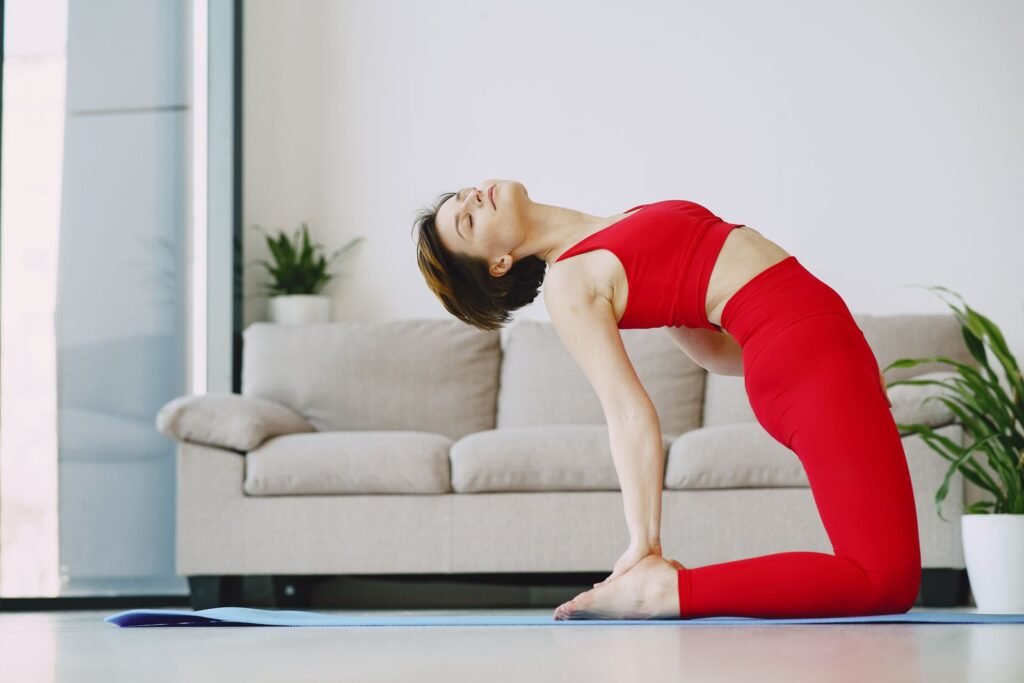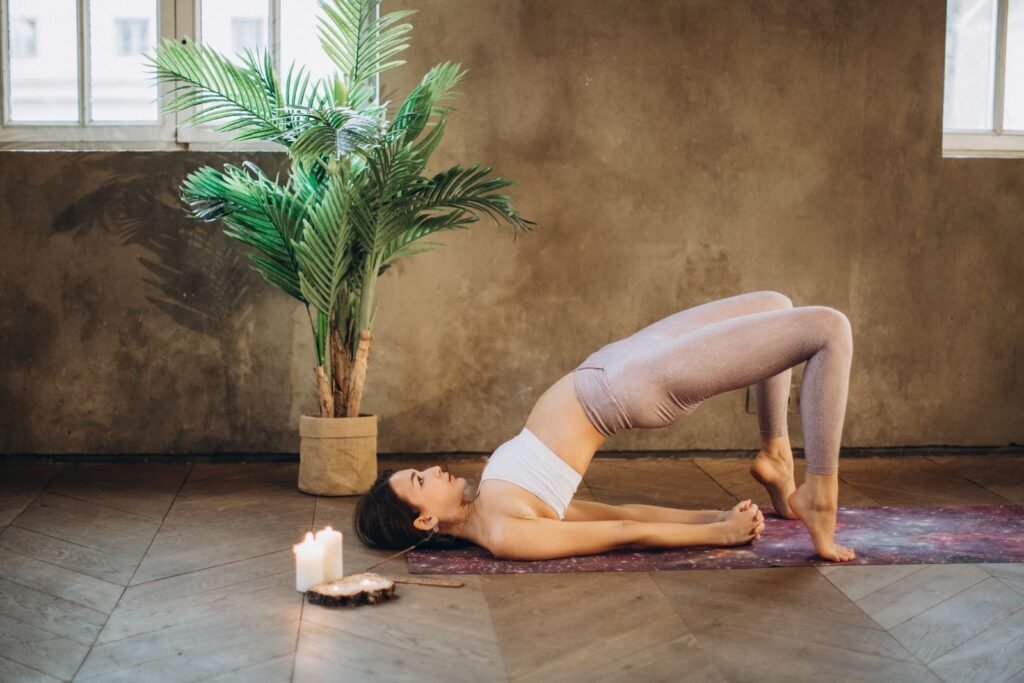
Yoga helps flatten your tummy by combining core-activating poses like Boat Pose and Plank with twisting postures that engage the obliques, plus breathing techniques like Kapalbhati that tone the deep abdominal wall from the inside out. No single pose “burns” belly fat on its own since fat loss happens through an overall calorie deficit, not by working one body part, but a consistent 20-30 minute practice done 4-6 days a week builds core strength, improves posture, reduces bloating, and lowers the cortisol-driven stress eating that often contributes to abdominal fat in the first place. Most people notice their stomach feels tighter and less bloated within one to two weeks, while visible changes in fat around the midsection typically take four to eight weeks of consistent practice paired with mindful eating. The poses that work best target the rectus abdominis, transverse abdominis, and obliques directly while also supporting digestion and hormonal balance.
Can Yoga Actually Give You a Flat Tummy?
Yoga can absolutely contribute to a flatter, more toned tummy, but it helps to be clear about the mechanism. Fat loss from any single area of the body through targeted exercise, often called “spot reduction,” is not how the body works; when you lose fat, you lose it based on genetics and overall body composition, not based on which muscles you just worked. What yoga does instead is threefold: it strengthens and tightens the abdominal muscles so the area looks firmer even before fat loss occurs, it burns calories (more in dynamic styles like Vinyasa yoga than in slower styles), and it addresses two often-overlooked contributors to a bloated or protruding belly: poor digestion and chronic stress. A regular practice that includes core work, twists, and breathing exercises gives you a genuinely flatter-looking midsection over time, especially when combined with a sensible diet, since no amount of exercise fully offsets a calorie surplus. If you’re brand new to the practice, our guide to yoga for beginners is a good starting point before jumping into a core-focused routine, and our overview of the benefits of yoga covers the wider health picture beyond just the midsection.
What Are the Best Yoga Poses for a Flat Tummy?
These poses were chosen because they either directly engage the abdominal muscles under load, compress and massage the digestive organs, or both. Work through them slowly and focus on controlled breathing rather than rushing to the next pose.
Boat Pose (Navasana)
Sit with knees bent, lean back slightly, and lift your feet off the floor so your shins are parallel to the ground, balancing on your sit bones. For a deeper challenge, straighten your legs into a V-shape with your torso. Hold for 20-30 seconds, working up to a minute. Boat Pose is one of the most direct core-strengtheners in yoga because it forces the rectus abdominis and hip flexors to hold your entire upper body weight against gravity, a pose covered in more depth in our guide to yoga for core strength. Keep your chest lifted and spine long rather than rounding forward, which shifts the work away from the abs and onto the lower back, an issue worth checking against our guide to yoga for back pain if you have a history of lower back sensitivity.
Plank Pose (Phalakasana)
From a push-up position, keep your body in a straight line from head to heels, hands under shoulders, core braced. Hold for 30-60 seconds. Plank builds the isometric strength of the transverse abdominis, the deep corset-like muscle that pulls the belly in and flat, more effectively than most crunching movements. A common mistake is letting the hips sag or pike up; both reduce the core engagement and can strain the lower back.
Side Plank (Vasisthasana)
From plank, rotate onto one hand and the outer edge of one foot, stacking your hips and lifting the other arm toward the ceiling. Hold 20-30 seconds per side. Side Plank isolates the obliques, the muscles that run diagonally along the sides of your waist and are responsible for that tapered, cinched-in look at the waistline that front-only ab work tends to miss.
Bow Pose (Dhanurasana)
Lie on your stomach, bend your knees, and reach back to hold your ankles, lifting your chest and thighs off the floor simultaneously so your body forms a bow shape. Hold for 15-20 seconds. This backbend stretches the front of the torso while requiring strong core engagement to maintain the lift, and it also compresses and massages the abdominal organs, which can support digestion.
Wind-Relieving Pose (Pawanmuktasana)
Lie on your back and draw both knees into your chest, wrapping your arms around your shins. Hold for 30-60 seconds. Despite being a gentle, restorative-feeling pose, it directly compresses the lower abdomen and is widely used to relieve trapped gas and bloating, both of which make the stomach look and feel more distended than it actually is. This is a useful pose to pair with our guide to yoga for bloating if a puffy midsection rather than fat is your main concern.
Cat-Cow Pose (Marjaryasana-Bitilasana)
On hands and knees, alternate between arching your spine up toward the ceiling (Cat) and dipping it down while lifting your chest and tailbone (Cow), moving with your breath for 8-10 rounds. Cat-Cow warms up the abdominal wall, spine, and digestive organs before more intense poses, making it a useful opener for any flat-tummy sequence, as detailed further in our guide to Cat-Cow Pose.
Seated Spinal Twist (Ardha Matsyendrasana)
Sitting with one leg extended and the other crossed over it, twist your torso toward the bent knee, using your opposite elbow as leverage against the outer thigh. Hold 20-30 seconds per side. This twist compresses and wrings out the abdominal organs, supporting digestion, while engaging the obliques through the rotational hold.
How Does a 7-Day Yoga for Flat Tummy Plan Work?
A realistic seven-day plan does not promise a dramatically different body in a week; it builds a habit and delivers noticeable improvements in bloating, posture, and core tightness that make the stomach look flatter almost immediately, while deeper fat-loss changes continue building beyond day seven. A sensible structure looks like this:
- Day 1: Core basics (Boat Pose, Plank, Cat-Cow)
- Day 2: Twists (seated spinal twist, Revolved Chair Pose)
- Day 3: Gentler digestion-focused day (Wind-Relieving Pose, Child’s Pose, Supine Twist)
- Day 4: Repeat core work with slightly longer holds
- Day 5: Introduce Bow Pose and Side Plank
- Day 6: Combine everything into one 25-30 minute flow
- Day 7: Active recovery with gentle stretching and breathing work
What actually changes in seven days is usually bloating (which can visibly reduce within 48-72 hours of consistent digestive-focused poses), posture (which straightens the belly line almost immediately), and a subjective feeling of a tighter core from the muscle activation. Genuine fat loss around the midsection is a slower process measured in weeks, not days, and claims promising dramatic transformation in a single week are worth treating with healthy skepticism.
How Does Breathing (Pranayama) Help Flatten the Tummy?
Certain breathing techniques do more for a flat tummy than most people expect. Kapalbhati (Skull-Shining Breath) involves short, forceful exhales through the nose while pulling the navel sharply toward the spine, repeated in rounds of 20-30 breaths. This rapid contraction directly works the transverse abdominis and is one of the few breathing exercises with a genuine, direct toning effect on the deep core muscles. Uddiyana Bandha, a “stomach lock” performed by exhaling fully, then drawing the belly up and in toward the spine while holding the breath out, similarly trains the deep abdominal wall and is traditionally used to stimulate digestion. These practices are generally more effective when learned from an instructor first, since incorrect technique (especially with Kapalbhati, which should never be forced or done on a full stomach) reduces the benefit and can cause dizziness. For a broader look at how breath control supports fitness goals beyond the belly, see our guide to pranayama breathing techniques.
What Is a Good 20-Minute Daily Yoga Sequence for Belly Fat?
A focused, repeatable sequence removes the guesswork of “what should I actually do today.” A practical 20-minute flow: 3 minutes of Cat-Cow and gentle spinal warm-up, 3 minutes of Sun Salutations (2-3 rounds) to raise heart rate, 5 minutes alternating Boat Pose and Plank (3 rounds of 30-second holds each), 3 minutes of Side Plank (both sides), 2 minutes of Bow Pose (2-3 holds), 2 minutes of seated twists, and a closing 2 minutes of Wind-Relieving Pose and deep breathing. Doing this sequence 5-6 days a week, alongside normal daily activity and reasonable eating habits, is a realistic template for visible core tightening over four to six weeks. Pairing this sequence with a faster-paced style like Vinyasa yoga two or three times a week adds a calorie-burning, cardio-adjacent element that static core poses alone don’t provide, and warming up with a few rounds of Sun Salutation (Surya Namaskar) before the core work raises your heart rate and primes the muscles for deeper engagement.
Does Twisting Yoga Poses Really Target Belly Fat?
Twisting poses like Revolved Triangle, seated spinal twist, and Revolved Chair Pose engage the oblique muscles strongly, which improves waist definition and core strength, but they do not selectively burn fat from the twisted area any more than sit-ups selectively burn fat from the front of the stomach. What twists reliably do is improve spinal mobility, stimulate digestion through gentle compression of the abdominal organs, and strengthen the muscles that create a more defined waistline once overall body fat decreases. They’re a valuable part of a flat-tummy routine, just not a magic spot-reduction tool, and they pair especially well with poses covered in our guide to yoga for love handles for anyone specifically focused on waistline shaping. If your goal extends beyond the midsection to overall body composition, our guide to yoga for obesity covers a broader, medically grounded approach to using yoga as part of a weight-management plan.
How Does Stress Affect Belly Fat, and Can Yoga Help?
Chronic stress elevates cortisol, a hormone that, among other things, is commonly associated with increased fat storage specifically around the abdomen and with cravings for high-calorie comfort foods. This is one of the more underappreciated reasons a flat-tummy routine benefits from including restorative elements, not just core-strengthening ones. Yoga’s combination of physical postures, controlled breathing, and mindfulness activates the parasympathetic nervous system, which lowers cortisol output over time with consistent practice. A flat-tummy plan that only includes intense ab work while ignoring stress management is working against itself if cortisol-driven fat storage and stress eating remain unaddressed. Adding 5-10 minutes of restorative yoga poses or seated breathing at the end of a core-focused session, or on rest days, supports this side of the equation. Our guides to yoga for stress and yoga for anxiety cover additional poses and breathing patterns for this purpose.
How Is Yoga for a Flat Tummy Different From Yoga for Weight Loss?
Yoga for a flat tummy is a narrower, more targeted goal than general weight loss. Weight loss involves the whole body and is driven primarily by overall calorie balance, while a flat tummy is about the specific combination of core muscle tone, reduced bloating, good posture, and, where applicable, general fat loss that happens to include the midsection. Someone can lose significant weight without necessarily building the core strength that makes a stomach look flat and toned, which is why core-specific work matters even within a broader weight-loss plan. Conversely, someone at a stable weight can still flatten and tone their tummy noticeably through consistent core-focused yoga and posture correction. For readers working on both goals simultaneously, our comprehensive guide to yoga for weight loss covers the broader calorie-burning and metabolic side of the equation that complements the targeted poses covered here.
What Diet and Lifestyle Habits Support Yoga for a Flatter Tummy?
Yoga poses alone rarely produce a dramatically flatter tummy without supporting habits, since diet plays the larger role in visible fat around the midsection. A few habits consistently make the biggest difference: reducing sodium and processed food intake to limit water retention and bloating, eating slowly and mindfully (a principle yoga philosophy has long emphasized) to avoid overeating, staying hydrated since dehydration can actually increase bloating as the body retains water defensively, getting 7-9 hours of sleep since poor sleep is linked to increased cortisol and hunger hormones, and limiting carbonated drinks and known personal trigger foods that cause gas. None of these replace the physical practice, but combining a consistent yoga routine with these habits is what separates people who see real changes in four to six weeks from those who don’t see much change after months of poses alone. If digestion specifically is a bigger concern than fat or tone, our dedicated guide to yoga for digestion goes deeper into the poses and timing that help most.
What Mistakes Undermine a Yoga Flat-Tummy Routine?
A few recurring mistakes slow progress even for people practicing consistently:
- Only static holds, never raising heart rate: This misses the calorie-burning component that dynamic styles provide, so mixing in a faster-paced practice like Vinyasa a few times a week helps.
- Holding the breath during core poses: This increases intra-abdominal pressure and can push the belly outward rather than training it to stay engaged; the fix is to breathe continuously, even during difficult holds.
- Overtraining the front abdominal muscles while ignoring the back and obliques: This creates postural imbalances, since a strong core includes all sides of the torso.
- Expecting spot reduction: Giving up when it “doesn’t work” is another common trap.
- Practicing inconsistently: A few intense sessions followed by long gaps produces far weaker results than shorter, steadier daily practice.
Who Should Be Cautious With Core-Focused Yoga Poses?
Certain groups should modify or avoid intense core and twisting poses. Pregnant practitioners, particularly past the first trimester, are generally advised to avoid deep abdominal compression, strong twists, and lying flat on the back for extended periods; gentle alternatives and prenatal-specific guidance are safer choices. People recovering from abdominal surgery, hernias, or with diastasis recti (a separation of the abdominal muscles that can occur after pregnancy) should check with a doctor or physical therapist before doing intense core work like Boat Pose or forceful breathing techniques like Kapalbhati, since these can worsen the separation if done incorrectly. Anyone with uncontrolled high blood pressure or glaucoma should approach forceful breath retention practices like Uddiyana Bandha cautiously, and checking with a healthcare provider first is the safer approach for anyone with an existing condition.
How Does Posture Affect How Flat Your Tummy Looks?
Posture has an outsized, often underestimated effect on how flat or protruding the stomach appears, independent of actual fat levels. Slouched, forward-rounded posture pushes the abdominal organs forward and down, creating a pooch-like appearance even on people who are otherwise lean, while an upright posture with an engaged core naturally pulls the belly in and lengthens the torso. Yoga’s emphasis on spinal alignment, through poses like Mountain Pose, Cat-Cow, and backbends, retrains the body to hold a taller, more supported posture throughout the day, not just during practice, a connection covered further in our guide to yoga for posture. This is one reason people often report their stomach “looking flatter” within days of starting yoga, well before any measurable fat loss has occurred; the visual change is coming from posture and muscle engagement, not from body composition. Building general postural awareness alongside targeted ab work tends to produce a faster-looking result than ab work alone.
Questions People Ask About Yoga for Flat Tummy
Can yoga alone give you a flat stomach without dieting?
Yoga can noticeably improve core tone, posture, and bloating without any dietary change, which often makes the stomach look flatter. However, meaningful fat loss around the midsection generally requires a calorie deficit, so combining yoga with reasonable eating habits produces faster, more complete results than yoga alone.
How many days a week should I do yoga for a flat tummy?
Practicing 4-6 days a week for 20-30 minutes tends to produce the best balance of results and recovery. Daily short sessions of 15-20 minutes generally outperform infrequent longer sessions, since consistency drives both the muscle-toning and the stress-reduction benefits more reliably than occasional intense workouts.
Which yoga pose is best for belly fat specifically?
Boat Pose is the most commonly recommended single pose because it directly loads the rectus abdominis and hip flexors under sustained tension. That said, no single pose outperforms a well-rounded routine combining core holds, twists, and breathing work, since belly fat responds to overall consistency rather than any one movement.
Is it true that yoga can give a flat tummy in just 7 days?
A week of consistent practice can visibly reduce bloating and improve posture, both of which make the stomach look flatter quickly. Actual fat loss around the midsection is a slower process, typically requiring four to eight weeks of consistent practice and dietary attention, so treat “flat tummy in 7 days” as a bloating and tone improvement rather than a fat-loss guarantee.
Does yoga help with the loose skin or belly fat after pregnancy?
Gentle, progressively deepening core yoga can help rebuild abdominal muscle tone after pregnancy, which supports a flatter appearance over time, but it should start slowly and ideally after clearance from a doctor, especially if diastasis recti is present. Restorative and beginner-level core poses are the safer starting point before progressing to more intense work like full Boat Pose or Kapalbhati.
Can beginners do yoga poses for a flat tummy safely?
Yes, most core-focused poses have accessible modifications, such as bending the knees in Boat Pose or dropping to the knees in Plank, that make them beginner-friendly. Starting with shorter holds, prioritizing steady breathing over depth, and progressing gradually over several weeks is the safest and most sustainable approach for anyone new to yoga.
Try This for Yourself
Reading through a list of poses is one thing; feeling your core actually activate under proper guidance is another. If you want real-time feedback on your alignment, breathing, and pacing while working through a full flat-tummy sequence, join a live FitStrot Online Yoga Class and build a routine that fits your current fitness level and goals.
Related reading: Yoga for Weight Loss, Yoga for Love Handles, Yoga to Reduce Neck Fat, Yoga for Bloating, Types of Yoga, and explore FitStrot’s Online Yoga Classes to build a full practice around your goals.