Yoga for love handles works best as part of a combined approach: specific poses like Side Plank, Revolved Triangle, and seated twists strengthen and tone the oblique muscles along your waist, while the calorie-burning effect of a consistent practice (especially faster-paced styles like vinyasa yoga) supports the fat loss needed to actually reveal that muscle definition. No single pose melts fat from one specific spot, but the right combination of twisting postures, core-strengthening holds, and mindful eating habits can visibly slim your midsection over several weeks. The poses below target the obliques directly, while the surrounding lifestyle guidance addresses the whole-body fat loss that ultimately determines whether your waistline shrinks.
What Exactly Are Love Handles?
Love handles are the pads of fat that sit on either side of your waist, just above the hip bones, spilling over the top of pants or waistbands. Anatomically, this area sits over your oblique muscles (internal and external), which run diagonally along the sides of your torso and are responsible for rotation and lateral bending of the spine. Fat here tends to accumulate due to a mix of genetics, hormonal patterns, calorie surplus, and, in some cases, elevated stress hormones like cortisol, which is commonly cited as a contributor to abdominal fat storage. Because the obliques are used constantly in twisting and stabilizing movements, they respond well to targeted strengthening work even though the fat layer above them responds only to overall fat loss.
Can Yoga Actually Reduce Love Handles?
This is the most important question to answer honestly. Research on “spot reduction” (the idea that exercising a specific muscle burns fat only from that area) has generally not supported it as an effective strategy; fat loss tends to happen across the whole body based on genetics and overall energy balance, not just where you’re working a muscle. What yoga can do is (1) strengthen and tone the oblique and core muscles so the area looks firmer once fat reduces, (2) burn calories through dynamic, flow-based practice, and (3) lower stress and cortisol, which may help reduce the tendency to store fat around the midsection. For genuine, lasting results, pair a love-handle-focused yoga routine with the broader strategies covered in our guide to yoga for weight loss.
Revolved Triangle Pose (Parivrtta Trikonasana)
Revolved Triangle is one of the most effective standing twists for engaging the obliques while also stretching the hamstrings and opening the chest. Stand with feet roughly three feet apart, square your hips toward the front of the mat, and hinge forward from the hips while rotating your torso so your opposite hand reaches toward the floor (or a block) beside your front foot. Extend the other arm skyward and look up if your neck allows it. Hold for 5-8 breaths per side. The rotation directly loads the oblique muscles along your waist, and the standing base means your legs and glutes are working simultaneously, turning this into a near full-body pose. If balance is a challenge, place your bottom hand on a yoga block rather than the floor.
Side Plank (Vasisthasana)
Side Plank is arguably the single best yoga pose for the waistline because it isometrically loads the entire oblique chain on one side while forcing the opposite side to stabilize. From a plank position, shift your weight onto one hand (or forearm for a gentler variation) and stack your feet, lifting your hips so your body forms a diagonal line. Reach your top arm toward the ceiling. Beginners can bend the bottom knee to the mat for support. Hold 20-40 seconds per side, working up to a minute as strength improves. Because this pose demands so much core stability, it’s often included in yoga for a flat tummy sequences alongside plank variations and boat pose.
Seated Spinal Twist (Ardha Matsyendrasana)
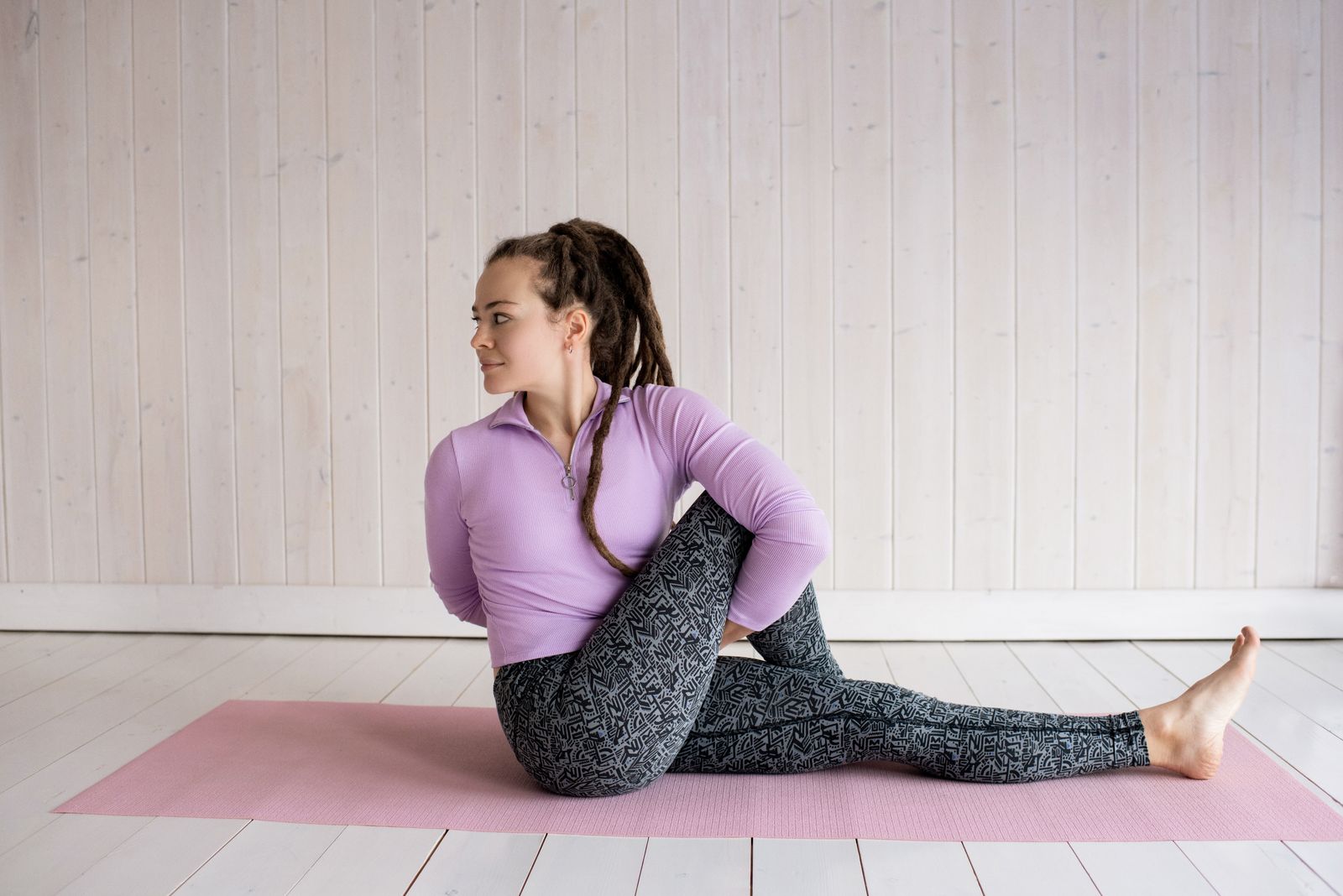
This seated twist is gentler than the standing variations but still effectively engages the deep oblique and rotator muscles of the torso. Sit with one leg extended and the other bent, foot planted outside the opposite knee. Twist toward the bent-knee side, using your opposite elbow braced against the outer knee for leverage, and lengthen your spine upward before deepening the rotation. Hold for 5-8 breaths, then switch sides. Practiced slowly with attention to the breath, this pose also supports digestion, since the compression and release action massages the abdominal organs. It’s a good low-impact addition for anyone easing into a core-focused practice or recovering from lower back sensitivity, and it shows up frequently in Hatha yoga sequences designed around slow, held postures.
Boat Pose (Navasana)
Boat Pose is a foundational core-strengthener that works the rectus abdominis, hip flexors, and, when combined with a slight twist, the obliques as well. Sit with knees bent, lift your feet off the floor, and balance on your sit bones while extending your arms forward. For more intensity, straighten the legs into a V-shape. To specifically target love handles, add a rotation: bring your hands together and twist your torso side to side while holding the balance (a movement sometimes called Russian Twist in fitness contexts). Start with 3 sets of 10-15 twists, resting between sets. This pose also builds the postural strength that makes standing twists like Revolved Triangle more stable.
Extended Side Angle Pose (Utthita Parsvakonasana)
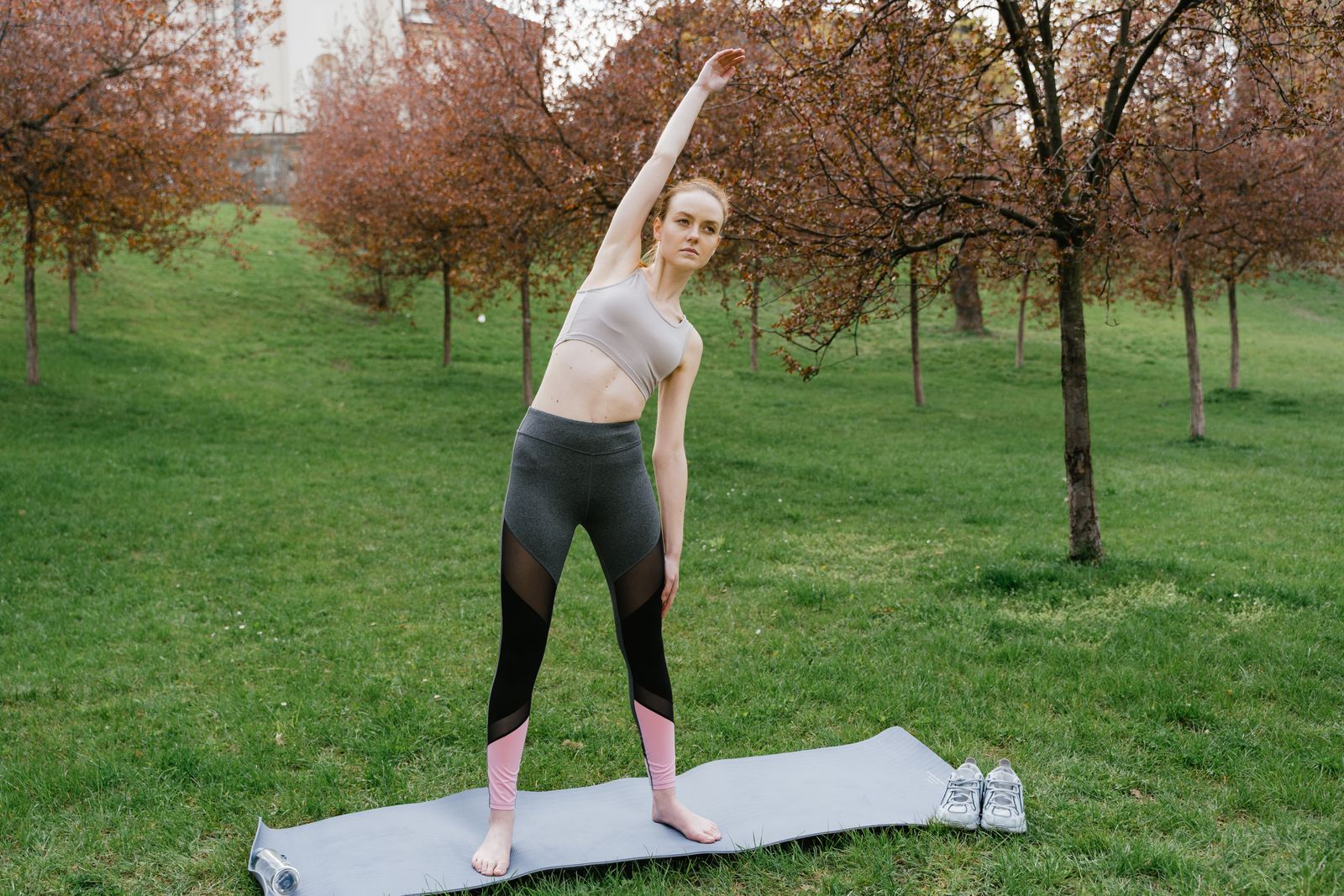
Extended Side Angle stretches and strengthens the entire side body in a single pose, making it valuable for both flexibility and the muscular tone that helps love handles look tighter. From a lunge position with your front knee bent at 90 degrees, lower your front forearm to your thigh or a block, and extend your top arm alongside your ear, creating one long diagonal line from back foot to fingertips. This lengthens the obliques on the reaching side while contracting them on the grounded side. Hold for 5-8 breaths per side. Because it combines a deep hip stretch with an oblique-lengthening side bend, it pairs naturally with a hip-opening flow like the ones in our hip-opening yoga poses guide.
Chair Pose with a Twist (Parivrtta Utkatasana)
Adding a twist to Chair Pose turns a quad-and-glute burner into a waist-sculpting move as well. Sink into a squat as if sitting in an invisible chair, bring your palms together at your chest, and rotate your torso so one elbow hooks outside the opposite knee. Keep your hips squared and knees aligned as best you can. Hold for 5 breaths, then switch sides. This pose demands significant core control to maintain the twist while the legs are already fatigued from the squat position, which is exactly what makes it effective for building functional oblique strength you’ll notice in daily movements like reaching, lifting, and turning.
Bicycle Crunch Flow
Although not a traditional Sanskrit-named asana, a slow, breath-linked bicycle crunch flow has become a staple in many modern yoga-for-weight-loss sequences because of how directly it targets the obliques. Lying on your back, hands lightly behind your head, bring one elbow toward the opposite knee while extending the other leg, then switch in a controlled, unhurried rhythm synced to your exhale. Unlike a fast gym-style bicycle crunch, the yoga version emphasizes slow control over speed, which increases time-under-tension for the obliques. Two to three sets of 12-16 total reps (6-8 per side) fit well at the end of a core-focused practice, and pairs well with the core-building sequences found in our guide to yoga for abs.
How Often Should You Practice Yoga for Love Handles?
Consistency matters more than intensity when it comes to visible changes at the waistline. Most practitioners see noticeable toning after 4-8 weeks of practicing a core-and-twist-focused sequence 3-5 times per week, combined with attention to diet and overall movement. A realistic weekly structure might include two dedicated core-and-twist sessions (20-30 minutes), two or three longer flow sessions such as vinyasa yoga or power yoga for weight loss for calorie burn, and at least one restorative or gentle session to support recovery. Overtraining the same muscles daily without rest can actually slow progress, since muscles need recovery time to rebuild and strengthen.
What Else Affects Love Handles Besides Yoga?
Yoga is one piece of a larger picture. Diet plays an outsized role in reducing the fat layer over the obliques since even the strongest oblique muscles won’t show through excess body fat; a modest, sustainable calorie deficit built from whole foods tends to outperform any single exercise routine. Sleep quality also matters, since poor sleep is associated with higher cortisol and disrupted hunger hormones, which can make midsection fat more stubborn. Hydration, reducing processed sugar and alcohol, and managing chronic stress through practices like pranayama breathing techniques or restorative yoga all contribute meaningfully. Combining these lifestyle factors with a dedicated pose routine is what actually produces visible change over time, not the poses in isolation.
Yoga for Love Handles vs. Yoga for Belly Fat: What’s the Difference?
While love handles and general belly fat are related, they aren’t identical targets. Belly fat typically refers to fat across the front of the abdomen, often including visceral fat around the organs, while love handles specifically describe the fat deposits on the sides of the waist above the hips. A well-rounded routine addresses both, since many poses (like Boat Pose and Side Plank) engage the rectus abdominis and obliques simultaneously. If your primary concern is the front of your midsection rather than the sides, our dedicated guide to yoga for belly fat goes deeper into that specific focus, while poses in this article lean more heavily toward lateral, rotational movement.
Common Mistakes That Slow Down Progress
Several habits quietly sabotage love-handle-focused yoga routines:
- Holding your breath during twists. This reduces the mindful engagement that makes these poses effective and can spike tension elsewhere in the body; breathe steadily throughout every hold.
- Rushing through transitions. Skipping the pause in each pose reduces the muscular time-under-tension that builds strength.
- Neglecting the rest of the body. Poses like Side Plank and Boat also rely heavily on shoulder and hip stability, so skipping strength work elsewhere can cap your progress.
- Expecting results within days rather than weeks. This leads many people to quit prematurely; visible changes to the waistline typically take a minimum of several consistent weeks, not sessions.
Tracking your practice alongside broader goals, like the milestones covered in our benefits of yoga overview, can help keep motivation realistic.
Can Beginners Practice These Poses Safely?
Yes, with modifications. Beginners should hold Side Plank with the bottom knee on the mat rather than the full extended-leg version, use a yoga block under the hand in Revolved Triangle and Extended Side Angle to reduce the reach, and keep knees bent in Boat Pose rather than straightening the legs. Those with lower back issues should approach seated twists gently and avoid forcing rotation past a comfortable range. As with any new fitness routine, anyone with existing back, hip, or abdominal conditions should check with a healthcare provider before starting an intensive core-and-twist practice, and a beginner-friendly online yoga class with live instructor feedback can help ensure proper form from the start.
How Does Yoga Compare to Other Waist-Targeting Workouts?
Compared to high-intensity interval training or weighted oblique exercises at the gym, yoga offers a lower-impact path to the same muscles, which makes it more sustainable for people managing joint issues or those newer to exercise. It also layers in flexibility and stress-reduction benefits that pure strength training doesn’t address directly. That said, yoga alone typically builds strength and tone more slowly than resistance training with added weight. Many people find the best results combining 2-3 yoga sessions per week with occasional strength or cardio work, similar to the layered approach recommended in our guide to yoga for weight loss, where different modalities complement rather than replace each other. Those newer to structured movement may also want to compare formats in our overview of types of yoga before committing to a specific style.
Sample 20-Minute Love Handle Yoga Routine
For a complete session you can do at home with just a mat, follow this sequence:
- 5 rounds of Cat-Cow to warm the spine
- 3 rounds of Sun Salutations to build heat
- Extended Side Angle, 5 breaths per side
- Revolved Triangle, 5 breaths per side
- Side Plank, 20-30 seconds per side (repeat twice)
- Boat Pose with twists, 2 sets of 12 reps
- Seated Spinal Twist, 5 breaths per side
- A short Savasana to finish
This structure mirrors the warm-up-to-core-to-cool-down format used in most beginner yoga sequences, making it easy to slot into an existing practice or use as a standalone routine three to five times weekly.
Questions People Ask About Yoga for Love Handles
Can yoga alone get rid of love handles?
Yoga alone can strengthen and tone the oblique muscles beneath love handles, but reducing the fat layer over them generally requires an overall calorie deficit achieved through diet and total activity level. Yoga contributes through calorie burn, stress reduction, and muscle toning, but it works best paired with mindful eating and consistent movement rather than as a stand-alone fix.
How long does it take to see results from yoga for love handles?
Most people practicing a dedicated core-and-twist routine 3-5 times weekly notice firmer muscle tone within 4-8 weeks, though visible fat reduction depends heavily on diet and genetics and can take longer. Consistency, proper breathing, and gradually increasing hold times or repetitions tend to produce faster, more noticeable results than sporadic practice.
Which yoga pose is best for love handles specifically?
Side Plank (Vasisthasana) is widely considered one of the most effective single poses because it isometrically loads the oblique muscles along the entire side of the torso while also engaging the shoulders and legs for stability. Revolved Triangle and twisting Boat Pose are close runners-up for their rotational engagement of the same muscle group.
Is it bad to do love handle yoga poses every day?
Daily practice is generally safe if you vary intensity and include rest for the muscles between harder sessions, since muscles need recovery time to rebuild. A sustainable approach alternates 3-5 dedicated strength-and-twist sessions weekly with gentler flow or restorative days rather than maximum-intensity core work daily.
Does diet matter more than yoga for reducing love handles?
Diet typically plays the larger role in reducing the fat layer itself, since no exercise, including yoga, can selectively burn fat from one location. A sustainable calorie deficit built from whole foods, combined with a consistent yoga practice for toning and stress management, produces more visible results than either approach alone.
Try This for Yourself
The poses and structure above give you a strong starting point, but real-time feedback on your twist depth, alignment, and breathing makes a measurable difference in both safety and results. Join a live online yoga class with FitStrot to work through a personalized core-and-waist-focused routine with an instructor who can adjust your form in real time and help you build a sustainable weekly practice.
Related reading: yoga for weight loss, yoga for a flat tummy, yoga to reduce neck fat, yoga for belly fat, and explore FitStrot’s online yoga classes to build a complete, guided practice.