Yoga to reduce neck fat works by combining targeted muscle-toning poses, chin and throat stretches, and full-body practices that support overall fat loss, since neck fat cannot be spot-reduced through movement alone. Poses like Bhujangasana (Cobra Pose), Simhasana (Lion Pose), Ustrasana (Camel Pose), and simple chin tuck stretches tone the platysma and neck muscles, improve posture, and support lymphatic circulation, while a consistent full-body yoga practice helps create the calorie deficit needed to reduce fat stores, including around the neck and jaw. Results typically take 4 to 8 weeks of daily practice combined with better posture habits and dietary awareness.
Why Does Fat Accumulate Around the Neck?
Neck fat, sometimes called a double chin or submental fat, develops for a mix of reasons that go beyond simple overeating. Genetics play a real role: some people are predisposed to store fat under the chin and along the jawline regardless of their overall body weight. Aging is another factor, since collagen and skin elasticity decline over time, allowing skin and underlying tissue to sag and appear fuller.
Posture is an underrated contributor. Hours spent hunched over phones and laptops, commonly nicknamed “tech neck,” weaken the platysma muscle that runs along the front of the neck and encourages the skin above it to sag. Thyroid conditions can also cause swelling or fat accumulation around the neck, so anyone with unexplained or sudden changes in that area should get it checked by a doctor before starting an exercise routine. Finally, general weight gain and a sedentary lifestyle both increase fat storage throughout the body, including the submental area, which is why yoga’s dual approach of targeted toning plus whole-body movement makes sense as a strategy.
Can Yoga Actually Reduce Neck Fat?
Yoga cannot melt fat from one specific spot on demand, and no exercise can, but it works on neck fat through three combined mechanisms. First, poses that stretch and engage the neck, jaw, and throat muscles tone the platysma and surrounding tissue, which can make the area appear firmer and tighter over time. Second, backbends and inversions improve blood flow and lymphatic drainage in the upper body, which supports a less puffy, more defined neck and jawline. Third, and most importantly, a regular yoga practice that includes standing poses, sun salutations, and core work contributes to the total-body calorie burn and stress reduction needed for gradual fat loss everywhere, including the neck.
Research on facial exercise programs suggests that consistent practice over several weeks can visibly firm and lift the lower face and jawline, though individual results vary based on genetics, diet, and consistency. Yoga should be viewed as one part of a broader approach that also includes nutrition, hydration, and posture correction, similar to how yoga for weight loss works best when paired with mindful eating rather than practiced in isolation.
Bhujangasana (Cobra Pose) for Neck and Chest Toning
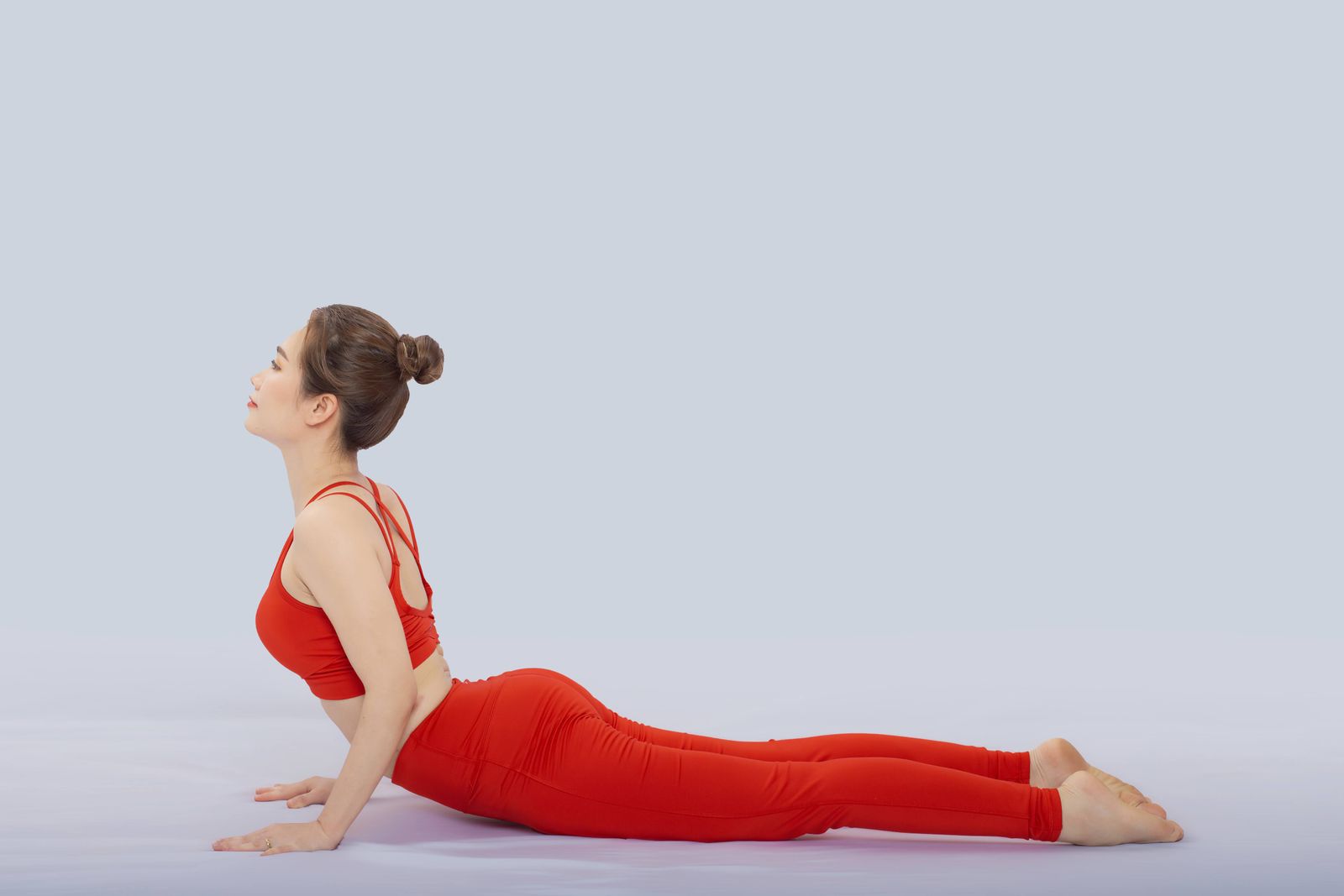
Cobra Pose is one of the most commonly recommended asanas for neck fat because it actively stretches the front of the neck and throat while strengthening the muscles that support the chin line. To practice it, lie face down with your palms under your shoulders, legs extended and tops of the feet pressing into the mat. Inhale and lift your chest off the floor, keeping your elbows slightly bent and your shoulders drawn away from your ears. Gently tilt your head back to feel a stretch along the front of the throat, hold for 15 to 30 seconds, and breathe steadily throughout.
Repeat this pose 3 to 5 times per session. Beyond the neck benefits, Cobra Pose opens the chest, strengthens the spine, and improves posture, which indirectly reduces the “tech neck” slouch that contributes to sagging skin under the chin. Avoid this pose if you have a recent back injury or are pregnant, and always move into the backbend gradually rather than forcing the stretch.
Simhasana (Lion Pose) for the Jaw and Throat
Lion Pose looks unusual but is highly effective for activating the muscles of the face, jaw, and throat. Sit in a comfortable kneeling or cross-legged position, place your hands on your knees with fingers spread wide, then inhale deeply through the nose. On the exhale, open your mouth as wide as possible, stick your tongue out toward your chin, widen your eyes, and exhale forcefully with a “ha” sound while tensing the muscles of your face and neck.
Hold the tension for a few seconds, then relax and repeat 5 to 7 times. This pose directly engages the platysma muscle and the muscles around the jaw and throat, helping tone the exact area where submental fat tends to sit. It is also traditionally valued in yoga philosophy for releasing tension and stimulating the throat area, an idea explored further in yoga’s broader focus on the body’s energy centers.
Ustrasana (Camel Pose) for a Deep Neck Stretch
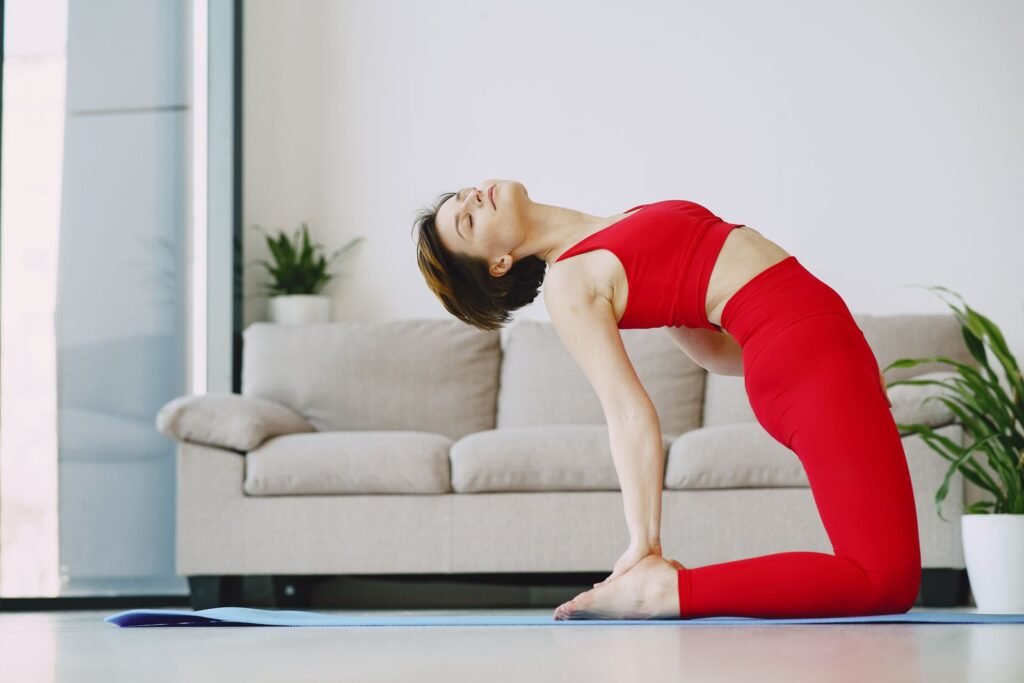
Camel Pose delivers one of the deepest available stretches to the front of the neck, making it a strong addition to any routine focused on reducing neck fat. Kneel on the mat with your knees hip-width apart, place your hands on your lower back for support, then lean back and reach for your heels one at a time, letting your head drop back gently if your neck allows it. Keep your hips pushed forward and your core engaged throughout.
Hold for 15 to 20 seconds, breathing steadily, then come up slowly to avoid dizziness. Camel Pose is an intermediate backbend, so beginners should try a supported version first, perhaps with hands on the hips instead of the heels, before attempting the full expression. This pose pairs naturally with other backbends featured in vinyasa yoga sequences, where flowing between poses builds heat and improves flexibility over time.
Chin Tuck and Neck Rotation Stretches
Simple chin tucks and neck rotations may look basic, but they directly strengthen the deep neck flexor muscles that support good posture and a firm jawline. To perform a chin tuck, sit or stand tall, then gently draw your chin straight back as if making a double chin on purpose, hold for 5 seconds, and release. Repeat 10 to 15 times.
Follow this with slow neck rotations: drop your ear toward one shoulder, roll your chin down across your chest, and continue to the other shoulder in a smooth, controlled half-circle. Avoid rolling the head all the way back, since this can strain the cervical spine. These stretches take less than five minutes and can be done daily, even at a desk, making them one of the most accessible tools for counteracting the effects of prolonged screen time on the neck and jaw.

How Does Posture Affect Neck Fat?
Poor posture is one of the most modifiable contributors to a fuller-looking neck. When the head juts forward over a phone or screen, the muscles at the front of the neck shorten and weaken while the skin above them loses tautness, which can make even a lean neck appear to have extra fullness. Yoga poses that open the chest and strengthen the upper back, such as Bhujangasana and Ustrasana already covered above, directly counteract this pattern by training the body to hold the head in better alignment.
Standing tall with shoulders back and the crown of the head reaching upward, a cue used throughout most styles of yoga, reduces the visual appearance of neck fat almost immediately, independent of any actual fat loss. Combining postural awareness with a regular practice like online yoga for stress relief can reinforce these habits since stress itself often causes people to hunch and tense the shoulders and neck.
What Role Does Pranayama (Breathing Work) Play?
Breathing exercises, or pranayama, support neck fat reduction indirectly but meaningfully. Practices like Kapalabhati (skull-shining breath) and Bhastrika (bellows breath) increase circulation and stimulate the core and diaphragm, which supports the metabolic activity needed for gradual full-body fat loss. Ujjayi breath, the audible “ocean breath” used throughout many yoga classes, also engages the throat muscles with every inhale and exhale, giving the neck area a subtle but consistent workout during a normal practice session.
Beyond the physical benefits, controlled breathing lowers cortisol, the stress hormone linked to increased fat storage, particularly around the face, neck, and midsection. This is one reason breathing-focused practices are often paired with poses targeting a flat tummy and overall midsection toning, since cortisol management benefits multiple areas of the body at once.
How Long Does It Take to See Results?
Most people who practice neck-focused yoga poses and stretches consistently for 15 to 20 minutes daily begin to notice firmer muscle tone and improved posture within 4 to 6 weeks. Visible fat reduction, however, typically takes longer, generally 8 to 12 weeks, since it depends on overall body fat percentage dropping through a combination of yoga, diet, and daily activity rather than the neck poses alone. Consistency matters far more than intensity here; five short daily sessions produce better results than one long session per week.
Progress also depends on starting point. Someone with a higher overall body fat percentage will likely need to focus more on full-body fat-loss practices, such as power yoga or a brisk vinyasa flow, alongside the neck-specific poses, while someone closer to their goal weight may see faster visible changes from toning work alone.
What Diet and Lifestyle Changes Support Yoga for Neck Fat?
Yoga poses alone will not offset a calorie surplus, so a few lifestyle adjustments meaningfully speed up results. Reducing processed foods, refined sugar, and excess sodium helps limit water retention and puffiness around the face and neck. Staying well hydrated supports skin elasticity and lymphatic drainage, both of which affect how tight or full the neck area appears.
Sleep quality matters too: poor sleep raises cortisol and can increase facial puffiness the next day. Pairing your yoga practice with a whole-food, protein-adequate diet supports muscle tone throughout the body, which is the same principle behind combining yoga with nutrition for reducing love handles or other stubborn fat areas. None of these changes need to be extreme; small, sustainable adjustments compound over weeks and months.
Are There Yoga Poses to Avoid If You Have Neck Fat or Neck Issues?
Anyone with a history of neck injury, cervical spine issues, or vertigo should approach deep backbends and inversions with caution. These poses place significant pressure on the cervical spine and are best modified or avoided without guidance from an experienced instructor:
- Full Ustrasana (Camel Pose) — the deep backward head drop can strain a neck that isn’t yet warmed up.
- Halasana (Plow Pose) — folds the full body weight down onto the neck and cervical spine.
- Sarvangasana (Shoulder Stand) — sustains direct pressure on the neck for an extended hold.
Dropping the head back forcefully in any pose, including Cobra or Camel, can also strain the neck if the surrounding muscles are not yet warmed up. A safer approach is to build a foundation with gentle stretches and beginner-friendly poses before progressing to deeper backbends. Structured, instructor-led classes, such as those found in a beginner’s guide to yoga, help ensure correct alignment and reduce injury risk while still targeting the neck and jaw effectively.
How Does a Full-Body Yoga Routine Complement Neck-Specific Poses?
Because neck fat is tied to overall body fat percentage, pairing neck-specific stretches with a full-body practice produces better results than isolated poses alone. A well-rounded weekly routine might include two to three sessions of a dynamic style like vinyasa yoga or power yoga for calorie burn and cardiovascular benefit, combined with daily short sessions of neck and face-focused stretches.
Core-strengthening poses such as Boat Pose (Navasana) and Plank also support better posture, which as covered earlier directly affects how prominent neck fat appears. Many people looking to reduce neck fat are also working toward broader goals like a flatter tummy or reduced love handles, and a combined routine addressing all these areas tends to be more sustainable than chasing one isolated body part.
1-1 Personal Training vs. Online Yoga: Which Helps More With Neck Fat?
Both formats can be effective, but they serve slightly different needs, as this quick comparison shows:
| Format | Best For | Key Benefit |
|---|---|---|
| 1-1 Personal Training | Beginners to backbends, or anyone recovering from an injury | Hands-on correction of alignment in poses like Cobra and Camel, plus a program tailored to your starting point |
| Online Yoga Classes | Busy schedules that need daily consistency | Flexibility to fit a 15-minute neck and posture routine in without traveling anywhere |
Many people find the best results come from combining both: periodic 1-1 sessions to refine technique, supported by regular online yoga for stress relief and toning sessions to maintain daily consistency.
Questions People Ask About Yoga to Reduce Neck Fat
Can yoga alone get rid of a double chin?
Yoga can tone the muscles under the chin and improve posture, which makes the area look firmer, but it cannot spot-reduce fat from one location. Combining neck-focused poses with a full-body practice, a balanced diet, and good hydration produces more noticeable and lasting results than neck exercises alone.
How often should I practice yoga for neck fat?
Most people see the best results practicing neck-focused stretches and poses like Cobra and Lion Pose daily for 10 to 20 minutes, alongside 2 to 3 full-body yoga sessions per week. Daily short practice tends to outperform occasional long sessions because consistency drives both muscle tone and overall fat-loss progress.
Is it normal to feel a stretch in my throat during Cobra Pose?
Yes, a gentle stretch along the front of the throat is expected and is part of what tones the platysma muscle. The stretch should feel comfortable, not painful or straining. If you feel sharp pain or dizziness, ease out of the pose slowly and reduce the depth of the backbend next time.
Can thyroid problems cause neck fat that yoga won’t fix?
Yes. Thyroid conditions can cause swelling or fat accumulation around the neck that is unrelated to overall body fat or muscle tone, and yoga alone will not resolve this. Anyone noticing sudden or unexplained changes in neck size should get thyroid function tested by a doctor before relying solely on exercise.
Does drinking more water actually help reduce neck fat?
Proper hydration supports skin elasticity and helps the lymphatic system drain excess fluid, which can reduce puffiness that makes neck fat look more pronounced. While water alone will not burn fat, it is a simple, low-effort habit that complements a yoga and nutrition routine aimed at reducing neck fat.
What is the fastest way to see results from neck yoga poses?
The fastest visible changes typically come from combining daily neck and jaw-focused stretches with better posture habits, reduced sodium and processed food intake, and 2 to 3 full-body yoga sessions weekly. Most people notice firmer muscle tone within 4 to 6 weeks, with fuller fat-loss results taking 8 to 12 weeks of consistent effort.
Try This for Yourself
Reading about neck-toning poses is useful, but real change comes from guided, consistent practice. Join a live online yoga class with an experienced instructor who can walk you through Cobra Pose, Lion Pose, Camel Pose, and posture-correcting sequences with proper form, so you get the benefits safely and see results faster.
Related reading: Yoga for Weight Loss, Yoga for a Flat Tummy, Yoga for Love Handles, A Beginner’s Guide to Yoga, or explore FitStrot’s online yoga classes to get started today.