A 30 day yoga challenge is a structured commitment to practice yoga every day for 30 consecutive days, usually following a set sequence of poses or a guided video series that builds in difficulty from beginner to more advanced work. The goal isn’t to master an arm balance by day 30 — it’s to turn up on the mat daily long enough that the practice becomes a habit rather than a task. Most challenges run 15 to 45 minutes a day, require nothing more than a mat and floor space, and can be done from a phone, app, or free online video series. The real value isn’t flexibility gains, though those come; it’s consistency, and consistency is what actually changes how your body and mind feel over time.
What Exactly Is a 30 Day Yoga Challenge?
At its core, a 30 day yoga challenge is a daily accountability structure layered on top of a yoga practice. Instead of “I’ll do yoga when I have time,” it becomes “I do yoga today, day 12 of 30.” That reframing matters more than it sounds like it should. Most structured challenges follow one of three formats: a themed video series (hips one day, backbends the next, restorative on day 30), a single style repeated with small variations (30 days of vinyasa yoga flows, for example), or a skill-building arc that progresses toward one pose, like a headstand or full split, by the final day. Whichever format you pick, the daily practice is short by design — long enough to matter, short enough that skipping it feels like a bigger inconvenience than doing it.
Does a 30 Day Yoga Challenge Actually Change Your Body?
Some changes show up fast, others take the full month or longer. In the first one to two weeks, most people notice better sleep, less lower-back stiffness, and an easier time touching their toes or sitting cross-legged without discomfort. By weeks three and four, strength gains in the core, shoulders, and legs become noticeable — holding plank pose or warrior poses for longer without shaking is a common milestone. Flexibility gains in the hips and hamstrings tend to be the most visible physical change, since these are the areas most affected by sitting for long stretches at a desk or in a car. None of this requires an intense practice; the meaningful driver is daily repetition, not daily intensity.
How Long Does It Actually Take to Build a Yoga Habit?
The popular claim that habits form in 21 days traces back to a 1960s plastic surgeon’s observations about patients adjusting to a new appearance, not to controlled habit research, and more recent behavioral science has moved away from it. Systematic reviews of habit formation research generally suggest that automatic, “I don’t have to think about it anymore” behavior takes considerably longer than three weeks to set in, with wide variation between people and between habits. That’s actually good news for a 30 day yoga challenge: you’re not failing if getting on the mat still requires willpower on day 25. The challenge format isn’t meant to complete the habit-forming process in one month — it’s meant to get you far enough into it that continuing feels more natural than quitting, which is often the hardest transition point in any new routine.
30 Day vs 21 Day vs 14 Day vs 7 Day: Which Yoga Challenge Should You Pick?
The right length depends on your current consistency, not your ambition:
| Challenge Length | Best For | Why Choose It |
|---|---|---|
| 7 Days | People who have never practiced daily before | Short enough to finish even on a rough week — a fast, low-risk way to test whether a daily practice fits your schedule |
| 14 Days | People already doing yoga once or twice a week | Doubles the commitment and pushes toward a daily rhythm without a full month of pressure |
| 21 Days | People who want a real sense of accomplishment | Long enough to feel meaningful, short enough that most people see it through — the default length for many studios and apps |
| 30 Days | People whose goal is lasting habit change | Built for making yoga a normal part of your week, not just feeling looser for a few days |
What Poses Show Up Most in a Yoga Challenge?
Yoga challenge poses are chosen for a mix of accessibility and progression, not novelty:
- Foundational resets: downward-facing dog, child’s pose, and cat-cow as resets between more demanding poses
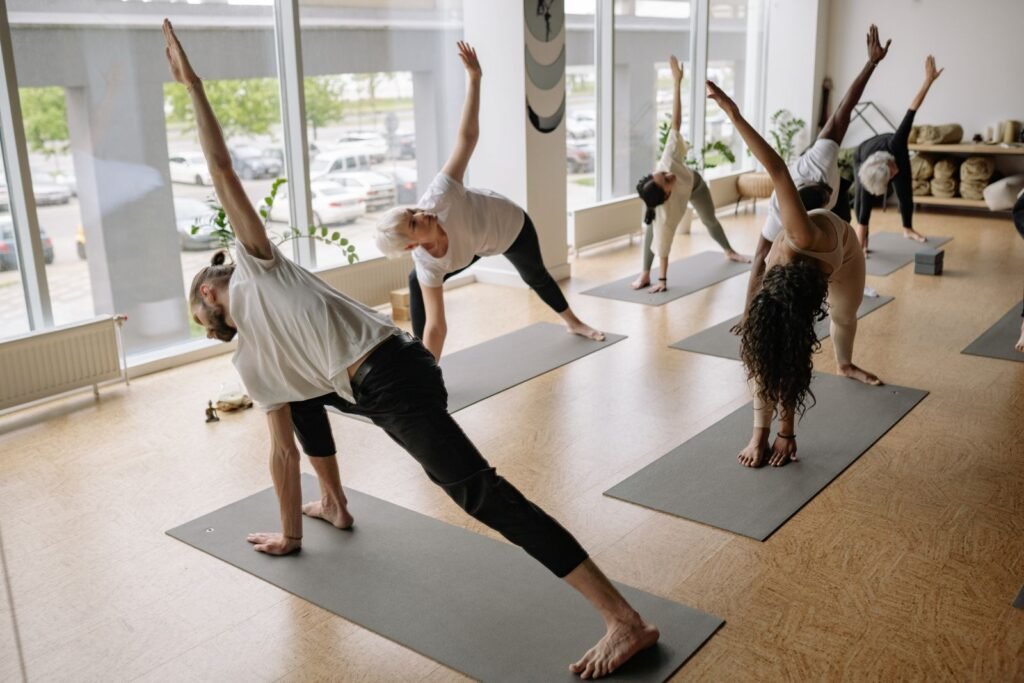
- Standing shapes: warrior I and II, triangle, and chair pose for strength and stamina
- Seated or floor poses: pigeon, seated forward fold, and bridge for hip and spine mobility
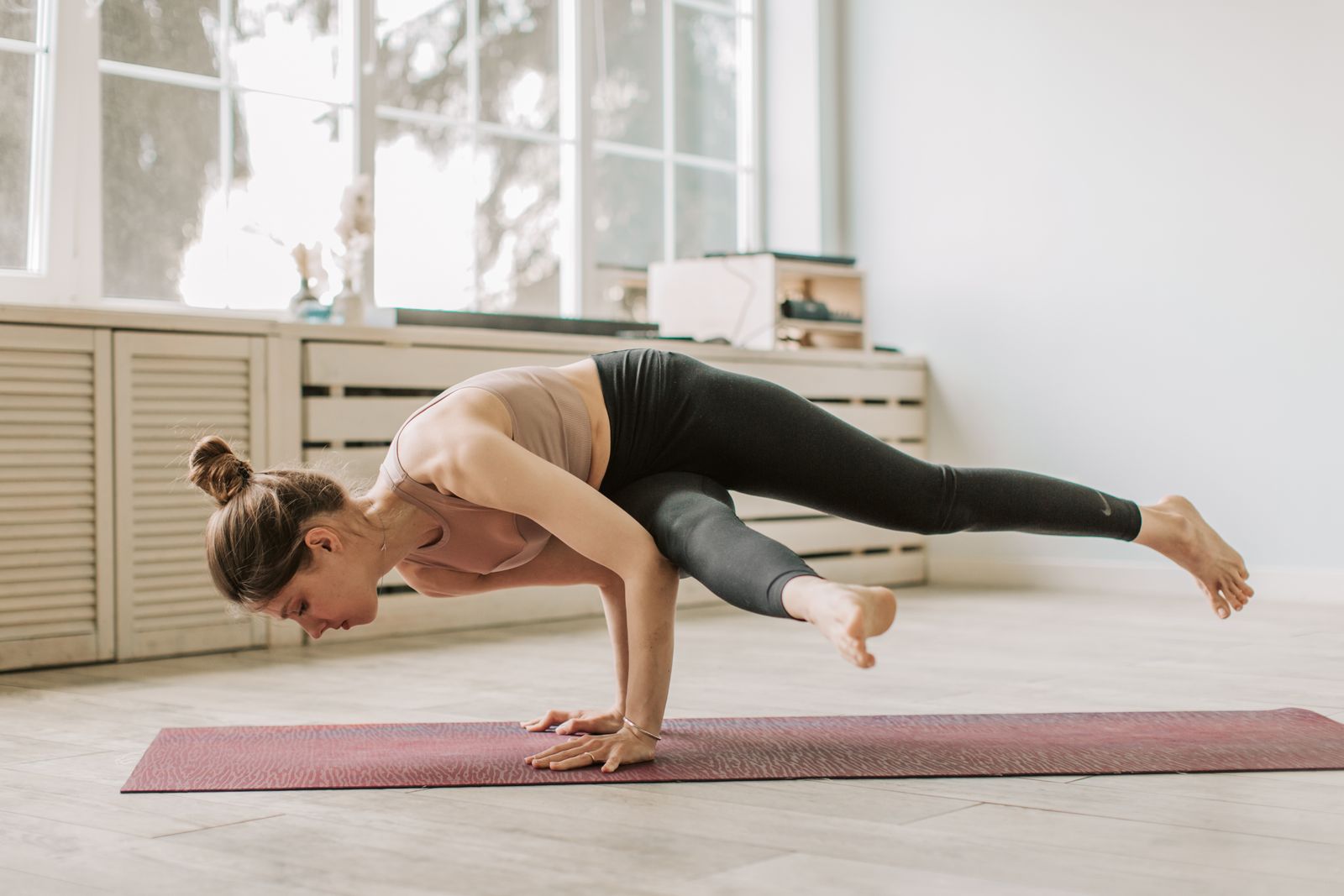
- Balance poses: tree pose, eagle pose, and half-moon, usually appearing in the second half once your body has warmed into the sequence
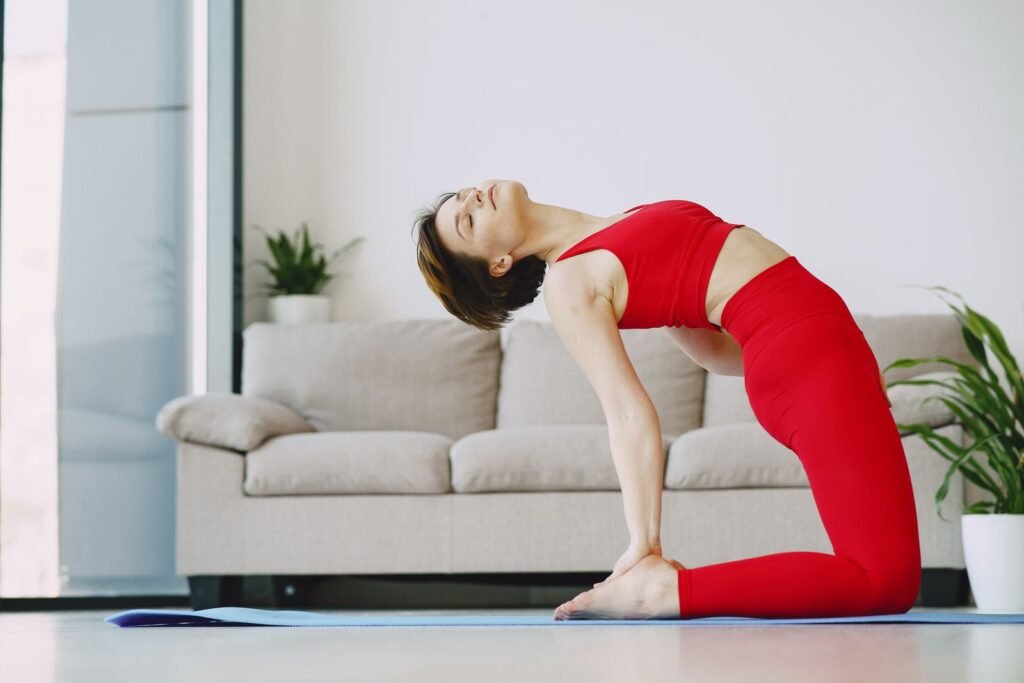
- Progression goals: a headstand progression, a split, or a full wheel pose by day 30, built through targeted hip-opening poses and shoulder-opening work
Do You Need a Yoga Challenge App, or Is Free Content Enough?
Free content is genuinely enough to complete a 30 day yoga challenge — there’s no requirement to pay for a dedicated app. Full free 21 day yoga challenge and 30-day series exist as complete YouTube playlists from established instructors, and many studios post free calendar-style challenges with a new video linked to each day. A yoga challenge app adds convenience rather than better content: built-in day-streak tracking, offline downloads for travel, reminder notifications, and sometimes a community feed where other participants on the same day post progress. If you’re someone who needs the external accountability of a streak counter and a push notification to stay consistent, an app earns its place. If you’re self-motivated and just need the sequence itself, a free video series or a printed pose calendar does the same job for zero cost.
What Does a Sample 30 Day Yoga Challenge Schedule Look Like?
Most well-structured challenges follow a rough weekly arc rather than random daily assignments. Week one typically focuses on foundational alignment and breath — beginner yoga poses, basic pranayama breathing techniques, and short 15-20 minute sessions to build the habit without overwhelming a new practitioner. Week two usually introduces standing sequences and light yoga flow work, increasing session length to 20-30 minutes as strength and confidence build. Week three often shifts toward hip openers, backbends, and balance poses, since these require the mobility gained in the first two weeks. Week four typically combines everything into fuller flows, sometimes building toward one culminating pose, and tapers with one or two restorative or yin yoga sessions in the final days so the challenge ends with recovery rather than peak exertion.
Is a Daily Yoga Challenge Safe for Beginners?
Yes, for most healthy adults, as long as the daily sessions are appropriately gentle and you’re willing to modify or skip poses that cause sharp pain. A daily practice is very different from a daily hard workout — well-designed challenges deliberately vary intensity so that a strength-focused day is followed by a gentler recovery-style session, preventing the overuse injuries that can come from repeating the same demanding poses without rest. Beginners should pay particular attention to the knees, lower back, and wrists, which absorb the most load in common poses like pigeon pose, forward folds, and plank variations. If you have an existing injury, are pregnant, or manage a chronic condition, it’s worth a quick conversation with a doctor or physical therapist before starting, and choosing a beginner-tagged challenge rather than an advanced one. Consistency matters far more than intensity for this format to work.
What If You Miss a Day During Your Challenge?
Missing a day doesn’t reset the challenge or erase its benefits — the all-or-nothing framing is one of the most common reasons people quit these programs early. If you miss day 14, the practical options are to pick up on day 15 where you left off, double up briefly later in the month, or simply extend the challenge by the number of days missed. What matters for the underlying goal — building a consistent practice — is the total number of sessions completed and the pattern of returning after a lapse, not an unbroken streak. Treating a missed day as data (what got in the way, and how to plan around it next time) is more useful than treating it as a failure that invalidates the whole month.
How Do You Stay Motivated for the Full 30 Days?
Motivation dips are normal and predictable, usually landing around day 8-10 once the initial novelty wears off and before the habit has fully taken hold. Tracking progress visually — a wall calendar, an app streak, or even a simple checklist — gives your brain a concrete signal of progress on days when you don’t feel any different physically. Pairing the practice with an existing habit, like doing it right after your morning coffee or immediately before bed, removes the decision-making step that causes most skipped sessions. Joining a group challenge, even an informal one with a friend doing the same series, adds social accountability that’s measurably more effective than willpower alone. Finally, picking a challenge whose pose style you genuinely enjoy — energetic vinyasa versus slow hatha yoga versus restorative yoga — matters more for completion rates than any productivity trick.
Can a Hot Yoga Challenge Replace a Regular 30 Day Challenge?
A hot yoga challenge follows the same daily-practice structure but adds a heated room, typically 90-105°F, which changes the demands on your body considerably. The heat increases muscle pliability, which can make deeper stretches feel more accessible, but it also increases sweat loss and the risk of dehydration and lightheadedness if you’re not drinking enough water before, during, and after each session. Because of that added physiological load, a 30-day hot yoga commitment is generally better suited to people who already have some yoga experience and know how their body responds to heat, rather than absolute beginners. If you’re drawn to the format but new to hot rooms, doing a standard 30 day challenge first and testing one or two heated classes separately is a lower-risk way to find out whether it suits you before committing a full month to it.
How Does a Yoga Challenge Fit Into a Broader Fitness Routine?
A 30 day yoga challenge works well as a standalone reset, but it also complements other training rather than competing with it. On strength-training or running days, a shorter 15-20 minute challenge session can serve as a mobility-focused warm-up or a recovery-focused cool-down instead of a full separate workout. People managing tight hips or a stiff back from desk work often pair a challenge with targeted sessions like yoga for back pain or yoga for flexibility rather than following the daily video verbatim every single day. The point of the challenge structure is the daily touchpoint, not rigid adherence to one specific sequence — swapping a day’s video for a more relevant session, like yoga for stress relief after a hard week, still counts as showing up.
What Should You Do After Finishing Your 30 Days?
Finishing a 30 day yoga challenge is a natural point to decide what a sustainable ongoing practice looks like, rather than stopping entirely or immediately starting another 30-day program. Many people scale down to 3-4 sessions a week once the daily habit has taken hold, since the challenge format’s main job — proving that consistent practice is achievable and valuable — has already been done. Others use it as a launchpad into a specific style they discovered they enjoyed, whether that’s a deeper dive into ashtanga yoga, a more meditative kundalini yoga practice, or continuing with daily yoga at a lower intensity. A short reflection on which days felt hardest and why is also useful data for structuring whatever comes next, whether that’s another challenge, a studio membership, or a self-directed routine.
Questions People Ask About 30 Day Yoga Challenges
Can beginners do a 30 day yoga challenge?
Yes. Most 30 day challenges are designed with beginners in mind and include modifications for common poses. Start with a beginner-tagged series rather than an advanced one, keep sessions short in the first week, and don’t push through sharp pain. The daily structure itself is what matters most, not your starting flexibility or strength level.
How much time does a 30 day yoga challenge take each day?
Most challenges run 15 to 45 minutes per session, with many defaulting to 20-30 minutes. Some challenges vary length by day, using shorter sessions on busy days and longer ones on weekends. Even a consistent 10-15 minute practice produces real benefits if it’s genuinely done every day rather than skipped when time feels tight.
Will a 30 day yoga challenge help me lose weight?
Gentle to moderate daily yoga can support weight management as part of a broader routine, mainly through stress reduction, improved sleep, and better body awareness that often leads to other healthier choices. It’s not a high-calorie-burn activity compared to cardio training, so it works best as a complement to your overall diet and activity level rather than a stand-alone weight-loss plan.
What’s the difference between a yoga challenge and just practicing yoga regularly?
A yoga challenge adds a defined start date, end date, and daily structure to an otherwise open-ended goal of “practice more.” That structure — a known number of days, a set sequence, and often a visible tracker — creates accountability that open-ended intentions usually lack, which is why challenges tend to produce more consistent short-term follow-through than an unstructured “I should do more yoga” goal.
Do I need special equipment for a 30 day yoga challenge?
A yoga mat is the only real requirement. A block or a folded towel helps with certain poses if your hips or hamstrings are tight, and a strap (or a belt) can substitute for one in seated forward folds. Comfortable clothing that allows a full range of motion matters more than any specific gear purchase.
Try This for Yourself
Reading about a 30 day yoga challenge only gets you so far — the benefits come from the daily practice itself, ideally with guidance that adjusts to your level and corrects your form in real time. If you want that structure without piecing together free videos yourself, FitStrot’s online yoga classes give you live, guided sessions built around exactly this kind of progressive, day-by-day practice, whether your goal is flexibility, stress relief, or simply finally making yoga a habit that sticks.
Related reading: Morning yoga | Daily yoga | Yoga flow | Benefits of yoga | Online yoga classes