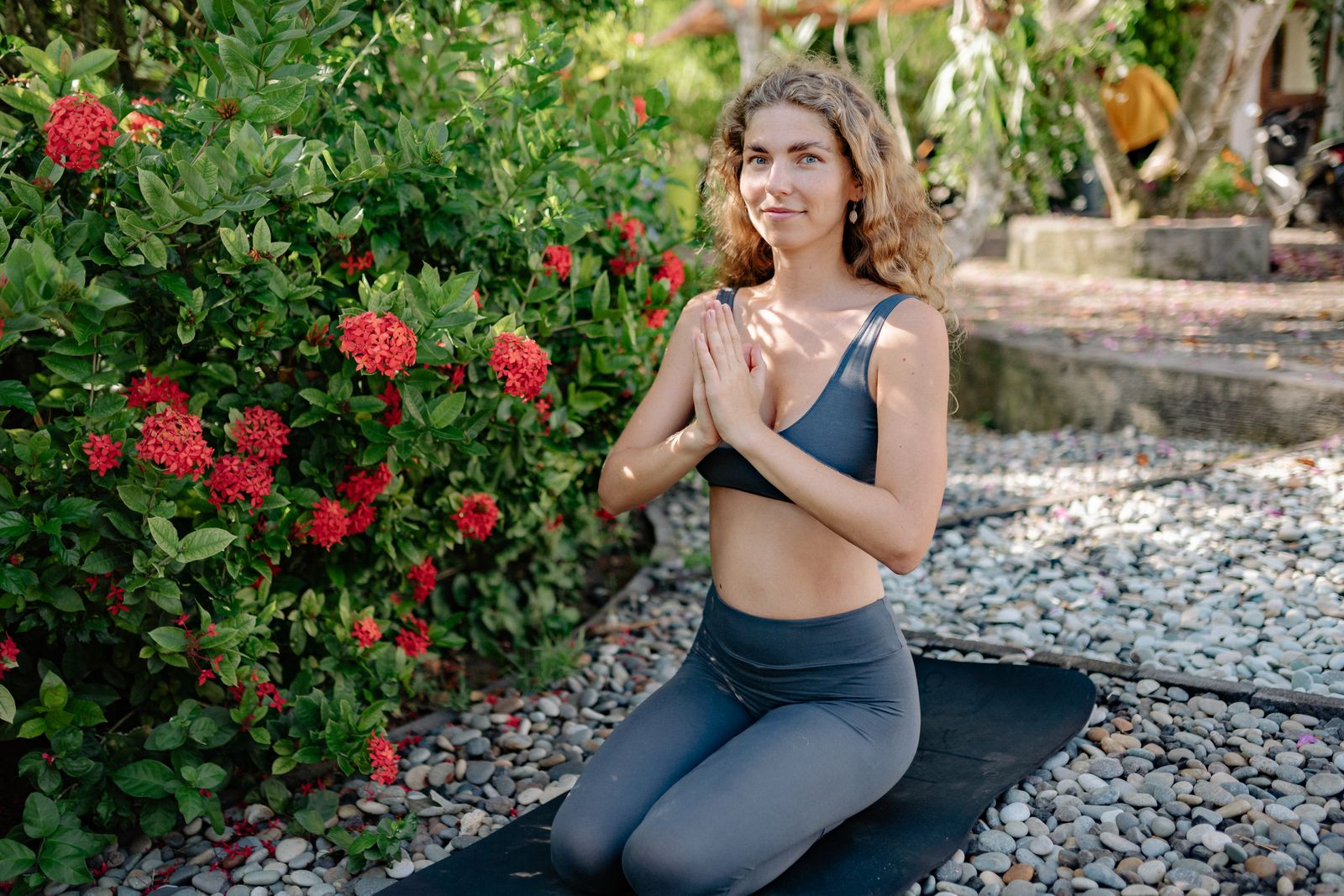
Vajrasana, also called the thunderbolt pose or diamond pose, is a simple kneeling yoga posture where you sit on your heels with your spine straight and hands resting on your thighs. Unlike almost every other asana, it’s the one pose yoga teachers say you can safely practice right after eating, because it aids digestion by directing blood flow toward the stomach and intestines. It’s also one of the few seated postures considered ideal for pranayama (breathing exercises) and meditation, since it naturally keeps the spine erect without straining the hips or knees the way cross-legged poses like padmasana can.
What Does the Word “Vajrasana” Mean?
The name comes from Sanskrit: “vajra” translates to thunderbolt or diamond, and “asana” means seat or pose. Together, vajrasana means “thunderbolt pose” or “diamond pose.” The name is thought to reflect the pose’s grounding, unshakeable quality — when you sit correctly in vajrasana, your base feels solid and stable, like a diamond, while the alert, upright spine channels a kind of internal energy comparable to a bolt of lightning. In some yogic texts, vajra also refers to a subtle energy channel (nadi) said to run through the pelvic region, which this seated position is believed to activate during pranayama and meditation practice.
Vajrasana Yoga in Hindi: व्रजासन का अर्थ
In Hindi, vajrasana (वज्रासन) is widely taught as a foundational bैठकर करने वाला आसन (seated posture). “Vajra” (वज्र) means thunderbolt or diamond, and this is one of the first poses introduced to beginners in Indian yoga schools because it’s low-impact, requires no flexibility training, and can be held for several minutes even by people who are new to yoga. It is frequently recommended in Indian households as the go-to after-meal posture, and many family elders encourage children to sit in vajrasana for five to ten minutes after dinner to support digestion.
How Do You Get Into Vajrasana? Step-by-Step Instructions
Vajrasana is beginner-friendly, but proper alignment matters for comfort and to protect your knees. Follow these steps:
- Step 1: Kneel on your yoga mat with your knees together and your big toes touching, feet slightly apart.
- Step 2: Slowly lower your hips down to rest on your heels. Your buttocks should sit on top of your heels, not between them.
- Step 3: Keep your spine straight, shoulders relaxed, and chest gently lifted. Avoid slumping forward.
- Step 4: Place your palms face-down on your thighs, just above the knees.
- Step 5: Close your eyes, relax your face, and breathe naturally through your nose. Hold for 1 to 5 minutes to start, building up gradually as your ankles and knees adapt.
Beginners often find their ankles or the tops of their feet feel tight in the first few sessions. This is normal and improves with regular, short practice sessions rather than forcing a long hold too soon. Pairing vajrasana with a simple standing warm-up like tadasana beforehand can help loosen the legs and improve circulation before you kneel down.
What Are the Main Vajrasana Yoga Benefits?
Vajrasana is often underestimated because it looks passive, but regular practice offers a genuine range of physical and mental benefits:
- Aids digestion: Sitting in vajrasana after meals is commonly cited as helping stimulate blood flow to the abdominal organs, which may support digestion and reduce bloating.
- Strengthens the pelvic floor and lower back: The upright spinal position engages the muscles that support the lower back and pelvis over time.
- Improves posture awareness: Because the pose demands an erect spine, regular practitioners often report better sitting posture throughout the day.
- Prepares the body for meditation: The stable base and straight spine make it a practical alternative to cross-legged seated poses for meditation and breathing work.
- Stretches the ankles, knees, and thighs: Holding the pose gently stretches connective tissue around the ankle joints and quadriceps, which can help with overall lower-body flexibility.
- Supports a calm nervous system: Combined with slow breathing, the stillness of vajrasana is often used as a grounding technique before or after more dynamic practices such as surya namaskar.
These vajrasana yoga pose benefits accumulate with consistency — a few minutes daily tends to be more effective than an occasional long session.
Can Vajrasana Really Help With Digestion?
This is one of the most searched questions about the pose, and it’s worth answering carefully. Vajrasana is widely recommended in traditional yoga practice as a post-meal posture, and the reasoning given is that the kneeling position may support blood circulation to the stomach and intestines while keeping the torso upright, which can ease the sensation of heaviness after eating. That said, it should be treated as a supportive habit rather than a medical treatment — if you have chronic digestive issues, a doctor or gastroenterologist is the right resource, not a yoga pose alone. Many people do find that ten minutes of quiet, upright sitting after a meal feels noticeably more comfortable than lying down or slouching on a couch, and vajrasana is simply a structured way to do that.
What Common Mistakes Should Beginners Avoid?
Even a “simple” pose like vajrasana has alignment details that are easy to get wrong:
- Sitting between the heels instead of on top of them: This puts uneven pressure on the ankles. Your hips should rest directly on your heels.
- Rounding the lower back: Slouching defeats the purpose of the pose. Imagine a string gently pulling the crown of your head upward.
- Forcing a long hold too soon: Jumping straight to 10-15 minutes without building up ankle flexibility can cause unnecessary strain. Start with 1-2 minutes and add time gradually.
- Ignoring knee pain: Mild stretching sensation is normal; sharp pain in the knee joint is not. Come out of the pose immediately if you feel this.
- Skipping the warm-up: Cold ankles and knees are more prone to discomfort. A few rounds of gentle movement or a standing pose like vrksasana beforehand can help ease into it.
What Is Supta Vajrasana and How Is It Different?
Supta vajrasana, or “reclined thunderbolt pose,” is a deeper variation where you start in vajrasana and then lean back until your back touches the floor or mat, with your knees still bent beneath you. It’s considerably more intense than the seated version and is generally recommended only for practitioners who already have strong knee and ankle flexibility, since it places significant stretch on the quadriceps, hip flexors, and knee joints. Supta vajrasana yoga is often taught in intermediate or advanced classes, and beginners are usually advised to build comfort in regular vajrasana for several weeks before attempting the reclined version. If you feel any sharp knee pain in supta vajrasana, come out of the pose slowly and stick with the basic seated form instead.
Who Should Avoid Vajrasana or Modify It?
Vajrasana is gentle, but it isn’t right for everyone in its full form. People with the following conditions should approach it cautiously or modify the pose:
- Knee injuries or arthritis: The deep knee bend can aggravate existing joint issues. A folded blanket behind the knees or under the ankles can reduce pressure.
- Ankle injuries: Sitting with the feet flexed underneath the body can be uncomfortable; a rolled towel under the ankles helps.
- Pregnancy: Generally considered safe in early stages with guidance, but always check with a prenatal yoga instructor or doctor first, especially in later trimesters.
- Recent hip or knee surgery: Avoid until cleared by a physical therapist or physician.
If any of these apply to you, a qualified instructor can suggest props or alternative seated postures that still support meditation and breathing practice without straining the joints.
How Does Vajrasana Compare to Other Seated Yoga Poses?
Vajrasana stands out among seated postures because it doesn’t require hip flexibility the way cross-legged poses do. Padmasana (lotus pose) and sukhasana (easy pose) both demand external rotation at the hip joint, which can be difficult for beginners or anyone with tight hips. Vajrasana instead asks for flexibility at the ankles and knees, which makes it accessible to a different group of practitioners. For people who find cross-legged sitting genuinely uncomfortable, vajrasana can be a more sustainable option for longer meditation sessions. It’s often introduced early in a broader study of yoga poses precisely because it teaches spinal alignment without the hip-opening prerequisite that many other seated postures require.
How Long Should You Hold Vajrasana?
For beginners, starting with 1 to 2 minutes once or twice a day is a reasonable entry point. As ankle and knee flexibility improves, most practitioners can comfortably build up to 5-10 minute holds, and experienced yogis sometimes sit in vajrasana for 15-20 minutes during meditation or pranayama sessions. There’s no universal “correct” duration — the right length depends on your comfort, your goal (a quick post-meal sit versus an extended meditation session), and how your joints respond. If you notice numbness or tingling in your feet, it’s a signal to come out of the pose and shake out your legs before continuing.
Can Vajrasana Be Practiced as Part of a Daily Yoga Routine?
Yes, and it fits naturally into several parts of a daily practice. Many practitioners use it as a closing pose after a more dynamic sequence, similar to how surya namaskar (sun salutations) might open a session with movement and vajrasana closes it with stillness. Others use it specifically around mealtimes for its digestive benefits, sitting for 5-10 minutes after lunch or dinner. It also pairs well before or after pranayama practices like alternate nostril breathing, since the upright spine supports deeper, more controlled breath work. Because it requires no equipment and very little space, it’s one of the more practical poses to slot into a busy day, whether you’re following an in-person class or an online yoga session at home.
Where Can You Find Vajrasana Yoga Images and Videos to Learn From?
If you’re searching for vajrasana yoga images or a vajrasana yoga video to check your form, look for resources that show the pose from a side angle, since this view makes it easiest to check that the spine is straight and the hips are resting on the heels rather than hovering above them. A qualified instructor watching you live — whether in a studio or through a live online yoga class — will catch small alignment issues that photos and videos alone can miss, particularly around ankle positioning and lower back rounding. If you’re building a broader home practice, comparing your form against structured guidance for other beginner yoga poses can help you understand how vajrasana fits into a well-rounded routine.
What Should You Combine Vajrasana With for Best Results?
Vajrasana works well as part of a broader sequence rather than as a standalone practice. A simple approach: begin with light movement such as tadasana (mountain pose) to center your posture, move through a few rounds of surya namaskar to warm the body, include a balance posture like vrksasana (tree pose) to build focus, and close with vajrasana for a few minutes of stillness and breath awareness. This kind of sequencing is common in both hatha yoga and gentler restorative styles, and it reflects a broader principle in yoga: dynamic movement followed by stillness tends to produce a deeper sense of calm than either alone. If digestion is your main goal, save vajrasana specifically for after meals rather than folding it into a pre-meal routine.
Questions People Ask About Vajrasana
Is vajrasana good for weight loss?
Vajrasana alone burns very few calories since it’s a static, seated pose. It isn’t a weight-loss tool by itself, but it may support digestion after meals, which some people find helps with portion awareness and bloating. For weight management, pair it with more active practices like surya namaskar or cardio-based classes such as Zumba.
Can I do vajrasana every day?
Yes, vajrasana is generally considered safe for daily practice, including sitting in it briefly after meals. Most people can hold it for a few minutes daily without issue. If you have knee or ankle sensitivity, use a folded blanket for cushioning and limit the duration until your joints adapt.
Why does vajrasana hurt my knees or ankles?
Discomfort usually comes from tight ankle joints, tense quadriceps, or sitting with too much weight concentrated on the knee joint itself rather than distributed through the shins and feet. Placing a folded blanket behind the knees or under the ankles reduces pressure. If pain persists, stop and consult an instructor or physical therapist.
Is vajrasana the same as sitting in seiza (Japanese kneeling)?
They look very similar and use the same basic kneeling position, but they come from different traditions with different intentions — seiza is a formal sitting posture in Japanese culture, while vajrasana is a yogic asana used specifically for digestion, meditation, and pranayama preparation. The physical alignment cues largely overlap.
What’s the difference between vajrasana and supta vajrasana?
Vajrasana is the basic seated kneeling pose with an upright spine. Supta vajrasana is a deeper reclined variation where you lean back from vajrasana until your back rests on the floor, creating a much stronger stretch through the thighs and hip flexors. Supta vajrasana requires significantly more flexibility and is generally an intermediate-to-advanced variation.
Can beginners do vajrasana without any prior yoga experience?
Yes. Vajrasana is often one of the very first poses taught to complete beginners because it requires no strength or hip flexibility, just the ability to kneel comfortably. Starting with short holds of 1-2 minutes and using a folded blanket for cushioning makes it accessible even on day one of a yoga journey.
Try This for Yourself
Reading about vajrasana is a good start, but the real benefits come from feeling the alignment cues in your own body, with someone to correct your form in real time. If you’d like personalized guidance on vajrasana and other foundational poses, join a live online yoga class with FitStrot and build a practice that fits your body and your schedule.
Related reading: Explore more on yoga poses, learn the fundamentals of surya namaskar, build better balance with vrksasana, or start with the basics of tadasana. Ready to practice with expert guidance? Join a live online yoga class today.