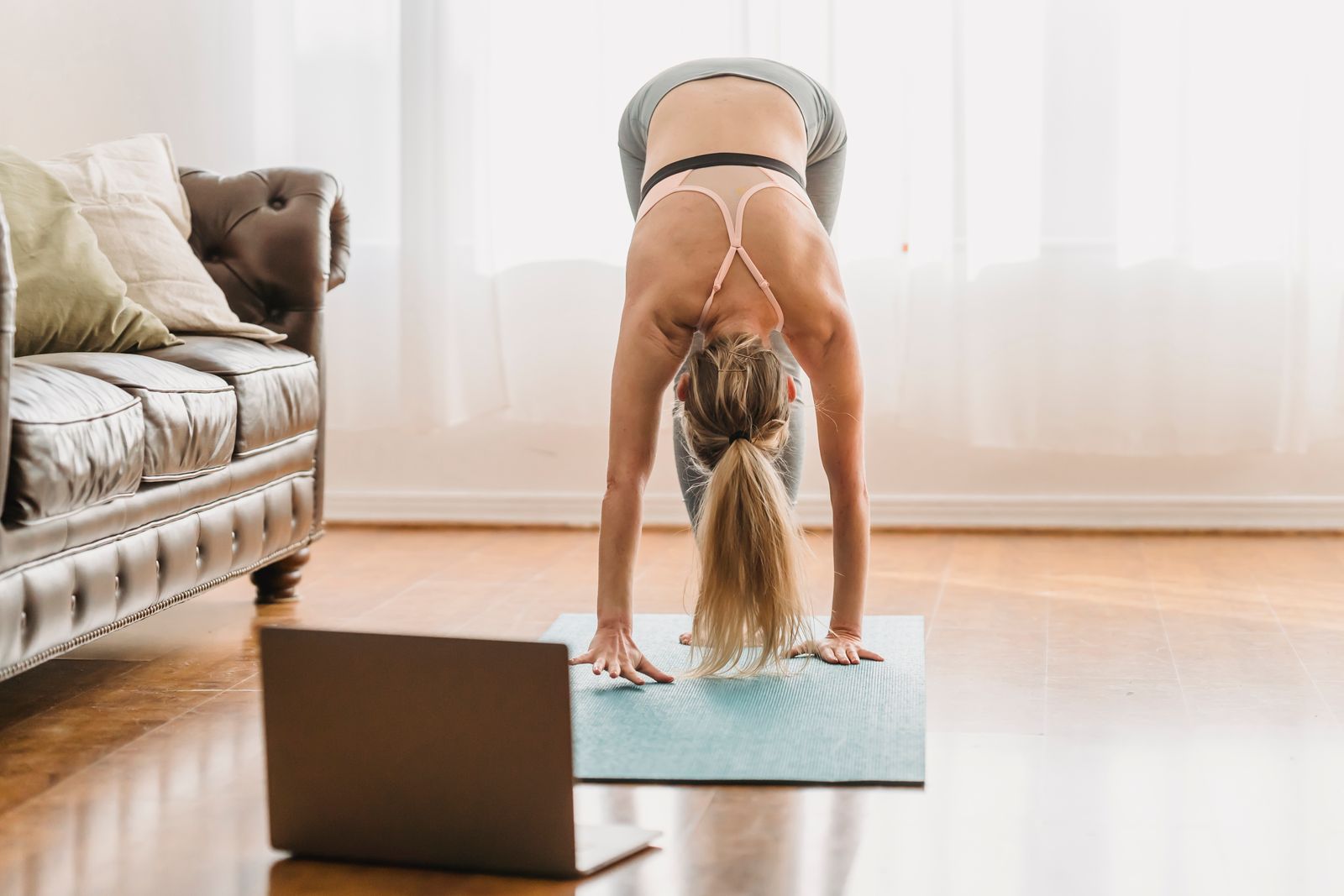
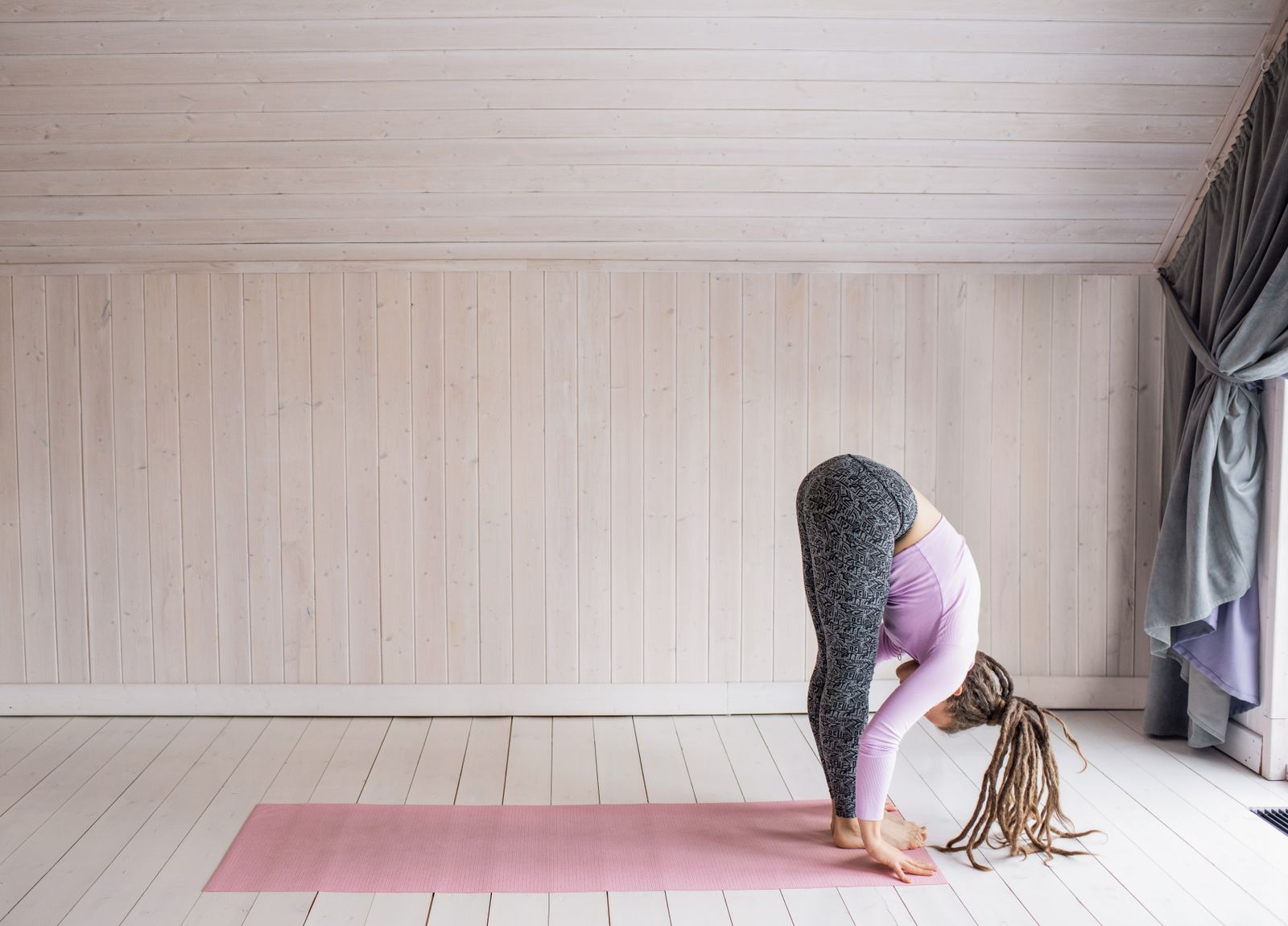
Padahastasana, or Hand-to-Foot Pose, is a standing forward bend in which you fold from the hips and slide your palms face-up under the soles of your feet. The name comes from the Sanskrit words pada (foot), hasta (hand), and asana (posture). It deeply stretches the hamstrings and spine, calms the nervous system, and is commonly practiced as part of Surya Namaskar (Sun Salutation), where it typically appears as the third and tenth positions in the sequence. Most practitioners hold it for 20 to 60 seconds, breathing steadily while keeping length in the lower back rather than forcing the head toward the shins.
What Is Padahastasana in Yoga?
Padahastasana is a standing forward-bending asana that belongs to the same family as Uttanasana (Standing Forward Bend), but with one key difference: instead of letting your hands rest on the floor or your shins, you tuck your palms face-up directly beneath your feet. This creates a gentle compression at the wrists that some yoga traditions describe as a light massage for the palms and a way to deepen the fold without collapsing the spine.
The pose is classified as an intermediate standing forward bend. It’s most commonly taught as part of a Surya Namaskar flow, but it also stands on its own as a foundational hip-hinge posture in general Hatha yoga and Vinyasa yoga classes. If you’re building a home practice from the ground up, Padahastasana is usually introduced after a student is comfortable with basic standing poses like Tadasana (Mountain Pose).
How Do You Do Padahastasana Step by Step?
Padahastasana rewards patience more than force. Here is a step-by-step breakdown you can follow safely, whether you’re practicing alone at home or as part of a guided yoga poses sequence.
- Stand in Tadasana with your feet hip-width apart, weight distributed evenly across both feet.
- Inhale and raise your arms overhead, lengthening your spine from tailbone to fingertips.
- Exhale and hinge forward from the hip joints, not the waist, keeping your back as long as possible.
- Bend your knees as much as you need to bring your palms flat to the floor, then slide them under the soles of your feet, palms facing upward.
- Gradually work toward straightening the legs only as far as your hamstrings comfortably allow.
- Hold the pose for 20 to 60 seconds, breathing evenly through the nose.
- To exit, bend your knees again, release your hands, and roll up slowly one vertebra at a time, letting your head come up last.
A short warm-up makes a real difference here. Spending five to ten minutes on gentle movement, such as Cat-Cow stretches, Downward Dog, or a slow round of Surya Namaskar, prepares the hamstrings and lower back before you attempt the deeper fold.
What Are the Benefits of Padahastasana?
Padahastasana offers a combination of physical and mental benefits that make it a staple of standing sequences.
- Hamstring and calf flexibility. The forward fold delivers a deep, sustained stretch through the back of the legs, which over time can improve overall lower-body mobility.
- Spinal decompression. Hanging forward from the hips gently releases compression between the vertebrae, which many practitioners find relieves tightness after long hours of sitting.
- Calming effect on the nervous system. Like most forward bends, Padahastasana is associated with a shift toward the parasympathetic “rest and digest” state, which can help lower stress levels.
- Digestive stimulation. The gentle abdominal compression created by the fold is commonly cited as a mild internal massage for the digestive organs.
- Improved circulation. Inverting the upper body relative to the heart, even briefly, encourages blood flow toward the brain and upper torso.
- Core engagement. Maintaining the fold with control, rather than collapsing into it, requires active engagement of the deep abdominal muscles.
These benefits compound when Padahastasana is practiced consistently as part of a broader routine rather than as an isolated stretch. Pairing it with other standing and balancing postures, such as Vrksasana (Tree Pose), builds both flexibility and stability over time.
How Does Padahastasana Fit Into Surya Namaskar?
Padahastasana is one of the recognizable postures within the twelve-step Surya Namaskar (Sun Salutation) sequence, where it commonly appears as the third position on the way down and again as the tenth position on the way back up. In this context, it acts as a transitional fold between the raised-arms position (Hasta Uttanasana) and the lunge that follows (Ashwa Sanchalanasana).
Because Sun Salutations are practiced as a flowing sequence, Padahastasana is often held for only a breath or two within that context, rather than the longer 30-second-plus holds used when it’s practiced as a standalone posture. Both approaches are valid: the flowing version builds cardiovascular rhythm and warmth, while the standalone hold builds deeper flexibility.
What Muscles Does Padahastasana Stretch and Strengthen?
Padahastasana primarily targets the posterior chain of the body. The hamstrings and calves receive the deepest stretch, while the spinal erector muscles lengthen as the back extends forward. The gluteal muscles are also stretched, particularly for practitioners with tighter hips. On the strengthening side, the deep core stabilizers, including the transverse abdominis, engage to control the descent and prevent the lower back from rounding excessively. The quadriceps also do quiet stabilizing work, especially as you work toward straighter knees.
Who Should Avoid Padahastasana?
Padahastasana is generally safe for healthy adults, but certain conditions call for caution or avoidance altogether. It’s best to skip or modify this pose if you have any of the following:
- A recent or acute hamstring strain or tear
- Herniated or slipped discs, or acute lower back pain
- Sciatica flare-ups
- Uncontrolled high blood pressure or glaucoma
- Osteoporosis or recent abdominal or spinal surgery
- Pregnancy, particularly after the first trimester
If you have any of these conditions or are unsure whether the pose is appropriate for you, speak with a doctor or a qualified yoga instructor before attempting it. As with any forward bend, exit the pose immediately if you feel sharp or shooting pain rather than a general stretching sensation.
What Are Common Mistakes in Padahastasana?
Even experienced practitioners can develop habits that reduce the benefit of this pose or increase injury risk. Watch out for these common errors:
- Forcing the stretch. Bouncing or yanking the body downward to reach the floor faster increases strain on the hamstrings and lower back.
- Locking the knees. Hyperextending the knees to get a deeper fold puts unnecessary stress on the joint; a soft bend is safer and often allows a better stretch.
- Rounding the lower back excessively. Letting the lumbar spine collapse instead of hinging from the hips shifts the stretch away from the hamstrings and onto the spine.
- Holding the breath. Shallow or held breath increases tension; steady nasal breathing helps the body relax into the fold.
- Lifting the head first when standing back up. This can strain the neck and lower back; the head should be the last part of the body to rise.
What Are Beginner-Friendly Variations of Padahastasana?
If your hamstrings are tight or you’re newer to forward bends, these modifications make Padahastasana more accessible without sacrificing the core benefits.
- Bent-knee version. Keep a generous bend in the knees throughout the pose. This is often the right starting point and is not a lesser version of the posture; it simply meets your body where it currently is.
- Hands-on-shins variation. If reaching the floor isn’t accessible yet, rest your palms on your shins or ankles instead of tucking them under your feet.
- Blocks under the hands. Placing yoga blocks under your palms shortens the distance to the floor and helps maintain length in the spine.
- Wall-supported fold. Standing an arm’s length from a wall and walking your hands down it can help beginners understand the hip-hinge action before attempting the full pose.
Progressing gradually from these variations toward the full expression of the pose, alongside consistent practice of complementary postures like Paschimottanasana (Seated Forward Bend), builds the flexibility needed over weeks and months rather than days.
How Does Padahastasana Compare to Uttanasana?
Padahastasana and Uttanasana are close cousins, and it’s common for beginners to confuse the two. In Uttanasana, the hands typically rest on the floor, on blocks, or hold opposite elbows, and the emphasis is on releasing the head and neck completely. In Padahastasana, the hands are tucked under the feet, which creates a slightly different sensation: a firmer anchor point that some practitioners find helps them fold a little deeper with more stability. Both poses stretch the same muscle groups and offer similar calming effects, so many teachers use them interchangeably depending on what feels more supportive for a given student on a given day.
How Often Should You Practice Padahastasana?
For general flexibility maintenance, practicing Padahastasana three to five times a week, either as a standalone hold or within a Sun Salutation flow, is a reasonable target for most healthy adults. Beginners often start by holding the pose for just 15 to 20 seconds and gradually build toward a minute or longer as the hamstrings adapt. Flexibility gains from forward bends tend to be gradual; consistency over several weeks matters far more than pushing hard in any single session. If you’re following a structured program, such as a guided online yoga class, your instructor can help pace your progress safely and correct alignment issues that are hard to catch on your own.
How Does Padahastasana Support Overall Wellness Goals?
Beyond its direct physical effects, Padahastasana fits naturally into broader wellness goals. It’s frequently included in sequences aimed at yoga for back pain because of how it lengthens the spine and hamstrings together. It also complements practices built around yoga for stress relief, since forward bends are generally considered calming rather than energizing postures. For anyone exploring the different types of yoga available, understanding foundational poses like this one makes it easier to follow along in almost any style, from gentle Hatha classes to more dynamic Vinyasa flows. More broadly, the general benefits of yoga, including improved flexibility, better posture, and reduced stress, are all reinforced by regularly practicing standing forward bends like Padahastasana.
Questions People Ask About Padahastasana
What does Padahastasana mean?
Padahastasana comes from three Sanskrit words: pada meaning foot, hasta meaning hand, and asana meaning posture or seat. Together, the name literally translates to “hand-to-foot pose,” describing the defining action of tucking the palms beneath the soles of the feet during the forward fold.
Is Padahastasana good for weight loss?
Padahastasana alone burns relatively few calories since it’s a static hold rather than a cardio movement. However, it’s commonly included in flowing sequences like Surya Namaskar, which combine several poses into a more calorie-demanding routine. As part of a broader, consistent yoga practice and balanced diet, it can support overall fitness goals.
Can beginners do Padahastasana?
Yes, with modifications. Beginners with tight hamstrings should bend the knees generously, rest their hands on their shins instead of the floor, or use yoga blocks to reduce the distance to the ground. The pose can be built up gradually over weeks as flexibility improves.
How long should you hold Padahastasana?
Most practitioners hold Padahastasana for 20 to 60 seconds when practicing it as a standalone pose, breathing steadily throughout. Within a Surya Namaskar flow, it’s typically held for only one or two breaths as part of the moving sequence rather than as an extended static stretch.
Is Padahastasana the same as touching your toes?
Not quite. Simply touching your toes doesn’t require the same attention to hip-hinging, spinal length, and breath control that Padahastasana asks for. The yogic version emphasizes a controlled, mindful fold with the hands tucked under the feet, which is why it delivers benefits like nervous system calming that casual toe-touching doesn’t emphasize.
Try This for Yourself
Reading about Padahastasana only gets you so far; the real benefits come from guided, consistent practice with correct alignment. If you’d like personalized feedback as you build toward a deeper, safer fold, explore FitStrot’s Online Yoga Classes and practice this pose alongside a certified instructor from home.
Related reading: explore our full library of yoga poses, learn the complete Surya Namaskar sequence, build a strong foundation with Tadasana, and challenge your balance with Vrksasana. Ready to practice with an instructor? Join FitStrot’s Online Yoga Classes today.