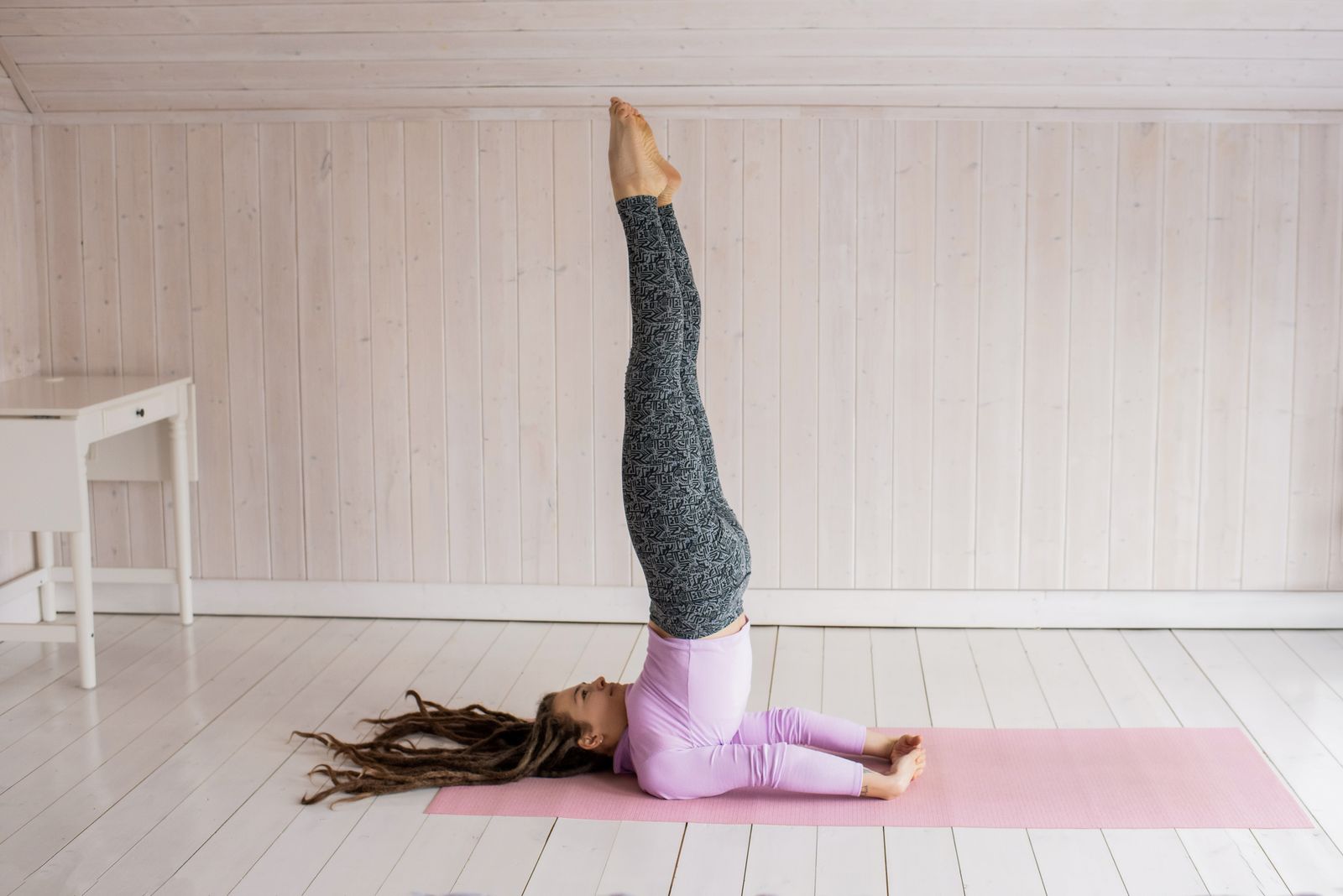
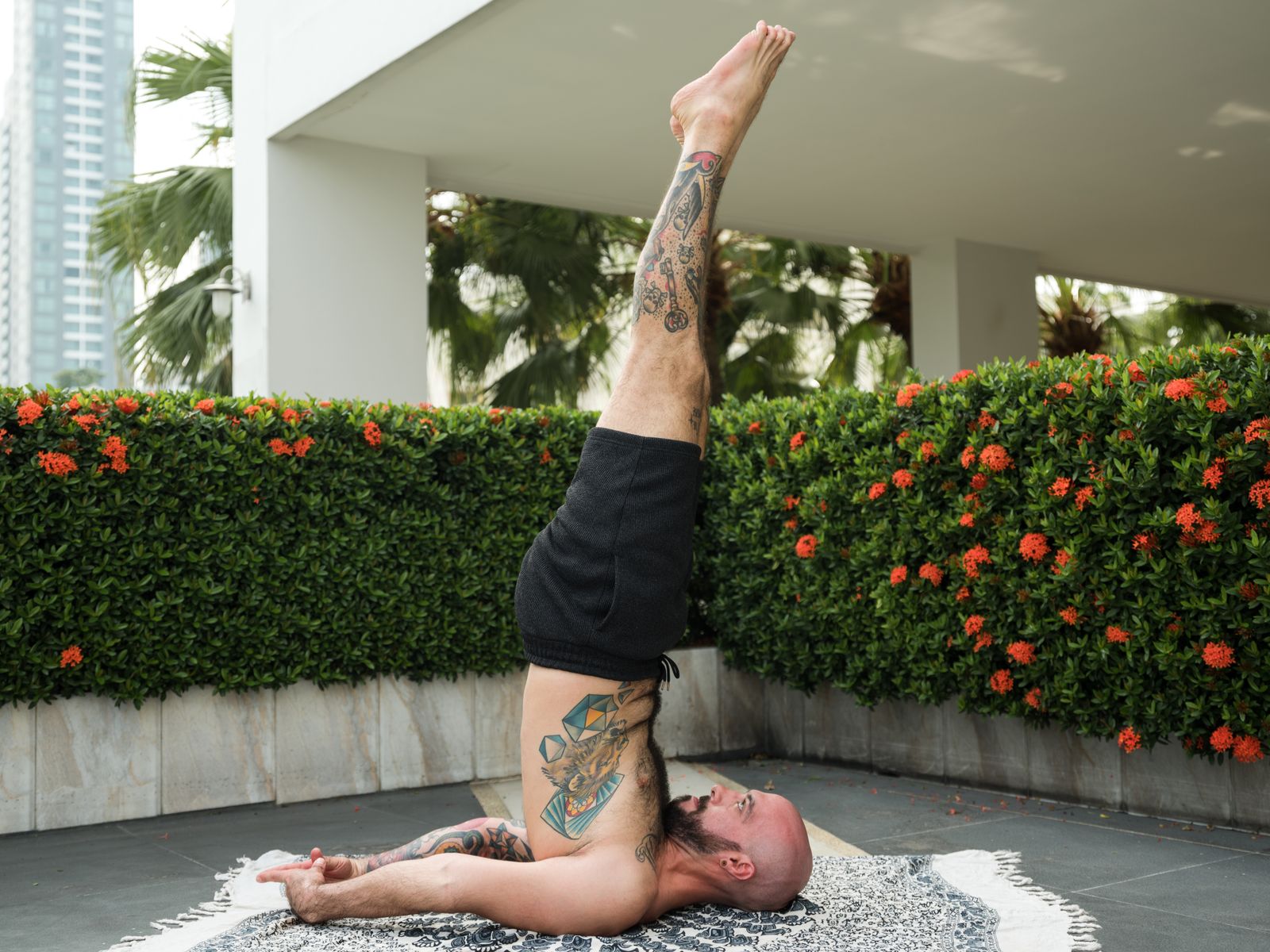
Salamba Sarvangasana, or supported shoulder stand, is an inversion in which the body is balanced on the shoulders and upper arms with the legs extended straight up toward the ceiling, while the hands support the lower back. The pose is often called the “queen of asanas” in traditional hatha yoga because it is believed to benefit the entire body, from circulation and the thyroid gland to the nervous system. Practiced with a folded blanket under the shoulders and a steady, unhurried entry and exit, it is one of the most grounding inversions you can add to a yoga poses practice, but it also carries real contraindications that every practitioner should understand before attempting it.
What Does “Salamba Sarvangasana” Actually Mean?
The name comes from Sanskrit: “salamba” means “supported,” “sarva” means “all” or “whole,” and “anga” means “limb” or “body part.” Put together, Salamba Sarvangasana translates roughly to “supported whole-body pose,” a nod to the idea that the inversion is thought to influence every system of the body at once, rather than isolating one muscle group. In English yoga classes it is almost always shortened to “shoulder stand.” The “salamba” prefix specifically distinguishes it from Niralamba Sarvangasana, the unsupported version where the arms are lifted away from the back, a significantly more advanced variation reserved for experienced practitioners with strong core and shoulder control.
How Do You Get Into Shoulder Stand Safely?
Begin lying on your back with two or three firmly folded blankets stacked under your shoulders, positioned so your head and neck rest on the floor just off the edge of the blankets while your shoulders stay supported on top. This blanket height is not optional decoration: it reduces the depth of neck flexion and protects the cervical spine. Bend your knees, press your feet into the floor, and use a small hop or rock to bring your knees toward your chest. Support your lower back with both hands, elbows drawing in toward each other, and walk your hands up your back as you straighten your legs toward the ceiling. Your weight should rest on your shoulders and upper arms, not on your neck or the back of your skull. Hold for 5 to 10 breaths as a beginner, working up gradually over weeks and months, then bend your knees back to your chest and roll down slowly, one vertebra at a time.
Why Is a Folded Blanket So Important in This Pose?
The blanket setup is the single most important safety element in Salamba Sarvangasana. Without it, the natural curve of the cervical spine gets pressed flat against the floor, which can compress the discs and nerves in the neck under the full weight of the body. A stack of blankets raises the shoulders 2 to 4 inches above the head, preserving the neck’s natural curve and shifting the load onto the stronger, more stable shoulder girdle. If you are new to inversions, practicing near a wall for balance, and using a teacher or a mirror to check that your neck stays soft and unweighted are all sensible ways to build the pose safely before attempting it away from support, similar to how you would build confidence in balance postures like Vrksasana.
What Are the Benefits of Salamba Sarvangasana?
Practitioners and yoga teachers commonly describe several benefits of regular, careful shoulder stand practice. Because the pose reverses the usual downward pull of gravity on the legs and abdominal organs, it is often cited as supportive for venous circulation, helping blood and lymph drain from the legs back toward the heart. The gentle chin-to-chest compression is traditionally associated with stimulating the thyroid and parathyroid glands in the neck, which is why the pose is frequently linked to metabolic balance in yogic texts, though this specific glandular effect has not been confirmed in modern clinical research and should be treated as a traditional claim rather than a proven medical outcome. Many practitioners also report that the pose has a calming, almost meditative effect on the nervous system, likely related to the stillness of the head and the slow, controlled breathing the position demands. The postural strengthening of the shoulders, upper back, and core that comes from holding the body in a straight vertical line is a benefit with clearer physical grounding, similar to the full-body engagement built through consistent Surya Namaskar practice, and it complements the general benefits of yoga that come from a well-rounded, consistent practice.
Who Should Avoid Shoulder Stand?
Shoulder stand is not appropriate for everyone, and this is one pose where caution genuinely matters. Consider skipping or modifying the pose if any of the following apply to you:
- Neck or cervical spine issues: neck injuries, cervical spine problems, or a history of whiplash mean the pose should be avoided entirely, since it places direct structural demand on the neck and upper spine.
- High blood pressure: inversions shift blood pressure distribution in ways that can aggravate hypertension.
- Glaucoma or other eye conditions: conditions involving elevated intraocular pressure can be worsened by inverting.
- Early pregnancy: changes in intracranial pressure during inversions are a common concern in the early weeks.
- Untreated thyroid disorders: check with a doctor first, given the pose’s direct pressure on the throat and neck region.
- Menstruation: some traditional teachers advise against inversions during your cycle, though this guidance is debated among modern teachers and not universally followed; listen to your own body’s comfort level if you choose to practice.
When in doubt, a qualified teacher or physician should be consulted before attempting this or any other inversion pose, and pairing that guidance with general yoga safety tips is a sensible habit for any new inversion practice.
What Are Good Modifications for Beginners?
If full shoulder stand feels inaccessible, several modifications preserve most of the pose’s benefits with far less demand on the neck. Legs-up-the-wall pose (Viparita Karani) offers a gentler inversion that still supports venous return without loading the cervical spine at all, making it an excellent entry point for anyone new to inverting. A half shoulder stand, where the legs stay at a 45-degree angle rather than fully vertical, reduces the core and balance demand while still building the habit of the blanket setup and hand placement. Practicing with the feet resting against a wall for the first several weeks removes the balance challenge entirely, letting you focus purely on shoulder and neck alignment. Building strength in supporting poses like Tadasana and core-focused postures beforehand also makes the transition into shoulder stand noticeably smoother, and combining these with yoga for flexibility work in the hips and hamstrings helps the legs stack more easily overhead.
How Does Shoulder Stand Fit Into a Full Yoga Sequence?
In most traditional hatha and Iyengar sequences, Salamba Sarvangasana appears near the end of practice, after the body has been warmed up with standing poses, backbends, and some gentle twists, but before the final relaxation in Savasana. This placement is deliberate: the body needs adequate warmth and shoulder mobility before inverting, and the calming effect of the pose serves as a natural bridge into stillness. It is traditionally taught alongside Halasana (plow pose), which flows directly from shoulder stand by lowering the legs overhead to the floor, and is often followed by a gentle backbend such as Matsyasana (fish pose) to counter the strong forward neck flexion. If you’re building a home sequence, placing Sarvangasana after a warm-up that includes sun salutations and before your cooldown mirrors how it’s traditionally taught in hatha yoga classes, and it’s a useful reference point when comparing the different types of yoga and how each structures a full-length session.
What’s the Difference Between Sarvangasana and Halasana?
Sarvangasana and Halasana are closely related but distinct poses that are frequently practiced in sequence. In Sarvangasana, the legs extend straight up, perpendicular to the floor, with the hands actively supporting the lower back to maintain the vertical line. In Halasana, the legs continue moving overhead until the toes touch the floor behind the head, and the hands can either stay supporting the back or release to interlace on the floor. Halasana places more emphasis on stretching the entire posterior chain, from the calves through the hamstrings and into the spine, while Sarvangasana is more focused on the balance, core engagement, and gentle throat compression of the vertical hold. Many teachers sequence Sarvangasana first, then transition into Halasana, before rolling back through Sarvangasana on the way down. Both poses are frequently paired with gentle backbends, such as Bhujangasana, in the cooldown portion of a class to counter the forward neck flexion built up during the inversions.
How Long Should You Hold Salamba Sarvangasana?
Duration should scale with experience rather than following a fixed target. Complete beginners are generally advised to hold the pose for as little as 10 to 15 seconds in the first few sessions, focusing entirely on setting up the blanket support correctly and finding a stable, comfortable alignment rather than on time. As shoulder, core, and neck strength develop over several weeks of consistent practice, the hold can gradually extend to 1 to 3 minutes, which is a common target range cited in intermediate-level teaching. Advanced practitioners in some traditional lineages hold the pose for 5 minutes or longer, but this level of duration should only be approached after months of consistent, careful practice under qualified guidance, not as an early goal.
What Are Common Alignment Mistakes in Shoulder Stand?
The most common and most important mistake is turning the head from side to side while in the pose, which places dangerous rotational stress on a spine that is already under axial load; the head and neck should stay completely still and centered throughout. Another frequent error is letting the elbows splay too wide, which collapses the support for the lower back and forces the legs to lean rather than stack vertically over the shoulders. Many beginners also let the legs drift forward or backward instead of stacking directly over the hips, which is usually a sign that the core isn’t yet engaged enough to hold the line and that more preparatory core work, similar to what’s built in vinyasa yoga sequences, may help. Finally, rushing the exit by dropping the legs quickly rather than lowering with control can jar the spine; rolling down slowly, one vertebra at a time, protects the lower back on the way out just as much as the setup protects the neck on the way in.
Can Shoulder Stand Help With Stress and Anxiety?
Many long-term practitioners describe a distinct calming effect from shoulder stand, and this is consistent with the broader pattern seen across restorative and inverted yoga postures, where slowed breathing combined with reduced visual and postural stimulation tends to shift the body toward a more parasympathetic, “rest and digest” state. The chin-to-chest position also naturally slows and deepens the breath, since it becomes harder to breathe rapidly or shallowly in this shape. That said, shoulder stand is a more physically demanding pose than typical restorative options, so for pure stress relief many teachers recommend starting with gentler options like yoga for stress relief or a supported inversion like legs-up-the-wall before working toward the full pose.
How Does Shoulder Stand Compare to Headstand?
Shoulder stand and headstand (Sirsasana) are often grouped together as the two classic yoga inversions, but they differ meaningfully in both risk profile and muscular demand.
| Aspect | Shoulder Stand (Sarvangasana) | Headstand (Sirsasana) |
|---|---|---|
| Weight-bearing point | Shoulders and upper arms | Crown of the head and forearms |
| Neck risk | Comparatively gentler on the neck when the blanket setup is used correctly | Higher risk of neck injury if alignment breaks down |
| Strength required | Core and shoulder stability to keep the legs stacked | Significant shoulder and core strength to keep weight off the cervical spine |
| Typical teaching order | Introduced first, as a foundational inversion | Introduced after shoulder stand, once strength and body awareness are established |
Even with shoulder stand’s comparatively gentler profile, it still requires real caution around blood pressure and eye conditions. Many teacher-training programs introduce shoulder stand before headstand for exactly this reason, treating it as a foundational inversion that builds the strength and body awareness needed before attempting more demanding balances. This same principle of building from stable ground poses toward more demanding shapes is central to how yoga for beginners programs are typically structured.
Questions People Ask About Salamba Sarvangasana
Is Salamba Sarvangasana good for beginners?
It can be, but only with proper setup and guidance. Beginners should use a folded blanket under the shoulders, keep sessions short, and ideally learn the pose from a qualified teacher first. Starting with modifications like legs-up-the-wall or a wall-supported half shoulder stand is a safer entry point than attempting the full pose unsupervised on day one.
Can I do shoulder stand every day?
Many experienced practitioners do include it in a daily practice, but it’s not necessary for benefit and shouldn’t be forced if your neck, shoulders, or blood pressure aren’t ready that day. Three to five sessions a week, each with a comfortable hold length, is a reasonable and sustainable target for most people building the pose into a routine.
Why do my legs shake in shoulder stand?
Shaking usually means your core and leg muscles are working hard to stabilize the vertical line, which is completely normal, especially in the first weeks of practice. It typically settles as strength builds. If the shaking is accompanied by pain, dizziness, or difficulty breathing, come out of the pose immediately rather than pushing through it.
Do I need a blanket to practice shoulder stand?
Yes, in almost all cases. The folded blanket raises the shoulders above head level, preserving the neck’s natural curve and keeping weight off the cervical spine. Practicing without this support, especially on a hard floor, meaningfully increases the risk of neck strain and is generally discouraged by experienced teachers.
What should I do if shoulder stand hurts my neck?
Come out of the pose immediately and check your setup. Neck pain usually signals insufficient blanket height, a rotated or tilted head, or too much weight resting on the neck rather than the shoulders. If discomfort continues even with a correct setup, skip the pose and substitute a gentler inversion like legs-up-the-wall until you can get in-person guidance from a teacher.
Try This for Yourself
Salamba Sarvangasana rewards patience: a slow, well-supported build produces a far safer and more sustainable inversion practice than rushing toward long holds. If you’d like personalized guidance on setting up your blankets, refining your alignment, and building toward this pose safely, join a live class with an experienced instructor through FitStrot’s online yoga classes, where a real teacher can watch your form and adjust your practice in real time.
Related reading: explore more foundational postures in our guide to yoga poses, build your warm-up with Surya Namaskar, strengthen your standing foundation with Tadasana, improve balance with Vrksasana, and see how inversions fit into the wider benefits of yoga, or start practicing with expert instructors through FitStrot’s online yoga classes.