Nadi shodhana, commonly known as alternate nostril breathing, is a pranayama technique in which you close one nostril at a time and breathe in a set pattern to calm the nervous system and balance mental energy. The Sanskrit name translates roughly to “channel purification” — nadi meaning subtle energy channel and shodhana meaning cleansing or purifying. Practiced for just five to ten minutes, it is widely used before meditation and yoga nidra to settle a racing mind, and is considered one of the most accessible pranayama practices for absolute beginners because it requires no special posture, breath retention, or prior experience.
What Does “Nadi Shodhana” Actually Mean?
In the language of hatha yoga, a nadi is one of thousands of subtle energy channels through which prana (life force) is said to flow through the body. Classical texts describe three principal nadis: ida (associated with the left nostril and a cooling, lunar quality), pingala (associated with the right nostril and a heating, solar quality), and sushumna (the central channel linked to spiritual awakening). Nadi shodhana literally means “nadi purification” — the practice of alternating breath between the left and right nostril is said to clear and balance ida and pingala so that prana can move more freely through sushumna. Whether or not you relate to this subtle-body framework, the practical experience most people report is a rapid sense of mental evenness, which is why it pairs so naturally with other breathing exercises taught in beginner yoga programs.
Where Does Nadi Shodhana Come From in the Hatha Yoga Pradipika?
Nadi shodhana pranayama is described in the second chapter of the Hatha Yoga Pradipika, a foundational 15th-century hatha yoga text attributed to the sage Svatmarama. The chapter, which deals with pranayama and the shatkarmas (cleansing practices), presents nadi shuddhi (channel purification) as a preparatory step that should be mastered before attempting more advanced kumbhaka (breath retention) practices. The text recommends that a practitioner first stabilize the body through asana and cleanse the nadis through breath control before progressing to deeper pranayama. It’s commonly cited as instructing seated practice in a quiet space, with attention to a steady, unforced rhythm rather than force or strain — a principle that still guides how the technique is taught in modern yoga traditions today, from hatha to contemporary vinyasa-influenced styles.
How Do You Practice Nadi Shodhana Step by Step?
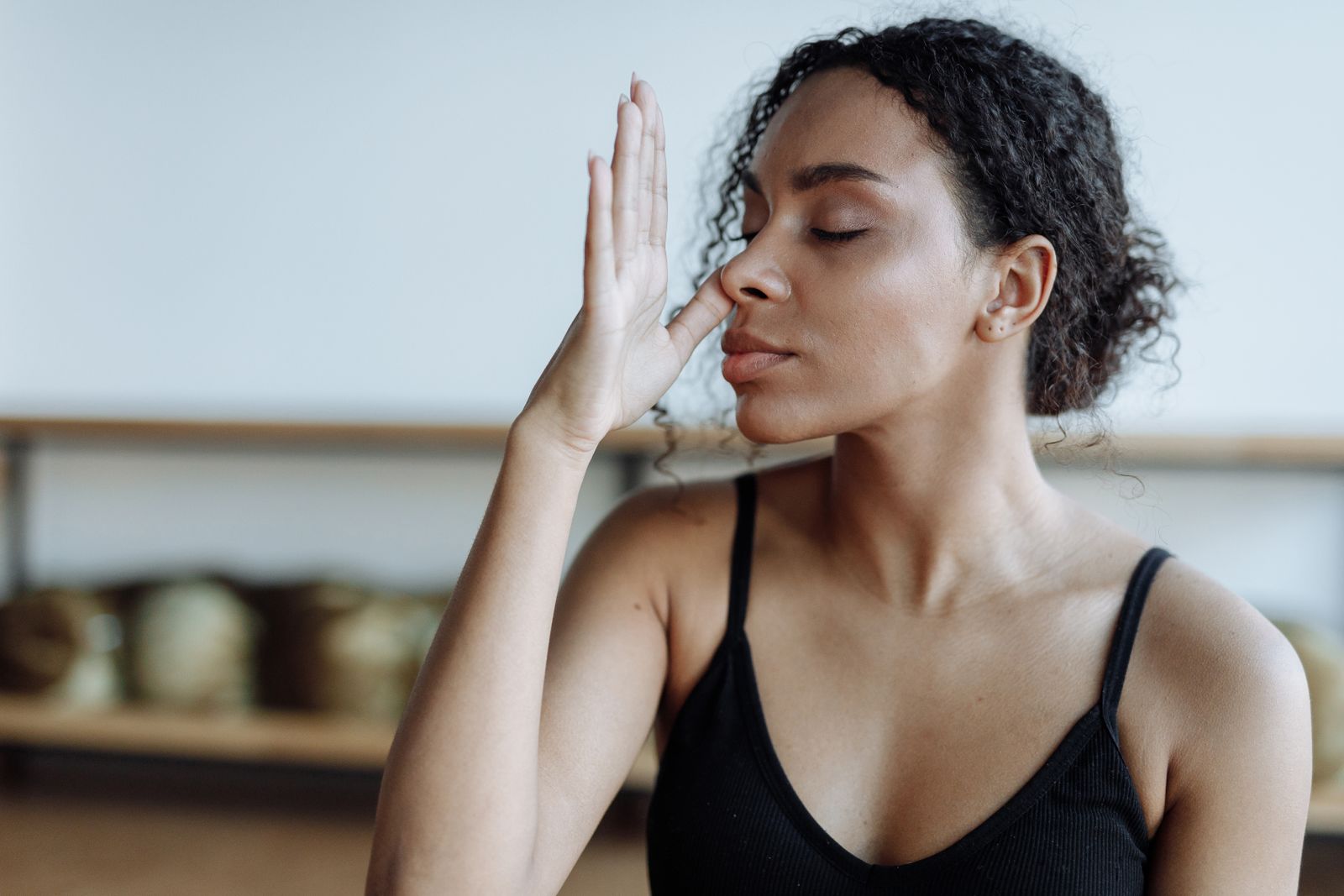
The classic technique uses the right hand in a mudra called Vishnu mudra, though beginners can simplify with just the thumb and ring finger.
1. Sit comfortably in a cross-legged position or on a chair with your spine tall — the same seated foundation used in most meditation for beginners practices.
2. Rest your left hand on your left knee, palm facing up, optionally in a light gyan mudra.
3. Bring your right hand up, folding the index and middle fingers into the palm, keeping the thumb and ring finger free.
4. Close the right nostril with your thumb and exhale slowly through the left nostril.
5. Inhale through the left nostril, then close it with your ring finger, release the thumb, and exhale through the right nostril.
6. Inhale through the right nostril, close it, release the left, and exhale through the left — this completes one round.
7. Continue for 5–10 rounds, keeping the breath smooth, silent, and unforced throughout.
Beginners often find it helpful to first practice with simple breathing exercises like three-part breath before adding the nostril-blocking component.
What Is Vishnu Mudra and Why Does It Matter?
Vishnu mudra is the traditional hand gesture used to alternate the nostrils in nadi shodhana. To form it, fold the index and middle fingers of the right hand down into the palm, leaving the thumb, ring finger, and little finger extended. The thumb closes the right nostril and the ring finger closes the left. This specific hand shape isn’t just aesthetic — in the broader system of yoga mudra practice, hand positions are believed to direct subtle energy and support concentration, turning a simple mechanical action (blocking a nostril) into a more complete meditative gesture. If folding the fingers feels uncomfortable, a simplified version using just the thumb and index finger works just as well for beginners.
What Are the Benefits of Nadi Shodhana?
Alternate nostril breathing is one of the more researched pranayama techniques, and several small clinical studies have looked at its effects on the autonomic nervous system. Research published in journals indexed on PubMed and PMC has examined how alternate nostril breathing influences heart rate variability and cardiorespiratory function, with findings generally suggesting it can shift the body toward a more parasympathetic (rest-and-digest) state during and shortly after practice. Commonly reported benefits, supported by both traditional texts and modern research, include:
- Reduced perceived stress and anxiety — the slow, even breath pattern is widely used as a quick nervous-system reset before stressful situations.
- Improved focus and mental clarity — many practitioners use it immediately before meditation or study sessions.
- Better breath awareness — the technique trains you to notice subtle differences in airflow and breath length.
- Support for better sleep — practiced in the evening, its calming quality can ease the transition into rest, similar to yoga for sleep routines.
- A gentle complement to blood pressure management — some research suggests slow controlled breathing practices may support healthy blood pressure, though this should never replace medical care or prescribed treatment.
As with any pranayama claim, it’s worth treating the more dramatic wellness claims you’ll see online (permanent “detoxification,” curing chronic disease) with skepticism — the honest, evidence-backed benefit is a reliable, low-cost tool for calming the nervous system in the short term.
How Is Nadi Shodhana Different From Anulom Vilom?
Nadi shodhana and anulom vilom are closely related and often used interchangeably, but many teachers draw a subtle distinction. Anulom vilom is generally taught as continuous alternate nostril breathing without necessarily following the full classical sequence or incorporating breath retention (kumbhaka), and it’s often introduced as a simpler entry-level version. Traditional nadi shodhana, particularly as described in hatha yoga texts, can include an added ratio of inhale, retention, and exhale (for example, a 1:4:2 ratio) once a practitioner has built enough breath control. For most beginners, the practical difference is minor: both involve alternating nostrils, both calm the mind, and both can be practiced without retention until you’re comfortable extending the breath.
How Does Nadi Shodhana Compare to Kapalbhati and Bhramari?
Pranayama practices are often grouped by their effect on the nervous system, and it helps to know where nadi shodhana sits relative to its two most common companions. Kapalbhati is a forceful, rapid-exhale technique that generates heat and energizes the body — it’s typically practiced in the morning and is more stimulating than calming. Bhramari pranayama, the “humming bee breath,” uses a soft vocal hum on the exhale to soothe the mind and is often reached for at night or during moments of acute anxiety. Nadi shodhana sits between the two: it doesn’t energize the way kapalbhati does, nor does it rely on sound like bhramari, but instead works through the slow, structured alternation of airflow to bring both hemispheres of attention into balance. Many practitioners use kapalbhati to wake up, nadi shodhana to center, and bhramari to wind down — three tools for three different moments in the day.
When Is the Best Time to Practice Nadi Shodhana?
Nadi shodhana is unusually flexible in terms of timing compared to more stimulating pranayama practices. Early morning, on an empty stomach, is the traditional recommendation because the mind is naturally quieter and the practice can set a calm tone for the day. It also works well as a transition tool: right before seated meditation, at a work desk during a stressful afternoon, or in the evening as part of a wind-down routine alongside gentle restorative yoga poses. Because it doesn’t require lying down or a mat, it’s one of the few yoga practices genuinely portable enough to use anywhere — at a desk, in a car before a meeting, or on a plane.
Are There Any Precautions or Contraindications?
Nadi shodhana is considered a gentle, low-risk pranayama practice suitable for most healthy adults, but a few precautions are worth noting. If you have a cold, sinus congestion, or a deviated septum that makes nostril breathing difficult, wait until your airways are clear or simplify the practice. Anyone with uncontrolled respiratory conditions, recent nasal surgery, or significant cardiovascular concerns should check with a doctor before starting any structured breathwork, including this one. Pregnant practitioners are generally fine to practice the basic version without retention, but should avoid forceful breath holds. As with any pranayama for beginners practice, the guiding rule is that the breath should always feel smooth and comfortable — dizziness, breathlessness, or strain is a signal to stop and return to normal breathing.
How Many Rounds and How Often Should You Practice?
Most teachers recommend starting with 5 rounds (a “round” being one full cycle through both nostrils) and building up to 10–15 rounds over several weeks as breath control improves. A daily practice of just 5–10 minutes is enough to notice benefits; consistency matters more than duration. The Hatha Yoga Pradipika’s broader instructions on pranayama emphasize gradual progress over months rather than rushing into longer retention, and this principle applies well to nadi shodhana — there’s no benefit to forcing longer holds before your nervous system and lung capacity are ready. If you’re building a broader home practice, nadi shodhana pairs naturally at the start or end of a session that includes online yoga classes, sun salutations, or a short seated meditation.
Can Nadi Shodhana Help With Anxiety and Sleep?
Because nadi shodhana slows the breath rate and encourages long, even exhales, it activates the same physiological pathway used in many clinical relaxation techniques: a longer exhale relative to the inhale tends to stimulate the vagus nerve and shift the body away from a stress response. It’s not a replacement for therapy or medical treatment of clinical anxiety disorders, but as a self-regulation tool it’s low-risk, free, and can be practiced anywhere without equipment. Pairing it with a consistent bedtime routine — dim lights, no screens, a few minutes of yoga nidra or gentle stretching — tends to compound the calming effect rather than relying on breathwork alone.
How Does Nadi Shodhana Fit Into a Broader Yoga Practice?
Pranayama is traditionally considered the fourth limb of Patanjali’s eight-limbed path, following ethical restraints (yama), observances (niyama), and physical posture (asana), and preceding sense withdrawal (pratyahara) and concentration (dharana). In that framework, nadi shodhana serves as a bridge between the physical practice of asana and the more internal practices of meditation. If your practice currently centers on physical styles like vinyasa yoga, hatha yoga, or online yoga for beginners, adding five minutes of nadi shodhana at the end of a session is one of the simplest ways to start exploring the subtler, mind-focused side of yoga.
What Mistakes Do Beginners Commonly Make?
The most common mistake is forcing the breath — pressing too hard on the nostril, gasping for the next inhale, or extending the breath length before the body is ready. This creates tension rather than calm. Another frequent error is rushing through rounds without pausing to notice the natural, brief gap between inhale and exhale, which is where much of the calming effect comes from. Beginners also sometimes skip proper seated posture, hunching over a phone or desk, which restricts the diaphragm. Finally, treating nadi shodhana as a one-time fix rather than a repeatable daily tool means missing the cumulative benefit that builds gradually through consistent yoga practice over time.
Questions People Ask About Nadi Shodhana
Is nadi shodhana the same as alternate nostril breathing?
Yes. “Nadi shodhana” is the Sanskrit name, and “alternate nostril breathing” is its common English translation used in most yoga studios and wellness content. Some teachers reserve “nadi shodhana” for the more advanced version that includes breath retention, while using “alternate nostril breathing” for the simplified, beginner-friendly version — but in everyday use, the terms are used interchangeably.
How long should I practice nadi shodhana each day?
Five to ten minutes, or roughly 5–10 rounds, is enough for most people to notice a calming effect, especially when practiced consistently. There’s no strict rule requiring longer sessions — the benefit comes more from regularity than from duration, so a short daily practice generally outperforms an occasional long one.
Can I practice nadi shodhana if I have a blocked nose?
It’s best to wait until congestion clears, since forcing breath through a blocked nostril can cause strain and defeats the purpose of a smooth, even practice. If one side is only partially blocked, you can practice gently and stop if it becomes uncomfortable, or switch to simple diaphragmatic breathing until your sinuses clear.
Does nadi shodhana have any scientifically proven benefits?
Several published studies have examined alternate nostril breathing’s effects on heart rate variability and cardiorespiratory function, generally suggesting it can shift the body toward a calmer, more parasympathetic state. Research in this area is still evolving, and results vary by study design, so it’s most accurate to describe the evidence as promising rather than definitive.
What is the correct ratio of inhale to exhale in nadi shodhana?
Beginners should start with an even ratio — inhaling and exhaling for roughly the same count, such as 4 seconds each. More advanced practitioners sometimes extend the exhale longer than the inhale, or add a brief retention, but this should only be introduced gradually and never to the point of strain or breathlessness.
Can children or older adults practice nadi shodhana?
Yes, in its basic form without breath retention, nadi shodhana is gentle enough for most children and older adults. As with any new breathing practice, it’s sensible to start with just a few rounds, keep the session short, and check with a healthcare provider if there are underlying respiratory or cardiovascular conditions.
Try This for Yourself
Reading about nadi shodhana only goes so far — the calming effect is something you notice in your own breath and nervous system after a few consistent sessions. If you’d like personalized guidance on hand position, breath ratio, and pacing, a live instructor can adjust the practice in real time in a way that a written guide can’t. Explore FitStrot’s online yoga classes to practice nadi shodhana and other pranayama techniques with certified teachers from home.
Related reading: Kapalbhati Pranayama | Bhramari Pranayama | Yoga Mudra Guide | Breathing Exercises for Beginners | Online Yoga Classes