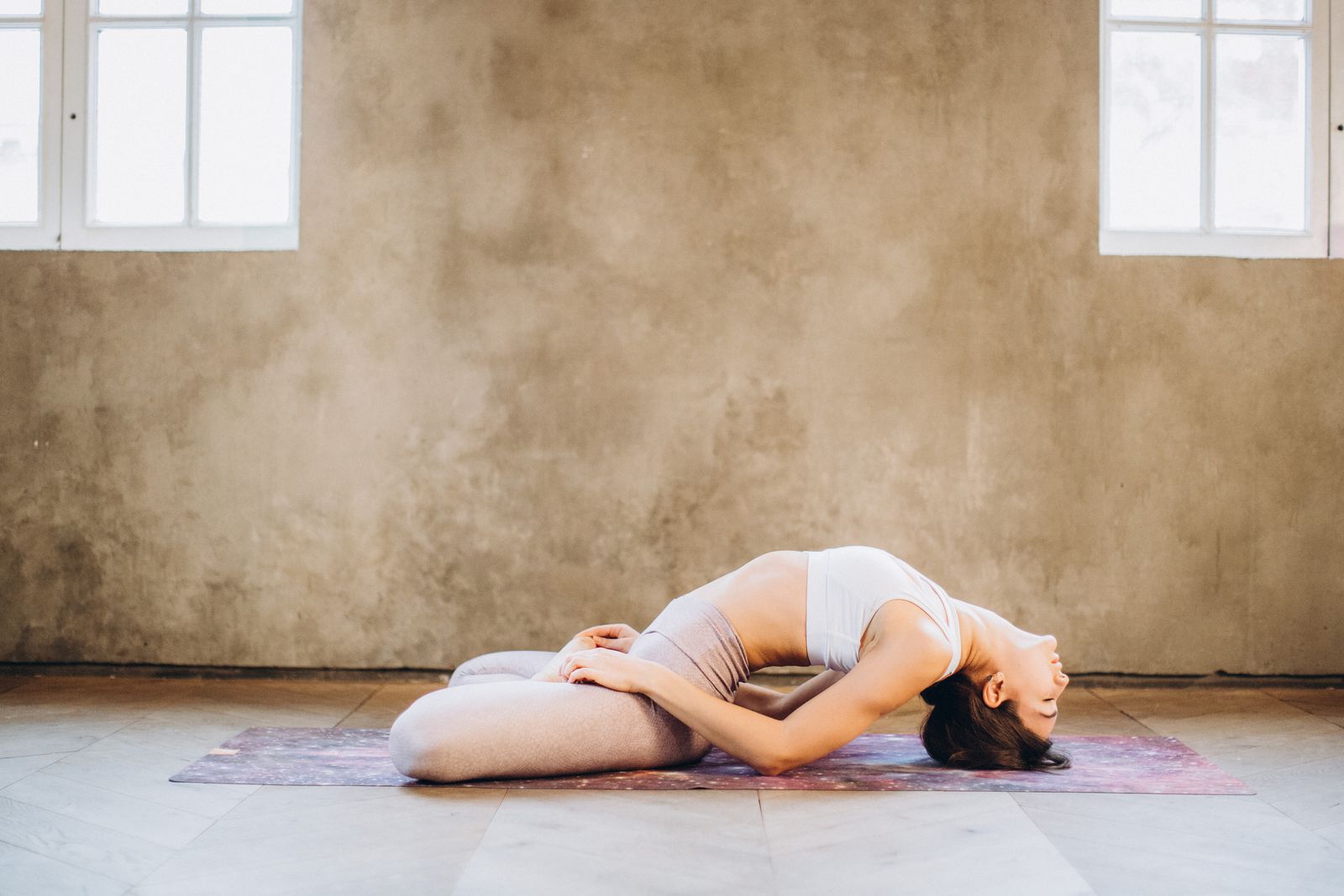
Matsyasana, or Fish Pose, is a seated backbend where you arch the chest upward, tilt the head back, and rest the crown lightly on the floor while the legs stay extended or crossed. It opens the chest, throat, and hip flexors, counters the rounded shoulders caused by desk work, and is traditionally paired with Sarvangasana (Shoulder Stand) as its balancing “counter pose.” Most practitioners hold it for 15 to 30 seconds, breathing steadily through the nose, and it’s accessible to beginners once basic foundational yoga poses and hip mobility are in place.
What Does Matsyasana Mean and Where Does It Come From?
The name comes from the Sanskrit words “matsya” (fish) and “asana” (pose or seat), so it translates literally to “Fish Pose.” The shape is meant to evoke a fish floating with its body arched and gills open, and in older hatha yoga texts it’s described as a pose that lets a practitioner float on water without effort, though this is a symbolic teaching point rather than a literal claim about buoyancy. Matsyasana appears in traditional hatha yoga lineages as a chest-opening backbend usually sequenced after inversions such as Sarvangasana, since it stretches the neck and throat in the opposite direction from a shoulder stand. It’s classified as a beginner-to-intermediate backbend in most modern yoga styles, including Hatha, Iyengar, and general Vinyasa flows.
How Do You Get Into Matsyasana Step by Step?
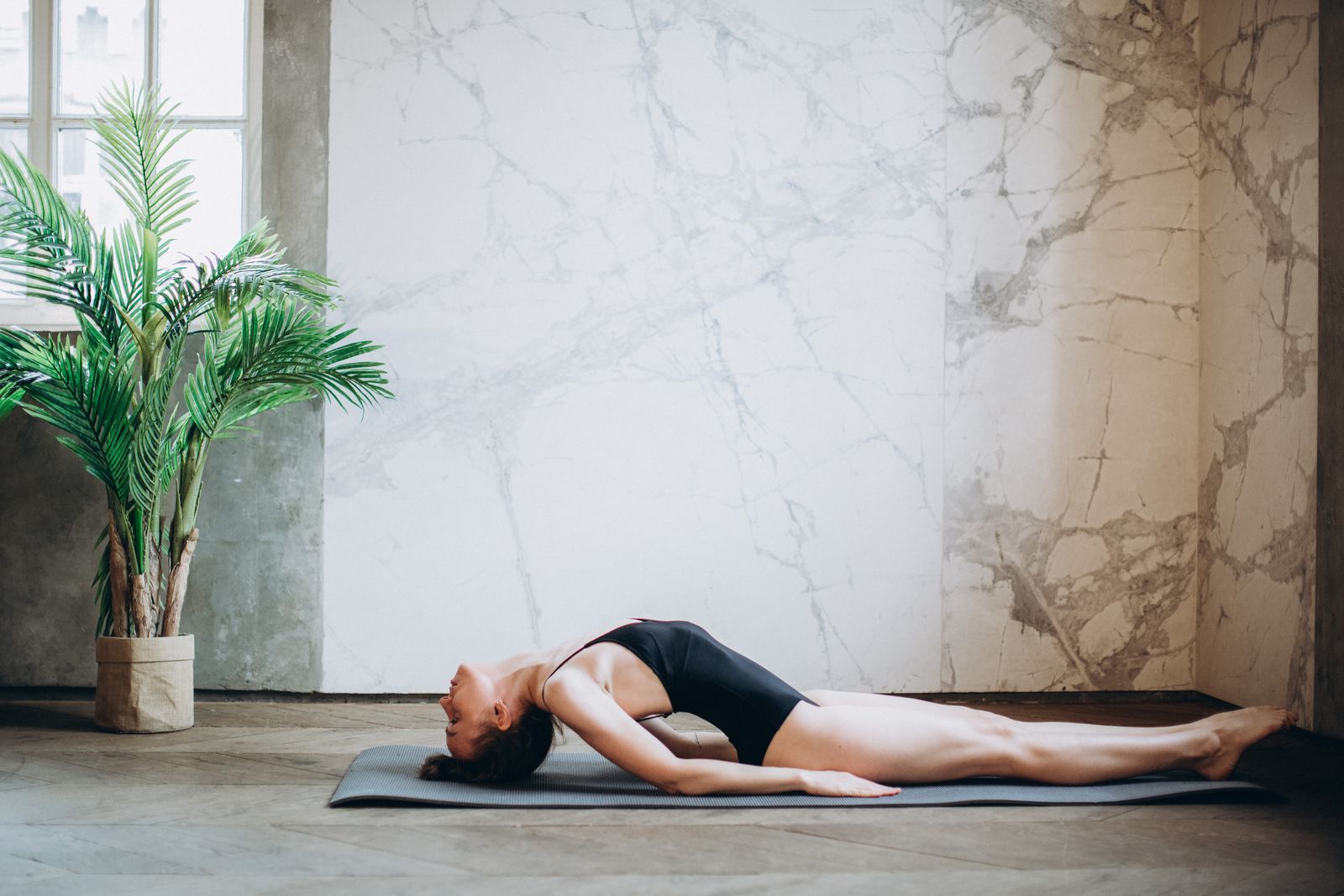
Start by lying flat on your back with legs extended and arms resting by your sides, palms down. Slide your hands, palms facing down, under your glutes so your forearms and elbows press into the mat. Press firmly into your forearms and elbows to lift your chest upward and off the floor, then gently tilt your head backward until the crown of your head touches the mat — the weight should stay mostly on your forearms and shoulders, not your neck. Keep your legs active and either extended straight with heels together, or folded into a comfortable cross-legged seat (Ardha Padmasana) for a deeper stretch. Hold for 5 to 8 breaths, then release by lifting the head first, lowering the chest, and sliding the arms out from under the body before resting.
What Are the Physical Benefits of Fish Pose?
Fish Pose stretches the intercostal muscles between the ribs, the front of the neck, and the hip flexors, while also engaging the muscles along the spine that support upright posture. Practitioners commonly report improved chest expansion, which can support fuller diaphragmatic breathing during pranayama practice. The pose is also cited in yoga teaching traditions as a stimulus for the thyroid and parathyroid glands because of the gentle stretch and pressure placed on the throat area, though this effect is described in yogic anatomy texts rather than confirmed by clinical trials, so it’s best understood as a traditional claim rather than a medical guarantee. Regularly practicing backbends like this one is associated with better shoulder mobility and a partial counterbalance to the forward-hunching posture common after long hours at a desk — a concern also addressed in our guide to yoga for back pain.
Can Matsyasana Help With Posture and Desk-Related Stiffness?
Yes, in a targeted way. Most desk-related stiffness comes from prolonged shoulder rounding and a forward head position, and Fish Pose directly reverses both by opening the chest and drawing the shoulder blades toward each other. It won’t fix chronic postural issues on its own, but as part of a broader routine that includes standing poses like Tadasana (Mountain Pose) and strengthening work, it plays a useful corrective role. Yoga teachers often recommend pairing Matsyasana with wall-supported chest openers or a rolled towel under the upper back for people who spend eight or more hours seated daily, since this eases into the same opening motion with less demand on the wrists and lower back.
What Are the Common Mistakes Beginners Make in Fish Pose?
The most frequent mistake is putting body weight directly onto the top or back of the skull instead of distributing it across the forearms and shoulders, which can strain the cervical spine over time. Another common error is collapsing the lower back into an exaggerated curve rather than lifting from the chest and upper back, which shifts the stretch away from the intended area and toward the lumbar spine. Some beginners also forget to keep the legs active, letting the feet splay outward, which reduces the stability of the whole pose. A slower entry — lifting the chest first, then tilting the head back only once the chest lift is established — solves most of these issues without needing extra flexibility.
Who Should Avoid or Modify Matsyasana?
People with neck injuries, cervical spine conditions, or recent whiplash should avoid placing weight on the head and instead perform a supported variation with a bolster or blanket roll under the upper back, keeping the head hovering rather than resting on the floor. Those with low blood pressure, migraines, or vertigo are often advised to approach backbends cautiously and build up gradually. Pregnant practitioners are generally advised to skip deep backbends like full Matsyasana, especially in the second and third trimesters, and to consult a qualified prenatal yoga teacher for safe alternatives. As with any new physical practice, anyone with an existing spinal, neck, or cardiovascular condition should check with a doctor or physiotherapist before attempting the full expression of the pose.
What Are the Best Variations of Matsyasana for Different Levels?
Matsyasana can be adapted for different experience levels and physical needs, from a fully supported restorative version to an advanced full-lotus expression:
- Supported Fish Pose — a bolster or two folded blankets placed lengthwise under the spine lets the chest open passively without weight-bearing on the forearms or head; ideal for beginners, restorative sessions, or anyone easing into the shape after an injury.
- Half Lotus Fish Pose (Ardha Padma Matsyasana) — folds the legs into a half-lotus position before lifting into the backbend, deepening the hip stretch alongside the chest opening; typically attempted only after comfort with basic Padmasana (Lotus Pose).
- Full Lotus Fish Pose — combines the full cross-legged lotus with the backbend; an advanced variation reserved for practitioners with significant hip and knee flexibility.
- Bent-Elbow Modification — for tight shoulders, keep the elbows bent and forearms flat on the mat rather than pressing up onto the hands; this reduces the height of the chest lift but keeps the stretch accessible.
How Does Matsyasana Compare to Other Backbends?
Matsyasana is a relatively gentle, seated backbend compared to standing or prone backbends such as Urdhva Dhanurasana (Wheel Pose) or Bhujangasana (Cobra Pose), because the legs stay grounded and passive rather than driving the lift. It’s often used as either a warm-up backbend before deeper ones or as a counter pose after inversions, whereas poses like Cobra Pose engage the lower back and abdominal muscles more actively. Compared to Ustrasana (Camel Pose), which is performed kneeling and creates a deeper full-spine arch, Fish Pose isolates more of its stretch in the upper chest, throat, and shoulders. This makes it a useful entry point for people building backbend confidence before progressing to more demanding variations.
| Pose | Position | Primary Focus | Level |
|---|---|---|---|
| Matsyasana (Fish Pose) | Seated, legs grounded | Chest, throat, upper back | Beginner |
| Bhujangasana (Cobra Pose) | Prone, arms drive the lift | Lower back, abdominals | Beginner |
| Ustrasana (Camel Pose) | Kneeling, full-spine arch | Whole spine, hip flexors | Intermediate |
| Urdhva Dhanurasana (Wheel Pose) | Hands and feet lifting the body | Full body, shoulders, spine | Advanced |
How Does Fish Pose Fit Into a Full Yoga Sequence?
In traditional hatha sequencing, Matsyasana is placed directly after Sarvangasana or Halasana (Plow Pose) as a counter-stretch, since those inversions compress the front of the neck while Fish Pose extends it in the opposite direction. In a general home practice, it works well near the end of a session, after a warm-up that includes Surya Namaskar (Sun Salutations) and standing poses, and before final relaxation in Shavasana. It also pairs naturally with hip-openers like Baddha Konasana when the legs are folded rather than extended. Teachers building a class around chest-opening or heart-opening themes often use Matsyasana as a peak pose after a sequence of gentler backbends.
What Role Does Breathing Play in Matsyasana?
Because the chest is lifted and expanded in this pose, it naturally encourages fuller inhalations, making it a useful shape for practicing slow, even ujjayi breathing. As the throat is stretched and slightly compressed by the head tilt, breathing tends to become audible and controlled, which is part of why the pose is traditionally linked to pranayama practice in classical hatha yoga. Beginners sometimes hold their breath instinctively when trying to balance on the crown of the head; consciously maintaining slow nasal breathing throughout the hold helps the nervous system stay calm and prevents unnecessary tension in the shoulders and jaw.
How Long Should You Hold Matsyasana and How Often Should You Practice It?
Most yoga teachers recommend holding Fish Pose for 15 to 30 seconds, or roughly 5 to 8 slow breaths, for a general wellness practice. Beginners can start with shorter holds of 10 to 15 seconds and build up gradually as neck and shoulder strength improves. Practicing it 3 to 4 times a week as part of a broader flexibility and posture routine is generally considered sufficient for most people to notice looser shoulders and an easier time sitting upright; daily practice is fine too as long as there’s no neck strain or discomfort building up over consecutive sessions.
What Muscles Does Matsyasana Stretch and Strengthen?
The primary stretch targets the intercostal muscles (between the ribs), the sternocleidomastoid and other front-neck muscles, the hip flexors (especially in the cross-legged variation), and the muscles of the anterior shoulder. At the same time, the pose strengthens the muscles of the upper back and neck extensors that are responsible for lifting and holding the chest in an extended position, plus the deep core stabilizers that keep the lower back from overarching. This combination of stretching tight anterior muscles while activating weaker posterior ones is a core principle behind most corrective backbend work, and it’s part of why Matsyasana is frequently recommended alongside strengthening poses like Vrksasana (Tree Pose) for overall postural balance.
Questions People Ask About Matsyasana
Is Matsyasana good for beginners?
Yes, the basic version with legs extended is considered beginner-friendly, especially with a supported variation using a bolster under the spine. New practitioners should focus on lifting from the chest rather than forcing the head back, and should stop immediately if they feel any sharp neck pain rather than a gentle stretch.
What is the difference between Matsyasana and Setu Bandhasana?
Matsyasana is a seated backbend where the crown of the head touches the floor and the chest lifts upward, while Setu Bandhasana (Bridge Pose) is performed lying on the back with knees bent, feet flat, and the hips lifted. Both open the chest, but Setu Bandhasana engages the glutes and hamstrings more, while Matsyasana focuses the stretch on the neck, throat, and upper chest.
Can Matsyasana help with thyroid function?
Traditional yoga texts describe Fish Pose as stimulating the thyroid and parathyroid glands through the gentle stretch and pressure on the throat area. This is a long-standing claim within yogic anatomy rather than one confirmed by clinical research, so it’s best treated as a traditional benefit alongside the pose’s clearer effects on posture and chest mobility, not as a medical treatment.
How is Matsyasana described in Hindi and Indian yoga tradition?
In Hindi and Sanskrit-based yoga terminology, Matsyasana is often referred to simply as “Matsya Asana” (मत्स्यासन), meaning “fish pose,” reflecting the same root words used across Indian yoga traditions. It is taught widely in Indian hatha yoga schools as a counter-pose to shoulder stand and plow pose, following the same sequencing logic used in classical Sanskrit yoga texts.
Why is my neck uncomfortable in Fish Pose?
Neck discomfort usually means too much body weight is resting on the top or back of the skull instead of being supported by the forearms and shoulders. Try pressing more firmly into your forearms to lift the chest higher before tilting the head back, or use a folded blanket under the head for cushioning. If discomfort persists, switch to the supported bolster variation instead of the full floor version.
Try This for Yourself
Reading about Matsyasana is a good start, but the details that actually prevent neck strain and unlock the full chest-opening benefit are much easier to pick up with live, real-time feedback from a qualified teacher. If you’d like personalized guidance on your alignment, breathing, and pacing, join a session with FitStrot’s online yoga classes and practice Fish Pose and other foundational asanas with an instructor watching your form in real time.
Related reading: Yoga Poses & Asanas Guide, Surya Namaskar (Sun Salutation), Tadasana (Mountain Pose), Vrksasana (Tree Pose), and explore FitStrot’s online yoga classes to build a complete home practice.