Naukasana, or Boat Pose, is a seated core-strengthening yoga posture in which the body balances on the sitting bones while the legs and torso lift into a “V” shape, resembling the hull of a boat (nauka means “boat” in Sanskrit). It works the rectus abdominis, hip flexors, and lower back simultaneously, while also improving balance, digestion, and focus. Beginners typically hold a bent-knee version (Ardha Naukasana) for 15-20 seconds, while more experienced practitioners extend the legs fully in Paripurna Naukasana for 30-60 seconds, often repeating the pose 3-5 times as part of a core-focused practice or a Surya Namaskar flow.
What Is Naukasana (Boat Pose)?
Naukasana comes from two Sanskrit words: “nauka” meaning boat and “asana” meaning posture. In the full expression of the pose, the body forms a V-shape balanced entirely on the sit bones, with the torso leaning back roughly 45 degrees and the legs lifted to the same angle, arms reaching parallel to the floor. The silhouette resembles a small boat floating on water, which is where the name originates. It is classified as a core-strengthening and balancing asana and is commonly grouped with other seated postures in a yoga poses sequence focused on abdominal and hip-flexor engagement.
Naukasana is considered an intermediate-level pose. While it looks simple, it demands significant isometric strength from the deep core muscles, hip flexors, and spinal erectors, which is why many teachers introduce a modified, bent-knee variation before attempting the full pose.
How Do You Perform Naukasana Step by Step?
Getting the alignment right matters more than how high you lift your legs. Follow these steps on a yoga mat, ideally after a short warm-up such as Tadasana and a few rounds of gentle spinal stretches:
- Sit on the mat with your legs extended straight in front of you and your spine tall.
- Place your palms on the floor slightly behind your hips, fingers pointing toward your feet, and lean back slightly to about a 45-degree angle while keeping the spine long (not rounded).
- Engage your core, and on an exhale, lift both legs off the floor together, keeping them straight and bringing them to roughly the same height as your torso, forming a “V” shape.
- Extend your arms forward, parallel to the floor and to each other, palms facing inward.
- Keep your chest lifted and gaze forward or slightly upward at your toes; avoid collapsing the lower back.
- Hold for 15-30 seconds while breathing steadily, then release the legs and torso back to the floor on an exhale.
Repeat 3-5 times, resting for a few breaths between rounds. If your lower back rounds or shakes excessively, it’s a sign to bend the knees and reduce the height of the lift.
What Are the Different Variations of Naukasana?
Boat Pose has several progressions that make it accessible to nearly every practice level.
Ardha Naukasana (Half Boat Pose)
The knees stay bent at roughly 90 degrees with shins parallel to the floor, which reduces the load on the hip flexors and lower back. This is the recommended entry point for beginners and anyone rebuilding core strength after a break from practice.
Paripurna Naukasana (Full Boat Pose)
The classic full expression with straight legs raised to torso height, arms parallel to the floor. This variation demands considerably more hip-flexor flexibility and core endurance.
Supported Naukasana
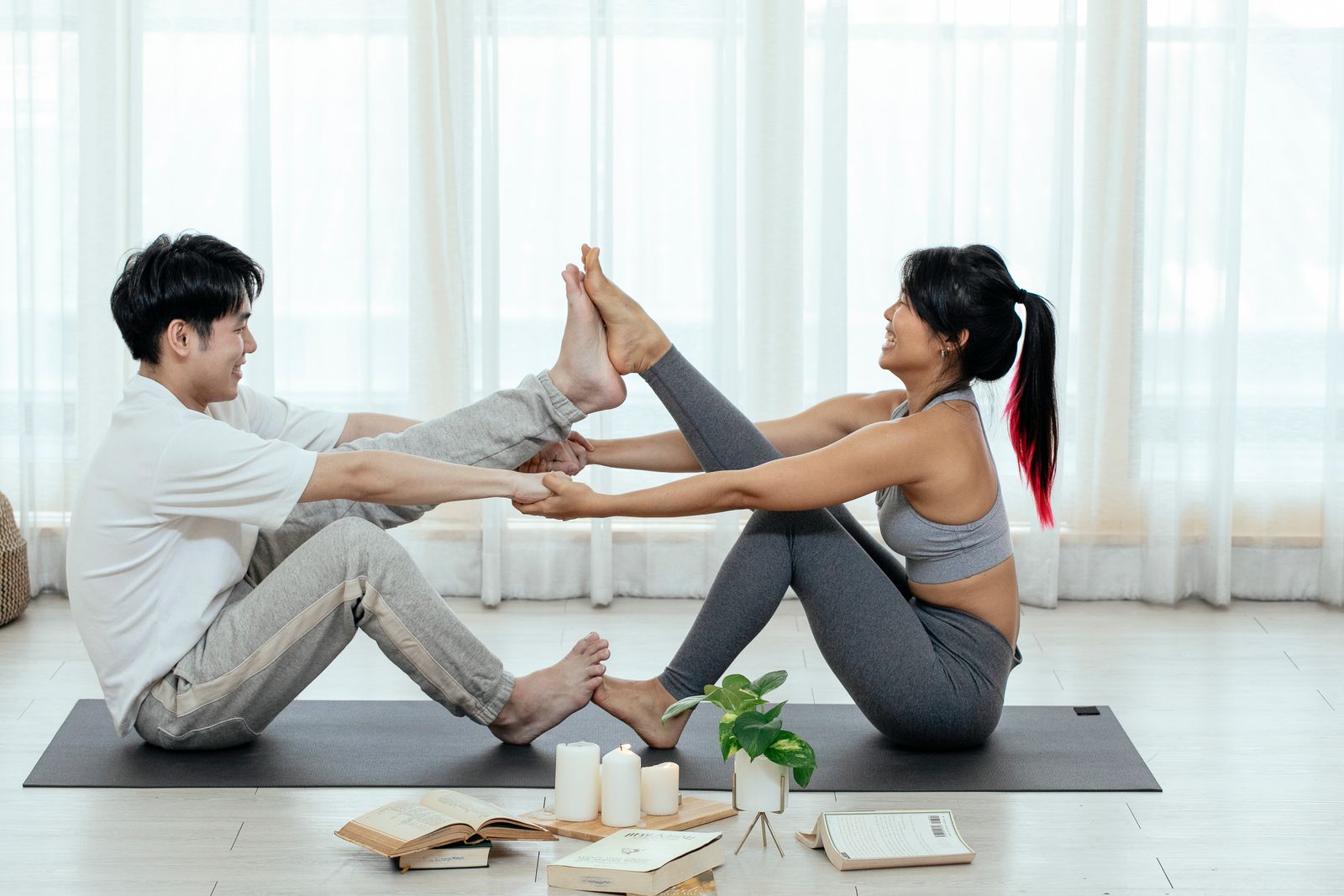
Practitioners who struggle with balance can loop a yoga strap around the feet and hold the ends with both hands, which offsets some of the effort while the core adapts to the pose’s demands.
Dynamic Naukasana (Boat-to-Boat Flow)
Some vinyasa-style sequences move rhythmically between Ardha Naukasana and Paripurna Naukasana on the breath, turning the static hold into a flowing core workout, similar in spirit to the transitions used in a Vinyasa Yoga class.
What Muscles Does Naukasana Work?
Naukasana is fundamentally an isometric core exercise disguised as a balance posture. The primary muscles engaged include the rectus abdominis (the “six-pack” muscle), the transverse abdominis (the deep stabilizing layer), the hip flexors (iliopsoas), the quadriceps, and the erector spinae group along the spine that keeps the torso from collapsing forward or backward. The obliques also fire to prevent the body from tipping sideways. Because so many muscle groups co-contract to hold the V-shape steady, the pose is often used as a functional alternative to crunches, training the core to stabilize the spine rather than simply flexing it.
What Are the Benefits of Naukasana?
Regular practice of Boat Pose is associated with a range of physical and functional benefits, and it pairs well with other foundational postures such as Vrksasana for overall body awareness.
Strengthens the Core and Improves Posture
Because the pose demands sustained abdominal and lower-back engagement, consistent practice can help build the kind of core endurance that supports better standing and seated posture throughout the day.
Tones the Abdominal Region
The deep contraction through the front of the body is commonly cited as a reason Naukasana is included in weight-management and toning-focused yoga sequences, alongside strength work and a balanced diet.
Improves Balance and Coordination
Balancing on the sit bones while the limbs are extended trains the nervous system to coordinate multiple muscle groups at once, which can translate into better overall body control in daily movement.
Supports Healthy Digestion
The compression created across the abdomen in this pose is traditionally believed to stimulate the digestive organs and may help relieve mild bloating when practiced regularly, though anyone with a diagnosed digestive condition should consult a doctor before adding new abdominal-compression poses to their routine.
Strengthens the Hip Flexors and Lower Back
The iliopsoas and lower back muscles work isometrically throughout the hold, which can help counteract the effects of prolonged sitting, a common concern for desk-based professionals exploring yoga for back pain.
Builds Mental Focus and Willpower
Holding a challenging balance pose steadily requires sustained concentration, and many practitioners find that the discipline of holding Naukasana carries over into greater mental resilience off the mat.
Who Should Avoid Naukasana?
Naukasana is a relatively intense posture and is not appropriate for everyone. It should generally be avoided or modified under the guidance of a qualified teacher in the following situations:
- During pregnancy, since the deep abdominal compression is not recommended for expectant mothers.
- During menstruation, when many traditional teachers advise avoiding intense abdominal-engaging poses.
- If you have a hernia, recent abdominal surgery, or diagnosed lower-back conditions such as a slipped disc.
- If you have low blood pressure combined with dizziness, since some variations involve holding the breath briefly.
- If you have chronic neck pain, since improper alignment can strain the cervical spine.
Anyone with an existing medical condition should check with a doctor or physiotherapist before attempting this or any new asana, and beginners are encouraged to learn the pose under the supervision of a certified instructor.
What Are Common Mistakes in Naukasana?
Even experienced practitioners can develop habits that reduce the effectiveness of the pose or increase strain.
Rounding the Lower Back
Collapsing through the lumbar spine to lift the legs higher is one of the most frequent errors. It shifts load away from the core and onto the spine. It is far better to keep the legs lower with a straight spine than to round the back for a “deeper” looking pose.
Holding the Breath
Many beginners unconsciously hold their breath while balancing. Steady, even breathing throughout the hold keeps the nervous system calm and helps sustain the posture longer.
Straining the Neck
Craning the neck forward to “help” the lift, instead of keeping the gaze soft and the neck in line with the spine, is a common source of unnecessary tension.
Skipping the Warm-Up
Attempting Naukasana cold, without warming the hip flexors and hamstrings first, increases the risk of strain. A short warm-up sequence, such as a few rounds of Surya Namaskar, prepares the body far better.
How Does Naukasana Compare to Navasana?
Naukasana and Navasana are frequently used interchangeably, and in most yoga schools they refer to the same Boat Pose. Some traditions draw a subtle distinction: Navasana (from the Sanskrit “nava,” also meaning boat) is the term more commonly used in Ashtanga and Western vinyasa lineages, while Naukasana appears more often in Hatha and Indian yoga texts, sometimes describing a slightly more reclined variation. In practical terms, students can treat the alignment cues, benefits, and precautions as the same for both names.
How Should Naukasana Fit Into a Weekly Practice?
For most healthy adults, practicing Naukasana 3-4 times a week, for 3-5 rounds of 15-30 seconds each, is a reasonable starting frequency to build noticeable core strength over several weeks. It works well slotted into the core or strength-focused portion of a class, after standing postures and before seated forward folds or twists. Combining it with complementary poses in a broader types of yoga practice, such as Hatha or Power Yoga sessions, allows the core strength built in Naukasana to support other balancing and standing postures.
What Breathing Pattern Works Best in Naukasana?
Ujjayi breathing (a slow, slightly audible ocean-like breath through the nose) is commonly recommended while holding Naukasana, because it helps regulate effort and keeps the nervous system from tipping into a stress response during the isometric hold. Inhale to lengthen the spine before lifting, exhale as the legs rise into position, and then settle into slow, even Ujjayi breaths for the duration of the hold, avoiding any breath-holding.
Questions People Ask About Naukasana
Is Naukasana good for weight loss?
Naukasana strengthens and tones the core, which can contribute to a leaner-looking midsection when combined with a calorie-appropriate diet and regular overall exercise. On its own, it is not a high-calorie-burning exercise, so it is best viewed as one part of a broader fitness and nutrition routine rather than a standalone weight-loss solution.
How long should I hold Naukasana?
Beginners can start by holding the bent-knee Ardha Naukasana for 10-15 seconds and gradually build up to 30 seconds as core strength improves. More advanced practitioners often hold the full Paripurna Naukasana for 30-60 seconds across 3-5 repetitions within a single session.
Can beginners do Naukasana?
Yes, beginners can start with the bent-knee variation, Ardha Naukasana, which places far less demand on the hip flexors and lower back than the full straight-leg pose. Using a strap around the feet for support is another beginner-friendly modification while core strength develops.
Why does my back hurt in Naukasana?
Back discomfort during Naukasana usually points to rounding of the lower spine or attempting the full-leg variation before the core is strong enough to support it. Bending the knees, lowering the leg height, and keeping the chest lifted with a long spine usually resolves the strain; persistent pain should be checked by a professional.
What is the difference between Naukasana and a regular sit-up?
A sit-up is a repeated, dynamic flexion movement, while Naukasana is a sustained isometric hold that trains the core to stabilize the spine against gravity rather than simply crunching forward. This makes Naukasana more comparable to a functional plank-style exercise than to a traditional ab crunch.
Try This for Yourself
Reading about Naukasana is a useful start, but the real benefits come from consistent, guided practice where an instructor can correct your alignment in real time. If you would like to build core strength safely and confidently, join a live online yoga class with FitStrot and practice Boat Pose and other foundational asanas under expert guidance from the comfort of your home.
Related reading: Explore more foundational postures in our yoga poses library, learn the full Surya Namaskar sequence, build standing balance with Tadasana and Vrksasana, or book an online yoga class to practice with a certified instructor.