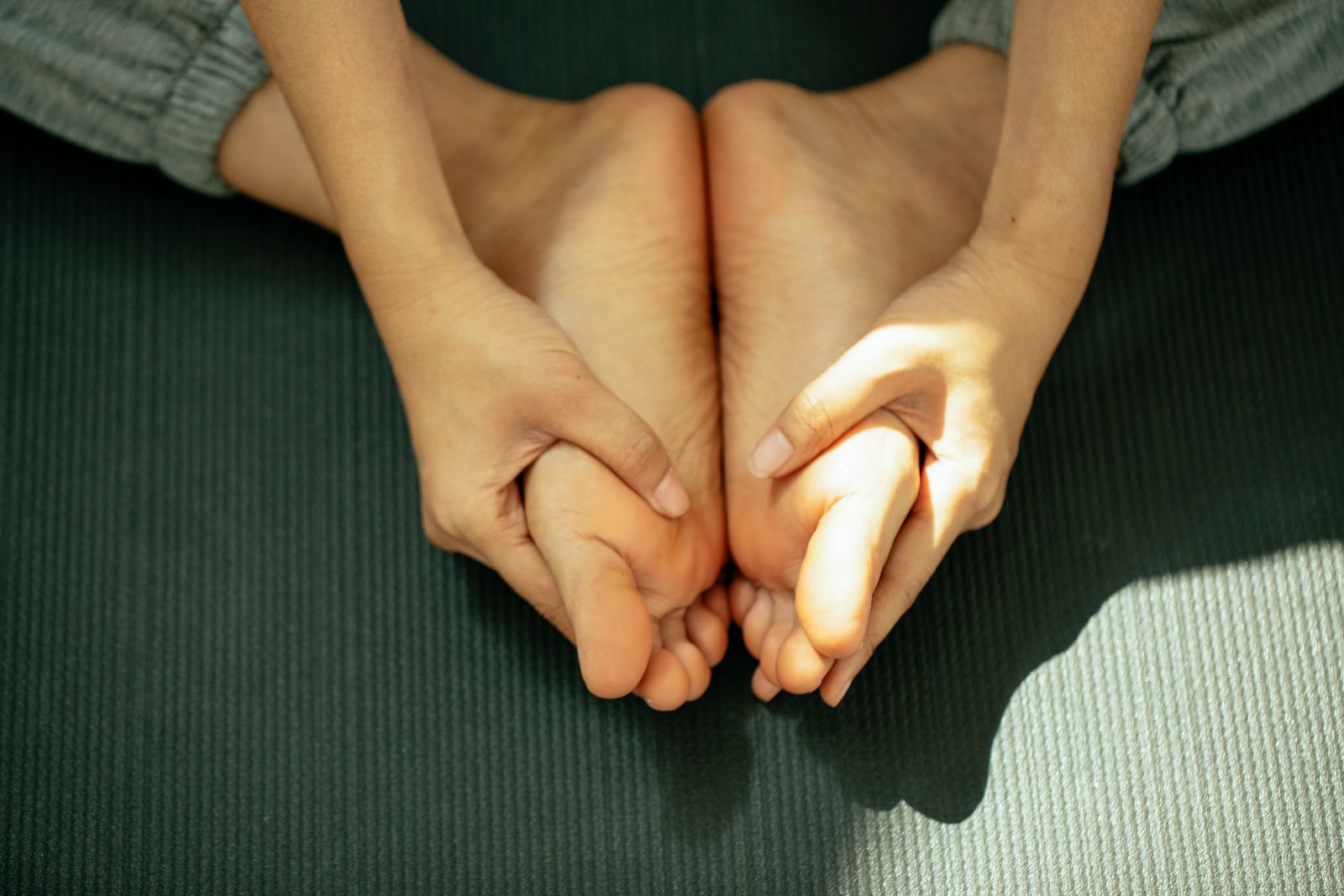
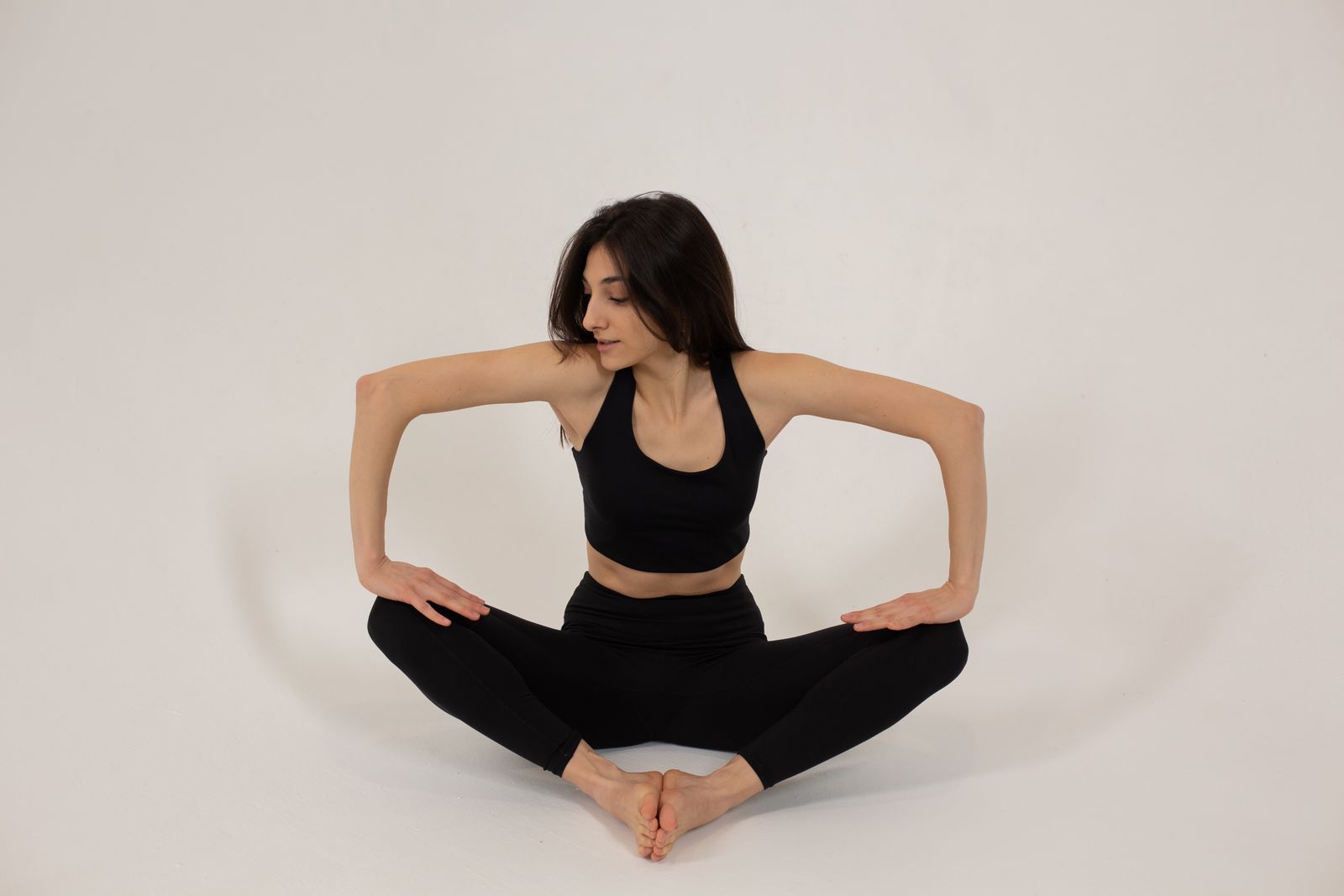
Baddha konasana, widely known as butterfly pose, is a seated hip-opening asana where you bring the soles of your feet together, let your knees fall out to the sides, and hold your feet with your hands. It stretches the inner thighs, groin, and hips while gently mobilizing the lower spine. Beginners can practice it for 30-60 seconds as a warm-up or cool-down, while more experienced practitioners hold it for several minutes, sometimes folding forward for a deeper stretch. It is one of the most accessible poses in yoga poses for hip flexibility, prenatal comfort, and calming the nervous system before meditation.
What Does Baddha Konasana Mean?
The name comes from Sanskrit: “baddha” means bound, “kona” means angle, and “asana” means pose or seat. Put together, baddha konasana translates roughly to “bound angle pose.” In everyday English classes, most teachers simply call it butterfly pose, because the gentle up-and-down motion of the knees resembles a butterfly flapping its wings. You will hear both names used interchangeably in studios and in searches for “butterfly pose yoga” or “baddha konasana yoga pose,” and they refer to the exact same posture.
Where Does Baddha Konasana Come From?
Baddha konasana as it is taught today is a relatively modern name, but the shape itself has a long lineage. A closely related seated pose called bhadrasana, meaning “throne” or “auspicious pose,” appears in the Hatha Yoga Pradipika, a foundational hatha yoga text believed to date to around the 15th century. That means practitioners have been working with this bound-angle shape in some form for roughly 600 years, long before it became a staple of modern studio classes. Over time, teachers in the 20th century popularized the current name and cues, and it is now one of the first poses introduced to new students because it requires no strength, only patience with the hips.
How Do You Practice Baddha Konasana Step by Step?
Getting into butterfly pose correctly matters more than how far your knees drop toward the floor. Follow these steps:
- Sit on your mat with your spine tall, ideally on the front edge of a folded blanket to tilt your pelvis slightly forward.
- Bend both knees and draw the soles of your feet together, letting your heels come as close to your pelvis as is comfortable.
- Hold your feet or ankles with both hands, keeping your spine long rather than rounding forward immediately.
- Let your knees release toward the floor under their own weight. Do not press or bounce them down.
- Breathe steadily for 5 to 10 breaths, or up to a few minutes if you are comfortable, keeping the chest open.
- To exit, release your feet, extend your legs forward, and shake them out gently.
If your knees sit well above the floor, that is completely normal and simply reflects your current hip mobility, not a flaw in your form. This pose pairs naturally with a grounding tadasana at the start of practice and can be woven into a slow cool-down after a surya namaskar sequence.
What Are the Benefits of Butterfly Pose?
Butterfly pose benefits go well beyond a simple hip stretch. Regular practice can:
- Improve flexibility in the inner thighs, groin, and hip joints by gently stretching the adductor muscles.
- Encourage better posture by activating the muscles that support an upright, lengthened spine.
- Support circulation in the pelvic region, which many practitioners find helpful during menstruation.
- Calm the nervous system when combined with slow, even breathing, making it a useful pose before meditation for beginners.
- Serve as a gentle counter-stretch after standing poses like vrksasana or after long periods of sitting at a desk.
Because it requires no jumping, balancing, or heavy exertion, it is frequently recommended as one of the safer entry points into yoga for beginners and into hip-opening work generally, such as sequences built around hip opening yoga poses.
Is Baddha Konasana Good for Pregnancy?
Butterfly pose is one of the most commonly recommended seated poses during pregnancy, and it appears in many prenatal yoga programs for this reason. The classic yoga manual “Light on Yoga” by B.K.S. Iyengar notes that the pose is traditionally considered helpful for pregnant practitioners, with regular practice associated with easing discomfort during later pregnancy and potentially supporting the birthing process. That said, this is a traditional claim rather than a clinical guarantee, so anyone who is pregnant should treat it as a gentle, supportive stretch and always check with their doctor or a qualified prenatal yoga instructor before adding any new pose to their routine, particularly in the third trimester.
Which Muscles Does Baddha Konasana Stretch?
Understanding the anatomy helps you feel the pose more precisely rather than just going through the motions. Baddha konasana primarily targets:
– The adductor group (inner thigh muscles), which lengthen as the knees move outward and down.
– The hip external rotators, including the piriformis, which control the outward rotation of the thighbone in the hip socket.
– The muscles around the sacroiliac joint and lower back, which get a gentle mobilization as the pelvis tilts forward.
– The muscles of the groin and, to a lesser degree, the inner knee, which is why knee support matters for anyone with a knee injury.
Because the adductors are some of the tightest muscles in most bodies, especially for people who sit for long stretches, this pose is often paired with other adductor-focused shapes found in a broader yoga for flexibility routine.
What Is the Difference Between Baddha Konasana and Titli Asana?
Baddha konasana and titli asana (butterfly pose in its more dynamic form) are frequently used as synonyms, but there is a subtle distinction worth knowing. Baddha konasana traditionally refers to the static, held version of the pose: feet together, knees released, spine steady, breath even. Titli asana, sometimes taught as a warm-up exercise, involves actively flapping the knees up and down like a butterfly’s wings, which is more of a dynamic mobility drill than a held stretch. Many teachers use “butterfly pose” loosely to describe both, which is part of why searches for “baddha konasana yoga” and “butterfly pose yoga” often return the same instructional content.
What Are Common Mistakes in Butterfly Pose?
Even a simple seated pose has a few common errors that reduce its benefit or create unnecessary strain:
– Rounding the lower back to force the knees down, which shifts the stretch away from the hips and into the spine.
– Pressing down on the knees with the hands or elbows, which can strain the inner knee ligaments over time.
– Bouncing the knees rapidly instead of letting gravity do the work gradually.
– Sitting flat on the floor with tight hips, which tilts the pelvis backward and defeats the purpose of the forward tilt needed for a safe stretch. A folded blanket under the sit bones usually solves this.
– Holding the breath while trying to “push” into the stretch, which increases tension rather than releasing it.
Slowing down and prioritizing breath over depth is a theme that runs through most seated poses, including padmasana and other cross-legged meditation postures.
Who Should Avoid Baddha Konasana?
While butterfly pose is generally considered safe for most people, a few groups should modify or skip it:
– Anyone with a recent groin, hip, or knee injury should use blankets under the knees for support or avoid deep versions of the pose until healed.
– People with sciatica or lower back issues may need to sit on a higher cushion to maintain a neutral pelvis.
– The forward-folding variation, where the head moves toward the floor, is generally not recommended immediately after eating a full meal.
– Anyone recovering from hip replacement surgery should get explicit clearance from their surgeon or physiotherapist first.
As with any posture in types of yoga practice, working within a comfortable range and building flexibility gradually over weeks is safer than forcing depth in a single session.
How Does Baddha Konasana Fit Into a Full Yoga Sequence?
Butterfly pose works well in several places within a class or home practice. As a warm-up, it loosens the hips before standing poses that require external rotation, such as vrksasana (tree pose) or wide-legged forward folds. As a cool-down, it is often placed near the end of a surya namaskar-based flow, right before final relaxation, because it brings the heart rate down and settles the breath. In restorative or yin yoga classes, it is frequently held for 3 to 5 minutes with support under the knees, allowing connective tissue to release slowly rather than through active muscular stretching. It also appears often in online yoga classes designed for desk workers, since it directly counters the tight hips caused by prolonged sitting.
What Variations of Butterfly Pose Exist?
Once the basic shape feels comfortable, there are several ways to progress or adapt it:
– Reclined butterfly pose (supta baddha konasana), where you lie on your back with the soles of the feet together, often used for deep relaxation or gentle prenatal stretching.
– Forward-folding butterfly, where you hinge from the hips and bring your chest toward your feet for a deeper groin and lower back stretch.
– Supported butterfly with blocks or bolsters under each knee, ideal for beginners or anyone with tight hips who wants to avoid strain.
– Dynamic butterfly (titli asana), where the knees flap gently up and down as a warm-up mobility drill rather than a static hold.
Choosing the right variation depends on your goal: relaxation, mobility, or a deeper stretch, and this mirrors how many other poses in a broader yoga for hip pain routine are adapted to different bodies and experience levels.
How Is Baddha Konasana Written and Searched in Hindi?
In Hindi-speaking yoga communities, the pose is commonly referred to as “titli asana” (तितली आसन), which literally translates to butterfly pose, or sometimes described using the Sanskrit “baddha konasana” itself since Sanskrit terms are widely understood across Indian yoga traditions. Many Indian yoga teachers use titli asana and baddha konasana interchangeably in instruction, which is why searches for “butterfly pose yoga in hindi” often surface the same pose under either name. The core instructions, benefits, and precautions remain identical regardless of which name is used.
How Long Should You Hold Baddha Konasana?
For most practitioners, holding butterfly pose for 30 seconds to 1 minute, repeated 2 to 3 times, is enough to feel a noticeable release in the hips during a general practice. In a slower or restorative-style class, holds of 2 to 5 minutes with props under the knees allow for a deeper, more passive release of connective tissue. Complete beginners should start with shorter holds of around 20 to 30 seconds and gradually increase the duration as hip mobility improves over several weeks of consistent practice, rather than trying to sit in the deepest version of the pose on day one.
Questions People Ask About Baddha Konasana
Is baddha konasana the same as butterfly pose?
Yes. Baddha konasana is the Sanskrit name, and butterfly pose is the common English name for the same posture. Both describe sitting with the soles of the feet together and the knees released outward. Some teachers reserve “butterfly” for a more dynamic, flapping version, but in most classes and search results, the two terms are used interchangeably to mean the same seated hip-opening pose.
What does baddha konasana help with?
Baddha konasana primarily helps improve flexibility in the hips, groin, and inner thighs. It is also commonly used to support better posture, ease tension from prolonged sitting, and calm the mind before meditation. Some prenatal yoga programs include it to support comfort during pregnancy, though it should always be practiced gently and with a doctor’s guidance during that time.
Can beginners do baddha konasana?
Yes, it is one of the most beginner-friendly poses in yoga because it requires no strength or balance, only patience with tight hips. Beginners with limited flexibility should sit on a folded blanket and place support under each knee rather than forcing the knees toward the floor, which keeps the pose comfortable while flexibility improves gradually.
Why do my knees not touch the floor in butterfly pose?
Knees staying elevated above the floor is completely normal and reflects the current mobility of your hip joints and inner thigh muscles, not incorrect form. Hip anatomy varies significantly between individuals, and forcing the knees down by pressing with the hands can strain the knee joint. Consistent practice over weeks, along with support under the knees, gradually increases the range without any need to force the position.
Is butterfly pose good before bed?
Yes, a slow, supported version of butterfly pose, especially the reclined variation, is often used as part of a wind-down routine before sleep. Combined with slow breathing, it helps release tension held in the hips from sitting during the day and can shift the body toward a calmer, more parasympathetic state, making it a popular addition to gentle evening or restorative practices.
Try This for Yourself
Reading about baddha konasana is a good start, but the real benefits come from feeling it in your own body, with cues on breath, alignment, and pacing that a written guide cannot fully replace. If you would like personalized guidance on this pose and the many others that build hip mobility and calm, join a live session with one of our instructors through FitStrot’s online yoga classes and get real-time feedback on your form.
Related reading: yoga poses, hip opening yoga poses, yoga for beginners, prenatal yoga, and online yoga classes.