The basic yoga poses for beginners are simple, low-risk shapes that build strength, balance, and body awareness before you attempt anything advanced. A solid starter set includes Mountain Pose, Child’s Pose, Downward-Facing Dog, Cat-Cow, Warrior I and II, Triangle Pose, Tree Pose, Bridge Pose, Cobra Pose, Seated Forward Bend, and Corpse Pose. Together these poses cover standing balance, gentle backbends, forward folds, and restorative recovery, giving a new practitioner everything needed to build a complete, safe home routine within the first few weeks of practice.
Why Start With Basic Yoga Asanas Instead of Advanced Ones?
Basic yoga asanas teach the body how to align the spine, hips, and shoulders correctly before you load them with more complex movement. Every advanced arm balance or deep backbend is really a combination of two or three foundational shapes stacked together. Skipping the basics is the single biggest reason beginners get frustrated or mildly injured in their first month. A well-sequenced yoga for beginners routine spends several weeks on foundational poses so the nervous system learns stable patterns, which is also why so many studios and online yoga classes for beginners start every session with the same handful of shapes.
What Are the 12 Basic Yoga Poses for Beginners?
A commonly recommended beginner set, drawn from what most certified instructors teach in week one, includes these 12 basic yoga poses for beginners:
- Mountain Pose (Tadasana) – the standing foundation for every other pose
- Child’s Pose (Balasana) – a resting shape used between more active poses
- Downward-Facing Dog (Adho Mukha Svanasana) – a full-body stretch and strength builder
- Cat-Cow (Marjaryasana-Bitilasana) – spinal mobility linked to breath
- Warrior I (Virabhadrasana I) – hip opening and leg strength
- Warrior II (Virabhadrasana II) – lateral strength and stamina
- Triangle Pose (Trikonasana) – side-body stretch and balance
- Tree Pose (Vrksasana) – single-leg balance and focus
- Bridge Pose (Setu Bandhasana) – gentle backbend and glute activation
- Cobra Pose (Bhujangasana) – spinal extension for the lower back
- Seated Forward Bend (Paschimottanasana) – hamstring release and calm
- Corpse Pose (Savasana) – final relaxation and nervous system reset
This list forms the backbone of most beginner yoga sequences, and you’ll recognize nearly all of them if you’ve ever browsed a “10 basic yoga asanas” chart at a studio.
How Do You Do Mountain Pose (Tadasana) Correctly?
Stand with feet hip-width apart, weight spread evenly across all four corners of each foot. Engage the thighs slightly, lengthen the tailbone down, draw the shoulder blades back and down, and let the arms rest by your sides with palms facing forward. Breathe for five to eight slow breaths. Mountain Pose looks static but it’s actually an active alignment check: it’s where you learn what a neutral spine and stacked joints feel like, a reference point you’ll return to in Warrior I, Warrior II, and Tree Pose. Instructors in yoga for beginners at home programs often spend the first full week on this pose alone.
How Do You Practice Child’s Pose (Balasana) Safely?
Kneel on the mat, bring your big toes together, sit back onto your heels, then fold forward and stretch your arms out in front of you, resting your forehead on the mat. Knees can stay together for a gentler version or wide apart for more space in the torso. Child’s Pose is used as an active rest between more demanding shapes, and it’s one of the safest poses for people managing lower back tightness. It’s a staple in restorative yoga and gentle recovery sessions because it lets the breath slow down without any muscular effort.
What Makes Downward-Facing Dog (Adho Mukha Svanasana) So Important?
From all fours, tuck your toes and lift your hips up and back to form an inverted V-shape, pressing the chest toward the thighs and heels toward the mat (heels don’t need to touch the floor). Downward Dog stretches the hamstrings, calves, and shoulders while building strength in the arms and core simultaneously. It appears as a transition pose in nearly every vinyasa yoga sequence, which is why mastering it early pays off across almost every future class you take, whether that’s a slow hatha yoga class or a faster-paced flow.
How Do You Move Through Cat-Cow (Marjaryasana-Bitilasana)?
On hands and knees, inhale as you drop the belly and lift the chest and tailbone (Cow), then exhale as you round the spine and tuck the chin toward the chest (Cat). Move slowly, syncing one full breath to each shape. This pair is often the very first movement taught in any basic yoga routine for beginners because it teaches breath-to-movement coordination, a skill you’ll use in every flow-based class afterward. Cat-Cow is also widely recommended for easing general stiffness, which is why it shows up frequently in guidance on yoga for back pain.
How Are Warrior I and Warrior II Different?
In Warrior I, both hips face the front of the mat, the back heel is grounded at roughly a 45-degree angle, and both arms reach overhead, creating a forward-facing, opening shape. In Warrior II, the hips rotate open to the side, arms extend parallel to the floor, and the gaze looks out over the front hand, creating a shape that builds lateral strength and stamina. Warrior I emphasizes hip flexor opening and upper body extension, while Warrior II trains the outer hips and shoulder stability. Beginners often mix the two up at first, but practicing them back-to-back is one of the fastest ways to learn the difference between hip-square and hip-open standing poses, a distinction that matters in nearly every standing sequence in types of yoga from Ashtanga to Vinyasa.
What Is Triangle Pose (Trikonasana) Good For?
Stand with feet wide apart, turn one foot out 90 degrees, extend the torso sideways over the front leg, and rest the lower hand on the shin, ankle, or a block while the top arm reaches toward the ceiling. Triangle Pose stretches the hamstrings, groins, and side body while strengthening the legs and improving spinal rotation. Using a block under the lower hand is completely normal for beginners and does not make the pose “less real” — it simply keeps the spine long instead of collapsing toward the floor, which is the actual point of the pose.
How Do You Balance in Tree Pose (Vrksasana)?
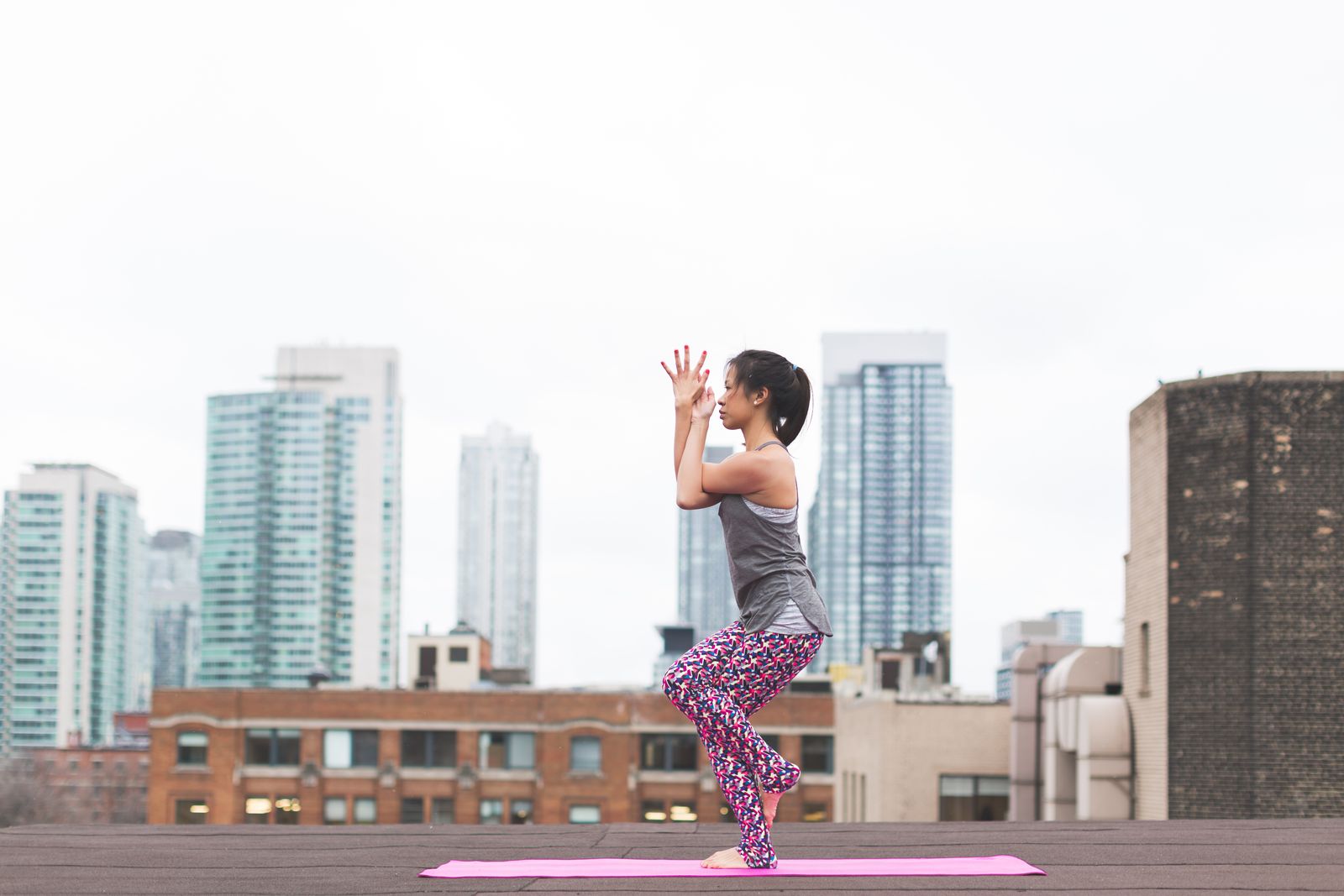
Shift your weight onto one leg, place the sole of the other foot against your inner calf or inner thigh (never directly on the knee joint), bring your palms together at the chest, and fix your gaze on a still point ahead of you. Tree Pose trains single-leg balance, ankle stability, and mental focus all at once. Wobbling is completely normal for weeks — balance poses improve with repeated practice far more than with effort in any single session, so treat the wobble as part of the training rather than a failure.
Why Is Bridge Pose (Setu Bandhasana) Considered Beginner-Friendly?
Lie on your back, bend your knees with feet flat on the mat hip-width apart, then press through your feet to lift your hips toward the ceiling while keeping your arms flat on the mat for support. Bridge Pose is a gentle backbend that strengthens the glutes and hamstrings while opening the chest and front hips, making it a safer entry point into backbending than deeper poses like Wheel or Camel. It’s frequently used in yoga for flexibility routines because it counteracts the forward-hunched posture most people carry from sitting at desks all day.
How Should Beginners Approach Cobra Pose (Bhujangasana)?
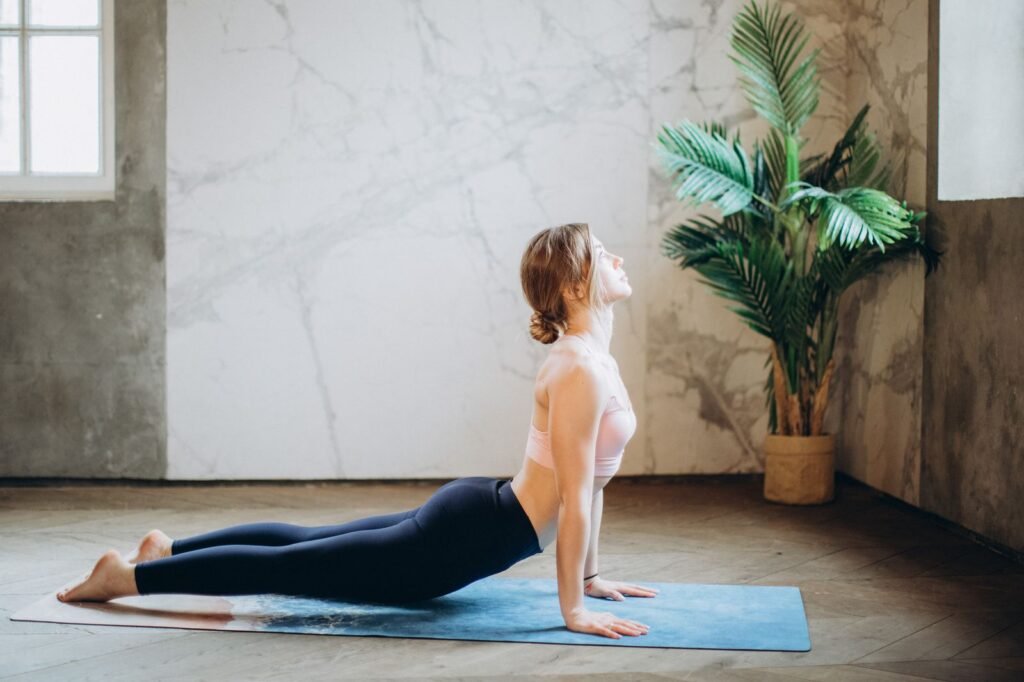
Lie face down, place your palms under your shoulders, and press the chest up while keeping the lower ribs and pelvis on the mat, using back strength rather than pushing hard through the arms. Cobra Pose builds spinal extensor strength and counters the rounded-shoulder posture common in beginners, but it should be practiced with a small lift rather than a maximal one. Many new practitioners push too high, too fast, mistaking arm strength for spinal strength; the correct cue is to keep the lift modest and let the lower back muscles do the work gradually over weeks of practice.
Why Does Seated Forward Bend (Paschimottanasana) Feel So Different for Everyone?
Sit with legs extended straight in front of you, flex the feet, and hinge forward from the hips, reaching toward the feet or shins rather than rounding the spine to reach the toes. Hamstring flexibility varies enormously between individuals, so this pose can look dramatically different from person to person while still being done correctly. A slight bend in the knees is completely acceptable for beginners with tighter hamstrings; the goal is a long spine, not touching the toes.
What Is Corpse Pose (Savasana) and Why Does It Matter?
Lie flat on your back with arms slightly away from the body, palms facing up, legs relaxed and slightly apart, and simply breathe naturally for several minutes. Corpse Pose closes almost every yoga class because it allows the nervous system to shift out of effort mode and consolidate the physical work just done. Skipping Savasana is one of the most common beginner mistakes, since it’s easy to assume the “real” workout has ended once the active poses are finished, but the relaxation phase is where much of the recovery benefit is thought to happen.
How Do You Build a Basic Yoga Routine for Beginners at Home?
A simple structure that works well for a first home routine: two minutes of Mountain Pose and Cat-Cow to warm up, five minutes moving through Downward Dog, Warrior I, and Warrior II on each side, three minutes of Triangle Pose and Tree Pose for balance work, three minutes of Bridge Pose and Cobra Pose for gentle backbending, three minutes in Seated Forward Bend, and finishing with five minutes in Corpse Pose. That adds up to roughly 20 minutes, a realistic length for most yoga for beginners at home sessions, and short enough that consistency stays achievable on busy days. Practicing this same sequence three to four times a week is generally more useful for building basic yoga asanas fluency than doing a longer session once a week.
What Equipment Do You Actually Need to Get Started?
A non-slip yoga mat, comfortable clothing that allows a full range of motion, and enough floor space to stretch out both arms and legs. A block or a sturdy book is genuinely useful for Triangle Pose and any pose requiring you to reach the floor before your flexibility allows it comfortably. A strap, or even a bathrobe tie, helps in Seated Forward Bend if your hands can’t reach your feet. None of this needs to be expensive; the goal of basic yoga steps is accessibility, not equipment. If you’re deciding between a printed guide and structured instruction, a good yoga basics book can be a useful reference between classes, but live or video instruction is more reliable for correcting alignment mistakes you can’t see yourself.
What Common Mistakes Should Beginners Avoid in Basic Yoga Asanas?
The most frequent mistakes are holding the breath during effortful poses, forcing depth in forward bends and Triangle Pose before the hips and hamstrings are ready, letting the knee cave inward in Tree Pose, and skipping Savasana at the end of practice. Breath should stay smooth and audible throughout every pose; if you’re holding your breath, you’ve gone past your current edge and should ease back slightly. Comparing your pose to someone else’s in a class or video is another common trap — bodies differ in proportion, so two people doing “correct” Triangle Pose can look quite different from the outside.
How Long Does It Take to Feel Comfortable With Basic Yoga?
Most beginners report feeling noticeably more comfortable with the core standing and seated poses after two to four weeks of practicing three to four times per week. Balance poses like Tree Pose typically take longer to stabilize than strength-based poses like Warrior II, since balance depends on repeated neural adaptation rather than just muscle conditioning. Flexibility-dependent poses such as Seated Forward Bend often show visible progress over a longer timeline, sometimes eight to twelve weeks, because connective tissue adapts more slowly than muscle strength does.
Questions People Ask About Basic Yoga Poses for Beginners
What are the 5 basic yoga asanas every beginner should learn first?
Mountain Pose, Child’s Pose, Downward-Facing Dog, Cat-Cow, and Corpse Pose are the five most commonly taught first, because together they cover standing alignment, spinal mobility, a full-body stretch, and relaxation without requiring any prior strength or flexibility.
Can I learn basic yoga poses without a teacher?
Yes, many beginners start with videos, apps, or a yoga basics book, but working with an instructor even occasionally is valuable because alignment mistakes in poses like Triangle Pose or Warrior II are hard to notice in your own body without external feedback.
How many basic yoga poses should a beginner practice per session?
Eight to twelve poses is a practical range for a single beginner session, similar to the 12 basic yoga poses for beginners list, since this is enough to cover standing, seated, and resting shapes without the routine becoming too long to sustain regularly.
Is it normal to shake during basic yoga asanas?
Yes, mild shaking in poses like Warrior II or Tree Pose is a normal sign that stabilizing muscles are being challenged and adapting, not a sign of doing the pose incorrectly, though sharp pain (as opposed to muscular fatigue) is a signal to ease out of the pose.
What’s the difference between basic yoga and basic yoga asanas?
“Basic yoga” typically refers to the broader beginner practice, including breathing and relaxation, while “basic yoga asanas” refers specifically to the physical postures themselves; asana is the Sanskrit term for a seated or physical pose within the wider yoga practice.
Do basic yoga poses help with flexibility or strength more?
Basic yoga poses build both simultaneously, though the balance differs by pose: Warrior I and II lean toward strength and stamina, while Seated Forward Bend and Triangle Pose lean toward flexibility, which is why a full routine mixing several poses produces more balanced results than repeating just one type.
Try This for Yourself
Reading about basic yoga poses only goes so far — real progress comes from guided practice where an instructor can correct your alignment in real time. Explore FitStrot’s online yoga classes to build a personalized beginner routine with an instructor who can adjust Warrior II, Triangle Pose, and every other basic asana to your body specifically.
Related reading: Yoga for Beginners, Yoga for Beginners at Home, Beginner Yoga Sequence, Benefits of Yoga, and FitStrot’s Online Yoga Classes.