Yoga for hormonal imbalance works mainly by lowering the stress hormone cortisol and calming an overactive nervous system, which in turn gives the endocrine glands more room to communicate properly through the hypothalamus-pituitary axis. Restorative poses like Supta Baddha Konasana (reclining bound angle), gentle twists, forward folds, and slow pranayama such as Anulom Vilom are the most commonly recommended starting point because they shift the body out of fight-or-flight mode, where cortisol and adrenaline are prioritized over reproductive and thyroid hormones. Yoga is not a substitute for medical diagnosis or treatment of conditions like PCOS, thyroid disorders, or perimenopause, but as a daily complementary practice it can meaningfully support sleep, mood, insulin sensitivity, and cycle regularity alongside whatever care a doctor has recommended. The rest of this guide covers the specific asanas, breathing techniques, weekly routines, and realistic timelines for using yoga as part of a hormonal balance plan.
What Does “Hormonal Imbalance” Actually Mean?
Hormonal imbalance is a broad, non-clinical term describing when hormone levels sit outside their typical range or when the ratio between hormones (like estrogen to progesterone) shifts in a way that produces symptoms. It isn’t a single diagnosis; it’s an umbrella that includes conditions such as PCOS, thyroid dysfunction, perimenopause, adrenal fatigue-type symptoms, and stress-driven cortisol elevation. Common symptoms people search for relief from include irregular periods, unexplained weight changes, fatigue, mood swings, hormonal acne, low libido, and sleep disruption. Because so many of these symptoms overlap with stress and lifestyle factors, yoga’s role is usually most direct in the areas it’s best studied for: lowering cortisol, improving sleep, and supporting the nervous system regulation that hormone production depends on.
How Does Yoga Influence Hormones in the Body?
Yoga does not directly inject or replace hormones, but it influences the systems that regulate hormone release. The central mechanism is the hypothalamic-pituitary-adrenal (HPA) axis, the communication loop between the brain and the adrenal glands that governs the stress response. When this axis is chronically activated by ongoing stress, poor sleep, or overtraining, cortisol output can stay elevated, and sustained high cortisol has been linked in research to disruption of reproductive hormones, thyroid function, and blood sugar regulation. Slow, mindful movement combined with deep diaphragmatic breathing activates the parasympathetic nervous system, the “rest and digest” counterpart to the stress response, which is the pathway most consistently supported by yoga research. A systematic review of yoga interventions in women with PCOS, for example, has reported improvements in androgen levels and metabolic markers alongside standard care, though researchers are clear that results vary and yoga is studied as a complementary practice rather than a stand-alone treatment.
Best Yoga Poses for Hormonal Imbalance
These are the yoga poses for hormonal imbalance most frequently recommended by yoga therapists, particularly for people managing PCOS, thyroid issues, or stress-driven symptoms. Each is included because it either reduces stress load, supports pelvic and abdominal circulation, or gently stimulates glands associated with hormone regulation.
Supta Baddha Konasana (Reclining Bound Angle Pose)
Lying on the back with the soles of the feet together and knees falling open, this is one of the most restorative poses in a hormonal balance sequence. It opens the hips and groin, encourages blood flow to the pelvic region, and is typically held for several minutes with support under the knees, making it a gentle entry point similar to poses used in restorative yoga.
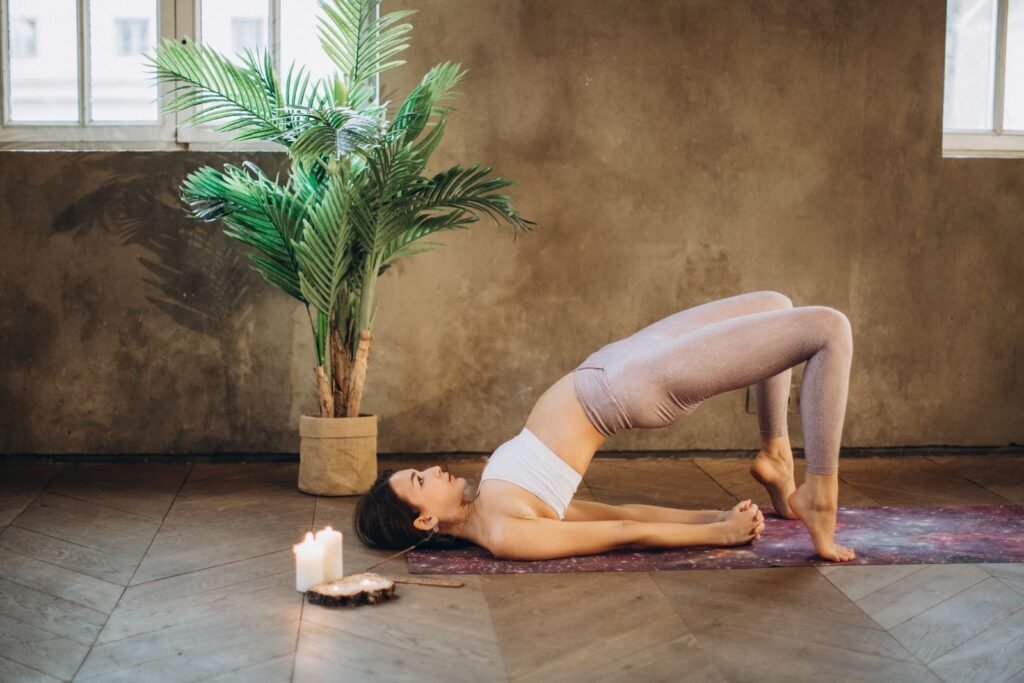
Setu Bandhasana (Bridge Pose)
Bridge pose lifts the hips while the shoulders and feet stay grounded, mildly stimulating the thyroid through the throat area while also engaging the glutes and lower back. It’s a frequent recommendation in guides on yoga for thyroid because it offers thyroid-adjacent benefits without a full inversion.
Balasana (Child’s Pose)
A grounding forward fold that compresses the abdomen gently and calms the nervous system, child’s pose is often used as a reset between more active poses. It’s a foundational shape in most yoga for beginners sequences and works well as a pause point whenever a hormonal-balance routine starts to feel too intense.
Malasana (Garland Pose / Yogic Squat)
A deep squat that opens the hips and pelvic floor, Malasana is commonly included in sequences targeting the reproductive system and is a supportive complement to routines built around yoga for PCOS, where hip and pelvic mobility are a recurring focus.
Ardha Matsyendrasana (Seated Spinal Twist)
Twisting poses are traditionally believed to stimulate digestion and the abdominal organs through gentle compression and release. This seated twist also supports spinal mobility and is often paired with other yoga for back pain sequences that use rotation to relieve tension along the spine.
Viparita Karani (Legs-Up-The-Wall Pose)
A passive inversion that requires no strength or flexibility, this pose is widely used to calm the nervous system and support circulation without the intensity of a full shoulder stand. It’s a gentle entry point into the broader category of yoga inversions and is considered safe for most people, including many managing thyroid or adrenal symptoms.
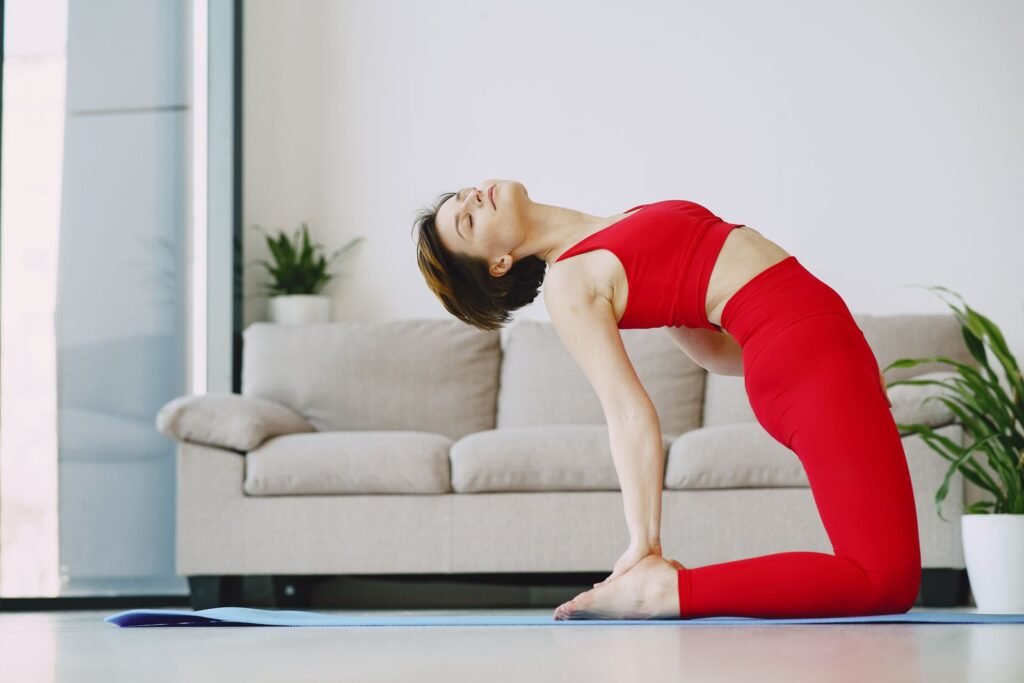
Bhujangasana (Cobra Pose) and Ustrasana (Camel Pose)
Both backbends open the chest and throat while mildly stimulating the abdominal region. Camel pose in particular appears frequently in thyroid-focused sequences and pairs naturally with a hormonal balance routine when practiced with a soft, gradual entry rather than forcing depth.
Yoga Poses for Hormonal Imbalance in Females: What’s Different?
Yoga for hormonal imbalance in females often needs to account for a monthly cycle, which changes what’s appropriate week to week. During menstruation, many teachers recommend avoiding deep twists, strong core work, and full inversions in favor of restorative poses like Supta Baddha Konasana and child’s pose. In the follicular and ovulatory phases, when energy is often higher, more active sequences and backbends tend to feel more accessible. During the luteal phase, when progesterone rises and some people notice more fatigue or irritability, slower, grounding sequences with longer holds are generally better tolerated. This cycle-aware approach is also central to conditions like PCOS and perimenopause, where hormone fluctuation is more pronounced, and it’s why a personalized routine tends to outperform a generic pose list, an approach also discussed in guides to yoga for PCOS.
Can Yoga Help With Hormonal Acne?
Yoga for hormonal acne works indirectly, mainly by lowering the stress hormones that are known to worsen breakouts and by supporting the circulation and lymphatic flow associated with clearer skin. Cortisol has been linked to increased oil production and inflammation, so poses and breathing techniques that reduce stress load may help reduce one of several contributing factors to hormonal acne, alongside diet, hydration, sleep, and any skincare or medical treatment already in place. It’s worth being clear that yoga is not a direct acne treatment and should not replace dermatological care for persistent or severe breakouts; it functions as one supportive piece of a broader routine, similar to how a consistent practice supports skin-adjacent benefits described in general benefits of yoga content.
Pranayama and Breathing Techniques for Hormonal Balance
Breathing practices are considered just as important as the asanas in a hormonal balance routine, because they act directly on the nervous system that influences hormone regulation.
Anulom Vilom (Alternate Nostril Breathing)
This balancing technique alternates airflow between nostrils and is widely used to calm the autonomic nervous system, supporting the parasympathetic response that helps regulate cortisol. It’s one of the most frequently taught techniques in pranayama breathing techniques for stress and hormone-related concerns.
Bhramari (Bee Breath)
A humming exhale that creates a gentle vibration in the head and throat, Bhramari is commonly used to quiet the mind quickly and is often recommended before sleep, since sleep quality directly affects cortisol and growth hormone rhythms.
Ujjayi Pranayama (Victorious Breath)
A slow, audible breath created by softly constricting the back of the throat, Ujjayi is often used throughout an asana sequence to keep the nervous system anchored in a calmer state rather than spiking into a stress response during more physically demanding poses.
Hormonal Yoga and Your Weekly Routine
The term “hormonal yoga” generally refers to sequences specifically designed around endocrine support rather than general fitness or flexibility. Compared with a typical vinyasa or power class, a hormonal yoga sequence usually holds poses longer, prioritizes restorative and gentle backbend shapes over cardio-intensive flows, and integrates pranayama and relaxation as core components rather than an afterthought. It’s less about calorie burn and more about nervous system regulation, making it a different goal entirely from something like yoga for weight loss, even though the two can be practiced on alternating days as part of a broader routine. A practical weekly structure looks like this: three to four sessions of 30-40 minutes combining the core asanas above, held for 30-90 seconds each with rest between, followed by 10 minutes of pranayama and a longer Savasana of 5-10 minutes. On lower-energy days, a shorter 15-20 minute restorative sequence focused on Supta Baddha Konasana, Viparita Karani, and Bhramari breath is often more sustainable than skipping practice entirely. If you’re new to structuring a routine, an overview of types of yoga can help clarify how a hormone-focused sequence fits alongside more dynamic styles like vinyasa yoga or gentle hatha yoga on higher-energy days.
How to Cure Hormonal Imbalance Through Yoga: Setting Realistic Expectations
The phrase “cure hormonal imbalance through yoga” sets an expectation that isn’t supported by the evidence, and it’s worth being direct about that. Yoga is studied as a complementary practice that supports the stress, sleep, and metabolic factors influencing hormone regulation, not as a cure for underlying conditions like PCOS, thyroid disease, or perimenopause, which typically require medical diagnosis and, often, medication or other treatment. What consistent practice does reliably support, according to the research available, is reduced stress reactivity, better sleep quality, and improved quality-of-life scores when practiced alongside standard medical care. A realistic timeline is four to eight weeks of consistent practice before noticing changes in stress and energy, with hormone level changes only ever confirmed through blood work ordered by a doctor, not by symptoms alone.
Baba Ramdev Yoga for Hormonal Imbalance: What This Search Usually Means
Many people searching for baba ramdev yoga for hormonal imbalance are looking for the specific pranayama-heavy sequences popularized in his yoga teaching, which typically emphasize kapalabhati, anulom vilom, and bhastrika alongside asanas like Sarvangasana and Halasana. These techniques overlap significantly with the pranayama and asana recommendations covered throughout this guide, though anyone with hyperthyroidism, high blood pressure, or pregnancy should approach vigorous breathing techniques like kapalabhati and bhastrika cautiously, since they can be overstimulating for an already active nervous system. The underlying principle, wherever the sequence originates, remains consistent: pair calming asanas with breathwork that supports the nervous system, and treat it as a daily habit rather than an occasional session.
Yoga for Hormonal Imbalance and Related Conditions
Hormonal imbalance rarely shows up in isolation, and it’s common for people managing one condition to notice overlapping symptoms elsewhere. Thyroid dysfunction, PCOS or PCOD, and stress-driven cortisol elevation frequently interact, which is why many people build a routine that draws from more than one focused guide. If irregular cycles and insulin resistance are the primary concern, yoga for PCOS goes deeper into cycle-specific sequencing. If fatigue, weight changes, or temperature sensitivity point toward the thyroid, yoga for thyroid covers gland-specific asanas in more depth. Hormonal shifts also affect body composition for many people, which is where yoga for weight loss becomes a relevant companion practice, and hormone-related concerns aren’t limited to women; men managing testosterone-related symptoms often find overlap with the approach covered in yoga for erectile dysfunction. Anyone whose symptoms include persistent low mood or anxiety may also benefit from pairing a hormonal routine with yoga for anxiety, since the nervous system pathways involved substantially overlap.
Safety Guidelines Before Starting a Hormonal Balance Practice
Yoga for hormonal imbalance should sit alongside, not replace, a conversation with a doctor, especially if symptoms are new, severe, or involve a diagnosed condition like PCOS, thyroid disease, or a suspected pituitary or adrenal issue. A few practical points apply broadly:
- Heavy menstrual flow: Avoid deep twists and strong core-engaging poses if they increase discomfort.
- High blood pressure, glaucoma, or pregnancy: Approach inversions cautiously.
- Vigorous pranayama: Introduce techniques like kapalabhati gradually, and skip them entirely if you have hyperthyroidism or a diagnosed anxiety disorder that vigorous breathing tends to aggravate.
- Warning signs: Treat any dizziness, sharp pain, or unusual palpitations as a signal to stop and rest.
Pregnant practitioners and anyone recovering from abdominal or pelvic surgery should get modifications from a qualified instructor rather than following a general sequence, similar to the tailored guidance found in prenatal yoga.
Common Mistakes That Undermine a Hormonal Yoga Practice
A handful of recurring mistakes reduce the benefit of a hormonal balance practice or add unnecessary strain:
- Skipping restorative work: Practicing only high-intensity, cardio-style yoga while ignoring restorative poses and pranayama misses the stress-reduction mechanism that does most of the work.
- Inconsistent practice: Occasional long sessions produce far less benefit than shorter, regular practice, since nervous system regulation compounds with repetition rather than intensity.
- Ignoring the cycle: Holding vigorous breathing techniques through a heavy or irregular cycle without adjusting for how the body feels that week ignores the cycle-aware approach that tends to work better for hormonal symptoms specifically.
- Replacing medical treatment: Stopping prescribed medication for PCOS, thyroid conditions, or any other diagnosed hormonal issue because a yoga routine feels good is not supported by any credible medical guidance.
Building a foundation in yoga for beginners before layering in hormone-specific sequences also reduces the risk of rushing into poses the body isn’t ready for.
How Long Before Yoga Improves Hormonal Symptoms?
Most people practicing yoga for hormonal balance consistently notice changes in sleep quality, stress levels, and general mood within two to four weeks, while changes tied more directly to cycle regularity or skin often take longer, sometimes two to three menstrual cycles, to become noticeable. This timeline mirrors the gradual, compounding nature of yoga’s benefits described more generally in benefits of yoga, and it’s worth setting the expectation early that this is a slow-build daily habit rather than a quick fix. Tracking actual hormone levels should always go through a doctor’s blood work rather than relying on how a person feels week to week.
Questions People Ask About Yoga for Hormonal Imbalance
Can yoga alone fix a hormonal imbalance?
No. Yoga is a supportive, complementary practice that can help manage stress, sleep, and some metabolic factors that influence hormone regulation, but it does not replace medical diagnosis or treatment for conditions like PCOS, thyroid disorders, or perimenopause. It works best alongside a doctor’s guidance and any prescribed treatment plan.
Which yoga pose is best for hormonal imbalance?
There isn’t a single best pose, since hormonal imbalance covers many different underlying causes. Supta Baddha Konasana (reclining bound angle) and Viparita Karani (legs-up-the-wall) are widely recommended for their calming effect on the nervous system, while bridge pose and camel pose are often included for their thyroid-adjacent benefits.
How often should I practice yoga for hormonal balance?
Most yoga therapists recommend three to five sessions a week of 20-40 minutes, favoring consistency over occasional long sessions. Shorter daily practice tends to produce steadier improvements in stress, sleep, and mood than infrequent, longer sessions.
Is yoga safe during a hormonal imbalance flare-up like PCOS symptoms or acne breakouts?
Generally yes, with gentle modifications. Restorative poses and calming pranayama are usually well tolerated even during symptom flare-ups, though vigorous inversions or intense core work may need to be scaled back. Anyone with a diagnosed condition should confirm specific modifications with their doctor or a qualified instructor.
Does yoga help with perimenopause and menopause symptoms specifically?
Yoga is commonly used to support sleep, mood, and stress levels during perimenopause and menopause, when hormone fluctuation is often significant. Cooling, restorative sequences tend to be favored over vigorous practice, particularly for people experiencing hot flashes or sleep disruption, though yoga supports symptom management rather than altering the underlying hormonal transition itself.
Can men benefit from hormonal balance yoga too?
Yes. While much of the research and popular content focuses on women’s hormonal health, men managing stress-related testosterone changes, fatigue, or low libido can benefit from the same stress-reduction and nervous system regulation mechanisms, an overlap covered in more detail in yoga for erectile dysfunction.
Try This for Yourself
If you want a guided approach to yoga for hormonal imbalance rather than piecing together poses on your own, a live one-on-one class lets an instructor adjust the sequence to your cycle phase, energy levels, and any diagnosed condition like PCOS or thyroid dysfunction. Book an online yoga class with FitStrot and build a hormonal balance routine that fits your schedule and your specific symptoms.
Related reading: yoga for PCOS, yoga for thyroid, yoga for weight loss, yoga for erectile dysfunction, and FitStrot’s online yoga classes.