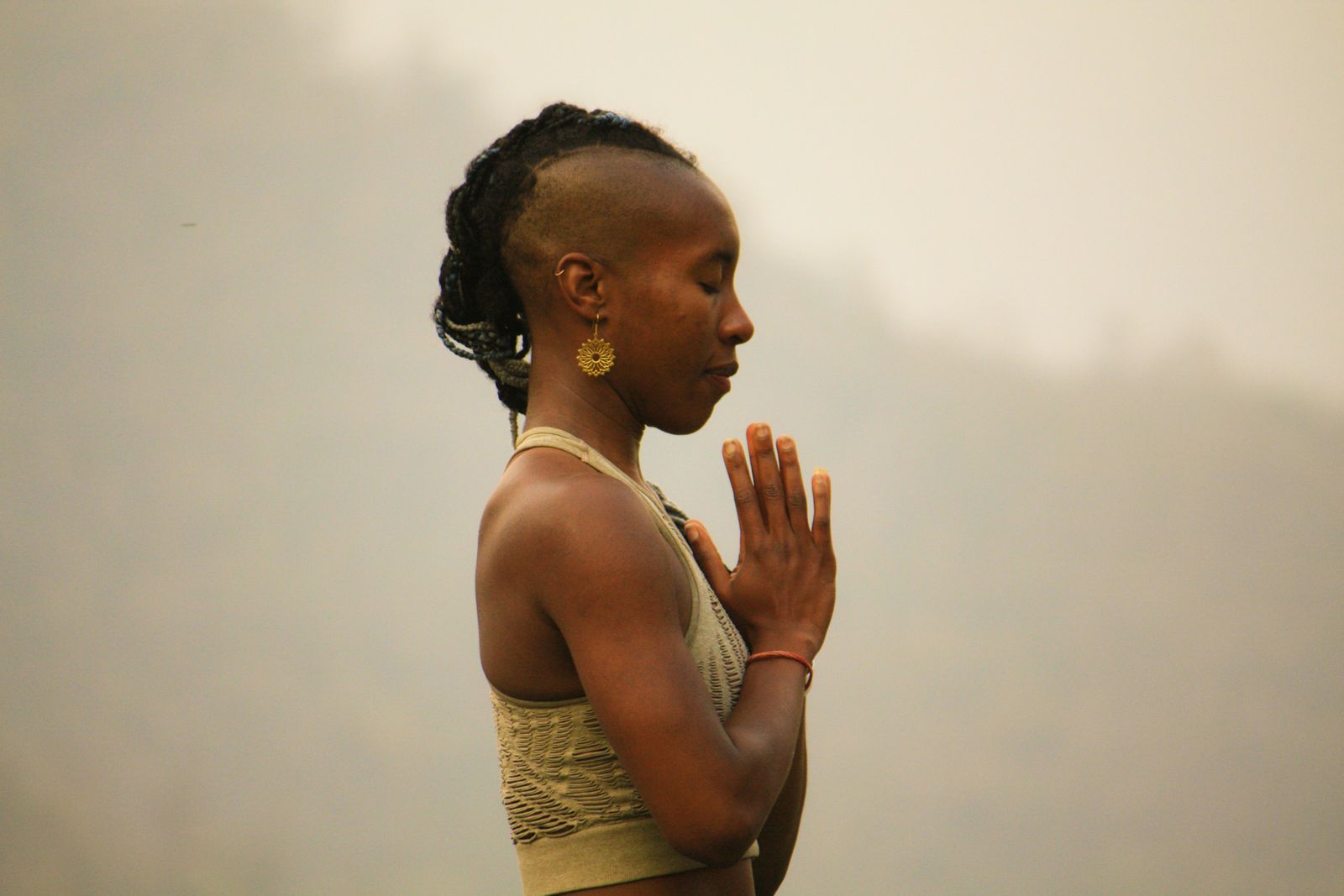
Pranamasana, or Prayer Pose, is the standing posture in which you bring your palms together at the center of your chest in Anjali Mudra, feet grounded and spine tall, as a gesture of focus and respect. It is the very first position in Surya Namaskar (Sun Salutation) and the position you return to at the end of the sequence, which is why most practitioners meet it before they’ve learned almost any other pose. Pranamasana itself involves no deep stretch or strength challenge; its value lies in centering the breath, quieting the mind, and setting an intention before movement begins.
What Is Pranamasana in Yoga?
The name comes from three Sanskrit roots: “pranam” (prayer, bow, or salutation), “asana” (pose or seat), and by extension a connection to “prana” (life force or breath). Put together, Pranamasana translates most commonly as Prayer Pose, though some teachers call it Salutation Pose because of its role in Surya Namaskar. It is a standing posture, palms joined in Anjali Mudra at the heart center, that appears at the start and close of the sun salutation sequence and is also practiced on its own as a short centering ritual before a longer yoga practice.
Unlike many named asanas, pranamasana was never designed to isolate a muscle group or test flexibility. Its function is transitional and mental: it marks the boundary between “before practice” and “during practice,” giving the nervous system a clear signal to shift gears.
How Do You Do Pranamasana? Step-By-Step Instructions
Pranamasana takes only a few seconds to move into, but the details of alignment and breath are what make it effective. Follow these steps:
- Stand at the front of your mat with feet together or hip-width apart, weight distributed evenly across both feet, similar to the grounding used in Tadasana.
- Relax the shoulders down and back, away from the ears, and let the spine lengthen naturally upward.
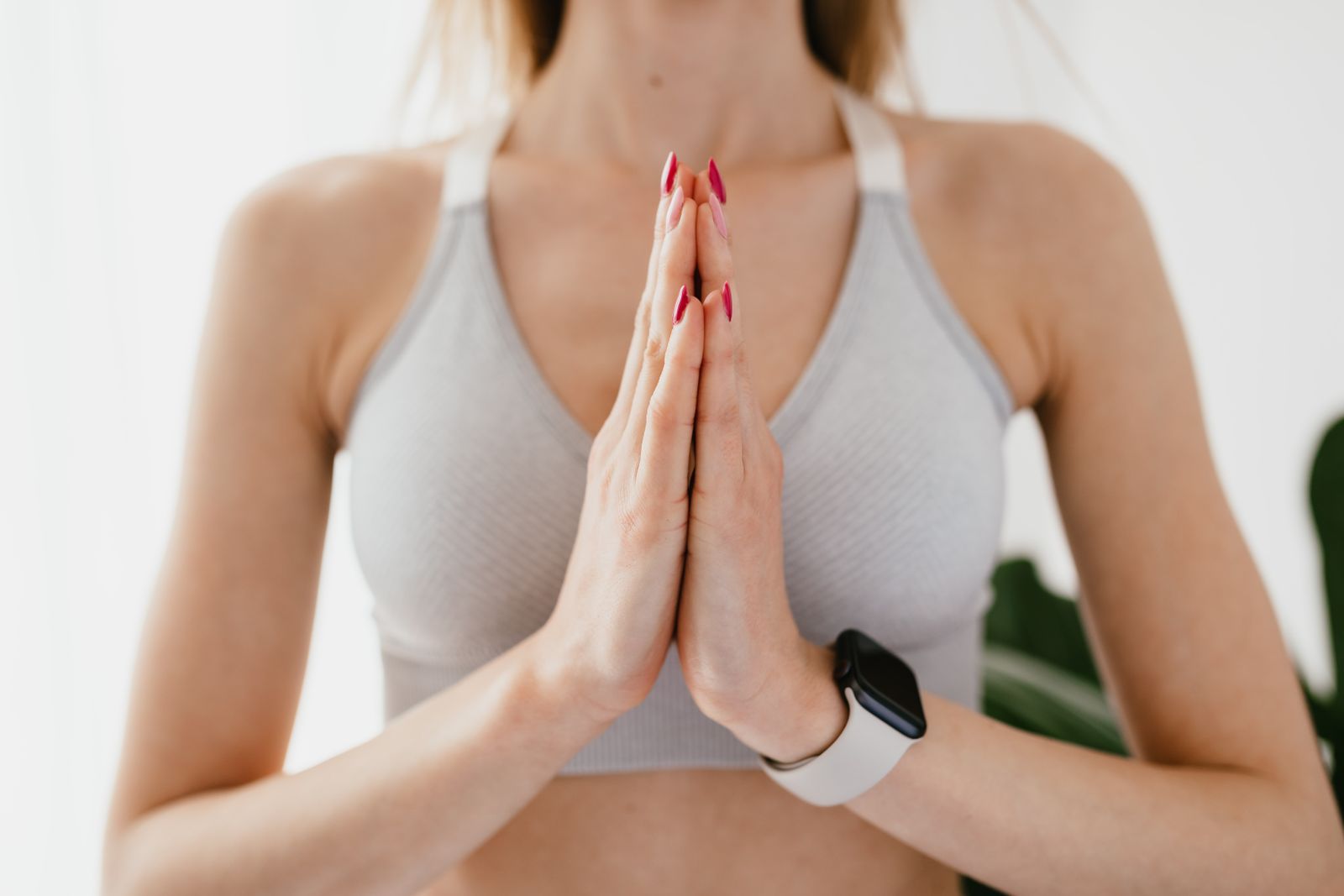
- Bring the palms together at the center of the chest in Anjali Mudra, thumbs resting lightly near the sternum.
- Press the palms together evenly without straining the wrists or forearms, keeping the elbows relaxed rather than flared out.
- Soften the gaze forward or close the eyes, whichever helps you settle attention inward more easily.
- Take 3 to 5 slow, even breaths, letting the inhale and exhale be roughly the same length.
- Set a simple intention for the practice ahead, whether that’s a single word, a breath count, or just the decision to stay present.
Hold pranamasana for as little as one breath when using it purely as a transition inside Surya Namaskar, or for 30 seconds to a minute when practicing it as a standalone centering ritual before a class.
What Are the Benefits of Pranamasana?
Because pranamasana is a low-intensity pose, its benefits are more about the nervous system and posture than about strength or flexibility gains:
- Calms the mind by giving the practitioner a single, simple physical action to focus on, which interrupts scattered or anxious thinking before movement begins.
- Improves posture awareness by requiring an even, tall stance similar to Tadasana, reinforcing good standing alignment at the very start of practice.
- Regulates the breath since the stillness of the pose naturally invites slower, more even inhales and exhales.
- Balances the nervous system by combining physical stillness with mental focus, a pairing associated with a shift toward the parasympathetic, “rest and digest” state.
- Symbolically marks intention for the practice, a psychological cue that research on ritual behavior suggests can improve focus and follow-through on the activity that follows.
- Prepares the body for Surya Namaskar by grounding the feet and aligning the spine before the more dynamic forward folds, backbends, and lunges that follow in the sequence.
These pranamasana yoga benefits accumulate less through repetition of the shape itself and more through the habit of pausing intentionally before physical activity, a habit that shows up across the wider list of benefits of yoga and carries over well beyond the mat, including into stress relief practices.
What Is Anjali Mudra and Why Does It Matter in Pranamasana?
Anjali Mudra, the hand gesture used in pranamasana, translates roughly to “salutation seal” or “offering gesture.” The palms press together at the chest, fingers pointing upward, in a shape recognized across many cultures as a sign of greeting, respect, or prayer. In yoga specifically, Anjali Mudra is thought to bring the two hemispheres of awareness, often described as the active and receptive, or masculine and feminine, energies into a symbolic union at the heart center. Whether or not you engage with that symbolism, the physical act of pressing the palms evenly together has a practical effect: it requires just enough attention to the hands and forearms to pull focus away from mental chatter, which is part of why the gesture appears not only in pranamasana but at the close of most yoga styles as well.
How Does Pranamasana Fit Into Surya Namaskar?
Pranamasana is the first and last of the twelve positions that make up a traditional round of Surya Namaskar. The sequence opens with pranamasana at the front of the mat, moves through Hasta Uttanasana (raised arms), a forward fold, a low lunge, a plank, and a series of backbends and folds, before returning to pranamasana to close the round. This bookending isn’t incidental. Beginning and ending in the same still, centered posture gives the body and mind a clear “before” and “after” marker, making it easier to notice the physical and mental shift a full round of sun salutations produces. Many teachers also treat the closing pranamasana as a brief moment of gratitude, a nod to the sequence’s traditional association with honoring the sun as a source of energy and life. If you’re new to the full sequence, it helps to first learn Surya Namaskar step by step before adding speed or repetitions.
What Muscles Does Pranamasana Work?
Pranamasana is not a strength-building pose in any significant sense, but it does involve light, isometric engagement in a few areas. Standing tall with even weight distribution activates the same postural muscles used in Tadasana: the quadriceps engage gently to keep the legs firm, the deep core muscles switch on lightly to support a neutral pelvis, and the muscles between the shoulder blades draw the shoulders back and down. Pressing the palms together at the chest engages the muscles of the forearms and the pectoral region in a mild isometric contraction, similar to a gentle version of a palm press exercise. None of this engagement is intense enough to build noticeable strength on its own, but it reinforces full-body postural habits every time the pose is practiced, in much the same way other standing yoga poses build alignment through repetition rather than a single dramatic effort.
What Are Common Variations of Pranamasana?
While the standing version at the front of the mat is the most familiar, pranamasana has a few common variations used in different contexts:
- Seated Pranamasana: The same palms-together gesture practiced in a cross-legged seated position, often used at the start or end of meditation rather than a standing flow.
- Pranamasana with eyes closed: Closing the eyes removes visual distraction and deepens the internal focus, though it requires steady balance to avoid swaying.
- Pranamasana with a slight forward bow: A small bow of the head or upper body toward the palms, emphasizing the gesture’s traditional connotation of respect or humility.
- Reverse Anjali Mudra (Paschima Namaskarasana): Palms pressed together behind the back rather than in front of the chest, a more advanced shoulder-opening variation sometimes used within backbend sequences.
- Pranamasana on one leg: Lifting one foot to the opposite ankle or calf while maintaining the hand position, blending the centering quality of pranamasana with a light balance challenge.
Each variation keeps the same core intention: stillness, even breath, and a clear mental transition into or out of practice.
What Mistakes Do People Make in Pranamasana?
Because pranamasana looks effortless, it’s easy to rush through without attention to detail. A common mistake is pressing the palms together so hard that the wrists or forearms tense up, which pulls focus toward discomfort rather than stillness. Another frequent issue is letting the shoulders creep up toward the ears, a tension pattern carried over from daily posture habits rather than anything specific to the pose. Some practitioners also let the weight sink unevenly into one foot, undermining the grounded, symmetrical stance the pose is meant to establish. Perhaps the most common mistake is treating pranamasana as a throwaway moment to rush through on the way to “the real poses,” rather than using it as intended: a brief, deliberate pause that sets the tone for whatever comes next, similar to how rushing the transitions in vinyasa yoga undercuts the benefit of the breath-movement link that style depends on.
How Does Pranamasana Compare to Tadasana?
Pranamasana and Tadasana share the same standing foundation: feet grounded, spine tall, shoulders relaxed. The difference is in the hands and the intention. Tadasana keeps the arms resting naturally by the sides and is typically used as a reference posture for alignment throughout a practice, appearing dozens of times in a single class. Pranamasana adds the palms-together Anjali Mudra at the chest and carries a more specific ritual role: marking the start and end of a sequence rather than serving as a general alignment checkpoint. In practice, many teachers move directly from Tadasana into pranamasana at the start of class, using the first to establish physical alignment and the second to add the mental cue of beginning. Balance-focused postures such as Vrksasana (Tree Pose) rely on that same tall, grounded stance built in both Tadasana and pranamasana, which is one reason instructors return to it so often across a beginner-friendly practice.
How Long Should You Hold Pranamasana?
Within a flowing sequence such as Surya Namaskar, pranamasana is typically held for just one or two breaths before moving into the next position. When practiced as a standalone centering pose before a class or a home practice, holding it for 30 seconds to a minute, roughly 5 to 8 slow breaths, gives enough time for the breath to settle and the mind to focus without the hold becoming a strain. There’s no fixed rule here: the appropriate duration depends on whether pranamasana is functioning as a brief transitional checkpoint or as a deliberate few minutes of stillness before movement begins, the same flexible approach used when timing holds in a broader flexibility-focused practice.
Can Beginners Practice Pranamasana Safely?
Pranamasana is considered one of the safest and most accessible poses in yoga. It requires no flexibility, no prior strength, and involves minimal risk of strain since the arms stay close to the body and both feet remain planted. It is appropriate for nearly all fitness levels, including older adults, complete beginners, and those returning to movement after a break. The main consideration is for people with significant wrist or hand mobility restrictions, such as arthritis, who may find pressing the palms fully together uncomfortable; in that case, letting the fingertips touch lightly rather than pressing the full palms together is a reasonable adjustment. Pregnant practitioners generally find pranamasana comfortable at any stage, since it involves no forward compression or deep twisting.
Does Pranamasana Have a Spiritual or Cultural Meaning?
Pranamasana carries meaning that extends beyond its physical shape. The joined-palm gesture, recognized across South and Southeast Asia as a greeting, is commonly associated with the word “namaste,” a spoken salutation often translated loosely as “I bow to you” or “the light in me honors the light in you.” In a yoga class, opening and closing practice with pranamasana connects the physical sequence to this broader tradition found across yoga philosophy, whether the respect is directed toward the teacher, the practice itself, or one’s own effort that day. You don’t need to adopt any particular belief system to benefit from the pose; many practitioners simply use it as a secular moment of stillness before the body starts moving.
How Does Pranamasana Support Breathing and Focus?
The stillness of pranamasana makes it a natural place to practice conscious breathing before a sequence picks up pace. Standing quietly with the palms joined removes the need to coordinate breath with complex movement, so beginners can focus entirely on lengthening the inhale and exhale evenly, a foundational skill for pranayama practices used throughout a broader hatha yoga or vinyasa class. Establishing this steady rhythm before moving into Surya Namaskar helps carry the same even breath pattern through the demanding positions that follow, rather than letting the breath become shallow during the forward folds and backbends.
What Does Pranamasana Look Like? (Visual Reference)
People frequently search for a pranamasana image or pranamasana pose picture before attempting it, mainly to confirm hand placement and stance. In its standard depiction, the practitioner stands facing forward, feet together or hip-width apart, palms pressed together at the center of the chest with fingers pointing upward, elbows relaxed rather than pinned to the sides, and the gaze either soft and forward or with the eyes closed. Illustrated versions used in yoga teaching materials sometimes show a small arrow indicating the lift through the crown of the head, echoing the upward lengthening cued in Tadasana. Because the pose is so simple visually, a short video demonstration is usually more useful than a static image for confirming shoulder position and breath timing.
Questions People Ask About Pranamasana
What is the meaning of pranamasana?
Pranamasana means “Prayer Pose” or “Salutation Pose” in English, from the Sanskrit “pranam” (salutation or bow) and “asana” (pose). It refers to the standing posture with palms joined at the chest in Anjali Mudra, used to mark the beginning and end of a yoga sequence, most notably Surya Namaskar.
Is pranamasana the same as Anjali Mudra?
Not exactly. Anjali Mudra refers specifically to the hand gesture, palms pressed together at the chest, while pranamasana is the full standing pose that incorporates that hand gesture along with a particular stance and breath focus. Anjali Mudra can be used in other poses too, such as seated meditation, without it being called pranamasana.
What is the first step of Surya Namaskar?
Pranamasana is the first step of Surya Namaskar. The sequence begins by standing at the front of the mat with feet together, palms pressed together at the chest in Anjali Mudra, and a few settling breaths before moving into Hasta Uttanasana, the raised-arms position that follows.
Can pranamasana be practiced without doing the full sun salutation?
Yes. Many practitioners use pranamasana on its own as a brief centering ritual before any type of workout or practice, not only before Surya Namaskar. Standing quietly with palms joined for a minute or two before a session can help settle the mind and establish an intention, independent of any longer sequence.
Why do yoga classes often start and end with pranamasana?
Pranamasana gives a class a clear beginning and end point, helping students shift out of daily distractions and into focused practice, then transition back afterward. Many teachers also use the closing pranamasana as a moment of gratitude or reflection, tying the physical session to yoga’s broader tradition of mindful intention.
Try This for Yourself
Reading about pranamasana only goes so far. If you want a guided experience of how this centering pose fits into a full Surya Namaskar sequence and a broader home practice, join a live, instructor-led class where your alignment and breath can be corrected in real time. Explore FitStrot’s online yoga classes and build a steady foundation that starts with a single, mindful breath.
Related reading: Yoga Poses | Surya Namaskar | Tadasana | Vrksasana | Pranayama | Online Yoga Classes