Vayu mudra is a simple hand gesture where you fold the index finger down and press it with the base of the thumb, while the other three fingers stay extended. In yogic and Ayurvedic tradition, it is known as the “air gesture” because it is used to pacify excess vayu (air element) in the body, which practitioners associate with bloating, gas, joint stiffness, and restless nervous energy. You hold it for a few minutes at a time, usually seated with a straight spine and slow breathing. It costs nothing, needs no equipment, and can be done almost anywhere, which is why it remains one of the most commonly recommended mudras for digestive discomfort and mental restlessness in modern mudra practice.
What Does Vayu Mudra Mean?
“Vayu” is the Sanskrit word for air or wind, one of the five classical elements (pancha mahabhuta) alongside earth, water, fire, and space that Ayurveda and yoga philosophy use to describe the body and mind. “Mudra” means seal or gesture. Put together, vayu mudra is the gesture believed to regulate the air element as it moves through the body’s energy channels, or nadis. In Ayurvedic language, air governs movement: the movement of breath, thought, waste through the digestive tract, and the joints. When air is described as excessive or erratic, the traditional signs are gas, bloating, tremors, joint pain, and a scattered, anxious mind. Vayu mudra is positioned as a counterbalance to that excess, which is part of why it sits within the broader family of yoga mudra practices used for targeted, subtle self-regulation rather than physical exertion.
How Do You Perform Vayu Mudra Correctly?
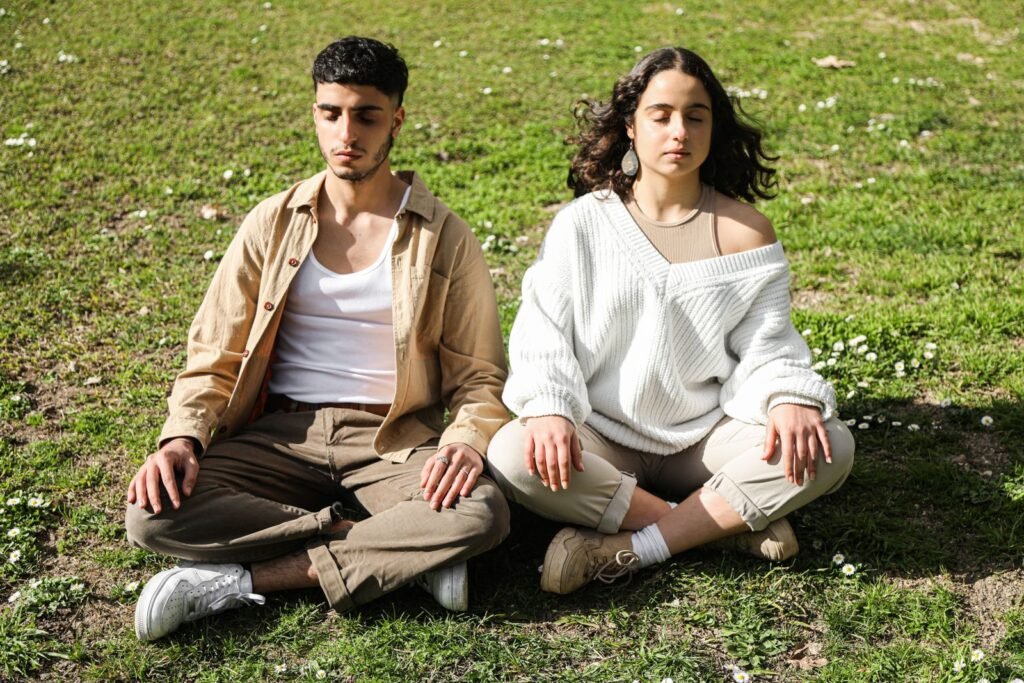
Sit in any comfortable cross-legged position, or simply sit upright in a chair with your feet flat on the floor. Rest your hands on your knees, palms facing upward. Bend your index finger inward so its tip touches the base of your thumb, at the mount below the thumb joint. Gently press your thumb down over the folded index finger, holding it in place without straining the joint. Keep your middle, ring, and little fingers relaxed and extended. Close your eyes, lengthen your spine, and breathe slowly and evenly through the nose. Traditional guidance suggests starting with two to five minutes per session and building up gradually, rather than jumping straight into long holds. The gesture can be practiced with both hands at once, and some teachers alternate hands across sessions.
How Long Should You Hold Vayu Mudra Each Day?
Most traditional sources recommend building up gradually: begin with short sessions of two to five minutes, and increase over one to two weeks toward longer holds. A commonly cited practice pattern is three sessions of around fifteen minutes each, spread across the day, for general digestive and nervous system support. For more persistent joint or nerve-related discomfort, some teachers suggest extending total daily practice toward thirty to forty-five minutes, split into shorter blocks rather than one long sitting. There is no single scientifically validated duration, so start small, notice how your body responds, and adjust rather than forcing a fixed number. Morning practice on an empty stomach is frequently recommended because the digestive system is naturally quieter at that time.
What Are the Traditional Benefits of Vayu Mudra?
Within Ayurveda and hatha yoga traditions, vayu mudra is commonly associated with several benefits, though these are traditional claims rather than clinically established medical outcomes:
- Digestive comfort: traditionally used to ease bloating, trapped gas, and general abdominal discomfort after meals.
- Joint and nerve-related stiffness: some traditional sources link excess “air” to joint pain, and describe vayu mudra as a supportive gesture for tremor-related conditions such as Parkinson’s disease — though this specific claim is not backed by clinical research and should never replace medical treatment.
- Calmer nervous energy: the slow, seated practice is described as settling for a restless or anxious mind, largely through the accompanying breathwork rather than the hand position alone.
- Improved focus during meditation: practitioners often pair vayu mudra with seated meditation to give the hands a steady point of engagement.
Because most of these claims come from traditional and Ayurvedic sources rather than controlled trials, it’s more accurate to describe vayu mudra as a supportive, low-risk practice than as a treatment. If you have a diagnosed digestive or neurological condition, treat this as a complementary habit alongside your existing care, not a replacement for it.
Why Do Yogis Connect Mudras to the Five Elements?
Classical hatha yoga and Ayurveda describe the body as composed of five elements: earth (prithvi), water (jal), fire (agni), air (vayu), and space (akasha). Each finger is traditionally assigned to one element — the thumb to fire, index finger to air, middle finger to space, ring finger to earth, and little finger to water. Mudras work by bringing two fingers into contact, described as either amplifying or reducing the corresponding element. In vayu mudra, pressing the air-associated index finger down with the fire-associated thumb is said to “burn off” or reduce excess air. This framework also explains related gestures such as gyan mudra, which joins the index finger and thumb tip-to-tip rather than folding the finger down, representing knowledge and calm rather than reducing an element.
How Is Vayu Mudra Different From Prithvi Mudra and Gyan Mudra?
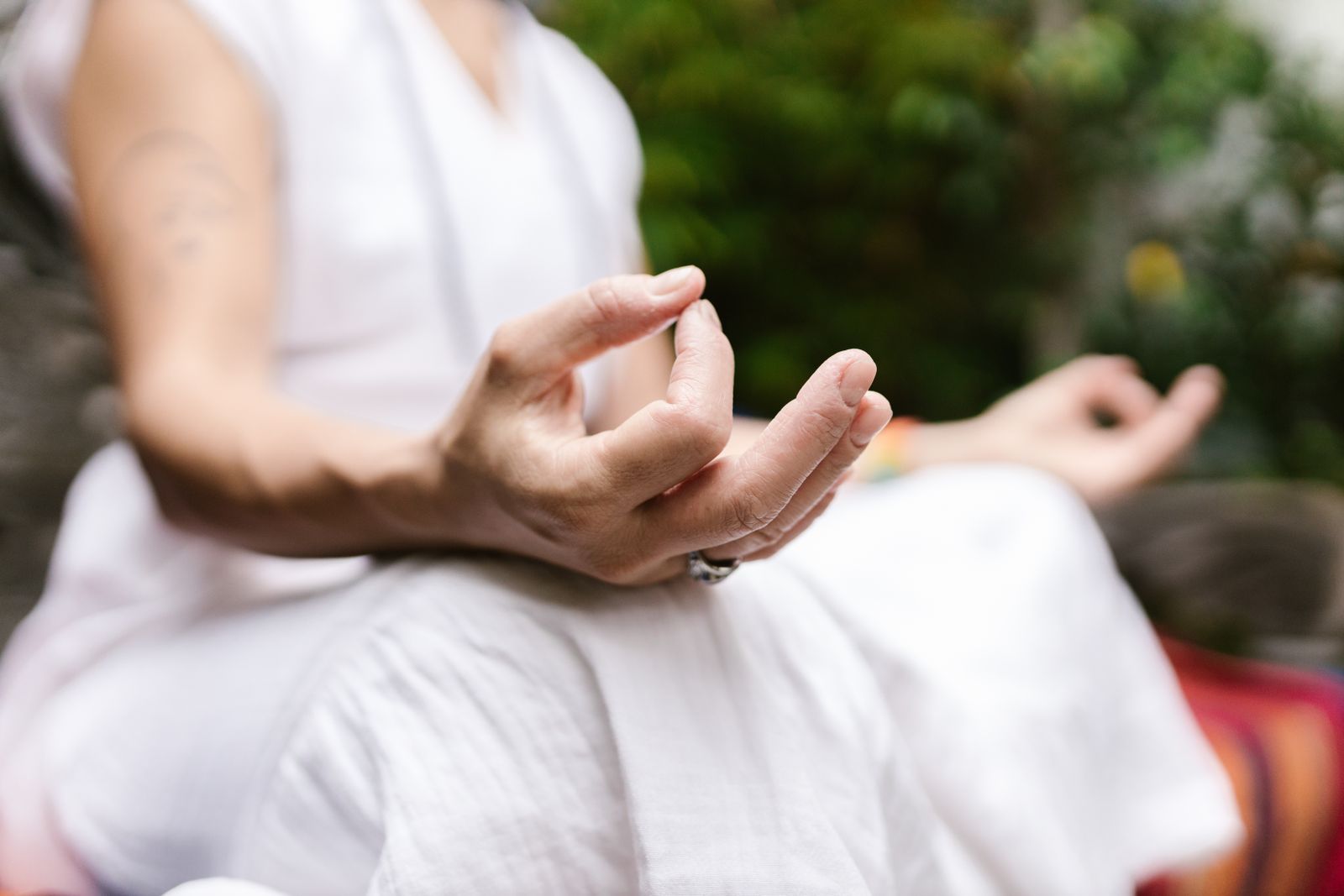
It’s easy to confuse vayu mudra with other finger-and-thumb gestures because the hand shapes look similar at a glance. The key difference is which finger touches the thumb and how it’s positioned. In gyan mudra, the tip of the index finger touches the tip of the thumb lightly, forming a circle, used for focus and calm awareness. In vayu mudra, the index finger is folded down and pressed under the thumb — a firmer, more compressed position associated with reducing the air element specifically. Prithvi mudra, by contrast, joins the ring finger and thumb tip-to-tip and is associated with the earth element, used traditionally for grounding and stamina rather than digestive relief. Knowing these distinctions matters because practicing the wrong gesture for your goal won’t produce the intended traditional effect, even though the hand positions look deceptively alike.
What Does Vayu Mudra Feel Like When Done Correctly?
When the position is correct, you should feel light, even pressure where the thumb rests over the folded index finger, without any sharp pinching or joint strain. The remaining three fingers stay soft and naturally extended, not rigid or spread wide. Many practitioners report a subtle sense of settling in the belly within the first few minutes, particularly alongside slow diaphragmatic breathing. If you feel numbness, tingling, or sharp pain in the index finger, you’re pressing too hard or bending the joint at an unnatural angle — ease off and reposition. The gesture should feel calm and sustainable enough to hold through several minutes of quiet breathing, similar to any other meditation mudra practice.
When Is the Best Time to Practice Vayu Mudra?
Early morning, on an empty stomach, is the most commonly recommended window because digestion is quiet and attention is typically clearer before the day’s distractions build up. That said, vayu mudra can also be practiced after meals if bloating or gas is the specific concern, since the traditional logic is to apply it when the “air” symptom is actually present. It pairs naturally with a short seated pranayama session, since slow nasal breathing is what most practitioners credit for the calming effect. Avoid combining it with seated forward folds or twists right after a heavy meal, since a full stomach and deep flexion together can cause discomfort unrelated to the mudra.
Can Vayu Mudra Help With Bloating and Gas?
This is the most searched reason people try vayu mudra, and it’s worth being precise about what can and can’t be claimed. Ayurvedic tradition attributes gas and bloating to excess vayu, and recommends this mudra specifically to counter it, often alongside dietary changes, warm fluids, and gentle movement. There is no controlled clinical trial establishing that the hand position itself changes digestive physiology. What is more plausible is that the accompanying calm nasal breathing reduces the sympathetic nervous system activation that often worsens bloating and cramping. In practice, most people who find vayu mudra helpful for gas are likely getting relief from the slow breathing and stillness of the practice, with the finger position serving as a traditional focal ritual. If bloating is frequent, severe, or accompanied by other symptoms, discuss it with a doctor rather than relying on any mudra alone.
Who Should Avoid or Modify Vayu Mudra?
Vayu mudra is gentle and generally considered safe for most people, but a few precautions are worth knowing. Avoid bending the index finger to the point of joint pain, clicking, or numbness — the fold should be comfortable, not forced. People with arthritis or recent hand or finger injuries should modify the pressure significantly or skip the pose until healed. It can be tempting to see this as a treatment for anxiety or tremor disorders; it is not a substitute for medical care for any diagnosed neurological or digestive condition. If cross-legged sitting causes back or hip discomfort, practice in a chair instead so the seated position itself doesn’t become the source of discomfort.
How Do You Combine Vayu Mudra With Breathwork?
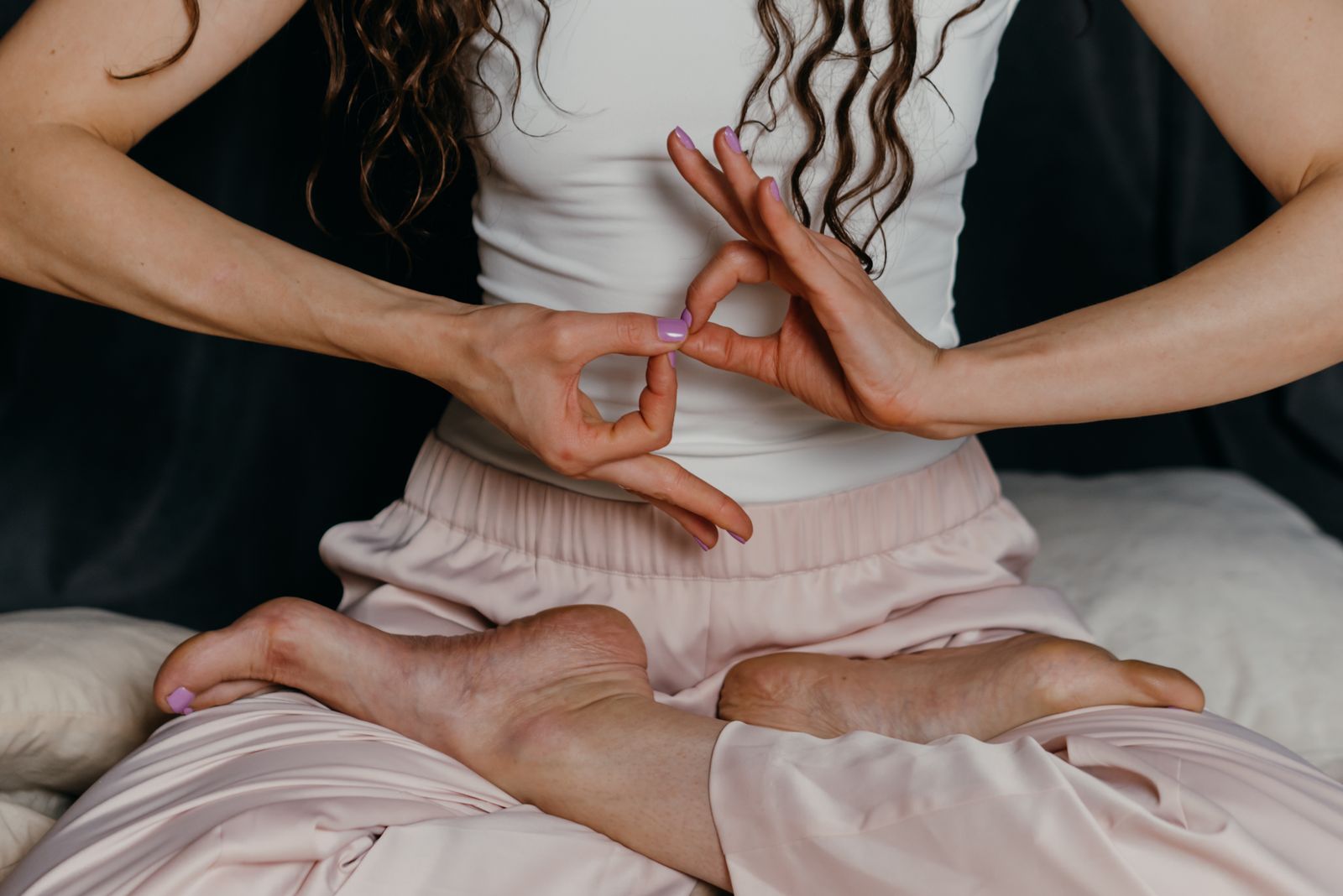
Mudras are traditionally never meant to be practiced as an isolated hand position; they’re paired with conscious breathing to have their intended calming effect. A simple way to combine the two: form vayu mudra with both hands resting on your knees, close your eyes, and inhale for a count of four, hold briefly, then exhale for a count of six. The longer exhale nudges the nervous system toward a parasympathetic, “rest and digest” state, which is the physiological mechanism most likely responsible for any settling effect on bloating or restlessness. This pairing is similar to how nadi shodhana (alternate nostril breathing) is used alongside other mudras — the breath does the physiological work, while the hand gesture provides a steady point of focus.
Does Vayu Mudra Have a Role in a Broader Yoga Practice?
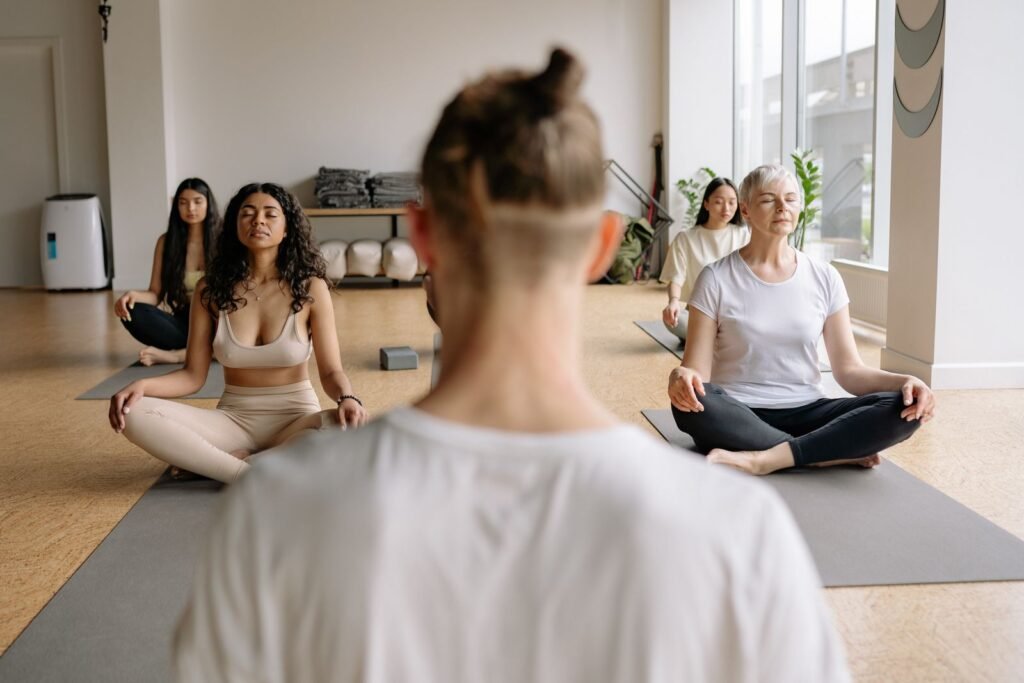
Mudras like vayu mudra are typically a small, quiet part of a larger practice rather than a standalone routine. Many practitioners hold it during the final seated meditation at the end of a hatha yoga or online yoga session. Others weave it into a short morning routine alongside surya namaskar or a seated beginner yoga sequence, using it as the cooldown moment before starting the day. Because it requires no mat space and no movement, it also suits people managing joint pain who want a practice that doesn’t load the knees or spine, making it a reasonable complement to yoga for back pain or gentle chair yoga routines.
How Does Vayu Mudra Compare to Other Digestive-Focused Yoga Practices?
If digestive comfort is your main goal, vayu mudra is one tool among several. Physical postures such as pawanmuktasana (wind-relieving pose) directly compress the abdomen to help move trapped gas, a more mechanical approach than a hand gesture. Twisting postures and gentle forward folds in a broader yoga for digestion sequence work through movement and compression of the digestive organs. Vayu mudra, by contrast, works primarily through stillness and breath regulation, making it a useful addition before a meal as a calming ritual, or as a seated practice when movement isn’t practical, such as while traveling or at a desk.
Is There Any Modern Research Behind Mudra Practices Like This One?
There is very limited modern clinical research specifically testing hand mudras like vayu mudra in controlled trials. Most of what’s written traces back to traditional Ayurvedic and hatha yoga texts and teacher lineages, not peer-reviewed medical studies. Where there is more established research is in the broader category of slow, controlled breathing and meditation, which has documented associations with reduced stress markers and calmer autonomic nervous system activity. Because vayu mudra practice typically includes slow breathing and seated stillness, it likely benefits from those same general relaxation mechanisms, even without direct research on the finger position itself. Treat vayu mudra as a low-risk traditional practice worth trying for stress and mild digestive discomfort, not as a scientifically proven treatment for any specific condition.
How Do You Build a Consistent Vayu Mudra Habit?
Consistency matters more than duration. Anchor the practice to something you already do daily, such as right after your morning tea or a short meditation for beginners session, so you don’t have to remember a new habit from scratch. Start with two to three minutes for the first week; most people abandon new mudra practices because they jump straight to fifteen or thirty minutes and find it unsustainable. Track how you feel afterward for a week or two and let that honest feedback guide whether you extend the practice, rather than following a rigid duration because a website recommended it.
Questions People Ask About Vayu Mudra
What is vayu mudra used for?
Vayu mudra is traditionally used to balance the air element in the body, which Ayurveda associates with gas, bloating, joint stiffness, and restless nervous energy. It’s practiced by folding the index finger under the thumb while seated and breathing slowly. Most people try it for digestive comfort or as a calming addition to meditation, though it works alongside breathwork rather than as a standalone cure.
How many minutes should I do vayu mudra?
Start with two to five minutes per session and build up gradually over one to two weeks. A common traditional pattern is three sessions of about fifteen minutes each spread through the day, though there’s no fixed scientific duration. Listen to your body and stop or shorten the practice if you feel any finger discomfort or numbness.
Can vayu mudra help with anxiety?
Vayu mudra is often paired with slow breathing during meditation, and that breathing pattern is genuinely linked to reduced stress activation. The calming effect people report is most likely coming from the breath and stillness rather than the finger position alone. It can be a useful, low-risk addition to an anxiety management routine, but it shouldn’t replace therapy or medical treatment for diagnosed anxiety disorders.
Is vayu mudra safe for everyone?
Vayu mudra is gentle and generally safe for most healthy adults. People with arthritis, finger injuries, or joint pain should reduce pressure or avoid folding the finger fully. It should be treated as a complementary wellness practice, not a substitute for medical care for any diagnosed digestive or neurological condition.
Which hand should I use for vayu mudra?
Traditional teaching doesn’t require a specific hand; you can practice with both hands simultaneously, resting one on each knee, or alternate between hands across sessions. What matters more than hand choice is consistent daily practice and correct, comfortable finger positioning without strain.
Can I do vayu mudra lying down?
Yes, vayu mudra can be practiced lying down, standing, or walking, though seated practice with an upright spine is most commonly recommended because it supports slower, deeper breathing. If you’re using it specifically to ease bloating after a meal, a relaxed seated position is usually more comfortable than lying flat.
Try This for Yourself
Reading about a mudra only goes so far — the real value comes from feeling how your own body responds to a few consistent minutes of practice each day. If you’d like proper guidance on pairing vayu mudra with breathwork, posture, and a full meditation routine, join a live online yoga class with a certified instructor who can walk you through it step by step and answer questions specific to your body.
Related reading: yoga mudra, mudras and benefits, gyan mudra, pranayama breathing exercises, and online yoga classes.