Janu Sirsasana, or Head-to-Knee Pose, is a seated forward bend in which one leg extends straight while the other bends with the sole pressed against the inner thigh, and the torso folds forward over the extended leg. It stretches the hamstrings, calves, and lower back, opens the hips and groin, and calms the nervous system through the introspective quality of a seated forward fold. It’s a foundational posture in Hatha and Vinyasa practice, taught to beginners as an accessible alternative to full forward folds like Paschimottanasana, and used in therapeutic settings to relieve tight hamstrings and mild lower-back discomfort.
What Does Janu Sirsasana Mean?
The name comes from three Sanskrit words: janu meaning “knee,” sirsa meaning “head,” and asana meaning “seat” or “pose.” Put together, it describes exactly what the final shape looks like: the head reaching toward the knee of the extended leg. In English yoga classes it’s commonly called Head-to-Knee Pose or One-Legged Forward Bend. It belongs to the broader family of seated forward folds alongside Paschimottanasana and shares its calming, introspective quality, but because only one leg is folded at a time, it’s generally more approachable for people with tight hamstrings or limited hip mobility.
How Do You Do Janu Sirsasana Step By Step?
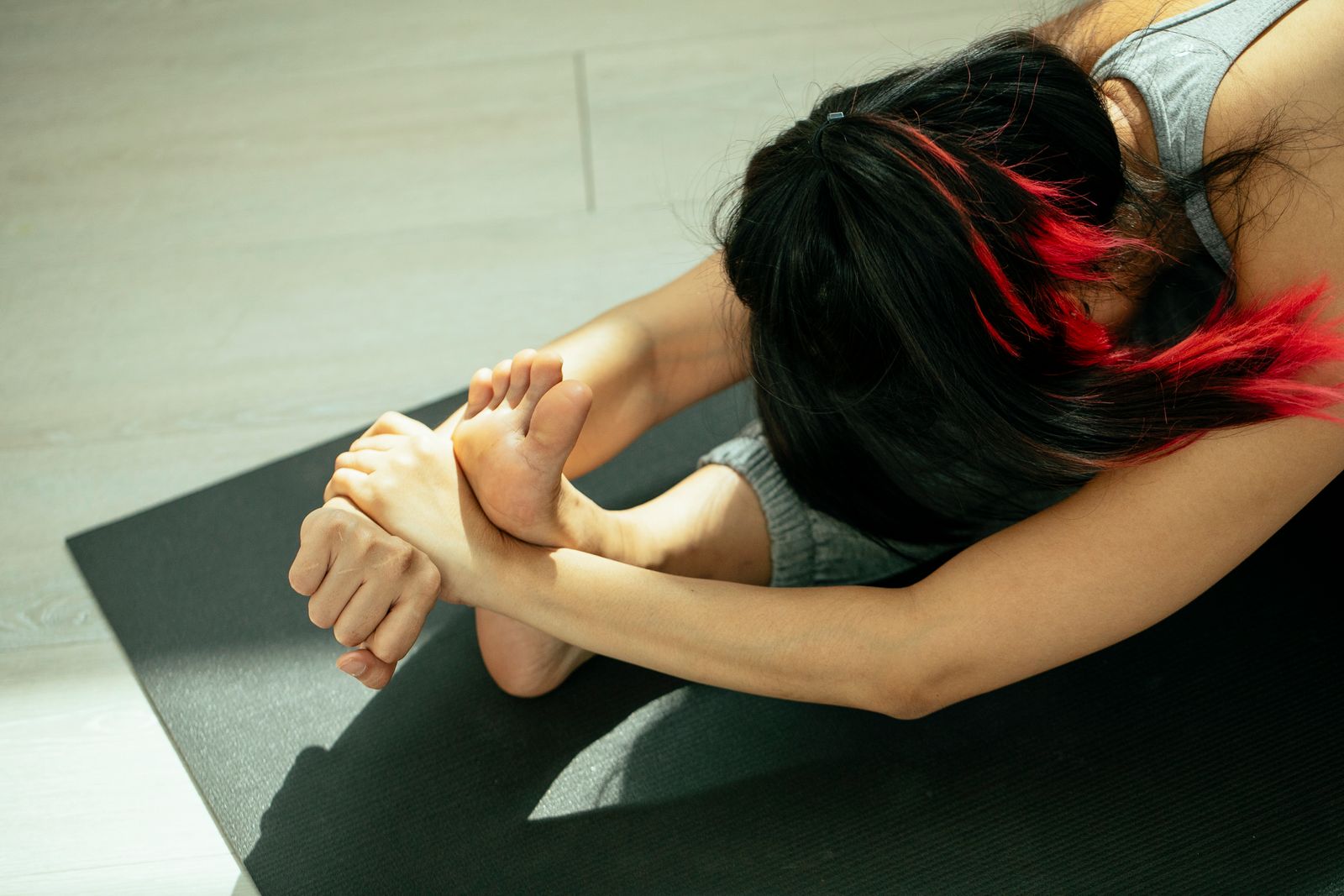
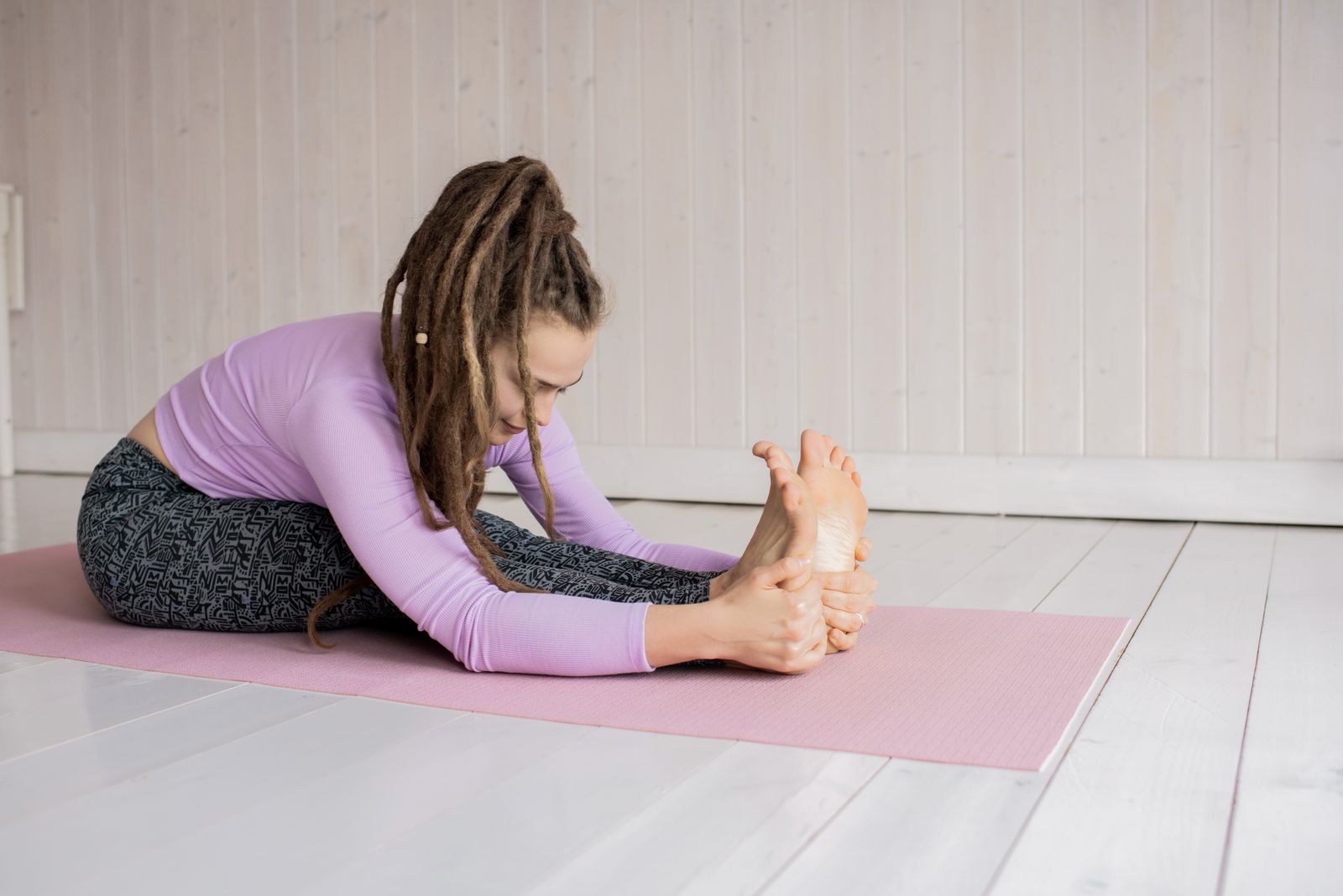
Start in Dandasana (Staff Pose), sitting tall with both legs extended straight in front of you and your hands lightly pressing into the floor beside your hips. Bend your right knee and draw the sole of your right foot against your inner left thigh, letting the right knee rest toward the floor. Square your torso toward the extended left leg. Inhale and lengthen your spine, reaching your arms overhead. As you exhale, hinge forward from the hip joints, not the waist, reaching toward your left foot, shin, or ankle, wherever you can hold without rounding your back excessively. Keep your left foot flexed, toes pointing toward the ceiling. Hold for five to ten breaths, then inhale to rise back up, release the bent leg, and repeat on the other side.
What Muscles Does Janu Sirsasana Stretch?
The primary targets are the hamstrings and calf of the extended leg, which lengthen as the torso folds forward. The pose also opens the adductors (inner thigh) and hip flexors of the bent leg, releases tension along the erector spinae muscles that run along the spine, and gently stretches the muscles between the ribs as the torso extends over the straight leg. Because the bend happens asymmetrically, one side at a time, it’s easier to isolate and correct alignment on a tight or previously injured side than in a two-legged fold like Paschimottanasana.
What Are the Benefits of Janu Sirsasana?
Regular practice of Head-to-Knee Pose offers a combination of physical and mental benefits:
- Hamstring and calf flexibility: the single-leg fold gradually lengthens tight hamstrings, which is useful for runners, cyclists, and anyone who sits for long stretches during the day.
- Hip and groin mobility: the bent-leg position opens the adductors and hip joint, complementing hip-openers like Baddha Konasana.
- Spinal length and lower-back relief: the forward hinge, done correctly from the hips rather than the waist, can ease tension that builds up from prolonged sitting, making it a useful posture within a yoga for back pain routine.
- Gentle abdominal compression: the fold applies mild pressure across the abdomen, which many practitioners find supports digestive comfort.
- Nervous system calming: like most forward bends, it activates a parasympathetic response, helping to settle the mind and reduce stress and mental fatigue.
- Accessible entry to deeper folds: because it works one side of the body at a time, it’s a natural stepping stone toward more demanding forward bends and twists.
Is Janu Sirsasana Good for Beginners?
Yes. Janu Sirsasana is typically introduced early in a beginner’s practice because the one-legged structure is more forgiving than symmetrical forward folds. Beginners with tight hamstrings often can’t get anywhere near their toes in Paschimottanasana, but in Janu Sirsasana they can prop the extended leg on a folded blanket, use a strap around the foot, and still feel the stretch build progressively. It’s commonly sequenced into beginner yoga poses routines and into yoga for flexibility programs precisely because it rewards consistency without demanding advanced range of motion on day one.
What Are Common Alignment Mistakes in Janu Sirsasana?
The most frequent error is rounding the entire spine to force the head closer to the knee, which collapses the chest and defeats the purpose of the pose. The forward movement should originate at the hip crease, with the spine staying long even if the fold itself is shallow. A second common mistake is letting the bent knee lift far off the floor without support, straining the inner knee ligaments. A folded blanket under that knee resolves this instantly. A third mistake is allowing the extended foot to sickle inward rather than staying flexed and vertical, which reduces the hamstring stretch and can stress the ankle. Finally, many practitioners rush the fold before the hips are warm; a few rounds of Surya Namaskar beforehand makes the muscles far more receptive.
What Are the Variations of Janu Sirsasana?
In Ashtanga Vinyasa yoga, Janu Sirsasana appears in three distinct forms, labeled A, B, and C:
- Janu Sirsasana A: the classic version described above, with the sole of the bent foot resting against the inner thigh.
- Janu Sirsasana B: the heel of the bent leg is drawn underneath the sitting bone, with the pelvis lifted slightly onto the heel, intensifying the hip stretch.
- Janu Sirsasana C: the bent foot is turned so the toes point backward and the heel presses toward the inner thigh or groin, creating a deeper ankle and hip rotation, generally reserved for practitioners with significant joint mobility.
There is also Parivrtta Janu Sirsasana, a revolved variation where the torso twists and the opposite arm reaches overhead toward the extended foot, adding a spinal rotation component that isn’t present in the standard pose. Teachers often introduce this alongside other yoga poses that combine folding and twisting for a more complete spinal release.
How Long Should You Hold Janu Sirsasana?
For general flexibility and relaxation practice, five to ten slow breaths per side (roughly 30 to 60 seconds) is typical. In restorative or yin-influenced sequences, the pose may be held for two to five minutes per side to allow the connective tissue around the hamstrings and hip to release gradually, usually with props supporting the body so muscles can stay passive. In a dynamic Vinyasa or Ashtanga class, the hold is often shorter, five breaths, before transitioning into the next posture. As with any static stretch, the depth of the fold should always be governed by breath: if breathing becomes short or strained, the fold has gone too far.
What Are the Contraindications for Janu Sirsasana?
Janu Sirsasana should be approached cautiously or avoided in several situations: an acute hamstring strain or recent hamstring tear, a herniated or bulging lumbar disc, significant sciatic nerve irritation, recent knee surgery or an unstable knee joint, and diarrhea or acute digestive flare-ups, since forward folds compress the abdomen. Pregnant practitioners, particularly in the second and third trimesters, should modify the fold to avoid abdominal compression and should consult a qualified prenatal yoga teacher for appropriate adjustments. Anyone with chronic lower-back pain should build the pose gradually, using props rather than forcing depth, and should stop immediately if pain travels down the leg, a possible sign of nerve involvement rather than a normal stretch sensation.
What Props Help With Janu Sirsasana?
Props make Janu Sirsasana accessible regardless of current flexibility. Sitting on the edge of a folded blanket or yoga block tilts the pelvis forward and immediately makes the forward hinge easier for anyone with tight hamstrings or a rounded lower back. A yoga strap looped around the ball of the extended foot lets you hold the pose with straight arms and a long spine instead of hunching to reach the foot directly. A folded blanket or block under the bent knee supports the joint when it doesn’t rest comfortably on the floor. These small adjustments matter more than raw effort: a supported version of the pose done with a long spine delivers a better stretch than an unsupported version done with a rounded back.
How Does Janu Sirsasana Compare to Paschimottanasana?
Paschimottanasana folds both legs forward simultaneously, stretching both hamstrings, the entire lower back, and the calves at once, and is generally considered the deeper, more demanding version. Janu Sirsasana isolates one leg at a time, which reduces the intensity of the stretch and makes it easier to correct alignment issues on a tighter or previously injured side. Many teachers sequence Janu Sirsasana before the two-legged fold specifically because working one side individually warms and lengthens the hamstrings, making the deeper posture more accessible afterward. If you’re building a home flexibility routine, practicing both in the same session, one leg at a time and then both legs together, is a practical way to progress, especially alongside other hamstring stretches in yoga.
When Should You Practice Janu Sirsasana in a Sequence?
Janu Sirsasana works best after the body has been warmed with standing postures. A common sequence begins with a few rounds of Surya Namaskar to raise circulation, moves through grounding standing poses like Tadasana and balance postures such as Vrksasana, and then transitions to the floor for seated yoga poses and forward folds once the hamstrings and hips are pliable. Placing Janu Sirsasana before deeper folds and twists prepares the hamstrings and lower back for what follows, while placing it near the end of a practice, closer to relaxation, emphasizes its calming, introspective effect. Either placement is valid; the choice depends on whether the class goal is building heat or winding down.
Can Janu Sirsasana Help With Digestion?
Many yoga traditions associate seated forward folds with digestive support, and the mechanism is straightforward rather than mystical: folding forward applies gentle, rhythmic compression to the abdomen, which some practitioners find encourages movement through the digestive tract and eases mild bloating after meals. This effect is generally described as supportive rather than a treatment for any digestive condition, and anyone with an acute digestive flare-up, recent abdominal surgery, or diagnosed gastrointestinal disease should get personalized guidance before adding forward folds to their routine.
How Does Janu Sirsasana Support Mental Wellbeing?
Forward bends, including Janu Sirsasana, are often described in yoga teaching lineages as postures that turn attention inward. Folding forward brings the forehead toward the leg and narrows the visual field, which combined with slow nasal breathing tends to lower physical arousal and quiet mental chatter. This is one reason the pose appears frequently in sequences built around yoga for stress relief and in slower-paced practices aimed at unwinding the nervous system at the end of a long day, similar to the intention behind restorative yoga. Combining the physical stretch with a longer exhale than inhale, for example a four-count inhale and six-count exhale, tends to deepen this calming effect further.
Questions People Ask About Janu Sirsasana
Is Janu Sirsasana a beginner or advanced pose?
Janu Sirsasana is considered beginner-friendly. Because only one leg folds at a time, it’s more forgiving for tight hamstrings than symmetrical forward folds. Beginners can use a strap, blanket, or block to modify the depth of the fold while still gaining the hamstring and hip benefits, which is why it’s a staple in early-stage yoga classes.
Which side should you do first in Janu Sirsasana?
There’s no universal rule, though many teachers suggest starting with the side that feels tighter or more restricted, since it will need more time to warm up within the pose. Others simply alternate consistently, right side first in one class and left side first in the next, to keep the practice balanced over time.
Why can’t I reach my foot in Janu Sirsasana?
Limited reach usually comes down to tight hamstrings, a stiff lower back, or short arms relative to leg length, not a failure of technique. A yoga strap looped around the ball of the foot closes the gap immediately and lets you keep the spine long, which is more valuable for the stretch than physically touching the foot.
Does Janu Sirsasana help with sciatica?
A gentle, well-supported version of Janu Sirsasana can ease mild sciatic tightness for some people by lengthening the hamstrings and glutes, but anyone with diagnosed sciatica or nerve pain radiating down the leg should approach forward folds cautiously and check with a healthcare provider or experienced teacher before deepening the pose.
How is Janu Sirsasana different from Janu Sirsasana B and C?
Janu Sirsasana A is the standard version, with the bent foot’s sole against the inner thigh. B lifts the pelvis onto the bent heel for a deeper hip stretch, and C rotates the bent foot so the heel presses toward the groin, intensifying ankle and hip rotation. B and C are generally practiced only after A feels comfortable and pain-free.
Can I do Janu Sirsasana every day?
Yes, daily practice is generally safe and is often how flexibility gains happen fastest, provided you’re not forcing the fold past a comfortable stretch sensation and you’re using props when needed. Consistency at a moderate depth over weeks tends to produce better, safer results than occasional aggressive stretching.
Try This for Yourself
Reading about alignment only goes so far. A live teacher can see exactly how your hips, spine, and hamstrings move together and adjust the pose in real time so you get the full benefit safely. Join a FitStrot online yoga class and practice Janu Sirsasana and other foundational forward folds with guided, personalized instruction from wherever you are.
Related reading: Paschimottanasana, Yoga Poses, Yoga for Flexibility, Beginner Yoga Poses, and explore FitStrot’s online yoga classes to build a guided practice.