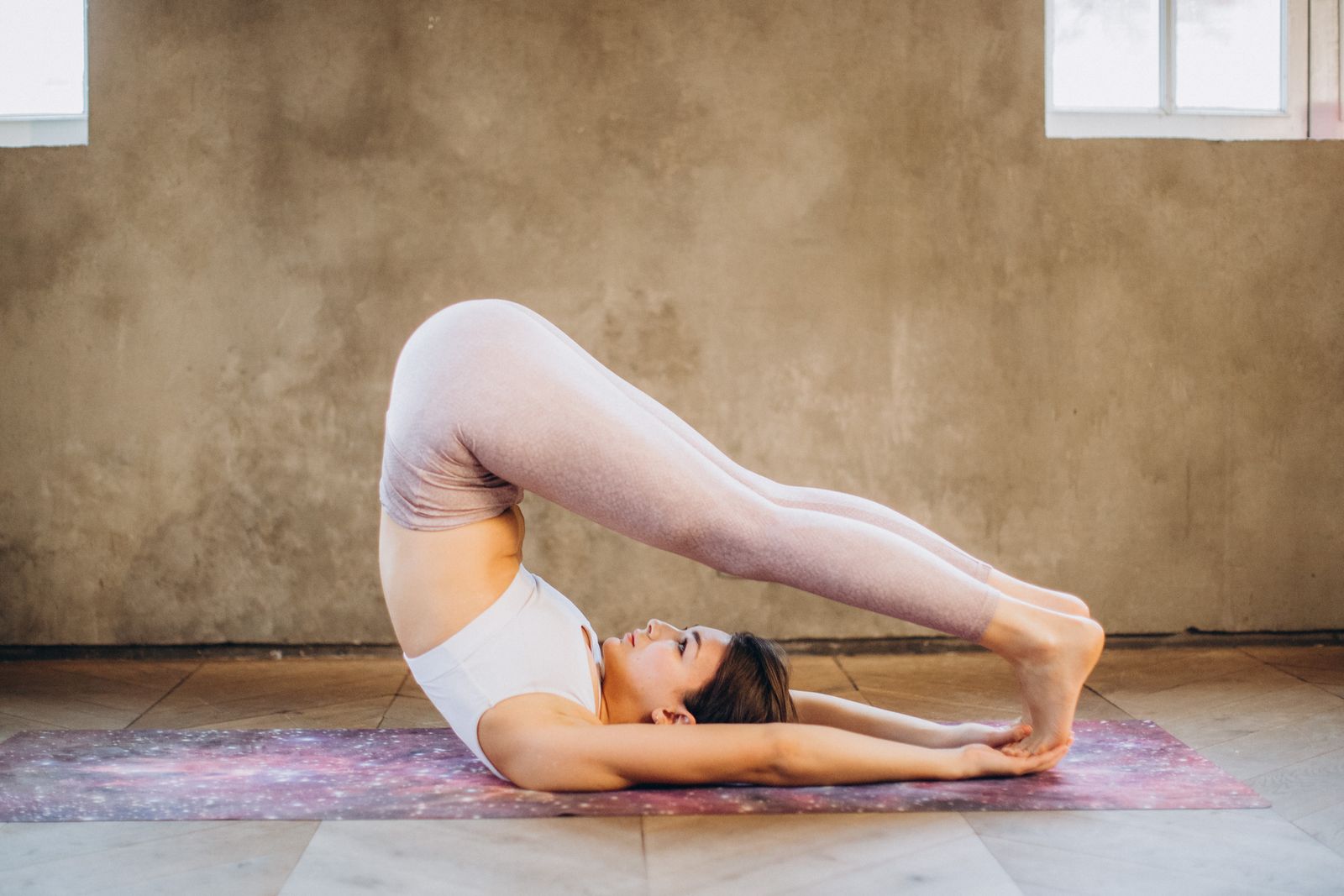
Halasana, or Plough Pose, is a seated-to-inverted yoga posture where you lie on your back, lift your legs overhead, and lower your toes to the floor behind your head, forming a shape that resembles a farmer’s plough. It stretches the entire back body, shoulders, and hamstrings while calming the nervous system, and it’s traditionally practiced as a cooling counterpose after backbends and before Sarvangasana (shoulder stand) or final relaxation. Because it’s a mild inversion, it’s generally practiced by people who are already comfortable with basic forward folds and shoulder-opening poses, and it’s usually approached slowly, with props, rather than forced into on day one.
What Does “Halasana” Mean and Where Does the Name Come From?
The word Halasana comes from two Sanskrit roots: “hala,” meaning plough, and “asana,” meaning pose or seat. The shape of the body in the final position, legs extended straight over the head with toes touching the floor and the torso forming a long diagonal line, resembles the traditional wooden plough once pulled by oxen across Indian farmland. This agricultural naming convention is common in yoga poses generally, where shapes are named after animals, tools, or natural forms (think Tadasana for mountain, or Vrksasana for tree). Halasana appears in classical hatha yoga texts and is considered part of the broader family of inversions and shoulder-stand variations taught in most intermediate hatha and Iyengar-style classes today.
How Do You Get Into Halasana Step by Step?
Getting into Plough Pose safely is less about flexibility on day one and more about sequencing. Here’s a standard approach:
- Start lying on your back (Savasana position) with your arms alongside your body, palms facing down for stability.
- Engage your core and press your palms into the floor to lift both legs straight up to a 90-degree angle, similar to entering Sarvangasana.
- Use your hands to support your lower back as you continue lifting your hips off the floor, letting your legs swing up and over your head.
- Lower your toes toward the floor behind your head. If they don’t reach, rest them on a bolster, block, or the seat of a chair rather than straining your neck.
- Keep your neck neutral and your gaze soft. Avoid turning your head once you’re in the pose, since the neck is vulnerable in this position.
- Hold for 30 seconds to a few minutes, breathing steadily, then roll down slowly, one vertebra at a time, with control.
If you’re newer to inversions, it helps to build up through simpler backbends and hip openers first. A short Surya Namaskar warm-up sequence is a common way many teachers prepare the spine and shoulders before attempting Halasana.
What Are the Physical Benefits of Halasana?
Halasana is valued in yoga practice for several specific physical effects:
- Spinal stretch and decompression: The forward-folding inverted shape lengthens the entire posterior chain, from the neck down through the lower back, which many practitioners find relieves stiffness built up from sitting.
- Hamstring and calf flexibility: Because the legs extend straight overhead, the backs of the legs receive a deep passive stretch.
- Shoulder and upper-back opening: The pose stretches the shoulders and upper back, which can help counteract the rounded posture common with desk work and screen time.
- Improved circulation to the upper body: As a mild inversion, blood flow is redirected toward the heart, neck, and head, which is part of why inversions are often described as refreshing rather than stimulating.
- Core and back strength: Controlling the descent into and out of the pose requires deep abdominal and lower-back engagement, building functional core strength over time.
These benefits are similar in spirit to what practitioners report from other grounding, lengthening poses like Tadasana and standing balance work such as Vrksasana, though Halasana works the body from a very different orientation.
What Are the Mental and Nervous System Benefits?
Beyond the physical stretch, Halasana is widely taught as a calming, introspective pose. Folding the body inward and bringing the legs overhead activates the parasympathetic nervous system in many practitioners, the branch responsible for “rest and digest” responses rather than “fight or flight.” This is part of why Halasana is commonly sequenced near the end of a practice, alongside poses used for yoga for stress relief and yoga for anxiety. The quiet, inward-focused nature of the pose also makes it a natural bridge into yoga for better sleep routines practiced in the evening.
What Is Ardha Halasana (Half Plough Pose)?
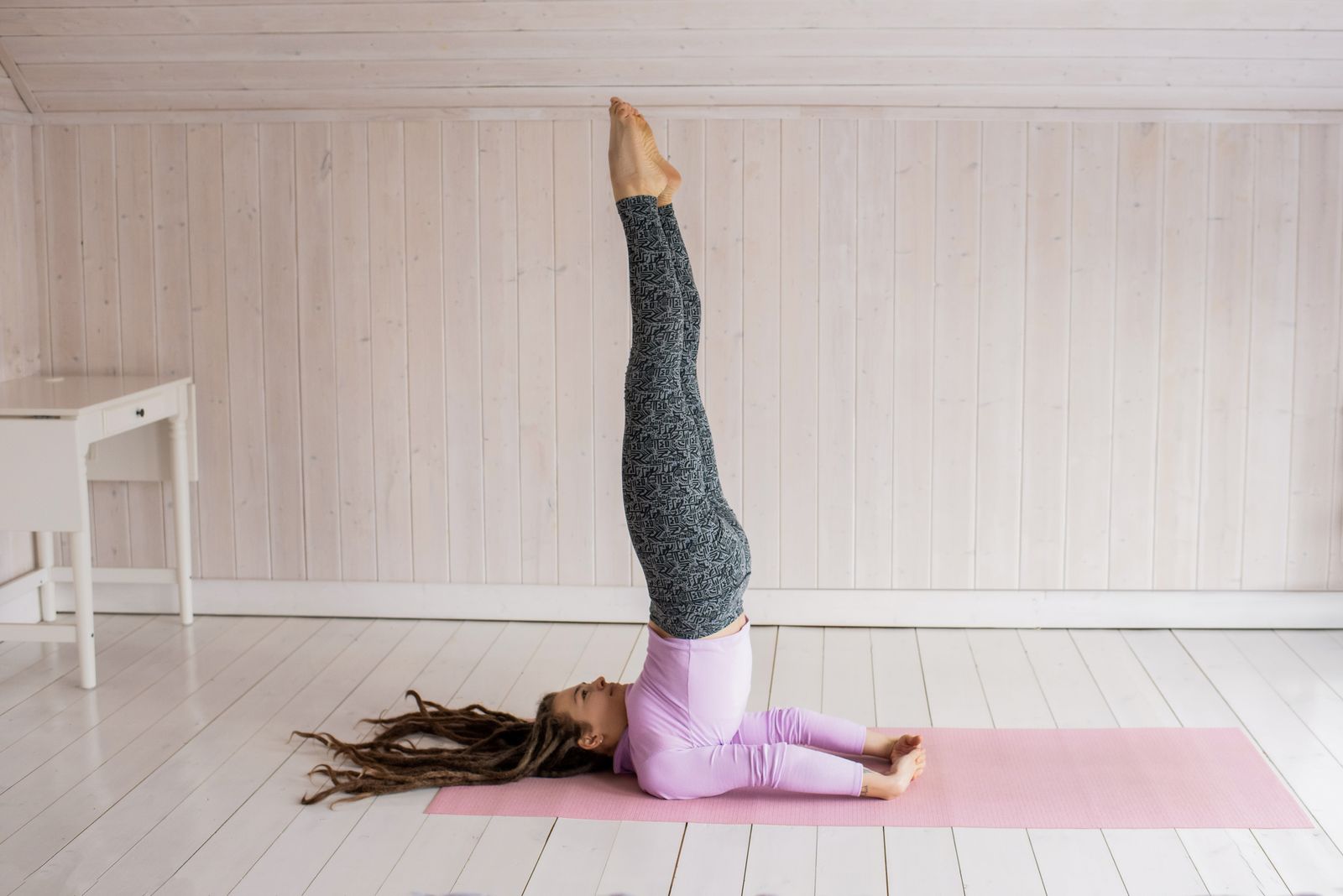
Ardha Halasana, or Half Plough Pose, is a modified version where the legs are lifted to a 90-degree vertical position rather than lowered all the way overhead. It’s often used as a preparatory step for full Halasana, or as a standalone pose for people who want the core-strengthening and lower-back benefits without the deeper neck and shoulder demands of the full inversion. Ardha Halasana is a good option for beginners, for people recovering from injury, or for anyone practicing later in pregnancy under guidance, since it avoids placing weight fully onto the neck and shoulders. It’s frequently taught in beginner yoga poses sequences as a stepping stone toward the full expression of the pose.
What Are Common Variations of Halasana?
Once the basic shape feels stable, several variations are commonly introduced:
- Supta Konasana (Sleeping Angle Pose): From Halasana, the feet are widened apart and the hands can reach back to hold the big toes, adding a hip and inner-thigh stretch.
- Parsva Halasana (Side Plough Pose): The legs are rotated to one side and then the other while in the plough shape, adding a gentle spinal twist.
- Supported Halasana: Using a chair, bolster, or wall to rest the feet, which reduces strain on the neck and is often recommended for beginners or anyone with tighter hamstrings.
- Eka Pada Halasana (One-Legged Plough): One leg lowers to the floor overhead while the other stays lifted toward the ceiling, adding a balance and core-control challenge.
These variations are often explored gradually as part of a broader Hatha yoga or Iyengar yoga practice, both styles known for methodical, prop-supported approaches to inversions.
Who Should Avoid Halasana?
Because Halasana places significant pressure on the neck and cervical spine, it isn’t appropriate for everyone. It’s commonly advised to avoid or modify the pose if you have:
- A neck injury, cervical spondylosis, or recent whiplash
- High blood pressure that isn’t well controlled
- Glaucoma or other eye pressure conditions
- Are in the later stages of pregnancy
- Have a slipped disc or other acute lower-back or spinal condition
- Are currently menstruating (many traditional teachers advise skipping deep inversions during this time, though this guidance varies by school and individual)
If any of these apply to you, it’s worth speaking with a qualified teacher or your doctor before attempting the pose, and considering supported alternatives such as legs-up-the-wall pose instead. For general safety guidance across postures, our yoga safety tips guide covers precautions that apply broadly to inversions and deep stretches.
What Are Common Mistakes in Halasana?
Even experienced practitioners can develop habits that reduce the benefit or increase the risk of the pose. Watch for these common errors:
- Turning the head while in the pose. This is one of the more risky habits in Halasana; the neck should stay neutral and still throughout.
- Forcing the toes to the floor. If the hamstrings or shoulders are tight, forcing the feet down can round and strain the lower back and neck instead of lengthening the spine safely. Using a block or chair under the feet is a better option.
- Collapsing the chin into the chest. This compresses the throat and neck; keeping some space between the chin and chest reduces strain.
- Skipping the warm-up. Entering Halasana cold, without warming the hamstrings, shoulders, and spine first, increases the risk of strain.
- Rushing the exit. Rolling out of the pose too quickly can jar the spine; coming down slowly, vertebra by vertebra, protects the lower back.
How Does Halasana Fit Into a Full Yoga Sequence?
Halasana is traditionally practiced after backbends and before final relaxation, since it counterbalances the spine after deeper extension work. A typical sequence might move through active standing poses and sun salutations, into backbends such as Bhujangasana (Cobra) or Ustrasana (Camel), then into Sarvangasana (Shoulder Stand) followed immediately by Halasana, and finally into Savasana for rest. This order allows the spine to move through extension and then flexion in a balanced way. If you’re building a home practice, our guide to yoga sequence for beginners outlines how to structure a full session so poses like this land in the right place, and our restorative yoga guide explains how supported inversions fit into a slower-paced practice.
How Does Halasana Compare to Sarvangasana?
Sarvangasana (Shoulder Stand) and Halasana are closely related and are usually taught together, often described as a “family” of poses. In Sarvangasana, the legs extend straight up toward the ceiling, with the body weight supported on the shoulders and upper arms. Halasana is often entered directly from Sarvangasana by lowering the legs overhead. The main difference is the angle of the legs and the additional stretch to the hamstrings and lower back that Halasana adds, whereas Sarvangasana emphasizes shoulder and upper-back strength and stability. Many teachers recommend mastering Sarvangasana with good alignment before progressing to holding Halasana for longer periods.
How Long Should You Hold Halasana, and How Often Should You Practice It?
For most practitioners, holding Halasana for 30 seconds to 2 minutes is a reasonable range, gradually increasing hold time as flexibility and comfort improve. It’s commonly practiced 2 to 4 times per week rather than daily, giving the neck and spine time to adapt between sessions. Beginners are generally advised to start with Ardha Halasana or a supported version using a chair, holding for shorter periods, and progress gradually over weeks rather than forcing the full pose early. As with most inversions, consistency over time matters more than pushing for depth in any single session.
How Does Halasana Fit Into Different Styles of Yoga?
Halasana appears across many yoga traditions, though the emphasis shifts. In Hatha yoga, it’s typically held statically with attention to breath and alignment. In Ashtanga yoga, it appears as part of the traditional closing sequence, linked with Sarvangasana and other finishing poses. In Iyengar yoga, props such as chairs, blankets, and bolsters are used extensively to make the pose accessible and precisely aligned for practitioners at every level. If you practice online yoga classes, look for instructors who explicitly cue prop use and neck safety when teaching this pose, since visual cues alone can be harder to self-correct with than in-person adjustments.
Questions People Ask About Halasana
Is Halasana good for the thyroid?
Halasana is often discussed alongside Sarvangasana as a pose that may stimulate the thyroid region, since the chin presses gently toward the chest and blood flow is redirected to the neck and throat area. Research specifically isolating Halasana’s effect on thyroid hormone levels is limited, so it’s best understood as a traditional claim worth discussing with a doctor if you have a thyroid condition, rather than a guaranteed treatment.
Can beginners do Halasana?
Beginners can work toward Halasana gradually, usually starting with Ardha Halasana (Half Plough) or a supported version using a chair or bolster under the feet. Building shoulder and hamstring flexibility first, through gentler poses and consistent practice, makes the full pose more accessible and safer over several weeks rather than attempting it cold.
What is the difference between Halasana and Ardha Halasana?
Halasana is the full pose, with legs lowered overhead until the toes touch or approach the floor. Ardha Halasana, or Half Plough, stops with the legs lifted to a 90-degree vertical angle instead of lowering them further. Ardha Halasana is generally considered more accessible and places less demand on the neck and shoulders.
Can you do Halasana during pregnancy?
Halasana is generally not recommended during pregnancy, particularly in the second and third trimesters, because of the inverted, compressive nature of the pose on the abdomen and the pressure it places on the neck. Pregnant practitioners are usually guided toward gentler, supported alternatives and should always check with their doctor and a qualified prenatal yoga teacher first.
What should I use if my feet don’t reach the floor in Halasana?
If your feet don’t comfortably reach the floor, rest them on a yoga block, bolster, or the seat of a sturdy chair placed behind your head. This lets you experience the shape and benefits of the pose without straining to force a range of motion your hamstrings and shoulders aren’t ready for yet.
How is Halasana different from a forward fold?
A standing or seated forward fold stretches the hamstrings and back while the body remains upright or seated with feet on or near the ground. Halasana is an inversion: the body is upside down, weight is supported on the shoulders and upper back, and the legs extend overhead rather than forward, adding neck and circulatory considerations that standard forward folds don’t involve.
Try This for Yourself
Reading about Halasana only gets you so far — the real benefits come from guided, consistent practice with proper alignment cues for your body. If you want to build toward this pose safely, with an instructor who can adjust pacing, props, and modifications in real time, explore FitStrot’s online yoga classes and start building the flexibility and confidence this pose requires.
Related reading: Yoga Poses | Surya Namaskar | Tadasana | Vrksasana | Online Yoga Classes