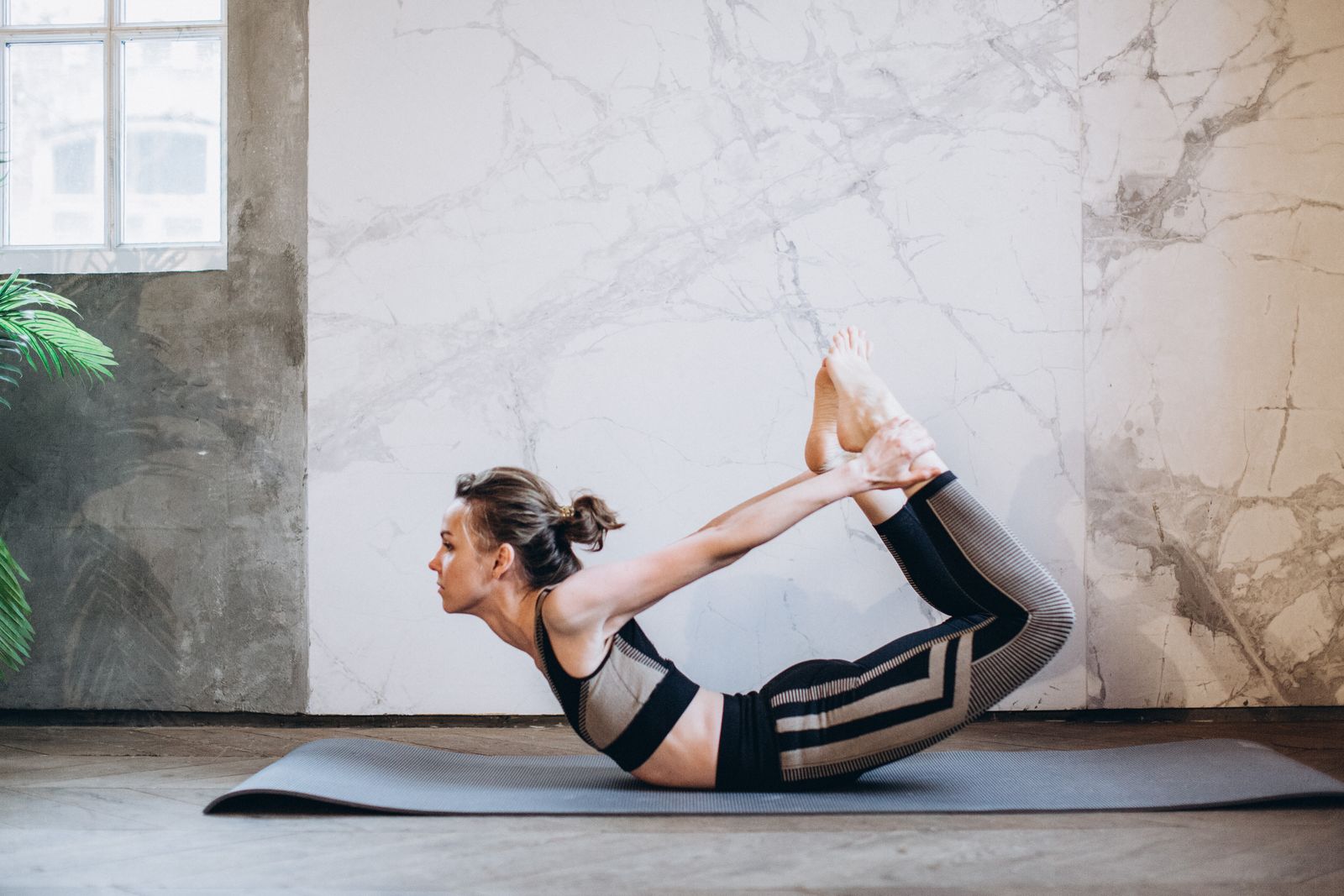
Dhanurasana, or Bow Pose, is a backbend where you lie on your stomach, bend your knees, reach back to hold your ankles, and lift your chest and thighs off the floor so your body curves like an archer’s bow. It stretches the entire front of the body, strengthens the back muscles, opens the chest and shoulders, and stimulates the abdominal organs. It’s typically practiced after warming up with sun salutations and is considered an intermediate yoga pose because it demands both flexibility and back strength working together.
What Is Dhanurasana?
The word “Dhanurasana” comes from Sanskrit: “dhanu” means bow, and “asana” means pose or seat. In the final shape, the torso and thighs represent the curved body of the bow, while the arms, reaching back to grip the ankles, form the string that pulls it taut. This makes Dhanurasana part of a small family of “bow-shaped” postures in hatha yoga, alongside related backbends that share its logic of opening the front body while strengthening the back.
Bow Pose is classified as a deep backbend and a chest-opening posture. It is commonly taught in intermediate-level classes because it asks the practitioner to combine three actions at once: bending the knees, extending the spine, and lifting the thighs, all while breathing steadily. Many teachers introduce it after students are already comfortable with gentler backbends such as Cobra or Locust, since Dhanurasana intensifies the same muscular pattern.
How Do You Do Dhanurasana Step by Step?
Getting into Bow Pose safely is less about forcing a deep backbend and more about sequencing the movement correctly. Follow these steps:
- Lie flat on your stomach with your arms alongside your body and your forehead resting on the mat.
- Bend both knees and bring your heels toward your glutes.
- Reach back with both hands and hold your ankles firmly (not the feet themselves).
- On an inhale, kick your feet away from your body while simultaneously lifting your thighs and chest off the floor.
- Keep your knees hip-width apart rather than letting them splay wide, and draw your shoulder blades toward each other.
- Hold the pose for 15 to 30 seconds, breathing steadily, then exhale as you release back down to the mat.
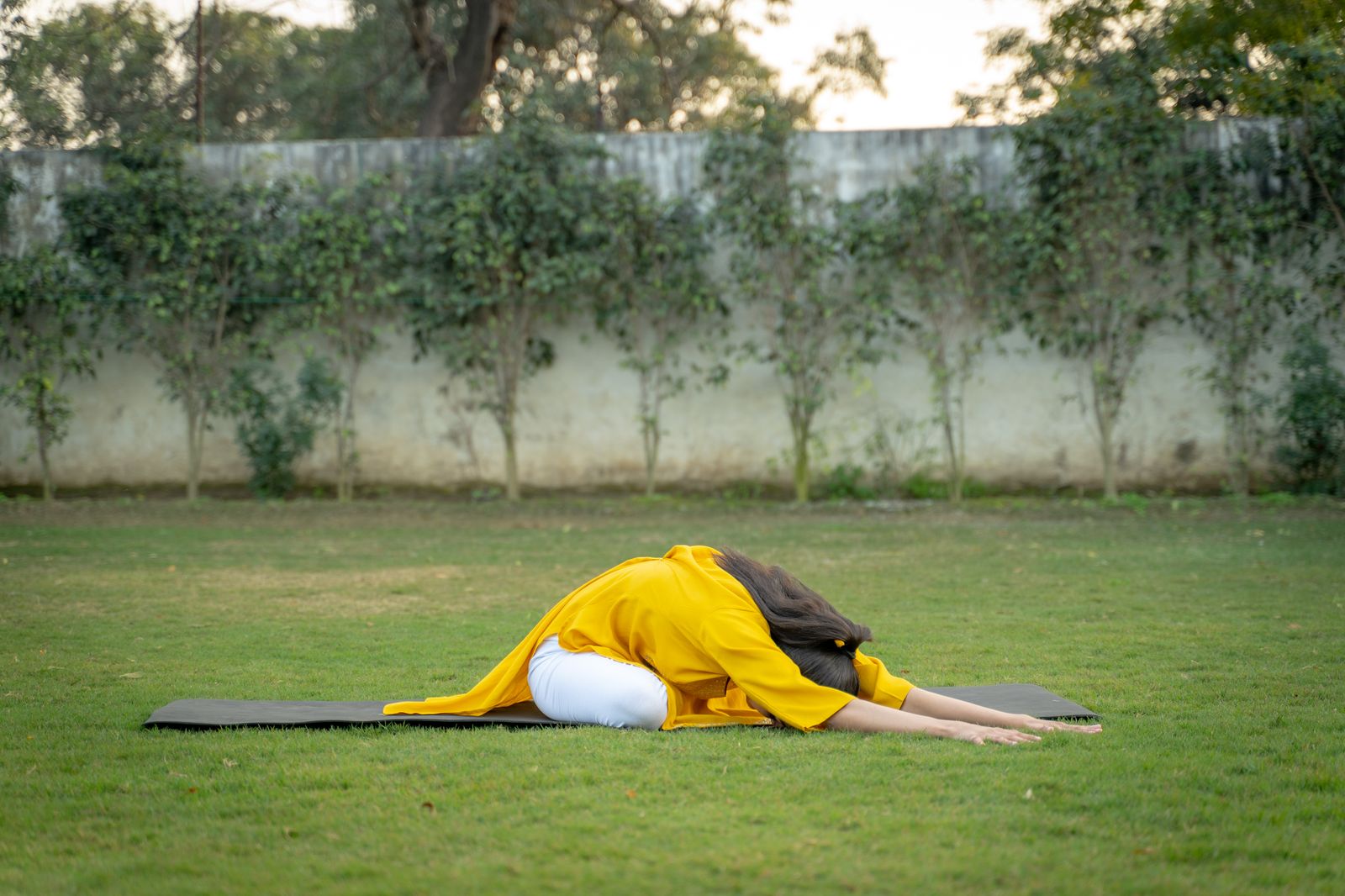
- Rest in a counter-pose, such as Child’s Pose, before repeating.
Most teachers recommend 2 to 3 rounds of Dhanurasana, holding each round for a handful of breaths rather than one long, strained hold. The pose works best when the lift comes from an active kick of the legs against the hands, not from yanking the upper body backward. This is the same “push against resistance” principle used in Surya Namaskar, where controlled effort matters more than raw range of motion.
What Are the Benefits of Dhanurasana?
Dhanurasana yoga benefits touch several systems of the body at once, which is part of why it’s kept its place in classical hatha yoga sequences for centuries.
- Spinal flexibility: The pose extends the entire spine from the neck to the lower back, helping counteract the forward-hunched posture common after long hours at a desk.
- Core and back strength: Holding the lifted position engages the erector spinae, glutes, and hamstrings isometrically, building strength in the posterior chain.
- Chest and shoulder opening: Reaching the arms back and lifting the chest stretches the pectoral muscles and the front of the shoulders, which is useful for people who spend a lot of time typing or driving.
- Improved posture: Regular practice trains the muscles that support an upright spine, which can help with the rounded-shoulder posture linked to screen use.
- Digestive stimulation: The compression of the abdomen against the floor is commonly cited in yoga tradition as a gentle massage for the digestive organs, though this effect is best understood as a traditional claim rather than a clinically proven outcome.
- Stress relief: Like other backbends, Dhanurasana opens the chest in a way that many practitioners associate with a lift in mood and energy, similar to the calming effects described in guides on yoga for stress relief.
These benefits are cumulative. A single session won’t dramatically change your posture or flexibility, but consistent practice over weeks, paired with other backbends and forward folds for balance, tends to produce the most noticeable results.
What Muscles Does Dhanurasana Work?
Bow Pose is a full-body posture, but its primary muscular targets are worth understanding in detail:
- Erector spinae: The long muscles running along the spine do the bulk of the work lifting the chest and thighs.
- Gluteus maximus and hamstrings: These contract to lift the thighs off the floor and to resist the pull of the arms.
- Quadriceps: Stretched intensely as the heels are drawn toward the glutes.
- Pectoralis major and anterior deltoids: Stretched as the chest lifts and the shoulders draw back.
- Rectus abdominis: Stretched along the front of the torso, the opposite action to a crunch.
Because it stretches and strengthens opposing muscle groups simultaneously, Dhanurasana is often described as a “balancing” pose in the same sequence logic as pairing Tadasana with more dynamic postures — one builds stability, the other builds active range of motion.
What Are the Variations of Dhanurasana?
Not everyone can hold the full expression of Bow Pose right away, and that’s completely normal. Several variations make the posture accessible or add intensity:
- Half Bow Pose (Ardha Dhanurasana): Lift and hold one leg at a time, alternating sides. This reduces the demand on the lower back and is a good entry point for beginners.
- Supported Bow Pose: Use a strap looped around the ankles if your hands can’t comfortably reach them yet, gradually building the flexibility needed for the full grip.
- Rocking Bow Pose: Once comfortable in the static hold, some practitioners gently rock forward and back, which is sometimes used as a self-massage for the abdomen.
- Side Bow Pose (Parsva Dhanurasana): From the full pose, roll onto one side and then the other, adding a lateral stretch to the twist-friendly muscles along the ribcage.
These variations make Dhanurasana approachable at nearly every stage of a yoga for beginners journey, and they give more advanced practitioners a way to deepen the pose without forcing a backbend the spine isn’t ready for.
What Should You Avoid When Practicing Dhanurasana?
Because Dhanurasana is a deep backbend, a few precautions matter more here than in gentler poses.
- Avoid it with recent back or neck injuries. The compressive load on the lumbar spine can aggravate an existing issue.
- Skip it during pregnancy. The pose requires lying on the stomach, which is unsuitable once pregnancy has progressed.
- Be cautious with high or low blood pressure. As with many strong backbends, check with a qualified teacher or doctor if you have a diagnosed blood pressure condition.
- Don’t force the ankle grip. If your hands can’t reach your ankles without straining your shoulders, use a strap or practice the half variation instead.
- Avoid it right after eating. The abdominal compression is much more comfortable, and safer, on an empty stomach.
If you have a pre-existing condition or are recovering from surgery, it’s worth checking with a doctor or an experienced teacher before adding deep backbends like this one to your routine, the same caution recommended before starting any new yoga for back pain program.
When Should You Practice Dhanurasana in a Yoga Sequence?
Sequencing matters a great deal with backbends. Dhanurasana is typically placed:
- After a warm-up: A few rounds of Surya Namaskar or gentle Cat-Cow movements prepare the spine before attempting a deep backbend.
- After gentler backbends: Cobra Pose (Bhujangasana) and Locust Pose (Salabhasana) are commonly practiced first, since they use a similar muscular pattern at a lower intensity.
- Before forward folds: A gentle forward bend or Child’s Pose afterward helps release the lower back and restores a neutral spine.
Skipping the warm-up and jumping straight into Dhanurasana is one of the most common mistakes beginners make, and it’s also one of the easiest to avoid simply by following a structured sequence.
How Does Dhanurasana Compare to Other Backbends?
Dhanurasana sits in the middle of the backbend intensity scale. Cobra Pose is gentler and only lifts the upper body, using the arms for support. Locust Pose lifts the whole body without using the arms at all, relying purely on back-muscle strength. Dhanurasana combines elements of both: it lifts the whole body like Locust, but adds the resistance of the arms pulling against the legs, which is what makes it feel more intense than either pose alone. Compared to standing poses like Tadasana, which build postural awareness while stationary, Dhanurasana actively works the muscles that keep that standing posture upright over the long term.
Can Dhanurasana Help With Posture and Back Pain?
Many people search for Dhanurasana specifically because of posture concerns caused by long hours sitting or looking down at a screen. The pose directly counters the rounded-shoulder, forward-head posture pattern by pulling the shoulders back and opening the chest. It also strengthens the muscles along the spine that are responsible for holding an upright position throughout the day. That said, if back pain is already present, it’s best to start with gentler options such as Cobra Pose and consult a qualified instructor before progressing to the full expression of Bow Pose. Structured guidance, like the kind offered in a live online yoga for back pain class, can help ensure the movement is appropriate for your specific situation.
What Do Dhanurasana Yoga Images Typically Show?
If you’ve searched for Dhanurasana yoga images, you’ve likely noticed a consistent visual pattern across them: a practitioner lying face-down, knees bent, hands gripping the ankles, chest and thighs lifted off the mat, and the body forming a smooth curved arc from the forehead to the toes. Photos of the pose are useful for checking alignment cues before you try it yourself — specifically, whether the knees stay hip-width apart rather than splaying outward, whether the neck stays long instead of jamming backward, and whether the lift is coming from the thighs and chest evenly rather than one side dominating. Comparing your own attempt to a few reference images, or working with a teacher who can correct your form live, is far more useful than guessing at the shape from memory alone.
How Does Dhanurasana Fit Into a Broader Yoga Asana Practice?
Dhanurasana yoga asanas practice usually treats Bow Pose as one node in a larger backbend family rather than an isolated move. It’s frequently grouped with Cobra, Locust, Camel, and Wheel Pose as part of a progressive backbend sequence, each pose building the flexibility and strength needed for the next. For practitioners exploring vinyasa yoga, Dhanurasana often appears as a peak pose toward the middle of a class, after the body has been sufficiently warmed up through sun salutations and standing poses like Vrksasana (Tree Pose), which builds the balance and core stability that make deeper backbends more controlled.
What Breathing Pattern Works Best for Dhanurasana?
Breath control, or pranayama, plays a direct role in how Bow Pose feels and how long you can comfortably hold it. The general pattern is to inhale as you lift into the pose, allowing the breath to expand the chest and assist the backbend, then take several steady breaths while holding, keeping the belly and chest as open as the compression allows. Exhale slowly as you release back down. Holding your breath during the pose is a common beginner habit that increases tension and shortens how long you can sustain the hold. Practicing this breath awareness in Dhanurasana also carries over well to other postures, including the more meditative pacing used in yoga for beginners routines built around slow, steady breathing.
Questions People Ask About Dhanurasana
Is Dhanurasana good for beginners?
Dhanurasana is generally considered an intermediate pose because it combines flexibility and back strength at the same time. Beginners can still work toward it using the Half Bow variation, holding one leg at a time, or using a strap around the ankles until their shoulders and hips open up enough for the full expression of the pose.
How long should you hold Dhanurasana?
Most teachers recommend holding Bow Pose for 15 to 30 seconds per round, repeated 2 to 3 times with rest in between. Holding for quality of alignment and steady breathing matters more than holding for a long duration, especially while you’re still building strength in the back and shoulders.
What is the difference between Dhanurasana and Ustrasana?
Dhanurasana is performed lying on the stomach with the hands gripping the ankles from behind, while Ustrasana (Camel Pose) is performed kneeling upright with the hands reaching back to the heels. Both are backbends that open the chest, but Ustrasana places more emphasis on the hip flexors and quadriceps, while Dhanurasana emphasizes the entire posterior chain.
Can Dhanurasana help reduce belly fat?
Dhanurasana stretches and engages the abdominal region, and combined with consistent practice, healthy eating, and an active lifestyle, it can be a useful part of a broader fitness routine. However, no single yoga pose targets fat loss in one specific area of the body; overall consistency across a full practice matters far more than any individual asana.
Why can’t I reach my ankles in Dhanurasana?
Not being able to reach your ankles usually comes down to tight shoulders, a tight chest, or tight quadriceps rather than a lack of effort. Using a yoga strap looped around the ankles, or practicing the Half Bow variation on one leg at a time, gradually builds the flexibility needed to eventually reach the ankles directly.
Is Dhanurasana safe during menstruation?
Many teachers suggest approaching deep backbends and abdominal-compressing poses like Dhanurasana with caution during menstruation, as the pose can feel uncomfortable for some practitioners at this time. Listening to your body and opting for gentler poses on heavier or more uncomfortable days is generally advised.
Try This for Yourself
Reading about Dhanurasana is useful, but the real benefits come from practicing it with proper alignment and guidance. If you’d like a qualified instructor to walk you through Bow Pose safely, along with a full sequence of poses built around your goals, explore FitStrot’s online yoga classes and start building a stronger, more flexible practice from home.
Related reading: Yoga Poses, Surya Namaskar, Tadasana, Vrksasana, and FitStrot’s online yoga classes.