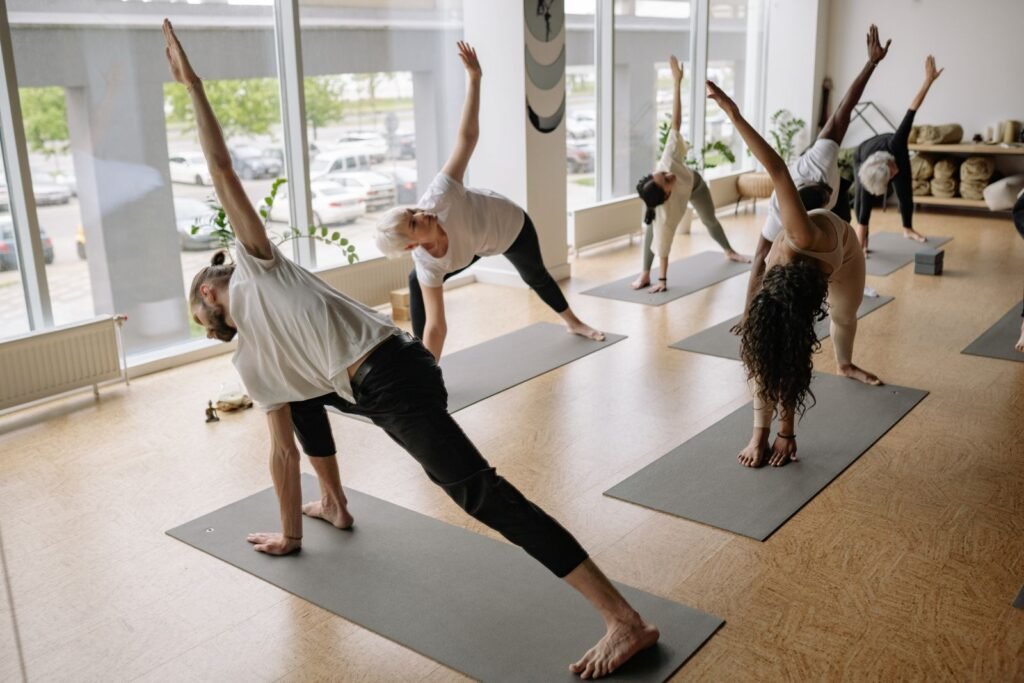
Yes, you can and generally should do yoga on an empty stomach. Most teachers recommend practicing 2 to 3 hours after a full meal, or waiting at least 45 to 60 minutes after a light snack, because twists, forward folds, backbends, and inversions all compress the abdomen and put direct pressure on a stomach that’s still digesting food. Practicing fasted — first thing in the morning is the most common window — lets you move through these positions without nausea, bloating, or the sluggish feeling that comes from asking your body to digest and stretch at the same time. If you feel lightheaded practicing completely fasted, a small glass of water or a few bites of something light 20 to 30 minutes beforehand is a reasonable middle ground.
Why Do Yoga Teachers Recommend an Empty Stomach?
The recommendation isn’t tradition for its own sake — it comes down to basic mechanics of digestion and movement. When you eat, blood flow redirects toward the stomach and intestines to support digestion, and the stomach itself expands and becomes more sensitive to pressure. Poses like seated forward bends, spinal twists, and deep backbends all involve compressing or stretching the abdominal region, which is uncomfortable and sometimes genuinely painful on a full stomach. There’s also a practical breathing issue: many yoga sequences use pranayama techniques that rely on a full, unrestricted range of diaphragmatic movement, and a stomach full of food physically limits how far the diaphragm can descend on an inhale. None of this means you need to fast for hours — it means giving your body enough of a gap that digestion isn’t actively competing with the demands of the poses.
How Long Should You Wait After Eating Before Doing Yoga?
The general guidance depends on how much you’ve eaten. These windows aren’t arbitrary — they roughly track how long the stomach takes to empty most of its contents into the small intestine, a process called gastric emptying that varies by meal size and composition.
| Meal Type | Recommended Wait Before Practice |
|---|---|
| Large or heavy meal | 2 to 3 hours |
| Moderate meal | 1 to 2 hours |
| Light snack (fruit, small smoothie) | 30 to 45 minutes |
A high-fat or high-protein meal empties more slowly than something light and carbohydrate-based, so a heavy dinner the night before generally isn’t an issue for a morning practice, but a heavy breakfast an hour before an evening class often is. If your schedule only allows practicing shortly after eating, choosing a gentler style like restorative yoga or a slow Hatha yoga class with fewer twists and inversions reduces discomfort considerably compared to a fast-paced Vinyasa yoga flow.
Is Morning the Best Time to Practice Yoga on an Empty Stomach?
Morning is the most natural empty-stomach window simply because you’ve already fasted for 7 to 9 hours overnight by the time you wake up. This is one of the reasons so many traditional and modern yoga schedules default to sunrise or early-morning classes — the stomach is empty without any extra planning required, and cortisol, which naturally rises after waking, works alongside gentle movement to support alertness. If you’re weighing the best time to do yoga more broadly, morning has this built-in digestive advantage, while an evening practice requires more deliberate timing around dinner. That said, morning isn’t objectively “correct” for everyone — some people simply have more energy and flexibility later in the day. What matters for the empty-stomach question specifically is the gap since your last meal, not the clock time itself. A well-planned morning yoga routine simply makes that gap easy to achieve without extra thought.
What Happens If You Practice Yoga Right After Eating?
Practicing too soon after a meal creates a mismatch between what your digestive system needs and what the poses demand. Forward folds and twists compress the stomach and intestines, which can cause cramping, acid reflux, or a general feeling of heaviness that makes it hard to breathe deeply. Inversions — anything that puts the head below the heart, such as Downward-Facing Dog or a supported shoulder stand — can push stomach contents upward and trigger reflux or nausea in some people. Faster-paced sequences that raise your heart rate, like a power yoga class, redirect blood flow toward working muscles and away from digestion, which can leave you feeling both under-fueled and uncomfortably full at the same time. None of this is dangerous in a lasting sense, but it makes the practice measurably less pleasant and can discourage someone from sticking with a new habit.

Which Yoga Poses Are Hardest on a Full Stomach?
Some poses are far more sensitive to a full stomach than others, so it helps to know which ones to modify or skip if you’ve eaten recently:
- Deep twists, such as Ardha Matsyendrasana — compress the abdominal organs directly and are usually the first pose to feel uncomfortable after eating.
- Forward folds, like Paschimottanasana — fold the torso over the thighs, squeezing the stomach against the legs.
- Backbends, such as Cobra Pose and Wheel Pose — stretch the front of the body and can feel tight or nauseating with food still in the stomach.
- Inversions, including headstand, shoulder stand, and even a simple Downward Dog held for a long time — shift blood and stomach contents in ways that are more comfortable when the stomach is empty.
Standing poses and gentle stretches are generally far more forgiving, which is why a light meal an hour or two before a standing-focused class is usually fine even when the same timing wouldn’t work for a twist-heavy session.
Can You Do Yoga on an Empty Stomach If You Feel Weak or Dizzy?
Some people, particularly those with low blood sugar, low blood pressure, or a history of fainting, genuinely don’t do well practicing on a completely empty stomach, and that’s a legitimate exception to the general rule. If you notice lightheadedness, shakiness, or difficulty concentrating during a fasted practice, a small amount of easily digestible food — half a banana, a few dates, or a small glass of diluted juice — about 20 to 30 minutes beforehand can prevent this without leaving a full stomach. The goal isn’t to fast at all costs; it’s to avoid a stomach that’s actively working through a meal while you’re asking your body to twist, fold, and invert. Pregnant practitioners, people managing diabetes, and anyone on medication that affects blood sugar should check with a doctor about the right pre-practice eating window for their specific situation rather than following a generic rule.
Does Practicing Yoga Fasted Improve Flexibility or Results?
There’s a common belief that practicing completely fasted makes you more flexible or improves the quality of the practice, but the evidence for this is thin and mostly anecdotal. What’s more clearly true is that an empty stomach removes a specific source of discomfort — pressure and bloating — that can otherwise distract from focusing on alignment and breath. Flexibility itself is driven far more by consistent practice, warm-up quality, and how gradually you increase range of motion over weeks and months, not by whether you ate three hours ago or five. If you’re trying to build flexibility specifically, the timing of your last meal is a minor variable compared to how often you practice and whether you’re working with a yoga sequence that progressively warms up the joints most relevant to the poses you’re working toward.
How Does Yoga on an Empty Stomach Compare to Working Out Fasted?
The empty-stomach guidance for yoga is generally gentler than fasted-training advice for high-intensity exercise, because yoga rarely demands the same acute energy output as sprinting or heavy lifting. Comparing yoga vs gym training, a strength session performed fasted can sometimes leave people feeling depleted mid-workout in a way that a slower-paced yoga class typically doesn’t, since yoga’s energy demands are spread more evenly and its pacing is usually self-regulated. Looking at yoga vs exercise more broadly, the empty-stomach principle applies to almost all forms of movement to some degree, but yoga’s emphasis on twists, folds, and inversions makes stomach fullness a more immediate comfort issue than it typically is for something like walking or cycling, where the torso stays more upright throughout.
What Should You Eat or Drink Before Yoga If You Can’t Fully Fast?
If a completely empty stomach isn’t realistic — early morning classes right after waking with a long commute, or an evening session after a long workday — a small, easily digestible snack works better than skipping food entirely and feeling faint mid-class. Good options include a banana, a handful of soaked almonds, a small serving of yogurt, or a slice of toast with a thin layer of nut butter, ideally eaten 45 minutes to an hour before class. Avoid high-fat, high-fiber, or heavily spiced foods in this window, since they digest slowly and are more likely to still be sitting in the stomach when you start twisting and folding. Hydration matters separately from food — a glass of water 15 to 20 minutes before practice is generally fine and helps prevent the lightheadedness that sometimes comes with practicing on a truly empty stomach, especially in a heated room.
Does This Rule Change for Different Styles of Yoga?
The empty-stomach guidance applies across styles, but how strictly it matters shifts depending on intensity and the amount of twisting or inverting involved. A slow, meditative Yin yoga class held mostly in seated, low-impact positions is more forgiving of a light meal than a fast, heat-building power yoga class full of sun salutations and inversions. Online yoga practiced casually at home gives you more control over timing than a scheduled studio class, since you can simply wait an extra 30 minutes if you’ve just eaten. Beginners exploring the different types of yoga available should know that the more static and gentle a style is, the less strict the empty-stomach rule needs to be, while any style built around dynamic twists, backbends, or inversions benefits most from practicing on a genuinely empty or very lightly fed stomach.
What Are Common Mistakes People Make With Meal Timing and Yoga?
The most frequent mistake is treating “empty stomach” as an all-or-nothing rule and either fasting for far longer than necessary or eating a full meal right before class out of habit. Skipping food for 8 or more hours before an intense practice can leave you low on energy and more prone to dizziness, which defeats the purpose of trying to feel good during the session. Another common error is drinking large amounts of water immediately before class rather than smaller sips spaced out over the preceding hour, which can cause the same bloated, sloshing discomfort that eating too close to class causes. People also sometimes assume the rule is stricter than it actually is and avoid all food for the entire day before an evening class, when a light snack a couple of hours beforehand would have been perfectly fine. Finally, ignoring your own body’s signals — practicing fasted out of principle even when you consistently feel faint — overrides the entire point of the guidance, which is comfort and safety, not rigid adherence to a rule.
Questions People Ask About Yoga on an Empty Stomach
Can we do yoga immediately after waking up without eating anything?
Yes, this is actually the most common and recommended timing, since you’re naturally fasted after 7 to 9 hours of sleep. Most people practice comfortably first thing in the morning with just a glass of water beforehand. If you feel weak or shaky practicing completely fasted, a small piece of fruit 20 minutes beforehand is a reasonable adjustment.
How many hours should you fast before a yoga class?
Aim for roughly 2 to 3 hours after a full meal, 1 to 2 hours after a light meal, and at least 30 to 45 minutes after a small snack. These windows allow most of the stomach’s contents to move into the small intestine before you start twisting, folding, or inverting, reducing discomfort during the practice.
Is it safe to do yoga on an empty stomach every day?
Yes, for most healthy adults, practicing on an empty stomach daily — especially first thing in the morning — is both safe and the most common pattern among regular practitioners. People with blood sugar concerns, low blood pressure, or a history of fainting should check with a doctor and may need a small snack beforehand.
What can I drink before yoga on an empty stomach?
Water is the safest choice, taken in small sips 15 to 20 minutes before class rather than a large amount right before starting. Herbal tea or warm water with lemon are also commonly used. Avoid caffeinated or sugary drinks immediately before an intense session, since they can cause jitteriness or a rapid blood sugar swing during the practice.
Can beginners do yoga on an empty stomach without feeling weak?
Most beginners tolerate an empty stomach well for a gentle to moderate session, but new practitioners sometimes underestimate how much energy even a slow-paced class requires. If you’re new to the practice and notice lightheadedness, a small snack 20 to 30 minutes before class is a sensible adjustment rather than pushing through discomfort.
Try This for Yourself
Reading about meal timing is useful, but the real test is how your own body feels moving through poses on a genuinely empty stomach versus a full one. If you’d like guided instruction that adapts pacing and pose selection to how you’re feeling that day, explore FitStrot’s online yoga classes and build a practice around what actually works for your body.
Related reading: morning yoga, best time to do yoga, yoga vs gym, yoga vs exercise, and FitStrot’s online yoga classes.