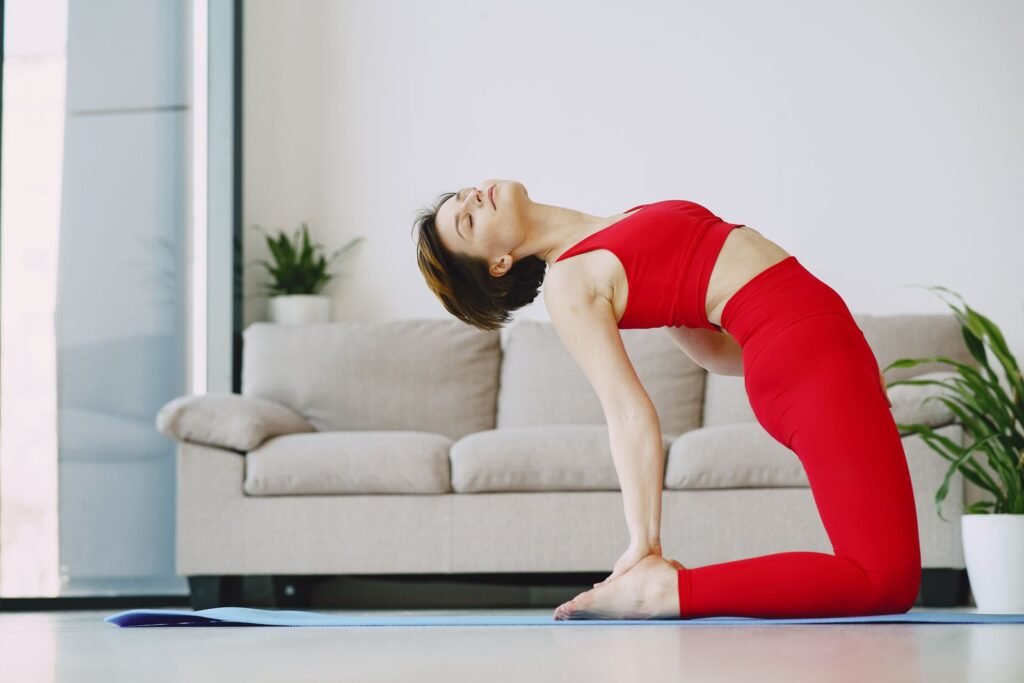
Yoga for chronic pain management combines slow, controlled movement, breath regulation, and mindfulness to reduce pain intensity, ease muscle tension, and improve function in conditions such as chronic low back pain, arthritis, fibromyalgia, and migraine. Research reviews, including a meta-analysis published in PLOS One, have found yoga can outperform standard exercise or no-treatment control groups for reducing pain and disability in people with chronic low back pain. It does not replace medical treatment, but as a consistent, low-impact practice, yoga gives people living with persistent pain a way to move safely, calm an overactive nervous system, and rebuild trust in their own body.
What Does the Research Actually Say About Yoga and Chronic Pain?
Chronic pain is different from acute pain in one crucial way: the nervous system itself often becomes sensitized, amplifying pain signals even after tissue has healed. Several systematic reviews and randomized controlled trials, including work published in PLOS One and reviewed in pain research journals such as Frontiers in Pain Research, have examined yoga’s effect on chronic low back pain specifically. The general finding across these reviews is that yoga interventions performed consistently over 8-12 weeks are associated with meaningful reductions in pain intensity and disability scores compared with usual care, and results are broadly comparable to conventional physical therapy exercise. Researchers describe yoga as a “mind-body complex system,” meaning its benefit likely comes from a combination of mechanisms working together, not any single technique in isolation. That combination is worth understanding before you start a practice, because it explains why generic stretching alone often isn’t enough for chronic pain, while a structured yoga approach can be.
How Does Yoga Actually Reduce Chronic Pain?
Yoga works on chronic pain through several overlapping pathways rather than one single mechanism.
- Nervous system regulation: Slow diaphragmatic breathing activates the parasympathetic (“rest and digest”) nervous system, which can lower the baseline arousal that keeps chronic pain circuits switched on. This is closely tied to what practitioners explore in pranayama for beginners.
- Reduced muscle guarding: Chronic pain often causes people to unconsciously brace or guard the painful area, which creates secondary stiffness and its own pain. Gentle, sustained stretches interrupt this guarding pattern.
- Improved interoception: Regular practice improves your ability to sense what is actually happening in your body, which research suggests helps separate “hurt” from “harm” and reduces fear-avoidance behavior.
- Gradual load tolerance: Postures build strength and mobility incrementally, which is central to modern pain science approaches that emphasize graded movement over rest.
- Cognitive and emotional shifts: The meditative component of yoga is associated with reduced pain catastrophizing, a thought pattern strongly linked to how much pain someone experiences day to day.
Which Chronic Pain Conditions Respond Best to Yoga?
Not all chronic pain is the same, and the evidence base is stronger for some conditions than others.
Chronic Low Back Pain
This has the strongest research support of any chronic pain condition studied with yoga. Multiple trials and the meta-analyses referenced above point to consistent, moderate improvements in pain and function. If this is your primary concern, our detailed guide to yoga for back pain covers pose sequencing in more depth.
Osteoarthritis and Joint Pain
Gentle, joint-friendly sequences can improve range of motion and reduce stiffness, particularly in the knees and hips, without the impact of higher-intensity exercise.
Fibromyalgia
Fibromyalgia involves widespread pain sensitivity, and studies on gentle yoga programs for this population report improvements in pain, fatigue, and sleep quality, though people with fibromyalgia typically need a slower entry point and shorter holds than other populations.
Chronic Neck and Shoulder Tension
Common in desk workers, this pattern often responds well to a combination of gentle twists, chest openers, and the kind of restorative work described in yoga for neck and shoulder pain.
Migraine and Tension Headaches
Because stress and muscular tension in the neck and upper back are common headache triggers, a calming practice that includes restorative yoga principles can reduce frequency for some people, though headache disorders are complex and yoga works best alongside medical management.
What Does a Beginner-Safe Chronic Pain Yoga Session Actually Look Like?
A well-designed session for chronic pain looks nothing like a fast-paced fitness class. It typically runs 20-45 minutes and follows this shape:
- Settling (3-5 minutes): Seated or lying breath awareness to shift out of a stressed, guarded state before any movement begins.
- Gentle mobilization (5-10 minutes): Small range-of-motion movements for the spine, hips, and shoulders, similar to what’s outlined in gentle yoga for beginners.
- Supported postures (10-20 minutes): Poses held with props, only ever to a comfortable edge, never to a sharp or increasing pain sensation.
- Integration (5-10 minutes): A short savasana or guided relaxation to let the nervous system consolidate the calming effect of the practice, an idea explored further in yoga nidra for deep relaxation.
This structure matters more than any individual pose. People with chronic pain often do better with a slow, predictable rhythm they can rely on than with variety for its own sake.
Which Yoga Poses Are Best for Chronic Pain?
These poses are commonly recommended in therapeutic yoga programs because they’re low-risk and easy to modify with props.
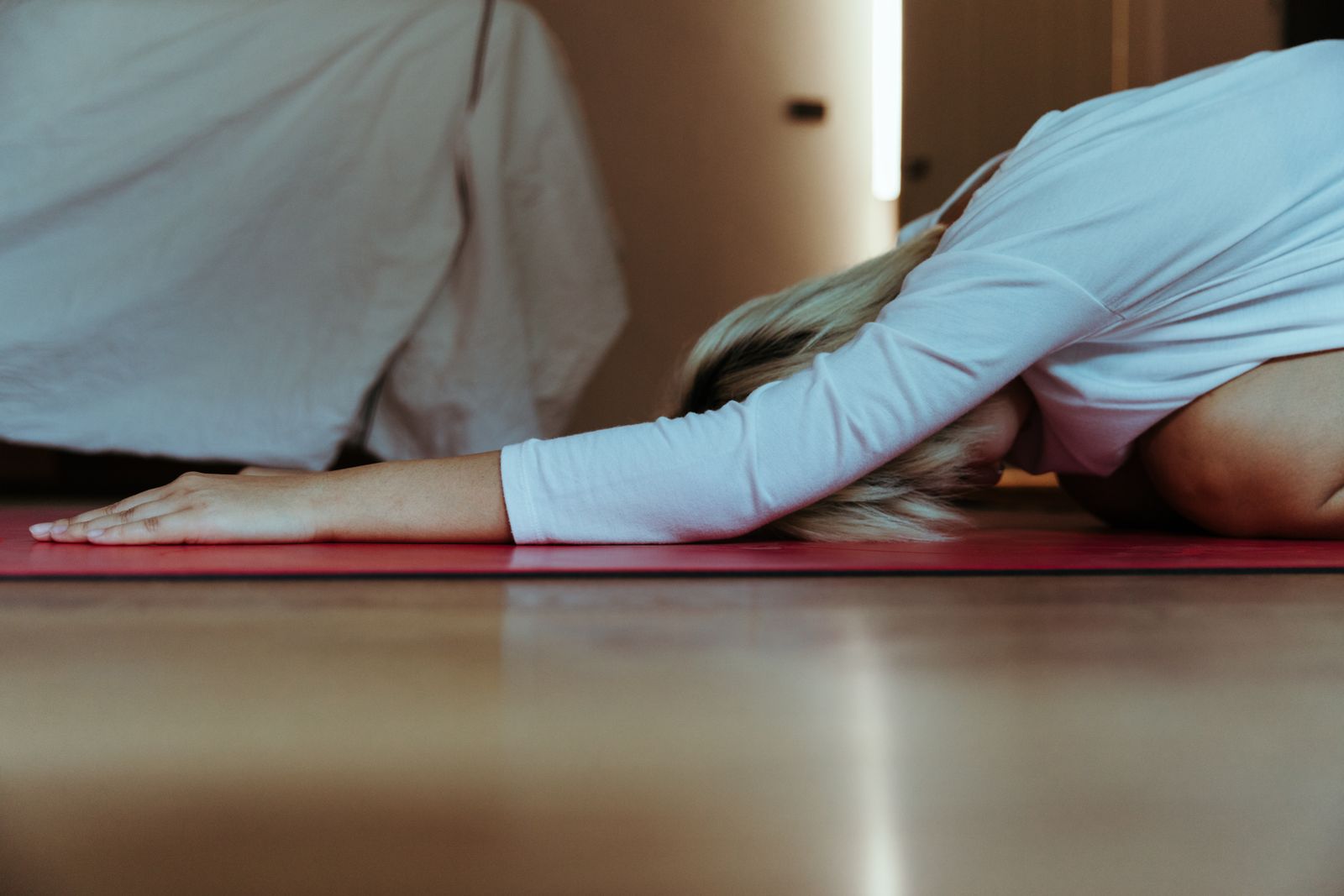
- Supported Child’s Pose: A bolster or folded blanket under the torso takes pressure off the low back and knees while gently stretching the hips.
- Cat-Cow: A slow, rhythmic spinal movement that many people find reduces stiffness without loading any single joint, a staple covered in our yoga for back pain guide.
- Legs-Up-The-Wall (Viparita Karani): A passive inversion that can calm the nervous system and ease lower body swelling and tension.
- Reclined Twist: Performed lying down with knees bent, this gently mobilizes the spine without weight-bearing stress.
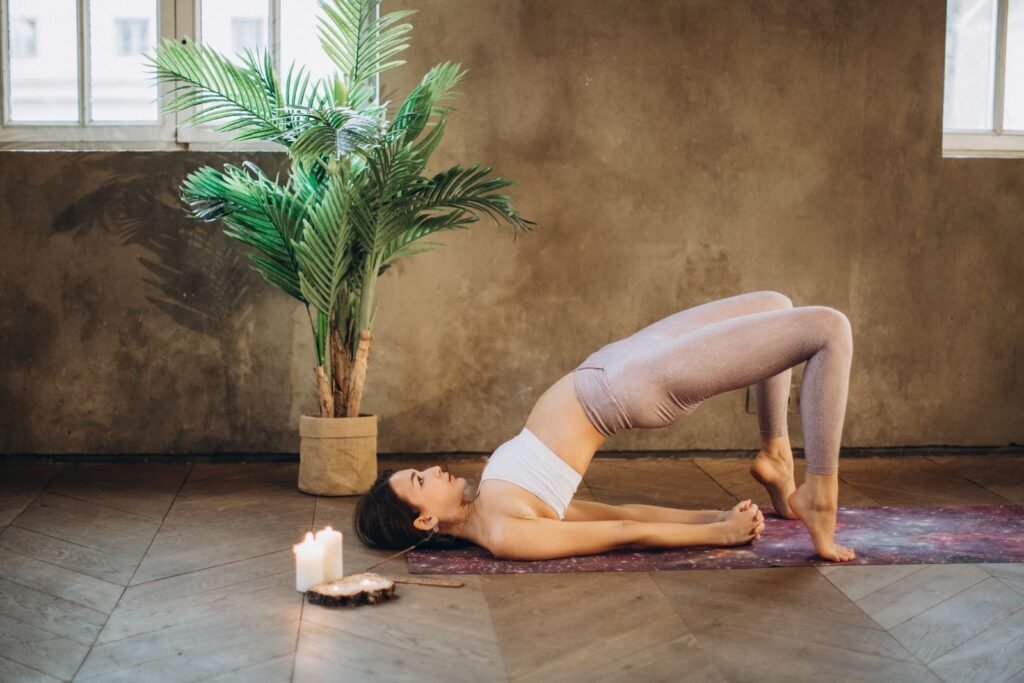
- Supported Bridge: Using a block under the sacrum, this can relieve pressure on the lower spine while strengthening the glutes gently over time.
- Seated Forward Fold with a Bolster: Supporting the torso prevents overstretching and allows the nervous system to register the stretch as safe rather than threatening.
If you’re newer to structured practice, our beginner yoga poses guide is a useful companion for learning correct alignment before adding props for pain-specific modifications.
Which Yoga Styles Are Most Appropriate for Chronic Pain?
Not every style of yoga is designed with chronic pain in mind, and picking the wrong one can do more harm than good.
- Restorative yoga: Almost entirely prop-supported and passive, ideal for flare-ups or highly sensitized nervous systems.
- Gentle or chair yoga: Slower-paced practices that keep joints within a comfortable range, good for arthritis or limited mobility.
- Hatha yoga: Generally slower than vinyasa yoga, giving more time to check in with sensation before moving deeper into a pose.
- Yin yoga: Long-held, low-intensity stretches that target connective tissue, though it should be approached cautiously with an instructor’s guidance if joint hypermobility is a factor.
Faster-paced styles like power or hot yoga are generally not recommended as a starting point for chronic pain, since rapid transitions and intense heat can increase the risk of pushing past a safe range of motion before your body signals it clearly.
What Are the Biggest Mistakes People Make When Using Yoga for Pain?
Even well-intentioned beginners commonly run into a few avoidable problems.
- Chasing a “stretch feeling” that’s actually pain: A useful working rule is to stay in a zone of mild, tolerable sensation and back off immediately from anything sharp, radiating, or increasing.
- Copying advanced sequences from social media: Many trending flows are designed for flexible, pain-free bodies and aren’t appropriate as a starting template for chronic pain.
- Skipping props: Blocks, bolsters, and straps aren’t a sign of weakness, they’re what allow a nervous system that’s primed to protect itself to actually relax into a pose.
- Practicing only during flare-ups: The research base supports consistent practice, generally several sessions a week over 8-12 weeks, not occasional sessions only when pain spikes.
- Ignoring the breath: Holding your breath through a pose reactivates the stress response the practice is meant to calm; pairing movement with breath, as taught in pranayama for beginners, is part of what makes yoga different from ordinary stretching.
How Does Yoga Compare to Other Chronic Pain Management Approaches?
Yoga is rarely an either/or choice against other approaches; it tends to work best as one part of a broader plan.
Compared with physical therapy, yoga offers similar graded-movement principles but adds a breath and mindfulness component that many people find helps with the emotional load of chronic pain, not just the physical symptoms. Compared with passive treatments like heat, massage, or medication alone, yoga is active and self-directed, meaning benefits tend to build over weeks rather than provide instant relief but also don’t wear off the moment treatment stops. For people managing weight alongside pain, a joint-friendly practice can also support broader goals; see our guide on yoga for weight loss for how a gentle practice can fit into that picture without aggravating pain. None of this replaces guidance from a doctor or physical therapist, especially for pain with an unclear cause, and yoga should be introduced as a complement to, not a substitute for, appropriate medical care.
How Do You Start a Yoga Practice Safely When You Have Chronic Pain?
Starting safely matters more than starting quickly.
- Get clearance first: Talk to your doctor or physical therapist about your specific condition before beginning, especially if you have a diagnosed spinal, joint, or autoimmune condition.
- Start with guided, pain-aware instruction: A qualified instructor who asks about your pain history and offers modifications is far more valuable at this stage than an advanced studio class. Structured online yoga classes let you practice at your own pace with real-time modification cues.
- Keep a simple pain log: Note your pain level before and after each session for the first month. Patterns emerge faster than most people expect.
- Progress slowly: Add five minutes or one new pose every week or two rather than jumping to a longer, harder sequence.
- Build consistency before intensity: Three short sessions a week for two months will do more for chronic pain than one long, intense session followed by days off.
Can Yoga Help With the Emotional Side of Living With Chronic Pain?
Chronic pain carries a psychological weight that’s often underestimated: anxiety about flare-ups, frustration with activity limits, and low mood from disrupted sleep are all common companions to physical pain. The meditative and breath-focused elements of yoga are frequently associated with reductions in this emotional burden, alongside the physical benefits. This connects to the broader philosophy behind yoga practice; concepts like yoga philosophy for beginners frame the practice as a relationship with your own body rather than a performance measured against anyone else. For many people managing chronic pain, that mental reframe, learning to work with the body instead of fighting it, ends up being just as valuable as any single stretch.
How Often and How Long Should You Practice Yoga for Chronic Pain Relief?
Most of the research protocols behind the positive findings cited earlier used sessions of roughly 45-90 minutes, two to three times per week, sustained over 8-12 weeks before evaluating results. That said, shorter and more frequent sessions, such as 15-20 minutes daily, can also be effective and are often more sustainable for people managing fatigue alongside pain. The clearest pattern across the research is that consistency over weeks matters more than the length of any single session. If you’re building a home practice, our guide to starting a home yoga practice covers how to structure a sustainable weekly rhythm.
Questions People Ask About Yoga for Chronic Pain Management
Is yoga safe for someone with severe chronic pain?
Yes, when modified appropriately. Restorative and chair-based yoga are specifically designed for people with significant pain or limited mobility, using props to remove weight-bearing stress. Always get clearance from your doctor first and work with an instructor experienced in pain-aware modifications rather than a general fitness class.
How long does it take for yoga to help with chronic pain?
Most research protocols measure results after 8-12 weeks of consistent practice, two to three sessions per week. Some people notice reduced tension and better sleep within the first two to three weeks, but measurable changes in pain and function typically build gradually rather than appearing overnight.
Can yoga make chronic pain worse?
It can, if poses are pushed too far, too fast, or without appropriate modification. The safest approach is to stay within a mild, tolerable sensation range, avoid any sharp or radiating pain, and use props generously. Working with a qualified instructor significantly reduces this risk.
What type of yoga is best for fibromyalgia?
Gentle or restorative yoga is generally the best starting point for fibromyalgia, since it avoids the deep, sustained stretching found in yin yoga and the pace of vinyasa. Shorter sessions with frequent rest are often better tolerated than longer, more demanding classes.
Do I need to be flexible to start yoga for pain management?
No. Chronic pain yoga is built around your current range of motion, not a flexibility standard. Props like blocks, straps, and bolsters exist specifically to bring the pose to your body rather than forcing your body into the pose.
Should yoga replace my current pain medication or physical therapy?
No. Yoga is best used as a complementary practice alongside medical care, not a replacement for it. Always continue following your doctor’s or physical therapist’s guidance and discuss adding yoga to your routine with them first.
Try This for Yourself
Reading about yoga for chronic pain management is a useful starting point, but the real benefit comes from consistent, guided practice tailored to your body. FitStrot’s online yoga classes connect you with instructors who can modify every pose around your specific pain history, so you can build a sustainable practice safely from home.
Related reading: Yoga for back pain | Yoga for weight loss | Restorative yoga | Gentle yoga for beginners | Explore online yoga classes