Yoga for double chin works by combining targeted face and neck exercises that tone the platysma and submental muscles with whole-body practices like yoga for weight loss that reduce overall fat, since a double chin is usually a mix of loose muscle tone and stored fat under the jaw. Simple moves like the chin lift, neck roll, and lion’s breath, done consistently for 10 to 15 minutes a day, can visibly firm the jawline and neck over 6 to 8 weeks, though results vary by age, skin elasticity, and how much fat is actually present under the chin.
What Causes a Double Chin in the First Place?
A double chin, medically referred to as submental fullness, typically develops from a combination of the following factors:
- Excess fat storage under the jaw, which can accumulate regardless of overall body weight.
- Weakened neck and jaw muscles, particularly the platysma, a thin sheet of muscle running from the collarbone to the jaw, which loosens with disuse.
- Loss of skin elasticity that comes naturally with age.
- Genetics — some people carry fat under the chin even at a healthy body weight, which is why a double chin can appear in people who are otherwise slim.
- Posture — constantly looking down at a phone or laptop weakens the neck muscles over time and can make the area under the chin look looser than it otherwise would.
Can Yoga Actually Reduce a Double Chin?
Yoga can help reduce the appearance of a double chin in two distinct ways. First, targeted face and neck yoga exercises engage and tone the platysma and other superficial neck muscles, which can create a firmer, more lifted look along the jawline. Second, broader yoga practice supports fat loss across the body, and submental fat tends to respond to overall weight reduction. Research on facial exercise, including a widely cited study from Northwestern University, found that consistent facial exercises performed over several months were associated with improved fullness and firmness in participants’ cheeks and a more youthful appearance overall, which lends some support to the idea that facial muscle work can visibly change how the face looks over time. Facial yoga is not a substitute for medical fat-reduction procedures if the cause is primarily fat rather than muscle laxity, but it is a low-risk, zero-cost first step worth trying consistently before considering anything more invasive.
What Is the Best Yoga Pose for Double Chin?
The single most recommended yoga pose for double chin reduction is Simhasana, or Lion’s Pose, because it actively stretches and contracts the muscles of the face, jaw, and neck simultaneously. To perform it, kneel comfortably, place your hands on your knees, inhale deeply through the nose, then exhale forcefully through the mouth while sticking your tongue out toward the chin, opening your eyes wide, and tensing the muscles of your face and neck. Hold the tension for 5 to 10 seconds, then release and repeat 5 to 8 times. Lion’s Pose is traditionally used in pranayama breathing exercises to relieve tension, but its side effect of engaging the platysma and neck muscles makes it one of the most efficient single moves for chin and jawline toning.
How Do You Do the Chin Lift Exercise Correctly?
The chin lift is a foundational face yoga exercise for double chin reduction and one of the easiest to learn. Stand or sit with a straight spine, tilt your head back so you’re looking at the ceiling, then purse your lips as if trying to kiss the sky. Hold this pucker for 10 to 15 seconds, feeling the stretch under the chin and along the jaw, then relax and return your head to a neutral position. Repeat for 10 to 12 repetitions. This move directly targets the platysma and the muscles connecting the chin to the collarbone, and it is often the first exercise taught in face yoga classes because it isolates the exact area where a double chin forms. Keep your shoulders relaxed and down throughout — tensing them reduces the stretch’s effectiveness and can strain the upper trapezius instead.
What Does the Neck Roll Exercise Do for the Jawline?
Neck rolls loosen tight neck muscles, improve circulation to the jaw and chin area, and gently engage the platysma through a full range of motion. Sit or stand tall, drop your chin toward your chest, then slowly roll your head to the right shoulder, back to center, and to the left shoulder in a smooth, controlled circle. Avoid rolling the head all the way backward, which can strain the cervical spine — keep the rotation front-to-side only. Complete 5 slow rolls in each direction. Because tight neck muscles from poor posture are a common contributor to how pronounced a double chin looks, this exercise pairs particularly well with yoga for neck and shoulder pain, which addresses the same muscle groups from a mobility and pain-relief angle.
How Does the Neck Stretch Pose (Camel Pose Variation) Help?
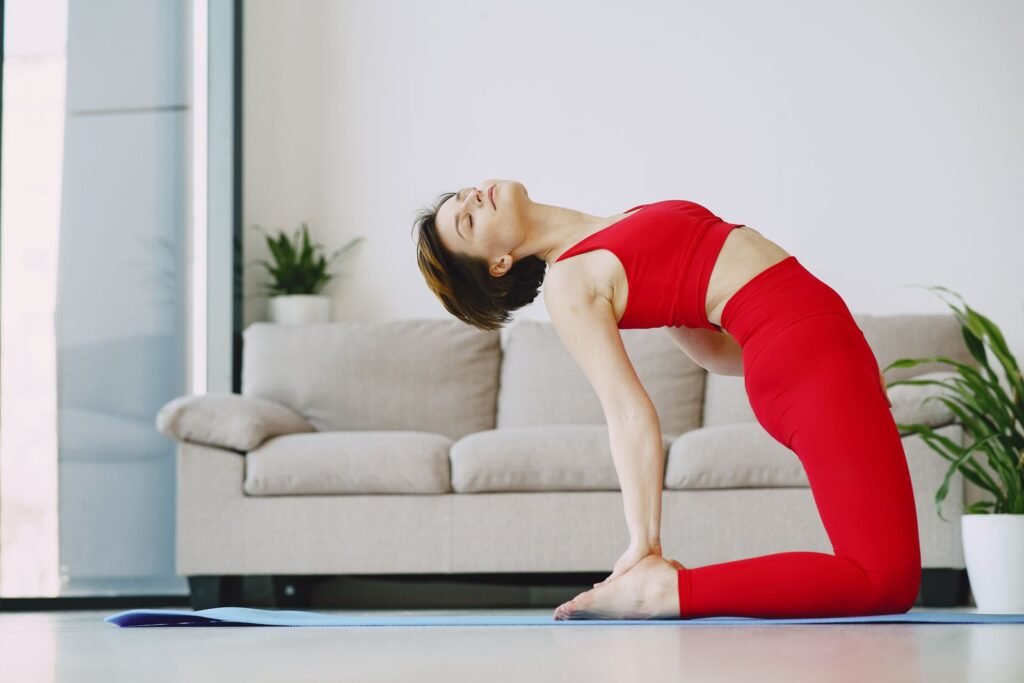
A seated or standing neck stretch, similar to the neck extension used in Ustrasana (Camel Pose), opens the front of the throat and stretches the platysma along its full length. To do it, sit cross-legged with a tall spine, place your hands on your lower back for support, then gently tilt your head backward and slightly to one side, feeling a stretch along the opposite side of the neck. Hold for 15 to 20 seconds, then switch sides. This is a gentler alternative to the full chin lift and is a good starting point for beginners or anyone with existing neck tension. It also complements yoga for posture work, since rounded shoulders and a forward head position make a double chin more visually pronounced regardless of actual fat levels.

What Is the Jaw Release and Cheek Puff Exercise?
The cheek puff exercise strengthens the buccinator muscles in the cheeks and helps tone the lower face, which indirectly improves jawline definition. Take a deep breath and puff air into both cheeks, holding it there as if you’re a trumpet player. Move the air from one cheek to the other slowly, back and forth, for about 30 seconds. This builds control over the muscles that support the lower face and, combined with jaw-focused moves like the chin lift, helps create a more sculpted look across the whole lower third of the face. Many face yoga teachers pair this with a simple jaw release: opening the mouth wide, moving the jaw gently side to side, and rolling the shoulders back to release tension that accumulates from clenching or stress.
How Long Does It Take to See Results From Face Yoga?
Most people practicing face yoga exercises for double chin reduction consistently, meaning daily or near-daily for 10 to 15 minutes, report noticing subtle firmness changes within 3 to 4 weeks and more visible changes in jawline definition by 8 to 12 weeks. This timeline lines up broadly with what muscle toning research shows for other parts of the body: visible tone change requires weeks of repeated engagement, not days. Results depend heavily on how much of your double chin is fat versus loose muscle — if fat is the dominant factor, face yoga alone will produce more modest results, and combining it with cardio-based practices or overall weight management will matter more. Consistency beats intensity here; doing the exercises for 10 minutes daily produces better outcomes than doing them for an hour once a week.
Does Facial Yoga Help With Skin Tightening Too?
Facial yoga’s effect on skin tightening is more indirect than its effect on muscle tone. Toning the underlying platysma and jaw muscles can make loose skin appear tighter because the muscle underneath provides more structural support, similar to how core strength changes the way the abdomen looks even without direct skin change. However, facial yoga does not increase skin’s collagen production or elasticity the way that skincare ingredients like retinoids or in-office treatments can. For a more complete approach to skin health that supports the visual effects of face yoga, many people combine this routine with yoga for glowing skin, which focuses on circulation-boosting poses and breathing techniques that support overall skin appearance, plus adequate hydration and sleep, both of which affect how tight or puffy the under-chin area looks day to day.
What Role Does Posture Play in a Double Chin?
Poor posture, especially the forward head position common from hours of looking down at phones and screens, is one of the most underrated contributors to how prominent a double chin appears. When the head juts forward, the neck muscles shorten and the skin under the chin bunches up, creating the visual effect of a double chin even in people with a healthy body composition. Correcting this through consistent postural awareness and yoga poses that open the chest and strengthen the upper back, such as those covered in yoga for posture and yoga for back pain, can measurably reduce the visual severity of a double chin without any face-specific exercise at all. Practicing awareness of screen height, keeping laptops and phones at eye level, and doing a daily chin tuck (gently pulling the chin straight back, not down) all reinforce this effect.
Can Yoga for Weight Loss Help Reduce a Double Chin?
Yes, in cases where a double chin is largely made up of stored fat rather than loose skin or muscle, overall body fat reduction through consistent yoga practice can noticeably reduce its appearance, since the body typically loses fat proportionally across areas rather than only in one targeted spot. Vinyasa-style and power yoga sequences that raise the heart rate, combined with a sustainable eating pattern, work toward this kind of full-body fat loss more effectively than facial exercises alone. Pairing a general yoga for weight loss routine with the face-specific exercises in this guide addresses both possible causes of a double chin at once: excess fat and under-toned muscle. Practices like vinyasa yoga and power yoga are commonly recommended for this dual-track approach.
How Does Stress Affect Facial Puffiness and Chin Appearance?
Chronic stress raises cortisol levels, which can contribute to water retention and puffiness in the face, including the area under the chin, making a double chin look more pronounced even without any change in actual fat mass. Stress also frequently leads to jaw clenching and shallow breathing, both of which keep the neck and jaw muscles in a state of tension rather than healthy engagement. Incorporating stress-reducing practices such as yoga nidra or a short daily meditation for beginners session can lower cortisol over time and reduce facial puffiness as a side benefit, working alongside the direct muscle-toning exercises covered earlier in this guide.
What Breathing Techniques Support a Firmer Jawline?
Certain pranayama, or yogic breathing exercises, engage the neck and diaphragm muscles in ways that indirectly support jawline firmness. Ujjayi breath, sometimes called “ocean breath,” involves a slight constriction at the back of the throat during inhalation and exhalation, which gently engages the neck muscles with every breath. Kapalabhati, or “skull-shining breath,” uses rapid diaphragmatic contractions that also engage the muscles of the neck and lower face over a sustained practice. Both are covered in more depth in pranayama breathing exercises, and both work well as a 5-minute addition to a dedicated face yoga for double chin routine, especially when done first thing in the morning before facial puffiness from sleep has fully subsided.
Should You Combine Face Yoga With Other Beauty-Focused Yoga Practices?
Combining face yoga with other beauty and wellness-focused yoga practices tends to produce more noticeable, faster results than isolating the chin and jaw alone, because skin appearance, circulation, and muscle tone are all interconnected across the body. Many people practicing yoga for double chin also incorporate yoga for hair growth, which uses inversions and forward folds to boost blood flow to the head and face, and yoga for glowing skin, which emphasizes twists and forward bends that support detoxification and circulation. Poses like downward dog and shoulder stand are frequently recommended in this context because inversions temporarily increase blood flow to the face and neck, which some practitioners find enhances the visible effect of dedicated face yoga sessions done shortly afterward.
Is Face Yoga Safe for Everyone to Try?
Face yoga is generally very low-risk since it involves no equipment, no pressure on joints, and no strain beyond gentle muscle engagement, making it appropriate for most age groups and fitness levels. People with recent facial surgery, active skin conditions such as eczema or acne flare-ups in the treatment area, temporomandibular joint (TMJ) disorders, or severe neck injuries should check with a doctor or physical therapist before starting a face yoga routine, since some of the jaw and neck movements involved could aggravate these specific conditions. For everyone else, the main risk is simply doing the exercises too aggressively, which can cause temporary muscle soreness in the neck and jaw similar to any new exercise routine. Starting with 5 minutes a day and gradually building to a full 15-minute routine is the safest approach for beginners.
How Do You Build a Daily Yoga Routine for Double Chin Reduction?
A well-rounded daily routine for double chin reduction combines targeted face yoga with broader movement and mindfulness. A practical structure looks like this:
- Warm-up (2 minutes): Neck rolls and chin lifts to loosen the area.
- Muscle activation (3 to 5 rounds): Lion’s Pose for a full facial and neck contraction.
- Toning (2 minutes): Cheek puffs and jaw releases.
- Cool-down (a few minutes): Ujjayi or Kapalabhati breathing.
This entire routine takes under 15 minutes and can be done first thing in the morning or as a wind-down in the evening. For best results, pair this daily face routine with 2 to 3 sessions per week of full-body yoga such as those found in a broader beginner yoga routine or yoga for weight loss plan, since addressing both muscle tone and overall body composition produces more complete results than either approach alone.
Questions People Ask About Yoga for Double Chin
Can face yoga get rid of a double chin permanently?
Face yoga can meaningfully reduce the appearance of a double chin caused by muscle laxity or poor posture, and results can last as long as you maintain the practice, similar to how body muscle tone fades if you stop training it. If the double chin is primarily fat-based, face yoga alone is unlikely to remove it permanently without accompanying changes to overall body fat.
How many minutes a day should I do face yoga for a double chin?
Most face yoga teachers recommend 10 to 15 minutes daily for visible results within 6 to 8 weeks. Shorter 5-minute sessions can still help if done consistently every day, but skipping days regularly slows progress significantly since muscle tone benefits from frequent, repeated engagement rather than occasional longer sessions.
Is the chin lift or Lion’s Pose better for double chin reduction?
Both target the platysma and jaw muscles effectively but in slightly different ways: the chin lift isolates a static stretch-and-hold under the chin, while Lion’s Pose combines a full facial contraction with a breath release. Using both in the same routine, rather than choosing one, produces more complete muscle engagement across the neck and jaw.
Can double chin exercises make my neck look thinner too?
Yes, many of the same exercises that tone the platysma and jaw muscles also engage the broader neck area, which can create a slimmer, more defined neck appearance alongside a firmer chin line. This is one reason face yoga routines often overlap heavily with general neck mobility and posture work.
Does drinking more water help reduce a double chin?
Staying well hydrated can reduce water retention and puffiness in the face, including under the chin, since the body tends to retain more fluid when dehydrated as a protective response. While hydration alone will not eliminate a double chin caused by fat or loose muscle, it supports the visible results of a dedicated face yoga routine.
At what age does face yoga stop being effective for a double chin?
There is no specific age cutoff where face yoga stops working, but results may take longer to appear in older adults due to naturally reduced skin elasticity and slower muscle response. Research on facial exercise has shown visible improvements in middle-aged participants over a period of several months, suggesting consistency matters more than age for seeing results.
Try This for Yourself
Reading about face yoga exercises for double chin is a useful start, but the real change happens with guided, consistent practice. If you want a structured, expert-led routine that combines face yoga, neck mobility, and full-body practices tailored to your goals, explore FitStrot’s online yoga classes and get matched with a certified instructor who can build a personalized plan around reducing a double chin and improving overall tone.
Related reading: yoga for weight loss, yoga for hair growth, yoga for glowing skin, yoga for eyesight, and FitStrot’s online yoga classes.