Yoga relieves constipation by combining gentle spinal twists, forward folds, and deep diaphragmatic breathing that physically compress and massage the intestines, stimulate peristalsis (the wave-like muscle contractions that move stool through the colon), and calm the stress response that often slows digestion in the first place. Poses like Wind-Relieving Pose (Pavanamuktasana), Supine Spinal Twist (Supta Matsyendrasana), and Cat-Cow (Marjaryasana-Bitilasana) are among the most consistently recommended for quick relief, while a regular practice that includes twisting postures and mindful breathing can support more regular bowel movements over time. Most people feel some relief within 10 to 20 minutes of a targeted sequence, though chronic constipation usually needs a combination of yoga, diet, hydration, and, if it persists, a doctor’s input.
Why Does Yoga Help With Constipation?
Constipation happens when stool moves too slowly through the colon, often because of low fiber intake, dehydration, inactivity, or stress. Yoga addresses several of these causes at once. Physically, twisting and compressing postures apply gentle pressure to the ascending, transverse, and descending colon, which can encourage trapped gas and stool to move along. Forward folds and inversions use gravity and abdominal compression to the same effect. On the nervous system side, yoga activates the parasympathetic (“rest and digest”) branch of the autonomic nervous system through slow breathing, which is the opposite of the sympathetic “fight or flight” state that tends to shut digestion down when you’re anxious or rushed. This dual action, mechanical stimulation plus nervous system calming, is what separates yoga from simply “exercising it out,” and it’s also why breathing pattern matters as much as the shape of the pose itself.
What Are the Best Yoga Poses for Constipation?
A handful of poses show up again and again across yoga guidance for digestive complaints, because each one targets the colon from a different angle:
- Wind-Relieving Pose (Pavanamuktasana): Lying on your back and hugging one or both knees into the chest compresses the abdomen directly, which is why it’s often the first pose taught for gas and constipation.
- Supine Spinal Twist (Supta Matsyendrasana): A gentle lying twist that massages the ascending and descending colon on alternating sides.
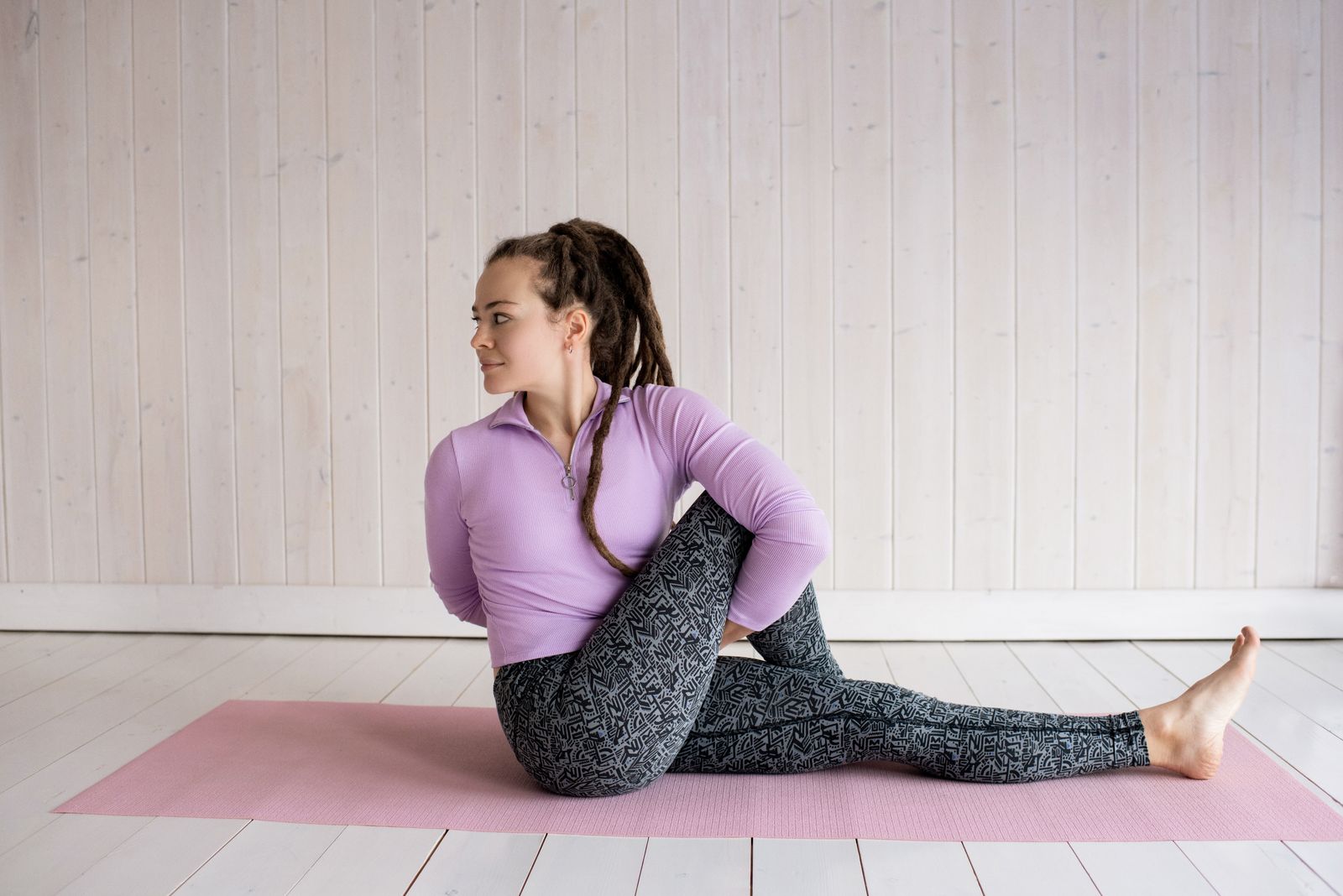
- Half Spinal Twist (Ardha Matsyendrasana): A seated twist that goes deeper into the abdominal organs than the supine version, good once you’re warmed up.
- Cat-Cow (Marjaryasana-Bitilasana): A rhythmic spinal flow on hands and knees that gently churns the digestive tract with each breath cycle.
- Child’s Pose (Balasana): A resting forward fold that compresses the abdomen while calming the nervous system.
- Legs-Up-The-Wall (Viparita Karani): A restorative inversion that improves venous return and is widely used for general relaxation as well as sluggish digestion.
- Cobra Pose (Bhujangasana): A gentle backbend that stretches the front of the abdomen and is often paired with twists for gas relief.
If you’re new to a home practice, pairing these with a broader look at types of yoga can help you understand which style (restorative, hatha, or gentle vinyasa) suits a digestive-focused routine best.
How Do You Do Wind-Relieving Pose for Constipation?
Lie flat on your back with your legs extended. Exhale and draw both knees toward your chest, wrapping your arms around your shins. Hold for five to eight breaths, letting each exhale gently deepen the compression against your abdomen. For a one-sided variation that targets a specific side of the colon, hug only one knee in at a time while keeping the other leg extended flat on the floor, then switch sides. Many teachers recommend this pose first in a constipation-relief sequence because it requires no strength or flexibility and can be done directly on getting out of bed, before the day’s stress has had a chance to tighten the gut. It also pairs naturally with the breathing techniques covered in our pranayama for beginners guide.
How Does Supine Spinal Twist Relieve Bloating and Constipation?
From the same lying position, draw both knees up toward your chest, then let them fall together to one side while keeping your shoulders flat on the mat. Extend your arms out in a T-shape and turn your gaze in the opposite direction of your knees. Hold for 8 to 10 slow breaths per side. The twist compresses one side of the colon while gently stretching the other, which is why alternating sides matters: it works the full loop of the large intestine rather than just one section. This is one of the most frequently recommended poses for bloating as well, since the same mechanism that helps move stool also helps release trapped gas, an overlap also discussed in our guide to yoga for acidity.
Can Yoga Help With Constipation and Gas Together?
Yes. Constipation and trapped gas frequently occur together because both stem from slowed transit through the intestines. Twisting and knee-to-chest poses address both at once by physically encouraging gas and stool to move along the digestive tract. Wind-Relieving Pose earns its name specifically because it targets gas, while Cat-Cow and gentle spinal twists add a rhythmic, massaging component. If bloating is your primary complaint rather than hard stools, focus your sequence on Wind-Relieving Pose, Happy Baby Pose, and seated forward folds, holding each for slightly longer (8 to 10 breaths) and breathing deeply into the belly rather than the chest.
Is Yoga Safe for Constipation and Piles (Hemorrhoids)?
Constipation and piles often occur together, since straining during bowel movements is a leading contributor to hemorrhoids. Gentle, non-straining yoga is generally considered safe and can help by softening the underlying constipation that causes the straining in the first place. That said, avoid deep forward folds or poses that place direct pressure on the pelvic floor and rectal area during an active flare-up, and skip any pose that causes pain rather than a mild stretch. A more detailed pose-by-pose breakdown is available in our dedicated guide to yoga for piles, which covers modifications for sensitive or inflamed tissue.
What Breathing Technique Helps Constipation the Most?
Diaphragmatic breathing, sometimes called belly breathing, is one of the most useful breathing patterns for constipation because it physically moves the diaphragm up and down against the abdominal organs, creating a gentle internal massage with every breath. To practice it, sit or lie down, place one hand on your belly, and breathe in slowly through your nose so your belly rises rather than your chest. Exhale slowly and let your belly fall. Doing this for five minutes before or after your pose sequence, or even on its own during a stressful moment, is associated with reduced sympathetic nervous system activity, the state that tends to stall digestion. This is one reason breathwork is emphasized alongside asana in most pranayama resources, not just as a relaxation tool but as a digestive one, and it’s a theme that also runs through our guide on yoga for stress relief.
How Long Does It Take for Yoga to Relieve Constipation?
Many people notice some relief, often in the form of released gas or a lighter feeling in the abdomen, within 10 to 20 minutes of a targeted pose sequence. A full bowel movement may follow within an hour or two, particularly if you also drink warm water and give your body space and time afterward. For chronic or long-standing constipation, expect gradual improvement over one to two weeks of consistent daily practice rather than a single-session fix, since a sluggish gut typically needs sustained changes in movement, hydration, and stress levels rather than one good sequence. If you see no improvement at all after two to three weeks of regular practice, that’s a signal to loop in a doctor rather than continuing to self-manage.
What Yoga Sequence Works Best for Morning Constipation Relief?
A short, five-pose morning sequence tends to work well precisely because it’s done before food, caffeine, or the day’s stress complicate digestion:
- Cat-Cow for 8 to 10 rounds, moving with the breath
- Child’s Pose held for 8 breaths
- Wind-Relieving Pose, both knees, held for 8 breaths
- Supine Spinal Twist, both sides, 8 to 10 breaths each
- Legs-Up-The-Wall for 3 to 5 minutes to finish
Follow the sequence with a glass of warm water and, if possible, 10 minutes before you need to rush anywhere. This mirrors the kind of gentle, low-intensity movement recommended for gut health in general, and pairs naturally with a broader look at morning yoga routine structuring if you want to build it into a longer daily habit. If mornings are tight, a short chair yoga version of Cat-Cow and seated twists can substitute for the floor-based poses.
Which Yoga Poses Should You Avoid With Constipation?
Avoid deep backbends and intense core-strengthening poses like full Wheel Pose or high-intensity core work when you’re actively constipated and uncomfortable, since these can increase intra-abdominal pressure without the gentle massaging effect of twists. Similarly, avoid pushing into any pose that causes sharp pain, since constipation can sometimes overlap with other digestive issues, such as an anal fissure or active hemorrhoid flare, where straining or pressure makes things worse rather than better. If a pose requires you to hold your breath or strain, such as some advanced arm balances covered in guides to Ashtanga yoga, skip it during a digestive flare-up and return to it once things have settled.
Does Yoga for Constipation Work Differently for Beginners vs. Experienced Practitioners?
Beginners generally get the most benefit from the simplest, most passive poses: Wind-Relieving Pose, Child’s Pose, and Legs-Up-The-Wall, all of which use body weight and gravity rather than strength or flexibility. There’s no need to attempt an advanced practice or deep backbends to get digestive benefits, and a good introduction to pacing can be found in our beginner yoga poses guide. Experienced practitioners can add deeper seated twists like Half Spinal Twist, or incorporate Bow Pose and other core-engaging postures, which apply more targeted compression but require more flexibility and core awareness to perform safely. Either way, consistency matters more than intensity: a gentle 10-minute daily sequence generally outperforms an occasional advanced one. Yoga for constipation can also be different for beginners in a Hatha class, and readers curious about how that lineage frames breathing and digestion can see our overview of Hatha yoga.
Can Yoga Replace Diet and Medication for Constipation?
No. Yoga is best understood as one part of a broader approach to constipation, not a replacement for adequate fiber, hydration, and movement throughout the day. Chronic constipation that doesn’t respond to lifestyle changes, including a regular yoga practice, may need medical evaluation, since it can sometimes be linked to conditions like hypothyroidism, irritable bowel syndrome, or medication side effects. Yoga’s value lies in addressing two contributing factors, physical inactivity and stress, that diet alone doesn’t touch. It works well alongside, not instead of, standard dietary advice like increasing fiber and water intake, and pairs naturally with a broader wellness routine such as the ones covered in our guide to yoga for weight loss, since both rely on similar foundational habits around movement and hydration.
Is Constipation Ke Liye Yoga Different From Standard Digestive Yoga?
Constipation ke liye yoga (yoga for constipation) draws on the same core postures used globally for digestive health: twists, forward folds, and Pavanamuktasana in particular, which translates roughly to “wind-releasing pose” in Sanskrit and Hindi. Traditional Indian yoga practice also frequently pairs these poses with specific breathing patterns and, in some traditions, kapalbhati (a rapid abdominal breathing technique), though kapalbhati should be learned from a qualified teacher and avoided during pregnancy, high blood pressure, or active digestive flare-ups. The core mechanism, mechanical stimulation of the colon combined with nervous system regulation, is consistent across traditions even where specific sequencing or terminology differs.
How Does Stress Contribute to Constipation, and How Does Yoga Address It?
The gut and the nervous system are closely linked through what’s often called the gut-brain axis. When you’re stressed, blood flow and nervous system resources shift away from digestion and toward the muscles and organs needed for a “fight or flight” response, which can slow intestinal movement and contribute to constipation. Yoga interrupts this cycle through slow breathing, sustained holds, and mindful attention, all of which are associated with increased parasympathetic (“rest and digest”) activity. This is part of why yoga is recommended not just for physical digestive symptoms but for stress-related digestive issues more broadly, and it overlaps meaningfully with the practices covered in our piece on yoga for stress relief and in meditation for beginners. Many people layer a short morning constipation sequence with a longer session two or three times a week that includes core work, gentle twists, and restorative poses like those found in restorative yoga or Yin yoga, or explore movement variety through styles like Vinyasa yoga.
Questions People Ask About Yoga for Constipation
What is the fastest yoga pose for constipation relief?
Wind-Relieving Pose (Pavanamuktasana) is generally considered the fastest-acting pose because it directly compresses the abdomen against the thighs. Holding it for 8 to 10 slow breaths, ideally first thing in the morning on an empty stomach, tends to produce the quickest sense of relief, whether that’s released gas or an urge to have a bowel movement within the following hour.
Can yoga help chronic constipation, or only occasional constipation?
Yoga can help both, but the approach differs. Occasional constipation often responds within one session, while chronic constipation typically needs one to two weeks of consistent daily practice combined with adequate fiber and water intake. If chronic constipation persists beyond three weeks despite consistent practice, it’s worth having a doctor rule out underlying causes.
How many times a day should I do yoga for constipation?
Once daily is typically enough, ideally in the morning before eating. Some people also do a short, five-minute sequence, Wind-Relieving Pose plus a gentle twist, in the evening if constipation is severe, but twice-daily practice isn’t necessary for most people and consistency matters more than frequency.
Is it safe to do yoga for constipation during pregnancy?
Many gentle poses, such as Cat-Cow and side-lying twists, are generally considered safe during pregnancy, but deep twists, strong abdominal compression, and inversions like Legs-Up-The-Wall need modification or avoidance depending on trimester. Always check with your doctor or a prenatal yoga teacher before starting a new routine during pregnancy.
Can yoga poses for constipation also help with bloating?
Yes. The same poses that relieve constipation, particularly Wind-Relieving Pose, spinal twists, and Cat-Cow, also help release trapped gas, which is the main driver of bloating. Because constipation and bloating share the same underlying cause of slowed intestinal transit, addressing one with yoga frequently improves the other.
Should I eat before or after doing yoga for constipation?
Practicing on an empty stomach, first thing in the morning or at least two to three hours after a meal, is generally recommended. A full stomach can make twists and abdominal compression uncomfortable and less effective, since there’s less room for the gentle internal massage that these poses rely on.
Try This for Yourself
Reading about poses only goes so far: the real benefit comes from consistent, guided practice that adjusts to how your body responds over time. Join a FitStrot online yoga class to work through a digestion-focused sequence with a live instructor who can correct your alignment, adjust the pacing, and build a routine around your specific digestive concerns, whether that’s occasional constipation, bloating, or a broader gut-health goal.
Related reading: Yoga for Piles, Yoga for Acidity, Yoga for Fatty Liver, Yoga for Weight Loss, and Online Yoga Classes.