
Yoga for fatty liver works by combining twisting postures, diaphragmatic breathing, and gentle core-activating asanas that improve digestion, support healthy blood flow to the abdominal organs, and help manage the weight and metabolic changes linked to liver fat. Poses like Ardha Matsyendrasana (seated spinal twist), Dhanurasana (bow pose), Bhujangasana (cobra pose), and pranayama techniques such as Kapalbhati are the most commonly recommended for both grade 1 and grade 2 fatty liver, alongside dietary changes and regular movement. Yoga is not a substitute for medical treatment of fatty liver disease, but as a consistent daily habit it is widely used as a supportive, low-cost tool for managing the condition and supporting long-term liver health.
What Is Fatty Liver Disease, and Can Yoga Really Help?
Fatty liver disease, medically known as hepatic steatosis, develops when excess fat builds up in liver cells. It is commonly graded from 1 to 3 based on ultrasound findings, with grade 1 being the mildest and most reversible stage. Non-alcoholic fatty liver disease (NAFLD) is closely linked to obesity, insulin resistance, high cholesterol, and a sedentary lifestyle. Doctors typically recommend a combination of dietary changes, weight management, and regular physical activity as the first line of management, especially at the earlier grades.
Yoga fits into this picture as a form of physical activity that also targets stress, an often underappreciated contributor to fat accumulation through elevated cortisol levels. Twisting and forward-bending postures are believed to increase blood circulation to the liver and digestive organs, while deep breathing exercises support the parasympathetic nervous system and may aid digestion. Yoga is not a standalone cure, but as part of a broader lifestyle change that includes a weight management routine and better eating habits, it is a practical, sustainable addition.
Is Fatty Liver Grade 1 Reversible With Yoga and Lifestyle Changes?
Grade 1 fatty liver is generally considered the most reversible stage of the condition, since the liver has not yet developed significant inflammation or scarring. At this stage, most doctors recommend sustained lifestyle changes rather than medication: weight loss of even 5 to 10 percent of body weight, a reduction in refined carbohydrates and added sugar, and regular physical activity of at least 150 minutes a week. A consistent yoga practice can contribute meaningfully toward that activity target while also addressing two other risk factors specific to fatty liver: abdominal fat and stress-related eating patterns.
It’s worth being clear that “reversible” does not mean overnight. Reversal typically takes several months of consistent effort, tracked through follow-up ultrasounds or liver function tests as advised by a doctor. Yoga should be treated as one pillar of that plan alongside dietary changes and, where relevant, walking or other cardio, rather than the entire strategy on its own.
Which Yoga Asanas Are Best for Fatty Liver?
The most frequently recommended yoga asanas for fatty liver focus on twisting, compressing, and stretching the abdominal region to stimulate the liver, gallbladder, and digestive tract. These are the poses most commonly featured across yoga-for-liver-health routines:
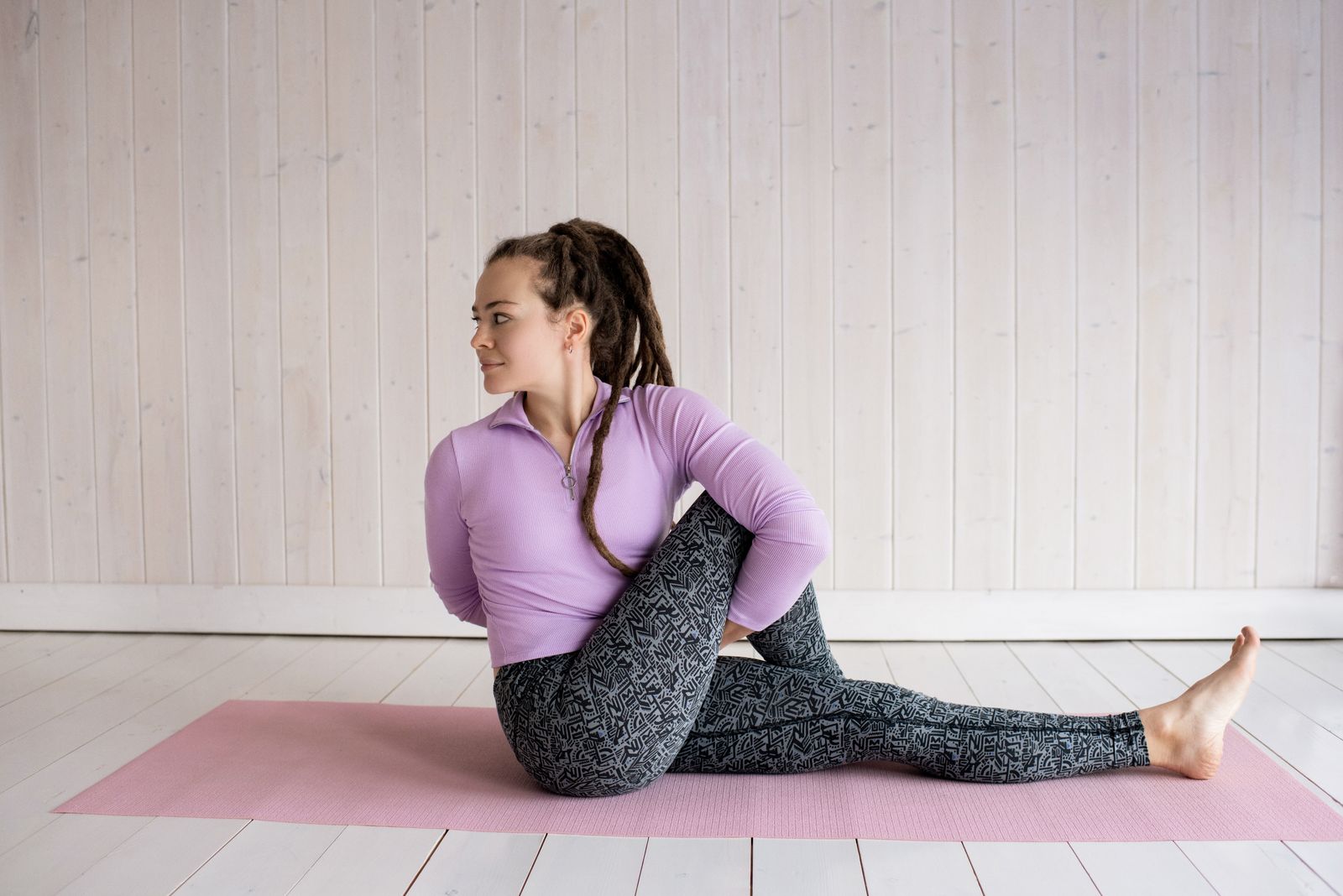
- Ardha Matsyendrasana (Half Spinal Twist): A seated twist that compresses and releases the abdominal organs, believed to improve blood flow to the liver.
- Dhanurasana (Bow Pose): A backbend that stretches the front of the torso and stimulates the abdominal muscles and digestive organs.
- Bhujangasana (Cobra Pose): A gentle backbend that engages the core and is often used to relieve mild digestive sluggishness.
- Paschimottanasana (Seated Forward Bend): A forward fold that massages the abdominal organs and is often paired with liver-focused sequences.
- Naukasana (Boat Pose): Strengthens the core and is thought to support abdominal circulation.
- Pavanmuktasana (Wind-Relieving Pose): A supine pose that gently compresses the abdomen, often used for digestive comfort.
These postures are frequently grouped under the broader umbrella of yoga for digestion, since the liver, stomach, and intestines respond to similar twisting and compressing movements. Building familiarity with basic beginner yoga poses first makes it easier to layer in this more targeted sequence safely.
How Do You Practice Ardha Matsyendrasana for Fatty Liver?
Sit on the floor with your legs extended. Bend your right knee and place your right foot flat on the floor outside your left thigh. Bend your left leg and tuck the foot near your right hip, or keep it extended, depending on flexibility. Inhale to lengthen your spine, then exhale as you twist your torso to the right, placing your left elbow outside your right knee and your right hand on the floor behind you. Hold for 20 to 30 seconds, breathing steadily, then release and repeat on the other side.
Beginners should keep the twist gentle rather than forcing a deep rotation, since overtwisting can strain the lower back. This pose pairs naturally with a broader yoga for constipation routine, since spinal twists are equally valued for stimulating bowel movement and easing bloating.
How Does Kapalbhati Pranayama Help With Fatty Liver?
Kapalbhati is a rapid breathing technique that involves short, forceful exhales through the nose while the abdomen contracts, followed by passive inhales. It is one of the pranayama techniques most often discussed in the context of yoga for fatty liver, particularly in routines popularized by yoga teacher Baba Ramdev, whose televised yoga sessions and Patanjali Yogpeeth programs have widely promoted Kapalbhati and other pranayama practices for digestive and metabolic health across India.
The forceful abdominal contractions in Kapalbhati are thought to massage the internal organs, including the liver, and improve oxygenation of the blood. To practice it, sit comfortably with a straight spine, take a normal breath in, then exhale sharply through the nose while pulling your navel toward your spine. Start with 20 to 30 rounds and build up gradually. People with high blood pressure, hernia, recent abdominal surgery, or who are pregnant should avoid Kapalbhati or check with a doctor first, since the forceful technique increases intra-abdominal pressure. Slower alternatives like Anulom Vilom are gentler starting points for anyone unsure whether Kapalbhati is appropriate for them.
What Does Baba Ramdev Recommend for Fatty Liver?
Baba Ramdev’s yoga sessions, broadcast widely across Indian television and social media, commonly recommend a combination of pranayama, including Kapalbhati and Anulom Vilom, alongside asanas like Ardha Matsyendrasana, Dhanurasana, and Paschimottanasana for liver health. These recommendations are typically framed as part of a broader lifestyle package that also includes dietary changes, such as reducing oily and processed food, and drinking warm water through the day.
It’s worth approaching any single public figure’s yoga routine as one input among several rather than a medical prescription. The specific asanas and pranayama commonly associated with these routines are the same ones recommended more broadly across yoga and Ayurveda-focused health content, which is a reasonable signal that they are safe for most healthy adults to try, but they should complement, not replace, a doctor’s guidance for managing diagnosed fatty liver disease.
How Often Should You Practice Yoga for Fatty Liver?
Most yoga-for-liver-health routines suggest daily practice of 20 to 40 minutes, ideally in the morning on an empty stomach, since twisting poses are more comfortable without a full stomach. A simple structure that works for most beginners:
- 5 minutes: Gentle warm-up stretches and joint rotations.
- 15 minutes: A sequence of 4 to 6 asanas, such as Bhujangasana, Dhanurasana, Ardha Matsyendrasana, and Pavanmuktasana, holding each for 20 to 30 seconds per side.
- 10 minutes: Pranayama, including Kapalbhati and slower breathing techniques like Anulom Vilom (alternate nostril breathing).
- 5 minutes: Relaxation in Shavasana (corpse pose) to let the nervous system settle.
Consistency matters more than intensity here. A shorter daily practice generally produces better long-term results for a metabolic condition like fatty liver than an occasional long session, similar to how consistency is emphasized in a yoga for weight loss plan.
Can Yoga Alone Cure Fatty Liver Disease?
No. Yoga is a supportive tool, not a standalone cure, and no serious medical resource frames it otherwise. Fatty liver disease is primarily driven by diet, body weight, insulin resistance, and in some cases alcohol use or underlying metabolic conditions. Reversing it, particularly at grade 1 or grade 2, depends most heavily on sustained changes to diet and body weight, with physical activity, including yoga, as a supporting factor.
Where yoga adds genuine value is in the areas that diet alone doesn’t address well: stress reduction, mindful eating habits developed through regular practice, gentle but consistent movement for people who find high-intensity exercise difficult to sustain, and better sleep, which is itself connected to metabolic health. Combining a daily yoga practice with dietary changes and, where appropriate, a doctor-guided plan gives it the best chance of making a measurable difference.
What Diet Changes Work Best Alongside Yoga for Fatty Liver?
Yoga and diet work together rather than in competition. The dietary changes most consistently recommended for fatty liver include reducing added sugar and refined carbohydrates, cutting down on fried and processed foods, increasing fiber from vegetables and whole grains, and moderating overall calorie intake if weight loss is a goal. Staying well hydrated and limiting or avoiding alcohol are also standard recommendations, since alcohol places direct additional strain on the liver.
A useful way to think about it: yoga asanas and pranayama support the “output” side of liver health, improving circulation and reducing stress hormones that can worsen fat storage, while diet controls the “input” side, determining how much fat and sugar the liver has to process in the first place. Neither works as well in isolation, which is why so many liver-focused routines pair naturally with broader yogic diet principles.
What Other Yoga Practices Support Digestive and Liver Health?
Fatty liver rarely exists in isolation from other digestive complaints, and many people managing it also deal with bloating, acidity, or irregular bowel movements. A well-rounded yoga practice often draws from several related routines:
- Yoga for acidity, which uses similar gentle twists and breathing techniques to ease acid reflux and heartburn.
- Yoga for piles, which focuses on poses that reduce pressure on the lower abdomen and improve circulation.
- Yoga for constipation, which shares several asanas with fatty liver routines, including seated twists and forward folds.
- Yoga for gas, useful for the general abdominal discomfort that often accompanies liver and digestive issues.
Building a broader yoga for digestion routine, rather than isolating fatty liver poses alone, tends to produce more consistent results because the digestive system functions as a connected whole.
What Precautions Should You Take Before Starting Yoga for Fatty Liver?
A few precautions matter, especially for people newly diagnosed or managing other health conditions. Avoid deep twists and inversions if you have had recent abdominal surgery, a hernia, or are in the later stages of pregnancy; a dedicated prenatal yoga routine is a safer starting point during pregnancy. People with high blood pressure or heart conditions should approach vigorous pranayama like Kapalbhati cautiously and ideally learn it first under supervision, either from a certified instructor or through a guided online yoga class.
It’s also worth getting a baseline diagnosis and grading from a doctor before starting any routine, since the management approach for grade 1 fatty liver differs somewhat from more advanced stages, particularly around how much and what type of exercise is appropriate. If you experience pain, dizziness, or unusual symptoms during practice, stop and consult a healthcare provider rather than pushing through.
How Does Stress Affect Fatty Liver, and Can Yoga’s Breathing Techniques Help?
Chronic stress raises cortisol levels, and elevated cortisol is associated with increased fat storage, particularly visceral fat around the abdomen and liver. Stress also commonly drives comfort eating and disrupted sleep, both of which work against liver health. This is one of the more overlooked mechanisms by which yoga may help with fatty liver: not through the postures alone, but through the nervous-system regulation that comes from slow, controlled breathing.
Techniques like Anulom Vilom (alternate nostril breathing) and Bhramari (humming bee breath) activate the parasympathetic nervous system, which counters the stress response. Practicing these for even 5 to 10 minutes daily, alongside asanas, gives yoga’s benefit for fatty liver two separate pathways to work through: mechanical stimulation of the abdominal organs, and stress-hormone regulation. This dual approach is part of why yoga is often recommended alongside, rather than instead of, structured exercise or a weight loss plan, and it’s a theme that shows up throughout pranayama practice generally.
How Long Does It Take to See Results From Yoga for Fatty Liver?
Most people practicing yoga consistently alongside dietary changes report noticeable improvements in energy, digestion, and general well-being within a few weeks, though the underlying reduction in liver fat, confirmed through ultrasound or blood tests, generally takes longer: commonly three to six months of sustained effort for grade 1 fatty liver, based on the general timelines discussed across liver health resources. Results vary significantly based on how much dietary change accompanies the yoga practice, starting body weight, and how consistently the routine is followed.
Patience and consistency matter more here than in most fitness goals, since fatty liver reversal is a metabolic process rather than a purely muscular one. Tracking progress through periodic doctor check-ins, rather than expecting to “feel” the liver improve, is the more reliable approach.
How Does Yoga for Fatty Liver Fit Into a Broader Weight Management Plan?
Because fatty liver is so closely tied to excess body weight, particularly abdominal fat, many people researching fatty liver yoga are also interested in broader weight management strategies. Core-strengthening poses like Naukasana, combined with a consistent yoga for weight loss routine, target the same visceral fat that contributes to liver fat accumulation. Styles like power yoga or vinyasa yoga can also be layered in on alternate days for people who want a higher-intensity complement to a gentler, liver-focused morning routine.
This combined approach tends to work better than a fatty-liver-only routine practiced in isolation, since the same lifestyle changes that reduce overall body fat, better sleep, less processed food, more consistent movement, are also the ones most directly linked to liver fat reduction.
Should You See a Doctor Before Starting Yoga for Fatty Liver?
Yoga is a low-risk addition for most people with grade 1 or grade 2 fatty liver, but a few situations call for medical evaluation first. Anyone with jaundice, unexplained abdominal pain, significant swelling, or abnormal liver function test results should see a doctor or hepatologist before starting any new exercise routine. People with advanced liver disease, cirrhosis, or portal hypertension need individualized medical guidance, since some poses that are generally safe for grade 1 fatty liver may not be appropriate at more advanced stages.
For most people with grade 1 fatty liver and no red-flag symptoms, starting a gentle daily yoga routine alongside dietary changes is considered safe. Anyone not seeing any improvement after several months of consistent practice and lifestyle changes should follow up with a doctor rather than continuing to self-manage indefinitely.
Questions People Ask About Yoga for Fatty Liver
Can yoga cure fatty liver completely?
Yoga alone cannot cure fatty liver disease. It works best as one part of a broader plan that includes dietary changes, weight management, and medical guidance. For grade 1 fatty liver, consistent lifestyle changes including yoga can meaningfully support reversal, but yoga should not be treated as a substitute for medical care.
Which yoga pose is best for fatty liver?
Ardha Matsyendrasana (Half Spinal Twist) is one of the most commonly recommended poses for fatty liver, since the twisting motion is believed to stimulate blood flow to the liver and surrounding organs. It’s typically combined with Dhanurasana, Bhujangasana, and pranayama for a more complete routine.
Is Kapalbhati safe for everyone with fatty liver?
Kapalbhati is generally considered safe for healthy adults practicing fatty liver yoga routines, but people with high blood pressure, hernia, recent surgery, or who are pregnant should avoid it or learn it under supervision first, since the forceful abdominal contractions increase intra-abdominal pressure.
How is grade 1 fatty liver different from grade 2 and grade 3?
Grade 1 fatty liver is the mildest stage, with minimal fat buildup and no significant inflammation or scarring, making it the most reversible. Grade 2 and grade 3 involve progressively more fat accumulation and a higher risk of inflammation or fibrosis, requiring closer medical monitoring alongside lifestyle changes.
Can I do fatty liver yoga asanas every day?
Yes, most fatty liver yoga routines are designed for daily practice, typically 20 to 40 minutes in the morning on an empty stomach. Daily consistency is generally considered more valuable than occasional longer sessions for a metabolic condition like fatty liver.
Does Baba Ramdev’s yoga routine for fatty liver actually work?
The asanas and pranayama commonly featured in Baba Ramdev’s yoga routines for fatty liver, such as Kapalbhati and spinal twists, overlap closely with poses recommended across broader yoga and medical wellness content. They can be a reasonable starting point, but should be combined with dietary changes and medical guidance rather than followed as a standalone treatment.
Try This for Yourself
If you’re managing fatty liver and want proper guidance on form, breathing, and sequencing rather than piecing together poses from videos, a structured, instructor-led class makes a real difference. Explore FitStrot’s online yoga classes to build a safe, consistent routine tailored to your health goals, with real instructors who can adjust poses for your specific needs.
Related reading: Yoga for Weight Loss, Yoga for Constipation, Yoga for Piles, Yoga for Acidity, and FitStrot’s online yoga classes.