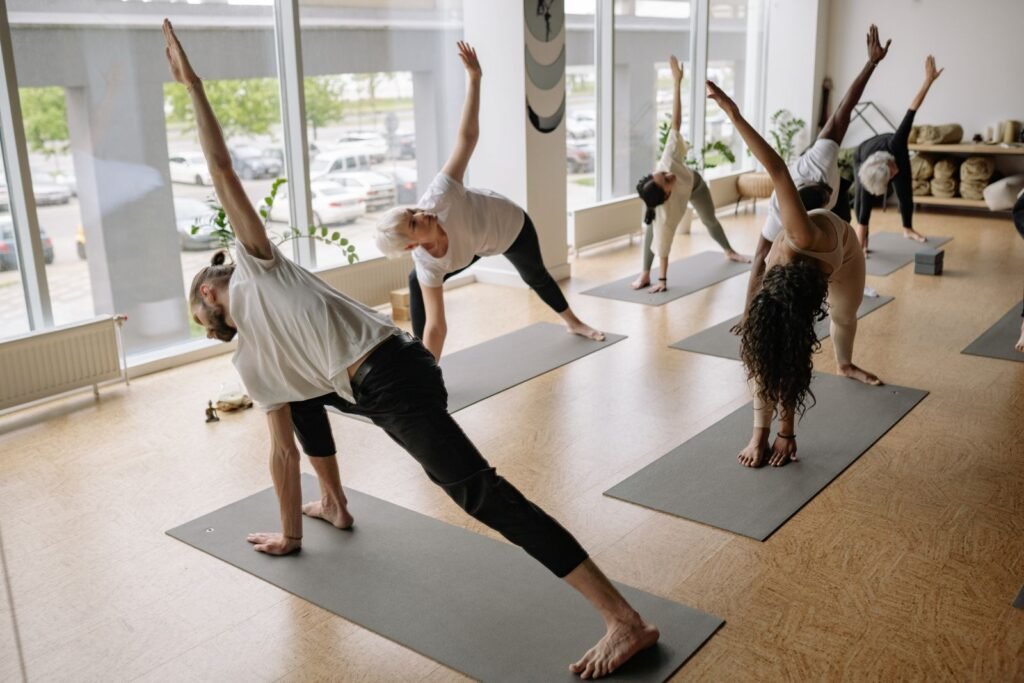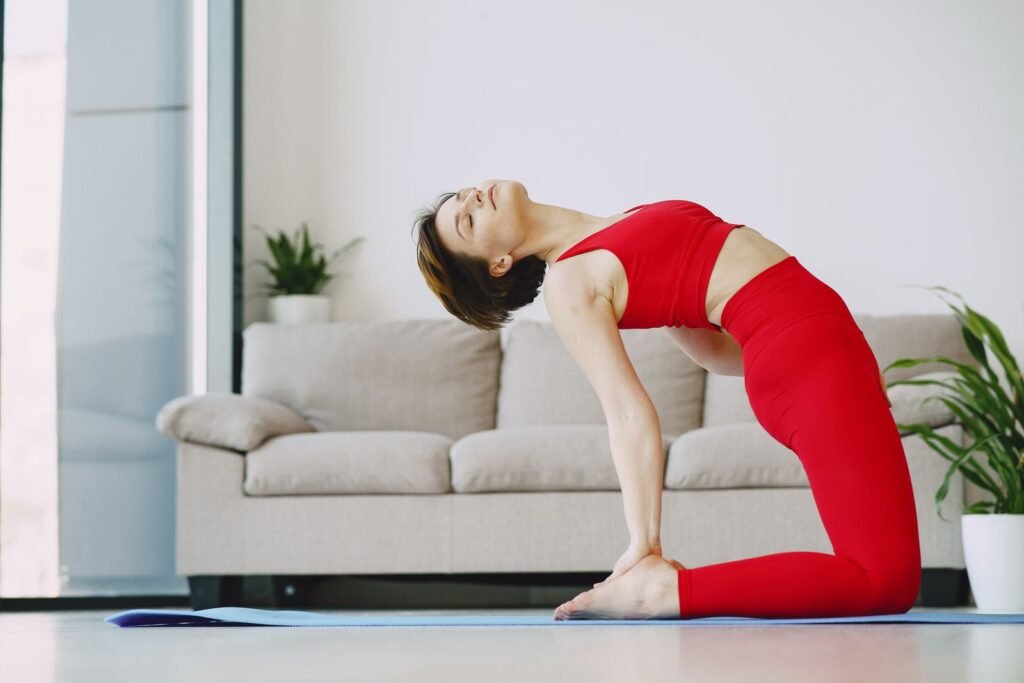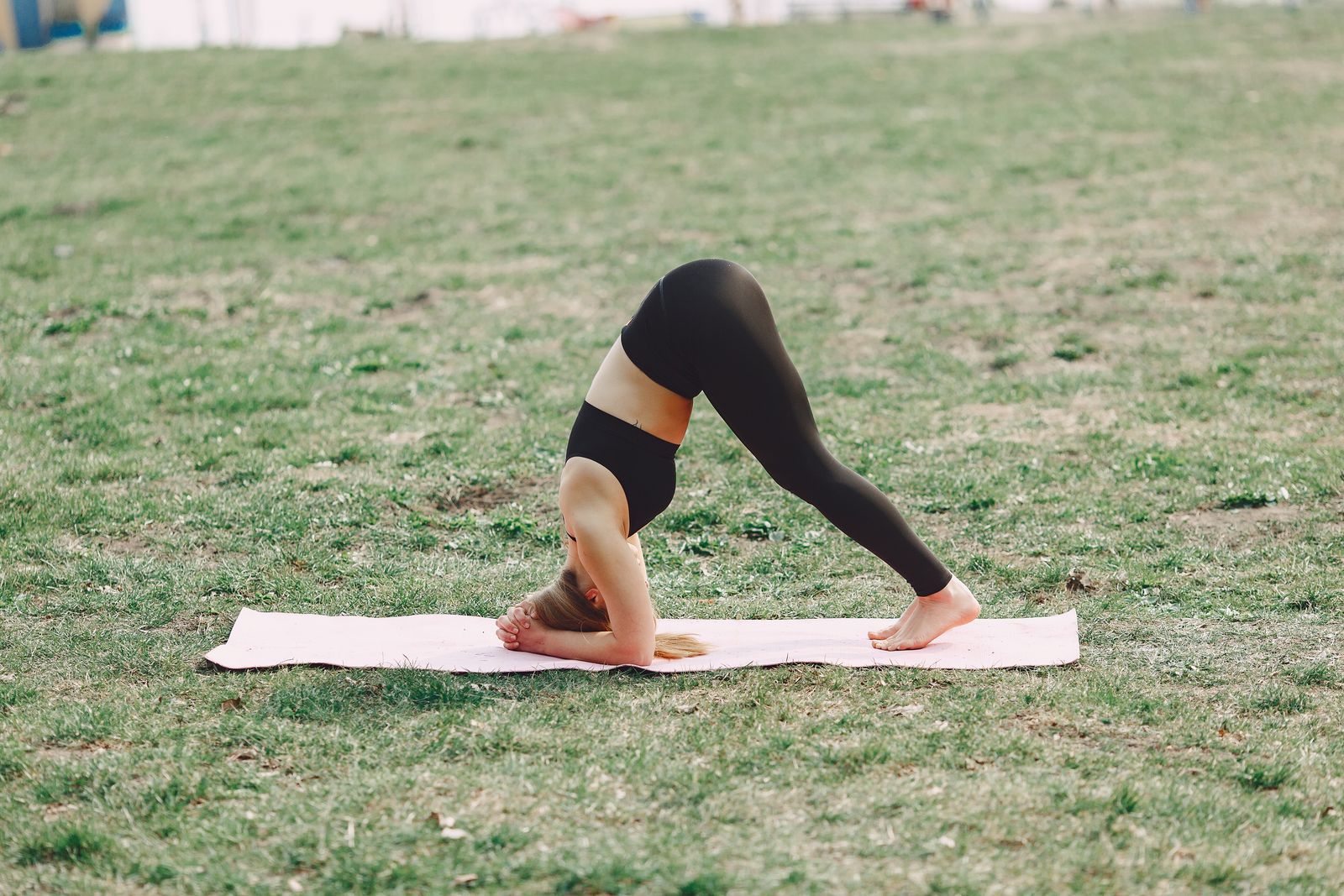
Yoga works well both before and after a workout, but the two placements serve different goals. Doing yoga before a workout should be short, dynamic, and warm-up focused — think five to ten minutes of sun salutations or flowing stretches that raise your heart rate and prime your joints for movement. Doing yoga after a workout should be slower and longer-held, using restorative or yin-style poses to cool the body down, release tight fascia, and kick-start recovery while your muscles are still warm. Neither choice is objectively “better.” The right answer depends on whether you need mobility and activation going in, or release and recovery coming out.
Why Timing Changes What Yoga Does for Your Body
Yoga is not one fixed thing — a slow yin class and a fast vinyasa flow ask completely different things of your muscles and nervous system. When you place a short, dynamic yoga sequence before a workout, you’re using it as an active warm-up: raising core temperature, lubricating joints with synovial fluid, and waking up the neuromuscular pathways you’re about to load. When you place a longer, gentler sequence after a workout, you’re using yoga as a cooldown and recovery tool: lowering heart rate gradually, working deeper into tissues that are already warm and pliable, and shifting your nervous system out of a sympathetic “fight or flight” state into a parasympathetic “rest and digest” one. Understanding this distinction matters more than memorizing a rule, because it lets you choose the right style for the right moment instead of doing the same routine regardless of purpose.
Should You Do Yoga Before a Workout?
Yes, if you keep it short and dynamic. A five- to ten-minute sequence of sun salutations, cat-cow, hip circles, and gentle lunges warms connective tissue, increases blood flow to the muscles you’re about to use, and can reduce injury risk compared to jumping straight into heavy lifting or a sprint session. This is especially useful before running, weight training, or any activity that demands a large range of motion at the hips and shoulders. The key mistake is overdoing it: a 45-minute vinyasa class before leg day will pre-fatigue your muscles and can actually hurt your performance and form during the main workout. Keep pre-workout yoga brief, dynamic, and focused on mobility rather than strength or deep stretching.
Should You Do Yoga After a Workout?
For most people, yes — and this is where yoga tends to deliver the most noticeable benefit. After strength training, running, or HIIT, your muscles are warm, your heart rate is elevated, and your nervous system is still in an activated state. A 15- to 30-minute session of slower-paced restorative yoga or yin yoga uses that warmth to work deeper into connective tissue without the injury risk of stretching cold muscles. Longer-held poses (often 1 to 5 minutes) target the fascia and joints rather than just the muscle belly, which is why post-workout yoga is often described as more effective for long-term flexibility gains than pre-workout stretching alone.
What Poses Work Best Before a Workout?
Pre-workout yoga should stay dynamic — moving in and out of poses rather than holding them for long periods, since static stretching cold muscles can temporarily reduce power output. Good choices include:
- Cat-Cow — mobilizes the spine and warms up the core
- Sun Salutation A (Surya Namaskar) — a full-body dynamic warm-up covering shoulders, hamstrings, and hips
- Low Lunge with a twist — opens the hip flexors, which are often the tightest area before running or lower-body training
- Downward-Facing Dog pulsing gently — lengthens the calves and hamstrings dynamically
- Standing Forward Fold with slow rolls up — increases blood flow to the posterior chain without a long static hold
Five to eight rounds of movement through these shapes, done briskly, is usually enough to raise body temperature and prepare joints without draining energy you need for the workout itself.
What Poses Work Best After a Workout?
Post-workout yoga benefits from the opposite approach: slower movement, longer holds, and a focus on the muscle groups you just trained. Useful poses include:
- Pigeon Pose — deep hip opener, especially valuable after running or leg day
- Reclined Twist — releases tension along the spine and obliques
- Child’s Pose — a resting shape that stretches the lower back and encourages slow breathing
- Legs-Up-The-Wall (Viparita Karani) — assists venous return and is widely used as a recovery pose after intense cardio
- Supine Butterfly — gently opens the hips and inner thighs while the body cools down
Holding each of these for one to three minutes, with slow diaphragmatic breathing, is a common structure in restorative and yoga nidra-style cooldowns.
Does Yoga Timing Depend on the Type of Workout?
Yes. The nature of your main workout should influence whether pre- or post-workout yoga matters more.
- Strength training: A brief dynamic warm-up before helps activate stabilizer muscles; a longer cooldown after helps release the muscle groups you just loaded heavily.
- Running or cycling: Dynamic mobility before reduces stiffness in the hip flexors and calves; static, longer-held stretching after is generally considered more effective for flexibility than pre-run stretching, since cold-muscle static stretching can temporarily reduce force output.
- HIIT or circuit training: A short warm-up flow prepares the joints for fast, multi-directional movement; a slower cooldown afterward helps bring heart rate down gradually rather than stopping abruptly.
- Swimming: Shoulder-focused dynamic mobility before, and a gentle spinal and shoulder-opening sequence after.
If you’re deciding between the two styles more broadly, our guide on yoga vs gym training looks at how the two forms of exercise complement each other across a full week, not just within a single session.
Can You Do Yoga on the Same Day as a Full Workout?
Yes, and for most people this is the most practical approach — pairing a short warm-up flow before and a short cooldown flow after the same training session, rather than treating yoga as a separate hour-long class. This “bookend” method takes as little as 15 minutes total and lets you get both the activation benefits and the recovery benefits without needing a dedicated yoga day. If time is tight, prioritize the post-workout portion: cooling down properly has a stronger link to reduced next-day soreness and better long-term mobility than skipping the warm-up.
Is It Better to Drink Water Before or After Yoga?
Both matter, but timing changes what the water does for you. Drinking roughly one glass (around 200-250ml) of water 20 to 30 minutes before a yoga session helps ensure you’re not starting dehydrated, without leaving excess fluid sitting in your stomach during poses that compress the abdomen, like twists or forward folds. During practice, most instructors recommend sipping only if genuinely thirsty rather than drinking on a schedule, since a full stomach of water can feel uncomfortable in inversions or deep folds. After yoga — and especially after a hotter, more dynamic class — rehydrating fully is important, since you lose fluid through sweat even in a slower-paced session. For hot yoga specifically, spreading hydration across the day beforehand tends to work better than a large amount of water immediately before class.
How Much Water Should You Drink Around a Yoga Session?
There’s no single number that fits everyone, since fluid needs depend on body size, room temperature, and practice intensity, but a few general reference points are commonly used:
- 30 minutes before: around one glass (200-250ml) of water
- During a standard-temperature class: small sips only if thirsty, particularly in stiller poses rather than mid-flow
- During hot yoga: more frequent small sips are reasonable given the higher sweat rate
- After class: rehydrate steadily over the following hour rather than drinking a large volume all at once
Warm or room-temperature water is often preferred over ice-cold water around yoga practice, since very cold water can feel jarring on a system that’s trying to stay calm and regulated — though this is more a matter of comfort and tradition than a strict physiological rule.
What Happens If You Drink Water Right Before a Yoga Class?
A large volume of water right before class can leave you with a heavy, sloshy feeling during forward folds, twists, and inversions, where the torso is compressed or turned upside down. This is why most teachers suggest finishing your pre-class glass of water at least 15 to 20 minutes before stepping onto the mat, giving your body time to begin absorbing it rather than having it sit in the stomach. If you arrive at class thirsty and haven’t had time to hydrate beforehand, a small sip is fine — it’s a large volume, not water itself, that tends to cause discomfort during practice.
How Does Yoga Timing Fit Into a Weekly Routine?
Beyond a single session, think about where yoga sits across your whole week. Some people do dedicated yoga days with no other training, treating it as their main practice rather than an add-on — this is common with vinyasa or power yoga styles that provide a full workout on their own. Others use yoga purely as bookends to strength or cardio days, as described above. A third pattern is reserving longer, slower yoga sessions — 45 to 60 minutes of hatha or restorative practice — for rest days, when the goal is recovery rather than warm-up or cooldown. Our article on the best time to do yoga covers how time of day interacts with these same goals, and morning yoga looks specifically at starting the day with practice rather than pairing it with another workout.

Does Doing Yoga Before or After a Workout Change Your Results Over Time?
Both placements support different long-term outcomes rather than one being universally superior. Consistently warming up with dynamic yoga before training is associated with better joint mobility and potentially lower injury rates over months of training, since you’re regularly moving joints through fuller ranges before loading them. Consistently cooling down with restorative yoga after training is more closely linked to flexibility gains and reduced accumulated stiffness, because you’re stretching tissue that’s already warm and because longer holds target fascia more effectively than brief dynamic movement. If your primary goal is injury prevention and performance, prioritize the pre-workout warm-up. If your primary goal is long-term flexibility and recovery, prioritize the post-workout cooldown. Many practitioners eventually do both, once it becomes a sustainable part of their routine.
Is Yoga Enough on Its Own, or Should It Be Paired With Other Exercise?
This depends on your fitness goals. Yoga builds strength, balance, flexibility, and cardiovascular benefit on its own, particularly in more dynamic styles like vinyasa or power yoga, but it doesn’t fully replace dedicated strength training for building maximal muscle or bone density, nor does it replace high-intensity cardio for certain endurance goals. Our comparison of yoga vs. general exercise breaks down where yoga overlaps with traditional workouts and where it doesn’t. For most people, the most effective approach combines yoga with other training — either as a warm-up and cooldown bookending strength or cardio sessions, or as a separate practice on alternate days, depending on schedule and goals.
Common Mistakes People Make With Yoga Timing
A few patterns show up repeatedly among people trying to fit yoga around other workouts:
- Doing a full-length yoga class immediately before heavy lifting, which can pre-fatigue muscles and reduce performance on the main workout.
- Skipping the cooldown entirely, which misses one of the more reliable benefits of post-workout yoga — the gradual return to a resting heart rate and reduced next-day stiffness.
- Static stretching cold muscles before a workout, which can temporarily reduce power output; save long static holds for after the workout when muscles are warm.
- Drinking a large volume of water immediately before class, leading to discomfort in folds and twists.
- Treating all yoga as interchangeable, rather than matching the style — dynamic vs. restorative — to whether it’s being used as a warm-up or a cooldown.
Questions People Ask About Yoga Before or After a Workout
Is it better to do yoga before or after cardio?
A short, dynamic warm-up before cardio helps loosen the hips and calves and can reduce injury risk. A longer, slower cooldown after cardio is generally more effective for improving flexibility and lowering heart rate gradually, since your muscles are warm and better able to lengthen safely.
Can yoga replace a warm-up before weightlifting?
Yes, a five- to ten-minute dynamic yoga flow covering the spine, hips, and shoulders can serve as an effective warm-up before weightlifting. Keep it brief and movement-based rather than static, since long static stretching before lifting can temporarily reduce strength output in the muscles you’re about to train.
How long should I wait to eat or drink after yoga?
Most people can drink water immediately after yoga, since rehydrating is beneficial rather than risky. For a full meal, waiting 30 to 60 minutes is a common guideline, giving the body time to shift out of the calmer, more parasympathetic state that yoga tends to promote before digesting a larger meal.
Does drinking water during yoga break your practice?
Drinking water during a calmer yoga class isn’t harmful, but many teachers suggest sipping only if genuinely thirsty and doing so during a stiller moment rather than mid-flow, since a full stomach can feel uncomfortable in twists and forward folds. In hot yoga, more frequent sipping is reasonable given the higher sweat rate.
Should beginners do yoga before or after their workout?
Beginners often benefit most from starting with a short pre-workout warm-up flow, since it’s easier to learn a handful of dynamic poses than a full restorative sequence. As comfort with the poses grows, adding a post-workout cooldown is a natural next step and tends to have a noticeable effect on next-day soreness.
What’s the ideal length for pre-workout vs. post-workout yoga?
Pre-workout yoga works well in short doses — around 5 to 10 minutes is usually enough to raise body temperature and mobilize joints without draining energy. Post-workout yoga can be longer, often 15 to 30 minutes, since the goal is deeper release and a gradual return to a resting state rather than activation.
Try This for Yourself
Reading about pre- and post-workout yoga is useful, but the real difference shows up on the mat, with guided pacing that matches your actual goals for that session. If you want structured routines for warming up before training or cooling down afterward, explore FitStrot’s online yoga classes, where live instructors can tailor dynamic or restorative sequences to fit around your existing workout schedule.
Related reading: Morning Yoga: Building a Sustainable Practice, Yoga vs. Gym: Which Should You Choose?, Best Time to Do Yoga, Yoga vs. Exercise: What’s the Difference?, and FitStrot’s Online Yoga Classes.