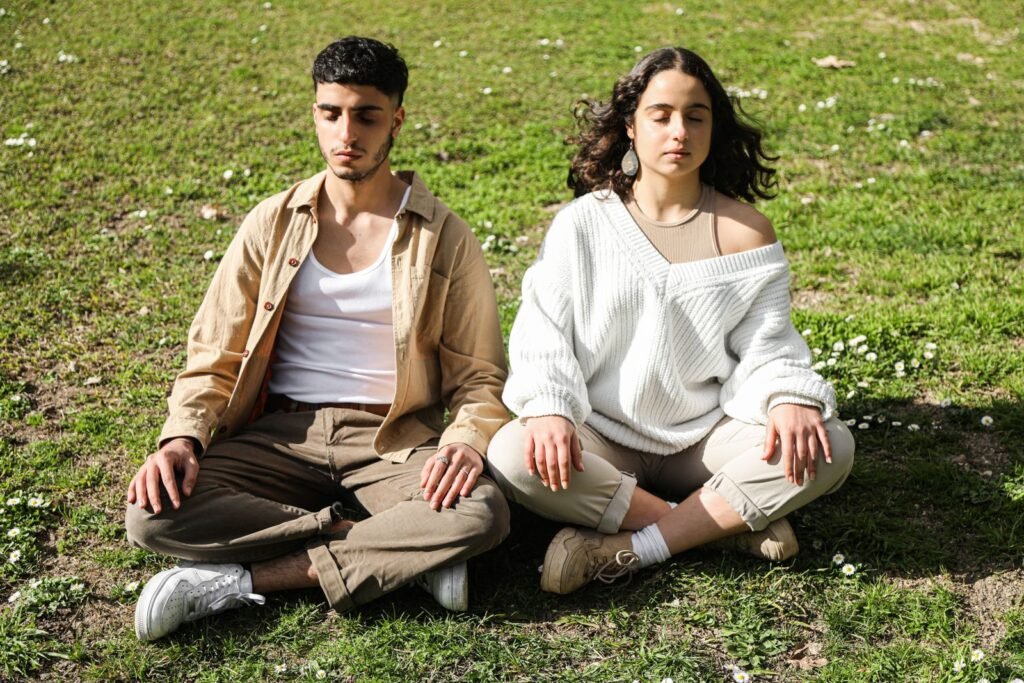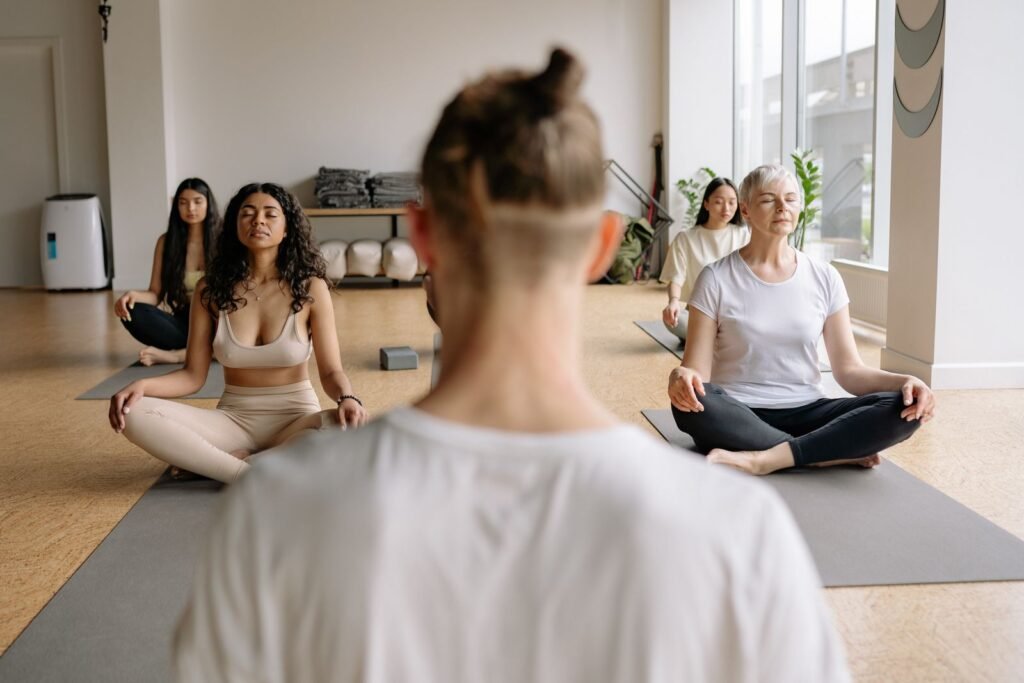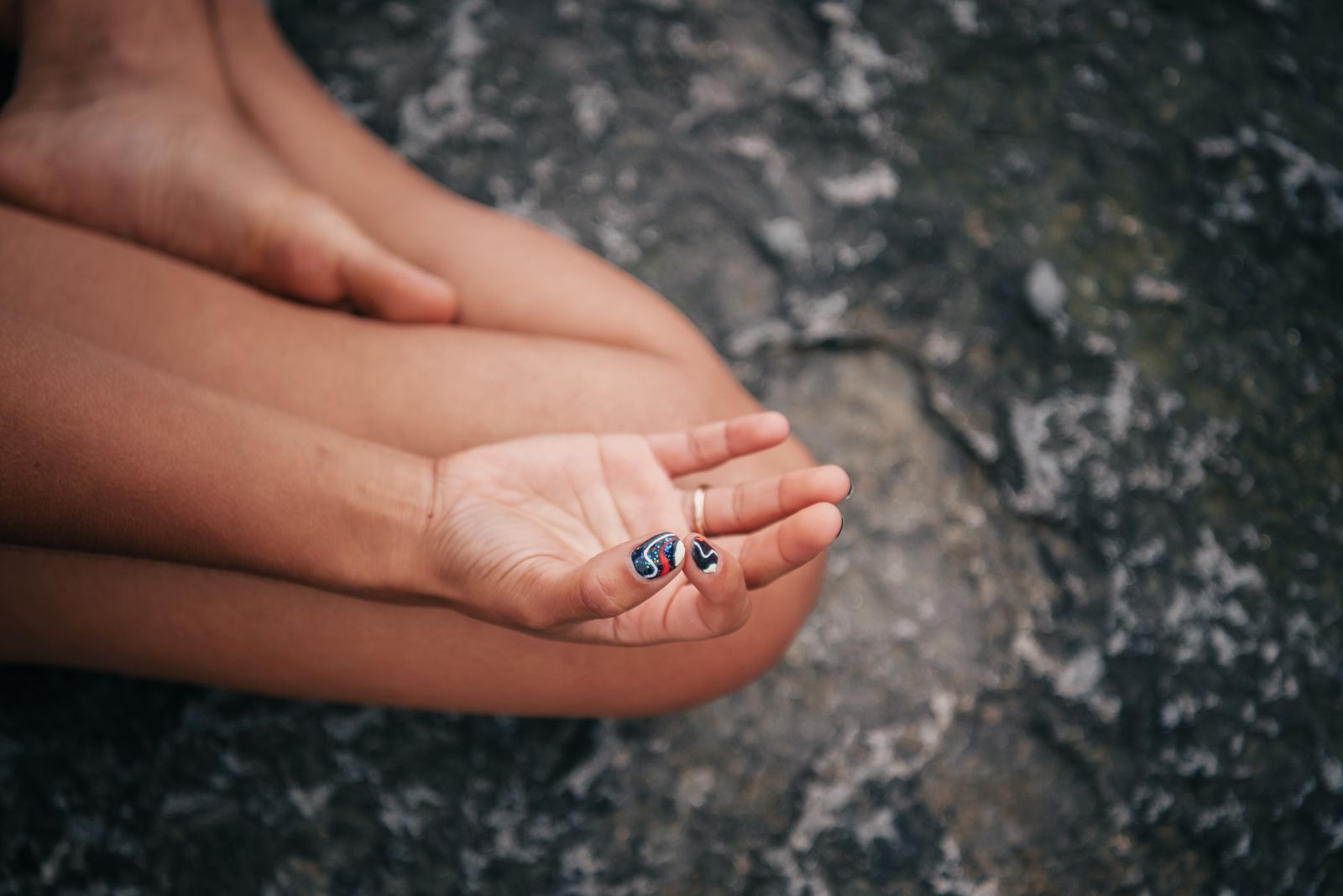
Gyan Mudra is a simple hand gesture where the tip of the index finger touches the tip of the thumb, while the remaining three fingers stay relaxed and extended. Practiced widely in yoga and meditation, it is traditionally associated with knowledge, focus, and calm, and is commonly used during pranayama and seated meditation to help settle a wandering mind. You can hold it with either hand, resting on the knee with the palm facing up, for anywhere from a few minutes to 30-40 minutes at a time.
What Is Gyan Mudra?
Gyan Mudra, also spelled Jnana Mudra, gets its name from the Sanskrit word “gyan” or “jnana,” meaning knowledge or wisdom, combined with “mudra,” meaning seal or gesture. It is one of the most recognizable hand positions in the entire mudra system, often the first one taught to beginners because it is easy to hold and easy to remember. In this gesture, the tip of the index finger (representing individual consciousness) meets the tip of the thumb (representing universal consciousness), symbolizing the union of the self with a larger awareness.
This mudra sits within a broader family of yogic hand seals, alongside gestures like Yoga Mudra and Vayu Mudra, each believed to influence a different quality of energy or mental state. If you’re new to the topic, our overview of mudras and their benefits is a useful starting point before working through individual gestures like this one.
How Do You Perform Gyan Mudra?
The physical technique is straightforward, which is part of why it’s such a popular entry point into mudra practice. Follow these steps:
- Sit in a comfortable seated posture such as Sukhasana (easy pose), Padmasana (lotus), or simply upright in a chair with your spine straight.
- Rest your hands on your knees or thighs with the palms facing upward.
- Bring the tip of your index finger to touch the tip of your thumb gently, without pressing hard.
- Keep your middle, ring, and little fingers extended and relaxed, not clenched.
- Close your eyes, relax your shoulders, and breathe slowly through the nose.
You can perform this mudra with one hand or both hands simultaneously. There is no strict rule requiring both, though most teachers recommend using both hands during seated meditation for symmetry and ease of focus.
How Long Should You Hold Gyan Mudra?
Traditional guidance suggests holding Gyan Mudra for at least 15 to 20 minutes to notice a mental shift, though even a few minutes during a short breathing break can be calming. Some practitioners aim for a cumulative 30 to 45 minutes a day, split across two or three sessions rather than one long sitting. If you’re combining it with formal pranayama practice, it’s common to hold the mudra for the entire duration of the breathing exercise, whether that’s 5 minutes or 30. As with most yogic practices, consistency across weeks matters more than the length of any single session.
What Are the Benefits of Gyan Mudra?
Gyan Mudra is one of the most widely practiced hand gestures in yoga because it’s linked to a broad range of claimed mental and physical benefits, most of which come from traditional yogic understanding rather than controlled clinical trials. It’s worth approaching these benefits as commonly reported experiences within the yoga tradition, not as medically proven outcomes.
- Improved focus and concentration: Many practitioners use it before study, work, or meditation sessions specifically to quiet mental chatter.
- Reduced stress and anxiety: The simple, repetitive physical anchor of finger contact is often described as grounding during moments of overwhelm.
- Support for meditation practice: Holding a mudra gives the hands a job, which can make it easier to keep the rest of the body still during longer sits.
- A sense of calm before sleep: Some people use it as part of a bedtime wind-down routine alongside slow breathing.
- A feeling of groundedness: Practitioners often describe it as a way to feel more present and less scattered during a busy day.
If your main goal is stress management specifically, it can help to pair this mudra with breath-focused practice, similar to what’s covered in guides on pranayama for beginners and online yoga for stress relief.
What Does Gyan Mudra Mean in Yogic Philosophy?
In classical yogic and tantric thought, the five fingers are each associated with one of the five elements: the thumb with fire, the index finger with air, the middle finger with space or ether, the ring finger with earth, and the little finger with water. When the index finger (air) touches the thumb (fire), it is said to represent a balancing of these elemental energies, specifically calming excess air element, which is traditionally linked to overthinking, restlessness, and anxious energy in the mind. This is one reason the gesture is so closely tied to mental clarity and focus in yogic texts, even though this elemental framework is a philosophical model rather than a scientifically verified mechanism.
This symbolic idea of the individual soul (the index finger) meeting the universal consciousness (the thumb) also connects Gyan Mudra to deeper concepts explored in yoga philosophy, where physical gestures are often treated as external expressions of an internal, spiritual intention.
When Should You Practice Gyan Mudra?
Gyan Mudra can be practiced at almost any time of day, but certain windows are traditionally favored:
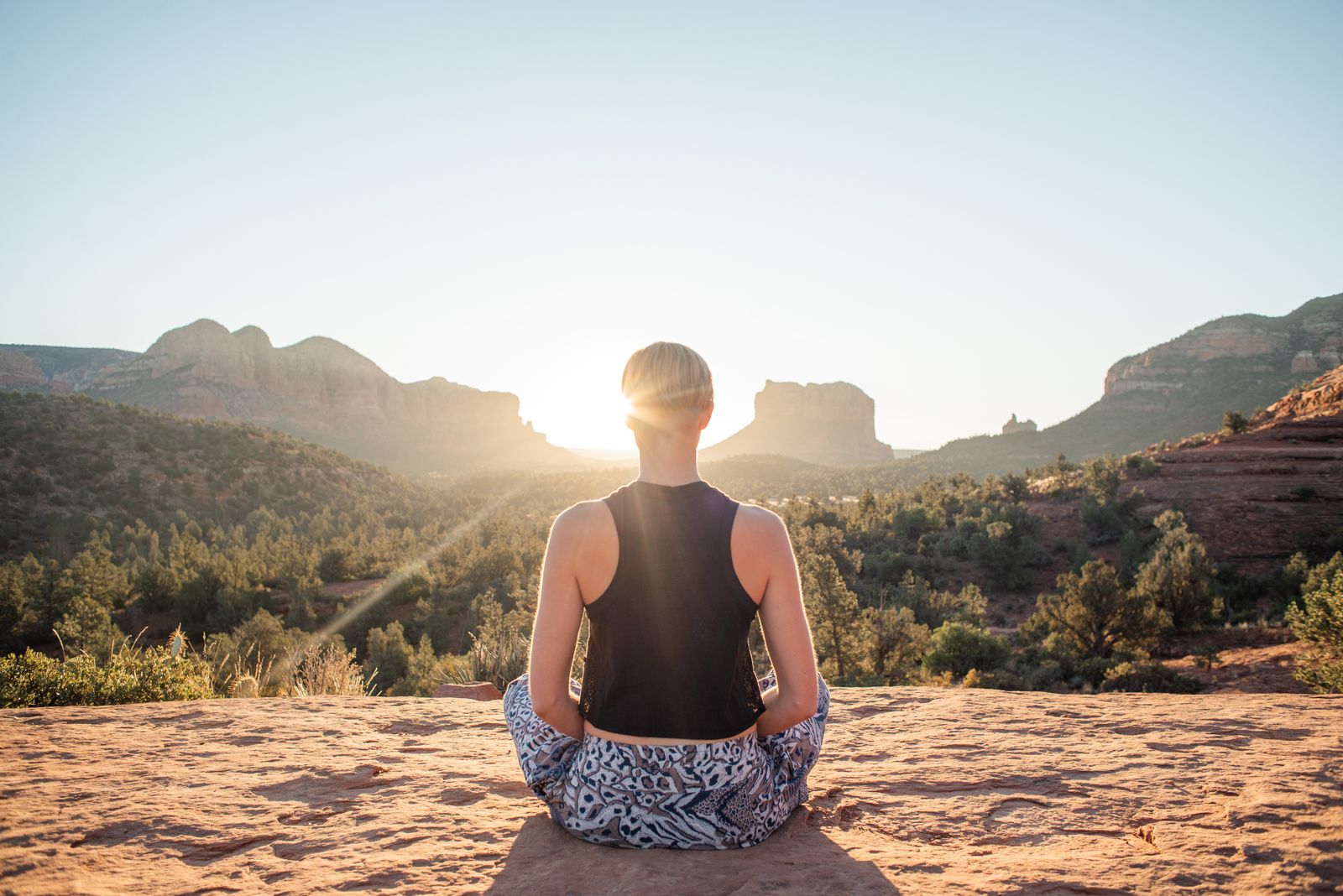
- Early morning meditation: Many practitioners prefer the quiet hours around sunrise, when the mind is naturally less cluttered.
- Before studying or focused work: A few minutes of this mudra combined with slow breathing is sometimes used as a pre-focus ritual by students.
- During formal pranayama sessions: It pairs naturally with practices like Anulom Vilom or simple diaphragmatic breathing.
- Before sleep: A short session can be part of winding down, particularly if racing thoughts are keeping you awake.
There’s no single “correct” time. The most effective time is whichever slot you can realistically make consistent, since regularity tends to matter more than timing for building any meditative habit.
Which Hand Should You Use for Gyan Mudra?
Most teachings recommend using both hands simultaneously during seated meditation, one resting on each knee. However, if you’re multitasking, for example holding a mudra briefly at a desk, using just one hand is also considered acceptable. There is no meaningful difference attributed to using the left versus the right hand specifically; the symbolism relates to the gesture itself rather than which hand performs it.
What Mistakes Do Beginners Make With Gyan Mudra?
A few common errors can reduce the comfort or perceived effectiveness of the practice:
- Pressing too hard: The fingertip contact should be light, almost effortless. Excessive pressure creates tension rather than relaxation.
- Clenching the other three fingers: These fingers should stay soft and naturally extended, not rigid or curled tightly.
- Holding tension in the shoulders and wrists: Hands resting on the knees should feel supported, not strained.
- Expecting instant results: Like most meditative tools, benefits are usually described as cumulative with regular practice rather than immediate.
- Ignoring the breath: The hand position alone does little without paired slow, conscious breathing, since the breath is what actually engages the nervous system.
How Does Gyan Mudra Compare to Other Mudras?
Gyan Mudra is often the first mudra people learn, but it’s one of many, and each is generally associated with a different intention or elemental balance. For example, Vayu Mudra is used to help balance excess air element in the body, often for joint discomfort or bloating, and involves tucking the index finger under the thumb rather than touching tip to tip. Prithvi Mudra connects the ring finger to the thumb and is linked to grounding and the earth element, while Prana Mudra joins the ring and little fingers to the thumb and is associated with vitality. Compared to these, Gyan Mudra is generally considered the most calming and mind-focused of the group, which is why it’s the default choice for meditation and study.
Yoga Mudra, despite the similar name, is a different practice entirely, a full-body forward-folding posture rather than a hand gesture, and shouldn’t be confused with the finger seal discussed here.
Can Gyan Mudra Help With Anxiety and Sleep?
Many people turn to Gyan Mudra specifically during anxious moments or before bed, largely because the physical act of forming the gesture gives the mind something simple and repetitive to focus on, similar to how counting breaths works as an anchor. Combined with slow nasal breathing, this can support the body’s relaxation response. That said, it should be treated as a complementary calming tool alongside other evidence-supported practices, such as consistent sleep schedules or professional support, rather than a standalone treatment for clinical anxiety or insomnia. If stress or sleep difficulty is persistent or severe, pairing this mudra with a structured routine like the one in our guide to online yoga for stress relief tends to be more effective than the mudra in isolation.
Is There Scientific Research on Gyan Mudra?
Most of what’s written about Gyan Mudra’s specific mental and physical effects comes from traditional yogic texts and centuries of practitioner experience rather than large-scale clinical trials isolating the hand gesture itself. Where research does exist on related practices, it tends to focus on the broader combination of meditation and controlled breathing rather than the finger position alone, making it difficult to separate the specific contribution of the mudra from the seated stillness and breathing that usually accompany it. It’s fair to describe Gyan Mudra’s calming effects as widely reported by practitioners and consistent with what’s known about focused, ritualized movement supporting mindfulness, while being cautious about overstating it as a proven medical intervention.
Who Should Be Cautious With Gyan Mudra?
Gyan Mudra is a gentle, low-risk practice suitable for almost everyone, including beginners, seniors, and those recovering from illness, since it involves no strain or physical exertion. There are no major contraindications specific to this mudra. The main consideration is for people with joint conditions like arthritis in the fingers, who may find the light fingertip contact briefly uncomfortable; in that case, simply resting the fingers near each other without full contact is a reasonable adaptation. As with any meditative practice, if you have a diagnosed mental health condition, this mudra should support, not replace, care from a qualified professional.
How Does Gyan Mudra Fit Into a Broader Yoga Practice?
Gyan Mudra rarely stands alone in a well-rounded practice. It’s typically layered onto an existing meditation or pranayama routine rather than treated as a separate workout. Many practitioners hold it during seated warm-ups before a full asana sequence, during closing relaxation at the end of a class, or throughout a dedicated online yoga for mental wellness session. If you’re building a home practice from scratch, it pairs naturally with foundational breathing techniques covered in guides to pranayama for beginners and can be a helpful addition to a broader meditation for beginners routine.
Questions People Ask About Gyan Mudra
What does Gyan Mudra do to the brain?
Practitioners commonly describe Gyan Mudra as improving focus and mental clarity, and traditional yogic theory links it to calming excess mental activity through balancing the air element. There isn’t strong clinical research isolating the hand gesture’s specific effect on brain activity, so it’s best understood as a traditional focusing tool that pairs well with meditation rather than a scientifically mapped neurological intervention.
How many minutes should I do Gyan Mudra?
Traditional guidance suggests 15 to 45 minutes daily for noticeable effects, though this can be split into shorter sessions of 10 to 15 minutes each rather than done in one sitting. Even a few minutes during a breathing break is considered worthwhile; longer, consistent daily practice is generally recommended over occasional long sessions.
Can I do Gyan Mudra while lying down?
Yes, Gyan Mudra can be done lying down, particularly before sleep, though it’s most commonly taught in a seated meditation posture. The hand position itself doesn’t require sitting upright; what matters more is that your body is relaxed and your breathing is slow and steady, whichever position you choose.
Is Gyan Mudra the same as Chin Mudra?
They are closely related but not identical in every tradition. Both involve joining the thumb and index finger, but Gyan Mudra is typically performed with the palm facing upward, while Chin Mudra usually involves the palm facing downward. Some schools use the names interchangeably, so definitions can vary slightly depending on the lineage you’re studying.
Can beginners practice Gyan Mudra without a teacher?
Yes, Gyan Mudra is considered one of the safest and simplest mudras to self-teach, since it involves no complex movement or physical risk. That said, structured guidance helps with pairing it correctly to breathing and posture, which is where a guided class or instructor-led online session can add real value over trial and error.
Does Gyan Mudra help with memory and studying?
It’s commonly used by students before study sessions, based on the traditional association between this mudra and mental clarity or knowledge. While there’s no robust clinical evidence proving a direct memory-boosting effect from the hand position alone, the accompanying stillness and focused breathing can plausibly support the kind of calm attention that makes studying more effective.
Try This for Yourself
Reading about Gyan Mudra is useful, but the calming effect is something you actually feel once you build it into a real practice alongside guided breathing and meditation. If you’d like structured, instructor-led sessions that combine mudras, pranayama, and meditation into one consistent routine, explore FitStrot’s Online Yoga Classes and start practicing with expert guidance from home.
Related reading: Yoga Mudra, Mudras and Their Benefits, Vayu Mudra, Pranayama for Beginners, and Online Yoga Classes.