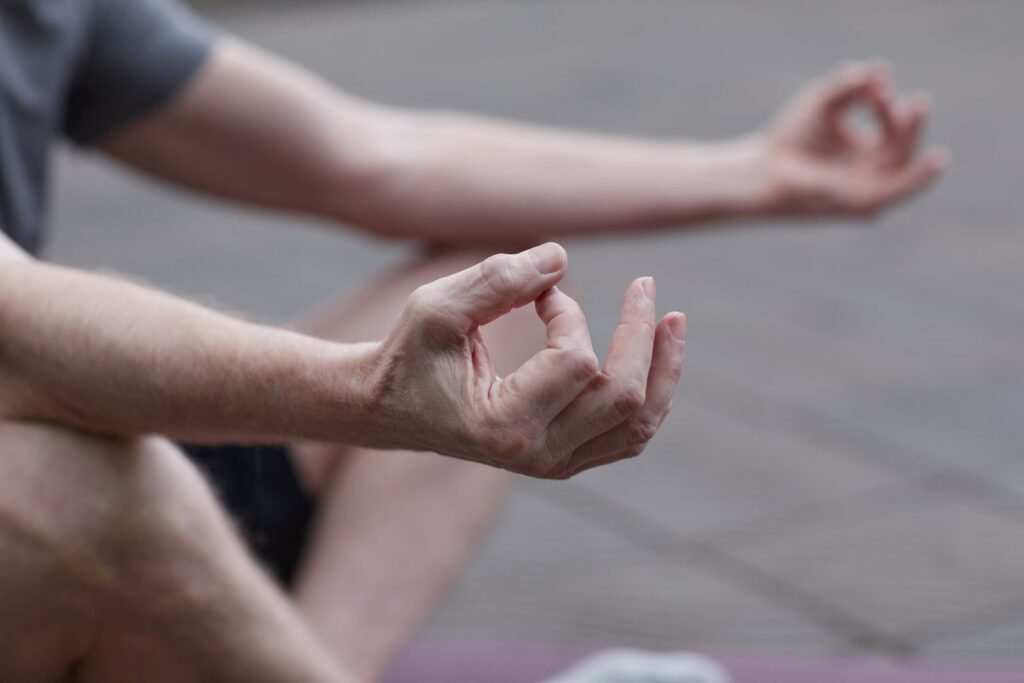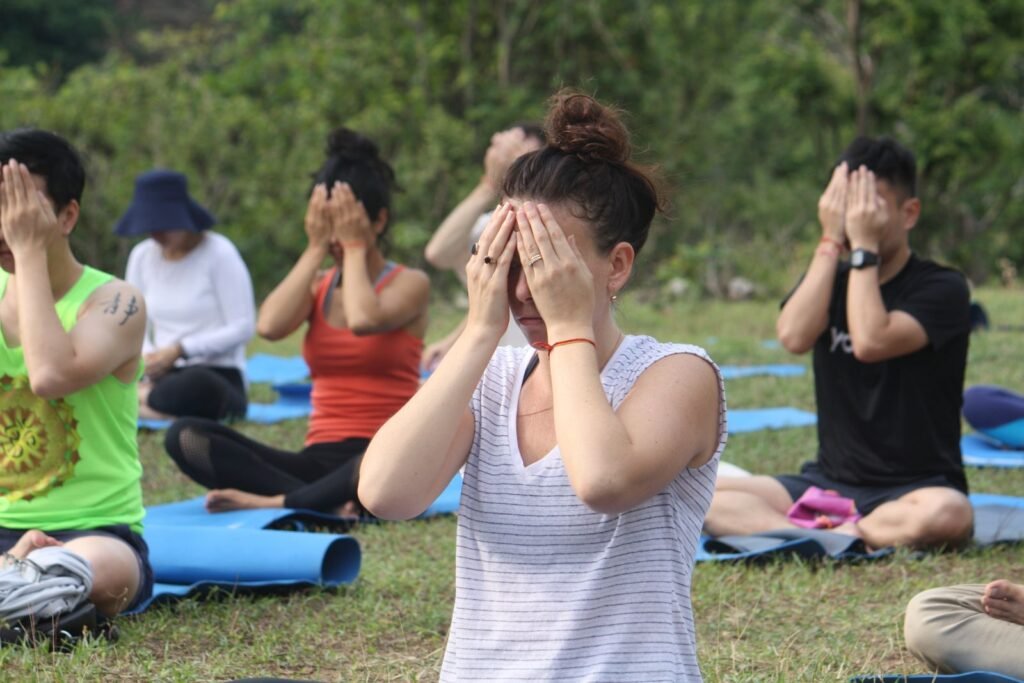
Vairagya is the Sanskrit term for detachment or dispassion — the practiced ability to relate to people, outcomes, and possessions without being controlled by craving or aversion. In yoga philosophy it is not coldness or withdrawal from life; it is the inner steadiness that comes from no longer needing things to go a certain way in order to feel okay. Alongside abhyasa (consistent practice), vairagya is described in Patanjali’s Yoga Sutras as one of the two pillars that stabilize the mind. Together they form the foundation for calming chitta vritti, the fluctuations of the mind that yoga exists to quiet.
What Does Vairagya Actually Mean?
The word breaks down from the Sanskrit roots “vi” (without or away from) and “raga” (color, attachment, or passion), giving a literal sense of “without color” or “colorless” — a mind no longer tinted by compulsive likes and dislikes. Practically, vairagya means observing your experiences, desires, and possessions clearly, without the automatic pull of “I must have this” or “I cannot bear that.” It is frequently translated as detachment, dispassion, or non-attachment, though none of these English words fully capture the nuance: vairagya is not apathy or emotional numbness, but a mature relationship with wanting itself. A person practicing vairagya can still enjoy a meal, a relationship, or a yoga class fully — they simply are not gripped by anxiety about losing it afterward.
Where Does Vairagya Come From in Yogic Texts?
Vairagya appears as a named concept in Patanjali’s Yoga Sutras, a foundational Sanskrit text on yoga philosophy commonly dated by scholars to somewhere between the 2nd century BCE and 4th century CE. In Sutra 1.12, Patanjali states that the fluctuations of the mind are stilled through abhyasa (practice) and vairagya (detachment) working together — practice supplies the effort and direction, while detachment prevents that effort from curdling into attachment to results. The concept is also central to the Bhagavad Gita, where Krishna repeatedly counsels Arjuna to act without clinging to the fruits of action, a teaching commonly summarized as “nishkama karma” (desireless action) and considered one of the clearest practical expressions of vairagya in Indian philosophical literature.
How Are Abhyasa and Vairagya Related?
Abhyasa and vairagya are traditionally taught as an inseparable pair, sometimes compared to two wings needed for the same bird to fly. Abhyasa is the sustained, uninterrupted effort applied over a long period of time — regular meditation, consistent asana practice, or steady ethical conduct. Vairagya is what keeps that effort from becoming another source of grasping. Without vairagya, practice can turn into a subtle form of striving — chasing a more flexible body, a calmer mind, or a spiritual “achievement” with the same anxious energy used to chase money or status. Without abhyasa, detachment can slide into passivity or avoidance, since dispassion without disciplined practice rarely produces real inner change. The two are meant to correct each other continuously.
What Are the Four Stages of Vairagya?
Classical yoga commentary describes vairagya as unfolding in progressive stages rather than arriving all at once. While different teachers phrase them slightly differently, they are commonly presented as a sequence of deepening detachment:
- Yatamana: The initial, effortful stage where a practitioner consciously tries to restrain the senses from chasing objects of desire, often through willpower alone.
- Vyatireka: A stage of discernment, where the practitioner starts noticing which particular attachments have weakened and which still have a strong pull, refining the effort with more precision.
- Ekendriya: The senses are largely subdued, though subtle mental attachment and rumination about objects can still arise even when the senses themselves are calm.
- Vashikara: The most mature stage, where there is no longer any real temptation toward sense objects; the mind rests in a settled, undisturbed clarity described in classical texts as mastery over craving itself.
Most practitioners spend years moving between the first two stages, and that is considered entirely normal — vairagya is described as a lifelong refinement rather than a switch that flips permanently.
Is Vairagya the Same as Giving Up Everything?
This is one of the most common misunderstandings of the concept. Vairagya is not a demand to renounce your job, relationships, or comforts, and it is not the same as monastic renunciation, though renunciate paths do draw heavily on it. The core distinction yogic teachers draw is between “para vairagya” (a rare, higher-order dispassion arising from direct spiritual insight) and the everyday, cultivated dispassion most practitioners work toward, which is about changing your relationship to attachment rather than eliminating the things you are attached to. You can own a home, love your family deeply, and pursue a career while practicing vairagya — the practice targets the anxious clinging and identity-fusion around these things, not the things themselves.
How Does Vairagya Relate to the Gunas?
In classical Samkhya-yoga philosophy, all of nature — including the mind — is described as composed of three qualities or gunas: sattva (clarity, balance), rajas (activity, restlessness), and tamas (inertia, dullness). Attachment and aversion are considered movements of rajas and tamas pulling the mind outward toward objects or downward into dullness and habit. Vairagya is closely associated with the cultivation of sattva, since a mind less agitated by craving naturally settles into greater clarity and steadiness. Many teachers explain that as vairagya deepens, a practitioner’s guna balance shifts noticeably: reactions slow down, decisions feel less urgent, and the nervous system has more room to rest in a sattvic state rather than swinging between rajasic overdrive and tamasic collapse.

How Does Vairagya Lead Toward Samadhi?
Patanjali’s eight-limbed path builds toward samadhi, the state of deep meditative absorption where the sense of a separate observer dissolves into the object of meditation. Vairagya is described as a necessary condition for reaching this state, because a mind still pulled by craving and aversion cannot sustain the unbroken concentration samadhi requires. Sutra 1.15 links vairagya directly to the mastery over craving for anything seen or heard about, and later sutras describe an even subtler form of dispassion toward the mind’s own contents — including toward spiritual experiences themselves. In this sense, vairagya is not just a supporting practice alongside meditation; it is part of the direct mechanism by which the mind becomes still enough for samadhi to arise.
What Does Vairagya Look Like in Daily Life?
Outside of formal meditation, vairagya shows up as a felt shift in how strongly outcomes grip you. A few common, practical markers practitioners describe include:
- Feeling less devastated by a canceled plan, a missed opportunity, or an unexpected setback, because your sense of okay-ness was never fully staked on that one outcome.
- Noticing a craving (for food, validation, a purchase, a person’s approval) and being able to observe it without immediately acting on it.
- Enjoying compliments and success without needing them repeated to feel stable, and receiving criticism without collapsing.
- Holding relationships with less possessiveness — caring deeply for people while allowing them their own path, choices, and changes.
- Practicing a physical discipline like vinyasa or Hatha yoga for its own sake, rather than being anxious about how quickly your body changes.
None of these markers require a dramatic lifestyle change; they are usually noticed gradually, as a side effect of consistent inner work rather than a goal pursued directly.
How Do You Cultivate Vairagya Through Yoga Practice?
Because vairagya is a subtle inner shift rather than a physical technique, it is usually cultivated indirectly through supporting practices rather than “tried” in isolation. A practical starting sequence many teachers recommend includes:
- Begin with breath awareness. A few minutes of watching the breath in pranayama builds the basic skill of observing an experience without immediately reacting to it.
- Practice asana without a fixed outcome. Approach a beginner yoga session focused on sensation and presence rather than achieving a “perfect” shape, using the mat as a low-stakes place to notice grasping.
- Sit with mild discomfort in meditation. Rather than shifting immediately when restlessness or an itch arises during meditation for beginners, pause and observe the urge to react before choosing whether to move.
- Journal on attachment patterns. A short daily note on what you clung to or resisted that day builds the self-awareness needed to recognize attachment as it happens, not just in hindsight.
- Study alongside svadhyaya. Reading classical texts such as the Yoga Sutras or the Bhagavad Gita, paired with self-reflection, reinforces the intellectual understanding that supports the felt experience of detachment.
Can Vairagya Help With Stress, Anxiety, and Burnout?
Because so much stress is generated by an anxious over-identification with outcomes — a specific promotion, a relationship going a certain way, a body looking a certain way — cultivating even a modest degree of vairagya can noticeably reduce the felt intensity of everyday pressure. Practitioners commonly report that separating their sense of self-worth from any single result makes setbacks feel like information rather than catastrophe. This is not a clinical treatment for diagnosed anxiety or depression, and anyone managing a mental health condition should work with a qualified professional, but as a daily mindset practice, vairagya pairs naturally with other calming tools like online yoga for stress relief and breath-based practices.
What Mistakes Do People Make When Practicing Vairagya?
The most common mistake is confusing vairagya with suppression — pushing feelings down and calling it detachment, rather than actually observing and releasing the grip a feeling has on you. A second common mistake is using vairagya as an excuse for disengagement, avoiding effort, relationships, or responsibility under the label of “not being attached,” which misreads the concept entirely; genuine vairagya is paired with full-hearted abhyasa, not laziness. A third mistake is treating vairagya as something to achieve quickly, which often produces frustration and a subtler attachment: attachment to becoming detached. Teachers commonly point out that noticing this loop with humor, rather than judgment, is itself a small act of vairagya.
How Is Vairagya Different From Aparigraha?
Aparigraha, one of the five yamas in Patanjali’s ethical code, is often translated as non-greed, non-hoarding, or non-attachment to possessions specifically. Vairagya is broader: it describes an overall inner orientation of dispassion toward outcomes, sensations, and experiences in general, not only material possessions. Aparigraha can be understood as one visible expression of vairagya applied to the specific domain of accumulating and holding onto things, while vairagya itself extends into relationships, achievements, self-image, and even attachment to one’s own spiritual progress. Many teachers describe aparigraha as an ethical guideline you practice, and vairagya as the deeper psychological ground that makes that guideline sustainable rather than forced.
How Does Vairagya Show Up in the Bhagavad Gita?
The Bhagavad Gita offers one of the most quoted expressions of vairagya in the teaching that a person should have a right to their actions but never to the fruits of those actions. Krishna’s counsel to Arjuna is not to withdraw from duty — Arjuna is explicitly told to fight the battle before him — but to perform that duty without being emotionally hijacked by whether the outcome favors him personally. This distinction is frequently cited as proof that vairagya was never meant to justify passivity or escape from responsibility; instead, it reframes engaged, committed action as compatible with, and even strengthened by, inner non-attachment to results.
Questions People Ask About Vairagya
What is the simplest definition of vairagya?
Vairagya means detachment or dispassion in Sanskrit, describing a mind no longer controlled by craving or aversion toward people, outcomes, or possessions. It is one of the two foundational principles named in Patanjali’s Yoga Sutras, working alongside abhyasa (consistent practice) to steady the mind.
Is vairagya the same as being emotionally numb?
No. Vairagya is not suppression or numbness; a person practicing it can still feel joy, love, and disappointment fully. The difference is that their sense of okay-ness no longer depends entirely on any single outcome, so emotions move through more freely instead of turning into anxious grasping or aversion.
Do I need to give up my possessions or relationships to practice vairagya?
No. Vairagya targets the anxious clinging around things, not the things themselves. You can keep your career, relationships, and possessions while practicing a healthier, less grasping relationship with them — genuine renunciation paths exist separately and are not required for everyday vairagya practice.
How long does it take to develop vairagya?
Classical texts describe vairagya unfolding across four progressive stages, and most practitioners spend years moving through the earlier stages. It is generally understood as a lifelong refinement supported by consistent practice (abhyasa) rather than something achieved quickly or permanently in a single effort.
How is vairagya different from aparigraha?
Aparigraha is one of the five yamas and specifically addresses non-greed and non-hoarding of possessions. Vairagya is the broader psychological ground of dispassion that extends beyond possessions into relationships, achievements, and self-image, making it the wider concept that aparigraha expresses in one specific domain.
Can practicing yoga poses alone build vairagya?
Physical practice supports vairagya but rarely builds it alone. Asana becomes a tool for cultivating detachment when it is practiced with attention to sensation rather than a fixed outcome; pairing physical practice with breathwork, meditation, and self-study tends to develop the quality more reliably than postures by themselves.
Try This for Yourself
Understanding vairagya intellectually is only the first step; the shift becomes real through consistent practice on and off the mat. If you’d like structured guidance connecting philosophy like vairagya to an actual movement and meditation practice, FitStrot’s certified instructors can help you build that connection session by session. Explore FitStrot’s online yoga classes and start practicing detachment with expert support.
Related reading: Samadhi: The Final Limb of Yoga | The Three Gunas in Yoga Philosophy | Chitta Vritti: Understanding the Fluctuations of the Mind | The Bhagavad Gita and Its Connection to Yoga | FitStrot Online Yoga Classes