Ishvara pranidhana is Sanskrit for “surrender to a higher power” or “devotion to the divine,” and it is the fifth and final niyama in Patanjali’s Yoga Sutras. In practice, it means loosening your grip on the need to control every outcome and instead offering your effort, your practice, and even your results to something greater than your individual ego — whether that is God, a higher consciousness, nature, or simply the flow of life itself. Traditionally considered the culminating niyama, ishvara pranidhana is often described as the fastest path to samadhi (the deepest state of yogic absorption), because it dissolves the very sense of separate self that keeps the mind restless.
What Does Ishvara Pranidhana Mean in Yoga?
The term breaks down from two Sanskrit roots: “Ishvara,” commonly translated as “supreme being,” “higher power,” or “the divine,” and “pranidhana,” meaning “surrender,” “dedication,” or “devoted attention.” Put together, ishvara pranidhana asks a practitioner to dedicate their actions and their practice to something beyond individual ego-driven striving. This does not require adherence to any particular religion. Patanjali’s Yoga Sutras were composed as a philosophical and psychological framework rather than a religious doctrine, and modern teachers commonly present ishvara pranidhana as compatible with theistic faith, a more abstract sense of universal consciousness, or a purely secular commitment to something larger than the self, such as community, nature, or purpose.
Where Does Ishvara Pranidhana Fit Among the Eight Limbs of Yoga?
Ishvara pranidhana is the fifth of the five niyamas, which together form the second of the eight limbs of yoga (Ashtanga, in the philosophical sense, not the physical Ashtanga Vinyasa style) described in Patanjali’s Yoga Sutras. The eight limbs are yama, niyama, asana, pranayama, pratyahara, dharana, dhyana, and samadhi. The niyamas are personal observances directed inward: saucha (cleanliness), santosha (contentment), tapas (disciplined effort), svadhyaya (self-study), and ishvara pranidhana (surrender to a higher power). Patanjali placed it last in this sequence, and many teachers read this ordering as intentional — cleanliness, contentment, discipline, and self-study each build a kind of readiness, and surrender is the culmination that lets a well-prepared practitioner finally let go of controlling the process altogether. It sits alongside the five yamas — ahimsa (non-violence), satya (truthfulness), asteya (non-stealing), brahmacharya (right use of energy), and aparigraha (non-attachment) — as one of the ten ethical and personal foundations that precede physical asana practice in the traditional sequence.
Where Does the Concept of Ishvara Pranidhana Come From?
Ishvara pranidhana appears explicitly in Patanjali’s Yoga Sutras, most notably in verses that describe devotion to Ishvara as a direct means to samadhi, alongside its listing among the niyamas in the second chapter. The concept of surrendering the fruits of one’s actions to a higher power is also a central theme of the Bhagavad Gita, one of the most influential texts in the broader philosophical tradition that yoga draws from, where the idea is closely tied to the practice of selfless action, or nishkama karma — acting fully while releasing attachment to the result. While the Yoga Sutras and the Gita are distinct texts with different emphases, both point toward the same underlying idea: that a mind fixated on controlling and claiming credit for every outcome stays agitated, while a mind that offers its efforts to something larger tends to settle.
Is Ishvara Pranidhana a Religious Practice?
This is one of the most common points of confusion for newer students, and it deserves a direct answer: ishvara pranidhana does not require belief in any specific deity or religious tradition. Patanjali’s own commentary describes Ishvara in fairly abstract terms — a particular kind of pure consciousness untouched by affliction, action, or the fruits of action — which is a philosophical description rather than a doctrinal one. Because of this, ishvara pranidhana has been interpreted compatibly across a wide range of belief systems. A practicing Hindu might direct their surrender toward a personal deity. A Christian or Muslim practitioner might connect the concept to their own understanding of God. Someone with no religious affiliation might interpret Ishvara as universal consciousness, nature, or simply “something larger than my individual ego.” Yoga teachers generally emphasize that the practice is about the quality of surrender itself — loosening the grip of ego-driven control — rather than about adopting a specific belief.
How Is Ishvara Pranidhana Different from Giving Up?
Surrender in the yogic sense is frequently misunderstood as passivity, resignation, or simply not trying. Teachers are careful to draw a clear line here: ishvara pranidhana asks you to give your full effort and then release your grip on the specific outcome, not to withhold effort altogether. This mirrors the Bhagavad Gita’s teaching on nishkama karma, where a person is encouraged to act with complete dedication while remaining unattached to whether the result matches their expectations. In practical terms, this might mean training consistently for a goal while accepting that the outcome isn’t entirely within your control, or showing up fully to a difficult conversation while releasing the need to control how the other person responds. The distinction is between disciplined, wholehearted action and anxious, white-knuckled attachment to a specific result.
How Do You Practice Ishvara Pranidhana on the Yoga Mat?
On the mat, ishvara pranidhana often shows up in the moments where effort meets acceptance. It can look like moving fully into a challenging pose during a vinyasa sequence and then accepting whatever depth or stability is actually available that day, rather than forcing a result to match an idealized image. Many practitioners connect it specifically to savasana (corpse pose), where the entire task is to stop directing the body and simply allow stillness — a physical rehearsal of surrender at the end of every class. It can also appear at the start of practice, in a brief dedication or intention-setting moment, where some teachers invite students to silently offer their practice to something beyond personal achievement before the first sun salutation. This same principle translates directly whether you’re on a studio floor or working through an online yoga class at home.
What Are Some Ishvara Pranidhana Yoga Poses?
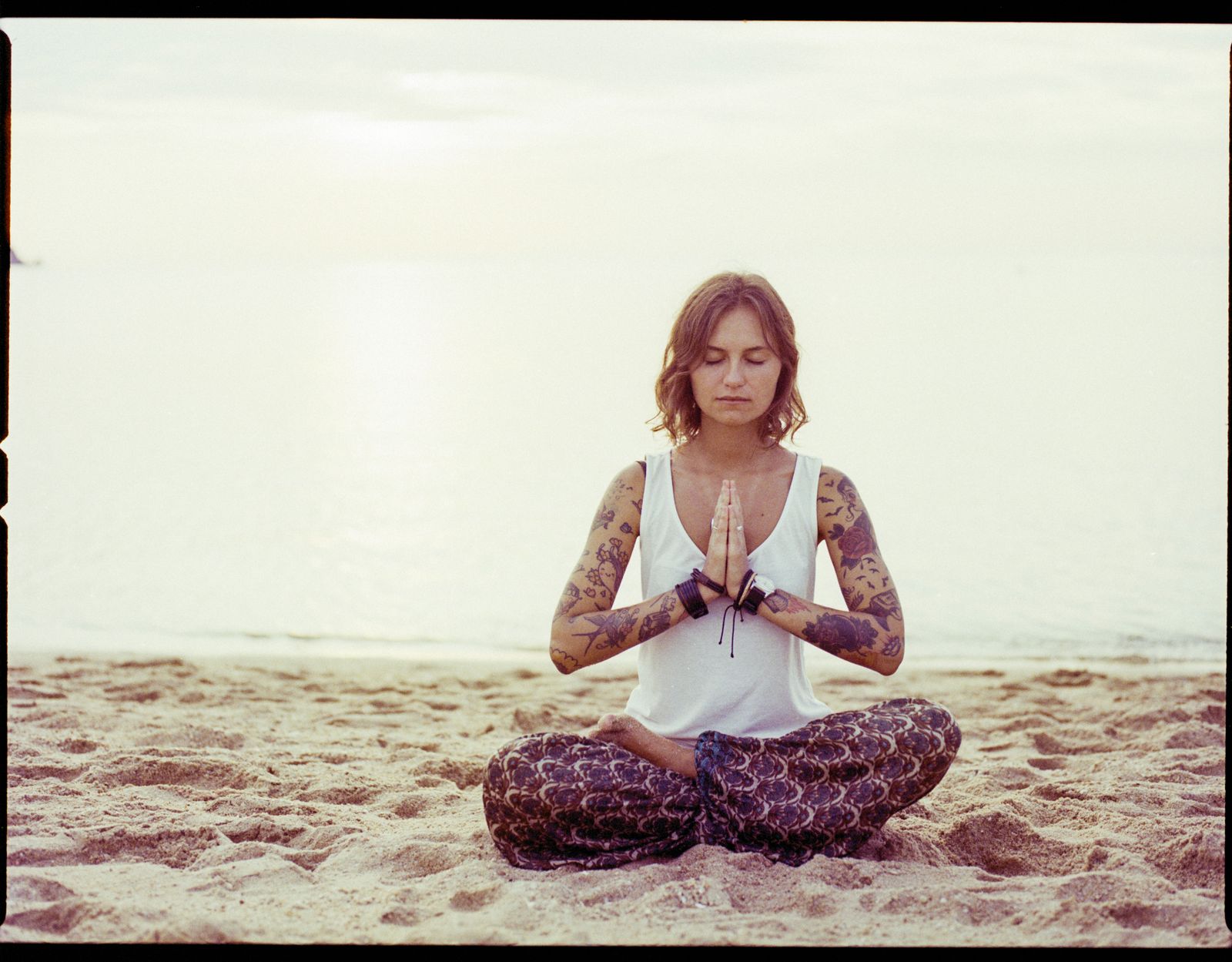
No single asana embodies ishvara pranidhana exclusively, but several poses are commonly used to cultivate the felt sense of surrender because they physically require releasing effort rather than generating it:
- Savasana (Corpse Pose): Total stillness at the close of practice, often described as the physical form of surrender — the body does nothing, and the mind is invited to do the same.
- Balasana (Child’s Pose): A folded, grounded shape that models handing over effort to the earth beneath you, frequently used as a resting point between more active sequences.
- Viparita Karani (Legs-Up-the-Wall): A restorative pose common in yin yoga that asks nothing of the muscles, reinforcing that stillness is a legitimate and complete part of practice.
- Supported Matsyasana (Fish Pose with props): An open-chested, heart-facing-up shape often described by teachers as a physical gesture of openness and offering.
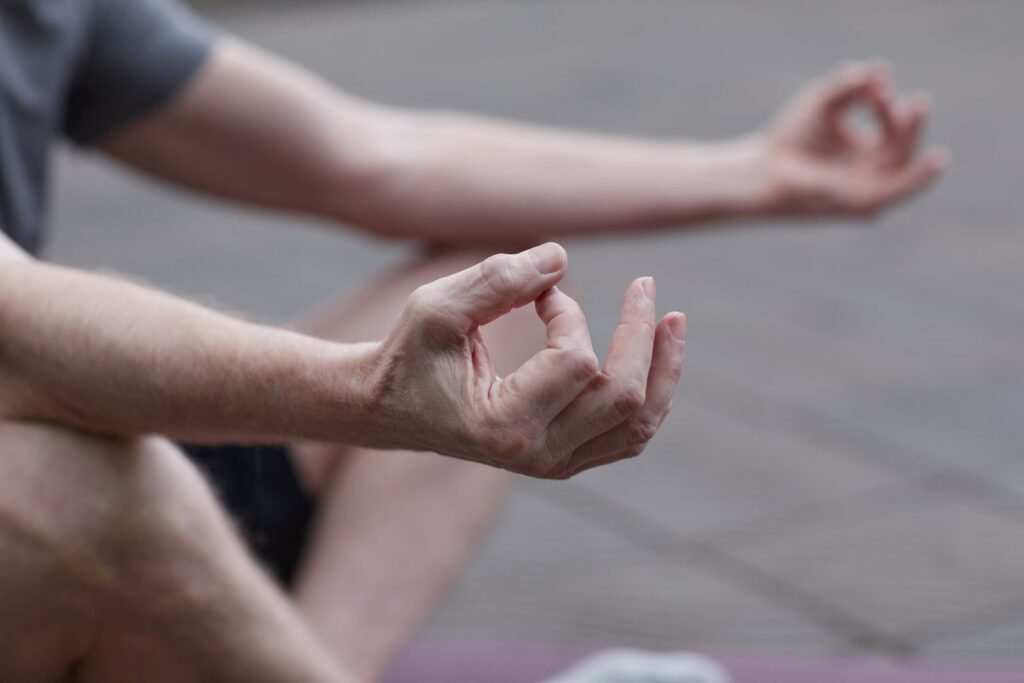
- Seated meditation with an open palm mudra: Turning the palms upward during seated meditation is a widely used gesture meant to symbolically represent receiving and releasing rather than grasping or controlling.
As with the yamas, the common thread isn’t the shape of the pose itself but the intention brought to it — any posture can become a practice of surrender when approached with acceptance rather than forceful control.
How Does Ishvara Pranidhana Relate to the Other Niyamas?
The five niyamas are typically understood as building toward one another rather than functioning as five separate, disconnected rules. Saucha (cleanliness, physical and mental) creates the clear foundation needed for reflection. Santosha (contentment) trains the mind to accept what is, which directly supports the acceptance required in surrender. Tapas (disciplined effort, sometimes translated as “heat” or “burning enthusiasm”) supplies the committed action that ishvara pranidhana asks you to then release attachment to. Svadhyaya (self-study, including study of yogic texts and honest self-reflection) builds the self-awareness needed to even notice where you’re gripping too tightly. Ishvara pranidhana is frequently described as the natural conclusion of this sequence — once you’ve cleaned up your habits, found contentment, built disciplined effort, and studied yourself honestly, surrender becomes less of an abstract idea and more of a lived, practical release.
What Is the Difference Between the Niyamas and the Yamas?
Students new to yoga philosophy often blur these two categories together, but the distinction is foundational. The yamas — including ahimsa, satya, brahmacharya, asteya, and aparigraha — are restraints that govern how you relate to the external world and other beings. The niyamas, including ishvara pranidhana, are personal observances directed inward, shaping your relationship with yourself and, in this final niyama’s case, with something beyond yourself entirely. Ishvara pranidhana sits specifically among the niyamas because it is fundamentally an inward orientation — a shift in how you personally relate to control, ego, and outcome — even though its effects clearly ripple outward into how you treat others and approach your broader yoga philosophy practice.
Why Do Teachers Consider Ishvara Pranidhana the Fastest Path to Samadhi?
In the Yoga Sutras, devotion to Ishvara is described in several places as a direct route to samadhi, the deep state of absorption that represents the eighth and final limb of yoga. Teachers commonly explain this by pointing to what surrender actually removes: the constant background effort of the ego trying to manage, predict, and control every outcome. Meditation and concentration practices like meditation for beginners and pranayama breathing techniques can quiet the mind considerably, but as long as the ego is still gripping tightly to outcomes, some restlessness tends to remain. Ishvara pranidhana is presented as a shortcut past that residual grip — rather than slowly quieting the ego through years of concentration practice alone, surrender addresses the root attachment more directly. This is one reason many teachers introduce it as a capstone concept rather than a beginner’s starting point.
How Does Ishvara Pranidhana Apply Off the Mat?
Patanjali’s niyamas were never meant to stay confined to formal practice; they are described as observances meant to shape daily conduct. Off the mat, ishvara pranidhana can guide how you approach a job application, a medical diagnosis, a relationship outcome, or any situation where you’ve done everything within your control and the result remains genuinely uncertain. It doesn’t mean abandoning planning, effort, or responsibility — someone practicing ishvara pranidhana in a job search still writes a strong resume and prepares thoroughly for interviews. What shifts is the relationship to the outcome afterward: rather than looping anxiously over things no longer in your control, you consciously release the outcome to circumstances, timing, or a higher power, however you understand that concept personally.
Can Ishvara Pranidhana Help with Anxiety and Perfectionism?
Because ishvara pranidhana directly targets the compulsive need to control outcomes, many practitioners report that consciously practicing surrender reduces the intensity of anxious, ruminating thought patterns, particularly around perfectionism. Reframing a stressful situation through this lens might mean replacing “I must make this go exactly right” with “I will do my honest best and release what happens next.” This is not a substitute for clinical treatment, and anyone managing a diagnosed anxiety disorder should work with a qualified mental health professional. As a daily mindset practice, however, ishvara pranidhana pairs naturally with other calming approaches such as online yoga for stress relief and mindfulness-based breathing work, offering a philosophical frame that complements rather than replaces clinical support.
How Can Beginners Start Practicing Ishvara Pranidhana Today?
Surrender is often easier to build through small, repeatable practices than through one dramatic leap of faith. A practical starting sequence looks like this:
- Set an intention before practice. Before starting a Hatha or vinyasa class, take ten seconds to silently dedicate the session to something beyond personal achievement — health, gratitude, or simply the practice itself.
- Notice your grip during savasana. At the end of each class, observe where your mind is still “doing” rather than resting, and gently invite it to release.
- Practice the “full effort, open hand” phrase. Before a challenging task off the mat, silently note: “I will give this my full effort, and I release my grip on the exact outcome.”
- Journal one moment of surrender daily. A single sentence noting where you let go of controlling an outcome builds the self-awareness this niyama depends on.
- Pair it with svadhyaya. Reading a few lines of the Yoga Sutras or the Bhagavad Gita regularly deepens the intellectual understanding that supports the felt experience of surrender.
None of these steps require special training or religious belief, which is part of why ishvara pranidhana, despite being the final niyama, is often approachable even for someone brand new to yoga philosophy.
What Mistakes Do People Make When Practicing Ishvara Pranidhana?
The most common mistake is confusing surrender with passivity — using the concept to justify not trying, not preparing, or not taking responsibility for controllable outcomes. A second common mistake is treating ishvara pranidhana as requiring a specific religious belief, which can make secular or differently-religious students feel excluded from a concept that Patanjali actually framed quite broadly. A third mistake is expecting instant emotional relief; surrender is generally described as a practice that deepens gradually through repetition, similar to building strength through consistent yoga practice, rather than a single insight that permanently resolves the need for control. Recognizing these patterns early tends to make the practice feel more sustainable and less like a spiritual performance.
Questions People Ask About Ishvara Pranidhana
What is the simplest definition of ishvara pranidhana?
Ishvara pranidhana means “surrender to a higher power” or “devotion to the divine” in Sanskrit. It is the fifth and final niyama in Patanjali’s Yoga Sutras, asking practitioners to dedicate their effort and practice to something greater than individual ego while releasing attachment to specific outcomes.
Do you need to be religious to practice ishvara pranidhana?
No. Patanjali describes Ishvara in fairly abstract, philosophical terms rather than tying it to one religion. Practitioners commonly interpret it through a personal deity, a sense of universal consciousness, nature, or simply “something larger than my ego,” making the practice accessible regardless of religious background.
How is ishvara pranidhana different from giving up on a goal?
Ishvara pranidhana asks for full, disciplined effort followed by release of attachment to the exact outcome — not the absence of effort. This mirrors the Bhagavad Gita’s teaching on acting wholeheartedly while remaining unattached to results, which is distinct from passivity or resignation.
Which niyama comes right before ishvara pranidhana?
Svadhyaya, or self-study, is the fourth niyama and comes immediately before ishvara pranidhana in Patanjali’s traditional listing. Many teachers see this as a deliberate sequence: cleanliness, contentment, disciplined effort, and self-study each build toward the deeper surrender that closes the niyamas.
What is an example of ishvara pranidhana in daily life?
A simple daily example is preparing thoroughly for something important — a job interview, a medical procedure, a difficult conversation — and then consciously releasing the outcome once you’ve done what’s within your control, rather than continuing to grip anxiously over what happens next.
Why is ishvara pranidhana considered the most advanced niyama?
It’s often described this way because Patanjali connects devotion to Ishvara directly to samadhi, the deepest state of yogic absorption, in multiple verses of the Yoga Sutras. Teachers commonly frame it as the culmination of the other four niyamas, since genuine surrender tends to be difficult without the groundwork of contentment, discipline, and self-study already in place.
Try This for Yourself
Reading about ishvara pranidhana is a starting point, but the practice only becomes real through repetition — setting an intention before class, noticing where you grip during savasana, and gradually extending that same release into daily life. If you want structured guidance on weaving philosophy like ishvara pranidhana into an actual movement practice, FitStrot’s certified instructors can help you build that connection session by session. Explore FitStrot’s online yoga classes and start practicing surrender on and off the mat with expert support.
Related reading: Ahimsa in Yoga: Meaning, Principle & How to Practice It | Satya: The Yogic Principle of Truthfulness | Understanding Brahmacharya in Yoga | The Bhagavad Gita and Its Connection to Yoga | FitStrot Online Yoga Classes