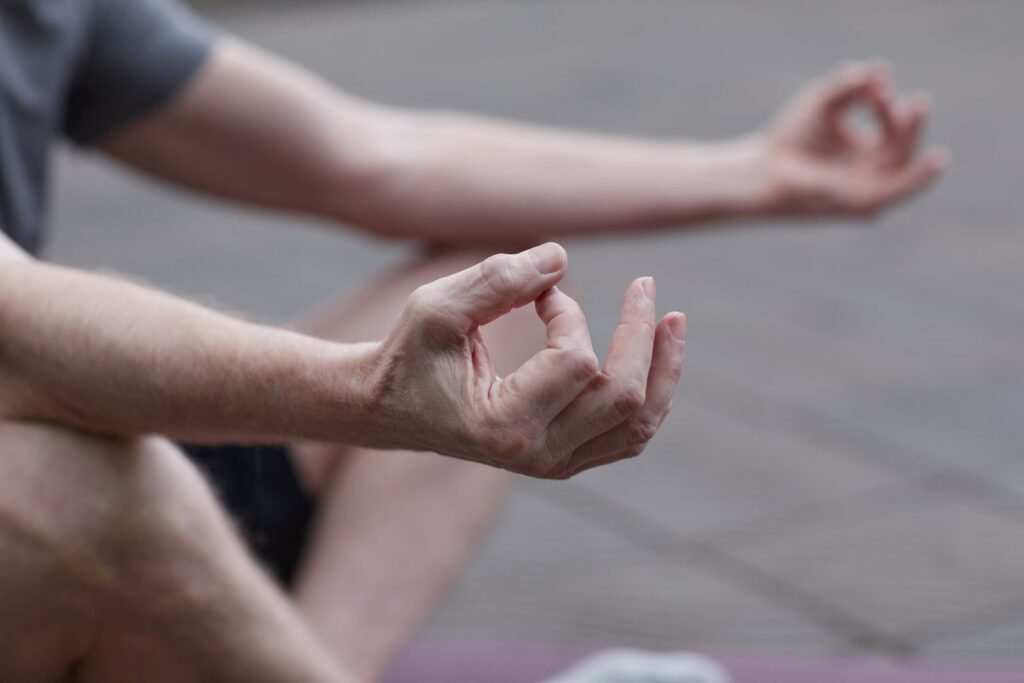
Aparigraha is the fifth of the five yamas (ethical restraints) in Patanjali’s Yoga Sutras, and it means non-possessiveness, non-greed, or non-grasping. It asks practitioners to take only what is necessary, release the compulsive urge to accumulate, hoard, or cling to people, possessions, and outcomes, and trust that life provides what is truly needed. Far from being about poverty or self-denial, aparigraha is a mental discipline: it teaches you to hold objects, relationships, and even your own opinions loosely, so that fear of loss stops running your decisions. In modern practice, aparigraha shows up as decluttering your home, releasing the need to control a yoga pose, letting go of grudges, and resisting the urge to compare your practice or your life to someone else’s.
What Does Aparigraha Mean in Sanskrit?
The word aparigraha breaks down into two Sanskrit roots: the prefix “a” (not) and “parigraha,” which itself combines “pari” (around, on all sides) and “graha” (to seize or grasp). Parigraha literally describes the act of grasping on all sides — hoarding, collecting, or clutching something tightly. Aparigraha, its negation, is therefore “non-grasping” or “non-seizing.” Traditional translations include non-possessiveness, non-attachment to possessions, non-greed, non-hoarding, and non-covetousness. Unlike ahimsa (non-violence) or satya (truthfulness), which govern how you treat others directly, aparigraha governs your relationship with things — objects, status, credit, and even ideas about how life should unfold.
Where Does Aparigraha Come From in the Yoga Sutras?
Aparigraha appears in Patanjali’s Yoga Sutras (commonly dated to somewhere between the 2nd century BCE and the 4th century CE, a range scholars still debate) as the fifth and final yama, listed alongside ahimsa, satya, asteya (non-stealing), and brahmacharya (right use of energy, often translated as celibacy or moderation). Together, the yamas form the first limb of Ashtanga Yoga’s eight-limbed path, functioning as the ethical foundation upon which all other limbs — including physical postures (asana) and breathwork (pranayama) — are meant to rest. Patanjali specifically notes that when a person is firmly established in aparigraha, there arises knowledge of the “why” of one’s birth, meaning a clarity about life’s purpose that comes when the mind is no longer clouded by grasping. This is less a factual claim than a traditional teaching passed down through the sutra’s commentaries, so it is best understood as philosophical insight rather than verifiable fact.
How Is Aparigraha Different From Simple Minimalism?
Minimalism as a modern lifestyle movement focuses on owning fewer physical things for the sake of aesthetics, efficiency, or environmental impact. Aparigraha is broader and more internal. It’s not just about how many objects sit in your closet — it’s about the mental grip you have on those objects, on outcomes, on relationships, and on your own identity. You can own very little and still practice parigraha (grasping) if you’re anxious about losing what little you have. Conversely, you can have more than you need and still practice aparigraha if you hold it lightly, share generously, and remain unattached to the idea that possessions define your worth. The yogic teaching is about the internal relationship to “having,” not a prescribed external quantity of belongings.
| Minimalism | Aparigraha |
|---|---|
| Owning fewer physical possessions | Loosening the mental grip on possessions, outcomes, and identity |
| Measured by the external quantity of belongings | Measured by your internal relationship to “having” |
| Achievable through decluttering alone | Requires awareness even if you own more than the minimum |
How Do You Practice Aparigraha in Daily Life?
Aparigraha is a lived practice, not a one-time decision. Here is a practical, step-by-step way to begin integrating it:
1. Notice the Grasping Reflex
Start by simply observing when you feel the urge to acquire, hold on tightly, or resist change — during a sale, a conversation, or a yoga class. Awareness precedes any behavior change, and in yogic terms this observation itself is part of svadhyaya (self-study), one of the niyamas that pairs naturally with aparigraha.
2. Declutter With Intention
Go through one drawer, shelf, or category of belongings and ask honestly whether each item serves a real purpose or whether you’re keeping it out of fear, guilt, or habit. This isn’t about minimalism for its own sake — it’s about noticing the emotional charge attached to “stuff.”
3. Practice Non-Attachment on the Mat
In asana practice, aparigraha means releasing the need to nail a pose perfectly, compare yourself to the person on the next mat, or cling to how a posture “used to feel” before an injury or life change. This is one of the most direct, embodied ways to practice the yama, since the mat becomes a small laboratory for noticing grasping in real time.
4. Give Without Expecting Return
Offer time, help, or resources without immediately calculating what you’ll get back. This weakens the reflex to treat every relationship as a transaction.
5. Release Outcomes, Not Effort
Aparigraha does not mean abandoning goals or ambition. It means putting in sincere effort while loosening your grip on a specific outcome, a concept closely related to the Bhagavad Gita’s teaching on selfless action, or nishkama karma.

What Is the Connection Between Aparigraha and the Bhagavad Gita?
The Bhagavad Gita expands on the philosophy behind aparigraha through its teaching on detached action. Krishna advises Arjuna to act according to his duty without being attached to the fruits of that action — a teaching often summarized as “you have a right to your actions, but never to the fruits of those actions.” This is essentially aparigraha applied to effort and outcome rather than physical objects: do the work fully, but don’t grasp at a specific result as though your peace of mind depends on it. Reading the Gita alongside the Yoga Sutras gives a fuller picture of how non-grasping applies not just to possessions, but to ambition, relationships, and even spiritual progress itself.
How Does Aparigraha Relate to the Other Yamas?
The five yamas work as an interconnected ethical system rather than five separate rules. Ahimsa (non-violence) is considered the foundation, and the other four yamas are often described as ways of protecting and refining it. Aparigraha supports ahimsa because hoarding, excessive competition, and greed frequently lead to harm — to the environment, to relationships, or to one’s own peace of mind. It also pairs closely with asteya (non-stealing): where asteya restrains you from taking what isn’t offered, aparigraha restrains you from clinging to what you already have beyond genuine need. And it relates to satya (truthfulness) because grasping often requires small dishonesties — with others or with ourselves — to justify accumulation we don’t need.
What Are the Niyamas That Pair With Aparigraha?
While the yamas govern outward ethical restraint, the niyamas guide inward personal observance. Santosha (contentment) is the niyama most directly linked to aparigraha, since genuine contentment with what one has naturally reduces the impulse to grasp for more. Aparigraha and santosha reinforce each other: it is difficult to stop grasping without cultivating contentment, and it is difficult to feel lasting contentment while still grasping. Practicing them together — noticing what is enough, and appreciating it fully — tends to be more sustainable than trying to practice non-attachment through willpower alone.
What Are Common Misconceptions About Aparigraha?
Aparigraha is often misunderstood in a few consistent ways:
- “It means giving away all your possessions.” In the classical tradition, that level of renunciation was reserved for sannyasins (monastic renunciates) who had chosen a life stage devoted entirely to spiritual pursuit. For householders and modern practitioners, aparigraha is generally understood as moderation and non-grasping rather than literal asceticism.
- “It means you shouldn’t plan for the future or save money.” In fact, aparigraha is compatible with responsible saving — the distinction is whether the saving comes from prudent care or from fear-driven hoarding.
- “It means emotional detachment or coldness toward people.” In practice, aparigraha applied to relationships means loving fully while not possessively controlling or clinging to another person.
How Can Aparigraha Help With Anxiety and Stress?
A significant portion of everyday anxiety stems from attachment to specific outcomes: the fear of losing a job, a relationship, a possession, or a particular self-image. Aparigraha offers a reframe by teaching practitioners to invest energy in effort and presence rather than in controlling results, which many find loosens the grip of anxious rumination. This doesn’t eliminate stress instantly, but over time, the practice of loosening attachment tends to reduce the mental “gripping” that keeps the nervous system on alert. Pairing aparigraha with a regular pranayama practice or restorative yoga session can reinforce this sense of release on both a mental and physical level.
How Does Aparigraha Apply to Social Media and Digital Life?
Modern grasping isn’t limited to physical objects — it shows up as compulsively checking likes and follower counts, hoarding digital content, or feeling threatened when someone else’s online success seems to diminish your own. Practicing aparigraha in digital life might mean regularly unsubscribing from accounts that trigger comparison, resisting the urge to constantly document experiences for validation, or simply noticing the anxious pull to check a phone. This modern application shows the yama’s relevance far beyond its ancient origins: non-grasping applies to attention and self-image just as much as it applies to money or belongings.
How Can You Bring Aparigraha Into a Yoga Class?
Teachers and students alike can bring aparigraha into physical practice in concrete ways. On the mat, this might mean choosing a modification instead of forcing a peak pose, letting go of the need to “keep up” with a faster-paced vinyasa yoga sequence, or accepting a day when the body needs a gentler practice like hatha yoga or yin yoga instead of a vigorous flow. Off the mat, it can mean not holding onto a “good” or “bad” class label — each session is simply what it is, without needing to be hoarded as a personal achievement or dismissed as a failure. This mindset shift is part of why many students find that a consistent online yoga practice becomes less about performance and more about presence over time.
Questions People Ask About Aparigraha
Is aparigraha the same as minimalism?
Not exactly. Minimalism is a lifestyle choice focused on owning fewer physical things, often for aesthetic or practical reasons. Aparigraha is a broader ethical and mental practice of non-grasping that applies to possessions, relationships, outcomes, and self-image. You can practice minimalism without aparigraha, and you can practice aparigraha while owning quite a lot, as long as you hold it lightly.
What is an example of aparigraha?
A simple example is decluttering items you keep “just in case” without real need, or resisting the urge to buy something new purely because of a sale. Another example is letting go of the need to control how a conversation, relationship, or yoga pose turns out, instead staying present with what actually happens.
How do you pronounce aparigraha?
Aparigraha is pronounced “uh-pah-ree-GRAH-huh,” with the emphasis generally falling on the third syllable. It comes from Sanskrit, so pronunciation can vary slightly by region and teacher, but this is the most common rendering in English-language yoga classes.
Is aparigraha only about material possessions?
No. While non-possessiveness toward objects is the most literal application, aparigraha also covers emotional attachment, grasping at specific outcomes, hoarding credit or recognition, and clinging to fixed opinions or identities. It’s best understood as a general orientation toward non-grasping in all areas of life.
How is aparigraha different from asteya?
Asteya means non-stealing — refraining from taking what has not been freely given, whether that’s a physical object, someone’s time, or their ideas. Aparigraha goes further by addressing the impulse to accumulate and cling even to things you already legitimately possess. They’re related but distinct: one restrains taking, the other restrains holding on.
Can you practice aparigraha and still be ambitious?
Yes. Aparigraha does not require abandoning goals or ambition. The Bhagavad Gita’s teaching on selfless action captures this well: you can pursue a goal with full effort and dedication while releasing your attachment to a specific outcome, so that your sense of peace doesn’t depend entirely on whether things go exactly as planned.
Try This for Yourself
Reading about aparigraha is useful, but the yama is best understood through direct experience on the mat, where you can practice noticing grasping in real time — during a challenging pose, a fast-paced sequence, or a quiet moment of stillness. If you’d like structured guidance on weaving philosophy like aparigraha into your physical practice, explore FitStrot’s online yoga classes and work with an instructor who can help you build a practice rooted in both movement and mindful non-attachment.
Related reading: Deepen your understanding of yogic ethics with our guides on ahimsa, satya, brahmacharya, and the Bhagavad Gita’s teachings on yoga, or start practicing today with FitStrot’s online yoga classes.