The Bhagavad Gita and yoga are inseparable: the 700-verse text, set as a dialogue between the warrior Arjuna and Krishna on a battlefield, is one of the oldest and most detailed explanations of yoga as a way of living rather than just a set of physical postures. It defines yoga in Chapter 2 as “samatvam yoga uchyate,” evenness of mind, and later as “yogah karmasu kaushalam,” skill in action. Across its eighteen chapters, the Gita outlines four major yogic paths, karma yoga (action), jnana yoga (knowledge), bhakti yoga (devotion), and dhyana or raja yoga (meditation), giving practitioners a philosophical foundation that modern asana-based yoga classes rarely cover in depth.
What Is the Bhagavad Gita and Why Does It Matter to Yoga?
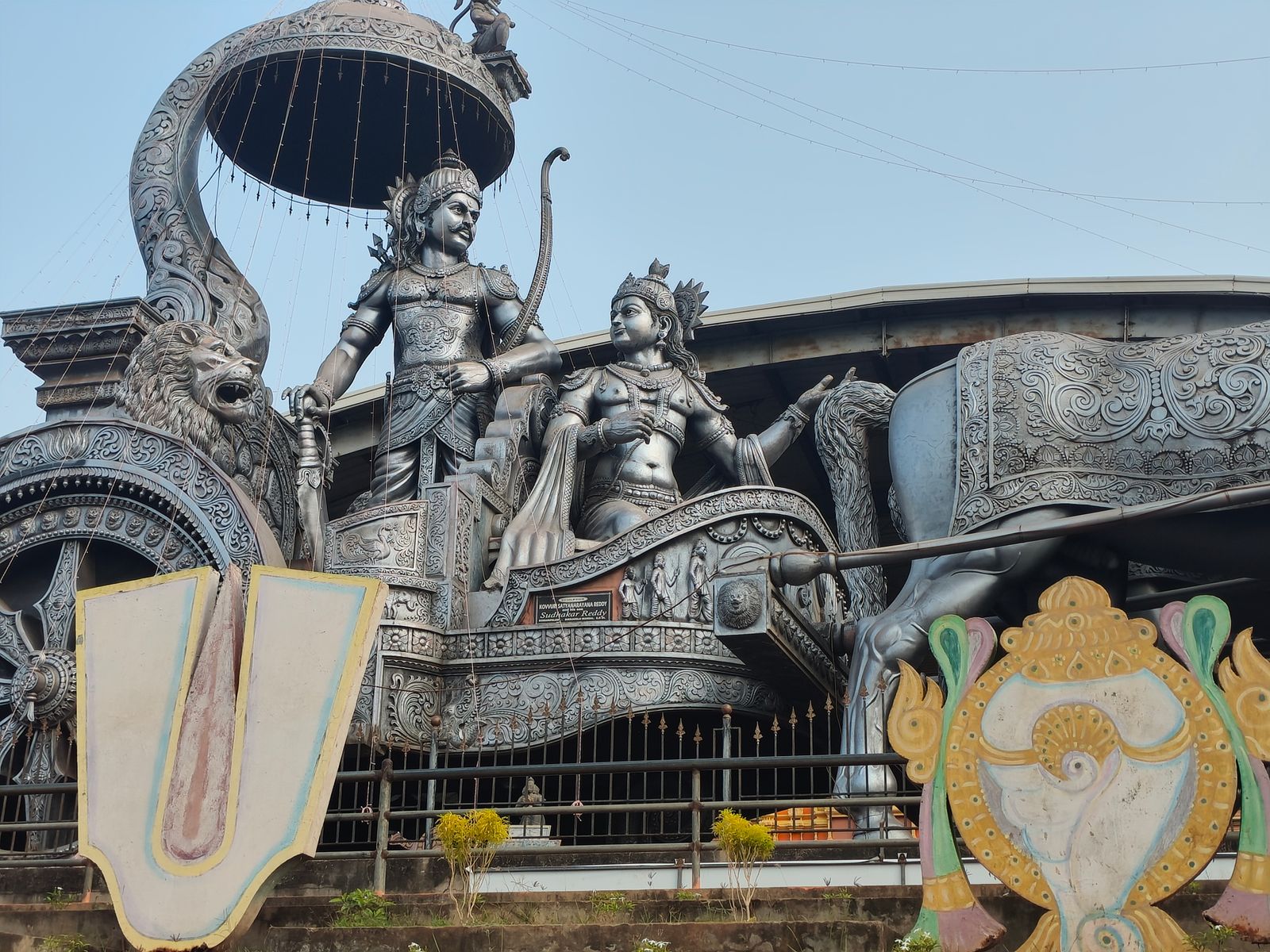
The Bhagavad Gita is a 700-verse Sanskrit scripture embedded within the much longer epic the Mahabharata, traditionally placed in its sixth book, the Bhishma Parva. It takes the form of a conversation on the battlefield of Kurukshetra between Prince Arjuna, paralyzed by doubt about fighting a war against his own kinsmen, and Krishna, his charioteer, who reveals himself to be a divine teacher. Scholars date the text’s composition anywhere between the 5th century BCE and the 2nd century CE, with most estimates clustering around the 2nd century BCE, though the exact dating remains debated.
What makes the Gita foundational to yoga specifically is that it is one of the earliest surviving texts to treat “yoga” as a broad, structured discipline of mind and action, not merely physical exercise. Where the later Yoga Sutras of Patanjali systematized meditation and ethical restraint into an eight-limbed path, the Gita approaches yoga as something practiced through ordinary duties, intellect, emotion, and attention, whichever suits the practitioner’s temperament. That is why yoga teacher trainings and philosophy courses so often treat the Gita as required reading alongside the Sutras.
How Does the Bhagavad Gita Define Yoga?
The Gita does not give one single dictionary definition of yoga; it gives several, each suited to the chapter’s argument. The two most quoted are found in Chapter 2. Verse 48 states “samatvam yoga uchyate,” meaning that yoga is evenness of mind, remaining equally undisturbed by success or failure, gain or loss. Verse 50 offers “yogah karmasu kaushalam,” meaning yoga is skill in action, the ability to act effectively and without being emotionally hijacked by the outcome.
Later, in Chapter 6, Krishna describes yoga more experientially: a state reached when the mind, disciplined through practice, becomes still and the self is content within itself. Taken together, these definitions frame yoga in the Gita as a psychological and ethical discipline: steadiness under pressure, competence without attachment to results, and a mind that has stopped being pulled around by craving and aversion. This is a considerably wider definition than “a physical practice of postures,” and it’s the reason teachers who want to go beyond the physical layer of a yoga practice often return to the Gita’s language.

What Are the Four Types of Yoga in the Bhagavad Gita?
The Gita organizes its teaching around four principal paths, each addressing a different aspect of human nature. None is presented as superior in an absolute sense; Krishna repeatedly says that different paths suit different temperaments, and that all genuinely practiced paths lead toward the same goal of liberation, or moksha.
- Karma Yoga (the path of selfless action), taught mainly in Chapters 2 to 4, for people who are active by nature and learn through doing.
- Jnana Yoga (the path of knowledge and self-inquiry), developed in Chapters 2, 13, and 18, for people drawn to philosophical discrimination between the eternal self and the changing world.
- Bhakti Yoga (the path of devotion), given its fullest treatment in Chapter 12, for people whose temperament is emotional and relational, oriented toward love and surrender.
- Dhyana Yoga, also called Raja Yoga (the path of meditation), central to Chapter 6, for people who want to still the mind directly through concentration practice.
Many later commentators, including Swami Vivekananda, treated these four as complementary rather than competing systems, arguing that a well-rounded practitioner draws on all four rather than picking one and ignoring the rest. This is a useful frame for anyone building a home practice through resources like online yoga classes, since a single hour of asana can still be approached with karma yoga’s detachment, jnana yoga’s self-observation, bhakti yoga’s devotion, and dhyana yoga’s focus all at once.
What Is Karma Yoga According to the Bhagavad Gita?
Karma yoga is the Gita’s answer to Arjuna’s opening crisis: he does not want to act because every option feels tainted by attachment, grief, or guilt. Krishna’s response, developed across Chapters 2 through 4, is that action itself is not the problem; attachment to the fruits of action is. The famous instruction in Chapter 2, verse 47, is that you have a right to your actions but never to the fruits of those actions, and that you should not let the fruit be your motive for acting, nor be attached to inaction either.
Practically, karma yoga asks you to do your work with full effort and full attention, then release your grip on the specific outcome, whether that outcome is praise, profit, promotion, or a particular result on the yoga mat. This is subtly different from Western ideas of “not caring about results.” Karma yoga does not ask for indifference to quality; it asks for indifference to the ego’s need to control or claim the outcome. For a deeper walk through this path specifically, see our companion piece on karma yoga in the Bhagavad Gita.
What Is Jnana Yoga in the Bhagavad Gita?
Jnana yoga is the path of discriminating knowledge, viveka, the ability to tell apart what is permanent from what is temporary. The Gita’s core jnana teaching is the distinction between Atman, the true, unchanging self, and the body-mind complex, which is constantly changing, aging, and eventually dying. Chapter 2 opens with Krishna’s argument that the self is never born and never dies, that weapons cannot cut it and fire cannot burn it, using this claim to dissolve Arjuna’s grief over the deaths he expects in battle.
Jnana yoga is generally considered the most intellectually demanding of the four paths, since it requires sustained philosophical inquiry rather than devotion or duty alone. Traditional teachers often paired it with a mind first purified through karma yoga, on the reasoning that a restless, attachment-driven mind cannot sustain the sharp discrimination jnana requires. That sequence, action first, then knowledge, still shows up in how teacher trainings order yoga philosophy study after a foundation of physical and ethical practice.
What Is Bhakti Yoga According to the Bhagavad Gita?
Bhakti yoga, the path of loving devotion, receives its most concentrated treatment in Chapter 12, often called the Bhakti Yoga chapter. Krishna describes devotees who fix their minds on him with unwavering faith as especially dear, while also acknowledging that the path of the unmanifest absolute (closer to jnana yoga) is valid but harder for embodied beings to sustain.
What distinguishes bhakti yoga from ritual worship is its emotional and relational quality: surrender, trust, and love directed toward the divine, expressed through whatever form resonates with the practitioner. The Gita’s most quoted bhakti verse, Chapter 18, verse 66, has Krishna telling Arjuna to abandon all other duties and take refuge in him alone, promising liberation from all sin. This path is often the entry point for practitioners who come to yoga through mantra meditation, chanting, or devotional music rather than through physical practice.
What Is Dhyana Yoga or Raja Yoga in the Bhagavad Gita?
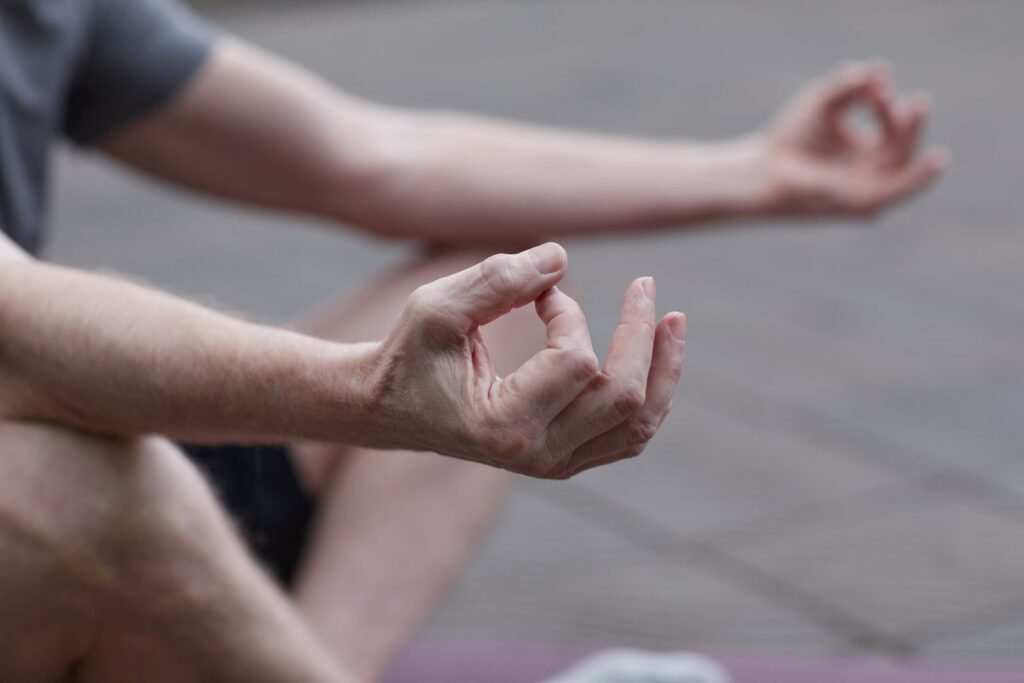
Chapter 6, sometimes titled “Dhyana Yoga” or “Atmasamyama Yoga” (the yoga of self-control), gives the Gita’s most technical description of meditation. Krishna instructs Arjuna to sit in a clean, steady place, neither too high nor too low, keep the body upright, fix the gaze gently, and hold the mind on a single point, gradually withdrawing it from sensory distraction. He compares the disciplined mind to a lamp in a windless place that does not flicker.
This chapter overlaps closely with what Patanjali later formalized as raja yoga, the “royal path” of concentration (dharana), meditation (dhyana), and absorption (samadhi). It adds a practical, encouraging note: even a small amount of this practice protects against great fear, and no sincere effort on this path is ever wasted, even if a student’s progress is interrupted. That reassurance is one reason the chapter is frequently taught alongside meditation for beginners programs.
What Is Sankhya Yoga and the Guna System in the Bhagavad Gita?
Chapter 2 of the Gita is titled “Sankhya Yoga,” drawing on Sankhya, one of the oldest schools of Indian philosophy, which analyzes reality as the interplay between Purusha (pure consciousness) and Prakriti (matter, including the mind, senses, and body). Sankhya predates the Gita and supplies much of its vocabulary, especially the three gunas, sattva (clarity and balance), rajas (activity and restlessness), and tamas (inertia and dullness), which the Gita uses throughout to classify food, work, and states of mind. In Chapter 2, Krishna uses Sankhya-style reasoning, the eternal self versus the temporary body, to talk Arjuna out of his grief and toward action, so “Sankhya Yoga” is best understood as philosophical groundwork rather than a separate fifth path alongside karma, jnana, bhakti, and dhyana.
The gunas reappear in force in Chapters 14 and 17, where the Gita argues all three are always present in some mixture in every person, and spiritual growth means gradually increasing sattva relative to the other two, then eventually transcending all three. Chapter 17 extends this to everyday choices: sattvic food is wholesome and nourishing, rajasic food is overly stimulating, and tamasic food is stale or impure, a classification that still surfaces today in discussions of yogic diet choices meant to support a calm, steady mind.
What Are the Most Quoted Bhagavad Gita Verses on Yoga?
A handful of verses account for most of the Gita quotations that circulate in yoga classes, books, and social media. Presenting the Sanskrit alongside its meaning helps clarify what is actually being claimed, since translations vary in wording even when the underlying idea is consistent across serious scholarly renderings.
- Chapter 2, Verse 47: “karmany-evadhikaras te ma phalesu kadachana” — you have a right to your actions, never to the fruits of those actions.
- Chapter 2, Verse 48: “samatvam yoga uchyate” — evenness of mind amid success and failure is called yoga.
- Chapter 2, Verse 50: “yogah karmasu kaushalam” — yoga is skill in action.
- Chapter 6, Verse 19: the disciplined mind is compared to a lamp that does not flicker in a windless place.
- Chapter 18, Verse 66: “sarva-dharman parityajya mam ekam sharanam vraja” — abandon all varieties of duty and take refuge in me alone.
These verses are quoted so often precisely because they compress the Gita’s core teaching, non-attachment, competence, mental steadiness, and surrender, into single memorable lines, which is also why they translate well into short reflections at the start or close of an asana practice.
How Can You Apply the Bhagavad Gita’s Teachings to a Modern Yoga Practice?
Most people encounter yoga first through physical postures, breathing techniques, and relaxation, not through Sanskrit philosophy. The Gita’s teachings still apply directly to that experience if you know where to look for the overlap.
- Practice karma yoga on the mat. Put full effort into a pose without measuring your worth by how it compares to yesterday’s practice or another student’s flexibility. This is karma yoga’s “skill in action” applied literally.
- Use jnana yoga’s inquiry during stillness. In savasana or seated meditation, ask what part of you is actually tired, actually anxious, or actually calm, gently separating passing sensations from a steadier sense of awareness underneath them.
- Bring bhakti into breathwork. Dedicating your practice, silently, to someone you care about, or simply approaching your breath with gratitude, is a small, accessible entry into devotional practice.
- Apply dhyana’s single-pointed focus to breathing exercises. Fixing attention on one sensation, the breath at the nostrils, for instance, and gently returning to it when the mind wanders is exactly the method Chapter 6 describes.
- Notice your guna tendencies. A rajasic (restless, overstimulated) day calls for slower, more grounding practice; a tamasic (sluggish, foggy) day calls for something more energizing, such as sun salutations.
How Is the Bhagavad Gita Different from the Yoga Sutras of Patanjali?
Both texts are foundational to yoga philosophy, but they differ in structure, tone, and emphasis. The Yoga Sutras, traditionally attributed to the sage Patanjali and generally dated somewhere between the 2nd century BCE and the 4th century CE depending on the scholar, is a compact, aphoristic manual organized around an eight-limbed path (ashtanga), moving systematically from ethical restraint through posture, breath control, and progressively deeper concentration.
The Gita, by contrast, is narrative and devotional, delivered as a dialogue during an emotional crisis, and addresses yoga through duty, devotion, and self-knowledge rather than a technical sequence. Teacher trainings often treat the two as complementary: the Sutras for method, the Gita for motivation and the psychology of why we practice at all. Anyone building a broader foundation in yoga history will find that reading both side by side clarifies how much of what looks like one unified tradition is really a synthesis of several distinct schools.
Why Do Modern Yoga Teachers Still Reference the Bhagavad Gita?
Contemporary yoga, especially the studio and online formats built around hatha yoga and vinyasa yoga, focuses heavily on the physical layer, alignment, sequencing, strength, flexibility. The Gita gets referenced because it supplies the “why” a purely physical class often leaves unanswered: why practice non-attachment, why cultivate evenness of mind, why treat the body as a vehicle rather than an end in itself. Teacher training programs commonly include Gita study within their philosophy and lifestyle requirements, alongside the Yoga Sutras and Hatha Yoga Pradipika, and studios use short readings from the Gita, particularly the verses on non-attachment and equanimity, to introduce philosophical depth into online yoga classes without requiring a full academic study of the text.
Questions People Ask About the Bhagavad Gita and Yoga
Is the Bhagavad Gita a yoga text or a religious text?
It is both, and the distinction is less sharp in the original context than it appears in English. The Gita is part of the Hindu epic the Mahabharata and is treated as scripture within Hindu tradition, but its core content is a detailed instruction in yogic paths, karma, jnana, bhakti, and dhyana yoga, making it one of the earliest systematic yoga texts as well.
How many types of yoga does the Bhagavad Gita describe?
The Gita centers on four major paths: karma yoga (action), jnana yoga (knowledge), bhakti yoga (devotion), and dhyana or raja yoga (meditation). Chapter 2 is also titled “Sankhya Yoga,” but this refers to the philosophical framework underlying the text rather than a separate fifth practical path.
What does the Bhagavad Gita say the definition of yoga is?
The Gita offers two especially well-known definitions in Chapter 2: “samatvam yoga uchyate,” evenness of mind is called yoga, and “yogah karmasu kaushalam,” yoga is skill in action. Together they frame yoga as psychological steadiness combined with effective, non-attached action, rather than only physical postures.
What is the most famous Bhagavad Gita quote about yoga?
“Yogah karmasu kaushalam,” yoga is skill in action, from Chapter 2, verse 50, is likely the single most quoted line in yoga contexts specifically. “Samatvam yoga uchyate” from verse 48 and the Chapter 6 lamp-in-a-windless-place image are close runners-up in how often teachers cite them.
Do I need to read the Bhagavad Gita to practice yoga?
No. Most physical yoga practice, including online yoga classes, does not require any prior study of the Gita. It is optional deeper study for practitioners who want the philosophical and ethical framework behind the physical practice, commonly explored once someone is already comfortable with the basics.
How does karma yoga from the Gita differ from ordinary hard work?
Karma yoga is not simply working hard. It specifically asks you to release attachment to the outcome of your effort while still acting with full skill and commitment. Ordinary hard work is often driven by anxiety about the result; karma yoga aims to separate the quality of the action from the emotional grip of what the result turns out to be.
Try This for Yourself
Reading about the Gita’s yoga philosophy is a starting point, but the paths it describes, action, knowledge, devotion, and meditation, are meant to be lived through practice, not just studied. Explore FitStrot’s Online Yoga Classes and bring karma yoga’s steadiness, jnana yoga’s awareness, and dhyana yoga’s focus into your next session.
Related reading: Go deeper into one of the Gita’s four paths with our guide to karma yoga in the Bhagavad Gita, explore the broader philosophy behind yoga practice, compare styles in our guide to types of yoga, or build a steadier meditation habit with our meditation for beginners guide, and when you’re ready to practice, join FitStrot’s Online Yoga Classes.