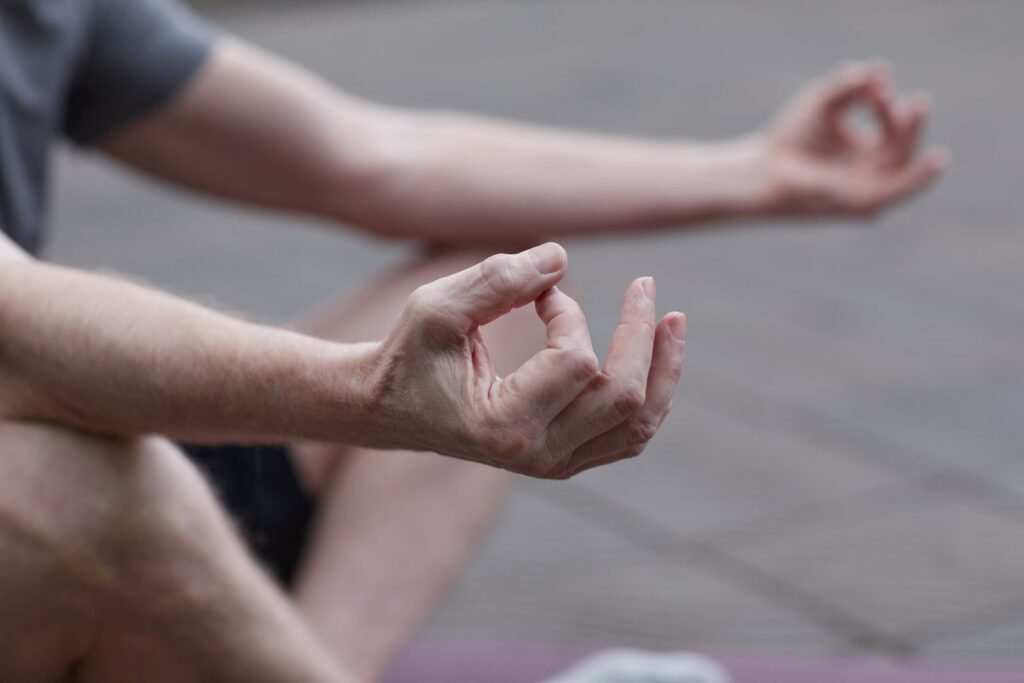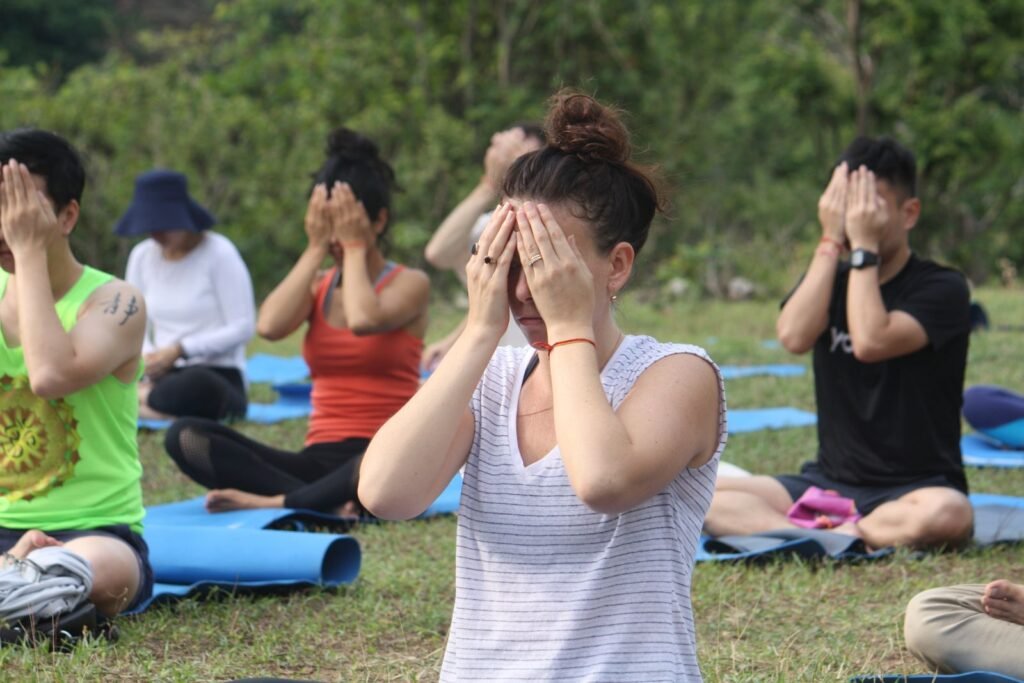
Samadhi is the eighth and final limb of Patanjali’s Ashtanga Yoga, described in the Yoga Sutras as the state where the meditator, the act of meditation, and the object of meditation dissolve into one unbroken awareness. It is not a technique you perform but a state that arises naturally once the mind grows still enough to stop separating the observer from the observed. In plain terms, samadhi is the deepest possible absorption: total presence with no sense of a separate “self” watching from the sidelines. It sits at the summit of the path that begins with chitta vritti (the fluctuations of the mind) and ends with their complete quieting.
What Is Samadhi in Yoga?
In Sanskrit, “sam” means “together” or “complete” and “adhi” relates to a state of being placed or established. Put together, samadhi roughly translates to “complete absorption” or “a state of being firmly established.” Patanjali defines it in Yoga Sutra 3.3 as the state when the object of meditation shines forth alone, as if the mind itself were empty of its own form. This is the culmination of a gradual narrowing of attention: you move from a broad awareness of the world, to focus on a single object, to such deep focus that the boundary between you and that object disappears.
It helps to think of samadhi less as a mystical reward and more as the logical endpoint of sustained attention training. Anyone who has lost themselves in a piece of music, a long run, or a demanding creative task has brushed against a shadow of this state. Classical yoga simply takes that same absorption and applies it systematically, through the eight limbs, until it becomes stable and repeatable rather than accidental.
The Yoga Limb Leading to Samadhi Is Dhyana
A commonly searched question is which limb of yoga leads directly to samadhi. The answer, according to Patanjali’s eight-limbed path (Ashtanga), is dhyana, or sustained meditation. The eight limbs run in sequence: yama (ethical restraints), niyama (personal observances), asana (posture), pranayama (breath control), pratyahara (withdrawal of the senses), dharana (concentration), dhyana (meditation), and finally samadhi (absorption).
Dharana and dhyana are often confused because they look similar from the outside. Dharana is the effort of holding attention on one point, a candle flame, the breath, a mantra, and repeatedly bringing the mind back when it wanders. Dhyana is what happens when that effort becomes effortless: the attention flows toward the object continuously, without the repeated correction dharana requires. Samadhi is the next and final step, where even the sense of “meditating on something” falls away and only the object, or pure awareness itself, remains. Understanding this sequence also clarifies why practices like pranayama breathing techniques and pratyahara sense withdrawal exist earlier on the path: they are not separate goals but preparation, each limb quieting the nervous system and the senses enough for the next to become possible.
What Are the Different Types of Samadhi?
Classical yoga texts describe samadhi as unfolding in stages rather than arriving as a single fixed state. The two broad categories most frequently referenced are savikalpa samadhi and nirvikalpa samadhi.
| Aspect | Savikalpa Samadhi | Nirvikalpa Samadhi |
|---|---|---|
| Meaning | Samadhi with distinction, or with support | Samadhi without distinction |
| Sense of self | A subtle awareness of I am experiencing this absorption remains | No separate observer remains, only undivided awareness |
| Stage on the path | Earlier, more accessible stage | Deeper, more advanced stage |
| How it is reached | Prolonged dhyana on a specific object, form, concept, or the breath | Complete dissolution of the sense of a separate witness |
Savikalpa Samadhi
Savikalpa samadhi is “samadhi with distinction” or “samadhi with support.” Here, a trace of duality remains: there is still a subtle awareness of “I am experiencing this absorption,” even though the mind has become extraordinarily still and one-pointed. This is typically described as the earlier, more accessible stage, reached through prolonged dhyana on a specific object, whether a form, a concept, or the breath.
Nirvikalpa Samadhi
Nirvikalpa samadhi is “samadhi without distinction.” Here even the subtle sense of a separate observer dissolves; there is no longer an “I” witnessing the experience, only undivided awareness. Patanjali’s sutras also describe a related distinction between samprajnata samadhi (samadhi with an object of focus, involving thought, reflection, or bliss) and asamprajnata samadhi (samadhi without any object, described as the seed-less state where even subtle mental impressions are stilled). These are subtle philosophical distinctions that different commentators and lineages describe with some variation, so treat the exact terminology as a guide to the general shape of the path rather than a rigid checklist.
Samadhi Meaning in Yoga Philosophy: Why It Matters
Samadhi is not presented in classical yoga as an optional bonus experience. It is described as the direct means to kaivalya, or liberation, the ultimate goal of Patanjali’s system. The logic runs like this: human suffering, in this framework, stems largely from misidentifying the true self (purusha) with the constantly shifting content of the mind, the body, and the senses (prakriti). This misidentification is closely tied to what the sutras call the kleshas, the root afflictions of ignorance, ego, attachment, aversion, and fear of death that keep the mind agitated.
Samadhi is the state in which that misidentification finally stops. When the mind becomes completely still, there is nothing left obscuring a clearer recognition of awareness itself. This is why the eight limbs are sequenced the way they are: ethical conduct and physical steadiness prepare the ground, breath and sense withdrawal quiet the nervous system, and concentration and meditation train the mind to hold still long enough for this recognition to become possible. Understanding the broader philosophical architecture behind this, including how the three gunas in yoga (sattva, rajas, and tamas) shape the quality of the mind at each stage, makes the goal of samadhi feel far less abstract.
How Does the Bhagavad Gita Describe Samadhi?
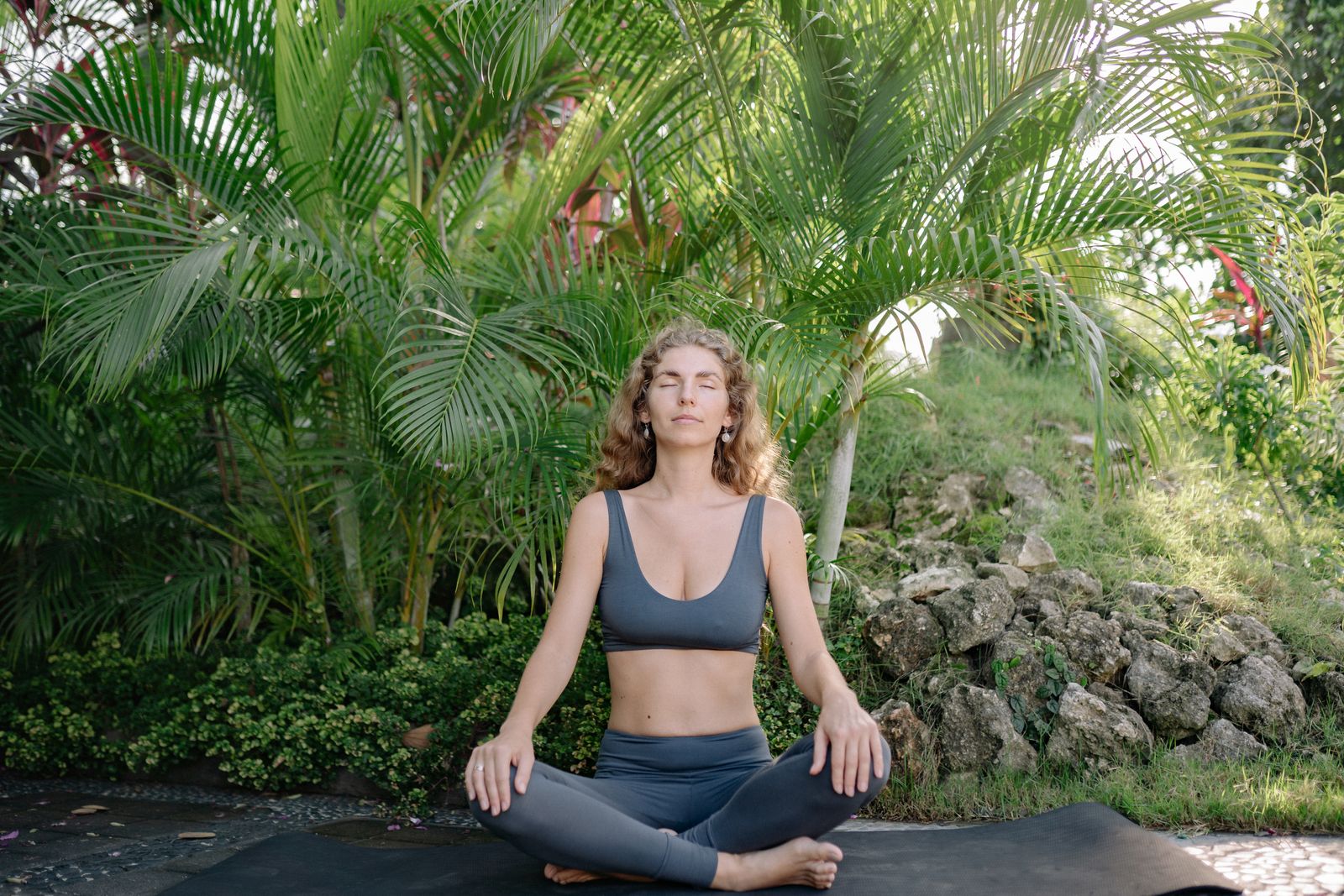
The Bhagavad Gita and yoga traditions describe a related concept, sthitaprajna, or “one whose wisdom is steady,” someone who remains undisturbed by pleasure and pain, gain and loss. In the second chapter, Krishna describes this steady-minded person as one who has withdrawn the senses from their objects the way a tortoise draws in its limbs, a description that closely parallels the pratyahara-to-samadhi progression found in the Yoga Sutras. While the Gita and Patanjali’s sutras are different texts from different periods, they describe a compatible inner logic: a mind trained through practice and detachment can become stable enough that external circumstances no longer shake it. This steadiness is one of the most practical, real-world descriptions of what a mature yoga practice is actually working toward, well before anyone reaches a formal state of samadhi.
What Is Siddha Samadhi Yoga (SSY)?
Siddha Samadhi Yoga, commonly abbreviated as SSY, is a structured meditation and breathing program developed in the 1990s and associated with the teacher Rishi Prabhakar. The program is typically taught as a multi-day course combining pranayama-based breathing techniques, meditation, and philosophical teaching, with the stated aim of helping practitioners reduce stress and move toward inner stillness. It has been taught through SSY centers and ashrams in India and internationally, including branches that describe themselves as a samadhi yoga ashram.
It is worth noting that Siddha Samadhi Yoga (SSY) is a distinct program from Siddha Yoga, the separate meditation lineage associated with Swami Muktananda and Gurumayi Chidvilasananda. The overlapping name causes genuine confusion in searches, so if you are looking for course materials, a specific ashram, or a downloadable siddha samadhi yoga pdf, it is worth double-checking which organization’s website or materials you are viewing before enrolling in a program or trusting a specific text as authoritative.
How Do You Actually Prepare the Body and Mind for Samadhi?
Because samadhi is the final stage of a sequential path, the most honest answer to “how do I reach samadhi” is that you build the seven limbs before it, rather than chasing the state directly. A practical starting structure looks like this:
1. Steady the Body First
Patanjali defines asana simply as a steady, comfortable seat. The goal of physical postures in classical yoga was never fitness for its own sake; it was to make the body still enough that it stops distracting the mind during long periods of stillness. If you’re building this foundation, a consistent beginner yoga poses routine that improves hip flexibility and spinal alignment makes seated meditation dramatically more sustainable over time.
2. Regulate the Breath
Pranayama, controlled breathing, calms the nervous system and, according to classical texts, thins the veil between ordinary awareness and deeper concentration. Simple techniques like alternate nostril breathing or extended exhalation are commonly used to prepare for meditation sessions.
3. Withdraw the Senses
Pratyahara means turning attention inward, away from constant sensory input. In practical terms, this can be as simple as sitting somewhere quiet, closing the eyes, and consciously letting go of the pull toward sounds, sensations, and mental chatter for a few minutes before formal meditation begins.
4. Build Concentration Gradually
Dharana starts small. Five focused minutes on the breath or a single point is a realistic starting target for most beginners; the point is consistency, not heroic duration. Over weeks and months, the mind’s capacity to stay with one object without wandering off gradually expands.
5. Let Meditation Deepen on Its Own
Dhyana cannot be forced. It emerges when dharana has been practiced long enough that concentration stops requiring effort. Trying to rush this stage typically backfires, producing frustration rather than stillness.
What Does Samadhi Feel Like?
Because samadhi is described as a state beyond ordinary thought, it resists neat description, and different traditions and practitioners describe the experience somewhat differently. That said, several qualities show up repeatedly across yogic and meditative literature: a dissolving sense of separation between self and the object of focus, a marked drop in the usual mental noise, a feeling often described as timelessness, and a quality of deep contentment that isn’t dependent on anything external. Some practitioners describe a felt sense of expansiveness, as though the usual boundary of “me” softens. None of these descriptions should be treated as a checklist to force; classical teachers generally caution against striving for a particular experience, since striving itself is a form of mental agitation that works against the stillness samadhi requires.
Why Do People Search for Samadhi Yoga Images?
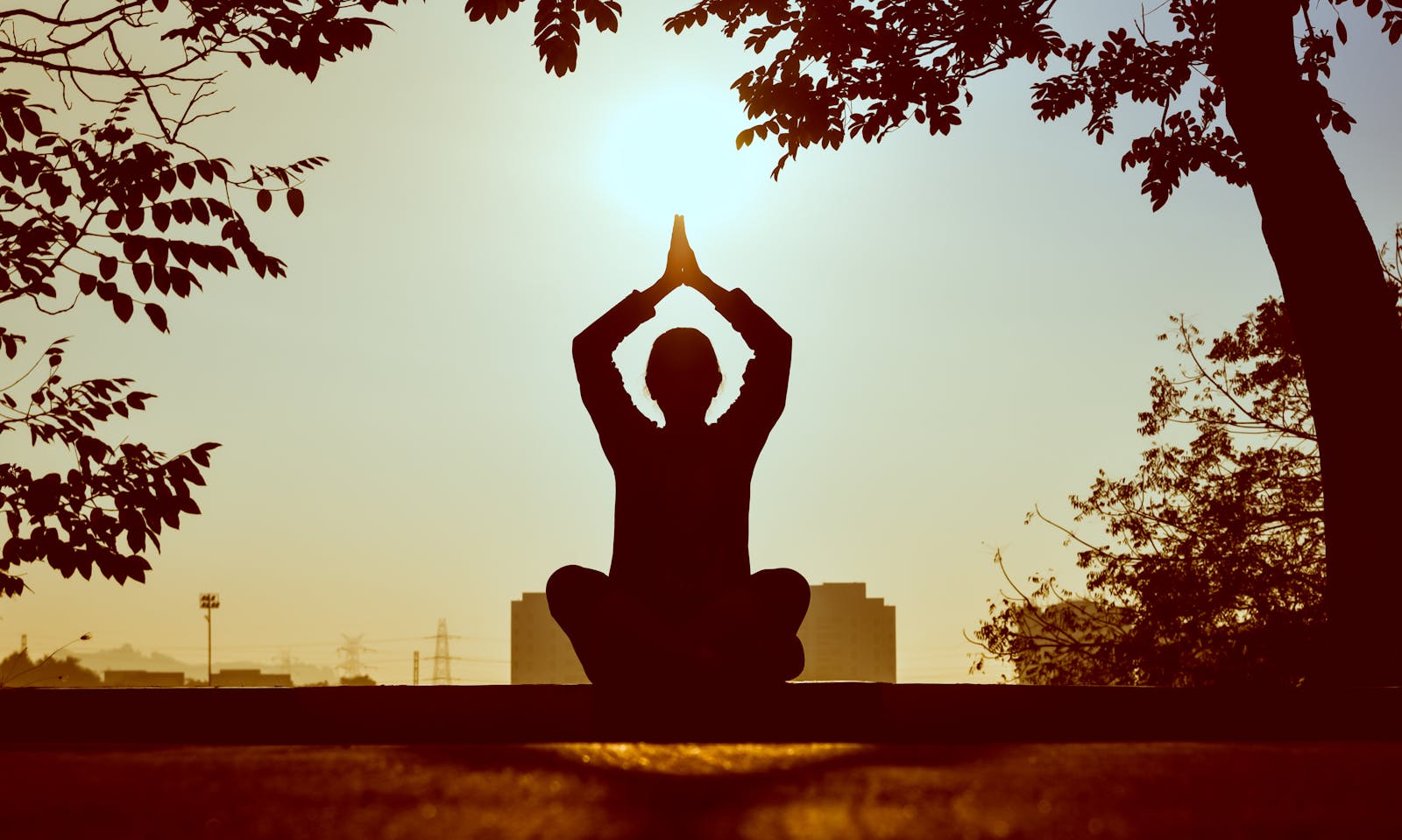
Searches for samadhi yoga images typically reflect people trying to visualize what this state looks like, since it’s an internal experience with no obvious external marker. In practice, most representations show a meditator in a seated posture, spine straight, eyes closed or softly focused, often depicted with imagery suggesting light, stillness, or expansiveness, sunrise scenes, radiant auras, or serene natural settings. These images are symbolic rather than literal; samadhi has no visible outward sign beyond, at most, extremely slow, steady breathing and complete physical stillness. If you’re building a personal practice, it can be more useful to focus on the felt sense of steadiness described above rather than trying to visually recreate an image you’ve seen online.
What Is Sahaj Samadhi Dhyan Yoga?
Sahaj Samadhi Dhyan Yoga refers to a category of meditation programs, most notably one taught through the Art of Living Foundation, that use a simple, personalized mantra-based technique aimed at helping the mind settle into a natural, effortless state of stillness. “Sahaj” translates roughly to “natural” or “easy,” and the technique is generally taught as requiring no forceful concentration, the mind is guided toward quietness gently rather than through strain. As with SSY, program details, course length, and specific instructions vary by teacher and organization, so it’s worth confirming details directly with whichever specific school or teacher you are considering before enrolling.
Common Misconceptions About Samadhi
A few misunderstandings come up often enough to address directly.
- Samadhi is not sleep or unconsciousness. Classical texts are explicit that it is a state of heightened, not diminished, awareness.
- It is not achieved once and permanently retained after a single course or weekend retreat; most traditional accounts describe it as a state that deepens and stabilizes gradually with sustained practice over years.
- It is not identical across all Indian philosophical and spiritual traditions. Buddhist, Jain, and various Hindu schools use the term with meaningfully different technical definitions, so a claim from one lineage shouldn’t automatically be assumed to apply to another.
- It is not a shortcut around ethical practice. The yama and niyama that begin the eight-limbed path are traditionally considered a non-negotiable foundation, not an optional preliminary step.
How Does Samadhi Fit Into a Modern Yoga Practice?
For most contemporary practitioners, especially those balancing a demanding job or family life, treating samadhi as a distant, once-in-a-lifetime peak experience is more useful than treating it as a weekly goal. What is genuinely achievable, and valuable, on a shorter timeline is the steadiness that the earlier limbs cultivate: better breath control, calmer emotional reactivity, and a mind that recovers from stress more quickly. A grounded daily yoga routine that includes asana, some pranayama, and even five to ten minutes of seated stillness builds the same foundation the eight-limbed path describes, just at a realistic, sustainable pace. Styles like Hatha yoga and restorative yoga are often recommended as entry points precisely because they emphasize stillness and breath awareness over intensity, making them a natural bridge toward meditative depth. For those specifically drawn to the meditative end of the spectrum, online yoga classes focused on meditation and pranayama can offer more structured, consistent guidance than trying to build the practice entirely alone.
Questions People Ask About Samadhi
Is samadhi the same as enlightenment?
They’re closely related but not always treated as identical. In Patanjali’s system, samadhi is the direct means to kaivalya (liberation), which is the ultimate goal. Some traditions use “enlightenment” and “samadhi” almost interchangeably; others treat samadhi as a repeatable state that, when stabilized over time, eventually gives rise to lasting liberation.
Can beginners experience samadhi?
Most classical teachings describe samadhi as the result of sustained practice across all eight limbs, so it is generally not something beginners should expect quickly. That said, brief moments of deep absorption can happen unpredictably to anyone, even without formal training, though these fleeting experiences are usually distinguished from the stable, cultivated samadhi the yoga tradition describes.
How long does it take to reach samadhi?
There is no fixed timeline, and classical texts don’t specify one. Traditional accounts generally describe samadhi as the outcome of years of consistent practice across asana, pranayama, and meditation, rather than something reachable through a short course or a handful of sessions.
What is the difference between meditation and samadhi?
Meditation (dhyana) is the seventh limb, a state of sustained, effortless attention on an object. Samadhi is the eighth and final limb, where even the subtle distinction between the meditator and the object of meditation dissolves. Meditation is the practice; samadhi is described as its natural culmination.
Do you need a guru or ashram to reach samadhi?
Not according to the texts themselves, though many practitioners find structured guidance, whether through a teacher, an ashram, or a course, genuinely helpful for staying consistent and correcting technique. Programs like Siddha Samadhi Yoga or Sahaj Samadhi Dhyan Yoga are examples of structured paths some people choose, but self-guided daily practice following the eight limbs is also a recognized approach.
Try This for Yourself
Reaching samadhi isn’t something you can force in a single sitting, but building the steadiness that leads toward it starts with consistent, guided practice. If you want structured support for the breathwork, postures, and meditation that form the foundation of this path, explore FitStrot’s online yoga classes and start building your practice one session at a time.
Related reading: chitta vritti, kleshas, gunas in yoga, Bhagavad Gita and yoga, and FitStrot’s online yoga classes.