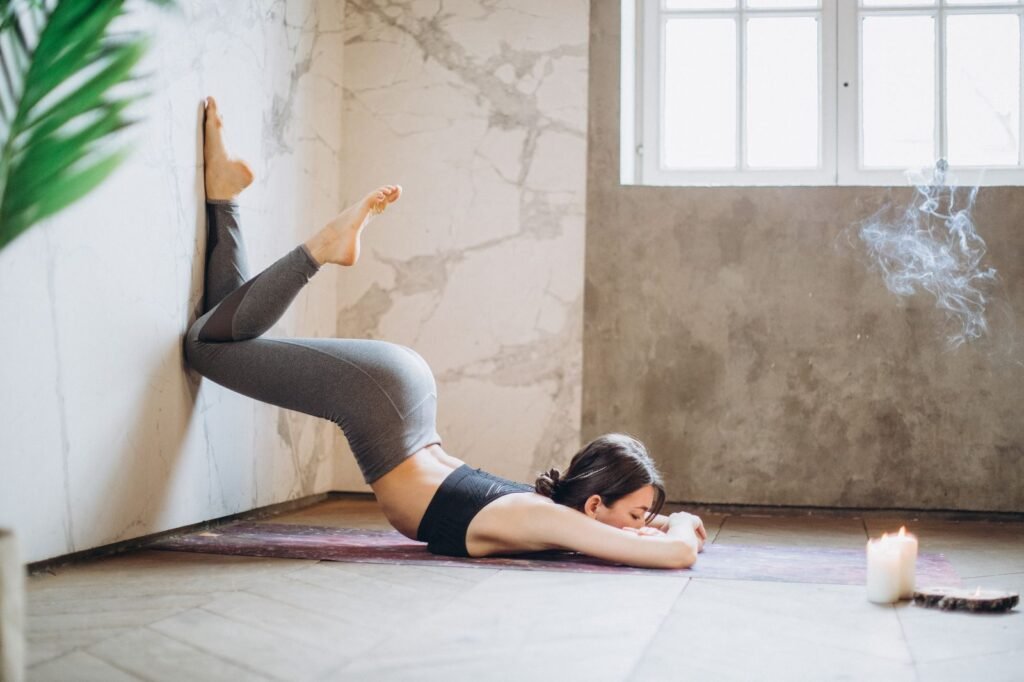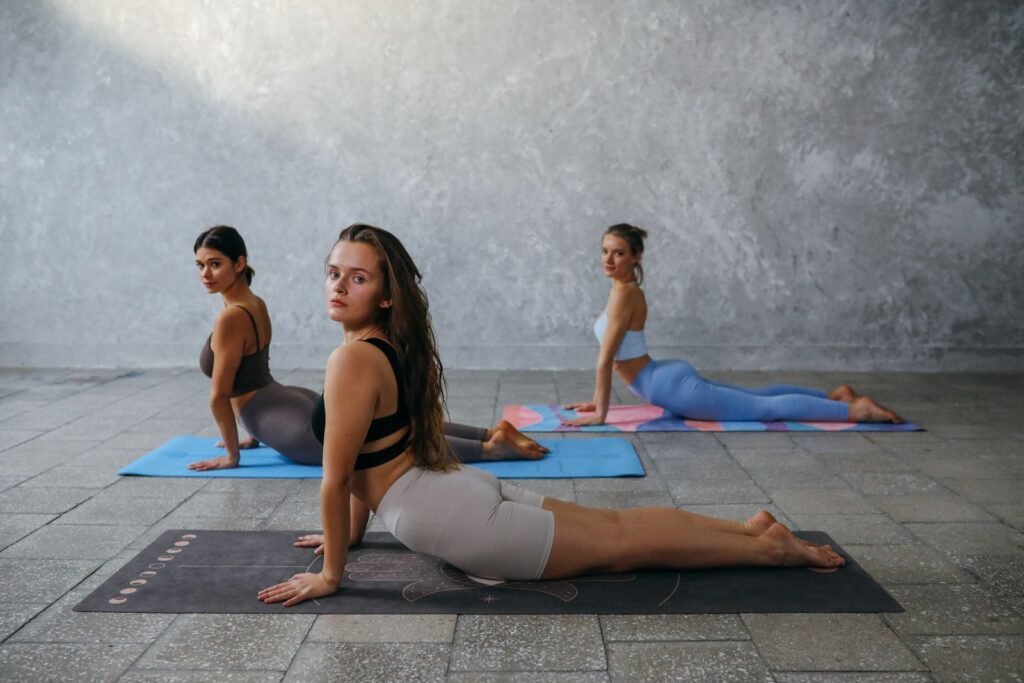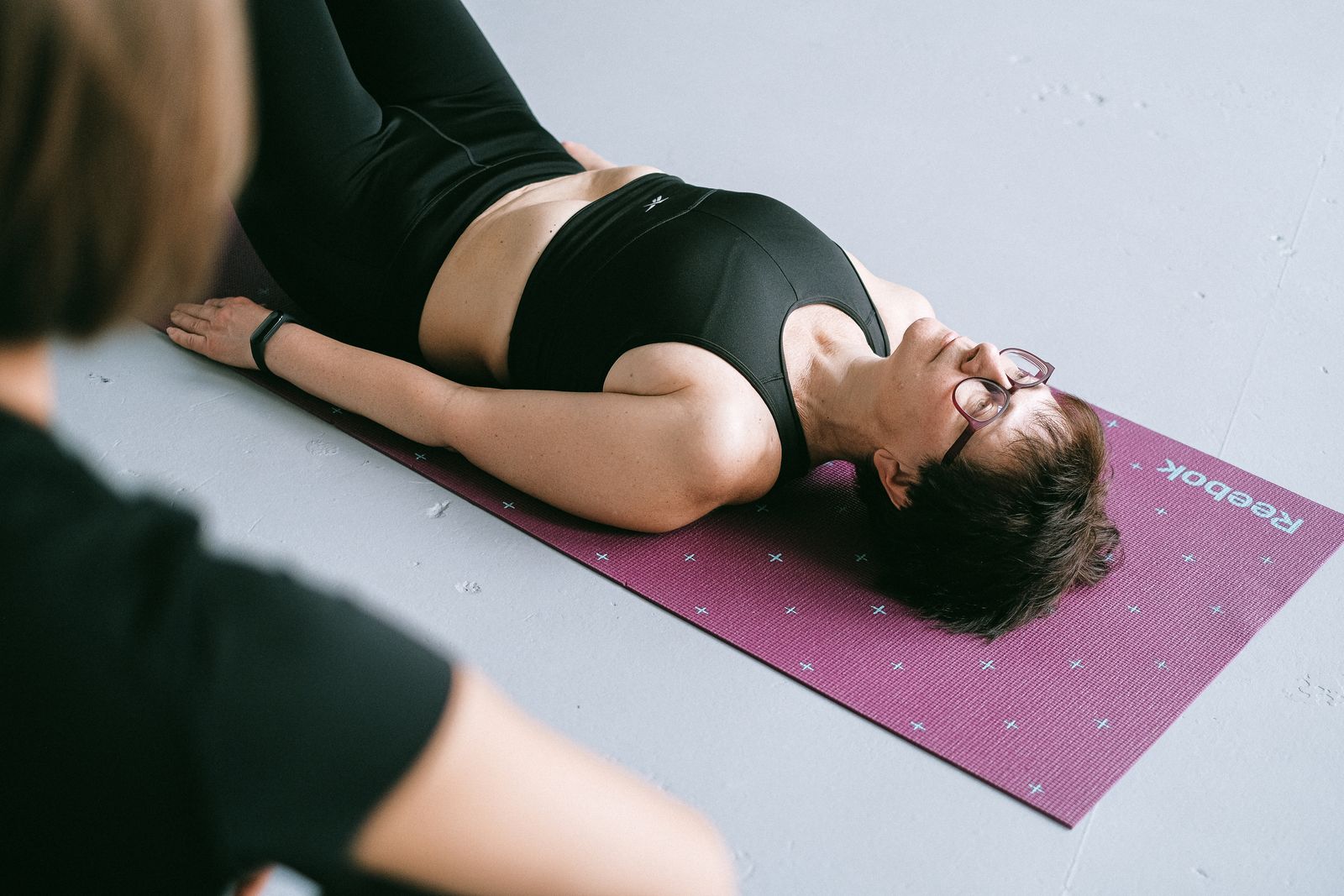
Makarasana, or Crocodile Pose, is a prone relaxation posture in which you lie face-down on the mat, stack your forearms or hands under your forehead, and let your belly, chest, and legs rest heavily into the floor while you breathe slowly and deeply. It’s one of the few yoga poses built entirely around stillness rather than stretch or strength, and it’s commonly used to release tension in the lower back, calm an overactive nervous system, and teach diaphragmatic breathing by making belly-breathing physically unmissable. The name comes from the Sanskrit makara (crocodile) and asana (pose), describing the low, grounded, half-submerged stillness of a crocodile resting at the water’s edge. Held for anywhere from three to twenty minutes, makarasana is often the pose practitioners are given when they need to slow down before anything else happens.
What Does Makarasana Mean in Sanskrit?
Makara translates to “crocodile” in Sanskrit, and asana means “seat” or “posture.” The imagery is deliberate: a crocodile floats low in the water, almost motionless, expending minimal energy while remaining fully alert to its surroundings. That combination of physical stillness and quiet awareness is exactly what the pose is designed to cultivate. Makarasana has roots in traditional Hatha yoga and is described in the Gheranda Samhita, a 17th-century Hatha yoga text, which refers to the pose in relation to generating internal heat and supporting pranayama practice. Today it’s used far more often as a restorative and therapeutic shape than as a heat-building one, appearing frequently in Hatha, restorative, and yoga therapy classes.
How Do You Do Makarasana Step by Step?
Start by lying face-down on your mat with your legs extended behind you. Separate your feet to roughly hip-width or slightly wider, letting the heels drop out to the sides and the toes turn outward — this takes pressure off the lower back. Bend your elbows and stack your forearms in front of you, resting your forehead on your stacked hands or forearms; some practitioners prefer turning the head to one side instead, which is a fine variation as long as you alternate sides to avoid one-sided neck strain. Let your shoulders soften away from your ears and allow your chest, ribs, and belly to sink fully into the floor. Close your eyes and begin breathing slowly through the nose, noticing how the belly presses into the mat on the inhale and releases on the exhale. Hold anywhere from three minutes as a mid-practice reset to fifteen or twenty minutes as a closing relaxation pose. If you’re new to floor-based poses, pairing makarasana with the standing foundation of tadasana at the start of practice helps bookend a session with two very different but equally grounding shapes.
What Are the Benefits of Makarasana Yoga?
Makarasana yoga benefits show up mainly in the nervous system and the lower back, though the pose touches several systems at once. Practitioners and teachers commonly report these effects:
- Lower back relief — lying prone with the spine in a neutral, supported position takes compressive load off the lumbar discs, which is why the pose is frequently recommended alongside a broader yoga for back pain routine.
- Deeper, slower breathing — because the belly is pressed against the floor, every inhale creates resistance that makes diaphragmatic breathing physically obvious, which is one reason the pose is used to teach beginners what a full belly breath actually feels like.
- Nervous system down-regulation — the fully supported, face-down position is commonly associated with activating the parasympathetic (“rest and digest”) branch of the nervous system, helping shift the body out of a stress response.
- Shoulder and neck release — resting the head on stacked forearms allows the muscles of the neck, shoulders, and upper back to fully let go without needing to hold any weight.
- Improved body awareness — because there is no active movement to focus on, attention naturally shifts to the sensation of breath and the points of contact between the body and the floor, a skill that carries over into more demanding poses.
For a wider view of what a consistent asana and breathing practice does for the body over weeks and months, see our guide to the benefits of yoga.
Which Muscles Does Crocodile Pose Work?
Unlike most postures, makarasana isn’t built to work muscles so much as to let them stop working. The erector spinae muscles running along the spine, which stay engaged through most of daily life to maintain posture, are given full support from the floor and allowed to release. The muscles of the neck and upper trapezius, often chronically tight from desk work and screen time, relax completely once the head is resting on the forearms rather than being held up by the neck. The diaphragm is the one muscle actually working harder than usual, since it has to press against the added resistance of the body’s own weight on the belly with each inhale. Because it demands so little muscular effort while offering so much passive release, makarasana is frequently placed at the end of a hatha yoga or vinyasa yoga class, right before final relaxation.
Is Makarasana Good for Beginners?
Makarasana is one of the most beginner-friendly poses in yoga, since it requires no strength, flexibility, or balance whatsoever. The only real skill involved is learning to relax fully into the floor rather than holding tension out of habit, which can actually take longer to learn than it sounds. Beginners who find lying flat uncomfortable on the ribs or hip bones can place a folded blanket under the pelvis and lower ribs for cushioning. Those with neck sensitivity should turn the head to alternate sides every few minutes rather than holding one direction for the full duration. Because it asks so little of the body, makarasana is often one of the first poses introduced in a beginner-friendly hatha yoga class, well before students attempt standing balances like vrksasana.
What Are Common Alignment Mistakes in Makarasana?
The most frequent error is keeping the legs pressed tightly together, which tends to tilt the pelvis and increase pressure on the lower back; letting the feet fall open to hip-width or wider, with the heels rolling outward, releases that tension immediately. A second common mistake is holding the shoulders up near the ears instead of letting them melt toward the floor, which keeps the neck and upper back from fully releasing. Some practitioners also unconsciously hold the breath high in the chest rather than letting it drop into the belly, missing the pose’s main purpose; consciously softening the belly and letting it push against the mat on each inhale corrects this quickly. Finally, rushing out of the pose after only thirty seconds defeats its purpose — the nervous system typically needs at least a minute or two of stillness before it begins to downshift, a pattern shared with other restorative holds throughout yoga poses generally.
How Does Makarasana Support Better Breathing?
Prone positioning makes belly breathing almost impossible to fake, which is exactly why teachers use makarasana to introduce pranayama concepts. Lying face-down with the belly against the floor means every diaphragmatic inhale has to push against the ground, giving immediate, tangible feedback about whether a breath is actually reaching the lower lungs or staying shallow in the chest. This is particularly useful for people who have spent years breathing primarily into the upper chest, a common pattern linked to chronic stress and poor posture. Once a practitioner can feel and control belly breathing in makarasana, that same breath pattern becomes easier to access in seated pranayama practices and even during more dynamic sequences like surya namaskar.
Can Makarasana Help With Back Pain?
Makarasana is widely used in therapeutic and restorative yoga settings as a gentle option for people managing lower back discomfort, since the prone, fully supported position takes weight-bearing load off the spine entirely. Some yoga therapy sources also mention it being used alongside broader programs for people managing conditions like mild disc issues or general muscular back strain, though this should be treated as a commonly cited supportive practice rather than a substitute for a medical diagnosis or treatment plan. Anyone with a diagnosed spinal condition, recent back surgery, or acute pain should check with a doctor or physical therapist before adding any new pose, including this one, to their routine. For a broader set of gentle options, see our guide to yoga for back pain.
How Does Makarasana Compare to Other Relaxation Poses?
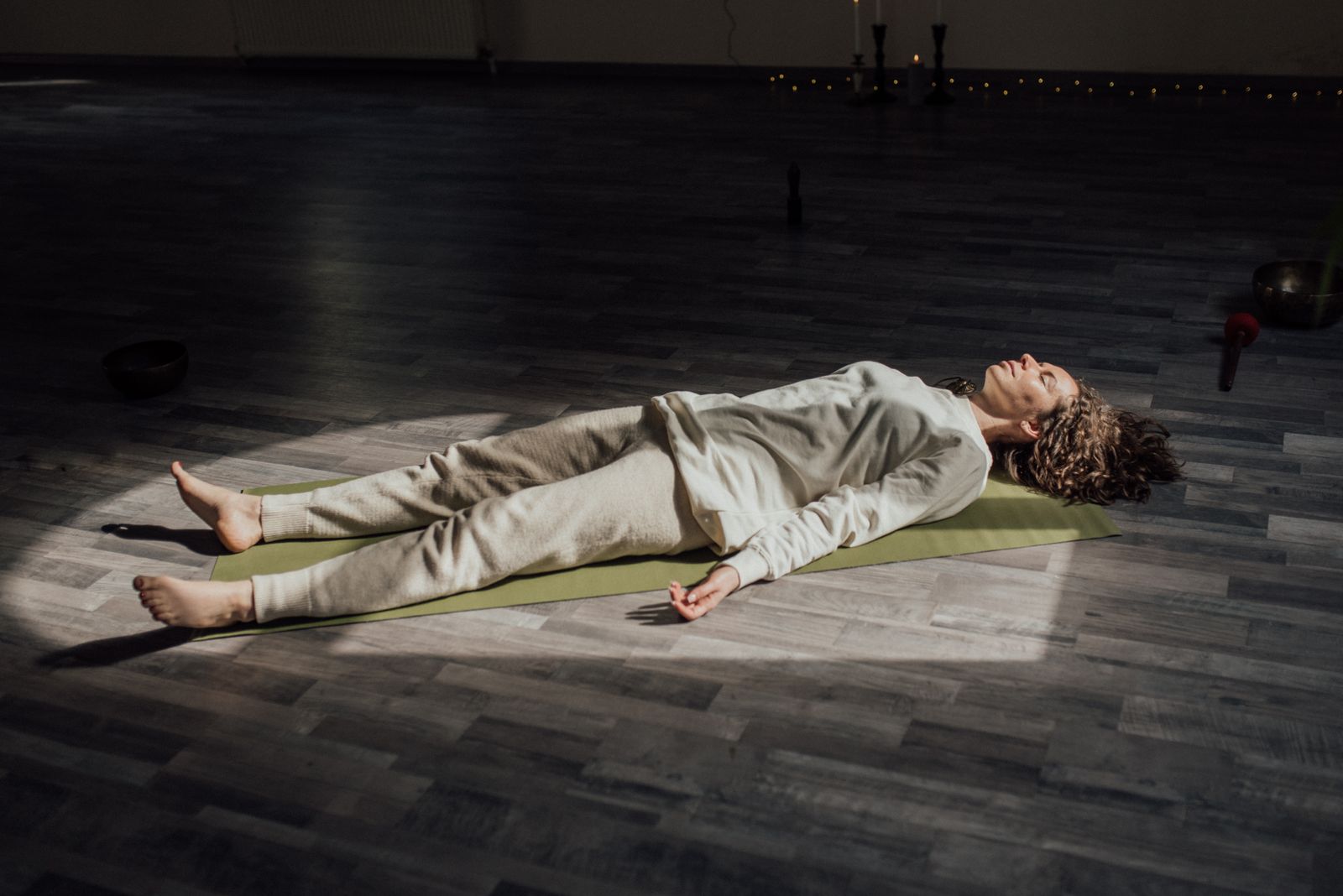
Makarasana is often grouped with Savasana (Corpse Pose) as one of yoga’s core relaxation postures, but the two work differently. Savasana is practiced lying on the back with the limbs completely passive, which is excellent for full-body release but offers no particular feedback about breathing mechanics. Makarasana’s prone position, by contrast, uses the weight of the body against the floor to actively teach diaphragmatic breathing, making it more useful as a breathing tool even though both poses share the same goal of deep relaxation. Some practitioners find makarasana more comfortable than Savasana if lying flat on the back causes lower back discomfort, since the prone position naturally supports a neutral spine. Many teachers use both poses within the same practice — makarasana mid-session to reset the breath, Savasana at the very end to integrate the whole practice. Where standing poses like tadasana and balances like vrksasana build strength and focus through effort, makarasana builds the opposite skill: the ability to let go completely while staying awake and aware, which is why a balanced practice tends to include both active and restorative shapes.
When Should You Practice Crocodile Pose in a Sequence?
Makarasana works well in three different places within a class. Early in a practice, it can serve as a grounding pose that settles the nervous system before more active work begins. In the middle of a sequence, particularly after backbends like Bhujangasana (Cobra Pose) or Salabhasana, it functions as a neutralizing counter-pose that lets the spine rest between more demanding shapes. At the end of a class, it can substitute for or precede Savasana as a closing relaxation, especially for students who find lying on their back uncomfortable. Many teachers introduce it directly after prone backbends within a hatha yoga sequence, since the transition from an active backbend to full prone stillness creates a clear, teachable contrast between effort and release. Variations of the pose can be swapped in at any of these points depending on what a student’s body needs that day.
Are There Variations of Makarasana?
Yes. The classical version stacks the forearms and rests the forehead on the hands, but a simpler variation turns the head to one side and stretches the arms forward alongside the head, which some beginners find more comfortable for the neck. A supported variation places a bolster or folded blanket under the chest and forehead for extra height, useful for people with tighter shoulders or a larger chest that makes the flat version uncomfortable. A wider-leg variation increases the distance between the feet for additional lower back relief, while a version with the arms tucked under the chest rather than stacked in front changes the pressure distribution across the ribs and belly. Each variation preserves the pose’s core purpose — supported stillness and deep breathing — while adjusting comfort for different body types, which reflects the broader adaptability found across types of yoga.
What Should You Avoid or Modify With Makarasana?
Pregnant practitioners, particularly in the second and third trimesters, should avoid lying prone altogether and choose a side-lying or seated relaxation pose instead. People recovering from recent abdominal surgery, or with acute abdominal pain, should also skip this pose until fully healed, since direct pressure on the belly can be uncomfortable or contraindicated. Those with severe neck injuries may need to modify the head position significantly or avoid the pose until cleared by a doctor. Most practitioners are advised to leave three to four hours between eating and practicing this pose, since lying face-down with pressure on a full stomach is uncomfortable and can interfere with digestion. If you have a specific health condition or injury, checking with a qualified online yoga classes instructor before attempting a new pose is always a sensible precaution.
Questions People Ask About Makarasana
Is Makarasana easy or hard to do?
Makarasana is one of the easiest poses in yoga from a physical standpoint, since it requires no strength, flexibility, or balance. The real challenge for most people is mental rather than physical: learning to actually relax and breathe slowly rather than staying tense out of habit, which can take longer to master than the shape itself.
How long should you hold Crocodile Pose?
A typical hold ranges from three to five minutes when used as a reset between other poses, and up to fifteen or twenty minutes when used as a closing relaxation. There’s no strict rule; even a single minute of full, conscious belly breathing in this position offers noticeable benefit for beginners.
Why is it called Crocodile Pose?
The name comes from the Sanskrit makara (crocodile) and asana (pose), describing the low, still, half-submerged posture of a crocodile resting at the water’s edge. The pose’s flat, grounded shape and quiet stillness are meant to echo that image.
Can Makarasana help with stress and anxiety?
Makarasana is commonly used to support relaxation because the fully supported prone position combined with slow, deep breathing is associated with calming the nervous system. Many practitioners find it a helpful tool for winding down, though it should be treated as one part of a broader stress-management approach rather than a standalone solution for clinical anxiety.
What’s the difference between Makarasana and Savasana?
Savasana (Corpse Pose) is practiced lying face-up with the limbs completely passive, while Makarasana is practiced face-down with the forearms stacked under the forehead. Makarasana’s prone position gives more direct feedback for learning belly breathing, while Savasana is generally used as the final, most passive relaxation at the end of a full practice.
Do you need any equipment for Makarasana?
No equipment is required, though a folded blanket under the hips, ribs, or forehead can add comfort for practitioners with sensitive joints or a smaller amount of natural cushioning over the pelvis and lower ribs. A yoga mat alone is enough for most people to practice the pose comfortably.
Try This for Yourself
Reading about makarasana is useful, but the release, the breath, and the calm it builds only really register once you feel them in your own body. If you’d like personalized guidance on alignment, breathing cues, and how to fit this pose into a broader practice, join a live class with FitStrot’s online yoga classes and work with an instructor who can guide your breath and posture in real time.
Related reading: yoga poses, surya namaskar, tadasana, vrksasana, and online yoga classes.