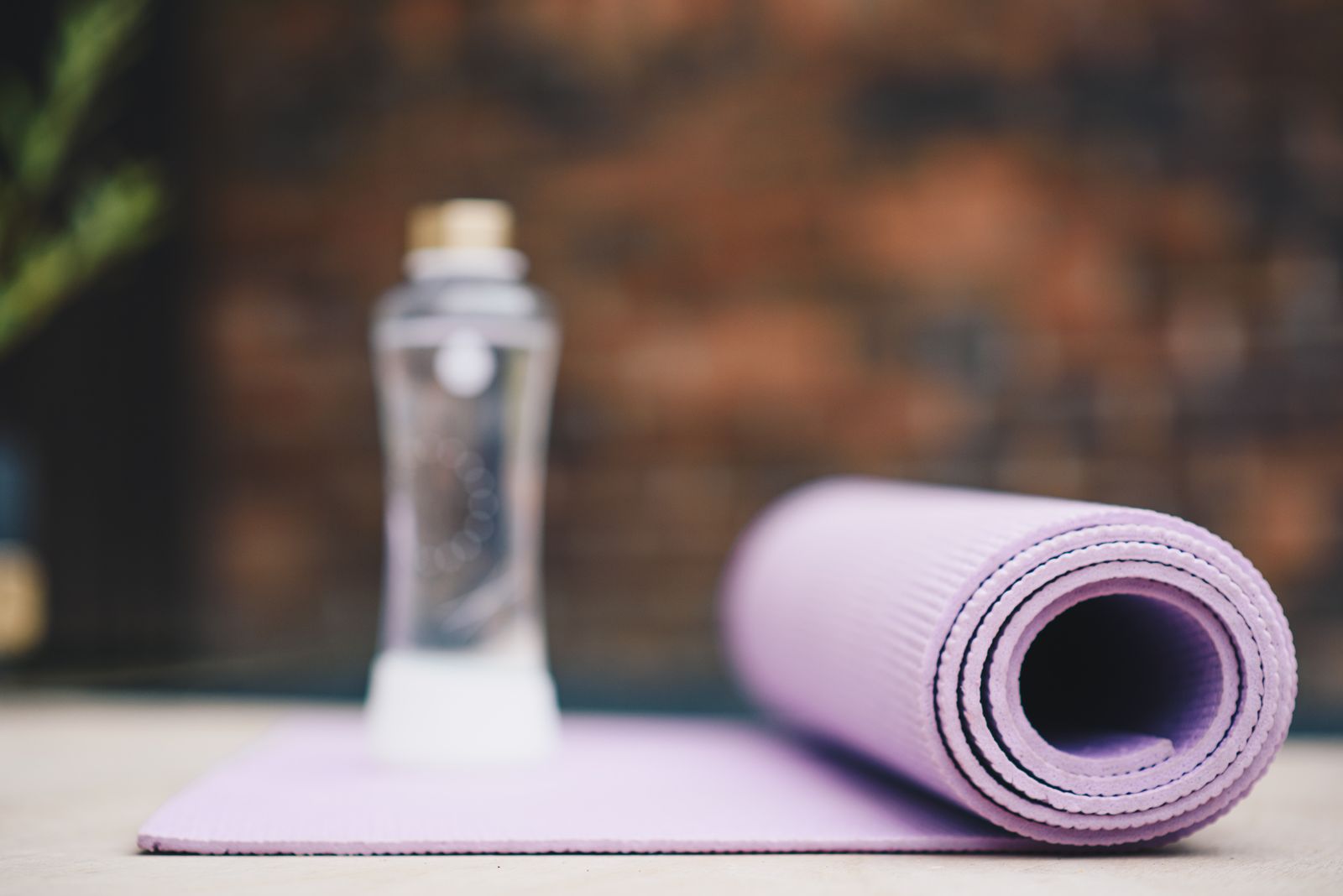
To wash a yoga mat, wipe it down after every session with a damp microfiber cloth, then do a deeper clean every one to two weeks by spraying it with a mix of water, a few drops of mild soap, and either white vinegar or a splash of tea tree oil, wiping it thoroughly, and hanging it to air-dry completely before rolling it up. Avoid soaking most mats in a sink or tossing them in a washing machine unless the manufacturer’s care label specifically says it’s safe, since prolonged water exposure can break down the foam, delaminate layers, or strip the surface texture that gives you grip. The exact method changes depending on whether your mat is PVC, natural rubber, TPE, or cork, which we’ll break down below along with drying times, what not to use, and how often you actually need to do this.
Why Does a Yoga Mat Need Regular Cleaning?
A yoga mat sits directly against bare skin for an hour or more, absorbing sweat, skin oils, and whatever dust or debris was on the floor beforehand. Because most mats are stored rolled up and slightly damp after a sweaty hot yoga or vinyasa class, they create a warm, moist environment where bacteria and fungus can multiply between uses. This isn’t just a hygiene inconvenience — a neglected mat can start to smell, feel slick in the wrong way, and in some cases contribute to skin irritation. Regular cleaning also protects your investment, since sweat salts and oils gradually degrade the surface coating that keeps a mat grippy. If you practice daily as part of a 30 day yoga challenge or a consistent daily yoga habit, your mat works harder than an occasional practitioner’s and deserves a proportionally more frequent cleaning routine.
How Often Should You Actually Clean Your Yoga Mat?
A quick wipe-down belongs after every single practice, especially if you sweat noticeably or practice barefoot. This takes less than two minutes and prevents oils and bacteria from setting into the material overnight. A deeper clean — the spray-wipe-dry method described above — is generally recommended every one to two weeks for people practicing three or more times weekly, and roughly once a month for lighter or occasional use. If you do hot yoga, power yoga, or any sweat-heavy style, lean toward the more frequent end of that range, since higher heat and moisture accelerate the buildup of odor-causing bacteria. A useful rule of thumb: if your mat smells noticeably “off” before you’ve even unrolled it, or if it feels tacky in a way that isn’t the good kind of grip, it’s overdue for a deep clean regardless of the calendar.
What Do You Need for a Basic Yoga Mat Cleaning?
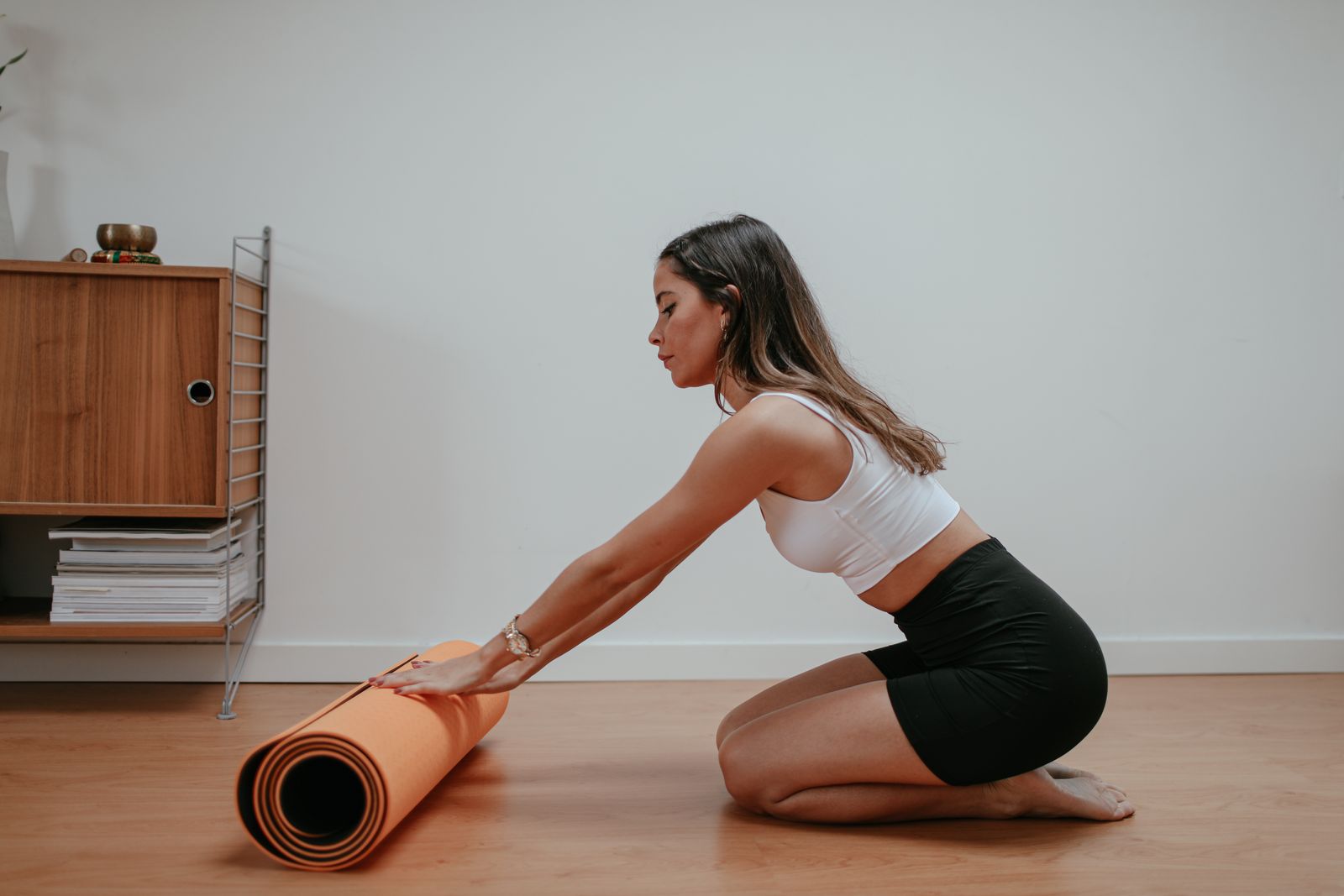
Most yoga mats can be cleaned with items you already have at home:
- Spray bottle for mixing and applying the cleaning solution
- Distilled or filtered water — tap water can leave mineral residue on darker mats
- Mild, unscented liquid soap or castile soap, just a few drops
- White vinegar or tea tree oil for their natural antibacterial properties
- Soft microfiber cloth — gentler than a rough sponge, which can scuff the mat’s textured surface over repeated use
Some practitioners prefer a store-bought yoga mat cleaner spray, formulated to skip the vinegar smell and dry faster, but a homemade solution works just as well for most mat materials. Avoid anything with bleach, ammonia, or strong essential oil concentrations, since these break down foam and rubber over time and can leave a residue that transfers onto skin during your next yoga for beginners session.
What Is the Step-by-Step Method for Deep Cleaning a Yoga Mat?
Start by laying the mat flat on a clean, flat surface — a bathroom floor or an outdoor patio works well. Mix roughly two cups of water with one to two tablespoons of mild soap and a tablespoon of white vinegar (or five to six drops of tea tree oil) in a spray bottle, shake gently, and mist the entire surface evenly. Let the solution sit for 60 to 90 seconds so it can loosen dried sweat and oils, then wipe firmly in overlapping strokes with a microfiber cloth, working from one end to the other. Flip the mat over and repeat on the underside, since grip texture and residue accumulate there too, especially if you practice on carpet or an unclean studio floor. Once both sides are wiped, use a second, slightly damp cloth to remove any remaining soap residue — leftover soap film is one of the most common causes of a mat feeling slippery instead of grippy afterward. Finish by wiping both sides one more time with a dry towel to remove excess moisture before moving to the drying stage.
How Should You Dry a Yoga Mat Without Damaging It?
Air-drying is the safest method for virtually every mat material. Hang the mat over a shower rod, a drying rack, or an outdoor railing in a well-ventilated space, ideally away from direct, intense sunlight for extended periods, since UV exposure can gradually degrade certain rubber and foam blends. Most mats need four to eight hours to dry fully at room temperature, though thicker mats or humid climates can extend that closer to 24 hours. Never roll or store a mat while it’s still damp — trapped moisture is exactly the condition that breeds mold, mildew, and the musty smell that’s notoriously difficult to remove once it sets in. If you’re short on time, pressing a dry towel over both sides briefly can speed things up, but this supplements air-drying rather than replacing it. Avoid tumble dryers, direct heaters, and hair dryers entirely, since concentrated heat can warp, shrink, or crack most mat materials.
Can You Put a Yoga Mat in the Washing Machine?
For most yoga mats, the honest answer is no. The majority of PVC, TPE, and foam-based mats are not designed to withstand the agitation, spinning, and prolonged water saturation of a washing machine cycle, and doing so risks delamination — where the mat’s layers separate — along with permanent creasing and loss of texture. A small number of thin, machine-washable mats specifically marketed as such (often labeled “microfiber-topped” or “machine washable” travel mats) can go through a gentle cycle in cold water without a spin cycle, but this is the exception rather than the rule. Always check the manufacturer’s care instructions before attempting this, since washing an unsuitable mat can void a warranty and shorten its usable life dramatically. If you’re unsure whether your specific mat can be machine washed, the safer default is the manual spray-and-wipe method described earlier in this guide, which works for essentially every mat type without any risk of damage.
How Do You Clean a Mat Based on Its Material?
Mat material changes the cleaning approach more than any other factor:
| Mat Material | Water Tolerance | Recommended Cleaning Method |
|---|---|---|
| PVC | Most water-resistant and durable | Tolerates a slightly wetter wipe-down and even occasional light rinsing under a faucet; air-dry fully afterward |
| Natural rubber | More porous; can absorb soap or oil residue if over-saturated | Lighter misting with a soft cloth wipe rather than heavy spraying |
| TPE (thermoplastic elastomer) | Moderate — sits between PVC and natural rubber | Handles mild soap solutions well but shouldn’t be soaked |
| Cork-topped | Absorbs moisture quickly; needs the gentlest treatment | Barely damp cloth with no soap, or just plain water; never leave wet for more than a few minutes |
| Suede or microfiber-topped | Absorbent top layer holds sweat directly | More frequent light cleaning; spot-clean as-needed between full deep cleans |
What Household Products Should You Avoid Using on a Yoga Mat?
Several common household cleaners can quietly ruin a yoga mat even though they seem like reasonable choices. Bleach and other harsh disinfectants can break down rubber and foam bonds, causing the surface to become brittle, flaky, or discolored within just a few uses. Alcohol-based sanitizing wipes, while effective at killing germs, dry out rubber and can leave a residue that reduces grip if used as a primary cleaning method rather than an occasional emergency wipe. Fabric softener has no place in mat care and can leave a slick film that makes poses like downward dog or warrior pose dangerously slippery. Heavily scented or oil-based products can build up residue over repeated cleanings, ironically making the mat feel dirtier and less grippy the more often it’s “cleaned” with the wrong product. When in doubt, a simple diluted mild soap and water solution outperforms anything more aggressive.
How Do You Get Rid of a Persistent Yoga Mat Smell?
A lingering odor usually means bacteria or mildew have taken hold in the mat’s pores rather than just sitting on the surface, which means a quick wipe won’t fully solve it. Start with the standard deep-clean method above, but let the vinegar or tea tree solution sit for a full two to three minutes before wiping, giving it more contact time to break down the source of the smell. For a stronger odor, a baking soda paste (a tablespoon of baking soda mixed with just enough water to form a paste) can be spread thinly over the smelliest sections, left for 10 to 15 minutes, then wiped and rinsed with a damp cloth — baking soda is a mild, mat-safe deodorizer that neutralizes odor rather than masking it. If the smell persists after two or three deep cleans, it may indicate the mat has absorbed moisture into its core layers, which is a sign it’s nearing the end of its usable life rather than a cleaning problem you can fully reverse.
How Do You Restore Grip to an Old or Slippery Yoga Mat?
A mat that’s become slick, rather than dirty, is often suffering from a buildup of soap residue or a worn-down surface texture rather than needing more cleaning. First, try a thorough clean using only water and a small amount of vinegar, skipping soap entirely, since soap film is the most common hidden cause of reduced grip. Wipe the mat down after every practice for a week, allowing residue to clear gradually. If grip still feels off afterward, sprinkling a small amount of salt on the mat, adding a splash of water, and gently scrubbing in circular motions can help resurface a worn top layer, though this works better on rubber and PVC mats than on suede-topped ones. If none of this restores adequate traction, especially for balance-heavy poses or a consistent yoga flow practice, it’s usually safer to replace the mat than to keep compensating with grip sprays.
How Do You Care for a Yoga Mat Between Deep Cleans?
Good daily habits reduce how much deep cleaning your mat actually needs. Wiping down both sides immediately after practice, even with just a dry or barely damp cloth, prevents sweat from sitting and soaking in overnight. Storing the mat unrolled for a few minutes before fully rolling it up allows any residual moisture to evaporate rather than getting sealed inside. Using a dedicated yoga towel during particularly sweaty sessions — common in hot yoga — keeps direct sweat contact on the towel instead of the mat surface, extending the time between deep cleans. Avoiding street shoes on the mat and keeping it away from pets and dusty floors when not in use also meaningfully cuts down on debris. These small habits matter more for long-term mat hygiene than any single deep-cleaning session, similar to how consistency matters more than intensity in a broader yoga routine.
When Should You Replace Your Yoga Mat Instead of Cleaning It?
Even with excellent care, mats have a natural lifespan, typically somewhere between six months and two years depending on frequency of use, material, and thickness. Signs it’s time to replace rather than continue cleaning include visible cracking or flaking on the surface, a permanent odor that survives multiple deep cleans, thinning in the areas where your hands and feet repeatedly press down, or a loss of cushioning that makes poses uncomfortable on the wrists or knees. A mat that no longer lies flat, curling stubbornly at the corners no matter how it’s stored, has usually reached the end of its structural life. Holding onto a deteriorating mat too long isn’t just a hygiene issue — reduced grip and uneven cushioning increase the risk of slips during standing balance poses or discomfort during longer holds, which can quietly undermine both safety and consistency in your practice.
Does Where and How You Practice Affect How Often You Need to Clean Your Mat?
Where you practice changes how much your mat actually needs cleaning. A mat used exclusively at home, on a clean floor, for a gentle morning yoga routine collects far less grime than one carried into shared studio spaces or used outdoors. Outdoor practice introduces dirt, pollen, and grass residue that indoor sessions don’t, so a quick wipe before rolling it up is worth adding if you practice outside regularly. This is part of a bigger comparison many people consider when weighing yoga vs gym settings — a home practice offers more control over cleanliness, while shared studio or gym environments require more vigilance about what your mat picks up. If you split time between home and in-person classes, keeping two mats is a practical way to reduce how often either one needs a full deep clean.
Questions People Ask About Washing a Yoga Mat
Can I use baby wipes to clean my yoga mat?
Baby wipes can work for a quick, occasional wipe-down in a pinch, but they’re not ideal as a regular cleaning method. Many contain fragrances, alcohol, or moisturizing agents that can leave a residue affecting grip over repeated use. For routine cleaning, a microfiber cloth with a diluted soap-and-vinegar solution is a better long-term choice.
Is vinegar safe for all yoga mat materials?
Vinegar is generally safe and effective for most PVC, TPE, and rubber mats when properly diluted with water, and its mild acidity helps break down bacteria and odor. However, it should be used sparingly on cork mats, which are more porous, and always wiped off rather than left to soak on any material.
How long does it take for a yoga mat to fully dry after cleaning?
Most mats dry within four to eight hours at room temperature in a well-ventilated space, though humidity, mat thickness, and material all affect this. Cork and thicker foam mats can take up to 24 hours. Always confirm the mat is completely dry to the touch, including in any textured grooves, before rolling it up.
Why does my yoga mat feel sticky even after cleaning?
A sticky feeling after cleaning is usually leftover soap residue rather than dirt. Using too much soap, or not rinsing thoroughly with a second damp cloth pass, leaves a thin film that attracts more grime and feels slippery-sticky rather than the natural grippy texture the mat should have. Reducing soap amount and adding a plain-water wipe afterward typically resolves this.
Can I use essential oils other than tea tree oil to clean my mat?
Tea tree oil is popular because of its natural antibacterial properties and mild scent profile, but other oils like lavender or eucalyptus can also be used in small amounts. Use only a few drops per cleaning solution, since higher concentrations of any essential oil can leave residue or irritate skin during your next practice.
Should I clean a brand-new yoga mat before using it?
Yes, many new mats have a manufacturing residue or a slight chemical smell from the production process, especially PVC and some rubber blends. A single wipe-down with a mild soap solution, followed by a full air-dry, removes most of this residue and can also slightly improve initial grip for your first few sessions.
Try This for Yourself
A clean mat is a small detail, but it makes every session more comfortable, more hygienic, and more enjoyable to return to day after day. If you’re ready to build a consistent practice on a foundation that actually feels good under your hands and feet, explore FitStrot’s online yoga classes and get guided sessions designed around real, sustainable habits.
Related reading: morning yoga, yoga vs gym, best time to do yoga, yoga vs exercise, and FitStrot’s online yoga classes.