Yoga for men is a strength, mobility, and stress-management practice built around breath-led movement, and it works just as well for a 220-pound powerlifter as it does for a desk-bound software engineer. The poses don’t change based on gender, but the entry point often does: most men come to the mat carrying tight hips from sitting, tight shoulders from lifting, and a nervous system that rarely switches out of “on” mode. A well-structured practice targets exactly those three problems while building the kind of full-body control that translates directly into other sports. You don’t need flexibility to start. You need about 20 minutes, a plan that respects how a male body typically moves, and enough consistency to let the tissue and the nervous system adapt.
Why Do More Men Need Yoga Than Actually Practice It?
Studios and class rosters still skew heavily female, yet the physical profile yoga addresses — tight hamstrings, restricted hips, rounded shoulders, shallow breathing under stress — shows up disproportionately in men who lift weights, sit at desks, or both. Muscle building in the gym tends to shorten the muscles being trained; without counterbalancing mobility work, that shortening compounds year over year into stiff hips and a limited overhead reach. Yoga isn’t competing with strength training here — it’s the maintenance layer that keeps a heavily-loaded body functional. Men who pair resistance training with even two yoga sessions a week often report easier squats, fewer lower-back tweaks, and better sleep, because the practice is doing joint-by-joint work that a barbell alone doesn’t touch.
What Are the Core Benefits of Yoga for Men?
The benefits of yoga for men cluster into four areas: mobility, strength, breath control, and stress regulation.
- Hip and shoulder mobility — poses like Low Lunge and Eagle directly counter the hip flexor and thoracic tightness caused by sitting and pressing movements.
- Functional core and grip strength — arm balances and long holds in Plank or Chaturanga build isometric strength that carries over to deadlifts and pull-ups.
- Breath control (pranayama) — slow nasal breathing patterns are commonly cited as a tool for lowering perceived stress and steadying heart rate during high-pressure moments, whether that’s a big lift, a presentation, or a tense conversation.
- Recovery and sleep quality — a short evening sequence of forward folds and supported twists shifts the body out of a sympathetic (fight-or-flight) state, which many practitioners find helps them fall asleep faster.
None of these benefits require flexibility on day one. They show up because the practice is repeated, not because a pose is performed perfectly.
How Does Yoga Support Mental Peace and Mental Clarity?
Yoga for mental peace works through the combination of controlled breathing, sustained attention, and physical exertion — three inputs that are difficult to layer together in most other forms of exercise. When you’re holding Warrior II for 45 seconds while breathing on a four-count rhythm, your attention has nowhere else to go; this is a practical, repeatable way to interrupt rumination. Over weeks of consistent practice, many men describe a noticeable gain in mental clarity — sharper focus during work blocks, less reactivity in stressful conversations, and an easier time falling asleep. This isn’t a replacement for treatment of clinical anxiety or depression, and anyone dealing with a diagnosed condition should treat yoga as a complement to, not a substitute for, professional care. But as a daily regulation tool, a 15–20 minute practice combining breathwork and slow movement is one of the more accessible options available, requiring no equipment and no appointment.
What Does a Beginner-Friendly Yoga for Men Routine Look Like?
Programs built for yoga for men beginners should front-load hip and hamstring mobility, since that’s where most men are tightest, and go easy on deep backbends until the spine has some conditioning. A sensible 20-minute starting sequence:
- Cat-Cow, 8 breaths, to warm the spine
- Downward Dog, 5 breaths, pedaling the heels to ease calf and hamstring tightness
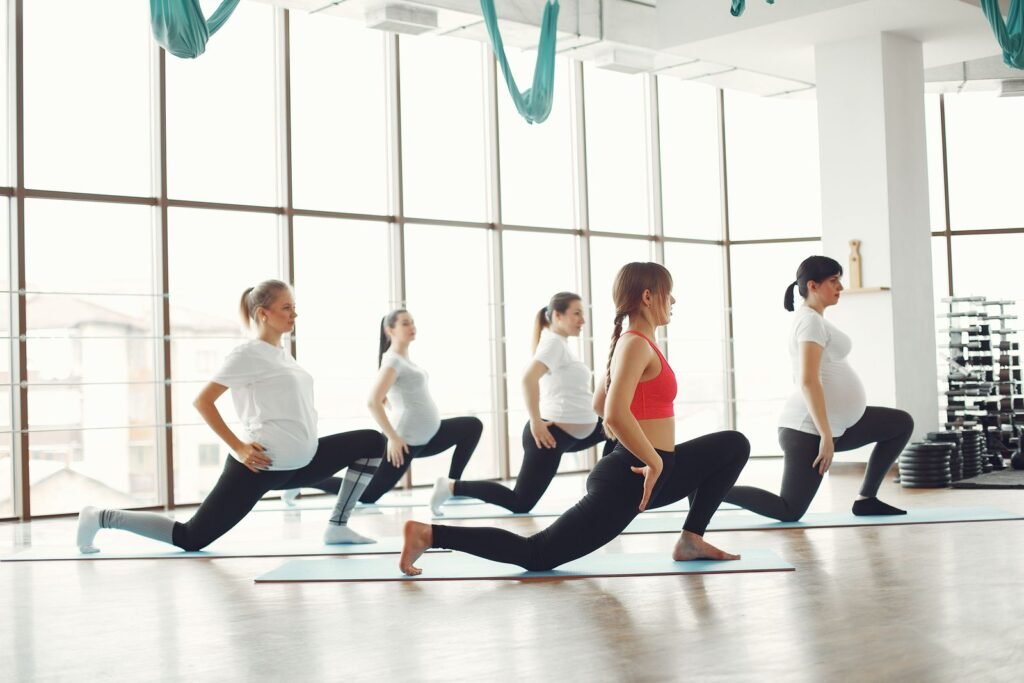
- Low Lunge each side, 5 breaths, to open the hip flexors
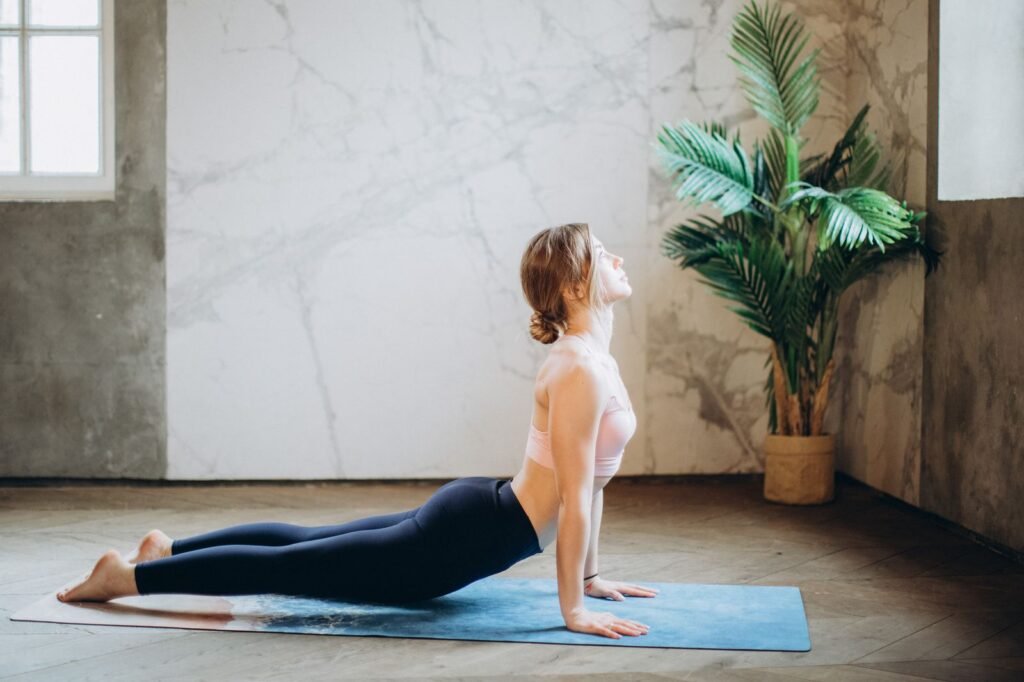
- Plank to Cobra flow, 5 rounds, for core and shoulder activation
- Seated Forward Fold, 8 breaths, respecting whatever range is available without forcing it
- Supine Twist each side, 6 breaths, to close with spinal release
Run this three or four times a week for a month before adding more advanced poses. If you’re new to the broader practice beyond this routine, a guide to yoga for beginners covers the foundational poses, breathing cues, and common early mistakes in more depth.
Which Yoga Styles Work Best for Men Who Lift or Play Sports?
Not every style of yoga suits every goal, and picking the wrong one is a common reason men quit after a single class. If the priority is strength and stamina, vinyasa yoga — a continuous, breath-linked flow between poses — builds work capacity and matches the pace most athletic men expect from a workout. If the priority is deep tissue release after heavy training, yin yoga, which holds passive stretches for two to five minutes at a time, targets the connective tissue that faster styles skip over. For men newer to structured movement generally, hatha yoga offers a slower pace with longer holds, making it easier to learn correct alignment before speeding up. Reviewing the broader landscape of types of yoga before committing to a studio or app subscription saves the frustration of starting with a style mismatched to your goals.
Can Yoga Actually Improve Athletic Performance?
Yes, largely through two mechanisms: expanded range of motion and improved proprioception (the body’s sense of position in space). A tight hip that stops a squat short of depth, or shoulders that can’t stack overhead for a strict press, are mobility restrictions yoga is specifically designed to address. Balance-heavy poses like Tree and Half Moon also sharpen the small stabilizer muscles around the ankle and knee that generic gym programming rarely trains directly — one reason runners and field-sport athletes often report fewer ankle rolls after a few months of consistent practice. The effect isn’t instant: plan on 8 to 12 weeks of twice-weekly practice before expecting a measurable difference in a specific lift or movement pattern.
How Do You Find Yoga for Men Near You?
If you’re searching for yoga for men near me, start by checking whether local studios run male-only or “bro flow” sessions — many do now, specifically because men reported feeling out of place in mixed beginner classes built around more flexible bodies. If no dedicated class exists nearby, a regular mixed-level class is still a perfectly good entry point; instructors are used to adapting poses for tighter hips and shoulders, and most will offer modifications without singling anyone out. For men who’d rather build the habit privately before stepping into a studio, live online yoga classes remove the intimidation factor entirely and let you progress at your own pace from home.
Does Face Yoga Work for Men?
Face yoga for men refers to a set of facial muscle exercises — jaw clenches, cheek lifts, resistance holds — aimed at improving muscle tone and circulation in the face. Interest among men has grown alongside general interest in skin and grooming routines, and the exercises themselves are low-risk: five to ten minutes a day of targeted holds costs nothing and carries no injury risk. What the evidence doesn’t support is treating it as a substitute for sleep, hydration, sun protection, or a basic skincare routine — those remain the higher-leverage factors for skin appearance. Approach face yoga as a minor complementary habit, not a primary strategy.
What About Yoga for Menstrual Health — Does It Apply to Men?
Search interest often groups yoga for menstruation, yoga for menstrual cramps, and yoga for menstrual pain alongside “yoga for men” simply because the search terms look similar, but these are separate topics addressing a female-specific physiological process — not a men’s health topic. If you or someone you know is looking for menstrual pain relief or ways to manage the menstrual cycle through movement, poses like Supta Baddha Konasana (Reclining Bound Angle) and gentle Cat-Cow flows are commonly recommended to ease cramping and pelvic tension. For men, the relevant practice areas are the mobility, strength, and stress-management benefits covered throughout this guide.
How Long Before You See Results From Yoga?
Most men notice the stress-reduction and sleep-quality benefits within the first one to two weeks, since breathwork produces a fairly immediate calming effect on the nervous system. Mobility gains — being able to sit in a deep squat, or reach further in a forward fold — typically take four to six weeks of consistent practice, three times a week, to become noticeable. Strength-specific benefits, like holding an arm balance or a longer plank, generally take eight to twelve weeks. The variable that matters most isn’t intensity, it’s consistency: three 20-minute sessions a week for two months outperforms one 90-minute session followed by three weeks off.
What Mistakes Do Men Commonly Make When Starting Yoga?
The most common error is forcing range of motion the tissue isn’t ready for — bouncing into a forward fold or cranking a twist to match an app screen. This is how hamstring and lower-back strains happen in week one, and it’s avoidable by treating the first month as a mobility baseline, not a flexibility competition. A second mistake is holding the breath during difficult poses, which spikes tension exactly where relaxation is needed; the fix is cueing an audible exhale on every effortful movement. A third is skipping the closing restorative poses because they “don’t feel like exercise” — those final minutes are where the nervous-system benefits actually consolidate. Comparing your flexibility to others in class is a fast route to quitting; hip flexibility varies by body type and training history, and it has no bearing on how effective the practice will be for you.
How Does Yoga Complement Other Types of Training?
Yoga sits well alongside almost every other training modality precisely because it targets what those modalities neglect. Runners get ankle and hip mobility that pounding pavement doesn’t build. Lifters get thoracic extension and hip flexor length that heavy pressing and squatting patterns shorten over time. For men managing chronic tightness or old injuries, a targeted approach like yoga for back pain can directly address the lower-back stiffness that spills over from both prolonged sitting and heavy lifting. Even high-intensity training benefits from a once-weekly slower session — it’s a built-in deload that keeps joints healthy without requiring a full week off. If cardiovascular conditioning is also a priority, styles like power yoga raise the heart rate significantly more than a standard flow class while still delivering the mobility work.
Do You Need Special Equipment to Start?
No. A yoga mat with reasonable grip is the only near-essential purchase, and even that’s optional for a first few sessions on carpet. Two yoga blocks make a meaningful difference for men with tighter hamstrings and shoulders, since they shorten the distance to the floor in forward folds and side stretches without compromising form. A strap helps with binds and deeper stretches where the hands can’t yet reach each other. None of this needs to cost more than the price of a gym T-shirt, and most studios keep loaner blocks and straps on hand for newcomers.
How Does Meditation Fit Into a Men’s Yoga Practice?
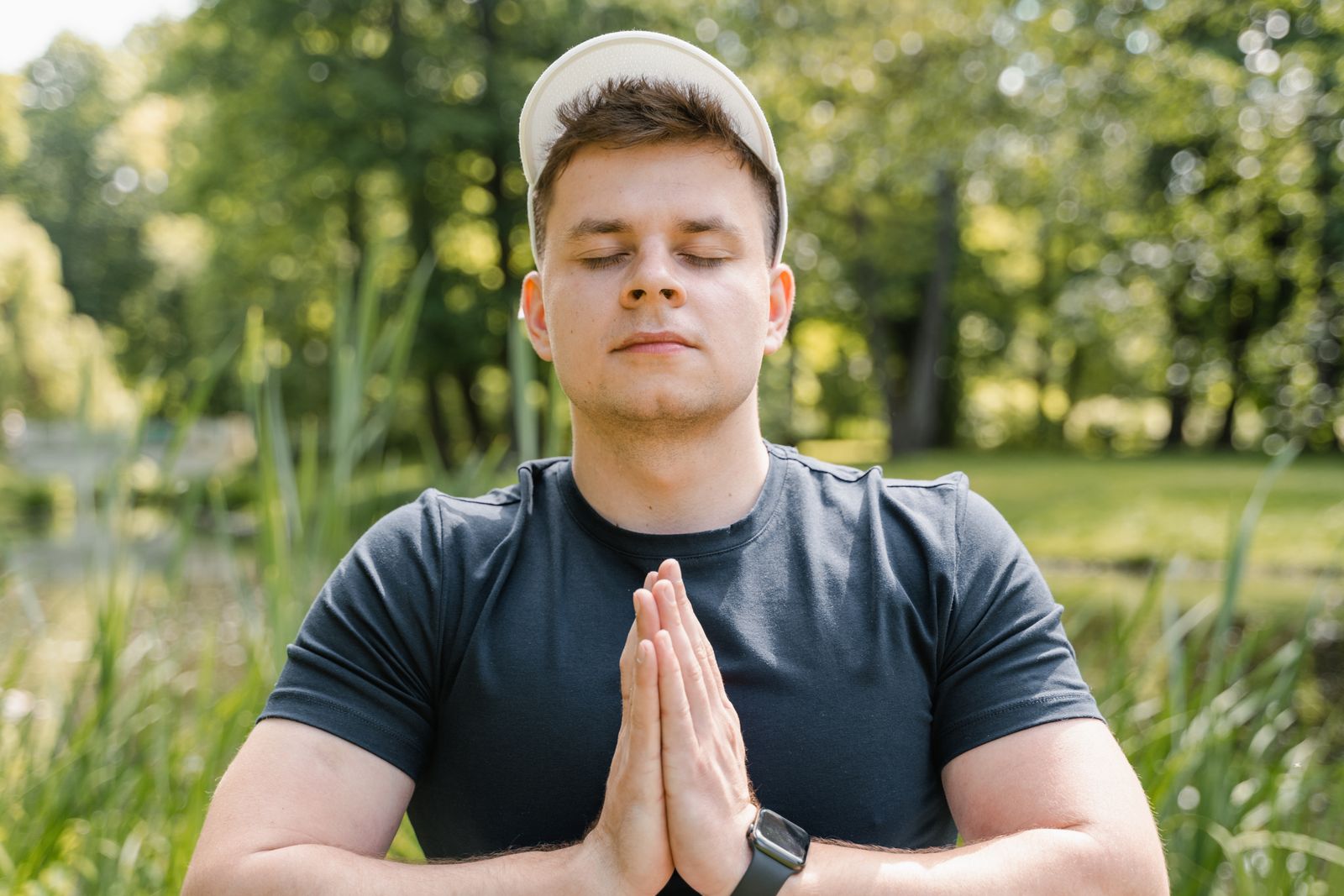
Physical postures (asana) are only one limb of yoga; meditation and breath control are separate but complementary practices that many men skip entirely, usually because sitting still feels unproductive compared to moving through poses. Even five minutes of seated breath awareness at the end of a physical session compounds the calming effect of the poses that came before it. Pairing structured movement with a foundational understanding of yoga and meditation together, rather than treating them as separate hobbies, tends to produce faster and more durable stress-reduction results than either practiced alone.
Questions People Ask About Yoga for Men
Is yoga effeminate or only for women?
No. Yoga originated as a practice with no gender association, and its physical demands — strength, balance, controlled breathing — apply identically regardless of gender. The perception that yoga is “for women” mostly reflects marketing and studio demographics in the West over the last few decades, not anything inherent to the practice itself.
What is the best yoga for men over 40?
A slower-paced style like hatha yoga, combined with joint-friendly modifications (using blocks, avoiding deep unsupported backbends), tends to work well for men over 40 managing accumulated stiffness or old injuries. Building consistency at a manageable intensity matters more at this age than pushing into advanced poses quickly.
Can yoga help with lower back pain from sitting all day?
Often, yes. Poses that open the hip flexors and stretch the hamstrings — Low Lunge, Pigeon, and seated forward folds — directly counter the postural tightness that prolonged sitting causes, which is frequently a contributing factor in lower-back discomfort. Persistent or severe back pain should still be evaluated by a medical professional before starting a new physical practice.
How many times a week should a man do yoga?
Three sessions a week of 20 to 30 minutes each is a reliable starting cadence for building both mobility and the habit itself. Men training heavily in the gym often add a fourth, shorter restorative session on a rest day to aid recovery.
Do I need to be flexible to start yoga?
No — flexibility is a result of the practice, not a prerequisite for starting it. Every pose has a beginner-level modification, and instructors expect tight hips and hamstrings from anyone new to the mat, especially men coming from years of sitting or lifting.
Try This for Yourself
Reading about yoga for men only gets you so far — the actual benefits show up once breath and movement become a repeated habit. FitStrot’s online yoga classes are built around live instruction that adapts to your body’s starting point, whether that’s your first Downward Dog or your hundredth. Book a session and find out what a routine built specifically around your goals feels like.
Related reading: Yoga for Mental Clarity | Vinyasa Yoga | Yoga and Meditation | Online Yoga Classes