The elements of yoga refer to the core building blocks that make up a complete yoga practice, and they are most commonly explained in two ways. The classical framework is Patanjali’s eight limbs (ashtanga) — yama, niyama, asana, pranayama, pratyahara, dharana, dhyana, and samadhi — which map the full journey from ethical conduct to meditative absorption. The second, more elemental framework draws on the five elements of nature (panchamahabhuta): earth, water, fire, air, and ether, which yoga uses to explain how the body, breath, and mind interact. Depending on the textbook or teacher you ask, “elements of yoga” might mean either system, or a simplified list of five to eight practical components such as asana, pranayama, meditation, and relaxation. This guide breaks down every version so you understand exactly which one applies to your question.
What Are the Elements of Yoga?
At the broadest level, the elements of yoga are the individual limbs or components that together form a complete practice rather than just a set of stretches. Yoga was never designed to be only physical movement; it was structured as a layered system moving from outer discipline to inner stillness. Most schools of thought group these elements into two categories: the philosophical elements (drawn from Patanjali’s Yoga Sutras) and the elemental or Ayurvedic elements (drawn from the five great elements described in classical Indian thought). If you want the fuller conceptual picture before drilling into the elements, our what is yoga guide and our piece on yoga meaning lay the groundwork this article builds on.
How Many Elements of Yoga Are There?
The number depends on which system you’re referencing. Patanjali’s classical system, described in the Yoga Sutras, lists exactly eight elements, known as the eight limbs or “ashtanga.” The elemental system used in Ayurveda and yogic philosophy references five elements, tied to the physical body and the natural world. Some school textbooks and simplified fitness contexts reduce yoga practice to four or five practical components (like posture, breathing, and meditation) for ease of teaching. So when someone asks “how many elements of yoga are there,” the honest answer is: eight in the classical philosophical model, five in the elemental/Ayurvedic model, and sometimes fewer in simplified teaching contexts. Our yoga definition article covers how these different frameworks fit under one umbrella term.
The 8 Elements of Yoga (Ashtanga): A Full Breakdown
The eight elements of yoga, or ashtanga, come directly from Patanjali’s Yoga Sutras, a foundational text of yogic philosophy. Each limb builds on the one before it, moving from how you treat others and yourself, to how you control the body and breath, and finally to deep states of concentration.
1. Yama — Ethical Restraints
Yama covers five ethical guidelines for how you interact with the world: non-violence (ahimsa), truthfulness (satya), non-stealing (asteya), moderation (brahmacharya), and non-possessiveness (aparigraha). These aren’t abstract rules; they’re the behavioral foundation the rest of the practice is built on.
2. Niyama — Personal Observances
Niyama focuses inward: cleanliness (saucha), contentment (santosha), discipline (tapas), self-study (svadhyaya), and surrender to a higher principle (ishvara pranidhana). Where yama governs your relationship to others, niyama governs your relationship to yourself.
3. Asana — Postures
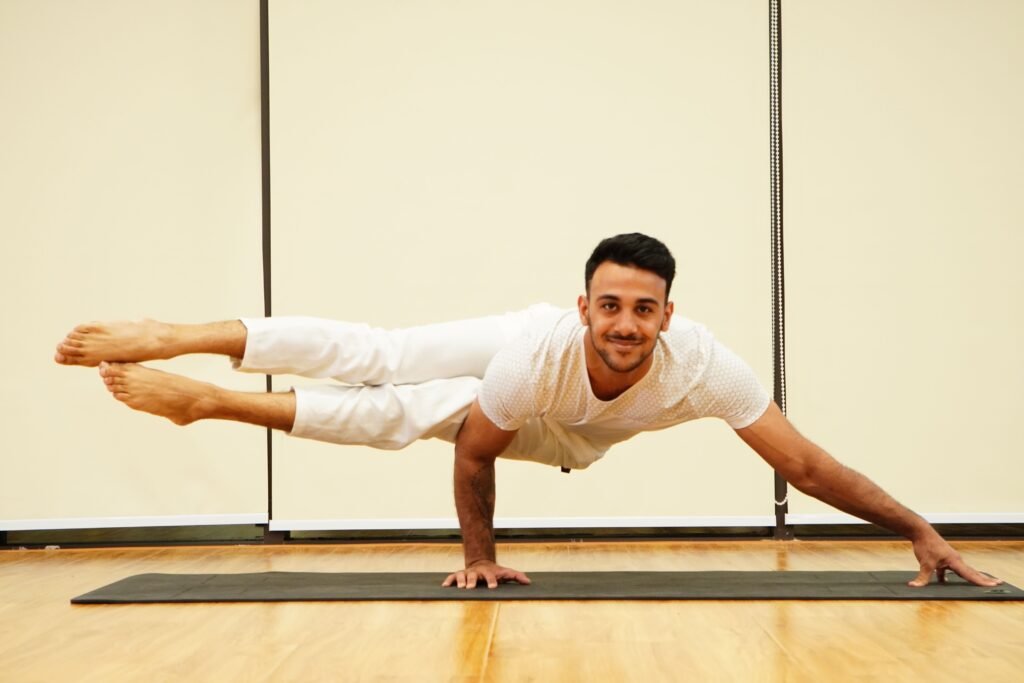
Asana is the physical posture practice most people associate with modern yoga classes. In Patanjali’s original text, asana simply meant a steady, comfortable seat for meditation — the huge variety of poses practiced today (from a supported child’s pose to a challenging crow pose) developed over centuries as the physical dimension expanded.
4. Pranayama — Breath Control
Pranayama is the regulation of breath to influence energy and mental state. Techniques range from simple diaphragmatic breathing to more structured patterns used in pranayama breathing techniques, which are often taught alongside asana in beginner classes.
5. Pratyahara — Withdrawal of the Senses
Pratyahara is the practice of turning attention away from external stimulation and toward the internal experience. It’s often described as the bridge between the outward-facing limbs (yama through pranayama) and the inward-facing limbs that follow.
6. Dharana — Concentration
Dharana is single-pointed focus — training the mind to rest on one object, sound, or sensation without wandering. This is the discipline that makes deeper meditation possible.
7. Dhyana — Meditation
Dhyana is sustained, uninterrupted awareness — meditation in the fuller sense, where concentration deepens into continuous flow. Our yoga meditation for beginners resource is a practical entry point into this limb.
8. Samadhi — Absorption
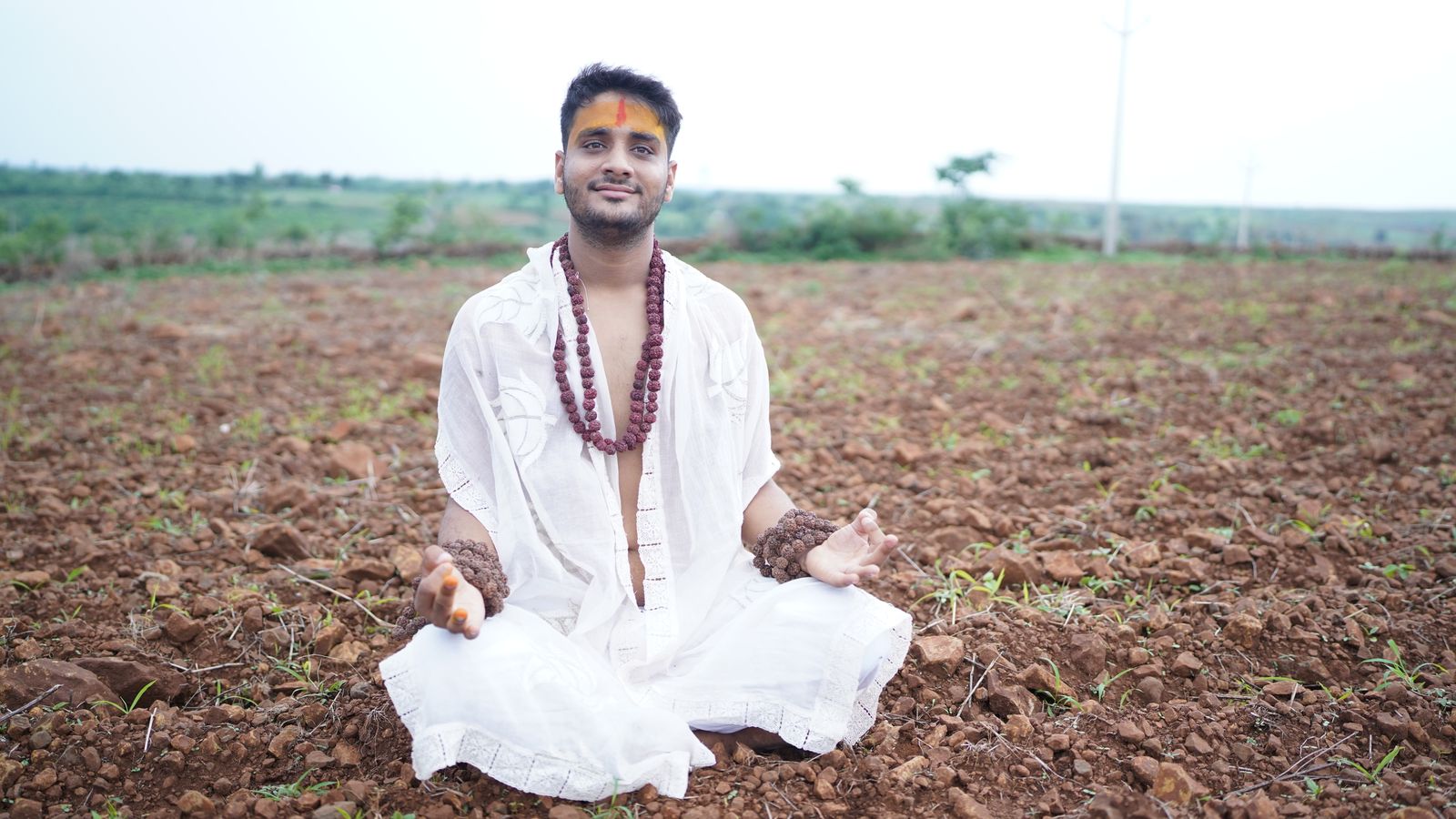
Samadhi is the final limb: a state of complete absorption where the sense of a separate observer dissolves. Classical texts describe it as the culmination of the entire eight-limbed path, though most practitioners will spend years working through the earlier limbs before this becomes a lived experience rather than a concept.
What Are the Five Elements of Yoga?
The five elements of yoga refer to the panchamahabhuta, or five great elements, that classical Indian philosophy and Ayurveda use to describe the composition of the physical world and the human body. In yoga practice, these elements are often linked to specific areas of the body, states of mind, and even categories of asana:
| Element | Sanskrit Name | Associated With |
|---|---|---|
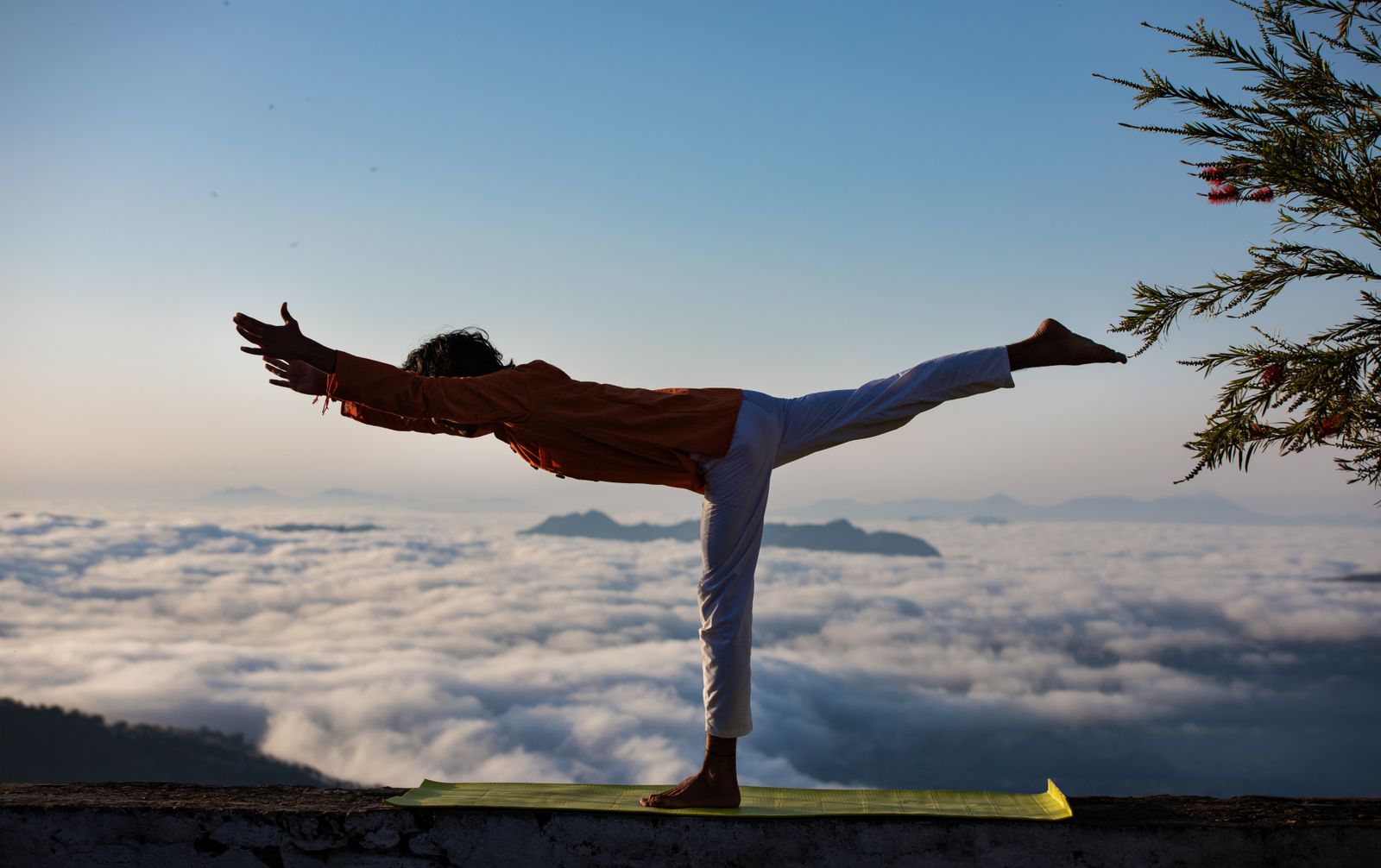
| Earth | Prithvi | Stability and grounding — standing poses |
| Water | Jal | Fluidity and adaptability — flowing sequences |
| Fire | Agni | Energy and transformation — backbends and twists |
| Air | Vayu | Movement and lightness — breath-focused practice |
| Ether (Space) | Akasha | Spaciousness and stillness — meditative poses |
Practices such as kundalini yoga and certain hatha yoga traditions lean heavily on this elemental framework when sequencing a class.
Elements of Yoga Can Be Explained in Terms of What?
This is a common exam-style phrasing, and the expected answer is almost always the panchamahabhuta: the elements of yoga can be explained in terms of the five basic elements of nature — earth, water, fire, air, and ether — that make up both the universe and the human body according to classical Indian philosophy. This framework is distinct from Patanjali’s eight limbs, which explain yoga in terms of ethical and meditative stages rather than physical composition. Students are sometimes asked to compare both frameworks, which is why confusion between “five elements” and “eight elements” is so common in search queries and textbook questions alike.
Elements of Yoga: Class 11 Physical Education Explained
In the CBSE Class 11 Physical Education syllabus, the chapter on yoga typically introduces students to the meaning, objectives, and elements of yoga as part of a broader unit on health and fitness. The elements covered in most Class 11 textbooks align closely with Patanjali’s eight limbs — yama, niyama, asana, pranayama, pratyahara, dharana, dhyana, and samadhi — presented in simplified language suitable for school-level learning. Some editions also introduce the concept of the five elements as a supplementary topic when discussing yoga’s philosophical roots. Because textbook wording varies slightly between editions and boards, students preparing for exams should always cross-check the specific elements listed in their assigned NCERT or state board textbook rather than relying solely on outside summaries.
Which Veda Mentions the Elements of Yoga?
The Rig Veda is commonly cited as the oldest text to reference yoga-like practices, describing ascetics and meditative disciplines in early Vedic society. However, more detailed and systematic descriptions of yoga’s limbs are generally traced to the Upanishads — particularly the Maitri Upanishad, which is associated with the Yajur Veda tradition and outlines practices like pranayama, pratyahara, dhyana, and samadhi in far more structured terms than the earlier Vedas. Because the four Vedas (Rig, Sama, Yajur, and Atharva) were composed and compiled over many centuries, scholars generally treat yoga’s textual development as gradual: early hints in the Rig Veda, deeper elaboration in the Upanishads, and full systemization later in Patanjali’s Yoga Sutras. If your textbook or quiz asks for a single answer, “Rig Veda” is the most frequently accepted response, though it’s worth noting the concept is developed much more fully in later texts.
Why Do the Elements of Yoga Matter for Practice?
Understanding the elements of yoga changes how you approach a class. If you only think of yoga as physical postures, you’re engaging with just one of eight (or five) elements, and you may plateau or feel like something is missing. Recognizing pranayama, concentration, and meditation as equally valid “elements” gives you a fuller toolkit: on days when a physical practice isn’t accessible, breathwork or a short seated meditation still counts as legitimate yoga. This is especially relevant for people managing stress, recovering from injury, or exploring yoga for beginners programs, where an overemphasis on advanced asana can be discouraging rather than helpful.
How the Elements of Yoga Show Up in a Typical Class
A well-structured yoga class, whether it’s online yoga classes or in-person sessions, usually touches several elements even if the instructor doesn’t name them explicitly. A class might open with a few minutes of seated breathing (pranayama), move into a sequence of postures (asana), include moments of focused attention on the breath or a drishti point (dharana), and close with a guided relaxation or short meditation (dhyana). Ethical elements like yama and niyama are less visible in a studio setting but often show up as class etiquette: showing up on time, respecting shared space, and practicing without comparison to others in the room.
Elements of Yoga vs. Types of Yoga: What’s the Difference?
It’s easy to confuse the elements of yoga with the types of yoga, but they answer different questions. The elements of yoga describe the components of the practice itself — postures, breath, concentration, and so on. The types of yoga describe different styles or schools that emphasize these elements differently. For instance, vinyasa yoga emphasizes asana and breath-linked movement, restorative yoga emphasizes stillness and nervous system recovery, and yin yoga emphasizes long-held postures that work into connective tissue. Every style draws on the same underlying elements; they just weight them differently.
Do the Elements of Yoga Apply to Online and Corporate Wellness Programs?
Yes. Corporate wellness programs and online classes still draw on the same elements of yoga, just adapted for time and setting. A 30-minute virtual session for a corporate team might compress pranayama, a short asana sequence, and a closing relaxation into a single class, while a dedicated online zumba class or one-on-one personal training session might focus more heavily on the physical element alone. Companies increasingly build wellness benefits around yoga precisely because it addresses multiple elements at once: physical movement, stress regulation through breath, and mental focus, all in a single session.
Common Misconceptions About the Elements of Yoga
One frequent misconception is that yoga’s elements are purely physical, when historically asana was just one of eight limbs and, in Patanjali’s original writing, referred mainly to a stable seated position for meditation rather than the dynamic poses seen in modern studios. Another misconception is that the five-elements framework and the eight-limbs framework are competing systems; in practice, they’re complementary lenses used in different contexts — the eight limbs come from yogic philosophy and ethics, while the five elements come from a broader Indian cosmological framework shared with Ayurveda. A third misconception is that you must master every element before a practice “counts.” In reality, most practitioners spend years working primarily with asana and pranayama, and that’s a complete and valid practice on its own.
How to Start Practicing the Elements of Yoga Yourself
If you want to experience the elements of yoga rather than just read about them, start small and build gradually with this simple 15-minute structure:
- Breathe (5 minutes): Begin with seated breathing to engage pranayama.
- Move (7 minutes): Flow through a short sequence of accessible postures such as mountain pose, downward dog, and child’s pose to engage asana.
- Sit (2-3 minutes): Close with quiet sitting to touch dharana and dhyana.
This simple structure already draws on four of the eight classical elements in under fifteen minutes, and it’s a realistic way to build a sustainable habit rather than attempting an advanced practice on day one. For guidance on structuring a full week, see our guide on yoga for beginners.
Questions People Ask About Elements of Yoga
What are the elements of yoga in simple terms?
In simple terms, the elements of yoga are the individual parts that make up a full practice: ethical conduct, personal discipline, physical postures, breath control, sensory withdrawal, concentration, meditation, and absorption. Depending on the framework used, this can be summarized as eight classical limbs or, in an elemental sense, the five natural elements of earth, water, fire, air, and ether.
What are the different elements of yoga besides the eight limbs?
Beyond Patanjali’s eight limbs, yoga is also explained through the five elements of nature (panchamahabhuta) used in Ayurveda, and through simplified practical categories like posture, breathing, relaxation, and meditation that appear in school textbooks and fitness contexts. These different elements frameworks aren’t contradictory; they’re different lenses for describing the same underlying practice.
Discuss the elements of yoga in one paragraph.
The elements of yoga are commonly discussed as Patanjali’s eight limbs: yama (ethics toward others), niyama (personal discipline), asana (posture), pranayama (breath control), pratyahara (sense withdrawal), dharana (concentration), dhyana (meditation), and samadhi (absorption). Together they form a progression from outward conduct to inward stillness, with each limb supporting the next rather than functioning as an isolated technique.
Are the eight elements of yoga the same in every tradition?
The eight elements (ashtanga) specifically refer to Patanjali’s classical framework and are consistent across most traditional texts that reference his Yoga Sutras. However, different schools and modern styles may emphasize certain limbs more than others; a style like Ashtanga yoga as taught today focuses heavily on asana and breath, while more meditative lineages emphasize dharana and dhyana.
Do I need to practice all elements of yoga to benefit?
No. Most people who practice yoga regularly engage primarily with asana and pranayama and still experience meaningful benefits for flexibility, strength, and stress reduction. The other elements, like ethical observances or meditative absorption, tend to develop naturally over time as a practitioner’s interest deepens, rather than being prerequisites for starting.
How do the five elements connect to specific yoga poses?
Many teachers link standing poses to the earth element for grounding and stability, flowing or balancing poses to the water element for adaptability, core-activating poses to the fire element for energy, breath-focused movements to the air element, and quiet meditative poses to the ether element for spaciousness. This is a teaching framework rather than a strict scientific classification, and different instructors may assign poses to elements slightly differently.
Try This for Yourself
Reading about the elements of yoga is a useful starting point, but the concepts only become meaningful once you feel them in a real practice. If you’d like guided support putting pranayama, asana, and meditation together in a structured, beginner-friendly format, try an online yoga class with FitStrot and experience how these elements work together in real time.
Related reading: what is yoga, yoga definition, types of yoga, benefits of yoga, and FitStrot’s online yoga classes.