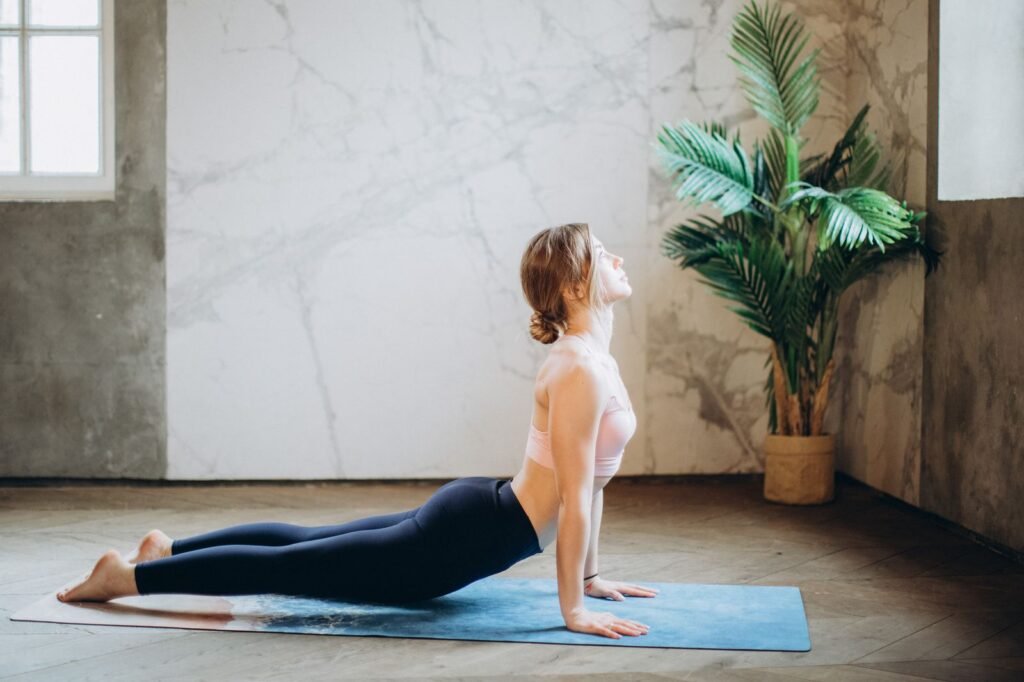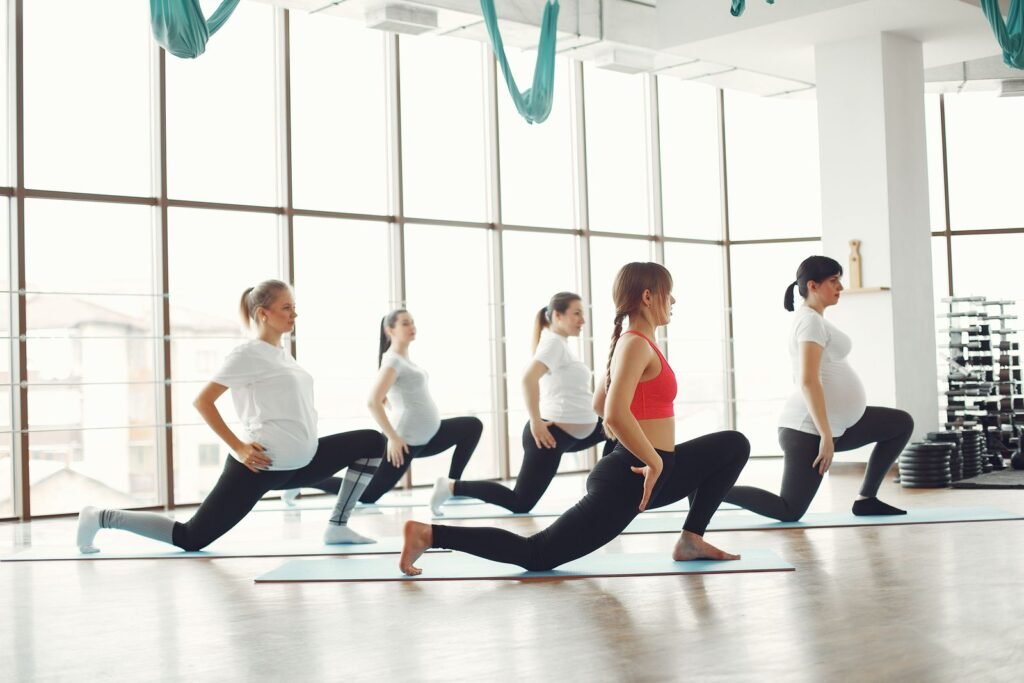
Yoga for beginners at home means learning a small set of foundational poses, a simple breathing pattern, and a consistent 15-20 minute routine you can do on a mat in your living room without any equipment or prior experience. The safest way to start is with grounding poses like Child’s Pose, Cat-Cow, and Downward-Facing Dog, moving slowly, breathing through the nose, and stopping well short of pain. You do not need flexibility, a class, or special gear to begin; you need a quiet corner, a mat or folded blanket, and roughly twenty unbroken minutes, two to four times a week.
Starting a home yoga practice can feel intimidating when every image online shows someone folded into a pretzel. That is not what beginner yoga looks like, and it is not what it should look like. This guide walks through exactly how to set up your space, which poses to learn first, how to breathe correctly, common mistakes that stall progress, and how to build a routine that actually sticks. If you have tried and abandoned yoga before, or you are stepping onto a mat for the very first time, this is the starting point.
Why Practice Yoga for Beginners at Home Instead of a Studio?
Home practice removes the two biggest barriers new students face: intimidation and inconsistency. A studio class moves at a fixed pace set for the group, so beginners often push into poses before their body is ready just to keep up. At home, you control the pace entirely, holding Child’s Pose for extra breaths or skipping a pose that feels wrong that day. Consistency also improves, since a 15-minute home session before work is easier to sustain than a 60-minute studio class requiring travel time. Research summarized by institutions like Johns Hopkins Medicine and the NIH’s National Center for Complementary and Integrative Health associates regular practice with real benefits of yoga such as improved flexibility, reduced stress, and better balance, benefits that depend far more on consistency than on studio attendance.
This does not mean studios or guided classes have no value. Many beginners eventually benefit from live feedback on alignment, which is why some people pair home practice with occasional online yoga classes for structured guidance. But the daily habit itself is best built at home, where there is no pressure and no audience.
What Do You Actually Need to Start Yoga at Home?
The equipment list for beginners is short by design. A yoga mat with reasonable grip is the only near-essential purchase, since bare floor or carpet makes balance poses and hand placement unstable. Beyond that, comfortable clothing that allows a full range of motion at the hips and shoulders matters more than any specific “yoga wear.” A folded blanket cushions the knees in kneeling poses like Cat-Cow, and two thick books or a yoga block substitute nicely for reaching the floor in seated forward folds if hamstrings are tight.
Space requirements are modest: roughly six feet by four feet of clear floor, enough to lie down with arms extended overhead and swing into a lunge without hitting furniture. Good lighting and a closed door help more than most beginners expect, since privacy reduces self-consciousness in the early weeks when poses feel unfamiliar and balance is shaky. A phone propped nearby for a video or timer app rounds out the setup; nothing else is required to begin.
Which Beginner Yoga Poses Should You Learn First?
A small set of foundational poses covers most of what a new practitioner needs in the first month. Learn one new pose every few sessions rather than all at once:
- Child’s Pose (Balasana): A resting position with hips back toward the heels, arms extended or relaxed by the sides, forehead toward the mat. The default pose to return to whenever a session feels too intense.
- Cat-Cow (Marjaryasana-Bitilasana): On hands and knees, alternating between arching and rounding the spine with the breath. Warms the entire spine and is one of the gentlest ways to begin any yoga for back pain routine.
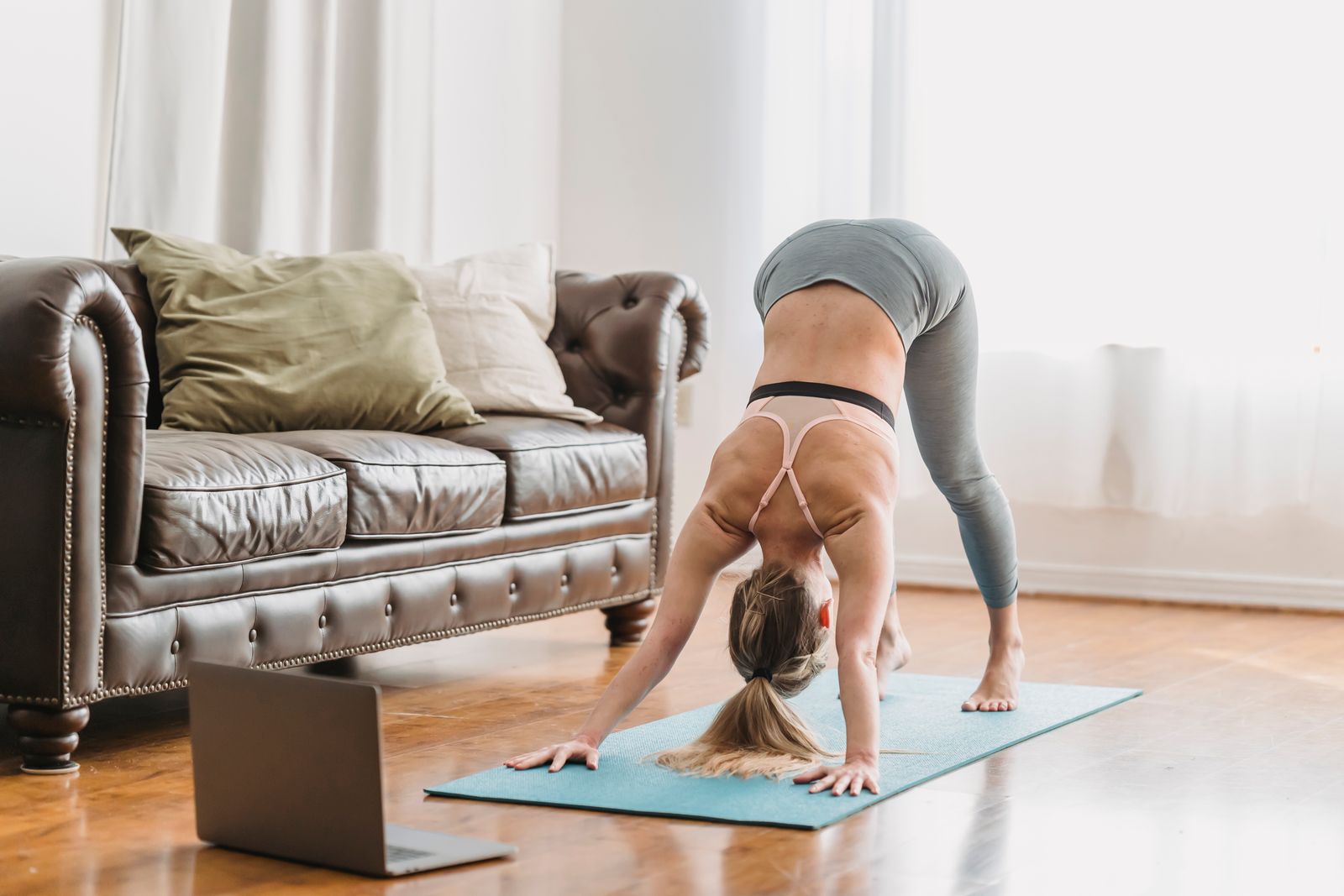
- Downward-Facing Dog (Adho Mukha Svanasana): An inverted V-shape that stretches the hamstrings, calves, and shoulders while building arm strength. Knees can stay bent for beginners with tight hamstrings.
- Mountain Pose (Tadasana): A standing pose that looks simple but teaches posture, weight distribution, and steady breathing, the foundation for every standing pose that follows.
- Corpse Pose (Savasana): Lying flat on the back at the end of every session, used for integration and relaxation, never skipped regardless of practice length.
For a broader list with step-by-step cues, see basic yoga poses for beginners and the companion guide on yoga for beginners.
How Do You Breathe Correctly During Beginner Yoga?
Breath is not a background detail in yoga; it is the mechanism that separates yoga from generic stretching. The default beginner pattern is slow nasal breathing, called Ujjayi in more advanced practice, where inhales and exhales are roughly equal length and both pass through the nose. A soft, ocean-like sound at the back of the throat suggests correct engagement, while loud gasping or held breath signals the pose is too intense and should be backed off.
Beginners commonly hold their breath during effortful poses like Downward-Facing Dog or a standing balance, which increases tension and defeats the purpose. A useful cue is counting four seconds on the inhale and four on the exhale, adjusting as needed but keeping the two roughly equal. Pairing movement to breath, inhaling to lengthen or lift and exhaling to fold or release, is the single technique that most separates yoga from calisthenics, worth practicing deliberately even before worrying about pose alignment.
How Long and How Often Should a Beginner Practice?
Fifteen to twenty minutes, two to four times per week, is a realistic and effective starting cadence. This is short enough to fit before work or after dinner, and frequent enough to build the habit loop that makes yoga stick past the first month, which is where most beginners quit. Daily 10-minute sessions tend to outperform a single weekly 60-minute session for building flexibility and habit consistency, because the body adapts through repeated gentle exposure rather than occasional intense effort.
A simple beginner week might look like: Monday a 15-minute morning yoga routine focused on Cat-Cow and Downward-Facing Dog, Wednesday a 20-minute standing sequence including Mountain Pose and a gentle forward fold, and Saturday a slower restorative yoga session built around Child’s Pose and Savasana. Rest days between sessions are not wasted time; they allow connective tissue to adapt, especially important for beginners whose joints and tendons have not yet adjusted to new ranges of motion.
What Are the Most Common Mistakes Beginners Make at Home?
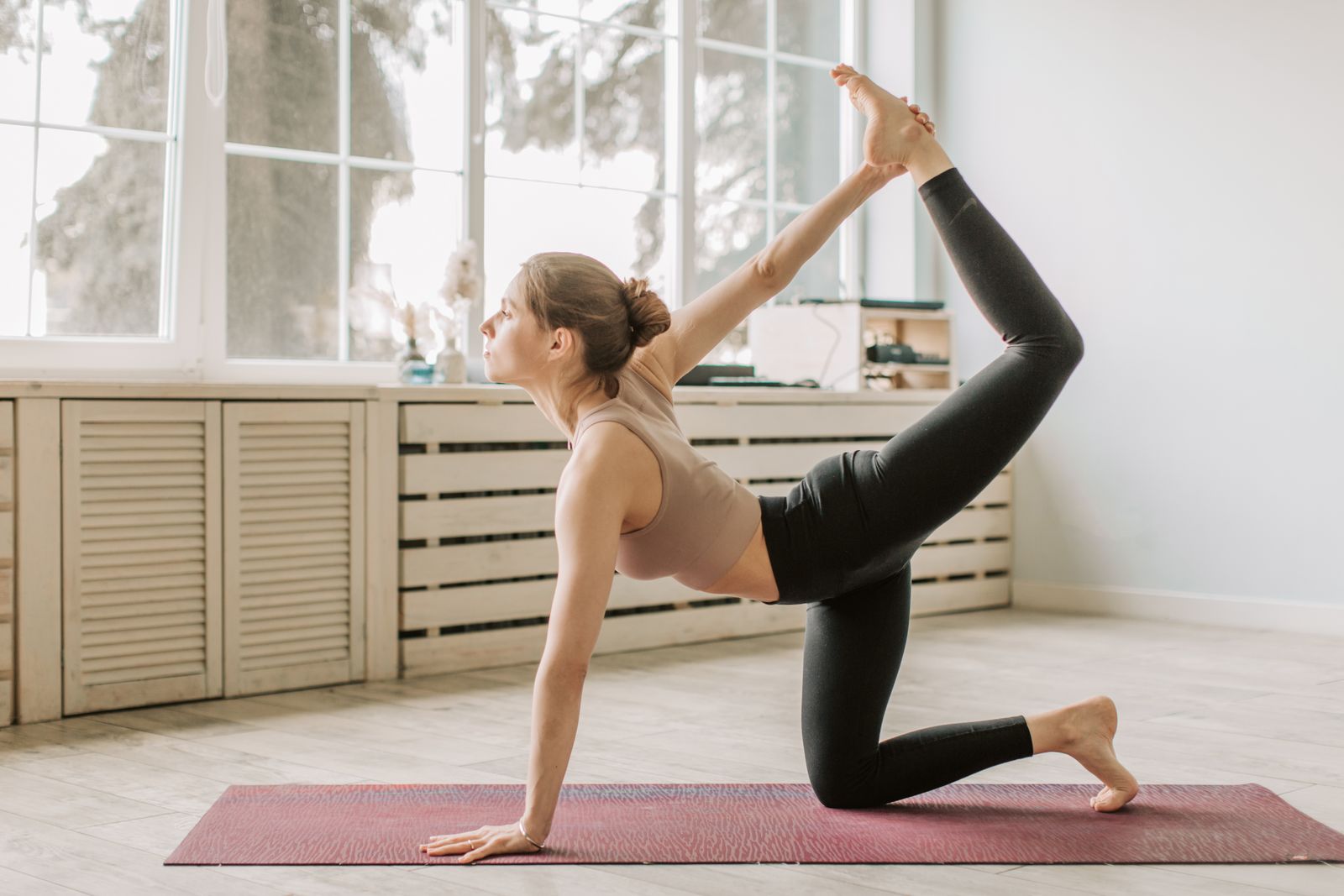
The single most common mistake is comparing your body’s range of motion to images of advanced practitioners, which leads to forcing a pose past a comfortable range and risking strain, particularly in the hamstrings, lower back, and shoulders. Yoga poses are meant to be modified, not muscled through; a bent knee in a forward fold or a block under the hand in a twist is the correct version for that body on that day, not a lesser one.
A second frequent mistake is skipping the warm-up and moving straight into deeper poses. Cold muscles and connective tissue are more prone to strain, so even a five-minute warm-up of Cat-Cow and gentle neck rolls meaningfully reduces injury risk. A third mistake is holding the breath during effortful holds, which raises tension rather than releasing it. Many beginners also quit within two weeks expecting visible flexibility gains immediately; realistic timelines for noticeable improvement in yoga for flexibility are measured in months of consistent practice, not days.
Is Yoga at Home Safe Without an Instructor?
For gentle, beginner-level poses like the ones listed above, home practice without live instruction is generally safe for most healthy adults, provided poses are approached slowly and stopped short of sharp pain. Dull stretching sensations are expected; sharp, pinching, or radiating pain is not, and is the clearest signal to back out of a pose immediately. Anyone with a pre-existing injury, a spinal condition, high blood pressure, or who is pregnant should consult a doctor before starting, since certain poses and breathing techniques require modification in those cases.
Watching a demonstration video before attempting a new pose for the first time reduces risk considerably, since alignment cues obvious on video are hard to intuit from a written description alone. This is one reason structured online yoga classes remain useful even for home practitioners: a real instructor watching your form, even remotely, catches alignment issues self-practice alone tends to miss.
How Do You Build a Beginner Yoga Sequence at Home?
A well-structured beginner sequence follows a simple arc: warm-up, standing or seated work, peak effort, and cool-down. Start with two to three minutes of Cat-Cow and gentle seated twists to warm the spine. Move into three to five standing poses such as Mountain Pose and a supported Warrior I, held for five breaths each. Include one or two floor poses, such as a seated forward fold or a gentle twist, before finishing with Savasana for at least three minutes regardless of session length.
This structure mirrors the sequencing logic used across most yoga styles, from Hatha yoga‘s slower, hold-focused approach to the more continuous movement of Vinyasa yoga. Beginners are almost always better served starting with Hatha-style sequencing, since poses are held longer and transitions are slower, giving more time to check alignment before adding movement complexity.
Should Beginners Follow Videos, Apps, or Live Classes?
All three work, and the right choice depends on learning style and budget. Free videos are the lowest-barrier option and suit visual learners who want to see full-body alignment demonstrated in real time. Apps often add structure through multi-week beginner programs and progress tracking, which appeals to people who want a plan rather than a single session. Live or recorded online yoga classes add the benefit of real-time or expert-reviewed feedback on form, which is the one thing static content cannot replicate.
A practical approach for many beginners is mixing formats: a short video for daily practice, paired with one guided class per week for feedback and to learn new poses correctly before attempting them solo. This combination builds both the habit and the technical foundation faster than either format alone.
How Does Beginner Yoga Compare to Zumba or Other Home Workouts?
Yoga and higher-intensity home workouts like online Zumba classes serve different goals and complement each other rather than competing. Zumba and similar cardio formats build cardiovascular fitness and calorie expenditure through continuous movement, while yoga builds flexibility, joint stability, and nervous system regulation through slower, controlled holds. Many beginners find pairing two Zumba-style sessions with two yoga sessions per week covers both cardiovascular and mobility needs without overtraining any single system.
Yoga also supports recovery from higher-intensity training. A gentle 15-minute session on a rest day between cardio sessions reduces muscular stiffness and supports the kind of active recovery that pure rest days do not provide, one reason fitness programs increasingly pair the two rather than treating them as separate categories of exercise.
What Is the Difference Between Yoga for Beginners and Advanced Yoga?
The difference is not the poses themselves but the depth, hold time, and transitions between them. A beginner’s Downward-Facing Dog might have bent knees and heels lifted off the mat; an advanced practitioner’s version has straight legs and heels pressing toward the floor, the same pose at a different point on a long continuum. Advanced practice also introduces longer holds, faster transitions, and more complex breathing techniques, none of which a beginner needs to worry about in the first months.
Understanding this continuum removes the pressure to “graduate” quickly. Staying in beginner-level poses for six months to a year while deepening breath control and alignment is often a wiser path than rushing into advanced variations, an idea explored further in types of yoga and how different styles structure that progression.
How Does Yoga Philosophy Fit Into a Beginner’s Home Practice?
Yoga is often introduced purely as physical exercise, but its roots include a broader philosophical framework, and even a beginner practicing alone at home benefits from a light understanding of it. Concepts within yoga philosophy, such as mindful awareness, non-striving, and breath as a bridge between body and mind, are not abstract add-ons; they explain why yoga reduces stress in ways pure stretching does not.
Practically, a beginner does not need to study philosophy texts to benefit from this dimension. Simply approaching each home session with patience rather than a goal of “getting better fast,” and treating breath as the anchor of attention rather than an afterthought, captures the core of what makes yoga psychologically distinct from other forms of exercise.
Questions People Ask About Yoga for Beginners at Home
How long does it take to see results from yoga for beginners at home?
Most beginners notice reduced tension and better sleep within one to two weeks of consistent practice, while measurable flexibility gains typically take four to eight weeks of regular sessions. Strength and balance improvements follow a similar timeline. Results depend heavily on consistency, so two or three short sessions weekly tend to outperform one long session.
What is the best time of day for beginners to practice yoga at home?
Morning practice works well for building a consistent habit and easing stiffness from sleep, while evening practice suits people using yoga to unwind before bed. There is no single correct time; the best time is whichever slot you can protect consistently on your calendar, since adherence matters more than time of day.
Do I need a yoga mat to start practicing at home?
A mat is strongly recommended but not strictly required to begin. A carpeted floor or a folded blanket can work temporarily for gentle poses, but a mat provides grip that prevents slipping in poses like Downward-Facing Dog and cushions joints in kneeling positions, making it a worthwhile first purchase.
Can beginners do yoga every day?
Yes, gentle beginner yoga can be practiced daily, and many people find daily short sessions build habit and flexibility faster than infrequent longer ones. The key is keeping intensity low enough that the body recovers between sessions; daily practice becomes a problem only if poses are pushed aggressively past comfortable range.
What should beginners avoid when starting yoga at home?
Beginners should avoid forcing flexibility past a comfortable range, holding the breath during effort, skipping warm-ups, and copying advanced pose variations seen online. Sharp or radiating pain is always a signal to stop, while a mild stretching sensation is normal and expected.
Is online yoga as effective as in-person classes for beginners?
For learning foundational poses and building a home habit, online yoga classes are effective and, for many beginners, more sustainable due to flexible scheduling. The main advantage in-person classes retain is real-time physical adjustment from an instructor, which some online formats now replicate through live video feedback.
Try This for Yourself
Reading about beginner poses only goes so far; the fastest way to build correct form and real confidence is practicing alongside a real instructor who can see your alignment and adjust it in the moment. FitStrot’s online yoga classes are built specifically for beginners starting their first home practice, with sessions structured around exactly the poses and pacing covered in this guide. Book a session and turn this article into an actual habit rather than another tab you meant to come back to.
Related reading: Yoga for Beginners, Basic Yoga Poses for Beginners, Benefits of Yoga, Morning Yoga Routine, and FitStrot’s online yoga classes.