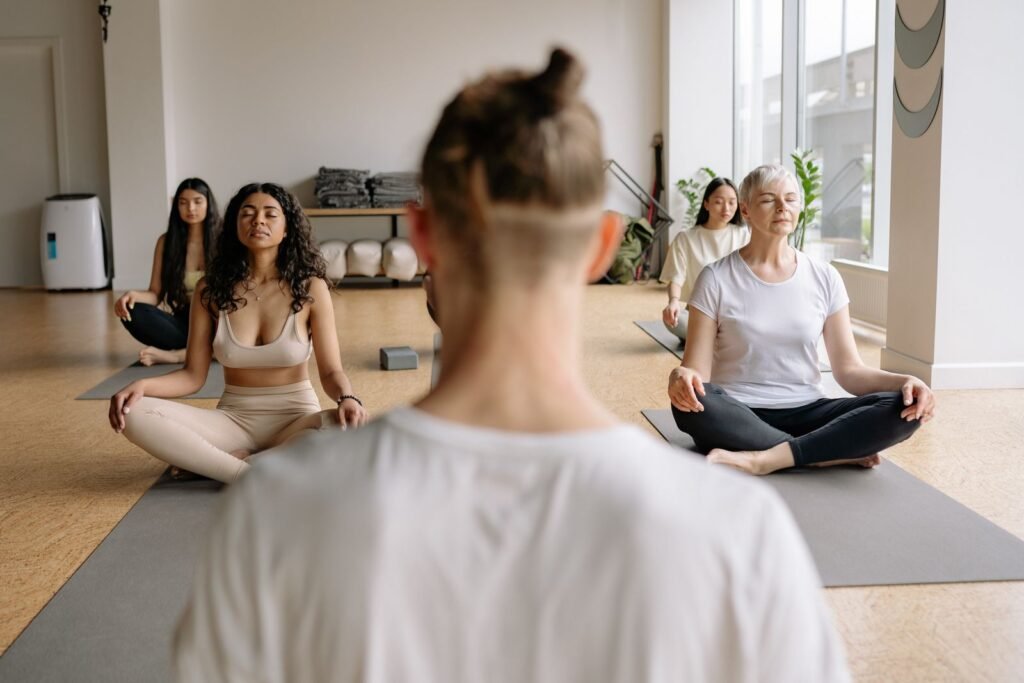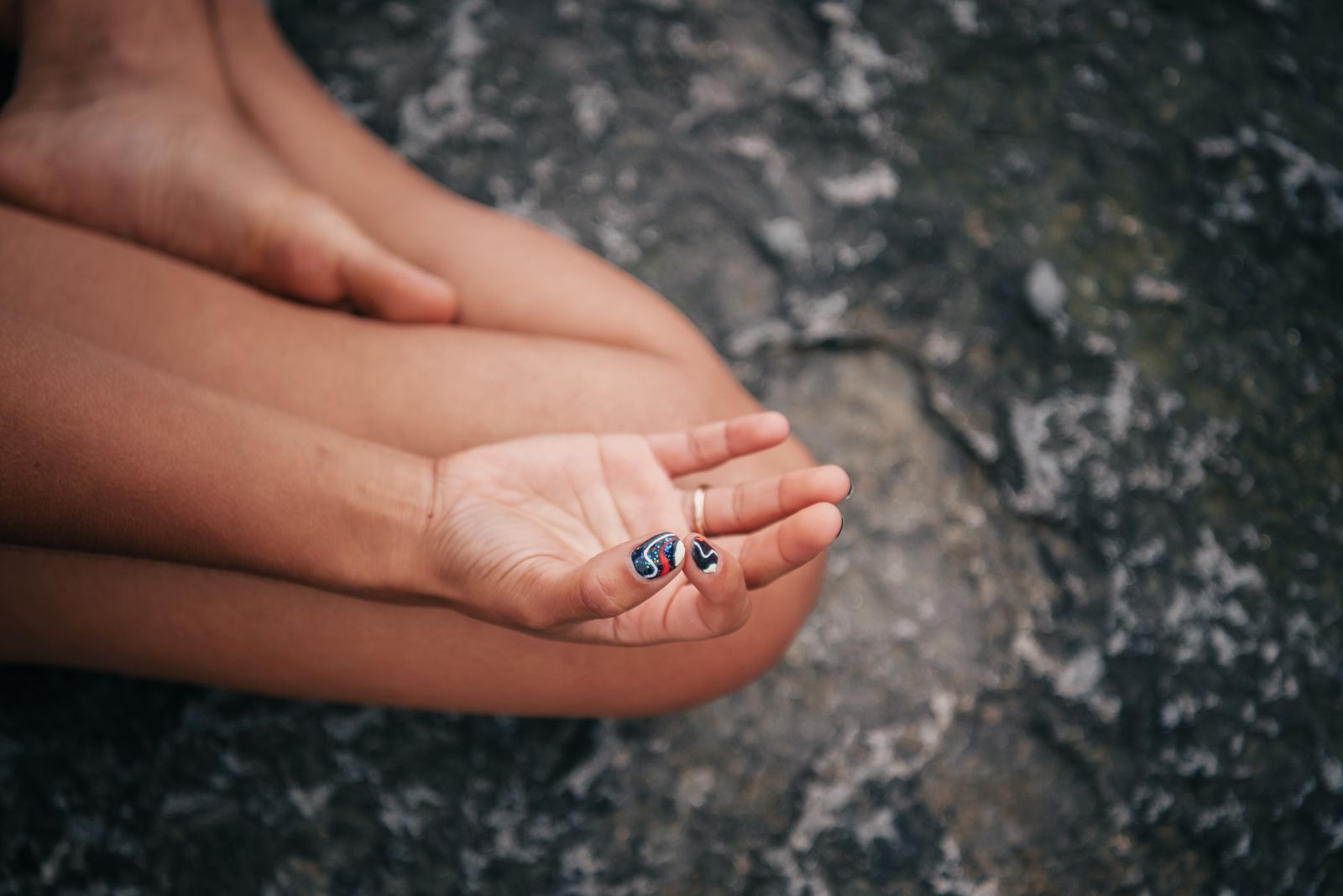
Apana mudra is a simple hand gesture used in yoga and pranayama practice, formed by touching the tips of the middle and ring fingers to the tip of the thumb while the index and little fingers stay extended. It is often called the “mudra of digestion” or the “cleansing mudra” because it is traditionally associated with apana vayu, the downward-flowing energy in yogic philosophy said to govern elimination, digestion, and detoxification. Practitioners typically hold it seated in a comfortable meditation posture, palms facing upward on the knees, for five to twenty minutes, ideally on an empty stomach or a couple of hours after eating.
This gesture belongs to a much larger family of hand seals used throughout yoga mudra practice, and understanding where it fits among the dozens of hand positions taught in mudras and their benefits makes it easier to use apana mudra effectively rather than as an isolated trick.
What Does “Apana” Mean in Yoga Philosophy?
In classical yogic anatomy, the body’s vital life force, prana, is described as moving through five distinct currents known as the pancha vayus (five winds). Apana vayu is the current associated with downward and outward movement, governing the lower abdomen, pelvis, and organs of elimination. It is said to influence digestion, excretion, menstruation, and childbirth. Where prana vayu draws energy inward and upward through the chest and head, apana vayu is its counterbalance, moving waste and used energy out of the body. Apana mudra is named for its traditional role in supporting and directing this downward current, which is why so many of its claimed benefits cluster around digestion and detoxification rather than energy or focus.
How Do You Form Apana Mudra Correctly?
The hand position is straightforward, which makes apana mudra a good entry point if you are new to mudra practice generally. Bring the tip of your thumb to touch the tips of your middle finger and ring finger at the same time, forming a small closed loop with three fingers. Keep your index finger and little finger relaxed and extended, not curled. Repeat the same shape with both hands, then rest your hands on your knees or thighs, palms facing upward, in any comfortable seated position. There should be no strain in the hand; the fingertips touch lightly rather than pressing hard. If you are unfamiliar with foundational hand seals, it helps to first practice something simpler like gyan mudra to build comfort with holding a mudra steadily before layering on apana mudra’s specific finger pattern.
What Is the Difference Between Apana Mudra and Apana Vayu Mudra?
These two mudras are often confused because their names are so similar, but the hand shapes and traditional intentions differ. Apana mudra uses only the thumb, middle finger, and ring finger, with the index and little fingers extended. Vayu mudra and its close relative, apana vayu mudra (also called Mrit Sanjeevani mudra, or the “life-saving gesture”), add an extra step: the index finger folds down to touch the base of the thumb, while the middle and ring fingertips still meet the thumb tip. That added index-finger fold is traditionally linked to pacifying excess “vayu” (air element) in the body, and apana vayu mudra is more specifically associated in yogic tradition with supporting heart and cardiovascular wellbeing, whereas plain apana mudra is oriented toward digestive and eliminative function. If you are researching mudras for a specific concern, this small difference in finger placement matters, so it’s worth double-checking which exact hand shape a source is describing before you practice it for a particular goal.
What Are the Traditional Benefits of Apana Mudra?
Ayurvedic and yogic texts associate apana mudra with several traditional benefits, though it’s worth noting these are drawn from centuries of yogic tradition and practitioner experience rather than controlled clinical trials. Commonly cited benefits include:
- Supporting regular digestion: traditionally used to ease occasional constipation, bloating, and sluggish digestion.
- Aiding the body’s natural detoxification: described in yogic texts as helping the excretory organs clear waste more efficiently.
- Calming the nervous system: the seated stillness and slow breathing that accompany the mudra are commonly reported to reduce tension and anxious energy.
- Supporting menstrual comfort: some traditional sources associate it with easing cramping and irregularity, though this should not replace medical care for menstrual health concerns.
- Grounding restless energy: practitioners often use it before sleep or during agitation to encourage a sense of settling.
Because apana mudra is a gentle, low-risk practice, many people incorporate it as a complement to broader wellness routines such as yoga for digestion or yoga for gut health, rather than as a standalone remedy.
How Long Should You Hold Apana Mudra?
Most teachers recommend holding apana mudra for at least five minutes to begin noticing its calming effect, building up to fifteen or twenty minutes as you become more comfortable sitting still. Some traditional guidance suggests a longer daily practice of around 45 minutes for addressing specific digestive complaints, though this is generally intended to be worked up to gradually rather than attempted on day one. There is no strict upper limit, and many practitioners simply hold the mudra for the length of a seated meditation or pranayama breathing exercises session, which commonly runs ten to twenty minutes. Consistency tends to matter more than duration; a short daily practice generally produces more noticeable results over weeks than an occasional long session.
When Is the Best Time to Practice Apana Mudra?
Because apana mudra is traditionally linked to digestion, many practitioners choose to practice it either first thing in the morning on an empty stomach or roughly two hours after a meal, when the downward-moving energy associated with elimination is considered most active. Early morning practice, paired with a few minutes of quiet seated breathing, is a common way to start the day calmly before other obligations take over. Evening practice, particularly before bed, is also popular among people using the mudra for its grounding and calming qualities rather than its digestive ones. There is no single correct time; the right moment is whichever one you can realistically repeat daily, since consistency is what allows any mudra practice to become noticeable over time.
How Do You Combine Apana Mudra With Breathing?
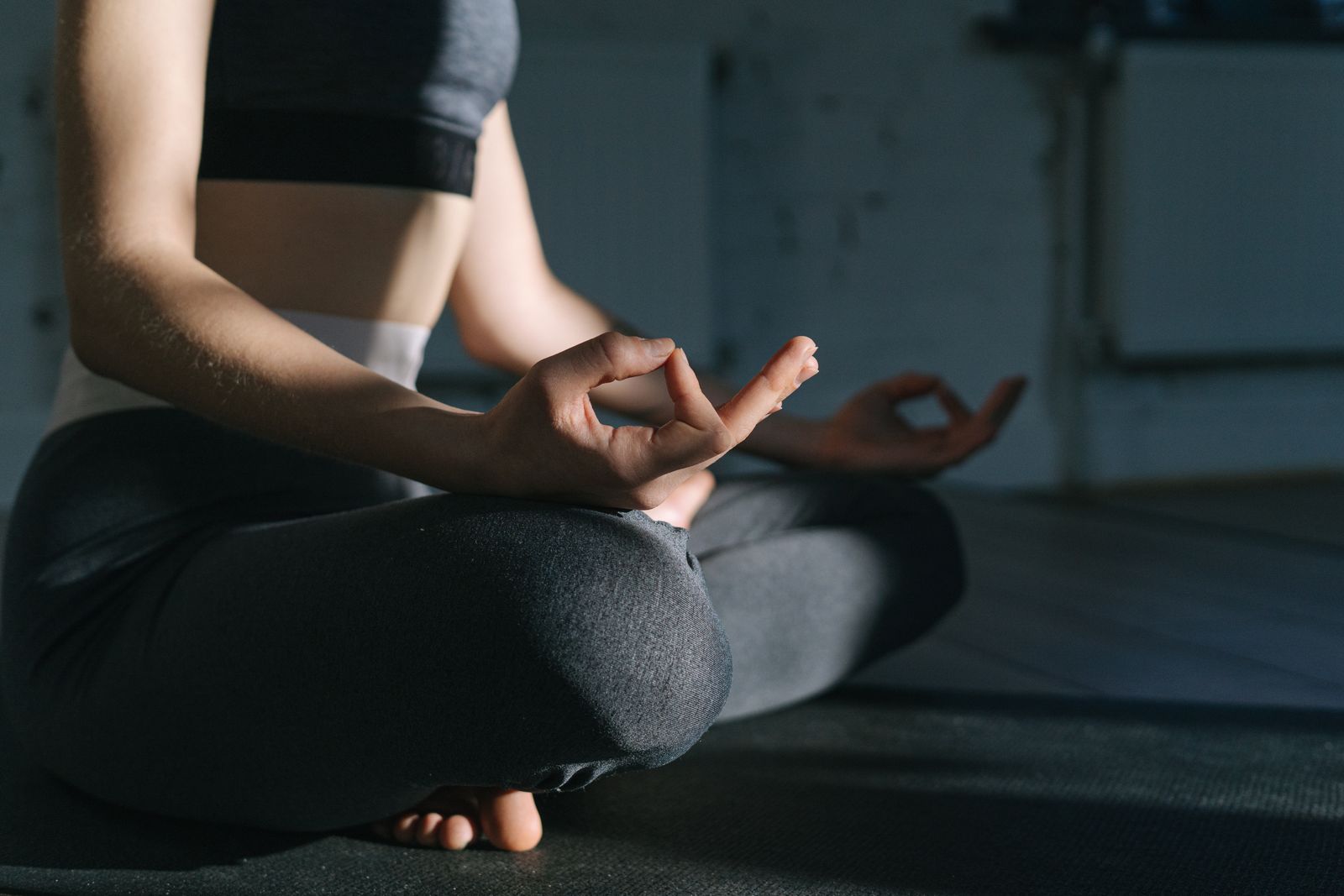
Mudras are traditionally practiced alongside conscious breathing rather than in isolation, and apana mudra is no exception. A simple approach is to sit comfortably, form the mudra with both hands resting on your knees, and breathe slowly through the nose, allowing the exhale to be slightly longer than the inhale. A longer exhale is thought to reinforce the downward, releasing quality associated with apana vayu. Some practitioners pair the mudra with a slow count, such as inhaling for a count of four and exhaling for a count of six or eight. If you already practice anulom vilom pranayama or diaphragmatic breathing, apana mudra can simply be added as the hand position you hold throughout those exercises rather than treated as a separate practice to schedule.
Can Apana Mudra Help With Bloating and Constipation?
Apana mudra is one of the more commonly recommended mudras for digestive discomfort in yogic tradition, and many practitioners report a sense of relief after regular practice, particularly when it’s combined with adequate hydration, fiber intake, and movement. That said, it should be understood as a complementary practice rather than a medical treatment. If bloating, constipation, or digestive pain is persistent, severe, or accompanied by other symptoms, it warrants a conversation with a doctor rather than reliance on a hand gesture alone. Pairing the mudra with gentle twists and forward folds from a yoga for digestion sequence, along with mindful breathing, is a more complete approach than the mudra by itself.
Is Apana Mudra Safe for Everyone?
Apana mudra is generally considered safe for most people because it involves no physical strain, forceful breathing, or extreme postures. It can be practiced by beginners, older adults, and people with limited mobility since it only requires seated stillness and a simple hand position. As with any wellness practice tied to specific health claims, pregnant individuals or people managing chronic digestive conditions should treat it as a gentle complementary tool and check with their healthcare provider before relying on it for a specific medical concern. There are no widely reported contraindications to the hand position itself, which is part of why mudra practice is often recommended even to complete beginners in mudra and meditation study.
How Does Apana Mudra Fit Into a Broader Mudra Practice?
Apana mudra is rarely practiced in isolation by long-term students of mudra; it’s typically one tool among many chosen for a specific intention during a session. Someone focused on grounding and digestion might use apana mudra, while someone seeking mental clarity might reach for gyan mudra, and someone wanting to calm anxiety might use prana mudra or shuni mudra. Building familiarity with several mudras, and understanding the logic of the pancha vayu system that underlies most of them, makes it much easier to choose the right hand seal for a given day rather than practicing the same one by habit. This is part of why a broader study of mudras and their benefits tends to be more useful long-term than learning a single gesture in isolation.
How Does Apana Mudra Relate to Meditation Practice?
Because apana mudra requires a seated, still hand position, it naturally lends itself to being folded into a broader meditation for beginners routine rather than practiced as a five-minute standalone exercise. Many teachers suggest starting a meditation session by setting the hand position, then bringing attention to the breath, allowing the mind to settle before any specific visualization or mantra work begins. The physical stillness of holding a mudra can act as an anchor for attention in the same way that focusing on the breath does, which is one reason mudras are often taught alongside online meditation classes rather than as a separate discipline.
What Mistakes Do Beginners Make With Apana Mudra?
The most common mistake is pressing the fingertips together too firmly, which creates unnecessary tension in the hand, wrist, and sometimes the shoulder. The fingertips should touch lightly, almost as if you’re holding a soap bubble between them, not gripping. A second common mistake is inconsistency: practicing once and expecting a noticeable effect, rather than treating it as a cumulative daily habit similar to the broader benefits of yoga, which tend to build gradually rather than appear instantly. A third mistake is confusing apana mudra with apana vayu mudra, which as covered earlier involves an additional index-finger fold and carries a different traditional focus. Finally, some beginners hold the mudra with a hunched or slouched spine; keeping the spine reasonably tall, whether seated on a chair or a cushion, supports easier breathing throughout the practice.
How Does Apana Mudra Compare to Other Digestive Wellness Practices?
Apana mudra is best understood as one small piece of a larger toolkit for digestive and overall wellness rather than a replacement for movement, diet, or medical care. Compared to a full asana practice such as a yoga for back pain sequence or a vinyasa yoga class, the mudra requires far less time, space, and physical capability, making it accessible on days when a full practice isn’t realistic, such as during travel, illness recovery, or a busy workday. It also pairs naturally with other low-exertion practices like restorative yoga or yin yoga, where slow, seated stillness is already the format of the class.
Questions People Ask About Apana Mudra
What is apana mudra used for?
Apana mudra is traditionally used to support digestion, elimination, and the body’s natural detoxification processes. It is formed by joining the thumb, middle finger, and ring finger tips while keeping the index and little fingers extended. Practitioners also use it for general grounding and calming during meditation, particularly when digestive discomfort or restlessness is the primary concern.
How is apana mudra different from gyan mudra?
Gyan mudra joins the thumb and index finger tips and is associated with knowledge, focus, and calming mental activity. Apana mudra joins the thumb with the middle and ring fingers instead, and is associated with digestion and elimination. The two mudras use different fingers and are chosen for different intentions, though both are commonly taught to beginners as foundational hand seals.
Can apana mudra help with weight management?
Apana mudra is not a weight-loss technique, but its traditional association with supporting healthy digestion and regular elimination means some practitioners include it as a small complementary habit within a broader routine of balanced eating, movement, and practices like a regular yoga for weight loss plan. It should not be relied on as a primary strategy for weight management.
Should apana mudra be practiced on an empty stomach?
Many teachers recommend practicing apana mudra either in the morning before eating or about two hours after a meal, since this is traditionally considered the time when the body’s downward, eliminative energy is most active. That said, it is a gentle practice, and holding the mudra at other times of day, including while eating, will not cause any harm.
How soon can you expect results from apana mudra?
There is no fixed timeline, and results are commonly reported to build gradually with consistent daily practice over several weeks rather than after a single session. Because the mudra involves no physical exertion, its effects are generally described as subtle, and it works best when combined with adequate hydration, fiber, movement, and sleep rather than practiced as an isolated fix.
Try This for Yourself
Reading about apana mudra is a useful start, but the calming, grounding quality it’s known for is really only felt through consistent practice. If you’d like guided support building a mudra and breathing routine that fits your schedule and goals, join a live online yoga class with an experienced instructor who can walk you through proper hand placement, breathing pace, and how to combine apana mudra with a fuller practice.
Related reading: yoga mudra, mudras and their benefits, vayu mudra, gyan mudra, and explore a guided online yoga class to build these practices into a full routine.