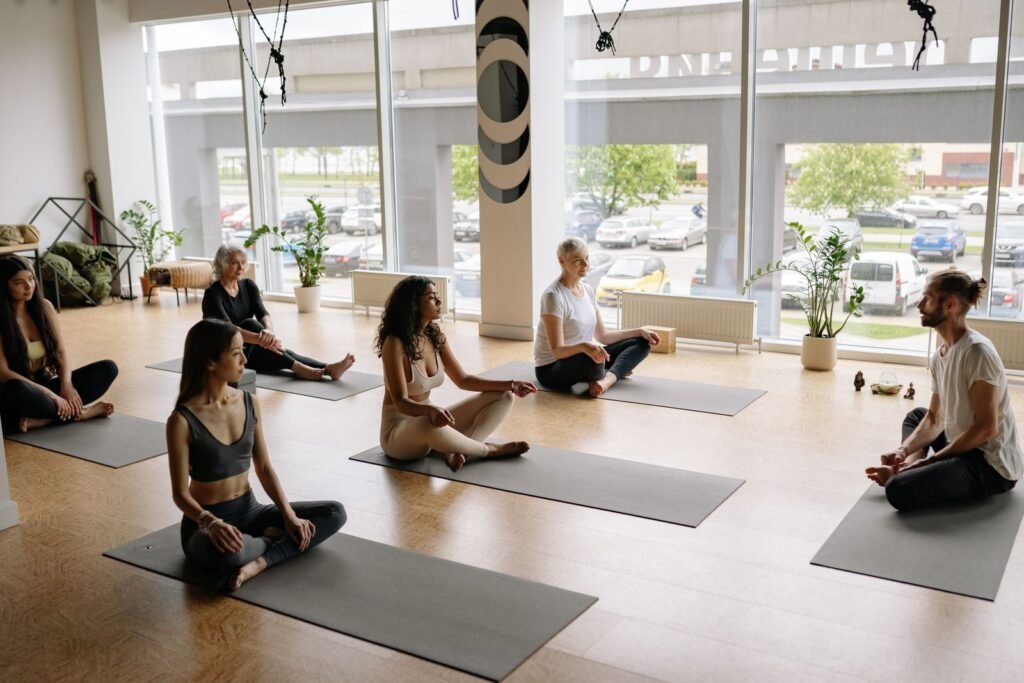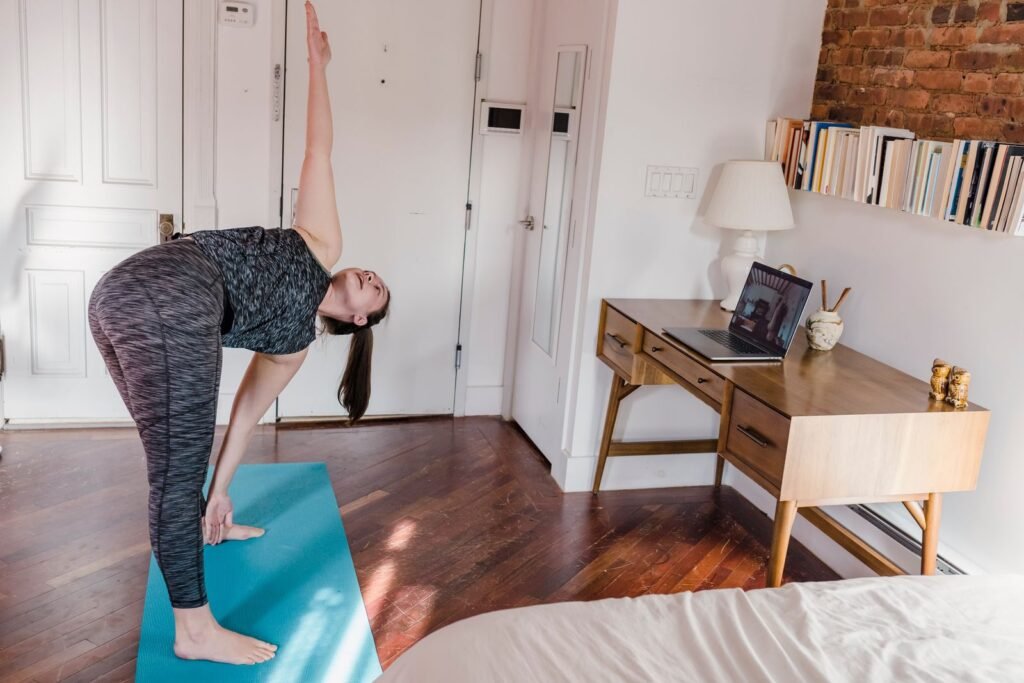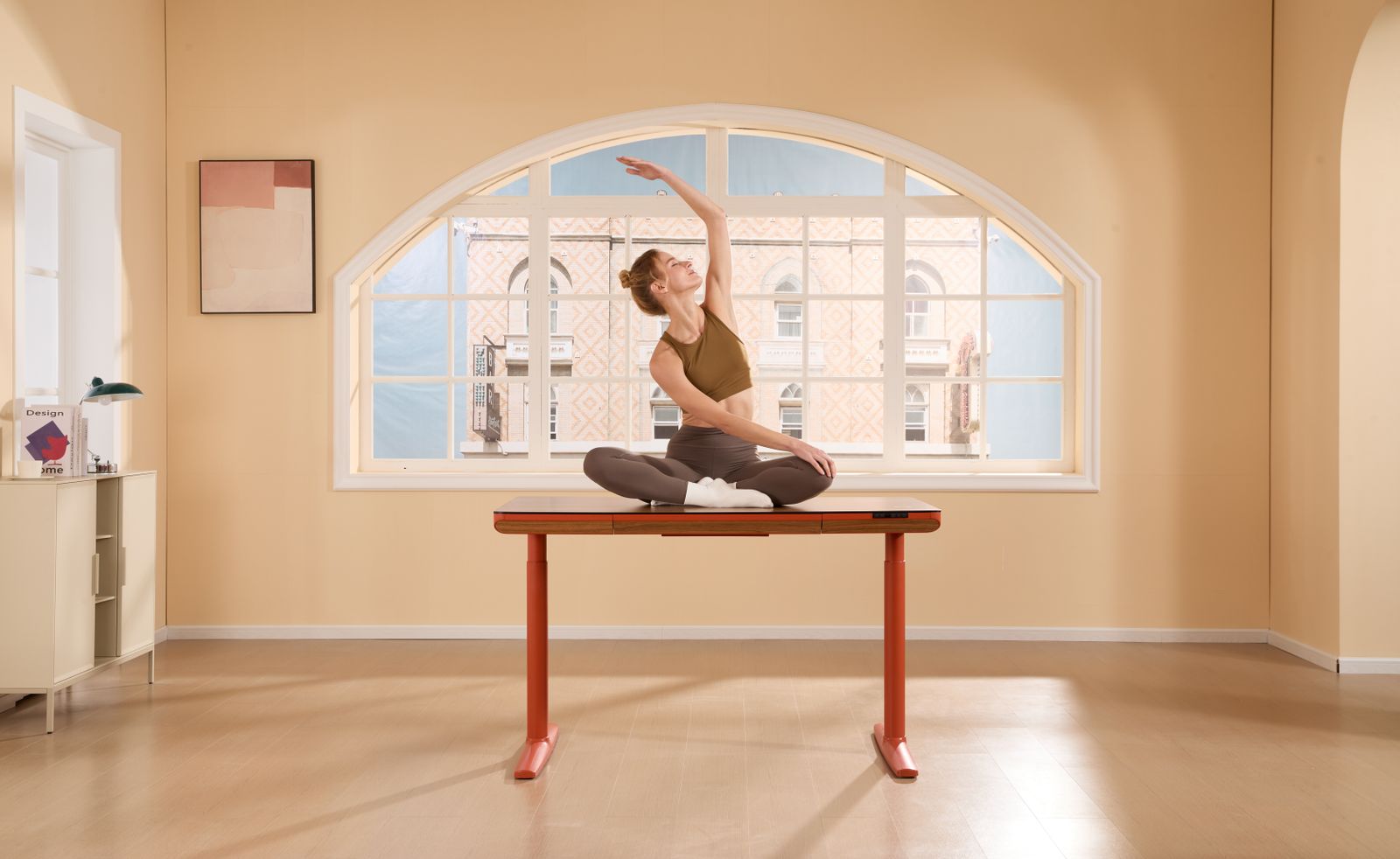
Desk yoga for office workers is a set of short, seated or standing stretches, breathing exercises, and postural resets you can do at or near your workstation without changing clothes or unrolling a mat. A session can take anywhere from 90 seconds to 10 minutes and typically targets the neck, shoulders, wrists, spine, and hips—the areas most compressed by hours of sitting and screen use. Practiced consistently through the workday, it helps ease stiffness, refresh concentration, and counter the postural strain that builds up from prolonged sitting, without requiring you to leave your desk or interrupt your schedule for long.
What Exactly Is Desk Yoga?
Desk yoga adapts traditional yoga poses and breathing techniques so they can be done while seated in an office chair, standing beside a desk, or using the desk itself as a prop. Instead of a full vinyasa flow on a mat, you get modified versions of familiar postures—a seated spinal twist instead of a floor twist, a chair-supported forward fold instead of Uttanasana, wrist and finger stretches instead of a full arm balance. The goal isn’t a workout in the gym sense; it’s a quick physiological reset that interrupts long static postures, encourages blood flow, and brings attention back to the breath. This is sometimes marketed as “desktop yoga,” a term popularized by organizations like the Art of Living, which teaches short desk-based sequences designed to be done in the middle of a workday in ordinary work clothes.
Why Do Office Workers Need Desk Yoga?
Most office jobs involve sitting for six to nine hours a day, often in front of a screen with the head tilted forward and shoulders rounded. Ergonomics and physiotherapy research consistently links prolonged, uninterrupted sitting with lower back pain, tightened hip flexors, weakened glutes, forward head posture, and reduced circulation in the legs. Short active breaks that involve standing, stretching, or changing posture are commonly recommended as a countermeasure to the strain caused by static sitting, since they redistribute pressure on the spine and reactivate muscles that stay dormant during long seated stretches. Desk yoga gives you a structured, repeatable way to take those breaks instead of just standing up and shaking it off. If your job involves long hours at a screen, pairing desk yoga with a broader look at yoga for work from home habits can help you build a more complete routine.
What Are the Core Benefits of Desk Yoga?
The benefits of desk yoga fall into a few clear categories, and understanding them helps you choose which poses to prioritize on a given day.
- Reduced muscular tension in the neck, shoulders, and upper back caused by hunching over a keyboard or phone.
- Improved circulation in the legs and lower body, which can otherwise stagnate during long sitting stretches.
- Better posture awareness, since many desk yoga poses specifically counter the forward-rounded “screen slouch.”
- Lower perceived stress, largely through the breathing component rather than the stretching alone—slow, controlled breathing is associated with activating the parasympathetic, or “rest and digest,” nervous system response.
- Sharper focus after breaks, since interrupting a long task with movement is a well-known way to counter attention fatigue.
- Relief from eye strain and wrist fatigue, when you include eye exercises and wrist mobilizations alongside the bigger stretches.
None of these benefits require an intense practice. Even two or three minutes, done consistently, adds up over a workweek. For a deeper look at how these effects compound over time, see our overview of the general benefits of yoga.
How Do You Set Up for Desk Yoga?
You don’t need a mat, props, or a change of clothes for most desk yoga poses, but a little bit of setup makes the practice more effective.
- Chair stability: Use a chair that won’t roll or swivel unexpectedly, especially for standing or balance-based moves.
- Footing: Keep both feet flat on the floor, or on a footrest, before starting seated stretches so your spine has a stable base.
- Clothing: Loosen anything restrictive—a tucked-in shirt, a tight belt, or closed dress shoes—so you can fold, twist, and reach without discomfort.
- Space: Push your chair back slightly from the desk to give your knees and arms room for twists and side bends.
- Timing: Set a recurring reminder every 60 to 90 minutes rather than waiting until you already feel stiff.
What Are the Best Desk Yoga Poses for the Neck and Shoulders?
The neck and shoulders absorb most of the strain from screen work, so this is usually where a desk yoga session should start.
- Neck rolls: Slowly tilt your ear toward one shoulder, roll the chin down and across to the other side, and repeat for four to six rounds. Avoid rolling the head all the way back, which can compress the cervical spine.
- Seated cat-cow: Place hands on your knees, arch the chest and look up on an inhale, then round the spine and drop the chin on an exhale. This mirrors the mat-based cat-cow pose and is one of the most effective resets for a stiff mid-back.
- Shoulder shrugs and rolls: Lift both shoulders toward your ears, hold for two seconds, then release and roll them back and down. Repeat five to eight times to loosen the trapezius muscles.
- Eagle arms: Cross one arm over the other at the elbow, bring the palms or backs of the hands together, and lift the elbows to stretch the upper back and rear shoulders—a seated variation of the arm position used in eagle pose.
- Ear-to-shoulder stretch: Gently rest one hand on the opposite side of your head and let the weight guide a light stretch along the side of the neck, holding for 20 to 30 seconds per side.
What Are the Best Desk Yoga Poses for the Spine and Hips?
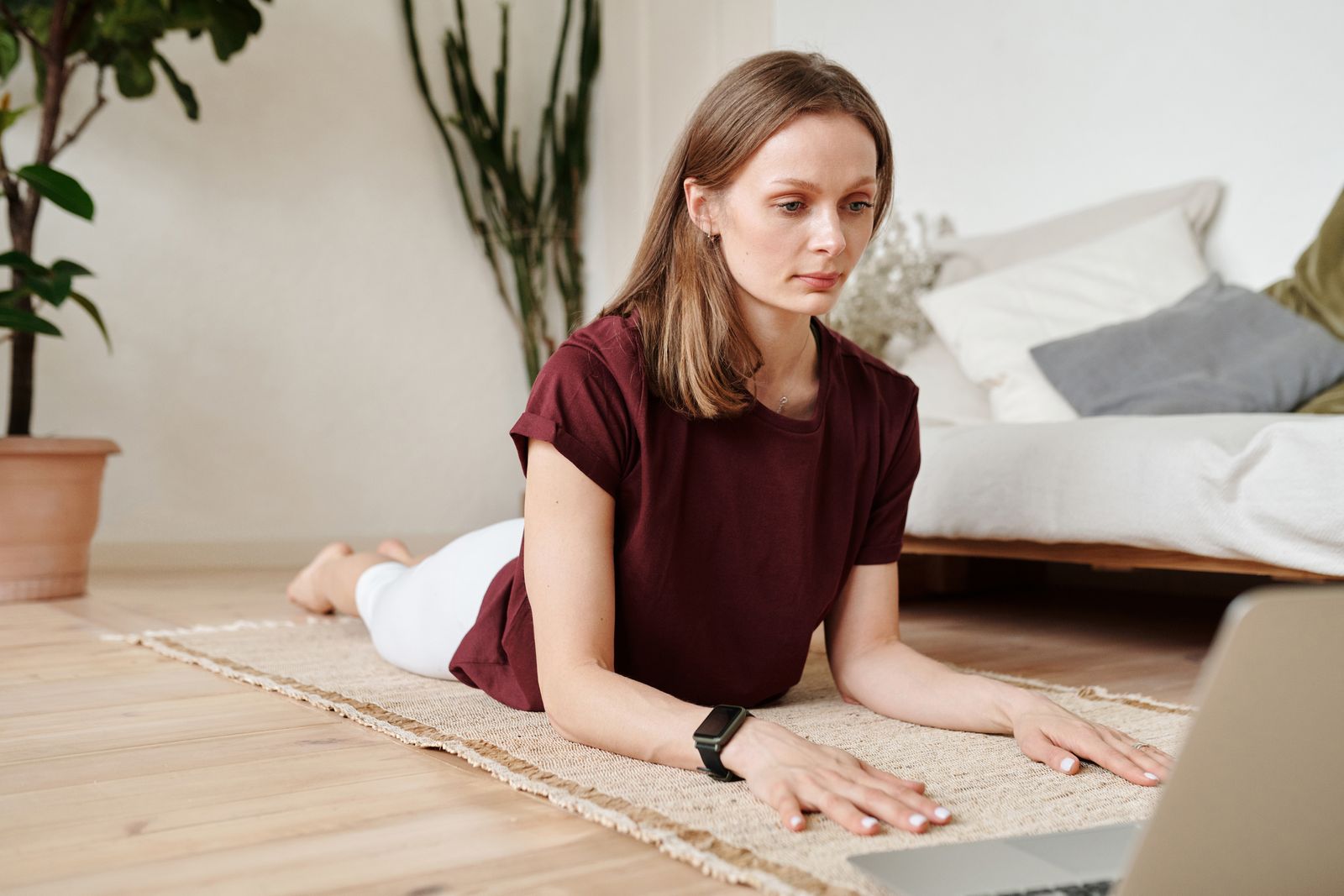
Sitting for long stretches shortens the hip flexors and compresses the lower spine, so these poses focus on counteracting that specific pattern.
- Seated spinal twist: Sit tall, place one hand on the opposite knee and the other on the back of your chair, and rotate your torso gently while keeping the hips facing forward. Hold for five breaths each side. This is a seated adaptation of Ardha Matsyendrasana.
- Chair pigeon: Cross one ankle over the opposite knee and hinge slightly forward from the hips to stretch the outer hip and glute—useful if you feel tightness after long sitting stretches.
- Seated forward fold: With feet flat on the floor, hinge from the hips and let your torso and arms hang toward your knees, releasing tension along the entire back line.
- Standing forward fold at the desk: Step back from your chair, place your hands on the desk edge, and hinge forward at the hips with a flat back to lengthen the hamstrings and decompress the spine, similar to a supported Uttanasana.
- Standing chair pose against the desk: Bend the knees as if sitting back into an invisible chair while holding the desk edge for balance, engaging the legs and core in a way that mimics chair pose (Utkatasana).
What Are the Best Desk Yoga Poses for Wrists, Hands, and Eyes?
Typing and mouse use put repetitive strain on the wrists and fingers, and screen time fatigues the eyes in ways that stretching alone won’t fix.
- Wrist flexor and extensor stretch: Extend one arm forward, palm up, and gently pull the fingers back with the other hand; then flip the palm down and repeat, holding each position for 15 to 20 seconds.
- Prayer stretch: Press the palms together in front of the chest, then lower the joined hands toward the waist while keeping the palms together, feeling a stretch along the forearms.
- Finger spreads and fists: Spread the fingers wide for a few seconds, then make a soft fist, repeating six to eight times to relieve tension from typing.
- 20-20-20 eye rule: Every 20 minutes, look at something roughly 20 feet away for at least 20 seconds. This is a widely recommended habit among eye-care professionals for reducing digital eye strain and pairs naturally with a desk yoga break.
- Palming: Rub the palms together to generate warmth, then gently cup them over closed eyes for 15 to 20 seconds without pressing on the eyeballs.
How Should Breathing Fit Into a Desk Yoga Routine?
Breathing exercises, or pranayama, are arguably the most underused part of desk yoga, because they require zero movement and can be done without anyone noticing.
- Diaphragmatic breathing: Place one hand on your belly and breathe so the belly expands on the inhale and falls on the exhale, rather than breathing shallowly into the chest.
- Box breathing: Inhale for a count of four, hold for four, exhale for four, and hold empty for four. This pattern is commonly used to reduce acute stress before a meeting or presentation.
- Alternate nostril breathing (Nadi Shodhana): A seated, simplified version can be done discreetly by softly closing one nostril at a time with a finger, useful for a calming reset between calls. Read more in our guide to pranayama breathing techniques.
- Sighing breath: A long exhale through slightly parted lips, repeated three to five times, can quickly lower physical tension after a stressful email or call.
Pairing even one minute of slow breathing with a physical stretch amplifies the calming effect, since the nervous system responds strongly to breath rate and length.
How Long and How Often Should You Practice Desk Yoga?
Consistency matters more than duration. A practical structure many office workers find sustainable:
- Micro-breaks (60–90 seconds): Neck rolls, shoulder shrugs, or a few deep breaths every hour.
- Short resets (3–5 minutes): A combination of two or three poses from different categories—one for the spine, one for the shoulders, one breathing exercise—done mid-morning and mid-afternoon.
- Longer sessions (10–15 minutes): A fuller sequence during a lunch break, ideally standing up and moving away from the desk if space allows.
If you’re new to structuring a routine like this, our guide to building a self-care yoga routine walks through how to fit short practices into a busy schedule without it feeling like one more obligation.
Can Desk Yoga Help With Stress and Mental Fatigue, Not Just Physical Tightness?
Yes, and this is often the more noticeable effect for office workers. Deadline pressure, back-to-back meetings, and constant notifications keep the nervous system in a mildly activated state for most of the workday. Desk yoga interrupts that pattern in two ways: the physical stretching signals safety to the body by releasing chronically tense muscles, and the breathing component directly supports a calmer nervous system state. This is closely related to how yoga is used more broadly for exam and performance pressure—see our article on yoga for exam stress for techniques that translate well to high-pressure workdays. Many practitioners report feeling calmer within a single session, though the more durable benefit tends to come from doing it consistently over weeks, not from any single stretch.
Is Desk Yoga Different From Chair Yoga?
The terms overlap heavily, but there’s a subtle distinction worth knowing. “Chair yoga” is usually a broader practice designed for anyone who needs seated support, including older adults, people with mobility limitations, or beginners easing into yoga for beginners. “Desk yoga” is more specifically framed around the office environment and screen-related strain, often incorporating the desk itself as a prop for standing stretches. In practice, most desk yoga sequences borrow heavily from chair yoga, and you’ll see the terms used interchangeably in guides and videos. Either way, the underlying goal is the same: accessible movement that doesn’t require getting on the floor.
What Mistakes Should You Avoid With Desk Yoga?
A few common missteps reduce the effectiveness of a desk yoga practice or, in some cases, create discomfort:
- Forcing range of motion: Desk yoga stretches should feel like gentle release, not a deep stretch that causes strain, especially in the neck.
- Skipping the breath: Holding your breath during a stretch limits its calming effect and can increase tension rather than reduce it.
- Only doing it when already in pain: The biggest value comes from prevention—regular micro-breaks before stiffness sets in, not after.
- Ignoring the chair setup: A wheeled, unstable chair makes twists and standing poses riskier than they need to be.
- Treating it as a replacement for real movement: Desk yoga is a supplement to walking, standing, and regular exercise, not a substitute for them.
How Does Desk Yoga Fit Into a Broader Corporate Wellness Approach?
Many companies are now building short movement breaks into the workday as part of broader wellness initiatives, recognizing that sedentary behavior is one of the most common and preventable contributors to workplace fatigue. Desk yoga is a low-cost, low-friction entry point for this, since it needs no equipment, no dedicated space, and no change of clothing. Teams that introduce a five-minute guided desk yoga break before or after a long meeting often report better focus in the session that follows. If you’re exploring wellness options at a team or organizational level, our approach to corporate yoga programs covers how structured sessions can be layered on top of individual desk practices like this one.
Questions People Ask About Desk Yoga
Can desk yoga really fix bad posture from sitting all day?
Desk yoga helps counteract the effects of poor posture by regularly stretching tight muscles and reactivating weak ones, but it works best alongside ergonomic adjustments like monitor height and chair support. Think of it as damage control done consistently throughout the day rather than a one-time posture fix; the biggest improvements come from combining short breaks with a properly set up workstation.
How many desk yoga poses should I do in one session?
Two to four poses targeting different areas—neck, shoulders, spine, and hips—is enough for a meaningful reset. A short session of three to five minutes done several times a day tends to be more effective than one long session, since it interrupts static sitting more frequently across the workday.
Do I need special clothes or a yoga mat for desk yoga?
No. Most desk yoga poses are designed to be done in regular work clothes, seated in an office chair or standing beside your desk. A mat isn’t necessary since nearly all the movements are chair-supported or standing, which is part of what makes desk yoga so easy to fit into a workday.
What is “desktop yoga” and is it different from desk yoga?
“Desktop yoga” is essentially the same concept as desk yoga—short sequences done at or near your desk—popularized under that name by organizations like the Art of Living, which teaches brief guided routines for office settings. The core techniques, seated stretches, breathing, and posture resets, are largely the same regardless of which term is used.
Can desk yoga help with headaches from screen time?
It can help with tension-type headaches that originate from neck and shoulder tightness, which is a common contributor to screen-related headaches. Combining neck stretches with the 20-20-20 eye rule and regular breathing breaks addresses both the muscular and visual strain that often trigger these headaches, though persistent or severe headaches should be discussed with a doctor.
Is it okay to do desk yoga in front of coworkers?
Most desk yoga poses are subtle enough to do at your desk without drawing attention—shoulder rolls, seated twists, and breathing exercises look like ordinary movement. If you’re self-conscious, start with the least visible options, like wrist stretches and breathing techniques, and save standing poses for a break room or quieter moment.
Try This for Yourself
Reading about desk yoga poses only goes so far—the real benefit comes from guided practice that keeps your form correct and your habit consistent. Explore FitStrot’s Online Yoga Classes to work with an instructor who can help you build a sustainable routine around your workday, whether that’s quick desk resets or a fuller practice on your off hours.
Related reading: Building a self-care yoga routine, yoga for exam stress, yoga for work from home, and the full range of benefits of yoga. You can also explore FitStrot’s Online Yoga Classes to get started with guided sessions.