
Yoga to increase height works mainly by decompressing the spine, correcting slouched posture, and improving hip and shoulder flexibility, which can add a genuine 1 to 3 centimetres of standing height for many adults simply by undoing years of compression and poor alignment. Yoga does not lengthen bones or reopen growth plates once they have fused, so it cannot make you taller the way puberty does. What it reliably does is help you stand at your full natural height, release tension that shortens your posture, and support the conditions that matter most during the growing years. This article covers exactly what yoga can and cannot do for height, the specific asanas that help, a realistic routine, and how age changes what to expect.
Can Yoga Increase Height, or Is That a Myth?
Yoga cannot increase your true skeletal height once your growth plates have closed, and it does not add new bone length at any age. What yoga can do is help you recover the height you already have but aren’t displaying, because gravity, sitting for long hours, weak core muscles, and tight hip flexors compress the spine and round the shoulders over time. Practices like yoga for posture can visibly add height by pulling the shoulders back, lengthening the neck, and reducing the forward head tilt that shaves inches off how tall a person looks and measures. For growing children and teenagers, yoga’s role is different: it supports healthy spinal alignment, better sleep, lower stress, and stronger core and back muscles, all of which create favorable conditions for the body’s own natural growth process to run its course without interference.
Does Yoga Increase Height After Puberty Ends?
After puberty, the growth plates at the ends of the long bones gradually fuse with the bone shaft, and once that fusion is complete, the bone can no longer lengthen, regardless of exercise, diet, or supplements. This fusion is commonly cited as completing sometime in the late teens, though the exact age varies by sex and individual development, with some estimates placing final fusion around 21 for males and somewhat earlier for females. Once that has happened, no yoga pose, stretch, or inversion will add bone length. What yoga can still do post-puberty is meaningful: decompress spinal discs compressed by gravity and bad posture, improve spinal curvature, and correct slouching, all of which can reveal an additional 1 to 3 centimetres of your existing height. That is not new growth, it is unlocking the height you were already built to have.
Which Yoga Asanas Are Best for Height?
The most effective yoga asanas to increase height target spinal elongation, hip opening, and shoulder mobility, since these are the areas most commonly restricted by sitting and poor posture. The following poses form the core of most height-focused yoga sequences.
- Tadasana (Mountain Pose): The foundational standing pose that teaches the body correct spinal alignment, distributing weight evenly through the feet and stacking the spine so you stand at your true height rather than a slouched version of it.
- Tadasana with arm reach (Urdhva Hastasana): Extending the arms overhead while grounding the feet creates active traction through the spine, encouraging the vertebrae to lengthen away from each other.
- Vrikshasana (Tree Pose): A balancing pose that strengthens the core and legs while training the spine to stay long and upright, reinforcing the postural habits that make you look and stand taller.
- Bhujangasana (Cobra Pose): A gentle backbend that strengthens the muscles along the spine and opens the chest, counteracting the forward-hunching posture common from desk work and phone use.
- Adho Mukha Svanasana (Downward-Facing Dog): This inversion-adjacent pose stretches the entire posterior chain, from the calves to the shoulders, and decompresses the spine using the body’s own weight and gravity.
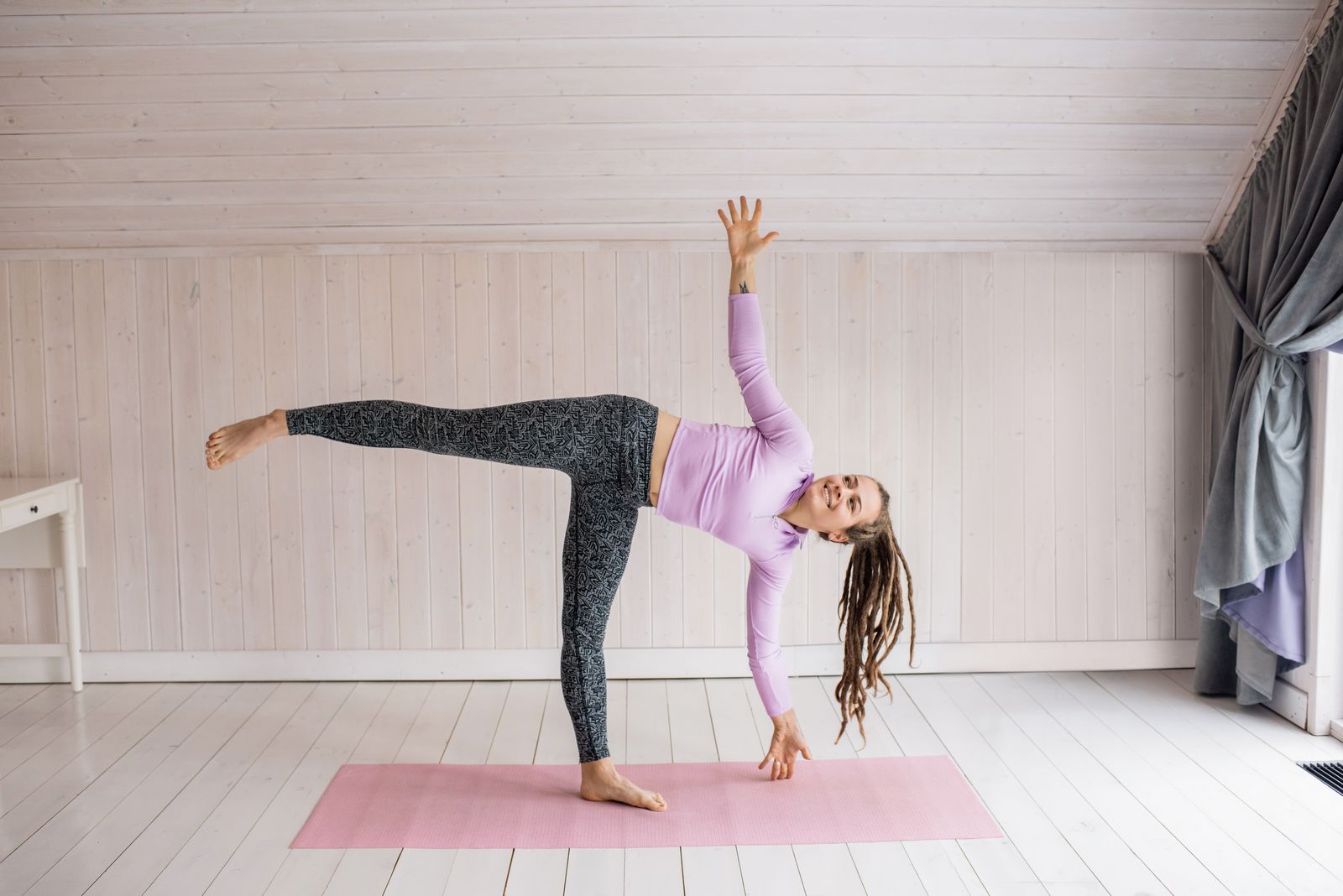
- Trikonasana (Triangle Pose): A standing side-bend that opens the hips and ribcage while lengthening the sides of the torso and spine simultaneously.
- Ustrasana (Camel Pose): A deeper backbend that stretches the front of the body, hip flexors, and thighs, areas that tend to shorten and pull the pelvis into a posture-compromising tilt.
- Setu Bandhasana (Bridge Pose): Strengthens the lower back and glutes while opening the chest and hip flexors, supporting the muscular foundation needed for upright posture.
For a broader look at how these poses fit into general flexibility work, see our guide to yoga for flexibility, and for the specific muscles that support an upright frame, our piece on yoga for back pain covers overlapping ground.
What Is the Best Yoga to Increase Height After 18?
After 18, the goal shifts from supporting bone growth to maximizing postural height and spinal health, since most people’s growth plates are at or near fusion by this age. The best yoga to increase height after 18 combines gentle inversions, backbends, and core-strengthening poses that address years of compression from school desks, commutes, and screen time. A combination of Tadasana, Adho Mukha Svanasana, Bhujangasana, and Setu Bandhasana, practiced consistently, tends to produce the most noticeable postural change, because together they lengthen the spine, open the chest, and build the back and core strength needed to hold an upright position throughout the day. Pairing these asanas with yoga for strength work on the core and back extensors makes the gains more durable, since a weak core is one of the biggest reasons people slip back into a slouched stance within weeks.
Does Yoga Increase Height After 21?
By 21, the vast majority of adults have fully fused growth plates, meaning true skeletal height is fixed regardless of exercise, and this applies to yoga as much as any other physical activity. Yoga after 21 will not add bone length, but it remains one of the most effective tools for reclaiming lost postural height, since years of sitting, poor ergonomics, and muscular imbalance can compress the spine and round the shoulders enough to cost real, measurable centimetres. Regular practice of spine-lengthening asanas can restore that lost height by improving disc hydration, correcting curvature, and strengthening the postural muscles that hold the spine upright. Anyone over 21 hoping for genuine bone growth from yoga should reset that expectation, but anyone hoping to stand taller and feel less compressed has a realistic, achievable goal with consistent practice.
Can Yoga Increase Height in Just 1 Week?
Yoga will not add bone length in a week under any circumstances, but a focused week of daily practice can produce a visible improvement in standing posture, which is often what people are actually hoping to see when searching for fast height results. Spinal decompression from poses like Downward-Facing Dog and gentle hanging-style stretches can create noticeable, if temporary, spinal lengthening within days, since much of the “height loss” people feel during the day comes from gravity compressing the fluid-filled discs between vertebrae. A one-week routine focused on Tadasana, Cobra Pose, Cat-Cow, and gentle inversions, practiced for 20 to 30 minutes daily, can meaningfully improve posture and confidence, but the honest expectation is centimetres of postural improvement, not true growth. Anyone marketing yoga as a way to grow multiple inches of bone in seven days is not describing anything grounded in human physiology.
How to Increase Height by Yoga: A Step-by-Step Approach
Increasing your effective height through yoga works best as a structured, progressive routine rather than a random selection of poses. Start with 10 minutes of gentle warm-up stretches, including neck rolls and Cat-Cow, to mobilize the spine before deeper work. Move into standing poses like Tadasana and Trikonasana to build alignment awareness while the body is fresh. Follow with backbends such as Bhujangasana and Ustrasana to open the chest and strengthen the posterior chain. Finish with a forward fold or gentle inversion like Downward-Facing Dog to decompress the spine, closing the session with 5 minutes in Savasana to let the muscles integrate the stretch. Consistency matters more than intensity: a 20-minute daily practice sustained over 8 to 12 weeks produces far more visible change than an occasional 90-minute session. Anyone building a broader home practice can pair this with our guide to beginner yoga poses or a full morning yoga routine for consistency.
What Yoga Exercises Support Height Growth in Teenagers?
For teenagers still in their growing years, yoga’s most valuable contribution to height is indirect: it supports the conditions under which the body’s natural growth process functions best. Poses that improve posture, like Tadasana and Vrikshasana, prevent the chronic slouching that can, over years, affect spinal curvature and how tall a teenager ultimately appears. Yoga’s well-documented effects on stress reduction and sleep quality also matter here, since growth hormone is released predominantly during deep sleep, and chronically poor sleep or high stress can interfere with normal growth signaling. Encouraging a teenager toward a short daily yoga habit, alongside adequate protein, calcium, and 8 to 10 hours of sleep, supports the full picture far more effectively than any single pose in isolation. For families building this into a broader routine, our article on yoga for kids covers age-appropriate sequencing.
How Does Yoga Compare to Other Height Myths and Methods?
Height increase is one of the most heavily marketed fitness claims online, and it helps to know where yoga sits relative to other common methods. Hanging exercises and inversion tables work on a similar principle to yoga’s spinal decompression, using gravity or traction to temporarily separate the vertebrae, producing comparable short-term postural gains. Height-increasing insoles and supplements do not affect bone length at all; insoles simply add physical height to the shoe, while most supplements marketed for height have no verified effect on adult bone growth. Swimming and basketball are often cited as “height sports,” but the more honest explanation is that naturally taller people are drawn to and succeed in these sports, rather than the sports themselves adding height. Yoga’s advantage over these alternatives is that it is low-impact, safe for nearly all ages and fitness levels, and delivers genuine secondary benefits, like flexibility, stress relief, and core strength, regardless of whether it changes your measured height.
What Role Does Nutrition Play Alongside Yoga for Height?
For anyone still in their growing years, nutrition is arguably a bigger lever on final adult height than any exercise, since bones need specific raw materials to grow to their genetically programmed potential. Adequate protein supports the collagen matrix bones are built on, calcium and vitamin D are essential for bone mineralization, and zinc and magnesium play supporting roles in the hormonal pathways tied to growth. Chronic undernutrition during childhood and adolescence is one of the few environmental factors clearly linked to people not reaching their full genetic height potential. Pairing a nutrient-dense diet with a consistent yoga practice, good sleep, and regular movement gives a growing body every advantage it can realistically get, while yoga alone, without attention to nutrition, is unlikely to move the needle on true height during the growing years.
Can Yoga Help With the Posture Habits That Make You Look Shorter?
Many people who feel they are “not tall enough” are actually dealing with posture habits that visually and measurably shorten their frame rather than a genuine height problem. Forward head posture from constant phone and screen use pushes the neck out of alignment with the spine, rounding the upper back and compressing the space between vertebrae. Anterior pelvic tilt, common in people who sit for long stretches, shortens the hip flexors and can create a swayed lower back that reduces overall standing height. A dedicated yoga for posture practice directly targets both issues, using chest-opening backbends and hip-flexor stretches to reverse these compensations. Combined with strengthening the deep core through yoga for strength, most people can recover a genuinely surprising amount of standing height within a few months, simply by undoing habits rather than growing new bone.
How Often Should You Practice Yoga to See Height-Related Results?
Most people practicing yoga for postural height gains should aim for 20 to 30 minutes, 5 to 6 days a week, sustained over at least 8 to 12 weeks before expecting a stable, visible change. Shorter or less frequent practice can still improve flexibility and reduce stiffness, but the postural recalibration that produces noticeable height change requires the repetition that retrains muscle memory and spinal habits. Morning practice tends to work well for spinal decompression poses since the spine is naturally more compressed after a night of horizontal rest, while evening practice releases compression built up from a day of sitting or standing. Whichever time is chosen, the single biggest predictor of results is consistency over weeks and months, not the intensity of any one session. Those newer to a regular practice may find it easier to build the habit through structured online yoga for beginners classes with guided pacing.
What Other Benefits Come From a Height-Focused Yoga Practice?
Even for people whose primary motivation is height, a consistent yoga practice delivers benefits that extend well beyond posture. Regular practice supports yoga for weight loss goals by building lean muscle and improving metabolic activity, and it commonly reduces the chronic muscular tension behind tension headaches and lower back pain. The breathing techniques embedded in most sequences, known as pranayama, can lower cortisol and support better sleep, which plays a real role in growth hormone release during adolescence. Many practitioners also report improved body confidence once their posture visibly improves, independent of whether their measured height changes at all. A height-focused yoga routine tends to become a gateway into a broader wellness practice rather than staying narrowly focused on one metric.
Questions People Ask About Yoga to Increase Height
Can yoga make you taller after 25?
No, yoga cannot add bone length after 25, since growth plates have fused for virtually everyone by this age. Yoga can still improve posture and spinal alignment, potentially revealing 1 to 3 centimetres of height that was being lost to slouching and spinal compression, but this is postural recovery, not new skeletal growth.
How long does it take to see height results from yoga?
Postural improvements from yoga can appear within 1 to 2 weeks of consistent daily practice, though the more stable, lasting changes in spinal alignment typically take 8 to 12 weeks of regular sessions. True bone growth is not something yoga produces at any point, regardless of how long the practice continues.
Which yoga pose is most effective for height?
Tadasana, or Mountain Pose, is widely considered the single most effective pose for height because it directly trains correct spinal alignment and even weight distribution. It is often combined with Bhujangasana and Adho Mukha Svanasana for a more complete routine targeting spinal decompression and posture.
Is it true that yoga increases height in children more than adults?
Yoga does not directly increase height at any age, but its indirect benefits, like better sleep, lower stress, and stronger posture, matter more for children and teenagers because their bodies are still actively growing and more responsive to supportive conditions. Adults benefit mainly through postural recovery rather than any growth-related effect.
Can bad posture actually make someone shorter?
Yes, chronic slouching, forward head posture, and anterior pelvic tilt can measurably reduce standing height by several centimetres by compressing the spine and altering its natural curvature. Correcting these habits through consistent yoga practice can restore that lost height, since it was never true skeletal height loss to begin with.
Do inversions like headstands help increase height?
Inversions such as headstands and shoulder stands use gravity in reverse to decompress the spine, which can produce a similar temporary lengthening effect to other spinal-traction poses. They should be practiced carefully and ideally under guidance, since improper alignment in inversions carries a higher risk of neck strain than standing or seated height-focused poses.
Try This for Yourself
Reading about spinal decompression and posture-correcting asanas is one thing; feeling your own spine lengthen under expert guidance is another. If you want a structured, guided routine built around the exact poses covered here, explore FitStrot’s online yoga classes, where certified instructors can personalize a height-and-posture-focused sequence to your body, flexibility level, and schedule.
Related reading: Yoga for Posture, Yoga for Flexibility, Yoga for Strength, Yoga for Weight Loss, and FitStrot’s Online Yoga Classes.