Yoga for cyclists works because it directly counteracts the two things pedaling does to your body: it shortens the muscles that flex your hips and compresses your chest and shoulders forward for hours at a time. A focused 15-20 minute practice built around hip flexor openers, hamstring and glute stretches, thoracic spine extension, and core stability can reduce post-ride stiffness, improve pedaling efficiency through a fuller range of motion, and lower your risk of the lower back and knee pain that many cyclists eventually deal with. You don’t need to be flexible or experienced to start; you need consistency and a handful of poses chosen specifically for the muscles cycling overworks and underuses.
Why Do Cyclists Need Yoga Specifically?
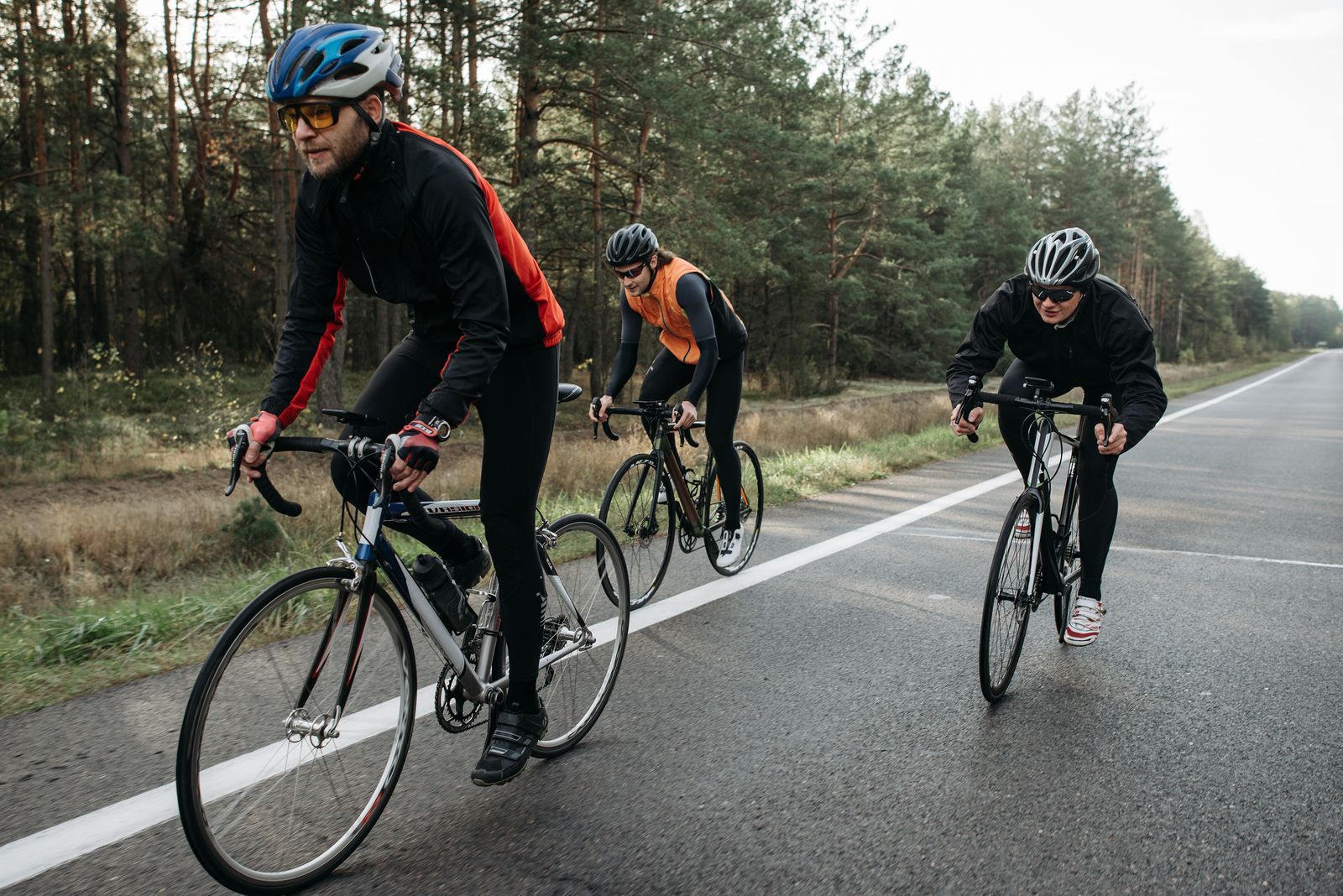
Cycling is a powerful cardiovascular workout, but it’s also a remarkably repetitive one. Your hips move through a narrow, forward-only range of motion for the entire ride, your spine stays flexed forward over the handlebars, and your feet rarely flex beyond the pedal stroke. Ride after ride, this pattern trains your body into a very specific shape: tight hip flexors, an anteriorly tilted pelvis, a rounded thoracic spine, and shortened hamstrings and calves. None of this shows up as an injury on day one. It shows up gradually, as stiffness that doesn’t fully resolve between rides, as lower back tightness on longer efforts, or as knees that ache on climbs. Yoga is one of the few practices that directly targets this exact postural signature, combining hip-opening poses, spinal extension, and mobility work that cycling itself never provides.
What Muscles Get Tight From Cycling?
Understanding which muscles cycling overloads makes it much easier to choose the right poses. During the downstroke, your glutes and quadriceps do most of the work; during the upstroke, your hamstrings and hip flexors take over. At a typical cadence of 80 to 100 pedal revolutions per minute sustained over an hour or more, these muscle groups inevitably tighten. The hip flexors are usually the biggest culprit because they stay in a shortened position throughout the entire pedal stroke. The IT band, glutes, calves, and lower back muscles typically follow. If you’ve ever stood up after a long ride and felt like your hips physically won’t extend all the way, that’s tight hip flexors pulling your pelvis into an anterior tilt.
How Does Poor Cycling Posture Affect the Spine?
Road and gravel cycling in particular put riders in a sustained forward-flexed position, with the thoracic spine rounded and the neck extended to look up at the road. Over months and years, this posture can reinforce a rounded upper back and forward head carriage that persists even off the bike. Yoga poses that extend and open the chest, such as gentle backbends and shoulder openers, work against this pattern. This matters beyond aesthetics: a habitually rounded thoracic spine can restrict full lung expansion and shift load onto the lower back to compensate for reduced upper-back mobility. If you already deal with tightness through your upper back, it’s worth exploring a dedicated yoga for back pain routine alongside your cycling-specific practice.
Which Yoga Poses Help Cyclists Most?
Not every pose in the yoga canon is equally useful for a cyclist’s body. The most effective ones target the exact areas cycling tightens: hips, hamstrings, quads, and the thoracic spine. Here are the poses worth prioritizing.
Low Lunge (Anjaneyasana)
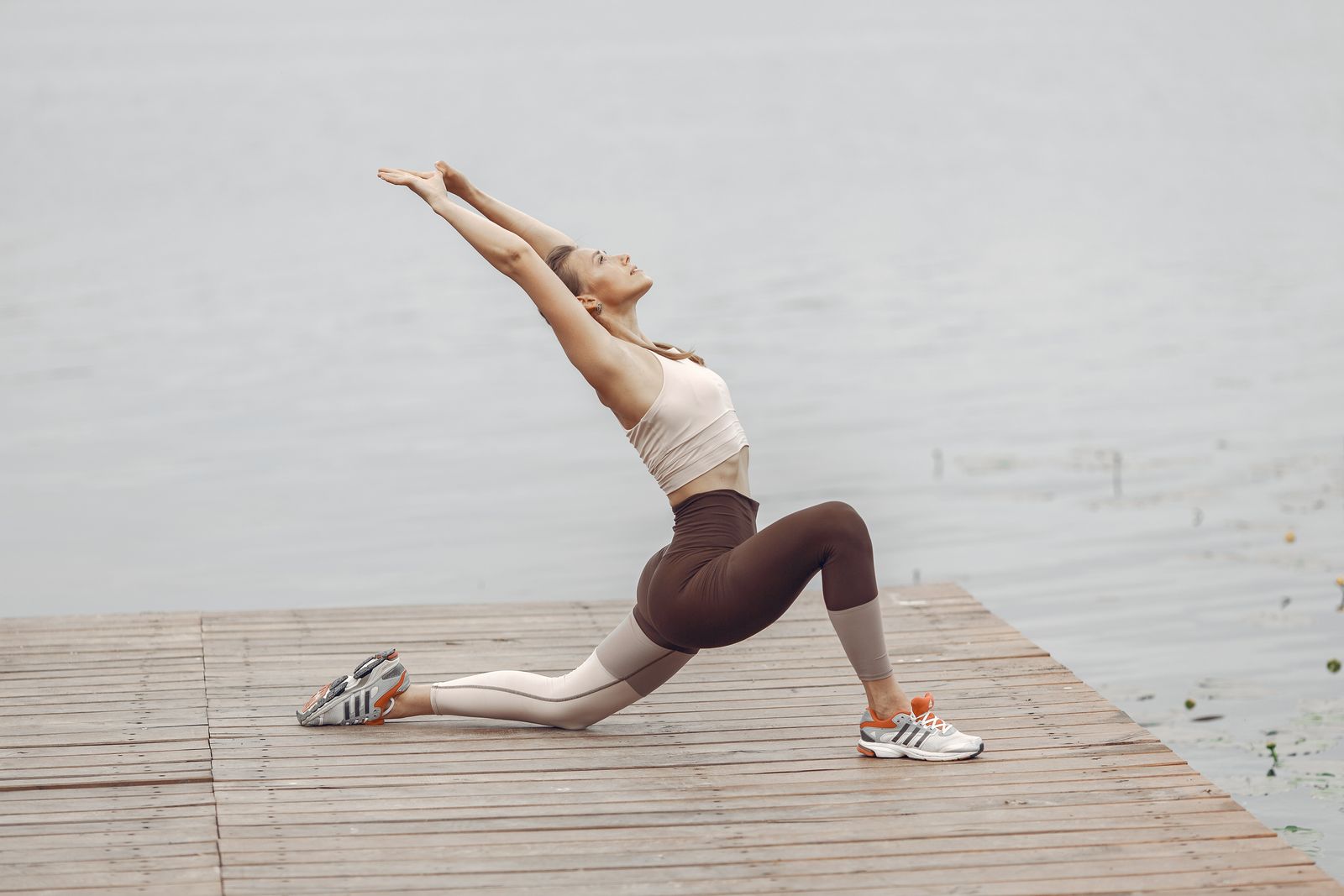
Low lunge directly targets the hip flexors of the back leg, the muscle group most shortened by hours in the saddle. Step one foot forward into a lunge, lower the back knee to the mat, and sink the hips forward and down while keeping the front knee stacked over the ankle. Hold for 5 to 8 breaths per side. For a deeper stretch, reach the arms overhead and add a gentle backbend through the upper spine.
Eye-of-the-Needle Pose (Sucirandhrasana)
This seated or supine figure-four stretch opens the glutes and outer hips without putting any load through the knee, which makes it a safer choice than deep pigeon variations for riders with sensitive knees. Lying on your back, cross one ankle over the opposite knee and draw the uncrossed thigh toward your chest. This is one of the most efficient poses for cyclists dealing with tight glutes after long rides.
Half Split (Ardha Hanumanasana)
Half split isolates the hamstring of the front leg while keeping the back leg supported, making it more accessible than a full split for stretching the hamstrings that fire hard on every upstroke. From a low lunge, shift your hips back and straighten the front leg, hinging forward over the extended leg while keeping the spine long rather than rounded.
Standing Forward Fold Variations (Uttanasana)
A wide-legged or standard forward fold lengthens the hamstrings, calves, and lower back simultaneously. Cyclists often carry tightness through the lateral hamstring and IT band, so shifting your weight slightly toward the outer edges of the feet during the fold can target that area more directly. This pairs well with dedicated yoga for flexibility work if tight hamstrings limit your saddle position.
Bridge Pose (Setu Bandhasana)
Bridge pose strengthens the glutes while stretching the front of the hips, which makes it valuable for cyclists whose hip flexors have grown tight relative to weaker, underused glutes. Lie on your back with knees bent, feet hip-width apart, and lift the hips while pressing evenly through both feet. This pose also gently opens the chest, countering the forward-hunched cycling posture.
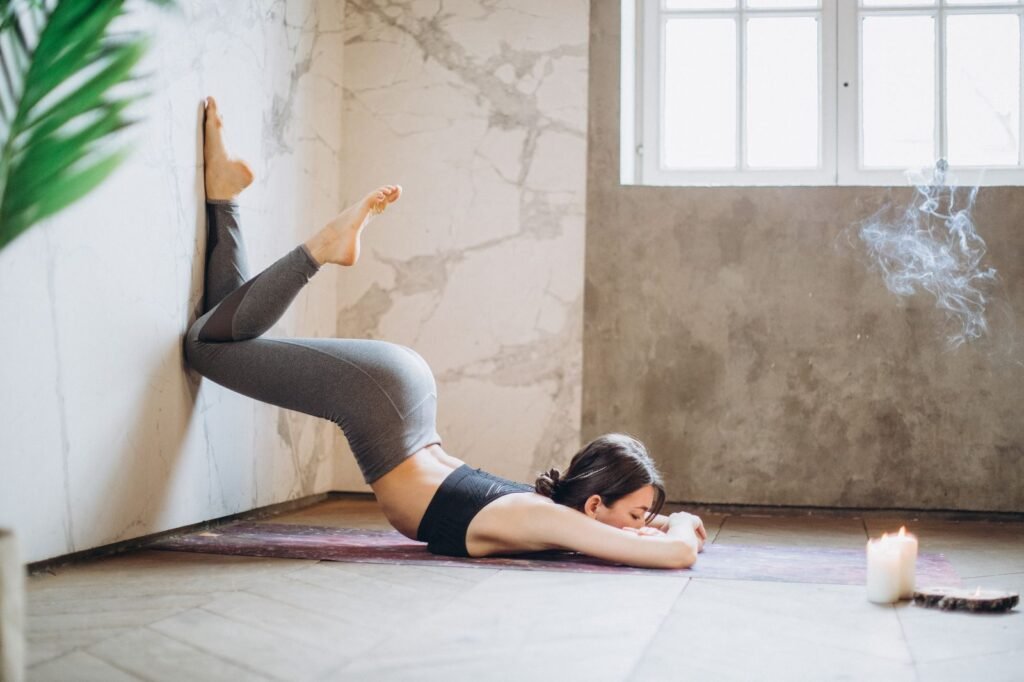
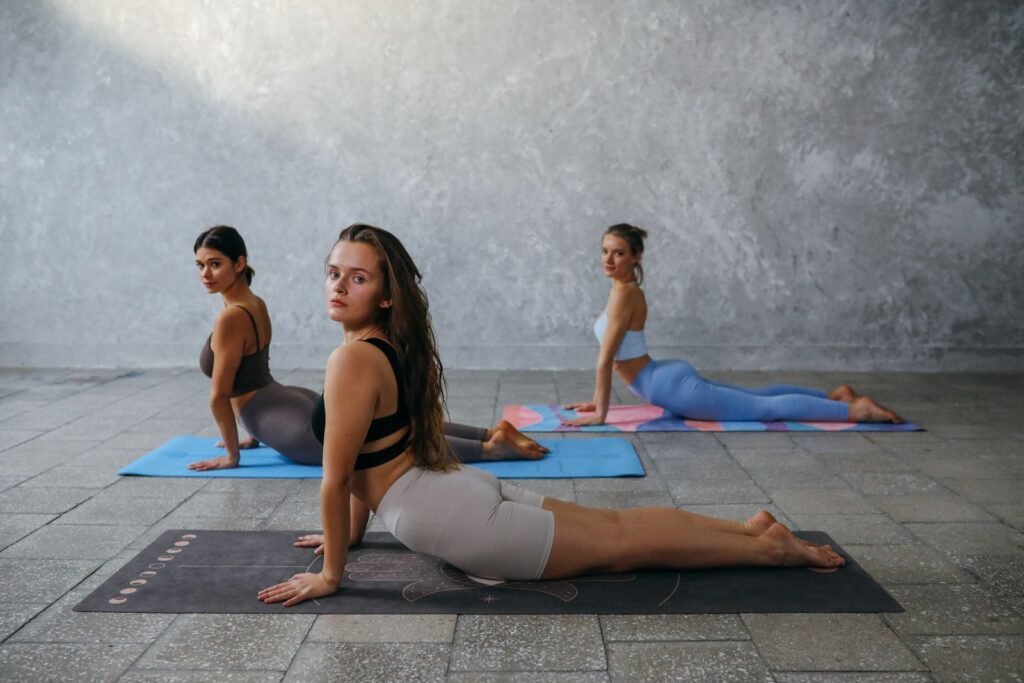
Cobra or Sphinx Pose
Both poses extend the thoracic spine in the opposite direction from the rounded position cyclists hold for hours. Sphinx pose is the gentler option, propping the upper body on the forearms, while cobra involves pressing further up through the hands. Either one counters the forward hunch and helps restore normal spinal extension.
Pigeon Pose (Eka Pada Rajakapotasana)
Pigeon pose is one of the deepest available hip openers and works well once your hips have some baseline mobility. Bring one shin forward at an angle in front of your torso while extending the back leg behind you, then fold forward over the front leg. Riders with knee sensitivity should favor Eye-of-the-Needle Pose instead, or use a folded blanket under the front hip for support.
How Long Should a Post-Ride Yoga Session Be?
A focused 15 to 20 minute sequence covering hip flexors, hamstrings, glutes, and thoracic extension is enough to meaningfully counteract a typical ride’s postural load. You don’t need a full 60-minute class after every ride. What matters more than duration is consistency: doing 15 minutes after most rides beats doing an hour once a month. On rest days, a longer 30 to 45 minute practice gives you room to work deeper into tight areas without the time pressure of squeezing it in post-ride.
Should You Do Yoga Before or After Cycling?
Before a ride, favor dynamic, warming movements rather than long static holds. A few rounds of cat-cow pose, gentle lunges, and dynamic leg swings prepare the hips and spine for the ride without over-stretching muscles you’re about to load. Save the longer static holds, like a 60-second pigeon pose or half split, for after the ride when your muscles are warm and the goal shifts from activation to recovery. This is a similar principle to how yoga for runners is typically sequenced, with dynamic movement before activity and deeper static stretching afterward.
Can Yoga Improve Cycling Performance, Not Just Recovery?
Yes, in a few specific ways. Greater hip flexor and hamstring flexibility allows for a more aggressive, aerodynamic riding position without compensating through the lower back. A stronger, more mobile core, built through poses like plank, boat pose, and side plank, improves power transfer by reducing wasted movement through the torso during hard efforts. And better thoracic mobility makes it easier to breathe fully in an aero position, since a rigid, rounded upper back can restrict rib cage expansion. None of this replaces time on the bike, but it removes physical limitations that no amount of training alone will fix. Many competitive riders now treat mobility work as seriously as intervals; broader context on this crossover is covered in our yoga for athletes guide.
What Yoga Style Works Best for Cyclists?
Slower, hold-focused styles tend to serve cyclists better than fast-paced flow classes, at least for recovery-focused sessions. Yin yoga, which holds passive poses for 2 to 5 minutes, is particularly effective for reaching the deep connective tissue around the hips that a quick stretch won’t touch. Restorative yoga is a gentler option for very fatigued legs after a big ride or race. For building strength and control alongside flexibility, a slower vinyasa yoga practice or a dedicated flexibility-focused sequence works well. If you’re deciding between styles, our overview of the types of yoga breaks down which approach suits which goal.
What Are Common Mistakes Cyclists Make With Yoga?
A few recurring mistakes keep cyclists from getting the full benefit of their practice:
- Skipping the hips entirely. Stretching the legs generally without targeting the hip flexors and glutes misses the specific tightness cycling creates.
- Holding stretches for only a few seconds. Connective tissue and chronically shortened muscle generally respond better to holds of 30 seconds or longer, especially in poses like pigeon or half split.
- Waiting until something hurts. Doing yoga only when pain shows up, rather than as a standing part of the training week, means always playing catch-up instead of staying ahead of the tightness cycling creates and building general strength alongside flexibility.
Can Yoga Help Prevent Common Cycling Injuries?
Cycling-related overuse injuries, including iliotibial band syndrome, patellofemoral pain, and lower back strain, are often linked to muscular imbalances and restricted range of motion rather than a single traumatic event. By restoring hip extension, loosening the IT band, and strengthening the glutes relative to the hip flexors, yoga addresses several of the underlying mechanical issues behind these injuries. It isn’t a guarantee against injury, since bike fit, training load, and pedaling technique matter too, but it removes one contributing factor that’s fully within your control. For riders managing existing discomfort, it’s worth pairing this with general yoga for knee pain guidance if knee soreness is already present.
Do You Need Special Equipment for Cycling Yoga?
No specialized equipment is required, though a few props make certain poses more accessible:
- Yoga block: placed under the hips in reclined stretches, reduces strain for riders with tighter hips.
- Folded blanket: placed under the front knee in pigeon pose, protects sensitive joints.
- Strap: useful for hamstring stretches like reclined big toe pose if you can’t comfortably reach your foot.
- Mat and floor space: enough room for a lunge is all you really need, making it easy to fit a short session in at home immediately after racking your bike.
How Does Yoga Fit Into a Weekly Cycling Training Plan?
Most riders get the most benefit from two to four short yoga sessions per week, rather than treating it as a separate, occasional activity. A practical approach is a 10 to 15 minute hip-and-hamstring sequence after your two or three main rides, plus one longer 30 to 45 minute session on a rest day that also includes core and thoracic spine work. This keeps cumulative tightness from building up between rides while still leaving your legs fresh for key workouts. A broader look at the benefits of yoga can help frame why this consistency matters beyond cycling alone.
Questions People Ask About Yoga for Cyclists
Is yoga actually useful for cyclists, or just for runners and general fitness?
Yoga is genuinely useful for cyclists because it targets the specific muscle tightness cycling creates: shortened hip flexors, tight hamstrings and glutes, and a rounded thoracic spine. These patterns build up from the repetitive, forward-flexed position of pedaling, and yoga’s combination of hip-opening and spine-extending poses directly counteracts them in a way general stretching often misses.
How often should cyclists do yoga each week?
Most riders benefit from two to four sessions per week. Short 10 to 15 minute sessions after rides help manage day-to-day tightness, while one longer 30 to 45 minute session on a rest day allows time for deeper hip and spine work. Consistency matters more than duration, so several short sessions generally outperform one long occasional class.
What is the single best yoga pose for cyclists?
If you can only do one pose, low lunge (Anjaneyasana) is the strongest choice because it directly targets the hip flexors, the muscle group most shortened by time in the saddle. Holding it for 5 to 8 breaths per side, ideally with a gentle backbend added through the upper spine, addresses both hip tightness and the rounded posture cycling creates.
Can yoga help with lower back pain from cycling?
Yoga can help because much of the lower back discomfort cyclists experience stems from tight hip flexors pulling the pelvis into an anterior tilt, which increases strain on the lower spine. Poses that lengthen the hip flexors and strengthen the glutes, combined with gentle spinal extension work, address this underlying mechanical cause rather than just the symptom.
Should beginners do yoga before or after a bike ride?
Beginners should favor light, dynamic movement like cat-cow and gentle lunges before riding, saving longer static holds for after the ride once muscles are warm. Doing deep static stretches on cold, unloaded muscles before a hard effort isn’t as effective for warm-up and can occasionally leave muscles feeling less responsive during the first few minutes of riding.
Is yin yoga or vinyasa yoga better for cyclists?
Yin yoga, with its long passive holds of two to five minutes, is generally more effective for the deep hip and connective tissue tightness cycling creates. Vinyasa yoga is better suited to building strength, core control, and general mobility. Many cyclists benefit from combining both: yin-style holds after hard rides, and a slower vinyasa practice on rest days.
Try This for Yourself
Reading about the right poses is a good start, but a guided practice makes it far easier to hold the right alignment and actually stick with a routine. FitStrot’s online yoga classes include sessions built around exactly this kind of athlete-specific mobility work, so you can follow along live or on your own schedule instead of guessing your way through a sequence alone.
Related reading: yoga poses, yoga for runners, yoga for athletes, yoga for flexibility, and FitStrot’s online yoga classes.