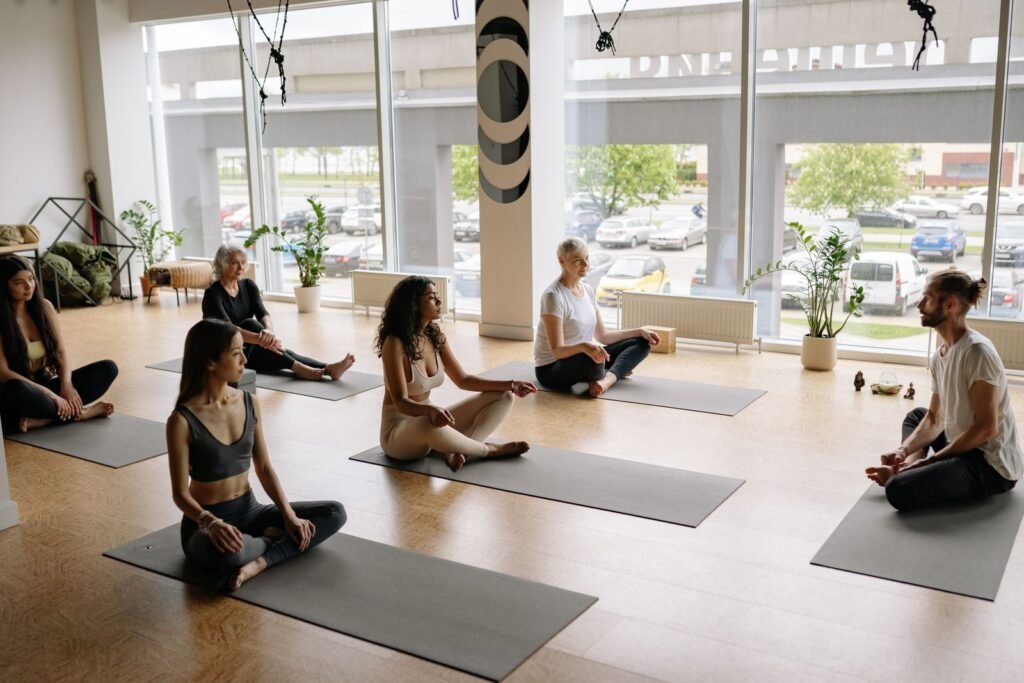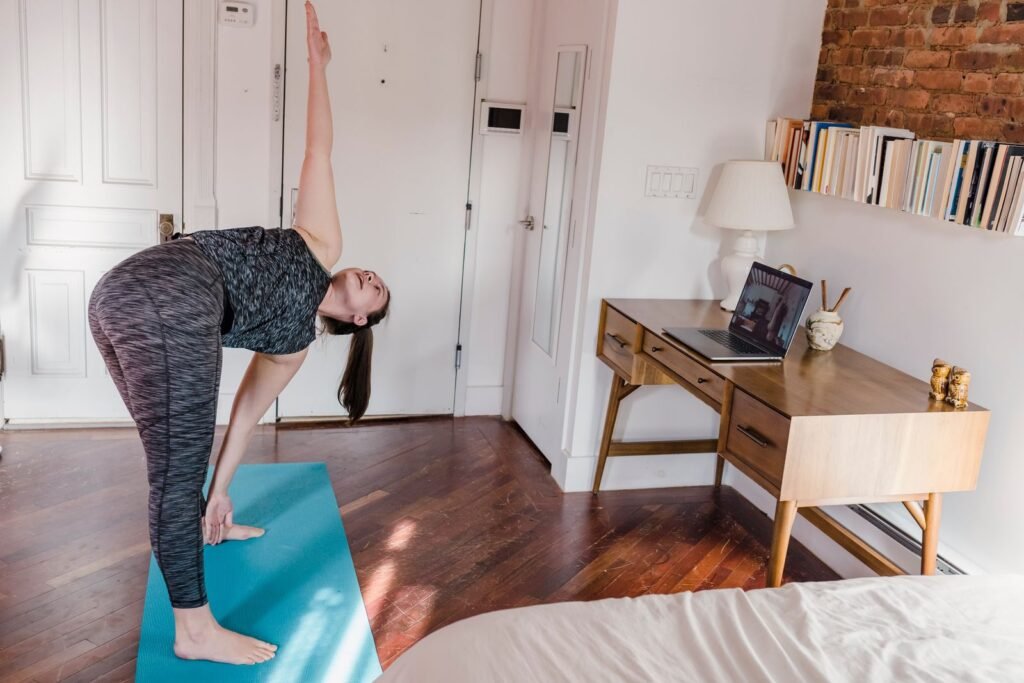
Yoga during festivals like Diwali and Navratri means adapting your practice, not abandoning it, to match the season’s late nights, rich food, family demands, and heightened emotional energy. Instead of forcing a rigid morning routine into a week of celebrations, festival-season yoga leans on shorter sequences, grounding pranayama, gentle digestive twists, and calming evening practices that fit around pujas, garba nights, and family gatherings. The goal is not perfection but consistency: ten mindful minutes before a Navratri fast or a five-minute breathing practice after a heavy Diwali dinner does more for your body and mind than skipping the mat entirely for two weeks straight.
Why Does Yoga Matter More, Not Less, During Festival Season?
Festivals compress a lot into a short window: disrupted sleep from late-night celebrations, richer and more frequent meals, increased social obligations, and for many people, genuine excitement mixed with quiet stress about hosting, travel, or family dynamics. This is exactly the kind of period where a regular practice, similar to the self-care yoga routine many people already lean on, becomes most valuable rather than least practical. A short daily practice acts as an anchor point in an otherwise unpredictable schedule, offering the nervous system a few minutes of predictability when everything else, from meal times to sleep times, has shifted. Practitioners who maintain even a scaled-back routine through Diwali and Navratri often report feeling less depleted by the time the festivities end, compared to years when they skipped practice entirely.
How Should You Adapt Your Practice for Diwali?
Diwali brings late nights, firework smoke in many cities, rich fried and sweet foods, and the mental load of cleaning, decorating, and hosting. A festival-adapted practice for Diwali typically shifts in three ways. First, timing moves earlier or later depending on your household’s schedule, since a 6 a.m. practice may not be realistic during Diwali week; a shorter midday or early-evening session works just as well. Second, digestive-support poses take priority: seated and supine twists, gentle forward folds, and Vajrasana after meals to aid digestion of heavier festive food, similar to the after-meal focus in guides to yoga for digestion. Third, given the smoke and air quality concerns common during Diwali in many Indian cities, indoor practice with pranayama that supports respiratory clearing, such as Kapalabhati done gently, becomes more relevant than usual, echoing the same air-quality awareness discussed in guides to yoga for winters.
How Is Navratri Yoga Different From Diwali Yoga?
Navratri is structured around nine nights, often paired with fasting, prayer, and for many, hours of garba and dandiya dancing late into the night. This creates a different physical demand than Diwali: instead of managing heavy food, many practitioners are managing lighter or restricted eating alongside genuine physical exertion from dancing. Yoga during Navratri often works best as gentle, restorative, and joint-supportive, offsetting the repetitive footwork and hip rotation of garba with hip-opening poses like Baddha Konasana and Malasana, along with ankle and calf stretches the next morning. For those observing a Navratri fast, practicing on an empty or lightly fed stomach calls for slower, more grounded sequences rather than vigorous vinyasa, since low blood sugar combined with intense movement can cause lightheadedness.
What Is the Best Time of Day to Practice During Festival Weeks?
There is no single correct time, but there is a useful principle: practice when your schedule is actually predictable, not when a guide says you should. For most people during Diwali and Navratri, early morning before the household wakes up or late morning before food preparation begins tends to be the most reliable window. Evening practice can work well too, particularly a wind-down sequence after Navratri dance sessions or after a Diwali gathering, using the same principles found in a bedtime yoga for better sleep routine. The consistent thread across successful festival-season practitioners is that they pick one realistic window for the week and protect it, rather than trying to match their non-festival schedule exactly.
Which Poses Help Most After Festive Meals?
Festival meals tend to be heavier, richer in ghee and sugar, and eaten later than usual, which makes gentle digestive support genuinely useful rather than just a nice idea. Three poses stand out for post-meal relief:
- Vajrasana — sit back on the heels for five to ten minutes after eating; traditionally recommended because it is one of the few poses considered safe to do immediately after a meal.
- Supta Matsyendrasana (reclined spinal twist) — helps relieve heaviness and bloating after a large festive dinner.
- Pawanmuktasana (knees drawn to the chest) — also helps relieve the heaviness and mild bloating that can follow a large meal.
These pair naturally with the twisting and folding poses covered in a broader yoga for back pain guide, since spinal mobility and digestive ease are closely linked through the same muscle groups around the abdomen and lower back.
How Can Pranayama Help With Festival Stress and Overstimulation?
Festivals are joyful, but they are also sensorially loud: bright lights, loud music, crowded homes, and a packed social calendar. Simple pranayama practices offer a fast way to downshift an overstimulated nervous system without needing a full hour on the mat. Nadi Shodhana, alternate nostril breathing, is widely used to balance the nervous system after a stimulating event like a late-night Diwali party or a Navratri garba session. Bhramari, or humming bee breath, is often turned to for its calming effect on a racing mind before sleep. Even three to five minutes of slow diaphragmatic breathing before bed during festival week can measurably ease the transition from a stimulating evening to actual rest, a principle also covered in pranayama breathing techniques.
Can Yoga Support a Navratri Fast Safely?
Many people observing Navratri follow some form of fasting, whether that means one meal a day, fruit and dairy only, or avoiding grains and certain vegetables. Yoga can support this, but the type of practice matters. Vigorous, heating sequences on very low intake can trigger dizziness, especially if combined with garba dancing later that day. A safer approach is to keep practice gentle and grounded on fasting days: seated forward folds, supported twists, and restorative poses rather than fast-paced sun salutations, similar to how a yoga for summer routine scales back intensity in heat to avoid strain. If you feel lightheaded, nauseated, or unusually fatigued during a fasting day’s practice, that is a signal to stop and rest, not to push through, regardless of how the sequence is normally structured.
How Should Kids and Teens Approach Yoga During Festival Season?
Children are often more affected by festival disruption than adults realize, staying up later, eating more sugar, and getting overstimulated by noise, lights, and crowds. A short, playful family yoga session, ten to fifteen minutes of simple poses like Tree Pose, Cat-Cow, and a few rounds of calm breathing, can help regulate energy before bed during Diwali or after a long day of Navratri celebrations. This does not need to look like an adult practice; the goal for children is simply movement and a few slow breaths to counter the sugar and stimulation of the day, an idea that overlaps with broader guidance in a family yoga for all ages guide.
What Role Does Yoga Philosophy Play During These Festivals?
Both Diwali and Navratri carry symbolic meaning that pairs naturally with yoga’s philosophical roots. Diwali marks the triumph of light over darkness, a theme that mirrors the yogic concept of moving from tamas, or inertia and dullness, toward sattva, clarity and balance. Navratri honors different forms of the divine feminine across nine nights, a structure some practitioners use to focus on a different intention or quality, strength, compassion, discipline, each day of the festival. You do not need to treat yoga as a religious practice to notice this overlap; even a secular approach to yoga and gratitude fits naturally into a festival season built around renewal, reflection, and light.
How Do You Fit Yoga Around Travel and Family Hosting?
Many people travel to be with family during Diwali and Navratri, or host relatives at home, both of which disrupt normal routines more than almost any other time of year. The most realistic solution is to lower the bar deliberately: a five-minute seated breathing practice in a guest room, a few standing stretches before guests arrive, or a short sequence done on a hotel room floor all count as maintaining the habit. This mirrors the same principle found in guides to how to build a daily yoga habit, where consistency in a minimal form beats occasional long sessions. Traveling with a thin, foldable mat or simply practicing on a folded blanket removes the excuse of not having proper equipment during a trip.
How Can Online Yoga Classes Help During a Packed Festival Calendar?
One of the most practical solutions during Diwali and Navratri is a live online class, precisely because it removes the commute and studio-timing constraints that make in-person practice hard to maintain during a busy week. A twenty or thirty-minute guided online session before guests arrive, between puja preparations, or right after a Navratri fast breaks in the evening fits into gaps that an in-person class schedule rarely accommodates. This is especially useful for people managing joint fatigue from garba dancing or mild digestive heaviness from Diwali meals, since a guided class can be shaped around exactly those needs rather than a generic studio sequence.
What Are Common Mistakes People Make With Festival Yoga?
A handful of avoidable mistakes show up again and again during Diwali and Navratri:
- Treating festival season as all-or-nothing — either maintaining a full pre-festival routine or abandoning practice completely until things calm down.
- Practicing vigorous, heating sequences on a fasting stomach out of habit — this raises the risk of dizziness.
- Skipping any cooldown after high-energy Navratri dancing — leading to stiff hips and calves the next morning that a few minutes of stretching could have prevented.
- Underestimating gentle evening pranayama — dismissing it as unnecessary when late nights and rich food make it often the single most useful practice of the entire festival period.
How Long Should a Festival-Season Practice Be?
There is no fixed rule, but ten to twenty minutes is realistic and sustainable for most people during Diwali and Navratri week, compared to a typical forty-five to sixty-minute non-festival session. A useful structure is five minutes of gentle warm-up movement, ten minutes of poses targeted at that day’s specific need, digestion, hip release, or calming, and five minutes of pranayama or seated stillness to close. This shorter format keeps the practice from feeling like one more obligation on an already full calendar, while still delivering the physical and mental benefits that make a consistent yoga practice worthwhile in the first place.
Questions People Ask About Yoga During Festivals
Is it okay to skip yoga entirely during Diwali or Navratri?
Occasional skipped days are completely fine and won’t undo your progress. The concern is skipping the entire festival period out of an all-or-nothing mindset, since even five to ten minutes of gentle movement or breathing most days maintains far more consistency, flexibility, and stress relief than a two-week gap followed by starting over.
Can I do yoga right after a heavy Diwali meal?
Vigorous poses immediately after eating aren’t ideal, but gentle options like sitting in Vajrasana for five to ten minutes are traditionally used specifically for post-meal comfort. Wait at least 30 to 45 minutes before attempting twists, forward folds, or any more active sequence to avoid discomfort.
Should I practice yoga before or after garba during Navratri?
Both have value. A brief warm-up with hip openers and ankle rotations before garba can reduce strain from repetitive footwork, while gentle stretching and restorative poses afterward help ease tight hips, calves, and lower back the following morning.
Is yoga safe while fasting during Navratri?
Gentle, grounded practice is generally fine during a Navratri fast, but vigorous or heating sequences on low food intake can cause dizziness or fatigue. Favor slow, seated, and restorative poses on fasting days, and stop immediately if you feel lightheaded or unusually tired.
How can yoga help with the stress of hosting during festivals?
A few minutes of pranayama, such as alternate nostril breathing or slow diaphragmatic breathing, can meaningfully lower the overstimulation that comes with hosting, cleaning, cooking, and managing guests. Even a five-minute practice before guests arrive or after they leave helps reset a nervous system that has been in “go” mode all day.
What is the best beginner-friendly festival yoga sequence?
A simple sequence of Cat-Cow, seated forward fold, a gentle seated twist, Vajrasana, and five minutes of slow breathing covers digestion, mild stiffness, and calming in about fifteen minutes. It requires no equipment beyond a mat or folded blanket, making it realistic even during a packed festival day.
Try This for Yourself
The easiest way to keep your practice alive through a packed festival calendar is to follow a guided class built around exactly this kind of adaptable, realistic sequencing. Explore FitStrot’s online yoga classes to join a live session that fits around your pujas, garba nights, and family gatherings, wherever you happen to be celebrating this Diwali and Navratri.
Related reading: self care yoga routine, yoga for winters, yoga for summer, yoga and gratitude, and FitStrot’s online yoga classes.