Virabhadrasana, commonly known as Warrior Pose, is a family of three standing yoga postures (Warrior I, II, and III) that build leg strength, open the hips and chest, and train focus and stamina in a single lunge-based shape. Each variation asks the body to root down through the legs while the upper body reaches, twists, or extends, making Virabhadrasana one of the most complete standing poses in a yoga practice. It suits almost every ability level, from a first class to an advanced vinyasa yoga flow, because the pose can be simplified with a shorter stance or deepened with a longer lunge and a lower back knee bend.
What Does Virabhadrasana Mean?
The name comes from Sanskrit: “vira” means hero or warrior, “bhadra” means friend or auspicious, and “asana” means pose or seat. Put together, Virabhadrasana translates roughly to “pose of the auspicious warrior” or “hero’s pose.” The name refers to Virabhadra, a fierce warrior figure from Hindu mythology said to have been created by the god Shiva out of grief and rage after the death of his wife Sati. According to the legend, Shiva tore a lock of his hair and struck it against the ground, and a thousand-armed warrior rose up to avenge Sati’s death. The three Warrior poses are often described as representing different moments in that story: Virabhadra’s arrival, his sighting of his target, and his swift, focused strike. This mythology gives the pose its dramatic, powerful character, even though the physical posture itself is a much more recent addition to yoga practice than the legend that inspired its name.
How Old Is Warrior Pose, Really?
It is easy to assume a pose named after ancient mythology must be equally ancient, but the physical Warrior postures as they are practiced today appear to be a 20th-century development. Historical photographs of pioneering yoga teacher Pattabhi Jois show him in a Warrior I-style pose around the late 1930s, and some yoga historians point to overlapping lunge-based positions in early European gymnastics traditions from the same period, suggesting a cross-pollination between physical culture movements and the codification of modern postural yoga. This doesn’t make the pose any less valuable. It simply means Virabhadrasana is best understood as a modern synthesis: a physical practice built on an old story, refined and standardized over the last century into the versions taught in studios and through online yoga classes today.
How Do You Do Warrior I (Virabhadrasana I)?
Warrior I is the foundational forward-facing version of the pose. Start in Tadasana (Mountain Pose) at the top of your mat, then step one foot back about three to four feet, turning the back foot in at roughly a 45-degree angle while keeping the front foot pointed straight ahead. Square both hips toward the front of the mat as much as your body allows. Bend the front knee until it stacks over the ankle, keeping the back leg strong and mostly straight. Raise both arms overhead, palms facing each other or touching, and lengthen through the sides of the torso. Keep the back heel grounded or lifted slightly if your hips are tight, and draw the tailbone gently down to avoid overarching the lower back. Hold for five to eight breaths before switching sides.
How Do You Do Warrior II (Virabhadrasana II)?
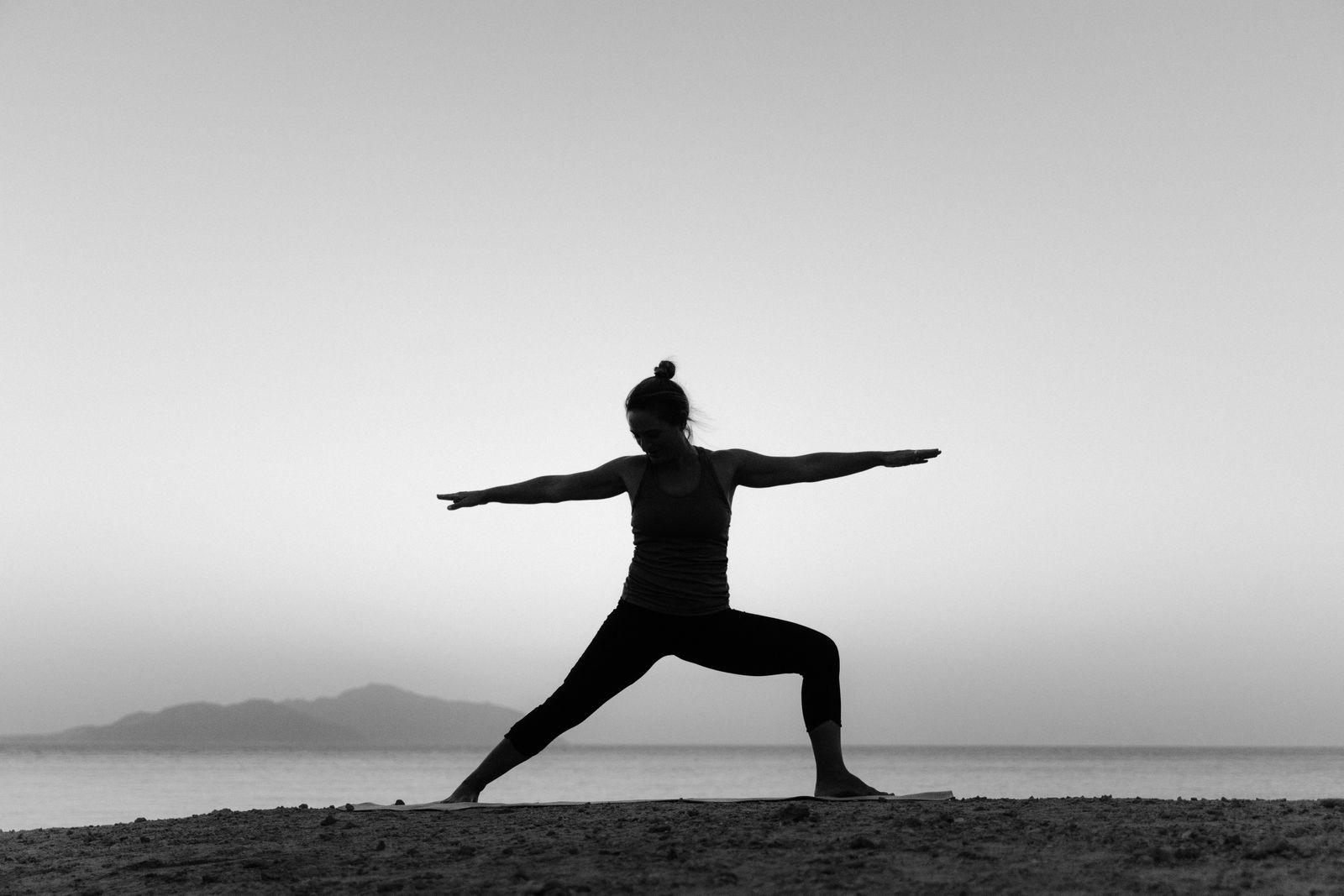
Warrior II opens the hips and chest to the side rather than the front, building a different kind of stability. From the same wide lunge stance used in Warrior I, instead of squaring the hips forward, rotate them so they face the long edge of the mat. Extend both arms parallel to the floor, front arm reaching over the bent front knee and back arm reaching behind you, palms facing down. Bend the front knee to a 90-degree angle if possible, tracking it directly over the ankle, and turn your gaze over the front fingertips. The back leg stays straight and active, pressing firmly through the outer edge of the back foot. This version is frequently used in vinyasa yoga sequences and is one of the most recognizable shapes in the entire practice.
How Do You Do Warrior III (Virabhadrasana III)?
Warrior III is the balancing version of the pose and is considerably more demanding than Warrior I or II. From a standing position, hinge forward at the hips while lifting one leg straight behind you, aiming to bring the torso and the lifted leg parallel to the floor, forming a straight line from fingertips to heel. Arms can extend forward, reach back alongside the torso, or rest on the hips depending on your balance. The standing leg should stay strong but not locked, with the kneecap drawing slightly upward to protect the joint. This pose demands significant core engagement and is closely related to balancing postures like Vrksasana (Tree Pose), since both require a single stable base and a quiet, focused mind. Many practitioners find it useful to practice near a wall until the balance becomes more reliable.
What Are the Physical Benefits of Warrior Pose?
Warrior Pose benefits are wide-ranging because the posture works multiple muscle groups and systems at once. The front leg lunge builds strength in the quadriceps, hamstrings, and glutes, while the back leg develops calf and ankle stability. Holding the arms overhead or extended engages the shoulders and upper back, improving posture over time. The deep lunge stretches the hip flexors, which tend to be tight from long hours of sitting, and the twisting or squaring action in each variation encourages better hip mobility. Because the pose requires sustained muscular engagement rather than passive stretching, it also raises the heart rate slightly, giving it a light cardiovascular component when practiced as part of a flowing sequence like Surya Namaskar (Sun Salutation).
What Are the Mental and Emotional Benefits?
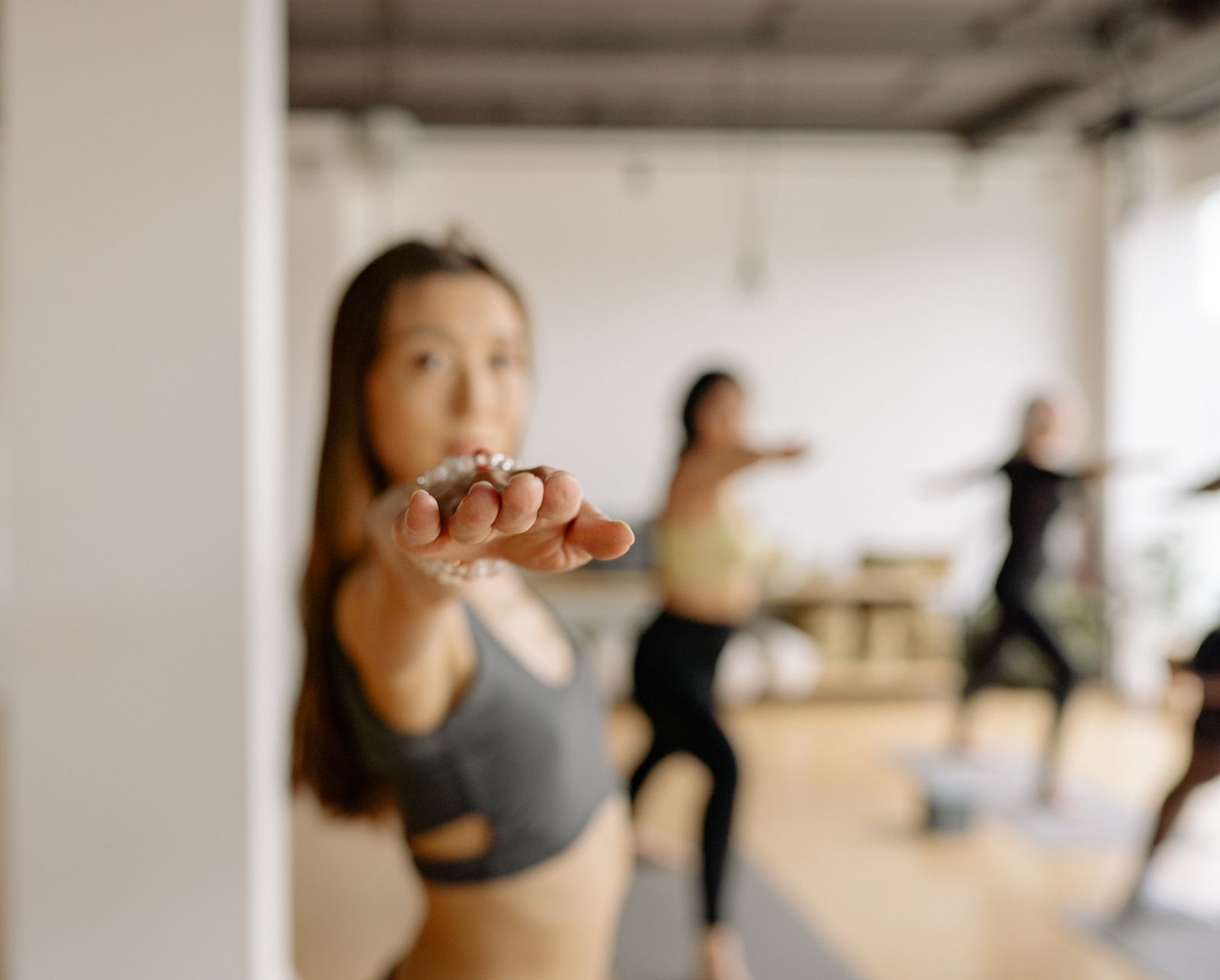
Beyond the physical stretch and strengthening, Warrior Pose is widely taught as a posture for building confidence and mental resilience. Holding a demanding standing pose for several breaths requires sustained concentration, and many practitioners describe a sense of groundedness and steadiness that carries beyond the mat. The pose’s association with the warrior archetype is often used symbolically in classes to represent inner strength, courage, and the ability to stay steady under pressure. This isn’t a clinically studied claim so much as a widely shared experience among practitioners and teachers, but it’s one of the reasons Warrior Pose is a staple in yoga styles aimed at stress relief, including many online yoga programs designed for busy professionals.
Who Should Be Cautious With Virabhadrasana?
Warrior Pose is generally safe for most healthy adults, but a few groups should modify or avoid certain variations:
- Knee injuries: Be cautious about how deeply you bend the front knee, since improper alignment (the knee collapsing inward or extending past the toes) can strain the joint.
- Shoulder impingement or recent shoulder surgery: Keep the arms lower than fully overhead in Warrior I.
- High blood pressure or vertigo: Be careful with Warrior III, since the forward-bending, balancing nature of the pose changes blood flow and head position.
- Pregnancy: Widen your stance for balance and avoid deep twists.
- Chronic hip or lower back pain: Build up to the pose gradually rather than forcing a deep lunge on day one.
As with any physical practice, checking with a healthcare provider before starting is sensible if you have an existing condition or injury.
What Muscles Does Warrior Pose Work?
Each Warrior variation emphasizes a slightly different combination of muscles:
| Variation | Primary Muscles Worked |
|---|---|
| Warrior I | Quadriceps and glutes (front leg), calf (back leg), shoulders and core (overhead arms) |
| Warrior II | Outer hip and inner thigh (back leg), obliques (upright, sideways-facing torso) |
| Warrior III | Abdominals, erector spinae, and the glute and hamstring of the standing leg |
Because of this range, practicing all three variations in sequence, sometimes called a “Warrior flow,” is an efficient way to work the entire lower body and core in a short amount of time.
How Does Warrior Pose Fit Into a Full Yoga Sequence?
Virabhadrasana rarely appears in isolation. It’s typically built into standing sequences that transition from one lunge-based pose to another, often linked by a vinyasa or a few grounding breaths in Tadasana between sides. A common flow moves from Downward Dog into a lunge, rises into Warrior I, opens into Warrior II, and may extend into Extended Side Angle or Triangle Pose before returning to standing. This sequencing logic is central to different styles of yoga, particularly Vinyasa and Ashtanga, where poses are chained together with the breath rather than held in isolation. Understanding where Warrior Pose sits within a broader sequence makes it easier to see why it’s considered a foundational posture rather than a standalone exercise: it’s a connecting point between grounding poses and more dynamic, balancing ones.
What’s the Difference Between Warrior Pose and Other Standing Poses?
Warrior Pose is often confused with or compared to other standing postures, but each has a distinct purpose. Compared to Tadasana, which is a still, upright pose focused on alignment and grounding, Warrior Pose is dynamic and asymmetrical, working one side of the body at a time. Compared to Triangle Pose, which keeps both legs straight and hinges the torso sideways, Warrior II keeps the front knee bent, making it a strength-focused pose rather than a flexibility-focused one. Compared to Vrksasana, a single-leg balance pose with the lifted foot placed against the standing leg, Warrior III shares the balance challenge but adds a horizontal, forward-reaching shape that demands more core and hamstring engagement. Recognizing these distinctions helps practitioners understand which pose to reach for depending on whether the goal that day is strength, flexibility, or balance.
How Often Should You Practice Virabhadrasana?
There’s no fixed rule, but Warrior Pose is versatile enough to appear in nearly every practice without causing overuse issues, as long as alignment stays consistent. Beginners often benefit from practicing it two to three times a week as part of a broader standing sequence, giving the hip flexors and leg muscles adequate recovery time between sessions. More experienced practitioners, particularly those following a daily vinyasa yoga or Ashtanga practice, may move through Warrior variations daily since the pose is typically held for only a handful of breaths rather than for extended periods. The better indicator than frequency is how the body feels: any sharp pain in the knees, lower back, or shoulders is a signal to scale back the depth of the pose or work with a teacher on alignment rather than pushing through discomfort.
Questions People Ask About Virabhadrasana
What is Virabhadrasana good for?
Virabhadrasana builds strength in the legs, hips, and core while improving shoulder mobility and posture. It also stretches tight hip flexors from prolonged sitting and, because it demands sustained focus to hold, many practitioners find it helps build mental steadiness and confidence alongside the physical benefits.
Which Warrior pose is easiest for beginners?
Warrior II is generally considered the most accessible starting point because the hips stay open to the side, which is a more natural rotation for tighter hips than the squared stance in Warrior I. Warrior III is the most advanced of the three due to its balance and core demands, so it’s usually introduced later.
Can I do Warrior Pose if I have knee pain?
You can often modify it by shortening your stance and keeping the front knee bend shallow, ensuring the knee never extends past the toes or collapses inward. If knee pain persists even with modifications, it’s worth working with a qualified instructor or checking with a healthcare provider before continuing.
How long should you hold Warrior Pose?
Most classes hold each Warrior variation for five to eight breaths per side, roughly 20 to 40 seconds depending on breath pace. Longer holds of a minute or more are common in slower styles like Hatha or Yin-influenced classes, where the goal is building muscular endurance rather than flowing quickly between poses.
Is Warrior Pose a good workout for weight loss?
Warrior Pose alone isn’t a significant calorie-burning exercise, but when practiced as part of a flowing sequence, such as repeated Sun Salutation variations, it contributes to a moderate-intensity workout that combines strength and light cardiovascular effort, which can support a broader fitness or weight-management routine.
Try This for Yourself
Reading about Warrior Pose only goes so far. The real value comes from feeling the alignment, the breath, and the balance in your own body, guided by someone who can correct your form in real time. If you want to build a steady, strength-focused yoga practice from home, explore FitStrot’s online yoga classes, where certified instructors guide you through Warrior Pose and full standing sequences at a pace that matches your level.
Related reading: Yoga Poses | Surya Namaskar | Tadasana | Vrksasana | Online Yoga Classes