Shalabhasana, or Locust Pose, is a prone backbend where you lift your chest, arms, and legs off the floor while keeping your hips and pelvis pressed into the mat, strengthening the entire posterior chain: the lower back, glutes, and hamstrings. Unlike deeper backbends such as Bhujangasana (Cobra Pose), Shalabhasana relies on muscular effort rather than pushing through the arms, which makes it one of the most effective yoga poses for building genuine spinal strength and correcting slouched, desk-bound posture. It’s typically held for 15-30 seconds and repeated 3-5 times, and it’s commonly taught early in a yoga poses curriculum because it teaches the body how to stabilize the spine without momentum.
What Does Shalabhasana Mean?
Shalabhasana comes from two Sanskrit words: “shalabha,” meaning locust or grasshopper, and “asana,” meaning pose or seat. The name describes the shape of the body in the final position, chest lifted, legs raised, arms extended back, which resembles a locust in mid-flight or resting on a leaf. In English yoga classes it’s most often called Locust Pose, though some teachers use the older spelling Salabhasana. It belongs to the family of prone backbends, poses performed lying face-down, alongside Bhujangasana and Dhanurasana (Bow Pose), and is traditionally grouped with these as a foundational back-strengthening sequence in Hatha yoga.
How Do You Perform Shalabhasana Step by Step?
Begin by lying flat on your stomach with your forehead resting on the mat, arms alongside your body, palms facing down, and legs extended straight with feet hip-width apart. Rest your chin or forehead on the floor and engage your core gently before you move. On an inhale, simultaneously lift your head, chest, arms, and legs away from the floor, keeping your gaze slightly forward rather than straining the neck upward. Reach your arms back toward your feet and your legs back away from your torso, creating length through the whole body rather than just height. Hold for 15-30 seconds while breathing steadily, then exhale and lower everything back down with control. Rest with your cheek on the mat for a few breaths before repeating the lift 2-4 more times. This same lift-and-lower rhythm is what makes the pose so effective for building endurance in the erector spinae muscles that run along the spine.
What Muscles Does Shalabhasana Strengthen?
Locust Pose is primarily a posterior chain exercise, meaning it targets the muscles running along the back of the body. The erector spinae, the long muscles that stabilize the vertebral column, do the bulk of the work lifting the chest and head. The gluteus maximus and hamstrings contract to lift the legs, while the rhomboids and mid-trapezius draw the shoulder blades together to lift the arms and open the chest. The core, particularly the transverse abdominis, works isometrically to protect the lower back and prevent it from over-arching. Because so many muscle groups fire together, Shalabhasana is often used as a diagnostic pose: if the glutes and hamstrings are weak, most people compensate by over-arching the lumbar spine instead, which is the most common technical error in the pose.
What Are the Benefits of Shalabhasana?
Regular practice of Shalabhasana is commonly associated with several physical benefits, though individual results vary and it should complement, not replace, medical advice for any existing back condition.
- Strengthens the lower back: Builds endurance in the erector spinae and multifidus muscles that support the lumbar spine, which is valuable for anyone who sits for long hours.
- Improves posture: Strengthens the muscles between the shoulder blades, counteracting the forward-rounded shoulders common with desk work and phone use.
- Tones the glutes and hamstrings: The leg-lifting action directly loads these muscle groups isometrically.
- Stimulates abdominal organs: The gentle compression of the abdomen against the floor is traditionally said to aid digestion, though this effect is anecdotal rather than clinically measured.
- Builds core stability: Because the pose demands the abdominals brace without crunching forward, it teaches a type of core control that transfers well to standing poses like Tadasana and balance poses like Vrksasana.
- Prepares the body for deeper backbends: Locust Pose is frequently used as a warm-up for more intense backbends such as Dhanurasana and Ustrasana, since it builds the strength those poses require.
What Are the Different Variations of Shalabhasana?
Several variations exist to make the pose accessible or more challenging, and a good teacher will offer these depending on a student’s strength and flexibility.
Ardha Shalabhasana (Half Locust Pose)
In this beginner-friendly variation, only one leg lifts at a time while the other stays on the floor, and the arms may remain alongside the body rather than lifting. This reduces the load on the lower back and is often taught first to build awareness of the muscular action before attempting the full pose.
Full Shalabhasana with Clasped Hands
Instead of extending the arms straight back, the fingers interlace behind the lower back or sacrum, and the hands lift away from the body as the chest rises. This variation increases the stretch across the chest and shoulders and is generally considered more advanced.
Vipariteshalabhasana (Reverse Locust)
Some teachers include a variation where the arms reach forward alongside the ears instead of back toward the feet, which shifts more of the workload onto the upper back and shoulders rather than the glutes.
Who Should Avoid Shalabhasana?
Shalabhasana is a relatively accessible pose, but it isn’t right for everyone. Anyone with a recent or acute lower back injury, a herniated disc, or spondylolisthesis should avoid the full expression of the pose until cleared by a doctor or physiotherapist, since the backbend compresses the lumbar spine. Pregnant practitioners should skip this pose entirely, since lying prone on the abdomen isn’t appropriate at any stage of pregnancy. People with high blood pressure, migraine, or recent abdominal surgery are also generally advised to modify or skip the pose. If you have a neck injury, keep your gaze down toward the mat rather than lifting your chin high, and consider starting with Ardha Shalabhasana before attempting the full variation. As with any new pose, it’s worth practicing under the guidance of a qualified instructor, such as through online yoga classes, so that alignment cues can be corrected in real time.
What Are the Most Common Mistakes in Shalabhasana?
The most frequent error is lifting the legs by over-arching the lower back rather than engaging the glutes and hamstrings, which places unnecessary compressive stress on the lumbar vertebrae. Another common mistake is craning the neck upward to look forward, which strains the cervical spine; the gaze should stay soft and slightly ahead, not stretched skyward. Many beginners also hold their breath during the lift, when steady breathing is what allows the muscles to sustain the hold. Finally, some practitioners try to lift too high too soon; a lower lift performed with correct muscular engagement is far more beneficial than a higher lift achieved by compensating with the spine.
How Does Shalabhasana Compare to Bhujangasana?
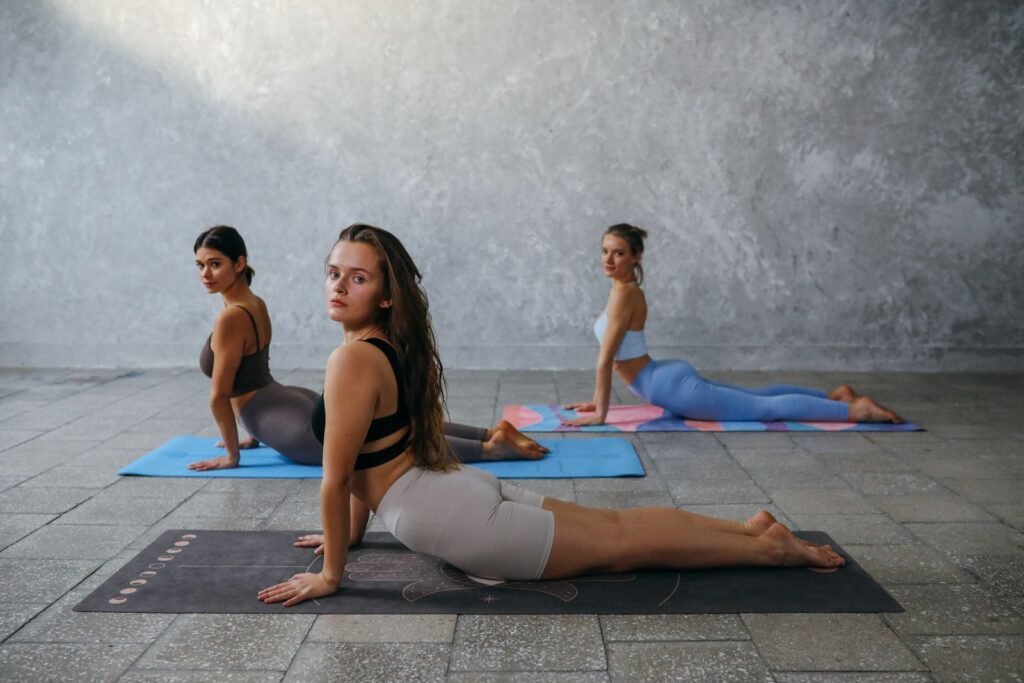
Both are prone backbends, but they train the body differently. Bhujangasana (Cobra Pose) uses the arms to press the chest upward, meaning the triceps and shoulders share the load with the back muscles, and the legs stay on the floor throughout. Shalabhasana, by contrast, lifts the entire body, chest, arms, and legs, using only the back, glute, and hamstring muscles, with no help from pushing against the floor. This makes Locust Pose considerably more demanding on the posterior chain and a better isolated strengthener for the lower back, while Cobra Pose is gentler and more accessible for daily mobility work. Many sequences, including a standard Surya Namaskar flow, use Cobra as a repeated transitional pose, while Locust is usually practiced as a standalone strength-building pose rather than part of a flowing sequence.
When Should You Practice Shalabhasana in a Yoga Sequence?
Locust Pose works best after the body has warmed up with a few rounds of gentle movement, such as Cat-Cow stretches or a short Surya Namaskar sequence, since cold back muscles are more prone to strain. It’s typically placed in the middle of a practice, after standing poses like Tadasana and before seated forward folds, which is important because forward folds and counter-stretches like Child’s Pose help release the lower back after the concentrated backbend effort. Following Shalabhasana with a gentle twist or a few breaths in Balasana (Child’s Pose) is a common and effective way to neutralize the spine before moving on.
Can Beginners Do Shalabhasana Safely?
Yes, with the right modifications. Beginners should start with Ardha Shalabhasana, lifting one leg at a time, and keep the lift low, just a few inches off the floor, rather than aiming for height. Placing a folded blanket under the hips can reduce pressure on the pelvis and lower back for those with sensitive lumbar spines. It also helps to first build baseline core and back endurance with simpler poses; if you’re new to yoga altogether, starting with foundational standing poses from a broader yoga for beginners guide before attempting prone backbends will make the transition smoother and reduce the risk of strain.
How Does Shalabhasana Fit Into a Back Pain Management Routine?
Locust Pose is frequently recommended as part of broader routines for yoga for back pain, specifically for building the muscular support that prevents recurring strain, though it should be approached cautiously during an active flare-up rather than as a treatment for acute pain. The pose strengthens the same stabilizing muscles that a physiotherapist would target with prone extension exercises, making it a useful maintenance tool once acute pain has resolved. Anyone with chronic or recurring back pain should introduce the pose gradually, starting with the half variation, and stop immediately if it reproduces sharp or radiating pain rather than a general muscular fatigue.
How Does Shalabhasana Support Better Posture?
Poor posture, particularly the forward head and rounded shoulder pattern common with long hours at a desk or on a phone, develops because the muscles between the shoulder blades and along the spine become weak relative to the chest and front-of-shoulder muscles. Shalabhasana directly strengthens the exact muscles that pull the shoulders back and hold the spine upright, making it a practical, low-equipment countermeasure. Combined with standing alignment poses such as Tadasana, which teaches the body what neutral spinal alignment feels like while standing, regular Locust Pose practice gives both the strength and the body-awareness needed to sit and stand taller throughout the day.
What Breathing Pattern Works Best for Shalabhasana?
Inhale as you lift into the pose, letting the breath help expand the chest and support the upward movement, then breathe steadily and evenly while holding the position rather than holding the breath. Exhale slowly and with control as you lower back down, resisting the urge to simply drop; a controlled descent uses the same muscles eccentrically and adds to the strengthening effect. If you’re pairing the pose with a broader pranayama practice, keep the breath in Shalabhasana relatively natural and unforced, since this is primarily a strength pose rather than a breath-focused one.
Questions People Ask About Shalabhasana
Is Shalabhasana good for weight loss?
Shalabhasana alone burns relatively few calories since it’s a static hold rather than continuous movement, but it builds muscle in the back, glutes, and hamstrings, which supports a higher resting metabolic rate over time. For weight management, it’s more effective when combined with a full practice that includes dynamic sequences like Surya Namaskar or a broader yoga for weight loss routine rather than relied on in isolation.
How long should you hold Locust Pose?
Most teachers recommend holding Shalabhasana for 15 to 30 seconds per repetition, repeated 3 to 5 times with rest in between. Beginners may only manage 5 to 10 seconds at first, which is completely normal; the hold time should increase gradually as back and glute strength improve rather than being forced from the first session.
Can Shalabhasana help with sciatica?
Some practitioners find that strengthening the lower back and glutes with poses like Shalabhasana reduces the frequency of sciatic flare-ups over time, since stronger stabilizing muscles take pressure off the lumbar spine and nerve roots. However, sciatica has many possible causes, and the pose should only be attempted cautiously and ideally under professional guidance during an active flare, since the wrong movement can worsen nerve compression.
What is the difference between Shalabhasana and Dhanurasana?
Shalabhasana lifts the chest and legs independently without the hands touching the feet, relying purely on back and leg muscle strength. Dhanurasana (Bow Pose) has the hands reaching back to grasp the ankles, creating a deeper backbend where the arms actively pull the legs toward the head. Dhanurasana is generally considered more intense and is often practiced after Shalabhasana has built sufficient back strength.
Why does my lower back hurt during Shalabhasana?
Lower back discomfort during this pose usually means the lift is being generated by arching the lumbar spine rather than engaging the glutes and hamstrings. Try lowering the height of your lift, actively squeezing your glutes before and during the lift, and keeping your pubic bone pressed into the mat. If pain persists even with correct form, stop and consult a physiotherapist or experienced teacher rather than pushing through it.
Try This for Yourself
Reading about Shalabhasana only goes so far; the real learning happens when a qualified instructor can watch your alignment, correct the small details that prevent strain, and guide your breath through each hold. If you’d like personalized, real-time feedback on Locust Pose and the rest of your practice, join a live class through FitStrot’s online yoga classes and build a stronger, more resilient back at your own pace.
Related reading: Yoga Poses, Surya Namaskar, Yoga for Back Pain, Tadasana, and explore FitStrot’s online yoga classes to practice with expert guidance.