Yoga for screen time and posture works by directly reversing the two patterns that hours in front of a phone, laptop, or monitor create: a forward-jutting head and neck, and a collapsed, rounded upper back. A short daily sequence of chest openers, neck mobilizers, upper-back strengtheners, and spinal extensions—paired with slow breathing—retrains the muscles that screen posture chronically shortens and weakens. Ten to fifteen minutes a day, done consistently, is generally enough to notice looser shoulders, less neck stiffness, and a taller resting posture within a few weeks, though the habit needs to be paired with regular breaks from the screen itself to hold.
Why Does Screen Time Wreck Your Posture in the First Place?
Every screen—phone, laptop, tablet, monitor—pulls your head forward and down to bring your eyes closer to the content, and gravity does the rest. The head, which weighs roughly 10 to 12 pounds in a neutral position, effectively gets heavier from the neck’s perspective the further forward it tilts, because the muscles at the back of the neck have to work harder to hold up an off-balance load. Physiotherapy and ergonomics research commonly describes this pattern as “tech neck” or forward head posture, and it’s frequently accompanied by rounded shoulders and a flattened upper-back curve, since the chest muscles shorten while the muscles between the shoulder blades lengthen and weaken. Unlike an acute injury, this develops slowly, one hour of scrolling or typing at a time, which is exactly why it’s easy to ignore until stiffness, headaches, or a visibly hunched stance show up.
What Does “Tech Neck” Actually Look Like?
Tech neck describes a cluster of related postural changes rather than a single symptom. The most visible sign is a head that sits forward of the shoulders when viewed from the side, instead of stacking directly above them. Alongside that, you’ll often see shoulders that roll forward and inward, a thoracic spine (mid-back) that rounds more than it should, and a chin that juts slightly rather than staying level. Functionally, this shows up as neck stiffness that’s worse at the end of a workday, tension headaches that start at the base of the skull, tightness between the shoulder blades, and sometimes tingling down the arms if nerve pathways in the neck get compressed. None of these changes happen instantly—they accumulate from thousands of repetitions of the same forward-leaning posture, which is also why they respond well to consistent counter-movement rather than a single stretching session.
How Does Yoga Specifically Counter Screen Posture?
Yoga addresses screen posture through three mechanisms working together: lengthening the muscles that get chronically shortened (chest, front of the neck, hip flexors from sitting), strengthening the muscles that get chronically weakened (upper back, deep neck flexors, glutes), and rebuilding body awareness so you notice slumping before it becomes a locked-in habit. This is different from a single stretch or a foam-rolling session because yoga combines movement, breath, and sustained holds, which gives tissue more time to actually lengthen rather than just momentarily release. It also trains the nervous system, not just the muscles: slow, controlled breathing while holding a backbend or chest opener signals safety to the body, which can reduce the protective muscle guarding that often keeps posture locked in a hunched pattern even after the original strain has eased.
Which Yoga Poses Target Screen-Related Neck and Shoulder Tension?
These poses focus on the areas that absorb the most strain from looking down at a screen.
- Neck rolls and side stretches: Slowly tilt one ear toward the shoulder, hold for 20 to 30 seconds, then repeat on the other side. Avoid rolling the head all the way back, which can compress the cervical spine rather than release it.
- Thread the needle: From hands and knees, slide one arm underneath the other and rest your shoulder and temple on the mat, opening the upper back and the side of the neck simultaneously.
- Eagle arms: Cross one arm over the other at the elbow and lift the elbows, stretching the rear shoulders and upper back—the same arm position used in full eagle pose.
- Supported fish pose (Matsyasana): Lying back over a bolster or rolled towel placed beneath the shoulder blades opens the chest and front of the neck directly, countering the forward-curled screen position.
- Cow face arms (Gomukhasana arms): Reaching one arm up and over the shoulder while the other reaches up from below the back stretches both shoulders in opposite directions, releasing tightness that builds from typing and mousing.
Which Yoga Poses Rebuild Strength in the Upper Back?
Stretching alone isn’t enough—the muscles between the shoulder blades and along the spine need active strengthening to hold a taller posture once it’s regained.
- Cat-cow pose: Alternating between arching and rounding the spine on hands and knees mobilizes the entire back and builds awareness of neutral spine position. See our full breakdown of cat-cow pose for pacing and breath cues.
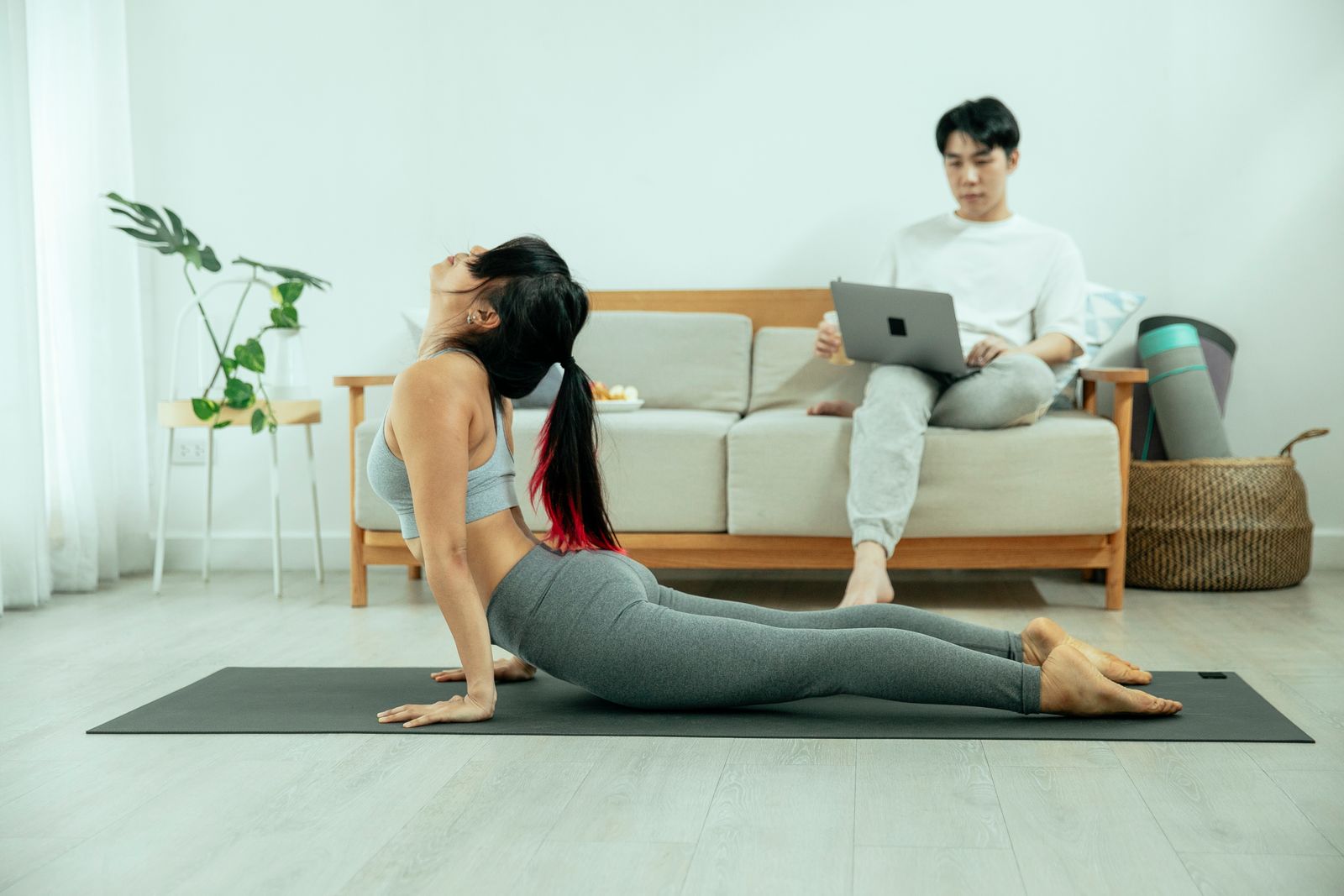
- Cobra pose (Bhujangasana): Lifting the chest while keeping the lower ribs grounded strengthens the muscles along the spine and opens the front of the shoulders and chest.
- Locust pose (Salabhasana): Lifting the chest, arms, and legs simultaneously from the belly builds the posterior chain—the muscles that resist the forward-collapsing pull of screen posture.
- Sphinx pose: A gentler, forearm-supported backbend that’s easier on the lower back than full cobra while still opening the chest and activating the upper back.
- Bridge pose (Setu Bandhasana): Lifting the hips while pressing through the shoulders strengthens the glutes and opens the front of the hips, which tend to shorten from prolonged sitting alongside screen posture.

Which Yoga Poses Help With Overall Spinal Alignment?
Beyond the neck and shoulders, posture depends heavily on the health of the whole spine, from the low back up through the neck.
- Mountain pose (Tadasana): Standing with even weight through both feet, a lifted chest, and a long neck is the foundational posture reference point that most other poses build from. Practicing it deliberately for even 30 seconds retrains what “neutral” actually feels like.
- Standing forward fold (Uttanasana): Hinging from the hips to fold forward decompresses the spine and stretches the entire back line, from the hamstrings up through the neck.
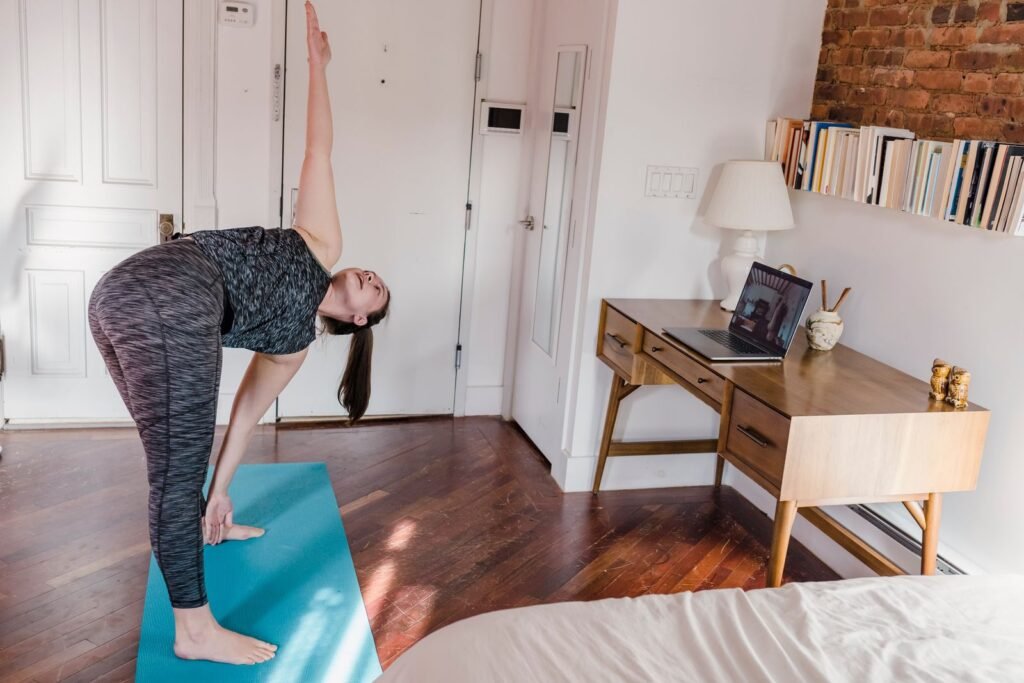
- Extended triangle pose (Utthita Trikonasana): A standing side stretch that lengthens the sides of the torso and encourages an open chest, directly opposing the collapsed, rounded posture of screen time.
- Seated spinal twist (Ardha Matsyendrasana): Rotating the spine while seated mobilizes each vertebral segment individually, which static sitting tends to lock into place. Read our full guide to Ardha Matsyendrasana for setup details.
- Child’s pose (Balasana): A resting fold that gently stretches the low back and shoulders while calming the nervous system, useful as a reset between more active postures.
For a broader look at how these postural principles apply beyond screen use specifically, our guide to yoga for back pain covers related patterns and remedies in more depth.
How Long Does a Daily Screen-Posture Yoga Routine Need to Be?
Ten to fifteen minutes a day is a realistic, sustainable target for most people, and it’s more effective than one long weekly session because postural muscles respond to frequent, consistent input rather than occasional intense work. A practical structure many people find workable: two to three minutes of neck and shoulder release first thing in the morning, a five-minute combination of chest openers and upper-back strengtheners at midday, and a longer 10 to 15 minute session in the evening that includes spinal twists and a forward fold to unwind the day’s accumulated tension. If a full routine feels like too much some days, even two or three poses done well is worth more than skipping the practice entirely. Our guide to building a self-care yoga routine walks through how to structure short daily practices so they stick.
Can Yoga Alone Fix Posture Without Changing Screen Habits?
Not entirely. Yoga is powerful for reversing the muscular effects of screen posture, but if you return to eight hours of forward-head scrolling immediately after a 15-minute practice, the underlying strain keeps reasserting itself. The most effective approach pairs a regular yoga practice with basic ergonomic changes: raising a laptop screen to eye level, holding a phone up rather than looking down at it, and taking short movement breaks every 45 to 60 minutes. Some people find it useful to reduce total screen time itself, not just correct posture during it—our article on digital detox with yoga looks at how scaling back screen exposure and building a yoga practice reinforce each other rather than working as separate fixes.
Does Breathing Matter as Much as the Poses Themselves?
Yes, and it’s the part most people skip. Shallow chest breathing is both a cause and an effect of poor screen posture—a collapsed chest restricts the diaphragm’s range of motion, and stress from constant notifications and deadlines encourages exactly that kind of shallow breathing. Practicing diaphragmatic breathing, where the belly expands on the inhale rather than the chest lifting, physically requires the torso to be more open, which reinforces upright posture. Our guide to pranayama breathing techniques covers specific practices like alternate nostril breathing and box breathing that pair naturally with a postural yoga sequence, deepening the nervous-system reset that comes from correcting the physical position of the spine and chest.
What’s the Difference Between Desk Yoga and a Dedicated Posture Practice?
Desk yoga refers to short stretches done at or near a workstation during the workday—quick neck rolls, shoulder shrugs, and seated twists that take 60 seconds to a few minutes and require no mat or change of clothes. A dedicated posture practice is typically longer, done on a mat outside of work hours, and includes strength-building poses like cobra, locust, and bridge that need more space and a bit more time to hold properly. Both matter: desk yoga interrupts the accumulation of strain throughout the day, while a longer practice actually rebuilds the strength and flexibility needed to hold better posture once you stand up. Our detailed guide to desk yoga for office workers covers the shorter, workday-friendly version of this practice in depth.
Who Is Most at Risk From Screen-Related Postural Strain?
Anyone who spends several consecutive hours a day looking at a screen is a candidate, but a few groups tend to show the pattern earlier or more severely. Remote and hybrid workers who lack an ergonomic home setup—working from a couch, bed, or kitchen table rather than a proper desk—often develop more pronounced forward head posture than office-based workers with adjustable monitors and chairs. Students juggling laptops, tablets, and phones across long study sessions are another high-exposure group, particularly during exam periods when screen time spikes alongside stress; our article on yoga for exam stress addresses this overlap directly. Younger children and teenagers, whose postural habits are still forming, are increasingly flagged by physiotherapists as showing early signs of forward head posture from heavy phone and tablet use.
How Do You Know If Your Practice Is Actually Working?
Progress with postural yoga tends to show up gradually and in a specific order. The first noticeable change is usually reduced end-of-day stiffness and fewer tension headaches, often within the first two to three weeks of consistent practice. Next comes an easier time holding an upright seated position without consciously correcting it, since the muscles supporting the spine are getting stronger and the shortened chest and neck muscles are lengthening. Later, you may notice a visible change when you glance in a mirror from the side—the head sitting more directly over the shoulders instead of jutting forward. A simple way to track this yourself is the wall test: standing with your heels, glutes, upper back, and head all touching a wall, and noticing how much effort it takes to keep your head against the wall without straining the chin down or up. As posture improves, that position starts to feel more natural and less effortful over time.
What Are Common Mistakes People Make When Using Yoga for Posture?
A handful of habits quietly undermine what should be an effective practice.
- Practicing inconsistently: A single 30-minute session on the weekend does far less than 10 minutes daily, since postural muscles need frequent, repeated input to change.
- Overextending the neck: Rolling the head fully backward or forcing deep backbends before the supporting muscles are ready can strain rather than help the cervical spine.
- Ignoring the strengthening poses: Focusing only on stretches like child’s pose or forward folds without adding cobra, locust, or bridge leaves the postural muscles under-trained, so the stretch-only gains fade quickly.
- Not addressing the screen habit itself: Practicing yoga for 15 minutes and then returning to eight hours of forward-head phone use limits how much benefit accumulates.
- Holding your breath during poses: Especially in chest openers and backbends, shallow or held breath reduces the calming, nervous-system-level benefit that makes yoga more effective than stretching alone.
Questions People Ask About Yoga for Screen Time and Posture
How quickly can yoga improve posture from screen time?
Most people notice reduced neck and shoulder stiffness within two to three weeks of a consistent daily practice, with more visible changes to head and shoulder alignment developing over one to three months. The timeline depends on how many hours a day are spent on screens and whether ergonomic changes are made alongside the yoga practice, since the two work best together rather than separately.
Can yoga reverse forward head posture completely?
Yoga can meaningfully improve forward head posture by strengthening the upper back and deep neck flexors while lengthening the chest and front-neck muscles, and many people see substantial visible improvement. Whether it fully “reverses” the pattern depends on severity, consistency, and whether screen habits change too; persistent or severe cases are worth discussing with a physiotherapist alongside a yoga practice.
What is the best time of day to do posture-focused yoga?
There’s no single correct time, but many people find a short morning session helps set posture awareness for the day, while an evening session helps release tension that accumulated during work hours. Splitting a practice into a short morning routine and a longer evening one tends to work better than a single long session, since it interrupts strain patterns twice rather than once.
Do I need a yoga mat and props to fix screen-related posture?
A mat helps for floor-based poses like cobra, locust, and bridge, but many effective neck and shoulder stretches can be done seated in a chair with no equipment. A bolster, rolled towel, or firm cushion is useful for supported fish pose, one of the more effective chest openers for reversing a rounded screen posture.
Is tech neck the same as a pinched nerve or herniated disc?
No. Tech neck refers to the muscular and postural pattern caused by repeated forward head positioning, not a structural injury like a pinched nerve or herniated disc. That said, chronic forward head posture is sometimes cited as a contributing factor to nerve compression over time, so persistent tingling, numbness, or radiating arm pain should be evaluated by a medical professional rather than addressed with yoga alone.
Can kids and teenagers benefit from posture-focused yoga too?
Yes. With supervision and age-appropriate poses, children and teenagers can practice many of the same neck, shoulder, and spinal poses used for adult screen posture, often with even faster results since their postural habits are less deeply set. Given how much time many young people now spend on phones and tablets, introducing simple postural yoga habits early can help prevent the pattern from becoming more entrenched later.
Try This for Yourself
Reading about poses is a starting point, but correcting a posture pattern that built up over months or years benefits enormously from guided instruction and real-time feedback on your form. Explore FitStrot’s Online Yoga Classes to work with an instructor who can build a posture-focused routine around your specific screen habits and schedule, whether that means short daily resets or a fuller weekly practice.
Related reading: Building a self-care yoga routine, digital detox with yoga, desk yoga for office workers, and yoga for back pain. You can also explore FitStrot’s Online Yoga Classes to get started with guided sessions.