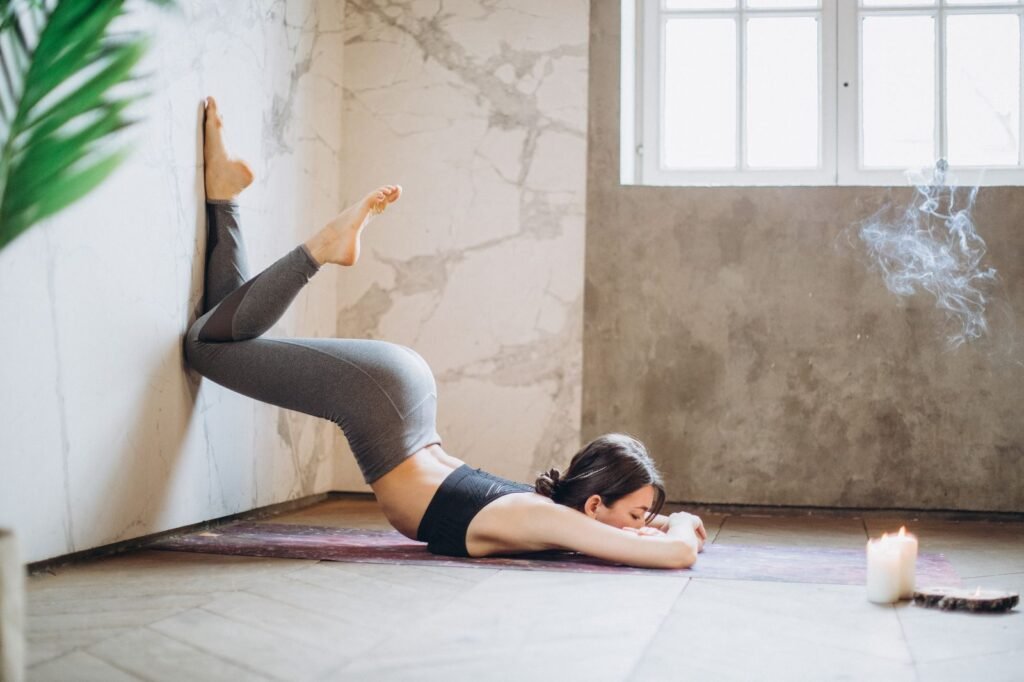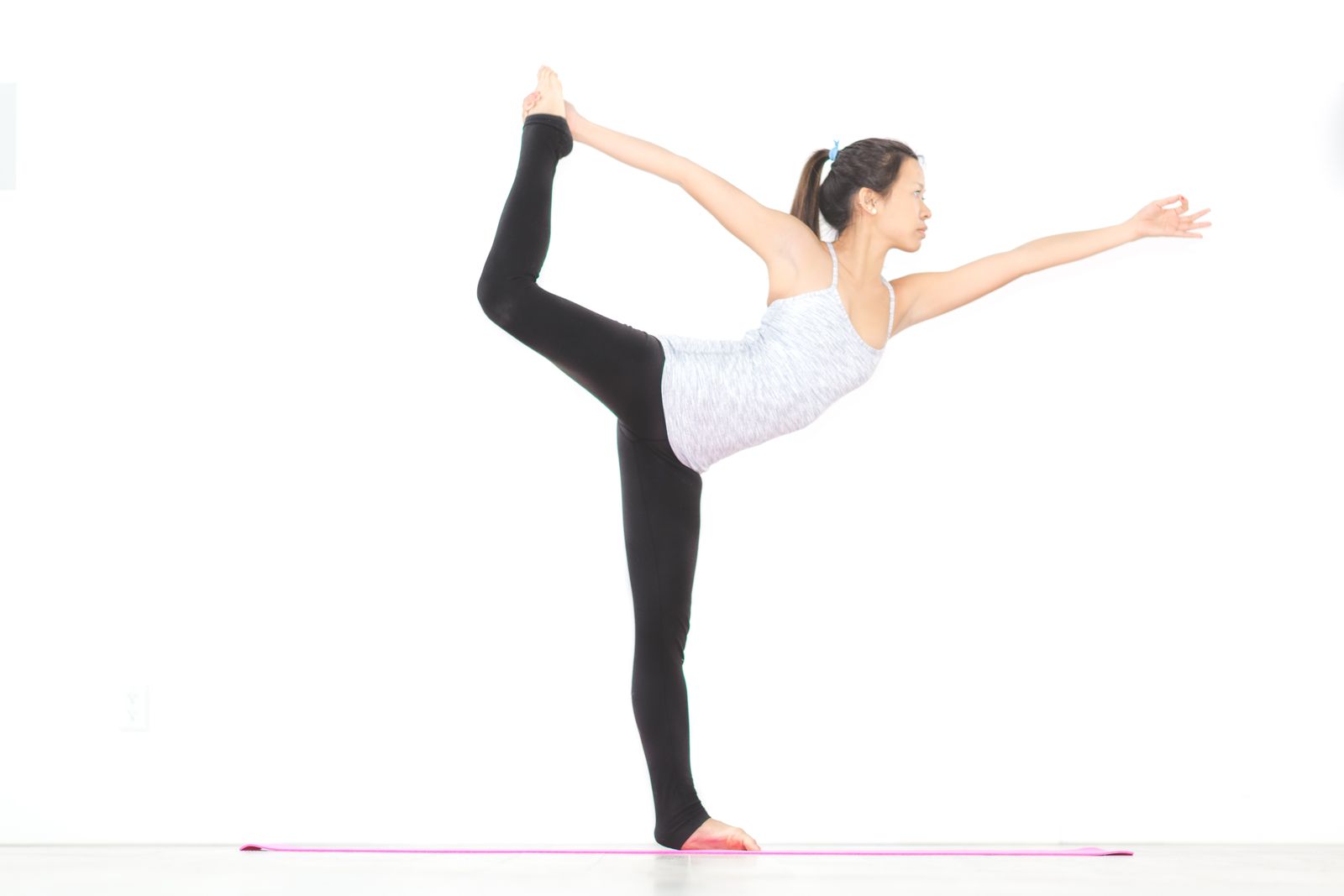
Ardha Chandrasana, or Half Moon Pose, is a standing balance posture where you balance on one leg and one hand while the other leg extends parallel to the floor and the torso opens toward the ceiling, forming the shape of a half moon. It builds hip stability, core strength, and ankle control while stretching the hamstrings and opening the chest and shoulders. Most practitioners hold it for 20-40 seconds per side, and it’s typically taught after standing poses like Tadasana and triangle-family poses, since it draws on the same hip and hamstring flexibility those poses build. It’s considered an intermediate pose because it demands both strength and balance at once, but it’s approachable for most bodies with a wall or block for support.
What Does Ardha Chandrasana Mean?
Ardha Chandrasana comes from three Sanskrit words: “ardha,” meaning half, “chandra,” meaning moon, and “asana,” meaning pose or seat. The name describes the visual shape of the final position, one straight standing line formed by the extended leg and torso, resembling the curved outline of a half moon. In English yoga classes it’s almost universally called Half Moon Pose. It belongs to the standing balance and hip-opening family of asanas, closely related to Trikonasana (Triangle Pose) and Virabhadrasana II (Warrior II), and is traditionally taught as a natural progression once a student is comfortable with those two foundational standing shapes.
How Do You Perform Ardha Chandrasana Step by Step?
Begin standing in Tadasana at the top of your mat, then step one foot back about three to four feet as if setting up for Trikonasana, turning the back foot slightly in. Hinge from the hip and bring your front hand down to the floor or onto a block placed roughly a foot in front of your front foot, shifting your weight onto that standing leg. Slowly lift your back leg parallel to the floor while rotating your hips and chest open toward the ceiling, stacking one hip directly over the other. Extend your top arm straight up toward the sky, creating one continuous line from your fingertips down through your torso to your lifted heel. Keep a soft micro-bend in the standing knee rather than locking it, and fix your gaze on a steady point on the floor or, once stable, upward at your raised hand. Hold for 20-40 seconds, breathing evenly, then bend the standing knee to lower the lifted leg back down with control before repeating on the other side.
What Muscles Does Ardha Chandrasana Strengthen?
Half Moon Pose is a full-body stabilizer, but the standing leg does the majority of the work. The gluteus medius and gluteus minimus on the standing hip fire continuously to keep the pelvis level and prevent the raised hip from collapsing, which is why the pose is often used to identify and correct hip weakness. The quadriceps and calf of the standing leg support the balance, while the core, especially the obliques, rotates and stabilizes the torso as it opens sideways. The muscles of the lifted leg, particularly the hamstrings and glutes, work isometrically to keep it extended and parallel to the floor. The shoulders and upper back also engage to keep the top arm reaching actively upward rather than passively floating.
What Are the Benefits of Ardha Chandrasana?
Regular practice of Ardha Chandrasana is commonly associated with several physical and mental benefits, though individual results vary and it should complement, not replace, medical advice for any existing joint or balance condition.
- Improves balance and proprioception: Standing on one leg while the body rotates challenges the vestibular and neuromuscular systems together, which is valuable for coordination at any age.
- Strengthens the hips and glutes: The standing-leg hip abductors work hard to keep the pelvis level, addressing a common weakness behind lower back and knee discomfort.
- Stretches the hamstrings and calves: The forward hinge and extended standing leg lengthen the back of the leg on the standing side.
- Opens the chest and shoulders: Rotating the torso open and reaching the top arm skyward counters the forward-rounded posture common with desk work.
- Builds core control: The obliques and deep core muscles stabilize the spine against rotation and gravity simultaneously, a type of control that transfers well to other balance poses like Vrksasana.
- Sharpens focus and concentration: Like most single-leg balance poses, holding Half Moon requires sustained mental focus on a fixed point, which is traditionally described as training drishti, or steady gaze.
What Are the Different Variations of Ardha Chandrasana?
Several variations exist to make the pose more accessible or more challenging, and a good teacher will offer these depending on a student’s balance, hip mobility, and experience level.
Ardha Chandrasana at the Wall
Practicing with your back against a wall, or with your lifted leg’s heel pressing into the wall behind you, gives beginners a stable reference point and removes some of the balance demand so the focus can stay on hip alignment and leg extension.
Ardha Chandrasana with a Block
Placing a yoga block under the bottom hand, rather than reaching all the way to the floor, is one of the most common modifications. It keeps the spine longer and the hips more level, especially for practitioners with tighter hamstrings or a shorter torso relative to their legs.
Parivrtta Ardha Chandrasana (Revolved Half Moon)
In this more advanced variation, the torso twists so that the top hand reaches down toward the standing foot instead of up toward the ceiling, adding a spinal rotation element that demands significantly more hip flexibility and core strength than the classic pose.
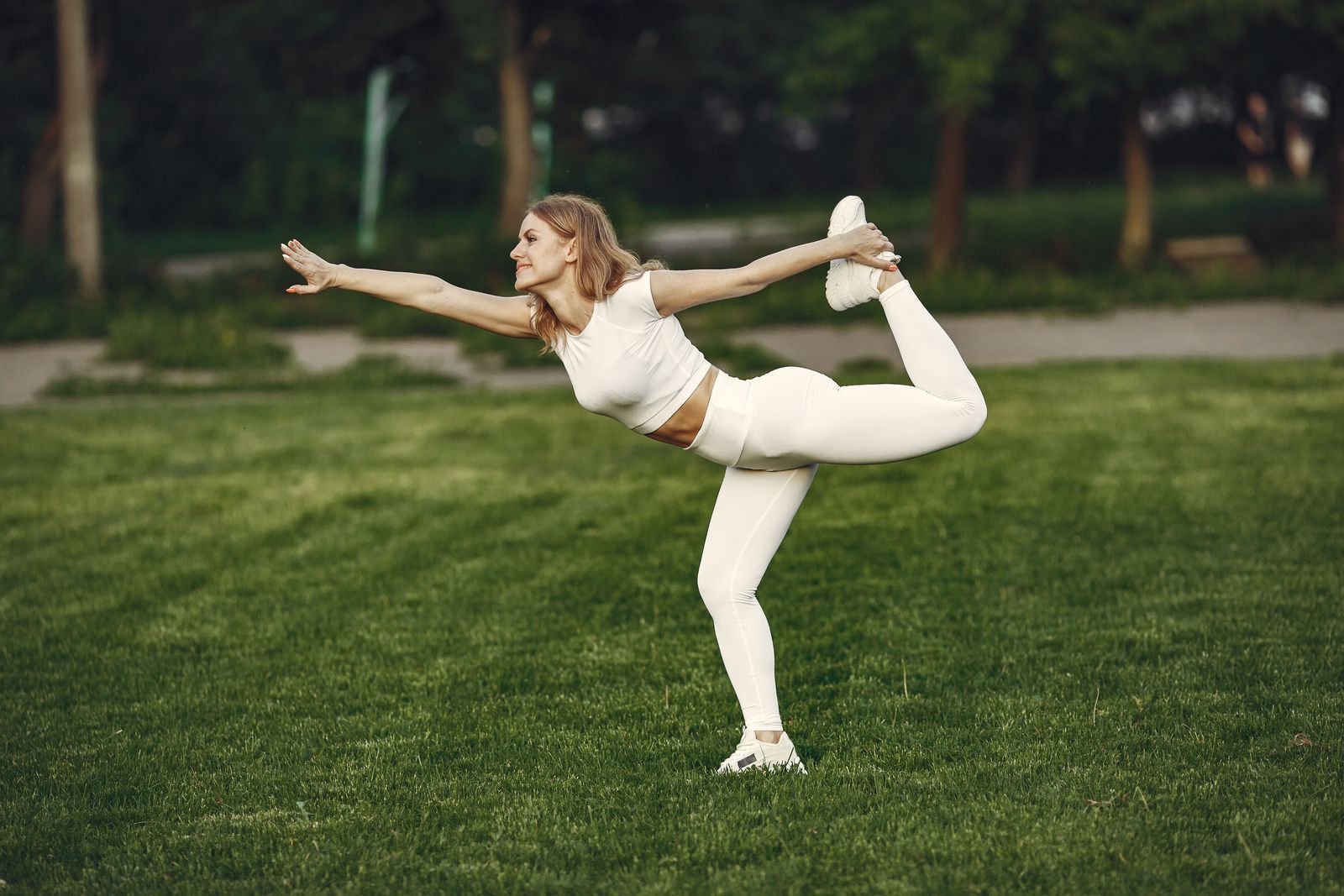
Ardha Chandrasana Chapasana (Half Moon with Bow)
Here the lifted leg bends at the knee and the same-side hand reaches back to hold the foot, creating a bow shape with the back leg while still balancing on the standing leg and bottom hand. This variation adds a quadriceps stretch and requires considerably more shoulder mobility.
Who Should Avoid Ardha Chandrasana?
Ardha Chandrasana is generally safe for most practicing bodies, but it isn’t right for everyone. Anyone with a recent ankle, knee, or hip injury on the standing side should avoid the pose or practice only the wall-supported version until the joint has fully healed. People with low blood pressure, vertigo, or inner-ear balance disorders may find the combination of a forward hinge and torso rotation triggers dizziness, so a wall or chair for support is strongly advised. Pregnant practitioners, especially in the second and third trimesters, should modify with a wall or skip the pose entirely as balance shifts. If you have a shoulder injury, keep the top arm at hip height instead of reaching overhead. As with any new pose, it’s worth practicing under the guidance of a qualified instructor, such as through online yoga classes, so that alignment cues can be corrected in real time.
What Are the Most Common Mistakes in Ardha Chandrasana?
The most frequent error is letting the raised hip roll open too far backward, which flattens the pose and shifts the workload away from the standing-leg glutes onto the lower back instead. Another common mistake is locking the standing knee completely, which reduces stability and can strain the joint over repeated practice; a soft micro-bend keeps the leg engaged and springy. Many beginners also collapse into the bottom shoulder, letting all their body weight sink into the supporting hand or block rather than actively pressing down and lifting the ribs away from it. Finally, rushing the transition into the pose without first establishing a stable base in the standing leg is a common cause of wobbling and falling out of the shape.
How Does Ardha Chandrasana Compare to Vrksasana?
Both are standing balance poses, but they challenge the body differently. Vrksasana (Tree Pose) balances the body in an upright, symmetrical position with the hips squared forward and the sole of the lifted foot pressed against the standing leg, which primarily tests vertical stability. Ardha Chandrasana, by contrast, balances the body in a horizontal, rotated position with the hips stacked sideways and one leg extending straight out, which adds a rotational and hip-opening challenge on top of the balance demand. This makes Half Moon considerably more complex neuromuscularly, and most teachers introduce Tree Pose first to build basic single-leg confidence before progressing students to Half Moon’s more dynamic shape.
How Does Ardha Chandrasana Relate to Trikonasana?
Ardha Chandrasana is often taught as the natural next step after Trikonasana (Triangle Pose), since the entry into Half Moon looks almost identical to Triangle’s final shape before the back foot lifts off the floor. Both poses share the same open-hip, open-chest orientation and stretch the hamstring of the front leg, but Trikonasana keeps both feet grounded while Half Moon removes that stability entirely, replacing it with single-leg balance. Practicing Trikonasana regularly builds the hamstring flexibility and hip-opening range that make the transition into Half Moon considerably smoother.
When Should You Practice Ardha Chandrasana in a Yoga Sequence?
Half Moon Pose works best after the body has warmed up with standing poses and a few rounds of movement, such as a short Surya Namaskar sequence, since cold hamstrings and hips make the balance considerably harder to find. It’s typically placed in the standing sequence portion of a practice, directly after Trikonasana or Virabhadrasana II, which is important because those poses prepare the same hip-opening and hamstring-lengthening actions Half Moon requires. Following Ardha Chandrasana with a grounding pose such as Tadasana or a brief forward fold helps the nervous system settle after the concentrated balance effort before moving into seated or floor work.
Can Beginners Do Ardha Chandrasana Safely?
Yes, with the right modifications. Beginners should start with the bottom hand on a block rather than the floor, and practice near a wall for the first several attempts so a light touch is available if balance wavers. It also helps to first build baseline hip strength and standing balance with simpler poses; if you’re new to yoga altogether, starting with foundational poses from a broader yoga for beginners guide before attempting single-leg balance poses will make the transition smoother and reduce the risk of falling.
How Does Ardha Chandrasana Improve Balance and Coordination?
Standing on one leg while the torso rotates open forces the brain to continuously process input from the eyes, inner ear, and joint sensors in the standing ankle and hip, a combination that is widely recognized as effective training for overall proprioception. This kind of practice is one reason balance-focused yoga poses are frequently recommended alongside general yoga for flexibility and mobility routines for older adults and athletes alike, since better balance reduces fall risk and supports more confident movement in daily life. Consistency matters more than duration here: a few minutes of balance work most days builds coordination more reliably than one long session per week.
How Does Ardha Chandrasana Fit Into a Hip-Opening Routine?
Half Moon Pose is frequently included in broader hip-mobility sequences because it demands both strength and length in the hip abductors and rotators at the same time, unlike passive stretches that only address flexibility. Pairing it with poses that stretch the hip flexors and outer hips, alongside general yoga for hip pain guidance, helps build the kind of balanced hip strength and mobility that reduces compensation patterns elsewhere in the body, particularly in the lower back and knees. Anyone with chronic hip discomfort should introduce the pose gradually with wall support rather than attempting the full balance immediately.
What Breathing Pattern Works Best for Ardha Chandrasana?
Inhale as you hinge forward and extend the back leg upward into the pose, letting the breath support the lengthening action through the spine. Once in the full shape, breathe steadily and evenly rather than holding the breath, since shallow or held breathing tends to increase wobbling by tensing the shoulders and neck unnecessarily. Exhale slowly as you bend the standing knee to lower the lifted leg back down with control. If you’re pairing the pose with a broader pranayama practice, keep the breath in Half Moon relatively steady and unforced, since the priority here is stability rather than deep breath work.
Questions People Ask About Ardha Chandrasana
Is Ardha Chandrasana good for beginners?
Ardha Chandrasana is generally classified as an intermediate pose because it combines balance, hip opening, and hamstring flexibility all at once. Beginners can absolutely practice it with a block under the bottom hand and a wall nearby for support, gradually reducing that support as balance and hip strength improve over weeks of consistent practice.
How long should you hold Half Moon Pose?
Most teachers recommend holding Ardha Chandrasana for 20 to 40 seconds per side, breathing steadily throughout. Beginners may only manage 5 to 10 seconds before wobbling out of the pose, which is completely normal; hold time should increase gradually as standing-leg strength and balance improve rather than being forced early.
Which muscles get the most benefit from Ardha Chandrasana?
The standing-leg hip abductors, particularly the gluteus medius, do the most work keeping the pelvis level throughout the pose. The hamstrings of both legs, the core obliques, and the shoulder stabilizers of the top arm also engage significantly, making it one of the more comprehensive standing poses for lower-body and core strength combined.
Can Ardha Chandrasana help with knee pain?
Some practitioners find that the hip and glute strengthening built through Ardha Chandrasana reduces knee strain over time, since stronger hip abductors help control knee alignment during standing and walking. However, anyone with active knee pain should approach the pose cautiously, use a block for support, and consult a physiotherapist before adding new balance poses to their routine.
What is the difference between Ardha Chandrasana and Utthita Hasta Padangusthasana?
Ardha Chandrasana balances the body in a rotated, sideways-open position with one hand on the floor or a block for support. Utthita Hasta Padangusthasana (Extended Hand-to-Big-Toe Pose) balances the body facing forward while holding the big toe of the lifted leg, with no hand touching the ground. The two poses train similar single-leg balance but in noticeably different planes of movement.
Try This for Yourself
Reading about Ardha Chandrasana only goes so far; the real learning happens when a qualified instructor can watch your alignment, correct the small hip and shoulder details that prevent wobbling, and guide your breath through each hold. If you’d like personalized, real-time feedback on Half Moon Pose and the rest of your practice, join a live class through FitStrot’s online yoga classes and build stronger, steadier balance at your own pace.
Related reading: Yoga Poses, Vrksasana, Tadasana, Surya Namaskar, and explore FitStrot’s online yoga classes to practice with expert guidance.