Yoga for erectile dysfunction works by improving pelvic blood flow, strengthening the pelvic floor muscles that support firm erections, and lowering the stress hormones that are one of the most common causes of ED in the first place. A small 2010 pilot study published in the Journal of Sexual Medicine followed 65 men through a 12-week yoga program and found meaningful improvements in erectile function, desire, and overall sexual satisfaction. Poses like Ardha Matsyendrasana (seated spinal twist), Malasana (garland pose), Setu Bandhasana (bridge pose), and Baddha Konasana (bound angle pose) are commonly recommended because they open the hips, activate the pelvic floor, and increase circulation to the groin. Yoga is not a replacement for medical treatment, but as a complementary practice it addresses the vascular, muscular, and psychological threads that often tangle together in erectile dysfunction.
What Is Erectile Dysfunction, and Why Does Yoga Help?
Erectile dysfunction (ED) is the consistent inability to get or maintain an erection firm enough for satisfying sexual activity. It is extremely common: most clinical estimates suggest it affects a meaningful percentage of men by their 40s, with prevalence rising with age, though ED is increasingly reported in younger men too, often linked to stress, poor sleep, and sedentary lifestyles.
ED has three broad root categories: vascular (poor blood flow to the penis, often tied to cardiovascular health), neurological or hormonal (nerve signaling or testosterone issues), and psychological (performance anxiety, depression, chronic stress). Yoga is uniquely suited to ED because it works on all three fronts at once. Postures that open the hips and groin increase circulation to the pelvic region. Pelvic floor engagement in certain asanas strengthens the same muscles responsible for erection rigidity and control. And the breathing and meditation components lower cortisol, the stress hormone that is a well-documented contributor to sexual dysfunction. If stress and anxiety are part of your picture, it’s worth reading our guide on yoga for stress and anxiety alongside this one.
Does Yoga Actually Cure Erectile Dysfunction?
“Cure” is a strong word, and it’s important to be accurate here rather than make promises science can’t back. Yoga is not a guaranteed cure for erectile dysfunction, especially when ED has an underlying medical cause like diabetes, heart disease, or a side effect of medication. What research does support is that yoga can meaningfully improve erectile function, sexual satisfaction, and confidence as part of a broader lifestyle approach. The 2010 Journal of Sexual Medicine pilot study is commonly cited as early evidence: participants who completed a structured 12-week yoga program reported improvements across multiple domains of sexual function, including desire, performance, confidence, and orgasm satisfaction. Other research on yoga’s cardiovascular effects — lower blood pressure, improved circulation, reduced resting heart rate — supports the idea that better vascular health translates into better erectile function, since an erection is fundamentally a blood-flow event. Think of yoga as an evidence-informed complementary practice, not a substitute for a doctor’s diagnosis when ED is persistent or sudden.
How Does Yoga Improve Blood Flow for Erectile Function?
An erection happens when blood vessels in the penis dilate and fill the erectile tissue, a process controlled by the parasympathetic nervous system and healthy vascular function. Anything that restricts blood flow — high blood pressure, clogged arteries, poor circulation from prolonged sitting — can make erections harder to achieve or sustain. Yoga supports circulation in several concrete ways. Hip-opening postures like Baddha Konasana and Malasana physically increase blood flow to the pelvic and groin region by stretching the muscles and connective tissue that can otherwise restrict circulation. Gentle backbends like Setu Bandhasana direct blood flow toward the pelvis and lower abdomen. And the deep, slow breathing central to yoga practice activates the parasympathetic “rest and digest” nervous system, which is the same nervous system state required for an erection to occur — this is why anxiety and the sympathetic “fight or flight” response are such common erection blockers. For a deeper look at how movement supports circulation more broadly, see our piece on yoga for blood circulation, and for the cardiovascular angle specifically, yoga for heart health.
What Are the Best Yoga Poses for Erectile Dysfunction?
These poses are consistently recommended across yoga therapy resources for men’s sexual health because they combine hip-opening, pelvic floor engagement, and circulation benefits.
Malasana (Garland Pose)
A deep squat with feet flat on the floor and hands pressed together at the chest. Malasana opens the hips and groin deeply, stretches the pelvic floor, and increases blood flow to the lower body. Hold for 30-60 seconds, using a rolled blanket under the heels if they don’t reach the floor comfortably.
Baddha Konasana (Bound Angle Pose)
Sitting with the soles of the feet pressed together and knees dropped toward the floor, this seated pose is one of the most direct hip-openers in yoga. It targets the inner thighs, groin, and pelvic region, all areas connected to erectile blood flow. Gently pressing the knees down with the elbows over 1-2 minutes deepens the stretch.
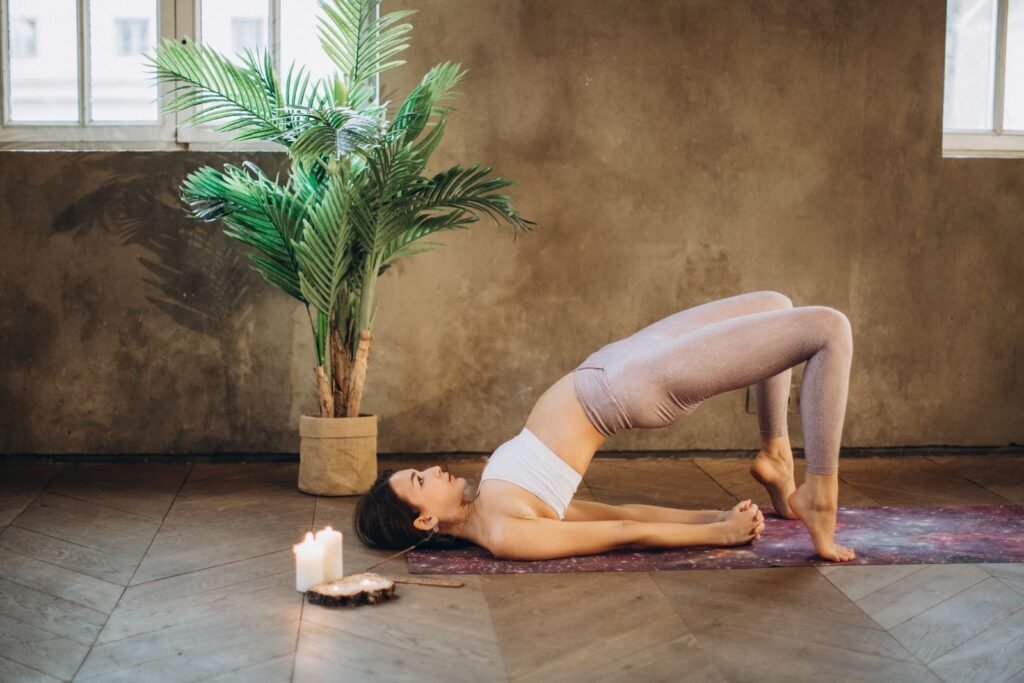
Setu Bandhasana (Bridge Pose)
Lying on your back with knees bent and feet flat, lifting the hips toward the ceiling. Bridge pose strengthens the glutes and lower back while directing blood flow to the pelvis. It also gently engages the pelvic floor muscles on the lift, similar to a Kegel contraction.
Ardha Matsyendrasana (Half Lord of the Fishes Pose)
A seated spinal twist that compresses and then releases the abdominal organs, which is thought to stimulate digestion and circulation to organs in the pelvic and abdominal cavity, including reproductive organs.
Paschimottanasana (Seated Forward Bend)
A seated forward fold that stretches the entire back body, including the lower back and hamstrings, while gently compressing the abdomen. It’s often paired with slow breathing to activate the parasympathetic nervous system. This pose also shows up in our guide to yoga for back pain for its lower-back benefits.
If you want to build these into a full practice, our guide to beginner yoga poses is a good starting point for sequencing and form, and yoga for hip pain covers the hip-opening mechanics in more depth.
Yoga for Erectile Dysfunction With Pictures: How Do I Know I’m Doing It Right?
Many people searching for yoga routines for ED specifically want visual guidance, since subtle alignment mistakes in hip-openers and pelvic-floor poses can reduce their effectiveness or cause strain. In Malasana, for instance, the knees should track in the same direction as the toes rather than collapsing inward, and the spine should stay long rather than rounding forward. In Baddha Konasana, the goal is not to force the knees to the floor but to let gravity do the work while keeping the spine tall. If you’re newer to practice, working with a live instructor who can correct alignment in real time is far more reliable than following static images alone, since they can see your specific body mechanics and adjust cues accordingly. This is one of the reasons structured, guided sessions tend to outperform self-taught routines for pelvic health work specifically, a principle covered more generally in our yoga for beginners guide.
What Does Patanjali Yoga Say About Erectile Dysfunction and Sexual Health?
Patanjali’s Yoga Sutras, the foundational text systematizing classical yoga philosophy, doesn’t address erectile dysfunction directly since it predates modern medical categories by roughly two thousand years. However, the broader Patanjali yoga tradition — and the yogic lifestyle principles built around it — treats sexual vitality as connected to overall life-force energy, often discussed through the concept of “ojas,” a Sanskrit term for vital reserve energy that yogic and Ayurvedic traditions describe as being depleted by stress, poor sleep, and excess. Practitioners who search for “Patanjali yoga for erectile dysfunction” are often looking for this integrated approach: combining asana (postures), pranayama (breath control), and a disciplined daily routine (dinacharya) rather than a single isolated pose. This whole-lifestyle framing is worth understanding even if you’re approaching yoga from a purely secular, health-first angle, since the practical advice — sleep, stress management, moderation, consistent practice — holds up regardless of the philosophical lens. Our overview of yoga philosophy basics and the eight limbs of yoga cover concepts like this in more depth.
What Yoga Breathing Exercises (Pranayama) Help With Erectile Dysfunction?
Breathwork is arguably the most underrated tool for ED because so much erectile dysfunction is stress-driven rather than purely physical. Two pranayama techniques are particularly relevant.
Nadi Shodhana (Alternate Nostril Breathing)
This technique involves closing one nostril at a time while breathing slowly through the other, alternating sides. It’s widely used to calm the nervous system and reduce anxiety, both of which are directly tied to erectile function since performance anxiety is one of the most common psychological causes of situational ED.
Bhramari (Bee Breath)
A humming exhale that activates the vagus nerve and shifts the body toward a parasympathetic, relaxed state. Because arousal and erection depend on parasympathetic dominance, techniques that quickly downshift the nervous system can have a direct practical benefit before or during intimacy, not just as a long-term practice.
For a broader introduction to these techniques, see our guide on pranayama breathing techniques and yoga for lung capacity, which covers related breath-training fundamentals.
How Does Yoga Help With Erectile Dysfunction and Premature Ejaculation Together?
ED and premature ejaculation frequently overlap, and it’s common for men dealing with one to also experience the other, since both are heavily influenced by nervous system regulation, pelvic floor control, and anxiety. Yoga’s approach to this combination centers on pelvic floor awareness and breath-body control. Poses that isolate and engage the pelvic floor — Bridge Pose, Malasana, and seated poses combined with Mula Bandha (root lock, a subtle pelvic floor engagement technique used in more advanced practice) — build the same muscular awareness and control that’s used in behavioral techniques for premature ejaculation, like the stop-start method. Slow, extended exhale breathing practiced in yoga also trains the nervous system to stay regulated during arousal rather than spiking into the sympathetic state that tends to accelerate both anxiety and ejaculation. Addressing both conditions together through yoga tends to be more effective than treating them in isolation, since they share so much of the same physiological machinery.
Are There Specific Yoga Exercises Beyond Asanas That Help With ED?
Beyond the classic poses, several supplementary yoga-based exercises are worth incorporating.
Mula Bandha (Root Lock)
A subtle contraction and lift of the pelvic floor muscles, similar to a Kegel exercise but integrated with breath. Practiced regularly, it builds the same muscular strength and control associated with firmer, more sustained erections.
Kapalabhati (Skull-Shining Breath)
A rapid, forceful exhale technique that engages the abdominal muscles and is believed to stimulate circulation and energize the lower body, though it should be learned from a qualified instructor and avoided by beginners with high blood pressure or heart conditions. Our kapalbhati pranayama guide covers technique and precautions in detail.
Ashwini Mudra
A rhythmic contraction and release of the anal and pelvic floor muscles, performed while holding the breath briefly. This is one of the more direct pelvic-floor-strengthening techniques in the yogic tradition and is often taught alongside Mula Bandha.
These are intermediate-to-advanced techniques and are best learned in a guided class setting rather than from written instructions alone, since incorrect pelvic floor engagement can create tension rather than release it.
How Long Does It Take for Yoga to Show Results for Erectile Dysfunction?
Based on the structure of the available research, meaningful results are generally reported after 8 to 12 weeks of consistent practice, done at least 3-4 times per week. The 2010 pilot study referenced earlier used a 12-week protocol, and that timeframe is a reasonable benchmark to set expectations around. That said, some men report subjective improvements in relaxation, confidence, and morning erections within the first 2-3 weeks, since stress reduction effects from breathing practices tend to show up faster than the structural changes from consistent hip-opening and pelvic floor work. Consistency matters more than intensity here — four short 15-20 minute sessions a week will likely outperform one long weekly session, because the nervous system and vascular benefits compound with regular repetition rather than occasional effort. This mirrors the consistency principle we cover in how often should you do yoga.
Can Yoga Help With Erectile Dysfunction Caused by Stress and Anxiety?
Yes, and this is arguably where yoga has its strongest, most well-supported effect. Situational or psychological ED — where a man can get erections in some contexts (like alone) but not others (like with a partner) — is very often anxiety-driven, and anxiety triggers the sympathetic nervous system, which actively works against the parasympathetic state required for arousal and erection. Yoga’s combination of physical movement, controlled breathing, and meditative focus is specifically designed to shift the body out of sympathetic “fight or flight” activation. Research on yoga and cortisol consistently shows reductions in this stress hormone with regular practice, and lower cortisol is associated with improved sexual function in multiple studies referenced in the sexual medicine literature. If anxiety is a significant factor for you, pairing a physical yoga practice with our guide on yoga for anxiety or online yoga for stress relief can address the root psychological driver more directly.
What Lifestyle Factors Should Accompany Yoga for Best Results?
Yoga works best as part of a broader lifestyle approach rather than in isolation, since ED is often a symptom of overlapping issues that yoga alone can’t fully resolve. The main factors to address alongside your practice:
- Sleep quality — testosterone production and erectile function are closely tied to deep sleep cycles; see our guide on yoga for better sleep if this is a factor for you.
- Weight management — excess weight is strongly linked to both vascular disease and lower testosterone; our article on yoga for weight loss covers how a consistent practice supports healthy body composition.
- Blood sugar and metabolic health — diabetes is one of the leading medical causes of ED; readers managing metabolic or hormonal conditions may also find our pieces on yoga for thyroid health, yoga for PCOS, and yoga for hormonal imbalance useful, since thyroid and hormonal dysfunction can directly affect sexual health.
- Alcohol and smoking — reducing alcohol and quitting smoking are two of the most evidence-backed lifestyle changes for ED specifically, since both directly damage the blood vessels responsible for erectile blood flow.
When Should You See a Doctor Instead of (or Alongside) Practicing Yoga?
Yoga is a reasonable complementary approach, but it isn’t a substitute for medical evaluation in several situations. See a doctor if ED is sudden in onset rather than gradual, since sudden ED can indicate a cardiovascular event risk or medication side effect that needs prompt attention. Seek medical care if ED is accompanied by chest pain, numbness, or other symptoms suggesting a broader cardiovascular or neurological issue. It’s also worth a medical visit if ED persists despite several months of consistent lifestyle changes including yoga, since this may point to a condition like diabetes, low testosterone, or a vascular blockage that requires targeted treatment such as medication, hormone therapy, or in some cases a referral to a urologist. Yoga and medical treatment are not mutually exclusive — many men use yoga alongside prescribed treatment to address the stress and lifestyle components while medication or therapy addresses the underlying physiological cause.
How Do You Build a Weekly Yoga Routine for Erectile Dysfunction?
A practical weekly structure for beginners is three to four sessions per week, each 20-30 minutes, built around these components:
- Two hip-openers — Malasana and Baddha Konasana
- One pelvic-floor-focused pose — Bridge Pose with a Mula Bandha hold at the top
- One twist — Ardha Matsyendrasana
- 5-10 minutes of pranayama — Nadi Shodhana or Bhramari to close the session
Morning practice is often recommended since it aligns with the body’s natural testosterone peak and sets a calmer nervous system tone for the day. If you’re not sure how to structure a full sequence or want real-time form correction, joining a live guided class removes the guesswork, especially for pelvic floor engagement techniques that are genuinely hard to self-assess from written instructions or photos alone. For men newer to a regular practice generally, our gentle yoga and restorative yoga guides are useful companions to this routine.
Questions People Ask About Yoga for Erectile Dysfunction
Can yoga cure erectile dysfunction completely?
Yoga is not a guaranteed cure, especially for ED caused by an underlying medical condition, but research suggests it can meaningfully improve erectile function, confidence, and sexual satisfaction when practiced consistently over 8-12 weeks. It works best combined with good sleep, weight management, and medical evaluation if symptoms persist.
How many times a week should I do yoga for ED?
Three to four sessions per week of 20-30 minutes each is a reasonable, sustainable target based on the protocols used in available research. Consistency across weeks matters more than the length or intensity of any single session, since the nervous system and circulation benefits build gradually with repetition.
Which yoga pose is best for erectile dysfunction?
There isn’t one single “best” pose, but Malasana (Garland Pose) and Baddha Konasana (Bound Angle Pose) are the most consistently recommended, since both directly open the hips and groin to increase pelvic blood flow while also engaging the pelvic floor muscles.
Is yoga better than medication for erectile dysfunction?
Yoga and medication serve different roles rather than competing directly. Medication typically addresses the acute vascular mechanics of an erection, while yoga addresses underlying contributors like stress, circulation, and pelvic floor strength over time. Many men use both together under a doctor’s guidance rather than choosing one over the other.
Can yoga help erectile dysfunction caused by diabetes?
Yoga can support the vascular and stress-related aspects of diabetes-related ED, and some research links regular yoga practice to improved blood sugar regulation, but diabetes-related ED usually requires direct medical management alongside any lifestyle practice. Anyone with diabetes and ED should coordinate yoga practice with their treating physician.
How is yoga different from Kegel exercises for ED?
Kegel exercises isolate the pelvic floor muscles directly, while yoga incorporates pelvic floor engagement (through poses and techniques like Mula Bandha) within a broader practice that also addresses circulation, flexibility, and stress. Many yoga poses for ED effectively combine a Kegel-like contraction with hip-opening and breathwork in the same movement.
Try This for Yourself
Reading about poses and pranayama techniques is a reasonable starting point, but getting real-time feedback on alignment and pelvic floor engagement is where a guided practice makes the biggest difference. If you want structured, expert-led sessions built around your specific goals, explore FitStrot’s online yoga classes and start building a consistent practice with proper guidance from home.
Related reading: Yoga for Weight Loss, Yoga for Thyroid, Yoga for PCOS, Yoga for Hormonal Imbalance, and FitStrot’s online yoga classes to build your practice with expert guidance.